Crates and Gates Sized for a Great Dane
Trying to find a crate or a baby gate that actually holds a Great Dane can feel like an impossible quest. Most standard options seem designed for much smaller dogs, leading to flimsy barriers that a determined Dane can easily push over, jump, or even destroy. This guide will walk you through the unique challenges of containing a giant breed and help you choose robust, appropriate crates and gates that keep your beloved Great Dane safe and sound, without sacrificing your sanity or your home.
Why Standard Crates Just Don't Cut It for a Great Dane
When you first bring home a Great Dane puppy, it’s easy to underestimate just how quickly they grow into their colossal frames. That cute little fluff ball might fit into a medium-sized crate for a few weeks, but before you know it, they're sprawling out, limbs akimbo, looking far too cramped. This rapid growth isn't just a matter of comfort; it fundamentally changes what kind of containment solutions you need, making many readily available products utterly useless.
The Sheer Scale of a Growing Great Dane
Let's be real, a Great Dane puppy isn't "small" for very long. They often reach half their adult weight by six months old, and by a year, they're usually at their adult height, even if they continue to fill out until two years old. This means that a crate you bought just a few months ago can suddenly become inadequate. Trying to squeeze a rapidly growing giant into a crate that's too small is not only uncomfortable for them but can also contribute to improper bone development problems in a Great Dane puppy if they can't stand, turn around, or lie down comfortably. It's a short window where those "normal" large crates might work, and then you're quickly upgrading.
Safety Risks of Undersized Crates
Beyond discomfort, an undersized crate poses real safety hazards for your Great Dane. If they can't move properly, they might get stuck, injure themselves, or feel extremely anxious and trapped. A crate that's too small also becomes a tempting target for chewing and breaking out, which can lead to ingested metal pieces, cuts, or frantic attempts to escape that cause severe injury. Remember, a Great Dane is powerful, even when trying to be gentle, and a flimsy crate simply won't stand up to their size and strength. We're talking about a dog that can weigh over a hundred pounds by adulthood, so you need something built to last.
The Myth of the "One Size Fits All" Crate
Many companies market their "extra-large" or "giant" crates, but often, these are designed for breeds like Golden Retrievers or Labradors, not true giants like Great Danes. A 48-inch crate, which is typically the largest standard size, might sound big, but it’s often barely enough for a full-grown male Great Dane to stand up or turn around in comfortably. The idea that one large size fits all simply doesn't apply to a breed whose sheer mass and height are in a league of their own. You need to look beyond generic labels and focus on actual dimensions and construction.
Choosing the Right Size Crate for Your Giant
Finding the "Goldilocks" crate for your Great Dane – not too big, not too small, but just right – is absolutely crucial for their comfort, safety, and successful crate training. It's an investment, for sure, but a well-chosen crate will serve you and your Dane for years, providing a secure den and peace of mind.
Measuring Your Great Dane for the Perfect Fit
The key to proper crate sizing is to measure your individual dog. Don't just guess or go by breed averages. Grab a tape measure and follow these steps:
- Height: Measure your Great Dane from the top of their head to the floor while they are standing. If your Dane has floppy ears, measure to the top of their head. If they have cropped ears, measure to the tip of their ear when erect. Add 2-4 inches to this measurement. This will be the minimum internal height your crate needs.
- Length: Measure your Great Dane from the tip of their nose to the base of their tail while they are standing. Do not include the tail in the measurement. Add 4-6 inches to this number. This will be the minimum internal length your crate needs.
- Width: While not as critical as length and height, ensure the crate is wide enough for your Dane to turn around comfortably without scraping their sides. Generally, a good length measurement will naturally provide adequate width.
Once you have these measurements, compare them to the internal dimensions of the crates you're considering. Remember, external dimensions can be misleading.
Recommended Crate Dimensions for Great Danes
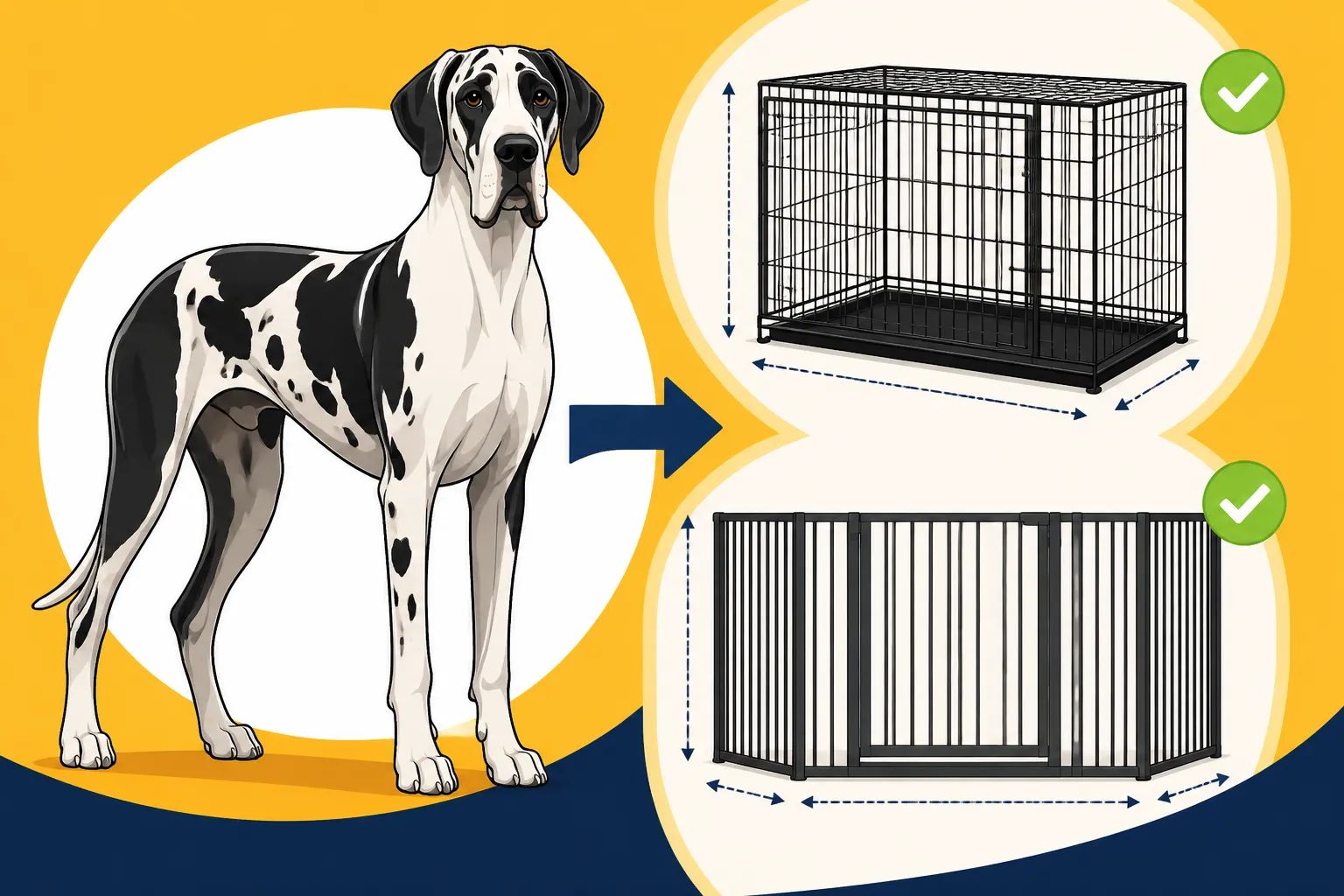
For a fully grown Great Dane, you are generally looking for a crate that is at least 54 inches long, 37 inches wide, and 45 inches high. Some larger males may even require a 60-inch length. These are not common sizes you'll find at your local pet store, and you'll likely need to order online from a specialty supplier. Brands like Midwest or Ruffland often carry crates in these larger dimensions. Chewy, for example, is a great online resource for finding these specialized, oversized crates, often with detailed dimensions listed.
Here's a quick reference table for general guidance:
| Great Dane Size Category | Approximate Weight | Minimum Crate Length | Minimum Crate Width | Minimum Crate Height |
|---|---|---|---|---|
| Smaller Females | 100-120 lbs | 52 inches | 35 inches | 42 inches |
| Average Males/Females | 120-150 lbs | 54 inches | 37 inches | 45 inches |
| Larger Males | 150+ lbs | 58-60 inches | 40 inches | 48 inches |
Note: These are minimum internal dimensions. Always measure your specific dog.
Considering Growth for Your Great Dane Puppy
If you're bringing home a Great Dane puppy, buying a full-sized crate upfront can feel daunting due to the initial cost and sheer space it takes up. However, it's often more economical in the long run than buying multiple crates. A large crate can be made "smaller" for a puppy using a divider panel. This allows you to gradually expand their space as they grow, ensuring they have just enough room to stand and turn around comfortably, which is crucial for successful house training. Too much space in a crate can lead a puppy to use one end as a potty area, defeating the purpose. You'll only need to adjust the divider a few times as your puppy grows, saving you from buying a new crate every few months.
Essential Features in a Great Dane Crate
Once you've nailed down the right size, it's time to think about the construction and features that make a crate suitable for a powerful Great Dane. This isn't just about preventing escapes; it's about ensuring their long-term safety and the durability of your investment.
Durability and Construction Materials
Forget flimsy wire crates with thin gauges. For a Great Dane, you need heavy-duty construction. Look for crates made from thick, reinforced steel wire or high-quality aluminum. These materials are much more resistant to bending, chewing, and escape attempts. Some dedicated brands specialize in "escape-proof" or "impact-resistant" crates, often marketing them for powerful breeds. These often feature thicker bars, stronger welds, and more secure latching mechanisms. Plastic crates, while lighter, are generally not robust enough for an adult Great Dane, as they can be chewed through or burst open with enough force.
The floor of the crate is also important. Some heavy-duty crates have reinforced plastic pans that are less likely to crack under a Great Dane's weight or shift around. For wire crates, look for closely spaced bars or a strong, thick wire gauge to prevent paws from getting caught or bent. Remember, your Great Dane will be putting a lot of pressure on this structure, so corners cut on material quality will quickly become apparent.
Door Types and Locking Mechanisms
A Great Dane-proof crate needs more than just a simple latch. Look for multiple locking points on each door. Spring-loaded latches or slide-bolt mechanisms with heavy-duty construction are preferable. Some crates feature a "guillotine" style door or reinforced swing-out doors with multiple strong deadbolt-style latches. The goal is to make it incredibly difficult for a smart and powerful Dane to manipulate or force open the door.
Consider where the doors are located. Crates with both front and side access can offer more flexibility in placement within your home. However, prioritize security over convenience if a multi-door design compromises the overall integrity of the frame or locking system. The last thing you want is for your Great Dane to discover a weak point in the door after a few hours of trying.
Portability and Ease of Cleaning
Even giant crates need to be cleaned periodically. Look for features that make this chore easier. Removable, durable plastic pans are a must for quick cleanup of accidents or shed fur. Some larger crates are designed to be disassembled for cleaning or transport, though this might be a multi-person job given their size and weight.
While "portability" is relative when talking about a 54-inch steel crate, some models include heavy-duty casters (wheels) that lock, allowing you to move the crate more easily for cleaning or repositioning. Just be sure the casters are strong enough to support the crate's weight plus your Great Dane's, and that they lock securely to prevent unwanted movement. Think about what will make your life easier when managing such a large piece of equipment.
Navigating Baby Gates and Barriers for a Great Dane
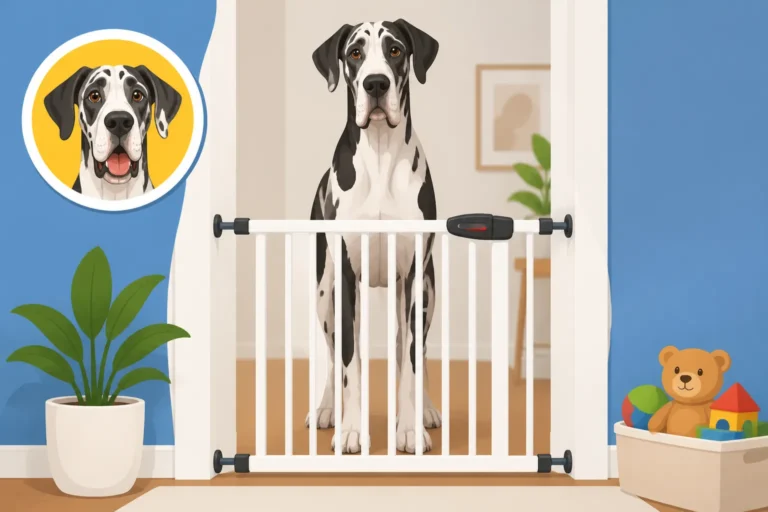
Crates are fantastic for secure confinement, but sometimes you just need to keep your Great Dane out of one specific room or section of the house. This is where baby gates come in—or, more accurately, Great Dane-proof gates. The typical flimsy pressure-mounted gates designed for human toddlers are laughable in the face of a determined Dane.
The Challenge of Great Dane Height and Strength
Your Great Dane can easily step over or jump many standard baby gates. They're often 30-36 inches tall, while a Great Dane can stand over 30 inches at the shoulder. And let's not even talk about their brute strength. A Great Dane can lean on a gate, push it with their nose, or even charge it if sufficiently motivated. Pressure-mounted gates, which rely solely on friction, are simply no match for a Dane's power and often end up dislodged and useless, potentially causing injury or property damage. If your Great Dane is known for its ability to test boundaries, you'll understand the frustration of constantly resetting or repairing flimsy barriers.
Types of Gates That Actually Work for Large Breeds
For a Great Dane, you need heavy-duty, hardware-mounted gates. These gates screw into your door frame or wall studs, providing a much more secure and stable barrier. Look for gates that are:
- Extra Tall: Aim for gates that are at least 40-48 inches tall. Some brands even offer "pet gates" that go up to 50-60 inches. This height discourages jumping and makes it difficult for them to brace and push over.
- Durable Materials: Metal gates are generally best. Wood can be chewed or splintered. Look for strong steel construction with a robust latch.
- Walk-Through Design: A walk-through gate with a secure latch is essential for your convenience. Repeatedly stepping over a tall gate can be a tripping hazard, and trying to remove and replace a hardware-mounted gate every time you pass through is impractical. Look for one-handed operation if possible, especially if you often have full hands.
- No Gaps: Ensure the vertical bars are close enough together that your Dane cannot get their head or body stuck.
Brands like Carlson Pet Products, Summer Infant (specifically their extra-tall pet gates), or Evenflo sometimes offer suitable options. You might also consider custom solutions if your doorways are unusually wide or you need an extra degree of security.
Strategic Placement of Gates in Your Home
Before you start drilling, think about where you really need gates. Common areas include:
- Kitchen entrances: To prevent counter surfing or access to potentially dangerous food items. A Great Dane that takes dinner off the table is a common and expensive problem!
- Stairwells: To prevent accidental falls or restrict access to upstairs/downstairs areas, especially important for managing a Great Dane's joints, as whether a Great Dane should climb stairs is a common concern.
- Specific rooms: If you have a designated "dog-free" zone, like a home office or a room with delicate furniture.
- Front door areas: To prevent bolt-outs when guests arrive or deliveries are made.
When installing, make sure to anchor the gate into solid wood studs for maximum security. Avoid anchoring into drywall alone, as a Great Dane's strength can easily pull screws out. Always test the gate's stability by leaning on it yourself to ensure it can withstand your Dane's pressure.
Beyond Crates and Gates: Other Containment Solutions
While crates and gates are primary tools, sometimes you need other strategies to keep your Great Dane safe and contained, both indoors and out. Their sheer size necessitates thoughtful solutions that go beyond what you'd consider for an average dog.
Exercise Pens and Room Dividers for Great Danes
For those times when a crate feels too restrictive but you don't need a full gate, extra-large exercise pens or modular room dividers can be incredibly useful. These are fantastic for creating a safe, contained play area or a temporary puppy zone. Look for pens designed for large breeds, usually with panel heights of 40 inches or more and made of heavy-duty metal. Many offer configurable panels, allowing you to create various shapes and sizes to fit your space.
These can be particularly helpful during puppyhood to contain messes to an easy-to-clean area or to give your puppy a bit more room to stretch out than a crate, while still keeping them from roaming the entire house. For an adult Dane, they can be useful for keeping them contained during house guests or if you need to separate them from other pets temporarily. Just remember that a very determined Dane might still be able to push or jump a standard exercise pen, so choosing a robust model with connecting clips is crucial.
Secure Fencing for Outdoor Containment
If your Great Dane will spend any time unsupervised outdoors, a secure fence is non-negotiable. Forget short picket fences; a Great Dane can easily clear a standard 4-foot fence. You need a fence that is at least 6 feet tall, and for some agile Danes, even 7 or 8 feet might be considered. The material should be sturdy—chain link, wood privacy, or a solid composite fence are good choices.
Beyond height, consider the integrity of the fence line. Danes can be diggers if they're bored or motivated, so ensure the fence goes deep enough into the ground or consider adding a "dig bar" along the bottom. Inspect your fence regularly for weak spots, loose boards, or areas where your Dane might be able to squeeze through. A bored Great Dane can become an escape artist, and given their size, an escaped Dane can quickly cause concern for you and your neighbors. Secure outdoor containment is vital for their safety and for preventing them from getting lost or into trouble.
Car Restraints and Travel Safety for Your Dane
Transporting a Great Dane safely is another significant containment challenge. A loose Great Dane in a car can be a dangerous projectile in an accident, not to mention a major distraction to the driver. Regular seatbelt harnesses might not fit or be strong enough.
For car travel, consider:
- Crash-Tested Harnesses: Look for harnesses specifically rated for large and giant breeds that have undergone crash testing. Brands like Sleepypod or EzyDog offer models designed for safety in a collision. These often connect directly to your car's seatbelt system.
- Heavy-Duty Crates/Carriers: If you have a large enough vehicle (like an SUV or van), a secure travel crate can be the safest option. These are typically impact-resistant and designed to prevent collapse. Just make sure the crate is properly secured within the vehicle to prevent it from shifting.
- Cargo Barriers: For SUVs, a strong metal cargo barrier can keep your Great Dane safely in the cargo area, preventing them from jumping into the passenger cabin.
Always prioritize safety over convenience when your Great Dane is in the car. An emergency stop or minor fender bender can have devastating consequences if your giant companion isn't properly secured. Many owners struggle with getting a Great Dane into a car, so planning ahead for safe travel is key.
Making Containment a Positive Experience for Your Great Dane
The word "containment" can sometimes sound harsh, but for a Great Dane, their crate or designated safe space should be a haven, not a punishment. With positive reinforcement and careful training, these tools become invaluable for their well-being and your peace of mind.
Crate Training Techniques for Large Puppies and Adults
Crate training a Great Dane, whether a puppy or an adult rescue, should always be a gradual, positive process. Never force your Dane into the crate or use it for punishment.
- Introduce Gradually: Start by feeding meals near the crate, then inside it with the door open. Toss high-value treats (like those yummy freeze-dried ones from Chewy or Ollie) inside to encourage them to enter voluntarily.
- Short Stays: Begin with very short periods, just a few minutes, with you in the room. Slowly increase the duration, always returning before they show signs of distress.
- Positive Association: Offer special toys or chew treats (like a Kong stuffed with peanut butter) only when they are in their crate. This helps them associate the crate with good things.
- Practice Alone Time: Once they are comfortable with short stays while you're present, start leaving the room for brief periods, gradually increasing the time. Build up to leaving them for longer periods, ensuring they are tired and have had a potty break beforehand.
Remember, patience is key. Some Great Danes take to crating quickly, while others need more time. If your adult Dane is struggling, consider working with a professional trainer who has experience with giant breeds. They can help with crate training a Great Dane that fills the room effectively.
Creating a Comfortable and Safe Crate Environment
The crate should be a comfortable den. This is especially critical for Great Danes, who are prone to joint issues and pressure sores.
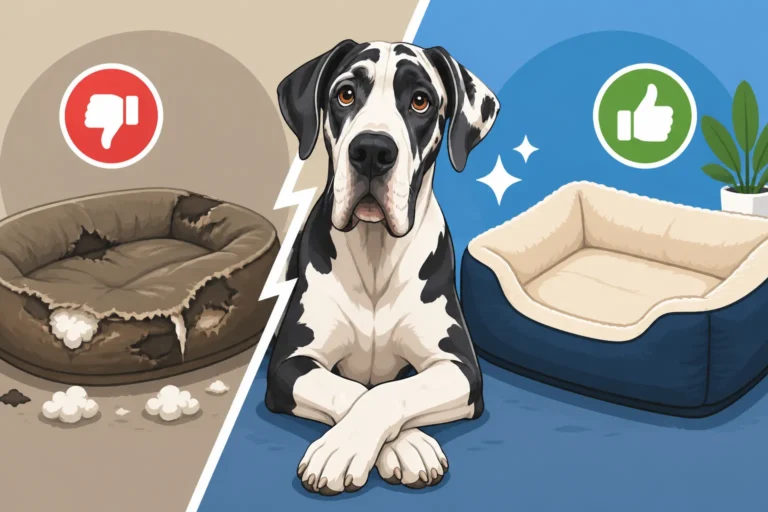
- Orthopedic Bedding: Invest in a thick, supportive orthopedic dog bed that fits your crate perfectly. This is crucial for cushioning your Dane's joints and preventing elbow hygromas on a Great Dane. Brands like Big Barker or Mammoth offer high-quality beds designed for giant breeds. Don't skimp here; a cheap, thin bed won't provide adequate support for their weight.
- Familiar Items: Include a favorite blanket or a toy that smells like you to provide comfort.
- Water Access: For longer stays, consider a crate-mounted water bowl to prevent spills and ensure hydration.
- Temperature Control: Ensure the crate is in a comfortable temperature range, away from direct sunlight or drafts. Great Danes can overheat easily in hot weather.
The goal is to make the crate such a pleasant place that your Dane willingly goes into it, viewing it as their private retreat.
Enrichment and Engagement within Gated Areas
When your Great Dane is behind a gate or in an exercise pen, it's important to keep them mentally stimulated to prevent boredom, which can lead to destructive behaviors or anxiety.
- Interactive Toys: Provide puzzle toys that dispense treats, durable chew toys, or Kongs filled with frozen peanut butter or wet food. These keep them occupied and mentally engaged.
- Safe Chews: Offer appropriate, size-safe chews that will last them a while. Always supervise new chews initially to ensure they are safe and don't pose a choking hazard.
- Rotate Toys: Keep a rotation of toys so they don't get bored with the same items every day.
- Short Training Sessions: Even in a gated area, you can do short training sessions to practice commands, reinforcing good behavior and strengthening your bond.
Remember that while containment tools are essential, they are just one part of providing a full and happy life for your Great Dane. Regular exercise, mental stimulation, and plenty of quality time with you are equally vital. And should any containment-related incidents lead to vet visits, having good pet insurance like Healthy Paws can certainly help with the costs of a Great Dane, especially for a breed prone to unique health challenges.
Disclaimer
The information provided in this guide is for general educational purposes only and should not be considered a substitute for professional veterinary advice. Always consult with your veterinarian or a certified professional dog trainer for personalized guidance regarding your Great Dane's health, behavior, and specific needs.