Reading a Great Dane’s Thyroid Panel
Getting a call from the vet with bloodwork results can be intimidating, especially when they start rattling off terms like T4, TSH, and autoantibodies. It feels like you need a medical degree just to understand what they're telling you about your beloved Great Dane. The good news is, you don't have to navigate this complex world alone. This guide will help you understand what those numbers on your Great Dane's thyroid panel actually mean, so you can have more informed conversations with your veterinarian and feel more confident about your giant companion's health.
Understanding the Basics of Thyroid Function in Great Danes
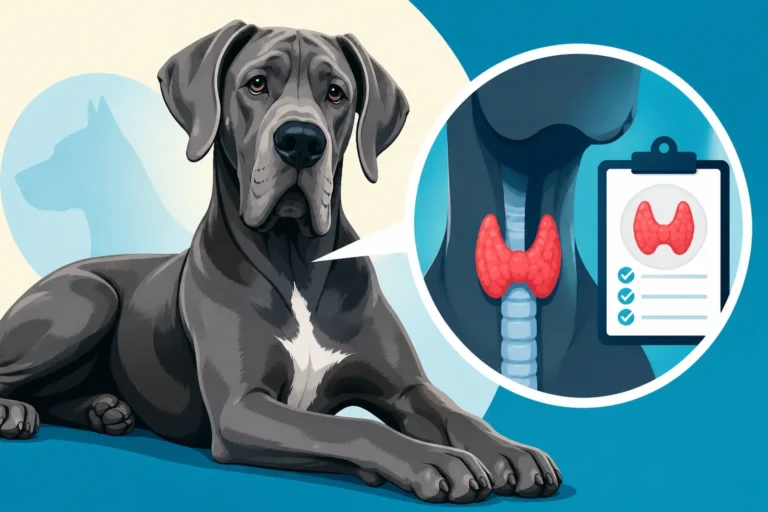
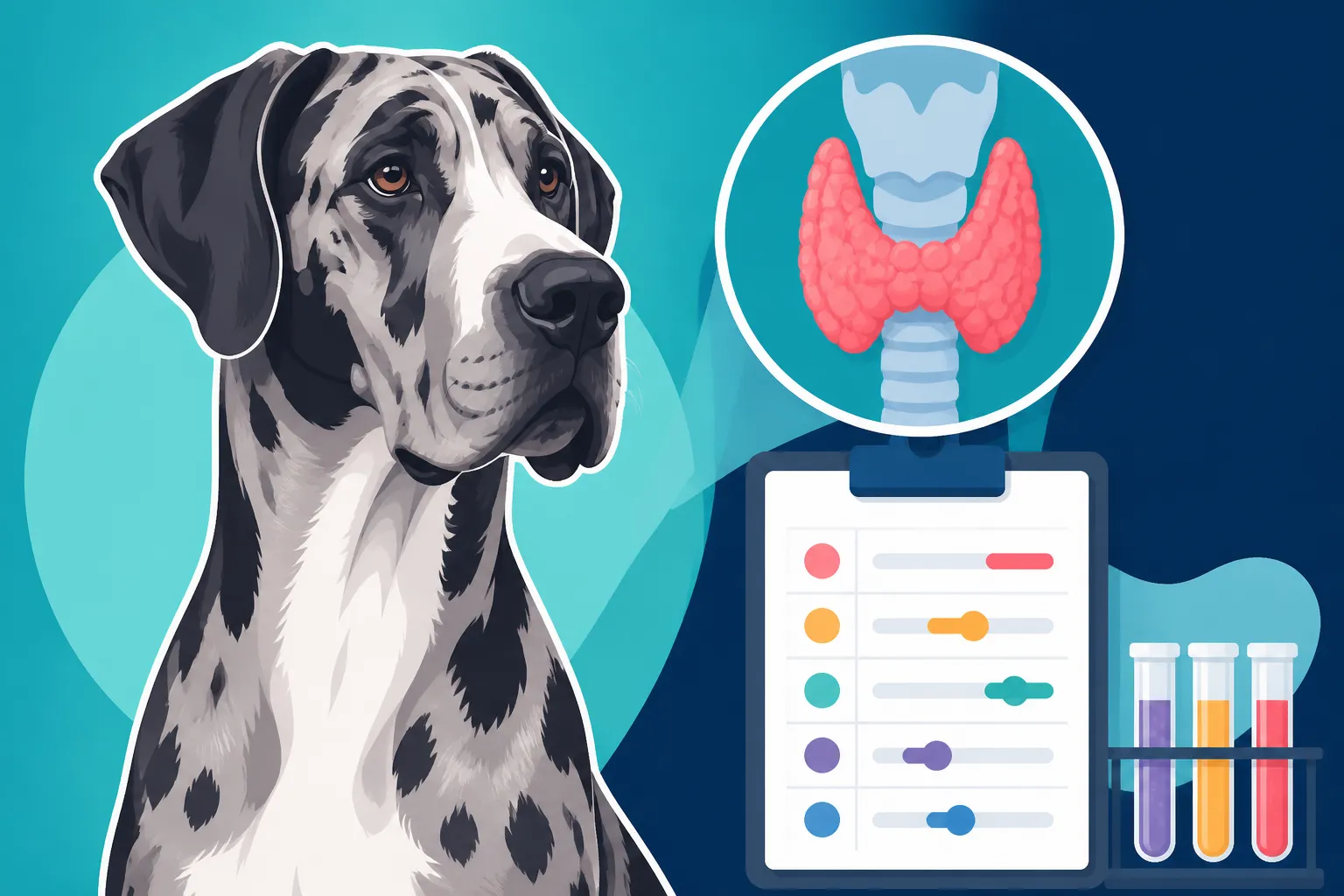
Before we dive into the nitty-gritty of the numbers, it's really helpful to grasp what the thyroid gland actually does. Think of it as the master regulator of your dog's metabolism. It's a tiny, butterfly-shaped gland located in the neck, but its impact is anything but small.
Why Thyroid Health is So Critical for Giant Breeds
The thyroid gland produces hormones, primarily thyroxine (T4) and triiodothyronine (T3), that literally influence every single cell in your Great Dane's body. These hormones control energy levels, body temperature, heart rate, skin and coat health, and even weight management. When the thyroid isn't pulling its weight, or is producing too much (which is rare in dogs), the ripple effect can be profound and incredibly frustrating for owners to pinpoint.
For Great Danes, specifically, thyroid issues – most commonly hypothyroidism, where the gland doesn't produce enough hormones – can be particularly devastating because of their size and already shorter lifespan. A sluggish metabolism means more than just a tired dog; it can affect their cardiac function, joint health, and overall vitality, potentially contributing to why a Great Dane Only Lives Seven to Ten Years. You might notice subtle changes like a slowing down on walks, a reluctance to play, or an increasing tendency to seek warmth. These symptoms can be easily dismissed as "just getting older" or "being lazy," which only delays diagnosis and proper treatment.
The Hormones We're Looking At: T4, T3, and TSH
When your vet runs a thyroid panel, they're typically looking at a few key players that tell the story of your dog's thyroid function. It's a bit like a complex conversation happening within the body.
The main hormones are T4 (thyroxine) and T3 (triiodothyronine), which are the hormones the thyroid gland produces. T4 is the most abundant hormone, often considered a prohormone because much of it gets converted into T3 in other tissues, which is the more biologically active form. Think of T4 as the raw material, and T3 as the finished product that actually does the work.
Then there's Thyroid Stimulating Hormone, or TSH. This isn't produced by the thyroid itself, but by the pituitary gland in the brain. The pituitary acts like a thermostat. If it senses that there isn't enough T4 and T3 circulating, it releases more TSH, effectively yelling at the thyroid gland to "produce more!" Conversely, if there's plenty of T4 and T3, the pituitary calms down and releases less TSH. Understanding this feedback loop is crucial for interpreting the test results, as it helps identify where the problem might be originating.
Deciphering Your Great Dane's Thyroid Panel Results
Now that we know the players, let's look at what their individual numbers might be telling us. It’s important to remember that these are pieces of a puzzle, and your vet will look at the whole picture, along with your Great Dane's clinical signs.
Total T4 (TT4) and Free T4 (fT4) – What the Numbers Mean
When your vet measures T4, they often look at two different types: Total T4 (TT4) and Free T4 (fT4). It’s an important distinction that can sometimes be the key to a correct diagnosis.
Total T4 (TT4) measures all the T4 in your Great Dane's blood – both the T4 that's bound to proteins and the small amount that's "free" and active. A low TT4 can definitely be a red flag for hypothyroidism. However, here's where it gets tricky for us Great Dane owners: TT4 levels can be artificially lowered by a whole host of other factors. If your Great Dane is battling another illness, even something seemingly unrelated like a bad ear infection or a bout of gastroenteritis, their TT4 can drop. We call this "sick euthyroid syndrome," and it means your dog has normal thyroid function but the illness is impacting the test results. Certain medications, like steroids (prednisone), non-steroidal anti-inflammatory drugs (NSAIDs), or even some sulfa-based antibiotics, can also suppress TT4 levels. So, if your vet just runs a TT4 and it comes back low, it’s not always the definitive answer, which can be incredibly frustrating if you’re trying to figure out what’s wrong.
This is where Free T4 (fT4) comes in. Free T4 measures only the unbound, biologically active form of the hormone. Because it's not bound to proteins, its levels are much less influenced by non-thyroidal illnesses or many medications. For this reason, fT4 is generally considered a more accurate indicator of true thyroid function. If your Great Dane's fT4 is low, especially in conjunction with other symptoms, it's a much stronger indicator that the thyroid gland itself might be underperforming. When discussing Great Dane Vet Costs Year by Year, remember that getting a full panel, including fT4, might be a bit more expensive upfront, but it can save you money and worry by leading to a more accurate diagnosis and avoiding unnecessary treatment.
Total T3 (TT3) and Free T3 (fT3) – Less Common, Still Important
Similar to T4, you might see Total T3 (TT3) and Free T3 (fT3) on a more comprehensive thyroid panel. While T3 is the more active hormone, converted from T4, T3 tests are generally less useful for diagnosing hypothyroidism in dogs.
Why? Well, T3 levels in dogs tend to fluctuate quite a bit, and they are even more susceptible to being lowered by non-thyroidal illnesses and various medications than T4. So, a low TT3 or fT3 on its own doesn't usually point directly to hypothyroidism in the way a low fT4 might. However, including them in a full panel can sometimes provide additional context, particularly in really complex or borderline cases where your vet is trying to rule out other issues or get a complete picture of how the body is handling thyroid hormones. For most routine screenings or initial diagnoses, the focus tends to be more heavily on T4 and TSH.
Thyroid Stimulating Hormone (TSH) – The Pituitary's Signal
TSH is arguably one of the most crucial parts of the thyroid panel. As we discussed, TSH is the signal from the brain's pituitary gland telling the thyroid to get to work. Understanding TSH is key to distinguishing between primary hypothyroidism (a problem with the thyroid gland itself) and secondary hypothyroidism (a rare problem with the pituitary).
If your Great Dane's thyroid gland isn't producing enough T4 and T3 (meaning the T4 and fT4 levels are low), the pituitary gland will recognize this and ramp up its production of TSH, trying to stimulate the failing thyroid. So, the classic textbook sign of primary hypothyroidism, which is by far the most common type in dogs, is a low T4 (especially fT4) combined with a high TSH. This tells your vet that the thyroid gland isn't listening to the pituitary's desperate calls to produce more hormone. It's like the boss (pituitary) is yelling louder and louder (high TSH), but the worker (thyroid gland) just isn't getting the job done (low T4).
In the very rare case of secondary hypothyroidism, the problem lies with the pituitary gland itself, meaning it's not producing enough TSH. In this scenario, you would see low T4 and fT4, but the TSH would be normal or even low, rather than high. This is much less common, but it highlights why a full panel is so important – each piece of the puzzle gives a different perspective. If your Great Dane is showing signs like a "slow Great Dane that thickens and loses hair" or a "Great Dane that cannot finish a walk," a comprehensive panel including TSH is essential.
Autoantibodies – Checking for the Immune System's Attack
Sometimes, a thyroid panel will also include a test for autoantibodies, specifically Thyroglobulin Autoantibodies (TgAA). This test checks if your Great Dane's immune system is mistakenly attacking its own thyroid gland. This autoimmune process, called lymphocytic thyroiditis, is a very common cause of primary hypothyroidism in Great Danes and other susceptible breeds.
If your Great Dane tests positive for TgAA, it means their immune system is essentially turning against the thyroid tissue. Even if their T4 and TSH levels are currently in a borderline or low-normal range, a positive autoantibody test can be a strong indicator that autoimmune thyroiditis is present and might lead to full-blown hypothyroidism in the future. It's like a warning signal that the immune system is already starting to cause damage, even if the gland hasn't completely failed yet. This information can be incredibly valuable for monitoring and proactive management, especially if your Great Dane is younger but already showing subtle signs that might otherwise be overlooked.
Common Pitfalls and Why a Full Panel Matters
Interpreting thyroid panels isn't always as straightforward as "low = problem." There are several nuances, especially with Great Danes, that can make diagnosis tricky. Understanding these can help you advocate for your dog and ensure they get the right care.
"Sick Euthyroid" Syndrome and Medication Interference
We touched on this briefly, but it deserves a deeper dive because it's a common stumbling block. "Sick Euthyroid Syndrome" (or Non-Thyroidal Illness Syndrome) refers to a situation where a dog that is not hypothyroid will show decreased T4 levels due to another underlying illness, injury, or stress. Essentially, the body is conserving energy to fight the primary problem, and one way it does this is by temporarily downregulating thyroid hormone production.
Imagine your Great Dane is recovering from a severe infection, or perhaps dealing with chronic pain from something like Great Dane Hips, Elbows and Growing Joints. If a thyroid panel is drawn during this time, the TT4 (and sometimes fT4) can appear low. However, their thyroid gland is otherwise perfectly healthy. Treating these dogs with synthetic thyroid hormone would be inappropriate and could even be detrimental. This is why your veterinarian will always want to assess your Great Dane's overall health and rule out any other concurrent diseases before making a hypothyroidism diagnosis based solely on low T4. Certain medications, especially corticosteroids (like prednisone) or even some common NSAIDs, can also suppress thyroid hormone levels. If your Great Dane is on any long-term medication, it’s crucial to discuss this with your vet when interpreting thyroid results.
Great Dane-Specific Reference Ranges
This is a point of contention and frustration for many giant breed owners, and rightly so. Most commercial veterinary laboratories establish their "normal" reference ranges based on a diverse population of dogs, often leaning towards smaller and medium-sized breeds because they are more common. What's considered "normal" for a Chihuahua might not be entirely appropriate for a majestic Great Dane.
Many veterinary endocrinologists and Great Dane enthusiasts believe that large and giant breeds, including our Danes, often have naturally lower baseline thyroid hormone levels compared to smaller dogs, even when they are perfectly healthy. This means a T4 reading that might be considered "low-normal" for a Labrador could actually be perfectly normal for your Great Dane. Conversely, a Great Dane with "normal" TSH levels might still be truly hypothyroid if their T4 is consistently at the very bottom of the reference range and they are displaying classic clinical signs like lethargy, weight gain, or a dull coat.
This nuance underscores why your vet's clinical judgment, combined with your observations of your specific dog, is so vital. It's not just about hitting a number; it's about seeing the whole picture. If you have concerns, don't hesitate to ask your vet if they are considering Great Dane-specific data when interpreting the results. Getting a second opinion or consulting with a veterinary internal medicine specialist or endocrinologist can be beneficial in borderline cases, especially if you're trying to figure out "The Thyroid Test a Slow Great Dane Needs."
When to Retest and What to Expect from Treatment
So, you've got the results, and maybe they're a bit borderline, or your vet suspects "sick euthyroid." What happens next? Often, the recommendation might be to retest in a few weeks or months, especially if there were confounding factors like illness or medication. This allows for a clearer picture when your Great Dane is otherwise healthy.
If the diagnosis of hypothyroidism is confirmed (typically low fT4 and high TSH, sometimes with positive autoantibodies), the good news is that it's a very manageable condition. Treatment involves daily oral administration of synthetic thyroid hormone, usually levothyroxine. The starting dose will be calculated based on your Great Dane's weight. This directly addresses the need for "Monthly Medications Dosed at Great Dane Weight."
You won't see changes overnight, and this can be disheartening. However, over several weeks to a few months, you should start noticing improvements. Your Great Dane might regain some of their previous energy, their coat might improve, and any weight gain associated with the condition should start to resolve.
Follow-up bloodwork is absolutely critical after starting medication. Typically, your vet will want to recheck blood levels about 4-8 weeks after starting treatment or adjusting the dose. This follow-up is usually done 4-6 hours after the morning dose of medication. The goal is to ensure the medication is bringing the thyroid hormone levels back into a healthy range without over-supplementing. Too little medication, and the symptoms persist; too much, and your Great Dane could develop hyperthyroidism, which has its own set of problems. Regular monitoring will be a part of their ongoing care for the rest of their life, ensuring they live their best, healthiest life possible. It's a commitment, but a worthwhile one for your gentle giant.
Here's a simplified look at what different thyroid panel results might suggest for your Great Dane:
| Parameter | Healthy Great Dane | Primary Hypothyroidism (Common) | Sick Euthyroid Syndrome (Non-Thyroidal Illness) |
|---|---|---|---|
| Total T4 (TT4) | Normal (or low-normal for breed) | Low | Low |
| Free T4 (fT4) | Normal | Low | Normal to Low (less affected than TT4) |
| TSH | Normal | High | Normal to Low |
| TgAA | Negative | Positive (often, but not always) | Negative |
| Clinical Signs | None, energetic | Lethargy, weight gain, poor coat | Signs of other illness, can mimic hypothyroidism |
If you're ever worried about your Great Dane's health, or facing significant vet bills for diagnostics or ongoing medication, a good pet insurance plan like Healthy Paws can truly be a lifesaver. They can help with the costs of diagnostics like full thyroid panels, retests, and the lifelong medication that might be necessary.
Beyond thyroid issues, Great Danes can face other serious health challenges such as "The Heart Muscle Disease Great Danes Are Prone To" or "The Neck Condition That Trips a Great Dane Up." Regular health check-ups and being proactive about symptoms are key to ensuring your Great Dane receives timely care, helping them cope for as long as possible.
Disclaimer
Please remember that this article is for informational purposes only and is not a substitute for professional veterinary advice. Always consult with a qualified veterinarian regarding any health concerns or before making any decisions about your Great Dane's care and treatment.