Bringing a Great Dane Into a House With a Cat
Bringing a giant dog like a Great Dane into a home that already has a resident feline can feel like an impossible balancing act. You're probably picturing your elegant cat suddenly having to contend with a clumsy, massive puppy or a towering adult who just doesn't understand boundaries. The anxiety is real – you want both your beloved pets to be safe, happy, and coexist peacefully, but the size difference alone can make it seem like a constant struggle. This guide will walk you through careful preparation, introduction techniques, and ongoing management to help your Great Dane and cat become the best of friends, or at least respectful roommates.
Understanding the Dynamics of Great Danes and Cats
Before you even think about introductions, it’s vital to understand the inherent characteristics of both a Great Dane and a cat. It’s not just about size; it’s about their natural instincts, communication styles, and how they perceive the world around them. Ignoring these fundamental differences is where many integration attempts falter right from the start.
The Great Dane's Natural Temperament
Great Danes are famously known as "gentle giants," and for good reason. They typically possess a calm, affectionate, and docile nature, especially towards their human families. This temperament is one of their most endearing qualities and often makes people believe they'll automatically be wonderful with smaller animals. However, "gentle" doesn't always equate to "understanding of a cat's delicate nature" or "absence of prey drive." A young, exuberant Great Dane puppy, full of boundless energy, might accidentally bowl over a cat just trying to play. Even an adult, in its enthusiasm, might not grasp the sheer scale of its movements compared to a tiny, agile feline.
While they are generally not aggressive, their sheer size means that any playful swat or an accidental bump can be genuinely dangerous for a cat. It’s important to remember that a Great Dane's gentle nature is cultivated through training and socialization, not something that magically appears upon arrival. Their intent might be friendly, but the impact can be devastating. The Gentle Great Dane Temperament and Its Limits explores this in more detail.
Why Size Matters (and Doesn't)
The colossal size difference between a Great Dane and an average house cat is undeniably the most striking feature when considering their coexistence. A fully grown male Great Dane can easily weigh over 150 pounds and stand over 30 inches tall at the shoulder, while a cat might barely tip the scales at 10 pounds. This disparity presents both challenges and surprising advantages. On one hand, the cat can feel incredibly intimidated and vulnerable, and rightly so. A Great Dane's playful pounce that would be harmless to another large dog could severely injure a cat.
On the other hand, the cat's small size, agility, and ability to squeeze into high or tight spaces provide it with natural escape routes and safe zones that the Dane simply cannot access. Cats are masters of vertical space, using shelves, counters, and furniture as their personal high ground. This inherent advantage can be strategically utilized to give the cat confidence and security, ensuring it always has an escape route from the giant.
Instincts at Play
Both dogs and cats possess ancient instincts that come into play during interspecies introductions. Dogs, especially those from hunting backgrounds, can have a strong prey drive. While Great Danes weren't bred for chasing small game in the same way terriers might be, any quick, darting movement from a cat can trigger a chase response. This isn't malice; it's instinct. A cat's natural defense mechanism, on the other hand, is flight or fight. If cornered or scared, a cat will hiss, swat, scratch, and make itself appear as formidable as possible.
Understanding these inherent reactions is crucial. Your goal isn't to eliminate these instincts entirely but to manage them through training and environmental control. You want to teach your Great Dane that the cat is a family member, not a squirrel, and you want your cat to learn that the giant dog, while large, is not a threat. Proper Socializing a Great Dane Puppy Early can significantly help temper these instincts.
Preparing Your Home for a Multi-Species Household
Integrating a Great Dane and a cat isn't about throwing them in a room together and hoping for the best. It requires meticulous planning and preparation of your home environment. The key is to empower your cat with a sense of security and control, while simultaneously setting your Great Dane up for success with clear boundaries. This isn't just about safety; it's about minimizing stress for both animals during a potentially overwhelming period.
Creating Safe Havens for Your Cat
Your cat needs to feel absolutely safe and have a guaranteed escape route and resting spot that is entirely off-limits to your Great Dane. This is non-negotiable. Think vertically. Cat trees, shelves, cat condos, and sturdy furniture that your Dane can't reach are invaluable. Place these in rooms where your cat spends a lot of time. Consider installing cat shelves or "cat superhighways" on walls, allowing your cat to move around a room without ever touching the floor. These elevated perches not only provide safety but also give your cat a vantage point from which to observe the Great Dane without feeling threatened.
Another excellent strategy is using baby gates or pet gates strategically. Many gates have small cat doors built into them, or you can install them high enough that your cat can easily slip underneath while the Great Dane is blocked. This allows your cat access to "cat-only" rooms (like the litter box area, discussed next) while keeping the Dane out. You can find a wide variety of these specialized gates on platforms like Amazon, offering different heights and features suitable for a Great Dane's impressive stature.
Secure Feeding and Resting Zones
Food and litter box access are critical areas of potential conflict and stress. Your cat's feeding station should be somewhere the Great Dane cannot reach, period. Not only will the Dane likely try to eat the cat food (which isn't good for them, often being too rich), but the cat needs to eat in peace without feeling vulnerable. High counters, shelves, or a "cat-only" room with a cat door are perfect solutions. If using a room with a cat door, ensure the door is large enough for your cat but too small for even a Great Dane puppy to squeeze through.
The litter box presents a similar challenge. Many dogs are, unfortunately, attracted to cat waste, which is not only unsanitary but can cause digestive issues. Place the litter box in a secure location, preferably behind a cat gate, or in an area with a cat flap entry. This protects your cat's privacy and hygiene, preventing any unpleasant discoveries for your Great Dane. Adequate bedding for your Dane, like orthopedic beds that cushion its joints, should also be placed in areas separate from the cat's main zones to allow both animals their own undisturbed resting spots. Consider exploring options for Beds That Cushion a Great Dane's Joints.
Essential Gear for Management
Having the right equipment on hand is paramount for safe introductions and ongoing management. For your Great Dane, a sturdy, well-fitting harness is far superior to a collar for control, especially if your Dane is prone to pulling or getting excited. A front-clip harness can help manage their immense strength without putting pressure on their sensitive neck. Pair this with a strong, non-retractable leash. When you're managing a hundred-plus-pound dog, you need reliable equipment. You might find a good selection of Harnesses and Leads for a Great Dane on Amazon or at your local pet store.
For the cat, ensuring its collar has an ID tag and perhaps a breakaway clasp (for safety if it gets snagged) is wise. Consider pheromone diffusers (like Feliway) for the cat's main areas. These can help reduce stress and anxiety in cats, making them more receptive to changes in their environment. While not a direct management tool, they create a calmer atmosphere that supports successful integration. Finally, always have high-value treats for both animals ready. These will be essential for positive reinforcement during introductions and training sessions.
| Management Tool | Purpose | Great Dane Benefit | Cat Benefit |
|---|---|---|---|
| Tall Pet Gates | Physically separates spaces, allowing gradual introductions and cat-only zones. | Prevents unsupervised access to cat's areas, aids in impulse control training. | Provides secure boundaries, giving the cat undisputed territory and a feeling of control. |
| Cat Trees/Shelves | Provides vertical escape routes and elevated resting/observation points for the cat. | Teaches the Great Dane that the cat has safe zones it cannot reach, reducing frustration from being unable to "get" the cat. | Offers a crucial sense of security and safety from the large dog, allowing the cat to observe from a distance without feeling threatened. |
| Crates for Dane | Provides a secure, comfortable den for the Great Dane, especially during initial supervised interactions or when unsupervised. | Teaches the Dane to settle and be calm in its own space, prevents chasing behavior when not actively supervised. | Gives the cat peace of mind, knowing the Great Dane is contained and cannot suddenly charge at it. |
| Front-Clip Harness | Offers better control over a large, strong Great Dane on a leash, redirecting pulling power. | Allows handlers to safely manage the Dane during leash-controlled introductions, preventing accidental lunges or unwanted interactions. | Reduces the risk of the Great Dane breaking free during an introduction, enhancing the cat's sense of safety and reducing the likelihood of a negative first impression. |
| Pheromone Diffusers | Releases calming synthetic pheromones into the air, reducing stress and anxiety in cats. | While primarily for the cat, a less stressed cat is less likely to react negatively to the Great Dane, creating a more peaceful environment for both. | Helps the cat feel more secure and less anxious in its own territory, which is especially beneficial when a new, large animal is introduced. |
| Slow Feeders | For the Great Dane, to prevent gulping food too fast, which can reduce bloat risk. | Slows down mealtime, reducing excitement and making the Dane less likely to eye the cat's food. | If the Great Dane is occupied with its own meal, the cat might feel more comfortable eating nearby (if separate, safe feeding stations are maintained). |
| Treats | High-value rewards for positive reinforcement during training and successful calm interactions. | Motivates the Great Dane to learn desired behaviors (e.g., "leave it," "settle"), associating good things with the cat's presence. | Helps the cat associate the Great Dane's presence with positive experiences (e.g., receiving a favorite treat when the Dane is calm nearby). |
| Leashes | Essential for direct control of the Great Dane during all initial interactions. | Keeps the Great Dane physically restrained and under immediate control, preventing chasing or jumping behaviors. | Ensures the cat can safely assess the Great Dane from a distance, knowing it is tethered and unable to approach too quickly or aggressively. |
The Introduction Process: A Step-by-Step Guide
The introduction phase is the most critical part of bringing a Great Dane and a cat together. This is where you lay the groundwork for their entire relationship. Rushing this process, or allowing unsupervised interactions too soon, is the fastest way to create fear, stress, and potentially dangerous situations. Patience, control, and positive reinforcement are your mantras during this delicate period. Remember, you’re aiming for calm acceptance, not immediate best friends.
Scent Swapping and Gradual Exposure
Before they even see each other, allow your Great Dane and cat to get used to each other's scent. This is a subtle yet powerful step. Swap blankets, beds, or even rub a cloth on one animal and then introduce it to the other. For example, let your cat sleep on a towel for a day, then place that towel in your Great Dane's crate or bed. Do the reverse for the cat. This helps them learn that the "new" smell is not inherently threatening but just another part of the household.
Keep them in separate areas of the house initially, using those sturdy pet gates you set up. Allow them to hear each other's sounds and catch glimpses from a distance without direct contact. Feed them on opposite sides of a closed door, gradually moving their bowls closer over several days. The goal is for them to associate the presence of the other animal with positive things like mealtime, even if they can't see each other yet. This gradual exposure, done calmly and consistently, reduces the shock of a direct meeting.
Controlled Visual Introductions
Once they seem comfortable with each other's scent and presence behind a closed door, it's time for supervised visual introductions. This should always be done with your Great Dane on a leash, preferably with a front-clip harness for better control. Choose a neutral space, or a room where the cat has easy, high escape routes. Have high-value treats ready for both animals.
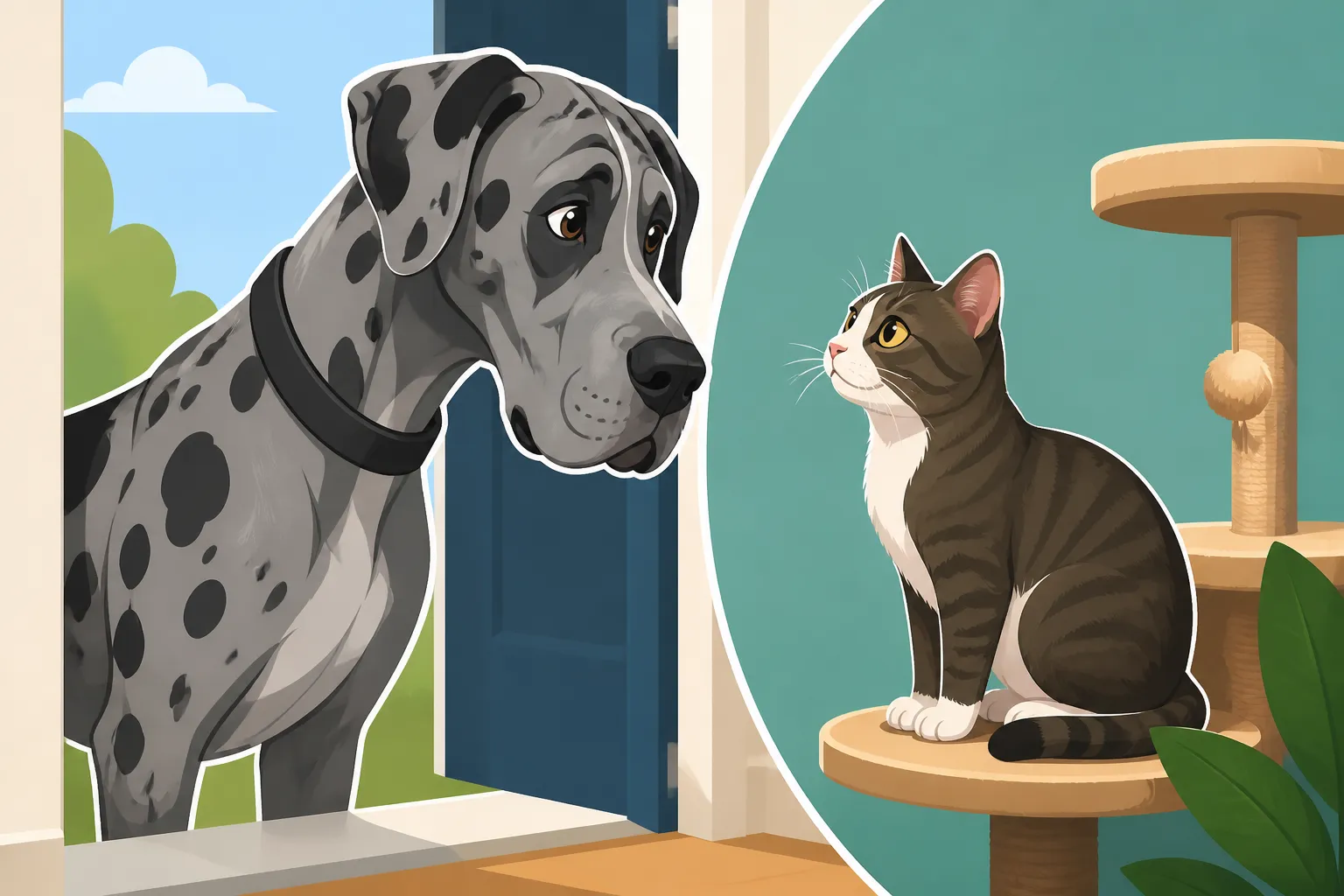
Start by allowing them to see each other from a distance, perhaps through a baby gate or with the Great Dane on leash in one room and the cat freely roaming in another. Keep these initial sessions very short – just a few minutes. If either animal shows signs of stress (hissing, growling, lunging, excessive panting, tail tucked), calmly separate them and try again later. The goal is for them to observe each other calmly. Reward any calm behavior, no matter how small. If your Great Dane looks at the cat and then looks back at you, reward that! If the cat simply sits and stares without running, reward it. The BAXTER & Bella online training program offers fantastic resources and guidance for managing controlled introductions like these, with a focus on positive reinforcement.
Supervised Interaction and Management
As both pets show increasing comfort with visual exposure, you can gradually move to supervised, leashed interactions in the same room. Your Great Dane must remain on a leash throughout these sessions. This isn't just for the cat's safety, but also to teach your Dane impulse control. Start with short durations and always have an exit strategy for the cat. Let the cat approach at its own pace. Never force interaction.
Continue to reward calm behavior from both animals. If the Great Dane lies down and ignores the cat, lavish praise and treats. If the cat walks by without fear, reward. Keep the energy low and calm. Avoid excited voices or sudden movements. Remember that Great Dane puppies, even with the best intentions, can be incredibly clumsy and energetic. What a Great Dane Puppy Must Know by Six Months is a good guideline for early training that will benefit these introductions. Gradually, as they show consistent calm, you can increase the duration of these supervised sessions. Only ever consider removing the leash once you are 100% confident in your Great Dane's obedience and your cat's comfort level, and even then, never leave them unsupervised.
Training and Ongoing Management Strategies
Successfully integrating a Great Dane and a cat isn't a one-time event; it's an ongoing commitment to training, management, and understanding their evolving relationship. Even after initial introductions seem to go well, it's crucial to maintain routines and reinforce positive behaviors. Your role as the household leader is to ensure both animals feel secure and understand the boundaries.
Teaching Crucial Commands to Your Great Dane
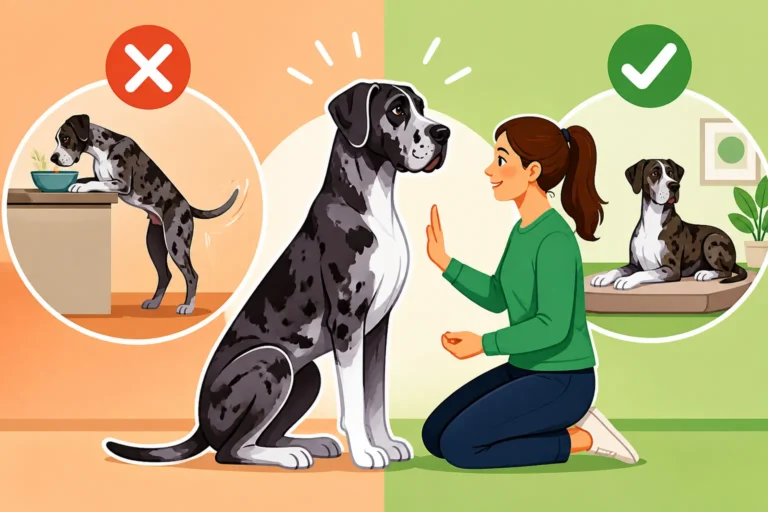
Your Great Dane needs to have a rock-solid foundation in obedience, particularly commands like "leave it," "stay," "off," and "come." "Leave it" is perhaps the most vital command when a cat is involved. This command teaches your Dane to disengage from something it's focused on, whether it's the cat, the cat's food, or even the litter box. Practice this command diligently with various distractions before even attempting it with the cat present. Use high-value Treats a Great Dane Will Work For to make this training rewarding.
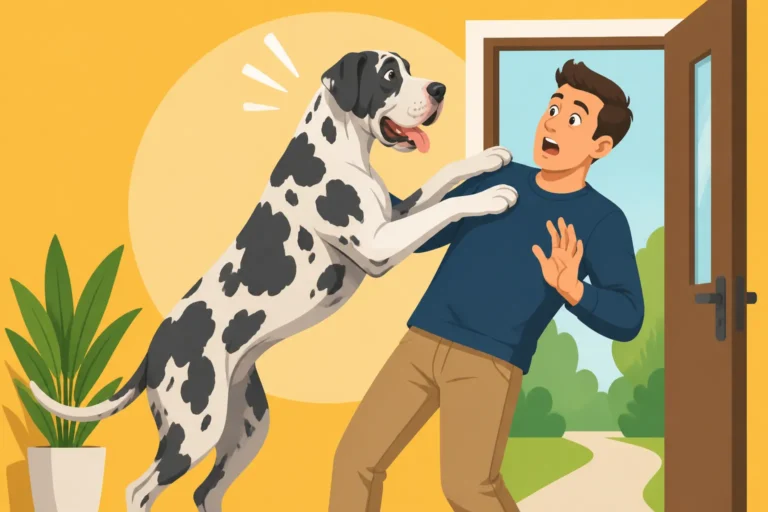
The "stay" command is essential for maintaining distance and control. If your cat is walking by, you can ask your Dane to "stay" in a designated spot, rewarding them for holding still. "Off" is crucial for preventing your Great Dane from jumping up on counters or people, and by extension, on the cat. Stopping a Great Dane Jumping Up on People is a critical skill for any Great Dane owner, especially in a multi-pet household. Consistency and patience are key here. Consider online training platforms like BAXTER & Bella for structured lessons on these commands, as their systematic approach can be very effective for large breeds.
Managing Play and Predatory Instincts
Even the most well-trained Great Dane might have a residual instinct to chase. It's your job to manage this. Never allow your Great Dane to chase your cat, even in "play." What seems like harmless play to a dog can be terrifying and physically dangerous for a cat. If your Dane starts to get too focused or begins to stalk the cat, immediately interrupt the behavior with a firm "leave it" or by redirecting their attention to a toy or a different activity.
Provide your Great Dane with appropriate outlets for its energy and play drive. Long walks (always on leash, of course, as Great Dane Leash Manners at a Hundred and Fifty Pounds are vital), puzzle toys, and structured play sessions with you can help burn off excess energy that might otherwise be directed at the cat. Keep the cat's toys separate from the dog's, and teach your Dane that cat toys are also "leave it" items.
Building Positive Associations
The goal isn't just tolerance; it's for both animals to associate the other's presence with positive experiences. Whenever your Great Dane and cat are in the same room and behaving calmly, reward them both. This could be giving them a special treat, offering verbal praise, or a gentle pet. If your cat ventures closer to the Dane without fear, reward the cat. If your Dane lies calmly while the cat walks past, reward the Dane.
Mealtimes, when safely separated, can also be a time for positive association. Feeding them simultaneously (even if in different rooms or behind gates) helps them associate the other's presence with something enjoyable. Your entire interaction should be focused on making the presence of the other animal a non-threatening, even pleasant, experience. The more positive experiences they share, the stronger their bond (or at least their mutual respect) will become.
Common Challenges and Troubleshooting
Despite your best efforts, integrating a Great Dane and a cat can present its fair share of hurdles. It's important to recognize potential problems early and know how to address them effectively. Sometimes, it feels like two steps forward, one step back, but persistence and understanding are crucial for overcoming these challenges.
When Interactions Go Wrong
Even with careful planning, things can sometimes go awry. A sudden lunge, an unexpected chase, or a fearful swat can happen. If an interaction turns negative, immediately and calmly separate the animals. Do not scold your Great Dane, as this can make them associate the cat with punishment. Instead, remove them from the situation and give them time to decompress in separate, safe spaces.
After a negative incident, take a step back in your introduction process. Revert to scent swapping or visual-only interactions behind a secure barrier. Reassess what might have triggered the negative response. Was the Great Dane overly excited? Was the cat cornered? Did you push the interaction too far, too fast? Learn from the incident and adjust your approach. Patience is truly a virtue here. Remember, Why Great Dane Training Cannot Wait and consistent reinforcement are your best tools.
Addressing Fear and Aggression
Fear is often at the root of aggression in both dogs and cats. If your cat is consistently hiding, hissing, or swatting at your Great Dane, it's a clear sign of fear. Similarly, if your Great Dane is showing signs of predatory aggression (intense focus, low stalking posture, growling, lunging with intent to harm), this is a serious issue that requires immediate attention. For cats, ensure they always have ample escape routes and high perches. Never force a cat to interact or stay in a room if it's clearly distressed.
If you observe persistent fear or aggression from either animal, it's time to seek professional help. A certified professional dog trainer or a veterinary behaviorist can assess the situation, identify triggers, and develop a tailored behavior modification plan. They can provide invaluable guidance and hands-on support, especially with the unique challenges of managing a giant breed like a Great Dane. Do not try to "fix" serious aggression problems on your own, as this can worsen the situation or put one of your pets at risk.
Maintaining Harmony Long-Term
Even after your Great Dane and cat seem to be coexisting peacefully, ongoing vigilance is key. Never assume that because they've been fine for a few weeks or months, they will always be fine without supervision. While you might eventually reach a point where they can be in the same room together without direct intervention, never leave them unsupervised, especially when you are out of the house. Accidents can happen in a split second, even between pets who have lived together for years.
Continue to provide dedicated, safe spaces for your cat. Maintain your Great Dane's training, regularly reinforcing commands. Ensure both animals receive enough individual attention, exercise, and mental stimulation. This helps prevent boredom or jealousy, which can sometimes lead to behavioral issues. Routinely check your home environment to ensure gates are secure, cat trees are stable, and litter boxes and feeding stations remain inaccessible to your Great Dane. By consistently managing their environment and reinforcing good behavior, you can foster a harmonious multi-species home for many happy years.
Disclaimer
This article is for general informational purposes only and does not constitute professional advice. Laws, prices and regulations vary by location and change over time. Consult a qualified professional for guidance on your specific situation.