Great Dane Leash Manners at a Hundred and Fifty Pounds
It's a common, utterly disheartening scene: you're out for what should be a peaceful stroll with your magnificent Great Dane, only to find yourself being dragged down the sidewalk, your shoulder screaming in protest. Managing a powerful, 150-pound dog on a leash requires more than just a strong arm; it demands smart training, the right tools, and an unwavering commitment to consistency. This guide will walk you through the essential strategies and techniques to transform those challenging walks into enjoyable, controlled experiences for both you and your gentle giant.
Understanding the Unique Challenge of Leash Walking a Great Dane
Let's be honest, few dogs present the same physical challenge on a leash as a Great Dane. When you're dealing with a dog that can easily outweigh an adult human, the stakes are significantly higher. It's not just about a minor inconvenience; it's about safety for you, your dog, and anyone you encounter. Ignoring leash manners when your dog is still a cute, manageable puppy can lead to serious problems once they reach their full, colossal size.
The Physics of a Pulling Giant
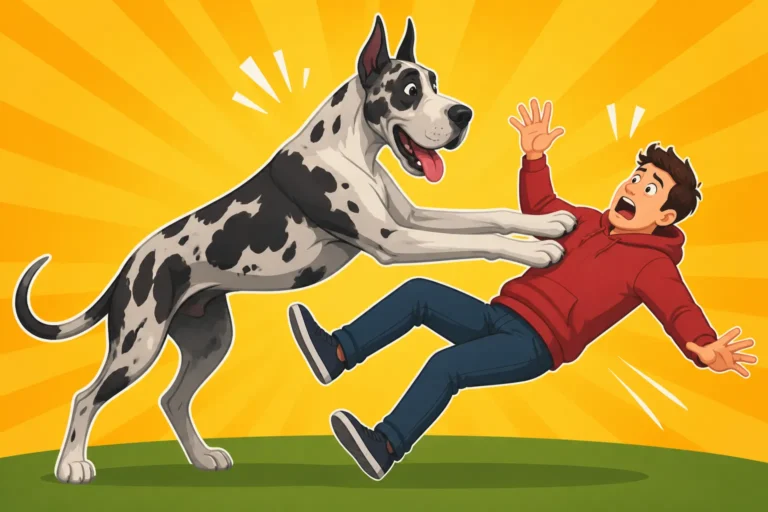
Imagine trying to hold back a small horse by a rope. That's not far from the reality of a determined Great Dane. Their sheer mass, combined with the power of their stride, means that even a slight pull can generate immense force. A dog that weighs 150 pounds and decides to lunge after a squirrel can easily unbalance an unsuspecting handler, leading to falls, rope burns, or even dislocations. It's physics, pure and simple: mass times acceleration equals force. When your Great Dane accelerates, that force can be overwhelming.
This isn't about blaming your dog; it's about understanding the mechanics at play. Their enthusiasm isn't malicious, but their size means their actions have magnified consequences. A small terrier pulling is a nuisance; a Great Dane pulling can be dangerous. We need to respect that power and equip ourselves with strategies that counteract it, rather than just trying to muscle through. The goal isn't to fight their strength but to redirect and teach them how to use their power responsibly.
Why Great Danes Pull So Much
Many owners often wonder why their Great Dane, despite being dubbed a "gentle giant," can be such a terror on the leash. Part of it is instinct and curiosity. The world is a fascinating place, full of smells and sights that a dog's natural inclination is to investigate. When your Dane smells something tantalizing down the block or sees another dog, their impulse control might not be strong enough to override the desire to explore, especially if they haven't been properly trained to defer to you.
Another factor is simply their genetic makeup as a working breed. While today's Great Danes are companions, their ancestors were powerful boar hounds, bred for strength, speed, and endurance. That inherent drive to move, to cover ground, is still very much a part of them. When you add that natural athleticism to a lack of early, consistent training, you've got a recipe for a pulling disaster. They often learn quickly that if they pull, they get to where they want to go faster, reinforcing the undesirable behavior.
Essential Equipment for Leash Training a Great Dane
Before you even think about stepping out the door, it's crucial to have the right gear. Trying to train a 150-pound dog with inadequate equipment is like bringing a butter knife to a sword fight – ineffective and potentially dangerous. The right collar, harness, and leash can make all the difference in gaining control and ensuring safety.
Choosing the Right Collar
For a Great Dane, a standard flat buckle collar, while necessary for ID tags, is rarely sufficient for effective leash training, especially if they're prone to pulling. A strong pull against a flat collar can put undue pressure on their sensitive trachea and neck, leading to coughing, gagging, or even long-term damage. Plus, a determined Dane can often slip out of a poorly fitted flat collar.
This is where a martingale collar often comes into play. It looks like a flat collar but has an extra loop that tightens gently when the dog pulls, preventing them from backing out or slipping free, without choking them like a traditional choke chain. It provides a humane way to give a gentle correction and keep them secure. However, it's important that even a martingale collar isn't used for constant pulling; it's a safety and correction tool, not a substitute for training. For foundational training, you'll still need more.
Effective Harnesses for Giants
When it comes to Great Danes, a front-clip harness is often considered the gold standard for loose-leash training. Unlike back-clip harnesses that can actually encourage pulling by engaging their natural sled-dog reflex, a front-clip harness redirects your dog's momentum. When your Dane pulls, the leash attachment point on their chest causes them to pivot back towards you, making it physically uncomfortable and unproductive for them to pull forward.
Look for harnesses specifically designed for large, deep-chested breeds. They need to be robust, with strong buckles and D-rings, and made from durable materials. Padding around the chest and armpits is also crucial to prevent chafing during walks. Brands that specialize in large-dog gear often offer designs that accommodate a Great Dane's unique build. You can find a wide range of these specialized harnesses available on platforms like Amazon, ensuring you get the right fit and durability. Harnesses and Collars That Control a Great Dane delves deeper into specific types and their uses.
Leash Selection and Length
Forget those flimsy nylon leashes you might use for a smaller dog. A Great Dane requires a heavy-duty leash, usually made of thick nylon, leather, or biothane, with strong, secure hardware. The snap hook connecting to the collar or harness should be robust, designed to withstand the force of a powerful dog. Avoid retractable leashes entirely, as they offer no control over a giant breed and can be incredibly dangerous for both the dog and handler if they suddenly lunge.
For everyday training and walks, a 4-to-6-foot leash is generally ideal. This length provides enough slack for your dog to walk comfortably beside you without tension, while still keeping them close enough for you to maintain control and respond quickly to their movements. A shorter leash might feel more restrictive, leading to more pulling, while a longer one can offer too much freedom, making it harder to manage distractions or unexpected lunges.
| Equipment Type | Best Use for Great Dane | Pros | Cons |
|---|---|---|---|
| Flat Buckle Collar | ID tags, minimal control (not for pulling) | Comfortable, lightweight, easy to put on/take off | No control for pulling, pressure on trachea, easy to slip out |
| Martingale Collar | Prevents slipping, gentle correction for mild pulling | Prevents escape, safer than choke chains, good for security | Still puts pressure on throat if dog pulls hard, not for heavy pullers |
| Front-Clip Harness | Loose-leash training, redirecting pulling | Reduces pulling, comfortable, safe for trachea, good control | Can tangle legs if not fitted correctly, dog can still pull if determined |
| Head Halter (Halti) | Maximum control for strong pullers, prevents lunging | Excellent control, good for reactive dogs, minimal strength needed | Can be uncomfortable for some dogs, requires training to accept |
| Standard 4-6 ft Leash | Everyday walks, training, maintaining close control | Clear communication, direct control, durable if chosen well | Can be heavy for handler, requires consistent training |
| Retractable Leash | Absolutely NOT recommended for Great Danes | (No benefits for Great Danes) | No control, dangerous, can cause severe injuries |
Foundational Principles of Loose-Leash Walking
Successful leash training isn't about magic; it's about consistency, clear communication, and positive reinforcement. You're teaching your Great Dane a new language and a new way to interact with the world while connected to you. This takes time and patience, but the rewards are well worth the effort.
Starting with the Basics: Inside and Out
Before you even dream of a busy park, start your loose-leash training in a low-distraction environment. Your own living room or backyard is perfect. The goal is to teach your Great Dane that walking calmly beside you, with a loose leash, earns rewards. Begin by simply walking a few steps, and the moment the leash is slack, mark the behavior with a verbal cue like "yes!" or a clicker, and immediately offer a high-value treat. Repeat this over and over, gradually increasing the number of steps.
Once they understand the concept indoors, move to a quiet outdoor area, like your driveway or a very calm street. The world is suddenly much more interesting, so expect setbacks. Go back to basics: a few steps, loose leash, reward. If they pull, immediately stop moving. Be a tree. Don't budge until the leash goes slack again. The moment it slackens, even for a second, praise and reward, then start walking again. This teaches them that pulling gets them nowhere, but a loose leash gets them moving forward. For excellent foundational training resources, consider online programs like those offered by BAXTER & Bella, which can provide structured lessons you can follow at home.
The Power of Positive Reinforcement
Great Danes, like most dogs, respond incredibly well to positive reinforcement. This means rewarding desired behaviors rather than punishing unwanted ones. When your Dane walks nicely on a loose leash, let them know! Lavish praise, offer their favorite treats, or even allow a moment to sniff something interesting as a reward. This builds a positive association with walking politely beside you. They learn that being connected to you means good things happen.
Conversely, try to avoid negative reinforcement or punishment. Jerking the leash, yelling, or physical corrections can create fear, anxiety, and a negative association with walks. A fearful or anxious Great Dane is not only harder to train but can also develop behavioral issues. You want your Dane to want to walk nicely with you, not to be afraid not to. This empathetic approach fosters trust and strengthens your bond, making training a much more enjoyable process for both of you.
Consistency is Key
This cannot be stressed enough: consistency is absolutely paramount when training a Great Dane. Every single person who walks your dog must follow the same rules, use the same cues, and apply the same techniques. If one person allows pulling and another doesn't, your Dane will become confused and learn that sometimes, pulling works. This undermines all your hard work.
Make sure everyone in the household is on board with the training plan. Create a set of rules and stick to them. It might feel tedious at first, stopping every time your Dane pulls, but this consistency is what will ultimately solidify good habits. Think of it as building a strong foundation for a very large house; any cracks in the foundation will cause problems down the line. Consistency ensures your Great Dane understands exactly what you expect of them, every time they're on a leash. Getting a Great Dane to Walk on a Loose Leash offers specific exercises to build this consistency.
Effective Training Techniques for Controlling a Pulling Dane
Once you've got the right equipment and a consistent mindset, it's time to put some specific techniques into practice. These aren't just tricks; they're methods designed to communicate clearly with your large dog and teach them the benefits of polite leash walking.
The "Stop and Go" Method
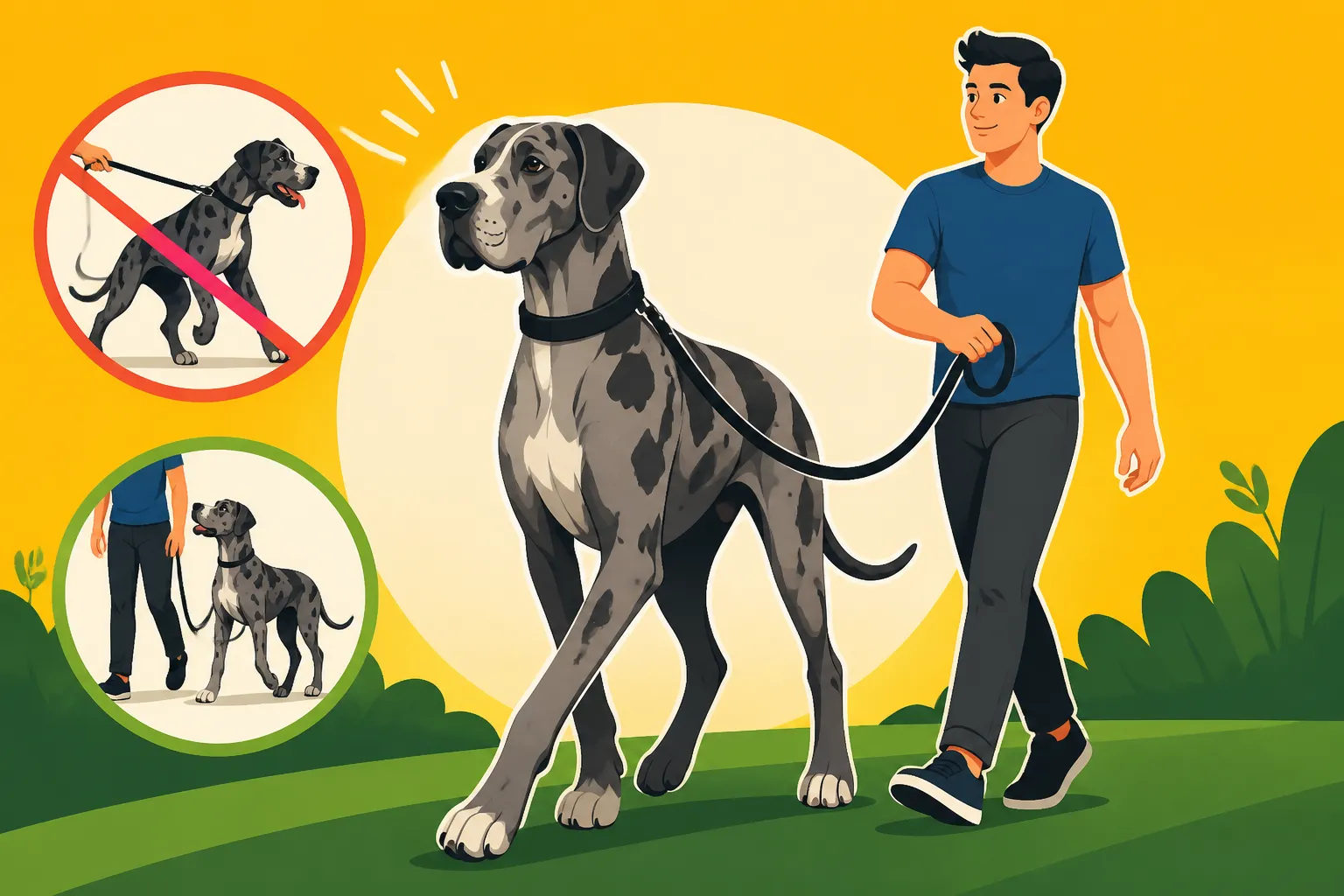
This is one of the most fundamental and effective techniques for teaching loose-leash walking, especially with a strong puller like a Great Dane. The premise is simple: any tension on the leash means the walk stops immediately. The moment your dog puts tension on the leash, you stop dead in your tracks. Don't say anything, don't pull back, just stand like a statue. Your dog will likely turn to look at you, or the leash will go slack as they lose momentum. The instant the leash slackens, say "yes!" or click, give a treat, and start walking again.
The power of this method lies in its clarity. Your Great Dane quickly learns that pulling prevents forward movement, while a loose leash enables it. It's a clear consequence that they can understand. If they start pulling again, you stop again. It requires patience, especially in the beginning, and you might not get very far on your first few attempts. But with persistence, your Dane will connect the dots: loose leash = walk, tight leash = stop. This simple yet profound technique puts the control back in your hands, without needing to exert physical force. Training a Great Dane That Pulls You Off Your Feet highlights the physical demands and how this method helps.
Changing Directions (The "Crazy Eights")
Another excellent way to prevent pulling and keep your Great Dane engaged with you is by regularly changing directions. Instead of walking in a straight line, which often encourages them to surge ahead, randomly turn left, right, or even do a 180-degree turn. The moment you change direction, give a little verbal cue like "this way!" and praise and reward them when they follow and the leash remains loose.
This technique, sometimes called "Crazy Eights" if you're doing tighter loops in a confined space, teaches your Great Dane to pay attention to you rather than fixating on what's ahead. They learn that your movement dictates the path, and they need to stay attuned to your signals. It also helps to break their focus on potential distractions. By being unpredictable, you become more interesting than the environment, fostering a stronger connection and a more engaged walking partner.
Lure and Reward
The "lure and reward" method is perfect for shaping desired behaviors, including walking nicely beside you. Start with a high-value treat in your hand, holding it at your Dane's nose level, just slightly to the side of your leg. Take a step forward, luring your dog to walk with you in the desired position. As they take a step or two, maintaining the loose leash and position, mark and reward them.
Gradually, you'll fade the lure. Instead of holding the treat constantly, you'll just use your empty hand as a guide, and then eventually just your verbal cue and body language. The treat becomes an intermittent reward, used to reinforce exceptionally good behavior or when starting in a new, more distracting environment. This method is fantastic for building muscle memory for the desired "heel" position without relying on physical corrections. It's especially effective in the initial stages of training, building a positive foundation.
"Touch" and "Watch Me" Commands
Two commands that significantly boost leash manners are "Touch" and "Watch Me." The "Touch" command involves holding your hand out and teaching your dog to touch their nose to your palm for a treat. This is incredibly useful for regaining focus, especially when your Dane is distracted. If they're fixated on something ahead, call "Touch!" and when they nose your hand, they've broken their focus and re-engaged with you. Reward them, and then continue your walk.
The "Watch Me" command teaches your Great Dane to make eye contact with you on cue. This is invaluable for preventing problems before they start. If you see another dog approaching or a squirrel scurrying, cue "Watch Me!" The moment they look at your eyes, reward them heavily. This shifts their attention away from the potential distraction and onto you, allowing you to pass calmly. These focus-building commands empower you to proactively manage distractions rather than just reacting to them. The Manners a Great Dane Needs Before It Grows is crucial for introducing these commands early.
Addressing Common Leash Reactivity and Distractions
Even with the best training, Great Danes are still dogs, and the world is full of stimuli that can trigger pulling, lunging, or barking. Addressing these common challenges requires targeted strategies and a deep understanding of your dog's triggers.
Managing Other Dogs and People
One of the biggest challenges for Great Dane owners is managing their dog's reactions to other dogs and people. Due to their size, even a friendly lunge can be intimidating or dangerous. The key here is proactive management and desensitization. If your Dane reacts to other dogs, start by identifying their "threshold"—the distance at which they notice another dog but don't react negatively. Work below that threshold.
For example, if your Dane starts to get tense when another dog is 50 feet away, practice your "Watch Me" or "Touch" commands at 60 feet. Reward them for calm observation of the other dog, or for refocusing on you. Gradually, over many sessions, you can slowly decrease the distance as long as your dog remains calm. If they react, you've gone too close, too fast; increase the distance again. This counter-conditioning teaches them that other dogs and people are cues for good things (treats from you) rather than reasons to react. A Great Dane That Lunges at Other Dogs provides more detailed advice on this specific issue.
Squirrels, Birds, and Other Critters
Ah, the nemesis of many a well-behaved dog: the elusive squirrel. The prey drive is strong in many Great Danes, and the sudden darting movement of a squirrel or bird can trigger an immediate, powerful lunge. Trying to physically hold back a 150-pound dog mid-lunge is a losing battle and can lead to injury.
The best strategy is anticipation. Learn to read your dog's body language. Do their ears perk up? Does their tail go rigid? Do they suddenly stare intently? These are signs they've spotted something. The moment you see these cues, or even better, if you spot the critter before they do, immediately use your "Watch Me" or "Touch" command. Distract them before they launch. If they do lunge, use the "Stop and Go" method to regain composure. Over time, they'll learn to look to you for guidance when they see these tempting distractions.
Environmental Overload
Sometimes, it's not a specific trigger but the sheer overwhelming nature of a busy environment that causes your Great Dane to pull or become anxious. A crowded street, a bustling farmers market, or a park full of children and loud noises can be too much. For a sensitive Dane, this "environmental overload" can lead to frantic pulling as they try to escape or process everything.
In these situations, it's vital to advocate for your dog. Don't force them into situations they're not ready for. Start in quieter environments and slowly introduce them to more complex ones, keeping sessions short and positive. If you find yourself in an overwhelming situation, try to find a quiet corner, let your Dane collect themselves, and then work on refocusing with simple commands like "sit" or "watch me." Your goal is to build their confidence and tolerance for various environments, not to flood them with stimuli.
Maintaining Good Leash Manners Throughout Your Dane's Life
Leash training isn't a one-and-done event; it's an ongoing commitment, especially with a breed whose physical power is so significant. As your Great Dane matures, their needs and challenges may change, requiring continued attention to their leash manners.
Continued Practice and Refreshers
Even the most perfectly trained Great Dane can get rusty if not regularly practiced. Just like a human learning a new skill, a dog needs consistent refreshers. Integrate short training sessions into your daily walks. Don't wait for your dog to start pulling before you practice loose-leash walking; actively reward good behavior even when they're already doing well.
Vary your walking routes to expose your Great Dane to different environments and distractions, reinforcing their good manners in new contexts. The occasional dedicated "training walk," where the primary focus is on practicing cues and staying connected, can be incredibly beneficial. Think of it as keeping their education current; without ongoing learning, old habits can slowly creep back in. Whether a Grown Great Dane Learns New Manners discusses how even adult Danes can benefit from refreshers.
Troubleshooting Common Setbacks
It's inevitable that you'll encounter setbacks. Your Great Dane might have a day where they suddenly seem to forget everything, or a new, irresistible distraction might cause a major pulling incident. Don't get discouraged. Setbacks are part of the learning process for both of you.
When a setback occurs, first, don't panic or get angry. That won't help. Instead, calmly assess the situation. What was the trigger? What was the environment like? Did you ask too much too soon? Then, go back to basics. If they pulled, revert to the "Stop and Go" method. If they were reactive, increase the distance from the trigger. Sometimes, it means taking a step back in your training progression to reinforce a foundational skill. It's like reviewing an old lesson before moving on to the next chapter.
Senior Danes and Changing Needs
As your Great Dane ages, their physical capabilities and needs will change. An older Dane might not have the same stamina, or they might develop arthritis or other joint issues. What was once an easy walk might become more challenging. It's crucial to adjust your expectations and training methods to accommodate their senior years.
Loose-leash walking is still important for control and safety, but the pace and duration of walks may need to be modified. Be attentive to any signs of discomfort—slowing down, limping, or reluctance to move. You might need to use a comfortable, padded harness to avoid any pressure on sensitive areas, and choose softer walking surfaces. Continuing to praise and reward their efforts, even if they're moving slower, reinforces their cooperation and ensures walks remain a positive experience throughout their golden years. Caring for a Great Dane Past Six offers valuable insights into adapting care for older Danes.
Safety First: Preventing Injuries for Both Handler and Dane
When you're dealing with a dog of a Great Dane's size, safety is paramount. A sudden lunge or fall can have serious consequences for both the dog and the human on the other end of the leash. Prevention and proper technique are your best friends.
Avoiding Falls and Injuries
Falls are a very real risk when walking a powerful Great Dane. A sudden lunge, especially if you're caught off guard or on uneven ground, can easily pull you off your feet. Always maintain awareness of your surroundings and your dog's cues. Wear appropriate footwear with good grip. Avoid carrying heavy bags or distracting yourself with your phone while walking. Your full attention should be on your dog and the environment.
When holding the leash, never wrap it around your hand or wrist, as a strong pull can lead to severe rope burns or even fractures. Instead, hold the leash firmly with your hand through the loop, allowing the leash to slide through your fingers in case of an emergency, or a quick release if absolutely necessary. Using a sturdy belt attachment can also help distribute the force across your core, rather than concentrating it in your arm, making it easier to manage a sudden pull.
Protecting Your Dane's Joints and Body
Great Danes are prone to a number of joint issues, including hip and elbow dysplasia, and their sheer size means extra strain on their musculoskeletal system. Incorrect leash techniques, such as constant jerking or allowing them to pull and lunge repeatedly, can exacerbate these problems and lead to long-term pain or injury.
A properly fitted front-clip harness is crucial here, as it distributes pressure across their chest and shoulders, rather than concentrating it on their neck or throat. Avoid any equipment that causes pain or discomfort, which can make your dog resistant to walking and potentially lead to further physical damage. Gentle, consistent loose-leash training ensures that your Dane can move naturally and comfortably, protecting their precious joints for as long as possible. Great Dane Hips, Elbows and Growing Joints discusses the importance of joint health.
Being a Responsible Giant Breed Owner
Owning a Great Dane comes with a special responsibility to the public. Their size alone can be intimidating to some people, regardless of their temperament. A well-behaved, leash-trained Great Dane is an ambassador for the breed. An out-of-control Dane, however, can reinforce negative stereotypes and create fear.
Beyond personal safety, responsible ownership means ensuring your dog is not a nuisance or a threat to others. This includes keeping them under control on a leash in public spaces, picking up after them, and being mindful of people who may be nervous around large dogs. A calm, well-mannered Great Dane on a loose leash not only makes your life easier but also helps to promote positive perceptions of this wonderful breed within the community.
When to Seek Professional Help
Even the most dedicated Great Dane owner might encounter challenges that feel overwhelming or beyond their capabilities. There's absolutely no shame in seeking professional guidance, especially when dealing with a powerful dog whose behaviors can have serious implications.
Recognizing Stubborn or Reactive Behaviors
You've tried the techniques, you've been consistent, but your Great Dane is still consistently pulling, lunging, or displaying reactivity (barking, growling) towards other dogs or people. Perhaps their behavior is escalating, or you're feeling frustrated and losing confidence. These are all signs that it might be time to bring in a professional. Sometimes, a fresh pair of eyes and expert guidance can pinpoint underlying issues or suggest strategies you haven't considered.
A professional dog trainer, particularly one experienced with giant breeds and positive reinforcement, can assess your specific situation, identify triggers, and develop a customized training plan. They can teach you more advanced techniques, help you build your handling skills, and provide the confidence boost you need to overcome those persistent challenges. Remember, a trainer isn't just for "bad" dogs; they're for owners who want to deepen their understanding and bond with their canine companions.
Finding a Qualified Trainer for a Great Dane
Not all dog trainers are created equal, and finding one with experience handling a Great Dane's size and specific breed traits is crucial. Look for trainers who:
- Specialize in positive reinforcement methods: Avoid anyone who advocates for harsh physical corrections, choke chains, prong collars, or intimidation tactics, as these can be detrimental to a sensitive Great Dane.
- Have experience with large and giant breeds: They'll understand the unique challenges of training a 150-pound dog and won't be intimidated by your Dane's size.
- Offer in-home consultations or private lessons: Group classes can be overwhelming for reactive dogs, and in-home sessions allow the trainer to observe your dog in their natural environment.
- Are certified by reputable organizations: Look for certifications like CPDT-KA (Certified Professional Dog Trainer – Knowledge Assessed) or those from academies that emphasize modern, force-free methods.
- Provide clear communication and realistic expectations: A good trainer will be transparent about the training process, timeline, and what you can realistically achieve.
Don't hesitate to interview several trainers, ask for references, and observe a session if possible. Finding the right partner in your Great Dane's training journey is an investment in a happier, safer future for both of you. You might find resources to find such trainers through communities associated with online training programs like BAXTER & Bella. Finding a Trainer Comfortable With a Great Dane is a good reference for this search.
Disclaimer
This article is for general informational purposes only and does not constitute professional advice. Laws, prices and regulations vary by location and change over time. Consult a qualified professional for guidance on your specific situation.