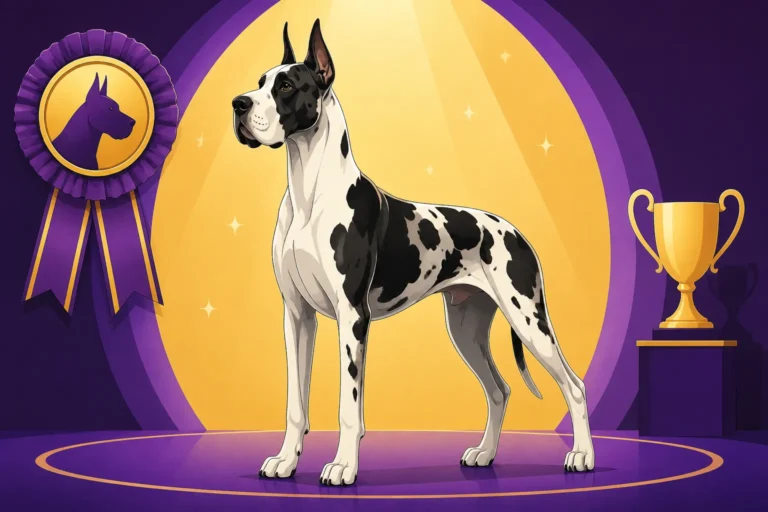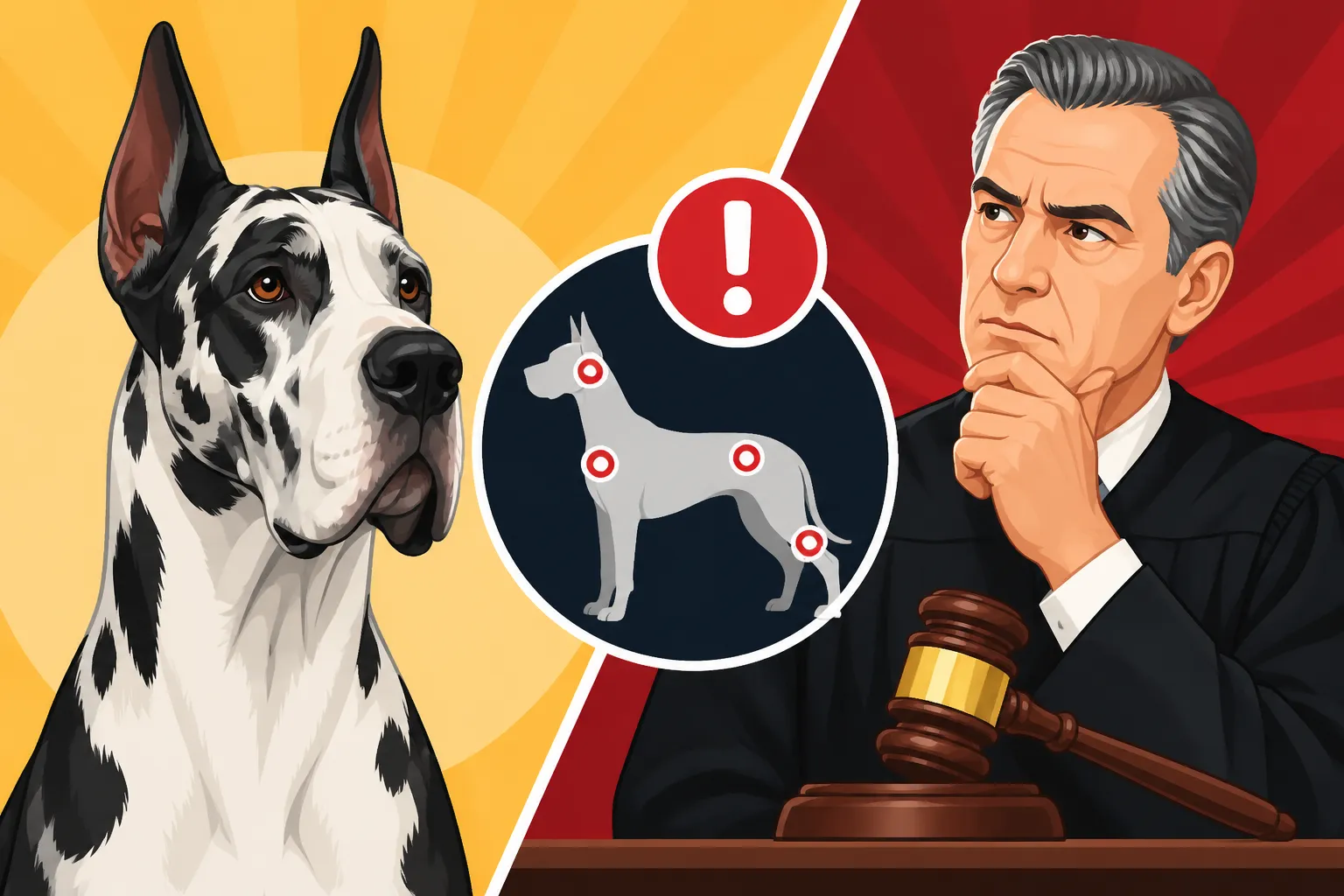
The Great Dane Faults a Judge Cannot Ignore
It can be incredibly disheartening to dedicate countless hours to raising, training, and conditioning your magnificent Great Dane, only to have their show ring dreams dashed by a seemingly minor detail. The truth is, judges meticulously scrutinize every aspect of a dog against the breed standard, and certain deviations, often referred to as "faults," can severely impact a dog's placement. This comprehensive guide will illuminate the specific physical and temperamental characteristics that judges simply cannot overlook, helping you understand the nuances that define an exceptional Great Dane.
The Essence of Form: General Appearance and Proportionality Faults
When a judge looks at a Great Dane, they're not just seeing a big dog; they're envisioning the "Apollo of Dogs," a creature of regal bearing, strength, and elegance. Any departure from this ideal balance and proportion is immediately flagged. It's about how all the pieces fit together to create a harmonious and functional whole.
Deviations in Size, Substance, and Bone
One of the first things a judge assesses is whether a Great Dane meets the standard for size and substance. While "giant" is certainly part of their appeal, there's a specific range that defines the breed. A Great Dane that is noticeably smaller than the minimum height, or appears too lightly boned, will often be penalized. This isn't just an aesthetic preference; insufficient bone suggests a lack of the power and stamina needed for the breed's historical role as a formidable hunter. You might have a perfectly healthy dog, but if it looks frail or delicate next to other Danes, it will stand out for the wrong reasons.
Conversely, a Great Dane that is excessively bulky, coarse, or overdone in bone can also be a fault. The standard calls for elegance and athleticism, not a lumbering, heavy build. A dog that appears too thick in body or too heavy in the head loses the refined contours that make the Great Dane so distinctive. Imagine a dancer who is too muscular to move gracefully – it disrupts the desired flow. The balance is critical; they need to be substantial without being clumsy, powerful without being ponderous. Judges are looking for a dog that feels solid and well-built, but one that can still move with undeniable grace and agility. The Minimum Height a Great Dane Must Reach is a key benchmark here.
Imbalance and Lack of Harmony
Beyond individual components, the overall balance and harmony of the Great Dane are paramount. The breed standard describes a dog that is nearly square in proportion, meaning the length of the body from the point of the shoulder to the point of the buttock should be approximately equal to the height from the highest point of the shoulder to the ground. Deviations from this can create a dog that looks "long-backed" or "short-coupled," neither of which is desirable. Think about a finely crafted sculpture; every part flows into the next seamlessly.
A judge will look for a dog where the neck, body, and legs appear in perfect proportion. A Great Dane with a very long neck but a short back, or one with a massive head on a fine neck, would immediately lose points for imbalance. These disproportions aren't just cosmetic; they affect the dog's ability to move efficiently and perform. A dog with a faulty backline, perhaps a sway back or a roach back, won't have the structural integrity to carry itself with the required dignity and power. The goal is an athletic build that demonstrates power without sacrificing elegance, where every part of the dog complements the rest. The Great Dane the Show Ring Is Looking For precisely details these expectations.
The Distinctive Head: Where Expression Resides
The Great Dane's head is often described as its signature, a hallmark of the breed's intelligence and noble character. A judge will spend considerable time evaluating its shape, proportions, and the expression it conveys.
Faults of the Muzzle, Lips, and Bite
The muzzle of a Great Dane is a critical feature, needing to be deep, broad, and square, but never coarse. A "snipey" or pointed muzzle, one that tapers too sharply or lacks depth, is a serious fault. This type of muzzle would have hindered the breed's original purpose of holding wild boar, indicating a lack of functional strength. The lips should be clean and tight, covering the lower jaw without excessive looseness or "flews" (drooping, pendulous lips). While some drool is expected in such a large breed, particularly after drinking, excessive, constant slobber due to overly loose lips is not desirable in the ring.
The bite is another non-negotiable aspect. A perfect scissor bite, where the outer side of the lower incisors just touches the inner side of the upper incisors, is required. An undershot bite (lower jaw protrudes) or an overshot bite (upper jaw protrudes) are serious faults, with extreme cases being disqualifications. Even a level bite, where incisors meet edge-to-edge, is considered a fault, as it can lead to premature wear of the teeth. These bite issues can affect the dog's ability to grasp and chew effectively. The Great Dane Head the Standard Wants goes into more detail on the ideal characteristics.
Incorrect Eye and Ear Characteristics
The eyes are often called the windows to the soul, and for a Great Dane, they should convey an intelligent, friendly, and confident expression. Judges look for medium-sized, deep-set, dark eyes with tight lids. Round eyes, light-colored eyes (especially yellow or "bird of prey" eyes), or eyes that are too close together or too wide apart are considered faults. Light eyes, in particular, detract from the noble expression. Issues like entropion (eyelids rolling inward) or ectropion (eyelids rolling outward) are not only faults but can also cause discomfort and health problems for the dog.
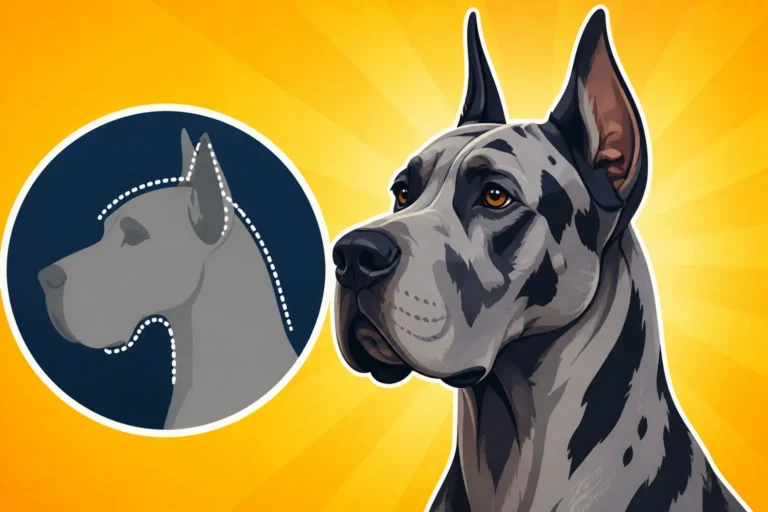
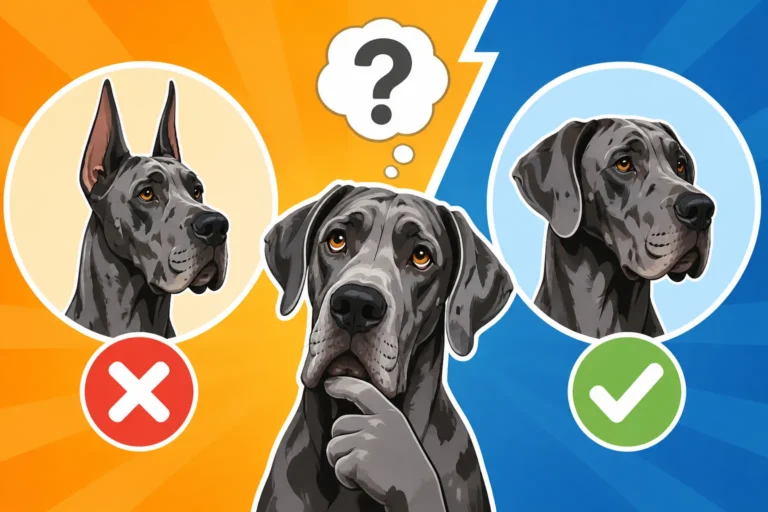
While ear cropping is a traditional practice in some regions and for show, many Great Danes are now shown with natural ears. If natural, they should be of medium size, set high, and carried folding close to the cheek. Ears set too low, or those that fly out ("hound ears"), disrupt the desired head profile. Regardless of whether they are cropped or natural, the set and carriage contribute significantly to the Great Dane's overall head picture and expression. Ensuring proper eye and ear health is also key; you can find specialized wipes and gentle cleansers on platforms like Chewy to keep these areas clean and free from irritation. Great Dane Eyelid and Eye Problems explores these issues further.
Movement and Structure: Grace in Motion
A Great Dane is a working dog at heart, and its structure is intrinsically linked to its ability to move with power, agility, and endurance. A judge doesn't just want a dog that looks good standing still; they want one that moves beautifully.
Undesirable Gaits and Lack of Reach/Drive
The ideal Great Dane gait is long, powerful, and unhindered, characterized by a smooth, ground-covering stride that conserves energy. The forelegs should reach out well in front, and the hind legs should drive powerfully from behind, creating a sense of effortless motion. Faults in gait are numerous and can include:
- Crabbing or Sidewinding: The dog moves at an angle, rather than straight forward, suggesting a structural imbalance.
- Hackney Gait: High-stepping front legs, like a hackney horse, which is inefficient and not typical for a Great Dane.
- Choppy or Short Strides: Lacking the necessary reach and drive, making the movement appear stiff or restricted.
- Paddling or Weaving: Front paws swinging out or crossing over, indicating issues with shoulder or elbow placement.
- Cow-hocked or Bow-legged: Hind legs turning inward or outward, affecting stability and power.
These gait problems are often direct indicators of underlying structural faults, such as incorrect angulation in the shoulders or hips, weak pasterns, or splayed feet. A Great Dane that cannot move efficiently wouldn't have been effective in its original role, and it signals a departure from the functional design of the breed. The Long Reaching Stride a Great Dane Shows details the preferred movement. It's often during these moments of movement that judges truly see a dog's overall soundness. If you've ever seen a Great Dane with a really strong gait, you'll know it's a breathtaking sight that speaks volumes about its underlying construction. A Great Dane That Stumbles on Its Back Legs would certainly be a major fault in the ring.
Backline and Tail Set Anomalies
The topline of a Great Dane should be firm and level, extending from the strong, muscled neck to the tail set. A "roach back," where the back is excessively arched over the loin, or a "sway back" (also known as a soft or dipped back), where the topline sags behind the shoulders, are significant faults. Both indicate structural weakness that can affect the dog's athleticism and overall soundness. A strong, level topline is essential for carrying weight and maintaining powerful movement.
The tail is a natural extension of the topline and should be set high, continuing the curve of the croup. It should be thick at the base and taper to a fine point, carried in a graceful curve but never curled over the back (a "gay tail") or tucked excessively between the legs unless under duress. A tail that is too short, kinked, or shows evidence of having been previously injured or broken will also be faulted. The tail acts as a counterbalance during movement, and its correct set and carriage are important for both balance and breed aesthetics.
Temperament: The Gentle Giant's True Nature
While physical attributes are critical, the Great Dane's temperament is equally, if not more, important. The breed is famously known as the "Gentle Giant," and a judge looks for a dog that embodies this reputation.
Signs of Shyness or Aggression
A true Great Dane should be courageous, friendly, and confident, demonstrating a stable and reliable character. Any sign of extreme shyness—such as cowering, backing away from the judge, or fear-biting—is a serious fault. This isn't just about show manners; it speaks to the core temperament of the dog. A dog that is fearful is unpredictable, and given the Great Dane's immense size, a stable temperament is absolutely non-negotiable for safety and breed integrity.
Similarly, unprovoked aggression toward people or other dogs is a disqualifying fault. While a Great Dane should be alert and protective of its family, it should never be vicious or overtly aggressive without cause. A judge will be looking for a dog that allows examination calmly, even if it might be a little reserved with strangers. A Dane that lunges, growls, or barks excessively out of fear or aggression would immediately be excused from the ring. A Great Dane That Is Anxious Rather Than Gentle highlights how anxiety can manifest and be perceived as a fault. This careful evaluation ensures that the breed maintains its reputation as a safe and loving companion. It's not uncommon for owners to use calming treats from Chewy for their dogs, especially during stressful show environments, to help them maintain composure. Whether a Great Dane Ever Shows Aggression is a critical point for any owner.
Lack of Self-Composure and Alertness
Beyond overt shyness or aggression, a judge also wants to see a Great Dane that exhibits self-composure and an intelligent alertness. A dog that appears lethargic, overly distracted, or simply uninterested in its surroundings lacks the spark and presence expected of the breed. They should be calm and dignified but also aware of their environment, responding appropriately to cues from their handler and showing an inherent intelligence.
This doesn't mean they need to be hyper or constantly "on," but rather possess an innate dignity and a thoughtful awareness. A judge might perceive a dog that is unresponsive or dull as lacking the desired breed character. The ideal Great Dane has a quiet confidence, able to stand still for examination, trot with purpose, and maintain an engaged, intelligent expression.
Color and Markings: Beyond the Acceptable Palette
Great Danes come in a magnificent array of colors, but the breed standard is very precise about what is acceptable and what constitutes a fault or even a disqualification. Color faults are often black and white (no pun intended) in the show ring, and judges cannot ignore them.
Non-Standard Colors and Patterns
The accepted Great Dane colors are Fawn, Brindle, Blue, Black, Harlequin, Mantle, and Merle. Any Great Dane presented in the show ring with a color or pattern that falls outside of these seven recognized varieties is considered a fault, and in many cases, a disqualification. For example, solid white Great Danes, or "double merles" that exhibit excessive white, are often associated with serious health issues like deafness and blindness, and are typically disqualified from the ring. These colors are not simply aesthetic choices; they can be indicators of irresponsible breeding practices that prioritize unusual appearance over health.
Similarly, dilute colors that are not recognized blues (e.g., Isabella or Lilac) are considered faults. The standard is very specific about the depth and purity of each accepted color. A washed-out fawn or a dusty-looking black would be faulted compared to a rich, deep hue. Understanding the genetics behind these colors, and why certain combinations are actively avoided by ethical breeders, is crucial for anyone interested in the breed. Why a White Great Dane Is Often Deaf is a particularly important read on this topic.
Incorrect Markings and Disqualifications
For patterned coats like Harlequin and Mantle, the specific distribution and type of markings are as important as the base color.
- Harlequin: Requires a pure white base coat with well-distributed, irregular black torn patches over the entire body. Grey patches, or an excessive amount of small, fine black spots (ticking), are considered faults. A Harlequin that lacks the distinctive torn patches or has too much solid black area would not meet the standard.
- Mantle: Described as black with a solid black blanket extending over the body, with a white blaze on the muzzle, a white collar, white chest, white legs, and a white-tipped tail. Any deviation from this precise pattern, such as a broken white collar or an absence of white on the legs or tail tip, is a fault. Too much white on the body breaking up the black blanket is also undesirable.
Other general marking faults can include excessive white on an otherwise solid-colored Dane (Fawn, Brindle, Blue, Black) where only small white markings on the chest and toes are sometimes permitted. Disqualifications for color and markings are usually reserved for extreme departures from the standard, such as albinism, or coat patterns like "piebald" that do not conform to any recognized variety. These rules ensure the consistency and health of the breed, discouraging fads that might compromise genetic integrity. What Puts a Great Dane Out of the Ring details many of these disqualifications.
Here's a quick look at some key Great Dane traits and how they might be judged:
| Trait | Acceptable (Ideal) | Minor Fault | Serious Fault / Disqualification |
|---|---|---|---|
| Temperament | Confident, friendly, alert, composed | Reserved, slightly shy initially | Extreme shyness, unprovoked aggression |
| Muzzle | Deep, broad, square | Slightly tapered, minor flews | Snipey, weak, overly loose flews |
| Bite | Scissor bite | Level bite | Undershot, overshot (can be disqualifying) |
| Eye Color | Dark brown, medium size, tight lids | Slightly lighter brown | Yellow, blue, round, loose lids |
| Topline | Firm, level | Slight dip behind shoulders | Roach back, sway back |
| Gait | Powerful, long-reaching, effortless | Slightly close at rear, minor crabbing | Choppy, hackney, cow-hocked, severely crabbing |
| Coat Color (Non-Harlequin/Mantle) | Rich, deep Fawn/Brindle/Blue/Black | Dull tone, small white markings not standard | Non-standard colors (e.g., solid white, merle on fawn) |
| Harlequin Markings | Clear, torn black patches on pure white base | Grey patches, light ticking | Excessive ticking, too much solid black, lack of patches |
| Mantle Markings | Solid black blanket, specific white markings | Broken white collar, indistinct white markings | Missing required white markings, excessive white on body |
Disclaimer
This article is for general informational purposes only and does not constitute professional advice. Laws, prices and regulations vary by location and change over time. Consult a qualified professional for guidance on your specific situation.