The Neck Condition That Trips a Great Dane Up
It’s truly heart-wrenching to watch your magnificent Great Dane, a picture of grace and power, suddenly falter, stumble, or even collapse. This isn't just a sign of clumsiness; it can be a terrifying indicator of a serious neurological issue brewing in their neck. This comprehensive guide is here to shed light on Cervical Spondylomyelopathy, commonly known as Wobbler Syndrome, a condition that frequently trips up our beloved giants, causing concern and distress for their devoted families.
Understanding Wobbler Syndrome in Great Danes: More Than Just a Clumsy Gait
When you see a Great Dane, you see strength and elegance, but beneath that impressive exterior, there are some unique vulnerabilities, especially concerning their fast-growing skeletal structure. Wobbler Syndrome is one of those significant concerns that can profoundly impact their quality of life. It’s a complex neurological disorder that affects the cervical (neck) spine, leading to compression of the spinal cord and/or the nerve roots. The result? A distinctive, often distressing, wobbly gait and significant neurological deficits.
What is Cervical Spondylomyelopathy (CSM)?
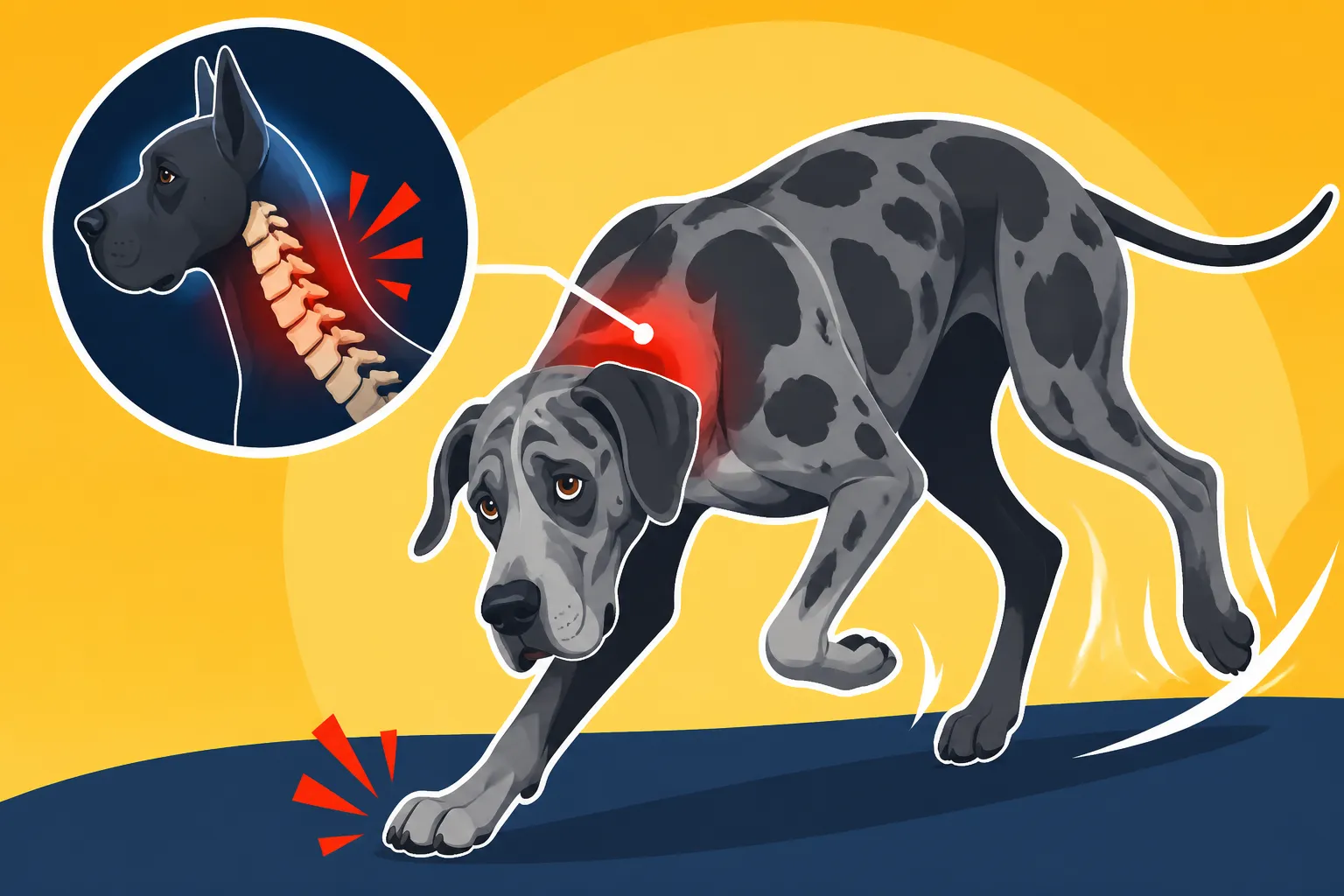
Cervical Spondylomyelopathy, or CSM, is a fancy medical term for a condition that basically means there's something pressing on the spinal cord in your dog's neck. Think of the spinal cord as the superhighway for all the messages going from your dog's brain to the rest of its body, and vice versa. When that highway gets squeezed, those messages can't get through clearly, or sometimes not at all. This compression can happen for various reasons – bone abnormalities, thickened ligaments, disc herniations, or even a combination of these factors – all occurring in the cervical vertebrae. It's not a sudden injury in most cases, but rather a progressive issue that worsens over time if left unaddressed. The degree of compression dictates the severity of symptoms, from mild unsteadiness to complete paralysis. It’s a condition that demands careful attention and a thorough understanding from any Great Dane owner.
Why Great Danes Are Particularly Susceptible
Great Danes, along with other large and giant breeds like Doberman Pinschers and Borzoi, have a disproportionately high incidence of Wobbler Syndrome compared to smaller dogs. This isn't just bad luck; it's deeply tied to their genetics and their rapid growth rate. Their cervical vertebrae are naturally larger and can be prone to developmental abnormalities. As a Great Dane puppy grows at an incredible speed, their bones, joints, and ligaments in the neck region undergo immense stress and rapid changes. This accelerated growth can sometimes lead to malformations of the vertebrae, an overgrowth of surrounding soft tissues, or an instability in the vertebral column that predisposes them to spinal cord compression. It's a cruel irony that their impressive size, a hallmark of the breed, is also a significant risk factor for this debilitating condition. This genetic predisposition means that even with the best care, some Danes are simply more likely to develop Wobblers.
We delve deeper into why Great Dane neck vertebrae pinch the cord in another post, but the short version is often related to these developmental quirks. Early screening and careful observation are crucial because the foundation for this condition is often laid during those intense growth spurts.
The Different Forms of Compression
Wobbler Syndrome isn't a single, uniform condition; the way the spinal cord gets compressed can vary, and understanding these differences is important for diagnosis and treatment. Generally, there are two main types of compression, though they can overlap.
The first is disc-associated compression (DA-CSM), often seen in older, middle-aged Great Danes (though still possible in younger ones). This occurs when one or more intervertebral discs, the cushions between the vertebrae, protrude or herniate, pressing on the spinal cord. It's similar to a "slipped disc" in humans. This type of compression tends to be dynamic, meaning it might worsen with certain neck movements.
The second type is osseous-associated compression (OA-CSM), more commonly seen in younger, rapidly growing Great Danes, typically under two years old. This involves abnormalities in the vertebrae themselves, such as malformed bone, or hypertrophy (overgrowth) of the surrounding ligaments and joint capsules. These bony or ligamentous changes narrow the spinal canal, compressing the cord. This compression is often more static, present regardless of neck position, but can also have dynamic components. Sometimes, the spinal canal is simply too narrow congenitally. The distinction between these types guides the veterinary neurologist in recommending the most appropriate diagnostic tools and potential surgical strategies.
Recognizing the Subtle and Overt Signs: Is Your Dane Stumbling?
Spotting Wobbler Syndrome can be tricky because the initial signs can be incredibly subtle, easily mistaken for general clumsiness or an awkward phase of growth. However, as the compression progresses, the symptoms become more pronounced and alarming. Being vigilant and knowing what to look for can make a huge difference in seeking timely intervention.
Early Indicators You Might Miss
It's natural to think a giant puppy might be a bit awkward as it navigates its rapidly changing body, but some early indicators of Wobbler Syndrome can hide in plain sight. You might notice your Great Dane being slightly less coordinated, perhaps taking wider turns, or being a little hesitant on stairs or when getting up. They might seem a bit stiffer in their neck, carrying it lower than usual, or showing reluctance to lift their head high for a treat. A very subtle sign can be uneven wear on their nails, especially the hind ones, as they might be scuffing their back nails on the ground without realizing it.
These early signs are often intermittent, appearing and disappearing, which makes them easy to dismiss. Owners might attribute it to a minor sprain or just a growth spurt. However, if you observe a recurring pattern of mild instability, a slight change in their normally confident stride, or any unusual stiffness, it's worth a conversation with your vet. Catching these initial whispers of trouble can be key.
The Classic "Wobbly" Gait and Rear Leg Weakness
The hallmark symptom of Wobbler Syndrome is the characteristic "wobbly" or drunken-like gait, often more pronounced in the hind limbs than the front. This is where the name "Wobbler" truly comes from. You might observe your Great Dane taking unusually wide steps with their back legs, almost as if they're trying to overcompensate for instability. Their hindquarters might sway, and they might appear off-balance, struggling to maintain a straight line. This uncoordinated movement, technically called ataxia, stems directly from the interrupted nerve signals caused by the spinal cord compression.
Often, the rear legs are affected more severely and earlier than the front. This is because the nerve pathways to the hind limbs are more superficial in the spinal cord, making them more vulnerable to even mild compression. As the condition advances, you might see a significant weakness in their hindquarters, making it difficult for them to stand up from a lying position, or they might even drag their back paws. We've got more information on what to do if you notice a Great Dane that stumbles on its back legs. This progressive rear limb ataxia is usually the clearest sign that something serious is happening.
Other Neurological Symptoms and Pain Signals
Beyond the obvious gait issues, Wobbler Syndrome can manifest in several other ways, including clear signs of pain. Some Great Danes will exhibit neck pain, which might show as yelping when touched around the neck or shoulders, holding their head in an unusual position, or a general reluctance to move their head and neck. They might become withdrawn or irritable due to chronic discomfort. You might also notice muscle atrophy, particularly in their shoulders, as the nerve supply to those muscles becomes compromised.
In more severe cases, the front legs can also be affected, though often appearing as a shorter, stiffer stride, sometimes described as a "two-engine gait" where the front and back don't seem to synchronize. Some dogs might even collapse intermittently, especially after exercise. In rare instances, severe compression can lead to partial or complete paralysis. It's vital to recognize that the array of symptoms can be broad, and any deviation from your Great Dane's normal movement or behavior warrants immediate veterinary attention. The first Wobbler signs in a Great Dane are not always straightforward, making owner observation incredibly important.
The Diagnostic Journey: Pinpointing the Problem
Once you've noticed concerning symptoms, the next step is a thorough diagnostic process to confirm Wobbler Syndrome and, crucially, identify the exact location and nature of the spinal cord compression. This isn't always a quick process; it often requires a combination of clinical examination and advanced imaging to get a clear picture.
Initial Veterinary Examination and Neurological Assessment
When you bring your Great Dane to the vet with suspected Wobbler Syndrome, the first thing they’ll do is a comprehensive physical and neurological exam. This isn't just a quick peek; it's a methodical assessment designed to pinpoint neurological deficits. The vet will observe your dog's gait, paying close attention to how they walk, turn, and respond to various tests. They'll check reflexes in all four limbs, assess muscle tone, and look for any signs of pain or sensitivity in the neck and spine. They might try to elicit pain responses by gently manipulating the neck.
During this initial exam, your vet will look for proprioceptive deficits, which means checking if your dog knows where its paws are in space. For example, they might flip a paw over and see how quickly your Great Dane corrects it. A slow or absent correction is a strong indicator of neurological issues. While this initial assessment can strongly suggest a spinal cord problem in the neck, it can't definitively diagnose Wobbler Syndrome or its specific cause. It serves to localize the problem and guide the next steps in the diagnostic journey.
Advanced Imaging Techniques: X-rays, MRI, and CT Scans
To truly understand what’s happening inside your Great Dane’s neck, advanced imaging is essential. Plain X-rays are usually the first step, and while they can show bony abnormalities, vertebral instability, or disc space narrowing, they don't directly visualize the spinal cord. They are more useful for ruling out other bony issues and getting a general idea of spinal alignment.
For a definitive diagnosis of Wobbler Syndrome and to precisely locate the site and nature of the spinal cord compression, your vet will likely recommend a Magnetic Resonance Imaging (MRI) or Computed Tomography (CT) scan, often combined with a myelogram (where dye is injected into the spinal canal). These advanced techniques provide highly detailed images of the spinal cord, discs, ligaments, and vertebrae. An MRI is particularly excellent for showing soft tissue structures, including the spinal cord itself, and any disc herniations or ligamentous hypertrophy. A CT scan, especially with a myelogram, is superb for visualizing bony compression and how the spinal cord is being impinged upon.
These scans are critical because they allow the veterinary neurologist to identify the exact vertebrae involved, the type of compression (disc, bone, or both), and the severity. This information is absolutely vital for planning the most effective treatment, whether medical or surgical. For an in-depth look, you can also explore how vets conduct Imaging a Great Dane neck for Wobblers. These diagnostic steps can be costly, and it's where having something like pet insurance from providers such as Healthy Paws can really make a difference, helping to cover these extensive investigative procedures.
Differentiating Wobblers from Other Conditions
One of the challenges in diagnosing Wobbler Syndrome is that its symptoms can mimic those of several other neurological or orthopedic conditions. It's not always a straightforward path, and a skilled veterinary neurologist is crucial to rule out other possibilities. For example, a Great Dane that limps without an injury could have something like osteosarcoma or a joint problem, rather than a spinal cord issue. Conditions like hip dysplasia or even severe arthritis could cause hind limb weakness, though usually without the characteristic "wobble." Other spinal issues, such as tumors, infections, or even acute disc herniations not specifically related to Wobblers, can present similarly.
Metabolic diseases, vitamin deficiencies (though rare), or even certain types of inner ear problems affecting balance can sometimes be confused with early Wobblers. This is why the comprehensive neurological exam and advanced imaging are so important. They allow the specialist to not only confirm the presence of spinal cord compression but also to exclude other potential culprits, ensuring that your Great Dane receives the correct diagnosis and, subsequently, the most appropriate and effective treatment plan. The differential diagnosis process is meticulous, but it's essential for your dog's well-being.
Navigating Non-Surgical Management Strategies
While Wobbler Syndrome can sound daunting, not every Great Dane diagnosed with the condition requires immediate surgery. For many, especially those with milder symptoms or certain types of compression, a well-managed non-surgical approach can significantly improve their quality of life. This involves a multi-faceted strategy focusing on reducing inflammation, limiting aggravating movements, and supporting overall mobility.
Medications to Alleviate Symptoms and Inflammation
A cornerstone of non-surgical management for Wobbler Syndrome is the use of medication to reduce inflammation and pain, thereby alleviating the pressure on the spinal cord and improving comfort. Non-steroidal anti-inflammatory drugs (NSAIDs) are commonly prescribed to manage pain and swelling. Your vet might prescribe drugs like carprofen, deracoxib, or meloxicam, carefully monitoring for side effects, especially with long-term use in a giant breed.
In cases of acute worsening or severe inflammation, corticosteroids like prednisone might be used, often for a short course to quickly bring down swelling. However, steroids come with their own set of potential side effects and are typically used cautiously. Muscle relaxants can also be helpful if muscle spasms contribute to neck pain and stiffness. Additionally, gabapentin or amantadine might be added for their neuropathic pain-relieving properties, which can be very beneficial for nerve-related discomfort. It’s a delicate balance to manage pain effectively without causing other issues, and your vet will work closely with you to find the right combination and dosage for your particular Great Dane. You can read more about options like steroids and crate rest for a Wobbler Dane, which are often prescribed together.
Lifestyle Adjustments and Environmental Modifications
Medication is only one piece of the puzzle; careful lifestyle adjustments and environmental modifications are equally crucial in managing Wobbler Syndrome non-surgically. The primary goal is to minimize neck movements that could exacerbate spinal cord compression and prevent further injury.
This usually means strict rest, especially during flare-ups. Limiting strenuous exercise, jumping, and rough play is paramount. Instead of a traditional neck collar, which can pull and strain the neck, it is highly recommended to switch to a well-fitting harness that distributes pressure across the chest. This is why we often recommend swapping a Great Dane's collar for a harness early on for any giant breed. Keeping your Dane’s weight in a healthy range is also vital, as extra pounds put more stress on their entire skeletal system, including the spine. Modifying their feeding station with raised bowls can help prevent excessive neck flexion.
At home, think about making things safer. Non-slip rugs on slick floors can prevent slips and falls that could worsen their condition. Restricting access to stairs, or helping them with a ramp if stairs are unavoidable, is also important. The less your Dane has to contort or strain its neck, the better. These modifications, while seemingly simple, can significantly contribute to their comfort and slow the progression of symptoms.
Physical Rehabilitation and Supportive Therapies
Beyond medication and environmental changes, physical rehabilitation plays a huge role in supporting a Great Dane with Wobbler Syndrome. Just like people recovering from spinal injuries, targeted exercises and therapies can help maintain muscle mass, improve balance, and enhance overall mobility without putting undue stress on the neck. This might include a range of techniques, often guided by a certified veterinary rehabilitation specialist.
Hydrotherapy, such as underwater treadmill sessions, is particularly beneficial. The buoyancy of the water reduces the load on the joints and spine, allowing your Dane to exercise and rebuild strength with less pain and risk of falling. Therapeutic exercises focusing on core strength, balance, and proprioception (awareness of body position) can also be tailored to their specific needs. Manual therapies, massage, and gentle stretching can help alleviate muscle tightness and improve range of motion. Acupuncture and laser therapy are also sometimes used as adjunctive treatments to reduce pain and inflammation. These therapies not only improve physical comfort but also contribute significantly to your Great Dane's mental well-being, helping them to feel more secure and mobile.
Considering Surgical Solutions for Cervical Spondylomyelopathy
For many Great Danes suffering from Wobbler Syndrome, especially those with severe or rapidly progressive symptoms, surgery often offers the best chance for significant improvement and a better quality of life. However, it’s a major decision that comes with its own set of considerations, risks, and a substantial recovery period.
When Surgery Becomes a Viable Option
Deciding whether to pursue surgery for Wobbler Syndrome is a complex discussion between you, your primary vet, and a board-certified veterinary neurologist or surgeon. Generally, surgery is considered a viable option when:
- Non-surgical management fails: If your Great Dane's condition continues to worsen despite medication, rest, and rehabilitation, or if their quality of life is severely impacted, surgery often becomes the next step.
- Severe neurological deficits: Dogs with profound weakness, ataxia that severely compromises their ability to walk, or signs of paralysis are often strong candidates for surgical intervention, as the degree of spinal cord compression is likely significant.
- Acute deterioration: A sudden and rapid worsening of symptoms can also push the decision towards surgery, especially if there's evidence of an acute disc herniation or severe instability.
- Specific types of compression: Certain forms of compression, particularly those caused by bony abnormalities or chronic disc herniation that can't be resolved medically, may have a better long-term prognosis with surgical decompression.
It’s important to understand that surgery is not a guaranteed cure and carries risks, but for many Danes, it provides the most effective way to relieve spinal cord compression. The prognosis after surgery can vary, and it's essential to have a frank discussion about what to expect. This is a topic often discussed in depth, covering why vets consider whether Wobbler surgery suits a Great Dane.
Common Surgical Techniques for Decompression
There isn't a single "Wobbler surgery"; rather, several techniques are employed, chosen based on the specific location, type, and severity of the compression identified through advanced imaging. The primary goal of any surgical procedure is to decompress the spinal cord, removing the pressure that is causing the neurological symptoms.
One common technique is a ventral slot decompression, often used for disc-associated compression. The surgeon approaches the spine from the underside of the neck, removes a small window of bone from the vertebral body, and then removes the herniated disc material or other compressive tissue. This creates a "slot" that relieves pressure.
Another set of procedures focuses on stabilization and distraction, particularly for cases involving instability or bony overgrowth. Techniques like dorsal laminectomy (removing part of the vertebral arch from the top) combined with fusion procedures using plates, screws, or bone grafts, aim to both decompress the cord and stabilize the unstable vertebrae. For specific types of compression or instability, a distraction-stabilization procedure might be performed, where the affected vertebrae are gently pulled apart (distracted) and then stabilized in the new position with implants, creating more space for the spinal cord. Each of these procedures is complex and requires a highly skilled veterinary surgeon.
Post-Operative Care and Recovery Expectations
Undergoing Wobbler surgery is a major event for any Great Dane and their family, and the recovery period is just as critical as the surgery itself. Immediately after surgery, your Dane will require intensive care in the veterinary hospital, often for several days. This includes pain management, careful monitoring of neurological function, and strict activity restriction.
Once home, the recovery journey continues for several weeks to months. This typically involves:
- Strict crate rest: This is paramount to allow the surgical site to heal without disruption. Controlled, short leash walks for potty breaks will be the only permitted activity initially.
- Pain management: Your vet will prescribe medications to keep your Dane comfortable, which is vital for a smooth recovery.
- Physical rehabilitation: This is usually initiated soon after surgery and progresses gradually. It's crucial for rebuilding strength, improving coordination, and preventing muscle atrophy. This might include passive range of motion exercises, gentle massage, and eventually, controlled exercises on an underwater treadmill.
- Environmental adjustments: Continuing with a harness instead of a collar, providing comfortable, supportive bedding, and ensuring easy access to food and water without excessive neck movement are all essential.
The recovery can be slow, and patience is key. While many dogs show significant improvement, some may not regain full neurological function, and some degree of residual ataxia or weakness might persist. The goal is to maximize their comfort and functional mobility. Pet insurance, such as that offered by Healthy Paws, can be incredibly valuable in managing the substantial costs associated with surgery and the extended post-operative rehabilitation that a Great Dane requires.
Living with a Wobbler Dane: Long-Term Care and Quality of Life
Receiving a Wobbler diagnosis for your Great Dane is undoubtedly challenging, but it's important to remember that with dedicated care, many dogs can live fulfilling lives. Long-term management focuses on adapting to their needs, ensuring their comfort, and maintaining their mobility for as long as possible.
Adapting Your Home for Safety and Mobility
Making your home a safe and accessible environment is crucial for a Great Dane with Wobbler Syndrome. Their wobbly gait makes them prone to slipping and falling, which can not only cause injury but also exacerbate their neurological symptoms.
- Flooring: Cover slippery hard floors (like tile or hardwood) with non-slip rugs, carpet runners, or even yoga mats to provide better traction. This helps prevent sudden splaying of their legs.
- Stairs: Limit or completely block access to stairs if possible. If stairs are unavoidable, consider installing a ramp or physically assisting your Dane with a supportive sling. For instance, supporting a Great Dane's back end with a sling can make stair climbing or even just getting up much safer.
- Bedding: Invest in high-quality, orthopedic dog beds that provide ample support and cushioning for their joints. These beds should be easy for them to get in and out of.
- Ramps: Ramps aren't just for stairs; consider them for getting into and out of vehicles, especially if your Dane struggles to jump.
- Food and Water Bowls: Raised food and water bowls can make eating and drinking more comfortable, preventing them from having to bend their neck excessively, which can worsen compression for some.
These adaptations are not just about preventing injury; they are about reducing daily effort and discomfort, thereby conserving your Dane's energy and improving their overall quality of life.
Ongoing Monitoring and Adjusting Care as Needed
Living with a Wobbler Dane is a journey that requires ongoing vigilance and a willingness to adjust your care plan as their condition evolves. Regular check-ups with your veterinarian or neurologist are essential, typically every few months, to assess their neurological status, monitor for any changes, and adjust medications or therapies as needed.
You, as their owner, are their primary observer. Pay close attention to subtle shifts in their gait, any signs of increased pain or discomfort, changes in appetite or mood, or new weaknesses. Keep a journal of their good days and bad days, and any specific activities that seem to trigger discomfort. This detailed information will be invaluable for your vet. As your Dane ages, or if the condition progresses, their needs might change. This could mean altering medication dosages, exploring new rehabilitation techniques, or re-evaluating their home environment. For instance, older Great Danes might develop arthritis alongside Wobblers, requiring additional pain management strategies. This continuous monitoring ensures that your Great Dane receives the most appropriate and responsive care throughout their life.
The Emotional Toll on Owners and Finding Support
Caring for a Great Dane with Wobbler Syndrome takes an immense emotional toll, and it’s important to acknowledge that. You're watching your beloved giant struggle, often in pain, and dealing with the physical demands of assisting a large, sometimes unstable, dog. The financial burden can also be significant, with diagnostics, surgery, medications, and rehabilitation adding up quickly. This kind of stress can lead to feelings of sadness, anxiety, guilt, and even isolation.
It's crucial to seek support for yourself. Connect with other Great Dane owners who have faced similar challenges, either through online forums, local breed clubs, or support groups. Sharing experiences, tips, and frustrations can be incredibly validating. Don't hesitate to lean on friends and family for practical help or simply for an empathetic ear. Remember to prioritize your own well-being; you cannot effectively care for your dog if you are completely depleted. Consider professional counseling if the emotional burden becomes overwhelming. Organizations dedicated to pet loss or chronic illness support can also provide resources. It’s a marathon, not a sprint, and you deserve support every step of the way.
Prevention, Genetics, and the Future of Wobblers in Great Danes
While Wobbler Syndrome can sometimes feel like an inevitable challenge for Great Dane owners, understanding its roots in genetics and growth can empower both breeders and owners to take proactive steps towards prevention and better management.
Breeder Responsibility and Genetic Screening
The most impactful long-term strategy for reducing the incidence of Wobbler Syndrome lies with responsible breeding practices. Since there's a clear genetic predisposition in Great Danes, breeders have a crucial role to play. This means only breeding dogs that are free from clinical signs of Wobblers and, ideally, come from lines with a low incidence of the disease. While there isn't yet a single definitive genetic test for Wobbler Syndrome, reputable breeders should be transparent about the health history of their breeding stock and their puppies' parents and grandparents.
They should also be performing health screenings, including comprehensive orthopedic and neurological examinations, and potentially radiographs of the cervical spine, although these don't always fully predict future issues. A Great Dane breeder who screens hearts and minds the overall health history of their lines is invaluable. Asking for health certificates and understanding the family history of both parents is a critical step for any prospective Great Dane owner. This commitment to careful breeding significantly contributes to reducing the prevalence of this heartbreaking condition in future generations.
Nutrition and Growth Rate Considerations for Puppies
For Great Dane puppies, managing their growth rate is a vital, though sometimes overlooked, aspect of prevention. While it might seem counterintuitive, you don't want a Great Dane puppy to grow as fast as possible. Rapid growth, often fueled by diets too high in calories and protein or an imbalance of calcium and phosphorus, can put undue stress on their developing bones and joints, including the cervical spine. This can exacerbate any underlying genetic predispositions to conditions like Wobbler Syndrome.
Instead, Great Dane puppies should be fed a high-quality, large-breed puppy food specifically formulated to support slow and controlled growth. These diets typically have a carefully balanced calcium-to-phosphorus ratio and moderate calorie levels. Avoid adding calcium supplements unless specifically directed by a vet, as excessive calcium can be detrimental to bone development. Keeping your puppy lean is also important, as extra weight puts more strain on their growing skeleton. Following the guidance of a vet experienced in giant breeds for nutrition is essential during those critical first 18-24 months to help mitigate the risks of developmental orthopedic diseases, including some forms of Wobbler Syndrome.
Understanding the Prognosis and What to Expect
The prognosis for a Great Dane with Wobbler Syndrome varies widely, depending on several factors: the severity of the neurological signs at diagnosis, the specific type and location of the spinal cord compression, the age of the dog, and the chosen treatment plan (medical vs. surgical).
For dogs with mild symptoms managed medically, the prognosis is generally fair to good, with many being able to maintain a decent quality of life for several years. However, their condition may still progress over time. For dogs undergoing surgery, the outcome can range from significant improvement to complete resolution of symptoms in some cases. However, surgery also carries risks, and some dogs may only show partial improvement or may experience complications. It’s also important to note that even after successful surgery, some degree of ataxia or weakness might persist, and strict management will always be necessary.
Ultimately, living with a Great Dane with Wobbler Syndrome means committing to a journey of ongoing care, vigilance, and adaptation. The goal is always to maximize comfort, mobility, and their overall quality of life, cherishing every moment with these magnificent, sometimes wobbly, companions.
Disclaimer
The information provided in this guide is intended for educational purposes only and should not be considered a substitute for professional veterinary advice. Always consult with a qualified veterinarian or veterinary specialist regarding any health concerns or before making any decisions about your Great Dane's medical care. Individual outcomes for Wobbler Syndrome can vary significantly.