Premiums Quoted on a Great Dane
Bringing a magnificent Great Dane into your home is an unparalleled joy, but let's be realistic: these gentle giants come with some very real and often substantial financial considerations, especially when it comes to their health. Many hopeful owners dream of a long, healthy life with their Dane, only to be blindsided by the staggering veterinary costs associated with a breed prone to specific, serious conditions. Understanding the intricacies of pet insurance premiums for a Great Dane isn't just smart planning; it's absolutely essential to avoid financial catastrophe and ensure you can provide the best care when the inevitable health challenges arise. This comprehensive guide will walk you through what impacts those premiums, what types of coverage truly make sense for a Great Dane, and how you can best prepare for the financial realities of owning one of these incredible dogs.
Understanding Great Dane Insurance Basics
Owning a Great Dane isn't just about finding a big enough bed or a car that fits them; it's about acknowledging their unique health profile and the financial implications that come with it. When you start looking into pet insurance, you'll quickly realize that a Great Dane isn't treated the same way as, say, a Chihuahua. Insurers look at breed-specific risks, and for our beloved Danes, those risks are substantial, leading to premiums that reflect this reality.
Why Great Danes Are Different for Insurers
Great Danes are, without a doubt, a high-risk breed in the eyes of insurance companies, and it’s not hard to see why. Their sheer size alone means higher doses of medication, more expensive anesthesia, and often more specialized equipment for examinations or surgeries. Beyond their general giant breed status, Great Danes are genetically predisposed to several severe, costly health issues. Conditions like Bloat in a Great Dane and the One in Three Odds, also known as Gastric Dilatation and Volvulus (GDV), can strike without warning, requiring emergency surgery that can easily run into thousands of dollars. Then there's The Heart Muscle Disease Great Danes Are Prone To, Dilated Cardiomyopathy (DCM), which often requires lifelong medication and regular specialist check-ups. They are also susceptible to conditions like bone cancer and orthopedic issues. These aren't minor ailments; they are life-threatening or chronic conditions that demand expensive interventions, making a Great Dane a significant actuarial risk.
The Core Components of a Pet Insurance Policy
When you dive into the world of pet insurance, you’ll encounter various types of policies, each with its own structure and coverage limits. Typically, policies are broken down into a few core components:
- Accident-Only: This is the most basic and usually the least expensive option. It covers injuries resulting from accidents, like a broken leg from a fall or an ingestion of a foreign object. For a Great Dane, while helpful, this often doesn't cut it, as many of their common health issues are illnesses, not accidents.
- Accident & Illness: This is the gold standard for most pet owners and especially recommended for Great Danes. It covers both accidental injuries and a wide range of illnesses, from ear infections to major conditions like cancer, DCM, or bloat. These plans usually have a deductible (what you pay before coverage kicks in), a reimbursement percentage (how much the insurer pays after the deductible), and an annual limit.
- Wellness Add-ons: Sometimes available as a rider or a separate plan, these cover routine care like vaccinations, annual check-ups, and preventative treatments. While beneficial, they generally add a significant amount to your monthly premium and you’ll want to weigh if the benefits outweigh the extra cost for your specific Great Dane's needs.
How Pet Insurance Works for Large Breeds
For giant breeds like the Great Dane, pet insurance works on the same principle as for smaller dogs, but with an important distinction: the numbers are simply bigger. The cost of diagnostics, medications, and surgical procedures scales with the animal's size. Anesthesia for a 150-pound Great Dane is far more complex and expensive than for a 15-pound terrier. A single dose of medication can be multiple times higher, leading to significantly inflated bills. Insurance companies factor this in when calculating premiums. They know that when a Great Dane needs help, it’s rarely a small bill. Therefore, your annual limits on an accident and illness plan will need to be higher to truly protect you from the financial burden of a major health event. Understanding these scaled costs is crucial when you are researching Premiums Quoted on a Great Dane.
Factors That Drive Great Dane Premiums Up
It’s easy to feel frustrated when comparing pet insurance quotes for your Great Dane against those for smaller breeds. The numbers can be startlingly different. Several key factors contribute to these higher premiums, and understanding them can help you make more informed decisions about your coverage.
Breed-Specific Health Concerns and Their Impact
As we touched upon, Great Danes are unfortunately predisposed to a host of serious and expensive health conditions. These breed-specific health concerns are the single biggest driver of higher insurance premiums.
- Bloat (GDV): This is perhaps the most feared condition among Great Dane owners. A stomach twist is always an emergency, and the surgery and intensive aftercare can be incredibly costly. The lifetime bloat risk in a Great Dane is a constant concern, and insurers are well aware of this. Policies that specifically cover GDV surgery are invaluable.
- Dilated Cardiomyopathy (DCM): This progressive heart disease can lead to heart failure. Diagnosis involves specialized tests like echocardiograms (What a Great Dane Cardiac Workup Costs), and treatment often requires multiple expensive medications for the remainder of the dog's life.
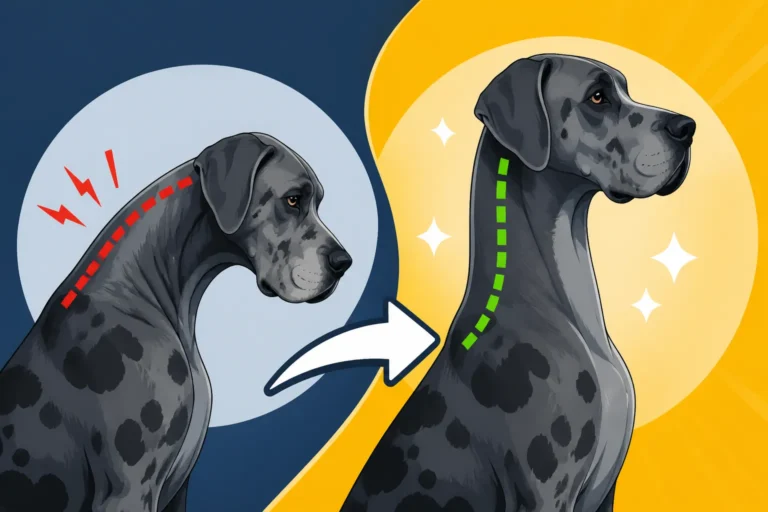
- Wobbler's Syndrome: Formally known as cervical vertebral instability, this neurological condition affects the neck and spinal cord, causing instability and incoordination. Diagnosis can involve advanced imaging like MRIs, and treatment might range from medical management to complex surgery, all carrying hefty price tags.
- Bone Cancer (Osteosarcoma): Great Danes have a higher incidence of this aggressive cancer, especially in their limbs. Treatment can include amputation and chemotherapy, which are emotionally and financially draining.
- Orthopedic Issues: Conditions like hip and elbow dysplasia, while not as prevalent as in some other large breeds, can still occur, requiring surgery or long-term pain management. Ensuring you get Great Dane Hip and Elbow Screening from a reputable breeder can help, but doesn't eliminate all risk.
Insurers calculate the likelihood and potential cost of these conditions into their premiums. They are assessing the statistical chance that your Great Dane will, at some point, need expensive care for one of these common ailments.
The Age Factor: Why Timing Matters
The age at which you enroll your Great Dane in pet insurance has a massive impact on your premiums. This is not unique to Danes, but it is particularly impactful for them given their shorter lifespan and propensity for early-onset conditions.
- Puppies: Enrolling a Great Dane puppy is almost always the most cost-effective option. Premiums are lowest for young, healthy dogs. More importantly, enrolling early means that any conditions that develop later in life will be considered "new" and thus covered, as long as they aren't during the initial waiting period. The longer you wait, the higher the premiums will climb, and the greater the risk that a condition could develop before enrollment, making it a "pre-existing condition" which would not be covered. You'll want to think about Enrolling a Great Dane Before Anything Happens rather than waiting.
- Adult Dogs: As your Great Dane ages, their risk of developing health problems naturally increases. Insurers adjust premiums accordingly. You'll also face stricter underwriting, and some companies might even decline coverage for very senior dogs or those with a significant medical history. If you're wondering Whether Four Is Too Late to Insure a Great Dane, the answer is often "it depends," but it will certainly be more expensive.
- Pre-Existing Conditions: This is a huge hurdle. If your Great Dane has already been diagnosed or shown symptoms of a condition before you enroll or during the policy's waiting period, that condition will almost certainly be excluded from coverage. For a breed with such serious health risks, getting coverage before issues arise is paramount.
Geographic Location and Local Vet Costs
Where you live significantly influences the cost of veterinary care, and consequently, your pet insurance premiums. Vet costs vary widely across different states, cities, and even specific neighborhoods.
- Urban vs. Rural: Veterinary practices in major metropolitan areas like New York City, Los Angeles, or Dallas typically have higher overheads (rent, staff salaries, equipment) compared to those in rural towns. These higher operating costs translate directly to higher prices for services, from routine check-ups to complex surgeries.
- Specialist Access: In areas with a high concentration of veterinary specialists (cardiologists, oncologists, orthopedic surgeons), the cost of specialized care is generally higher due to demand and the advanced nature of their services. Given that Great Danes often require specialist consultations for conditions like DCM or Wobbler's, being in an area with good specialist access also means higher potential claims for insurers.
- Competition: In regions with more veterinary clinics and hospitals, there might be more competitive pricing. Conversely, in areas with fewer options, clinics may charge more. Insurers use actuarial data based on average veterinary costs in your specific zip code to help determine your premium. Someone living in, say, suburban Austin, Texas, might see different quotes than someone in rural Vermont for the exact same dog and coverage level.
Comparing Different Types of Coverage for Danes
Choosing the right pet insurance for your Great Dane isn't a one-size-fits-all decision. The best plan for your dog will depend on your budget, your risk tolerance, and your comfort level with potential out-of-pocket expenses. It’s about finding the sweet spot between comprehensive protection and affordability.
Accident-Only Coverage: The Bare Minimum
Accident-only plans offer the most basic form of protection and, as their name suggests, cover costs associated with accidental injuries. This could include things like fractures, bite wounds, foreign object ingestion, or getting hit by a car. For a Great Dane, these plans are typically the least expensive premium-wise.
However, for a breed known for severe illnesses, this type of coverage is often insufficient. While it's great if your Dane has a freak accident, it won't touch the bills for a sudden case of bloat, a DCM diagnosis, or the discovery of bone cancer. If your budget is extremely tight, it's better than nothing, providing a safety net against unexpected trauma. But remember, the most common and expensive health challenges for a Great Dane are usually illnesses, not just accidents. Many owners who opt for accident-only coverage for their Danes find themselves wishing they had more comprehensive protection when a serious illness strikes.
Comprehensive Accident and Illness Plans
This is where the real protection for a Great Dane lies. Comprehensive accident and illness plans cover both unexpected injuries and a vast array of illnesses, from minor infections to life-threatening conditions. This type of plan is generally highly recommended for Great Danes due to their breed-specific health risks.
- What's Covered: These plans typically cover consultations, diagnostics (X-rays, ultrasounds, blood work, MRIs), surgeries, hospitalization, prescription medications, and emergency care. For conditions like Bloat in a Great Dane and the One in Three Odds, this is indispensable. They'll also cover treatments for The Heart Muscle Disease Great Danes Are Prone To or Bone Cancer in a Great Dane.
- Customization: Most providers, including well-regarded options like Healthy Paws, allow you to customize your plan by choosing your deductible (e.g., $250, $500, $1,000), reimbursement percentage (e.g., 70%, 80%, 90%), and annual payout limit (e.g., $5,000, $10,000, unlimited). These choices directly impact your monthly premiums and how much you'll pay out-of-pocket when a claim arises. A higher deductible and lower reimbursement percentage will mean lower premiums but more financial responsibility during a claim. For a Great Dane, aiming for a higher reimbursement and annual limit is generally a wise move, even if it means a slightly higher premium.
- Value: While these plans come with higher premiums than accident-only options, the peace of mind and financial security they offer for a Great Dane can be invaluable. Considering the potential costs of treatments for serious conditions, an accident and illness plan often pays for itself multiple times over the course of a Dane's life.
Adding Wellness to Your Great Dane's Policy
Wellness add-ons or separate wellness plans are designed to cover the costs of routine, preventative care. This can include annual physical exams, vaccinations, flea and tick prevention, heartworm medication, and sometimes even dental cleanings.
For a Great Dane, wellness plans can be a mixed bag. On one hand, regular preventative care is crucial for maintaining their health and catching potential issues early. Brands like Chewy, for instance, offer a wide array of preventative products that align with wellness goals. On the other hand, these plans typically add a significant amount to your monthly premium, and it’s important to calculate if you’ll get more back than you pay in.
- Cost-Benefit Analysis: Before adding a wellness plan, list out your Dane’s anticipated routine costs for the year (annual exam, shots, preventatives). Compare this total to the annual cost of the wellness add-on. Sometimes, simply budgeting for these routine expenses yourself is more cost-effective than paying the increased premium.
- Value for Money: For some owners, the convenience of having these costs covered is worth the extra premium. For others, particularly those on a tighter budget, prioritizing a robust accident and illness plan and self-funding wellness care makes more sense. Remember, a wellness plan won't cover a sudden bloat surgery, so ensure your core accident and illness coverage is solid first.
Strategies to Potentially Lower Your Great Dane's Premium
We all want to provide the best care for our Great Danes, but the cost can be daunting. Thankfully, there are several smart strategies you can employ to help manage or even reduce the pet insurance premiums Quoted on a Great Dane, without necessarily sacrificing essential coverage.
Enrolling Your Dane as a Young Puppy
This is hands-down the most effective way to secure the lowest possible premiums for your Great Dane. Insurance rates are heavily weighted by age, and a young puppy with no pre-existing conditions represents the lowest risk for an insurer.
- Lock in Lower Rates: When you enroll a puppy, you lock in a lower base premium that will likely increase gradually over their lifetime, rather than starting high with an older dog.
- Avoid Pre-Existing Exclusions: More critically, getting coverage early means that any conditions that arise later in life will be covered, provided they don't fall within the initial waiting period (which is usually short for accidents and a bit longer for illnesses). If you wait until your Dane is 3 or 4 years old and has already had a suspicious limp or a cough, those symptoms might be considered pre-existing conditions, leaving you to pay for expensive diagnostics and treatment entirely out-of-pocket. Considering the array of health challenges Great Danes face, from early joint issues to sudden cardiac events, getting them insured as soon as possible after adoption is a no-brainer. This makes a huge difference in the overall lifetime cost of care, as well as the premiums Quoted on a Great Dane.
Adjusting Your Deductible and Reimbursement Rate
Pet insurance, much like human health insurance, offers flexibility in how much you pay upfront versus how much the insurer covers. By adjusting your deductible and reimbursement percentage, you can directly influence your monthly premium.
- Deductible: This is the amount you pay out-of-pocket before your insurance coverage kicks in. Typical deductibles range from $100 to $1,000. Choosing a higher deductible will lower your monthly premium, but means you'll pay more for each incident before your plan starts reimbursing you. For a Great Dane, where a single incident like bloat surgery can be many thousands of dollars, a higher deductible might be manageable if it allows you to afford a more comprehensive plan.
- Reimbursement Rate: This is the percentage of the covered veterinary bill that the insurance company will pay after your deductible has been met. Common rates are 70%, 80%, or 90%. Opting for a lower reimbursement rate (e.g., 70% instead of 90%) will also reduce your monthly premium, but you'll be responsible for a larger portion of the bill.
- Finding the Balance: The key is to find a balance that fits your financial comfort level. If you have a healthy emergency fund, a higher deductible and lower reimbursement might make sense to keep premiums down. If you prefer minimal out-of-pocket costs during a crisis, a lower deductible and higher reimbursement, while more expensive monthly, offers greater protection. Remember, for a Great Dane, even 70% of a $7,000 bloat surgery bill is a significant saving.
Exploring Multi-Pet and Other Discounts
Many insurance providers recognize that owners with multiple pets are loyal customers and often offer incentives.
- Multi-Pet Discounts: If you have more than one dog, or perhaps a cat alongside your Great Dane, inquire about multi-pet discounts. These can typically save you 5% to 10% on your total premiums, which can add up significantly, especially when insuring a Great Dane.
- Other Potential Discounts: Some companies offer discounts for military personnel, veterans, employees of certain companies, or if you purchase your pet insurance through an existing home or auto insurance provider. It never hurts to ask! Companies like Healthy Paws are known for their transparent pricing, but even with them, it's always worth checking for any applicable savings.
- Employer Benefits: Some employers are now offering pet insurance as part of their benefits package, often at a discounted group rate. Check with your HR department to see if this is an option for you. Every little bit helps when you're managing the costs of a giant breed.
Navigating Quotes and Understanding the Fine Print
Getting quotes for your Great Dane's pet insurance can feel like sifting through a mountain of paperwork and jargon. It's crucial to not just compare the numbers on the surface but to truly dig into the details. The fine print holds the keys to what is truly covered, and what might leave you with unexpected bills.
Decoding Policy Exclusions and Limitations
This is perhaps the most critical section of any pet insurance policy, especially for a Great Dane. Exclusions are conditions or treatments that the policy explicitly states it will not cover.
- Breed-Specific Exclusions: While less common with reputable, comprehensive policies, some budget insurers might have outright exclusions for certain breed-specific conditions. For example, some might exclude coverage for Bloat in a Great Dane and the One in Three Odds, or certain types of orthopedic issues common in large breeds. Always double-check this. No one wants to find out their most feared health scenario isn't covered when it actually happens.
- Hereditary and Congenital Conditions: Most good policies do cover hereditary conditions (those passed down genetically) and congenital conditions (those present from birth), provided symptoms don't show up before enrollment or during waiting periods. However, some cheaper policies might have limitations or exclusions. Given The Health Testing a Great Dane Breeder Owes You should include screening for conditions like DCM and hip dysplasia, you want an insurer that backs up your breeder’s good practices.
- Cosmetic Procedures: Things like ear cropping or tail docking (if not medically necessary) are almost universally excluded.
- Annual and Per-Incident Limits: Understand the maximum amount the policy will pay out in a year or for a single incident. For a Great Dane, aim for high annual limits, ideally unlimited. The Night a Great Dane Bloats and What It Costs can easily exceed $5,000, and chronic conditions like DCM can rack up thousands more in yearly medication and vet visits. A low annual limit might seem appealing for a lower premium, but it offers very little true protection for a giant breed.
Understanding Waiting Periods for Specific Conditions
Every pet insurance policy has waiting periods, which are specific lengths of time you must wait after purchasing the policy before certain conditions become eligible for coverage. This is a standard industry practice to prevent people from buying insurance only after their pet is already sick.
- Accident Waiting Periods: These are usually the shortest, often just a few days (e.g., 2-3 days).
- Illness Waiting Periods: These are typically longer, ranging from 14 to 30 days. For a Great Dane, this means if symptoms for a severe illness like bloat appear 10 days after you enroll, it likely won't be covered.
- Orthopedic/Specialty Waiting Periods: Some policies have extended waiting periods (e.g., 6 months to a year) for orthopedic conditions like hip or elbow dysplasia, or other specific conditions like IVDD (intervertebral disc disease), even if your Great Dane Hips, Elbows and Growing Joints were cleared by a breeder. This is crucial to know. If your Great Dane starts limping two months after enrollment and falls within an extended orthopedic waiting period, you'll be on the hook for those vet bills. Always ask about these specific waiting periods before committing to a policy.
Pre-Existing Conditions: A Great Dane Owner's Reality
This is often the most heartbreaking and frustrating part of pet insurance for owners. A pre-existing condition is any injury or illness that showed clinical signs, or for which veterinary advice or treatment was received, before the policy's effective date or during its waiting periods.
- No Coverage: Generally, pet insurance policies do not cover pre-existing conditions. This means if your Great Dane was diagnosed with a heart murmur before you enrolled, or had a history of limping, any future treatment related to those issues would be excluded.
- Curable vs. Incurable: Some insurers differentiate between "curable" and "incurable" pre-existing conditions. A curable condition (e.g., an ear infection that clears up) might be covered if your pet remains symptom-free for a certain period (e.g., 6-12 months), while incurable conditions (like chronic arthritis or DCM) are almost always permanently excluded.
- Documentation is Key: This is why thorough veterinary records are so important. Insurers will review your Great Dane’s vet history to determine if a condition is pre-existing. It's another strong argument for Enrolling a Great Dane Before Anything Happens – ideally when they are a healthy puppy with a clean bill of health. This way, you minimize the risk of future health issues being deemed pre-existing.
Real-World Examples and Cost Expectations
Talking about premiums in abstract terms is one thing, but seeing how they play out in real-world scenarios, especially for a Great Dane, helps paint a clearer picture. Let’s consider some illustrative examples to set realistic expectations.
Illustrative Premiums Across Different Ages
The cost of pet insurance for a Great Dane varies widely based on age, location, and the specifics of the plan (deductible, reimbursement rate, annual limit). However, we can look at some general ranges for Premiums Quoted on a Great Dane.
Let's imagine you're looking for an accident and illness plan with an annual limit of $10,000 to unlimited, a $500 deductible, and 80-90% reimbursement.
| Age of Great Dane | Monthly Premium Range (Estimate) | Notes |
|---|---|---|
| Puppy (8 weeks – 1 year) | $50 – $90+ | Lowest rates, essential to lock in coverage before conditions arise. |
| Young Adult (1-4 years) | $70 – $120+ | Rates start to climb as risk increases, but still generally affordable. |
| Adult (4-6 years) | $90 – $150+ | Significant increase due to higher risk of bloat, DCM, and other age-related conditions. |
| Senior (6+ years) | $130 – $200+ (or higher) | Highest premiums, and harder to get comprehensive coverage without pre-existing exclusions. |
These are estimates, and actual quotes can vary significantly. For instance, a Great Dane in an expensive veterinary market like San Francisco will likely see much higher premiums than one in a less costly region. Also, opting for unlimited annual coverage will be on the higher end of these ranges. It highlights the importance of asking How Much Extra a Great Dane Costs to Insure.
The Financial Impact of a Major Health Event
This is where pet insurance truly shines for Great Dane owners. Let's consider a couple of common, severe scenarios:
- Scenario 1: Bloat (GDV) Emergency
- Without Insurance: Your Great Dane suddenly bloats. You rush them to the emergency vet. Diagnosis, emergency surgery, and a few days of critical aftercare could easily cost $5,000 to $10,000, or even more depending on complications and location. This is The Night a Great Dane Bloats and What It Costs. Paying this out-of-pocket can be devastating for many families, forcing difficult choices.
- With Insurance (e.g., 90% reimbursement, $500 deductible, unlimited annual limit): If the bill is $8,000, you first pay your $500 deductible. The remaining $7,500 is subject to reimbursement. At 90%, the insurance company pays $6,750, leaving you to pay $500 (deductible) + $750 (10% of remaining) = $1,250. That's a huge difference!
- Scenario 2: Dilated Cardiomyopathy (DCM) Diagnosis
- Without Insurance: Initial diagnosis involves an echocardiogram and other tests, possibly costing $1,000-$2,000. Then, lifelong medications (like Pimobendan for a Great Dane) can cost $100-$300+ per month, depending on your Dane's weight and the specific drugs. Annual cardiac check-ups can add another $500-$1,000 each year. Over the remaining lifespan of your Dane, these costs quickly add up to tens of thousands.
- With Insurance (similar plan as above): After your deductible, your diagnostic costs would be reimbursed at 90%. Monthly medication costs would also be covered (minus your 10% co-pay), significantly reducing the ongoing financial burden. What a Great Dane Cardiac Workup Costs can become much more manageable.
These examples underscore why Many Great Dane owners find Whether Pet Insurance Is Essential for a Great Dane to be a resounding "yes."
When Pet Insurance Truly Pays Off for a Great Dane
For Great Danes, pet insurance isn't just about covering random accidents; it's a critical safety net against their known predispositions. It truly pays off when:
- A major, unexpected illness strikes: Bloat is the prime example. Having insurance can mean the difference between life and death for your dog, as it removes the financial barrier to immediate, aggressive treatment.
- Chronic conditions develop: DCM, Wobbler's, or even severe arthritis can lead to years of medication, specialist visits, and rehabilitation. Insurance helps make these ongoing costs manageable.
- You prioritize preventative care: While wellness plans are optional, having a robust accident and illness plan ensures that if your preventative efforts uncover something serious, you're financially prepared to address it.
- Peace of Mind: Perhaps the biggest payoff isn't financial at all, but emotional. Knowing that you can say "yes" to necessary treatment, regardless of the bill, without having to deplete your savings or go into debt, is invaluable. It allows you to focus on your Great Dane's health and recovery rather than the crushing weight of vet bills.
For Great Dane owners, pet insurance isn't a luxury; it's often a necessity that helps ensure these magnificent dogs receive the care they deserve throughout their precious, albeit often shorter, lives.
Disclaimer
This article is for general informational purposes only and does not constitute professional advice. Laws, prices and regulations vary by location and change over time. Consult a qualified professional for guidance on your specific situation.