Why a Great Dane’s Chest Shape Invites a Twist
Great Dane deep chest anatomy creates a free-floating stomach with loose ligaments that easily twists, causing fatal bloat.
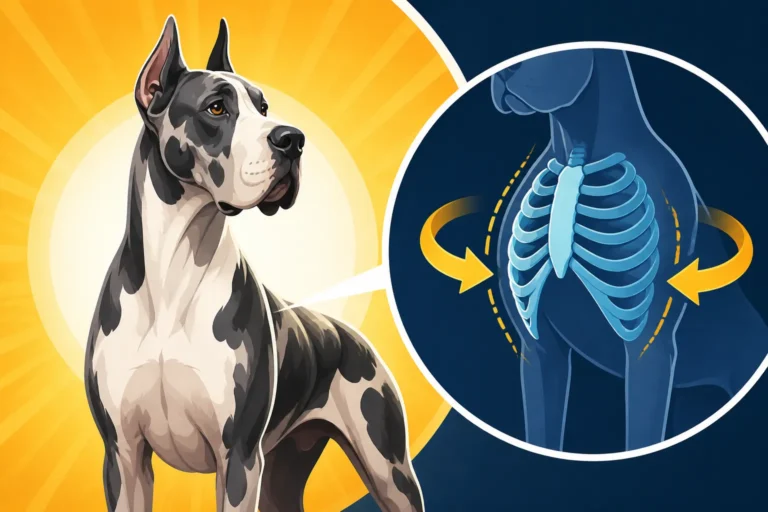
Great Dane deep chest anatomy creates a free-floating stomach with loose ligaments that easily twists, causing fatal bloat.
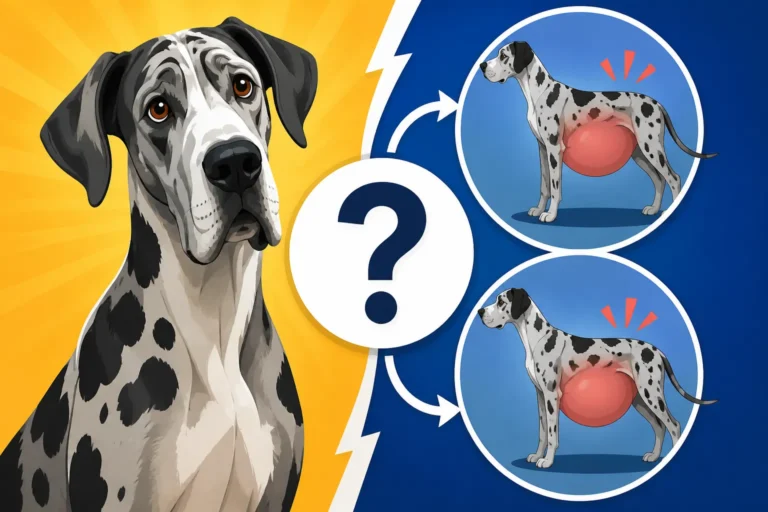
Great Dane bloat recurrence happens because their deep chest allows the stomach to twist again without gastropexy surgery.
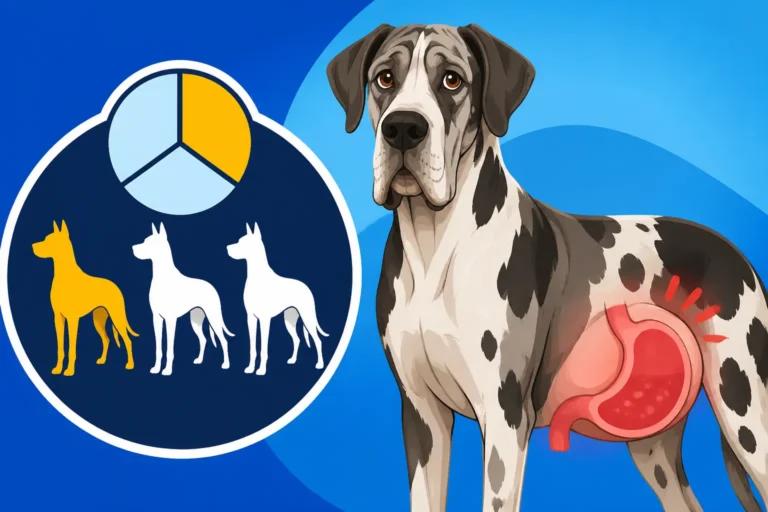
Gastric Dilatation-Volvulus risk for Great Danes explains why one in three dogs face this twisting stomach emergency between two and seven years of age.
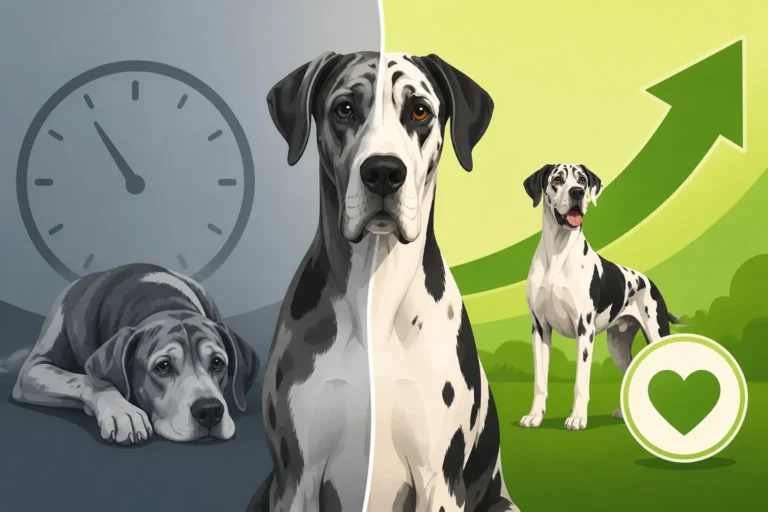
Great Dane lifespan statistics and factors like rapid growth explain why these giant dogs typically live seven to ten years.
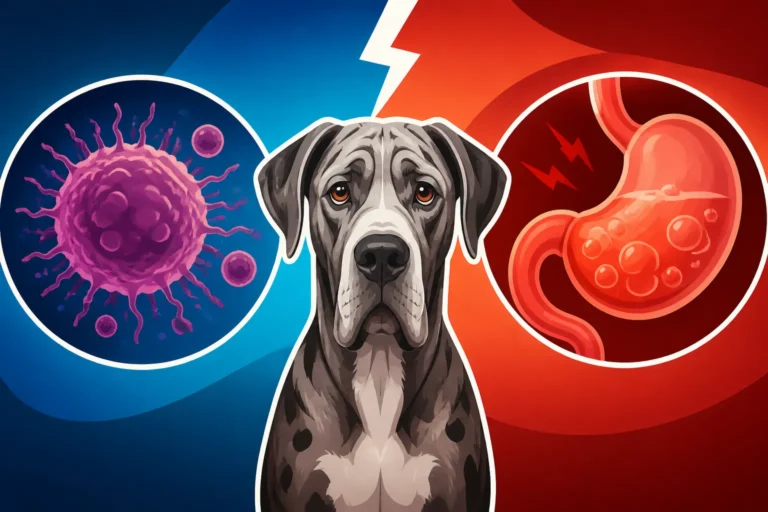
Statistical data and veterinary research reveal whether GDV bloat or cancer claims more Great Danes, citing a lifetime risk up to forty percent.
Great Danes enter their senior years between five and seven years old because rapid cellular growth taxes their organ systems.
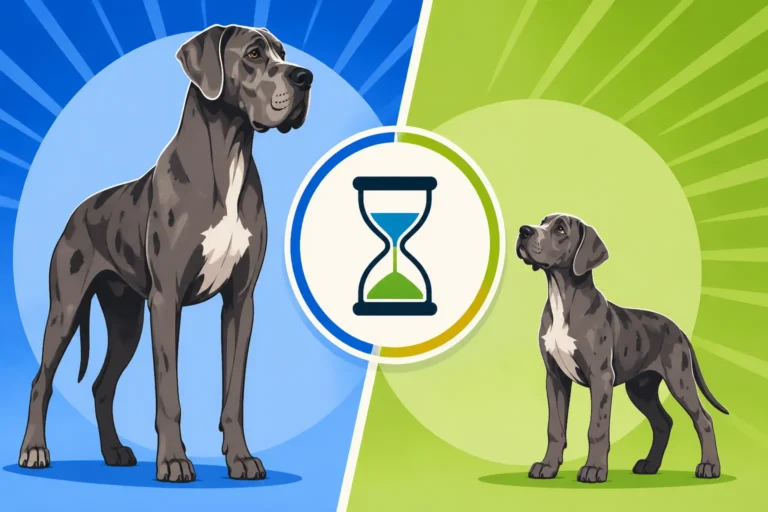
Great Dane size variations, genetics, and care nuances explain how body mass and growth affect the lifespan of giant dogs.

Rapid skeletal growth and genetic health conditions like dilated cardiomyopathy cause Great Danes to live only seven to ten years.
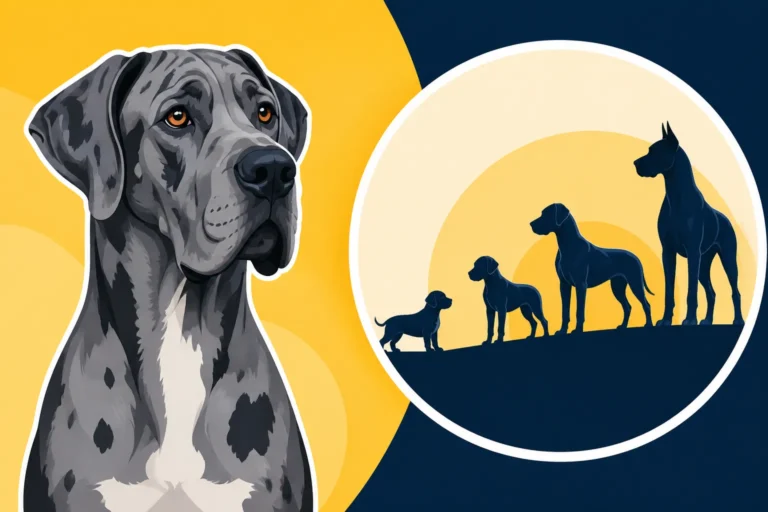
Great Danes usually live seven to ten years, which makes the rare dog reaching its twelfth birthday notable, and owners can take steps to improve the odds.

Great Dane lifespan averages seven to ten years because rapid growth places immense physical strain on their giant bodies.