Whether a Great Dane’s Chest Should Reach the Elbow
One common sight that often sparks questions among new Great Dane owners, or even just admirers, is the sheer depth of their chest. It’s natural to wonder if this imposing feature is just a breed characteristic or if there’s a specific, functional reason behind it, and what exactly the breed standard says about it. This guide will dive deep into the ideal chest conformation of a Great Dane, explaining why it matters for their health, movement, and overall well-being.
The Great Dane Breed Standard and Chest Conformation
When you look at a Great Dane, their chest immediately commands attention. It's not just about aesthetics; the breed standard, which is essentially the blueprint for what a Great Dane should be, places significant emphasis on proper chest depth and spring of rib. This isn't just arbitrary; it directly impacts their ability to function as the majestic, powerful dogs they were bred to be.
Why Conformation Matters for a Giant Breed
For a breed as massive and athletic as the Great Dane, every aspect of their physical structure, or conformation, plays a crucial role in their health and longevity. Imagine building a skyscraper; every beam, every support, needs to be perfectly placed for stability and endurance. It's no different for a Great Dane. Correct conformation ensures that their enormous weight is distributed properly, reducing strain on joints and muscles. It affects their balance, their stride, and even the efficiency of their internal organs. A dog with poor structure might look awkward, but more importantly, they are predisposed to a lifetime of discomfort, pain, and potentially serious health issues. This is why breeders who are truly dedicated to the health of the breed pay such close attention to these details.
The "Elbow Deep" Ideal
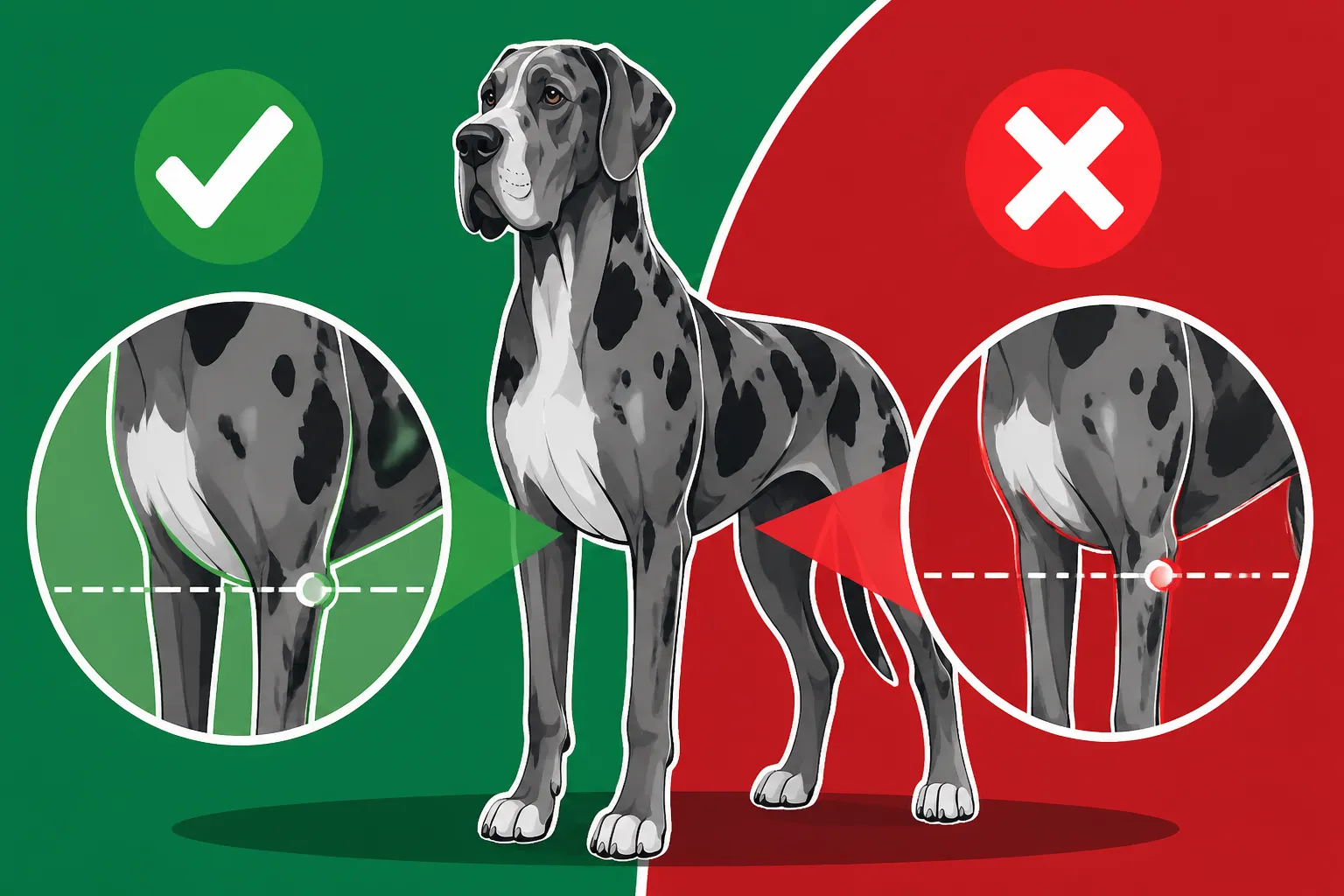
The Great Dane breed standard often describes the chest as being "deep and broad with well-sprung ribs." The phrase "reaching the elbows" is commonly used to illustrate the ideal depth. This doesn't mean the bottom of the chest should literally be at the elbow joint when the dog is standing square. Instead, it refers to a proportionality where the deepest point of the chest cavity should align roughly with the elbow.
Think of it this way: when you stand beside your Dane and look at them from the side, their chest should extend downwards, providing ample space for their heart and lungs. This deep chest provides the volume necessary for powerful respiration and a strong, efficient cardiovascular system – vital for a dog that can weigh well over a hundred pounds. It contributes to that powerful, flowing movement that is so characteristic of the breed. Without this depth, a Dane's internal organs would be compressed, limiting their function and overall capacity for sustained activity. It’s part of The Great Dane the Show Ring Is Looking For, a detail that speaks volumes about the dog's overall soundness.
How to Visually Assess Your Dane's Chest
As a Great Dane owner, you don't need to be a show judge to get a general idea of whether your dog's chest conformation is within healthy parameters.
Here’s a simple way to assess it:
- Stand your Dane square: Have your dog stand naturally, with all four legs directly under them, not leaning or stretching.
- Locate the elbow: Identify where your dog's elbow joint is on their front leg. This is usually pretty easy to spot.
- Observe the deepest point: Look at the deepest part of your dog's chest, right behind the front legs.
- Compare: Ideally, the bottom line of the chest should align fairly closely with the elbow. If it's significantly higher, appearing shallow, or if it extends much lower, past the elbow, it might be outside the ideal.
It’s about balance and proportion more than an exact measurement. A well-proportioned chest should also appear broad when viewed from the front, indicating good rib spring. This isn't just about looking good; it's about providing optimal space for crucial organs and ensuring fluid, effortless movement, which is essential for The Long Reaching Stride a Great Dane Shows.
The Functional Importance of Proper Chest Depth
A Great Dane’s chest isn't just a physical feature; it's a vital component of their internal machinery. The sheer size of these dogs demands a substantial framework to support all their internal systems, and the chest plays a starring role in allowing them to thrive.
Lung Capacity and Stamina
Imagine running a marathon with a restricted lung capacity. Not fun, right? For a Great Dane, who despite their size, often possesses a surprising burst of speed and can cover ground quickly, excellent lung capacity is paramount. A deep and broad chest provides the necessary room for large, fully functional lungs to expand and contract efficiently. This directly translates to better oxygen intake and stamina during exercise, whether it's a vigorous play session in the yard or a long walk in the park. Without adequate lung room, a Dane could become winded quickly, struggle with prolonged activity, and potentially face issues down the line, especially as they age or if they develop conditions like How Long a Great Dane Lives After Heart Failure. This capacity helps them maintain a healthy, active lifestyle throughout their The Seven to Ten Year Great Dane Lifespan.
Impact on Movement and Gait
A Great Dane is renowned for its elegant, powerful, and fluid gait. This "harmonious stride," as it's often described, relies heavily on a correctly structured chest. A chest that is deep and well-sprung allows for proper shoulder placement and ample clearance for the front legs to move freely and powerfully. If the chest is too shallow, the shoulder blades might be too close together, impeding movement. Conversely, if it's too broad or disproportionate, it could lead to a "rolling" gait or make the dog less agile. The chest acts as a natural counterbalance, working with the powerful rear assembly to create that characteristic ground-covering, effortless trot. When the chest is correctly formed, it contributes to the overall structural integrity, allowing the dog to move with grace and power, minimizing stress on their joints, and ensuring comfort during their daily activities.
Protecting Vital Organs
Beyond breathing and movement, the Great Dane’s deep rib cage serves as a robust protective shield for their most vital internal organs: the heart and lungs. In a breed of this size, the stakes are higher; any impact or injury could be more severe. A well-defined, sturdy chest helps to cushion these critical organs from external bumps, jostles, or accidental impacts during play. While it can't prevent all injuries, the natural armor of a strong rib cage offers an important layer of defense, contributing to the overall resilience and safety of your gentle giant. This protective aspect is often overlooked but is a significant benefit of proper chest conformation.
Health Implications of Incorrect Chest Conformation
While we often think of ideal conformation in terms of show rings and breed standards, for a Great Dane, it's intrinsically tied to their health. Deviations from the ideal chest structure can have tangible and sometimes serious consequences on their well-being.
Shallow Chests and Potential Issues
A Great Dane with a shallow chest, meaning it doesn't reach the elbows or isn't adequately broad, faces several potential challenges. Most immediately, it can restrict the space available for the lungs and heart. This can lead to reduced stamina, making even moderate exercise difficult, and potentially impacting the efficiency of their cardiovascular system. A dog with less lung capacity might become easily winded or struggle to recover after exertion. Furthermore, a shallow chest offers less protection for these vital organs, leaving them more vulnerable. In terms of movement, a shallow chest can also affect shoulder assembly and overall balance, potentially leading to an uneven gait or increased strain on other joints as the dog tries to compensate. It's a structural weakness that can ripple through their entire physical system.
Overly Deep or Narrow Chests
While a deep chest is desirable, "overly deep" can sometimes be an issue if it's disproportionate, making the dog appear unbalanced or cumbersome. However, more critical is a chest that is too narrow. A narrow chest, regardless of depth, can compromise lung and heart space and affect the dog's stability. It can make them less stable on their feet, particularly during quick turns or when navigating uneven terrain. A very narrow chest can also push the elbows out, causing a "fiddle-front" appearance, which is not only incorrect conformation but can also put undue stress on the elbow joints. This can impact their ability to carry their weight comfortably and move efficiently, potentially exacerbating joint problems as they age.
Bloat Risk and Chest Shape
This is perhaps one of the most critical health implications directly linked to a Great Dane's chest and abdominal anatomy. Great Danes are notoriously susceptible to Gastric Dilatation-Volvulus (GDV), commonly known as bloat, where the stomach fills with gas and can twist. Their deep, narrow chests are believed to be a contributing factor to this terrifying condition. The theory is that the deep, somewhat narrow chest allows the stomach to hang and swing more freely, increasing the likelihood of it twisting on its axis when distended. This is why understanding Why a Great Dane's Chest Shape Invites a Twist is so important for owners.
While proper chest conformation is part of the breed standard, the very characteristics that make a Dane majestic also contribute to this risk. It's a cruel irony. This susceptibility is a major reason why many Great Dane owners consider a prophylactic gastropexy, a surgery to tack the stomach in place, to significantly reduce the risk of life-threatening torsion, even if bloat itself can still occur. The Lifetime Bloat Risk in a Great Dane is something every owner must be aware of and proactively manage.
Here's a quick comparison of ideal versus less ideal chest characteristics:
| Characteristic | Ideal Great Dane Chest | Less Ideal Great Dane Chest | Potential Impact |
|---|---|---|---|
| Depth | Deep, reaching approximately to the elbows | Significantly shallow or overly deep/low | Shallow: Restricted lung capacity, reduced stamina. Overly deep: Can affect balance if disproportionate. |
| Breadth (Rib Spring) | Broad with well-sprung ribs | Narrow, flat-sided, or barrel-chested | Narrow: Compressed organs, instability, "fiddle-front." Barrel: Less efficient movement, awkward appearance. |
| Muscle Development | Well-muscled, firm | Weak or underdeveloped | Reduced power, increased strain on skeleton, poor stamina. |
| Overall Balance | Harmonious with forequarters and body | Disproportionate to body length or leg length | Awkward gait, unbalanced movement, increased stress on joints. |
| Protection | Provides ample protection for heart and lungs | Less protective | Increased vulnerability of vital organs to injury. |
| Bloat Risk | Deep conformation inherently carries risk | Exaggerated deep and narrow conformation may increase risk | Higher susceptibility to Gastric Dilatation-Volvulus (GDV) due to free-hanging stomach space. |
Caring for Your Great Dane's Structural Health
Beyond appreciating the aesthetics of a beautifully proportioned Great Dane, understanding their structural needs is crucial for promoting their long-term health and comfort. As giant breeds, their bodies undergo immense stress, especially during their rapid growth phase, making proactive care essential.
Nutrition for Proper Development
The foundation of a strong, healthy Great Dane begins with appropriate nutrition, particularly during puppyhood. Unlike smaller breeds, Great Danes shouldn't grow too quickly. Rapid growth can put immense strain on their developing bones and joints, leading to orthopedic issues like pano, OCD, or even more severe conditions down the line. It's not about making them huge as fast as possible; it's about slow, steady, controlled growth. This means feeding a high-quality large or giant breed puppy formula specifically designed for controlled growth, usually lower in calories and calcium than regular puppy foods. You can find excellent options on trusted sites like Chewy that cater to these specialized dietary needs. Why Great Dane Puppy Food Is Different and Why a Great Dane Puppy Should Grow Slowly are topics every new Dane owner should thoroughly research to ensure their puppy gets the best start.
Avoid supplementing with extra calcium unless directed by your vet, as this can actually disrupt the delicate calcium-phosphorus balance crucial for bone development and lead to problems. Always aim to keep your puppy lean, allowing you to easily feel their ribs without seeing them prominently, to minimize stress on their growing skeleton.
Exercise Considerations
Exercising a Great Dane, especially during their formative months, requires a delicate balance. Too much high-impact exercise can be detrimental to their developing joints, while too little can lead to weak muscles and poor bone density. Puppies and adolescents should engage in moderate, controlled exercise rather than intense, prolonged activities. Think multiple short walks, supervised playtime, and gentle, free-running sessions on soft ground rather than forced jogging or strenuous hikes. Exercise Limits While a Great Dane Is Still Growing provides critical guidance.
As they mature, around 18-24 months, their growth plates will have closed, and you can gradually increase their activity levels. Even then, always be mindful of their giant stature. Long walks, swimming, or even canine sports can be great, but monitor them for signs of fatigue or lameness. Providing proper orthopedic support at home, such as a high-quality dog bed from Chewy, can also significantly aid in joint health and recovery after activity, cushioning those large bodies from hard floors.
Regular Vet Checks and Conformation Awareness
Regular veterinary care is non-negotiable for a Great Dane, particularly with their predisposition to various health issues. Annual check-ups, even more frequently during puppyhood and senior years, are vital for monitoring their overall health, including their structural development. Your vet can assess their gait, palpate their joints, and watch for any early signs of orthopedic problems that might be linked to their conformation or rapid growth. Discussing your Dane's physical development with your vet can provide reassurance or alert you to potential concerns.
Beyond general health, understanding your Great Dane's conformation can help you make informed decisions about their care, from nutrition to exercise. Being aware of the breed's predispositions, like bloat, is paramount. Proactive discussions about preventive measures, such as gastropexy, with your vet are essential. The Vet Spending a Great Dane Needs Anyway highlights the importance of consistent professional care throughout their life. Your veterinarian is your best partner in ensuring your Great Dane lives a long, comfortable, and healthy life.
Disclaimer
This article is for general informational purposes only and does not constitute professional advice. Laws, prices and regulations vary by location and change over time. Consult a qualified professional for guidance on your specific situation.