Telling a Great Dane From a Mastiff
It’s a common sight at the dog park or even in online discussions: someone marvels at a massive, majestic canine, wondering if it's a Great Dane or a Mastiff. These two giant breeds often get confused because, well, they're both huge! But for anyone considering bringing one of these gentle giants into their home, understanding the distinct differences in their history, physical traits, and temperaments is absolutely crucial. This guide will walk you through how to confidently tell a Great Dane from a Mastiff, helping you appreciate the unique qualities of each magnificent dog.
The Historical Roots and Purpose: Graceful Hunter vs. Staunch Guardian
Before we even look at their physical forms, understanding what these breeds were originally developed for gives us a massive clue about their inherent differences. Their historical jobs shaped their bodies, their minds, and their very instincts.
Great Dane: The Boar Hunter
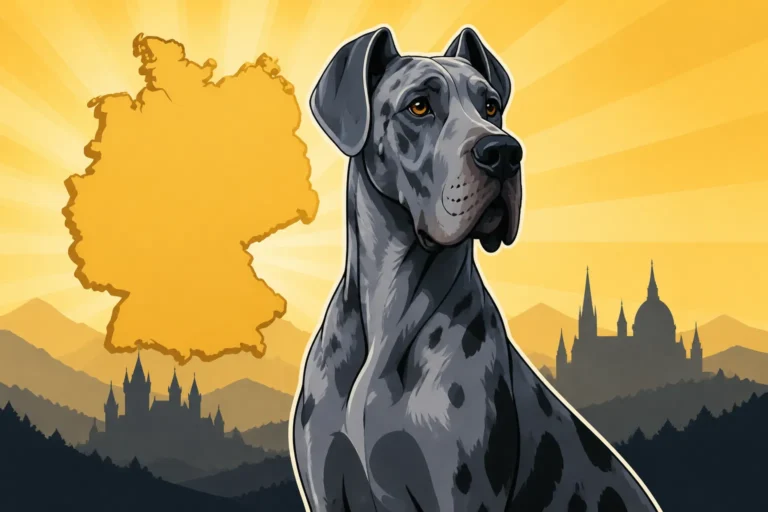
The Great Dane, often called the "Apollo of Dogs," carries a certain elegance despite its colossal size. Its lineage traces back to Germany, not Denmark, where it was primarily bred for hunting wild boar. Imagine trying to tackle a fierce, tusky boar – you'd need a dog that was not only incredibly powerful but also swift, agile, and courageous. This formidable task demanded a dog that could track, corner, and hold its prey until the hunter arrived, a job that required both strength and incredible athleticism. Why the Great Dane Is Not Danish touches on this fascinating origin.
This hunting heritage instilled in the Great Dane a remarkable combination of power and grace. They needed to be fast enough to keep up with the chase and agile enough to navigate dense forests and uneven terrain without becoming clumsy. This blend of speed and strength is evident in their lean, muscular build and their characteristic long, ground-covering stride. They weren't just brute force; they were sophisticated athletes.
Mastiff: The Ancient Guardian
The term "Mastiff" itself encompasses several breeds, but when most people refer to the Mastiff, they're typically thinking of the English Mastiff. This breed boasts an ancient and storied past as a guardian and war dog, with roots going back to antiquity. Their purpose was less about the chase and more about protection – standing their ground, intimidating intruders, and defending their masters and property with unshakeable loyalty. They were the formidable sentinels of castles and estates, requiring immense strength, a deep chest, and an imposing presence to deter any threat.
Unlike the Great Dane's agility, the Mastiff's role demanded sheer mass and unwavering fortitude. They were developed to be heavy-boned, powerfully built dogs whose very appearance would make any potential aggressor think twice. Their history as protectors means they often possess a more reserved, watchful demeanor, always aware of their surroundings, even if seemingly placid. They are slow to anger but resolute in their defense when necessary.
Physical Distinctions Beyond Just "Big Dog"
While both breeds are undeniably giant, their physical characteristics diverge significantly. Once you know what to look for, telling them apart becomes much easier than simply noting their impressive size.
Stature and Build: Grace vs. Mass
When observing a Great Dane, you'll immediately notice its towering height and relatively slender, athletic frame. They are built for speed and endurance, with long legs, a deep chest that almost reaches their elbows, and a sleek, powerful body. Think of a finely tuned athlete, a canine sprinter with incredible reach. The phrase How Big a Great Dane Actually Gets hints at their impressive dimensions, often making them among the tallest dog breeds. Their silhouette is clean and angular, designed for fluid motion.
A Mastiff, on the other hand, is a study in raw power and bulk. While they might not always be as tall as a Great Dane, they compensate with immense weight and bone. Their build is undeniably stocky, broad, and heavily muscled. They possess a massive chest, thick neck, and a sturdy, rectangular body. They embody gravitas and unyielding strength. When they move, it's with a deliberate, powerful gait, not the airy trot of a Dane. If a Great Dane is a racehorse, a Mastiff is a powerful draft horse – both magnificent, but built for very different forms of exertion.
Head, Muzzle, and Expression
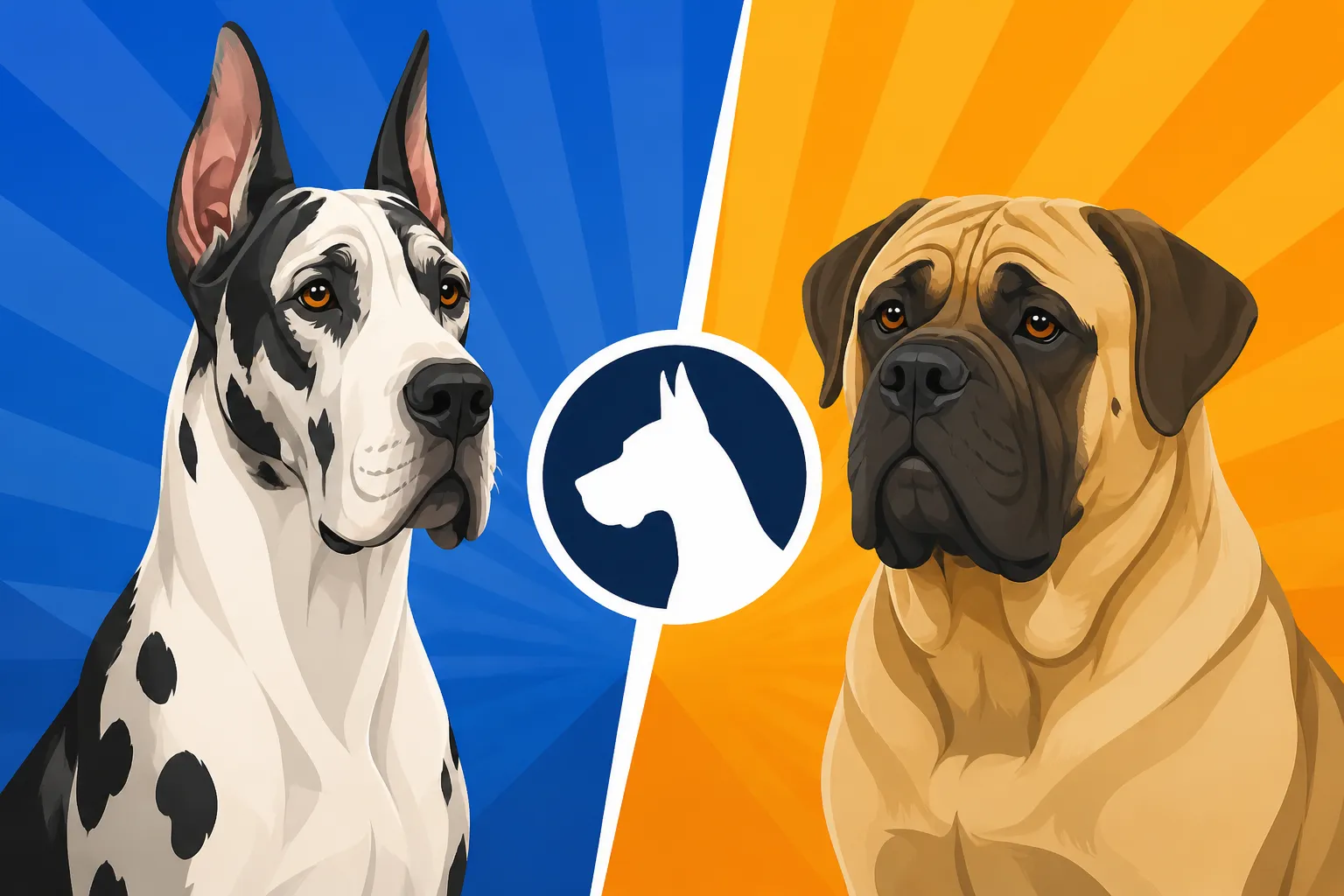
The head is perhaps one of the most distinguishing features between the two. A Great Dane has a long, noble head, often described as rectangular and finely chiseled, with a distinct stop between its forehead and muzzle. Their muzzle is deep and broad, but proportionate to the rest of their head. Their eyes are typically dark and almond-shaped, conveying an intelligent, thoughtful, and sometimes gentle expression. Their lips are somewhat pendulous, but not excessively so, and their ears can be either cropped and erect or natural and folded, lying close to the cheek. The Great Dane the Show Ring Is Looking For provides more insight into their ideal head structure.
Conversely, the Mastiff’s head is famously massive, broad, and square, often with a wrinkled forehead, especially when alert. Their muzzle is short in comparison to their skull, broad, and deep, often appearing somewhat blunt. The Mastiff’s expression is typically serious, solemn, and watchful, framed by dark, widely set eyes and often heavy jowls. These jowls are a hallmark of the breed, contributing to their prodigious drooling – a trait generally less pronounced in Great Danes. Their ears are medium-sized and V-shaped, carried close to the head.
Coat, Color, and Markings
Both breeds sport short, dense coats that require relatively easy grooming. However, the range of acceptable colors and patterns differs.
Great Danes come in a specific set of recognized colors:
- Fawn: A golden-yellow with a black mask.
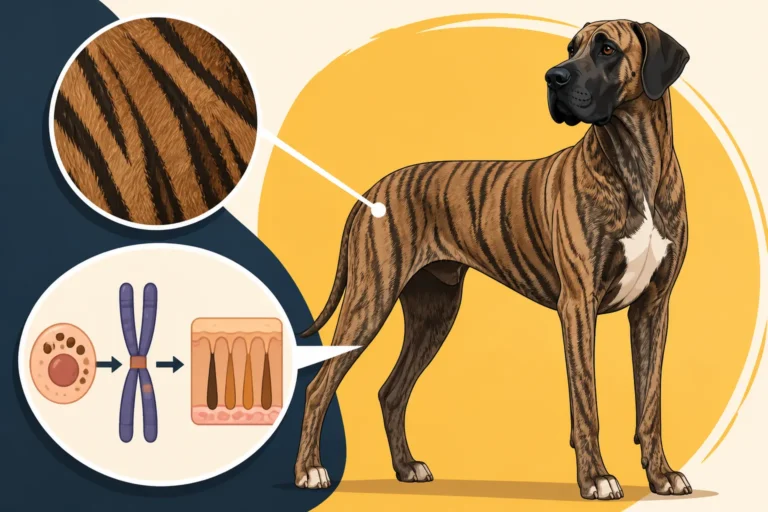
- Brindle: Fawn with black stripes.
- Blue: A steel blue (gray) color.
- Black: Solid glossy black.
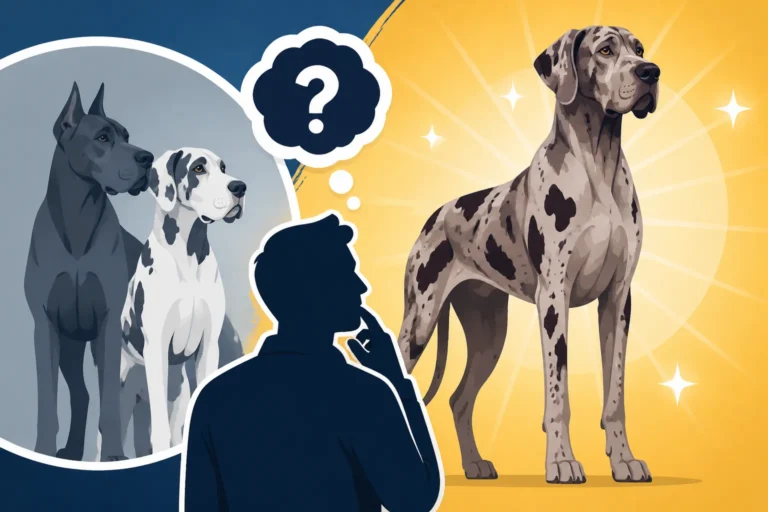
- Harlequin: White with torn black patches.
- Mantle: Black with white markings, often resembling a blanket over their back, with a white blaze on the face.
You'll find detailed descriptions like The Fawn Great Dane and Its Black Mask or What Makes a Harlequin Great Dane Correct in other breed resources. Their coats lie flat and are generally smooth to the touch.
Mastiffs typically have a shorter, harsher coat. Their recognized colors include:
- Fawn: Light fawn to a rich golden fawn.
- Apricot: A reddish-fawn.
- Brindle: Fawn or apricot with dark stripes.
A crucial distinction is that all Mastiffs should have a black mask around their muzzle, eyes, and ears. You won't see the harlequin or mantle patterns in a Mastiff, nor the blue dilution. Both breeds shed, but the Mastiff's coat, while short, can still produce a surprising amount of hair. For either giant, you'll want to invest in a good quality brush and potentially a vacuum designed for pet hair, and online stores like Chewy offer many options for grooming tools.
Temperament and Personality Differences
While both are often described as "gentle giants," their inherent temperaments and how they interact with the world around them are shaped by their historical roles, leading to distinct personality traits.
The "Apollo of Dogs" vs. The "Noble Guard"
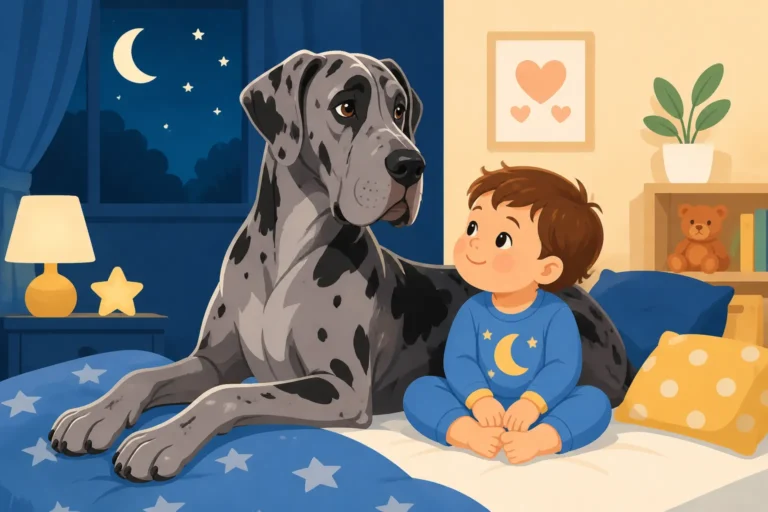
The Great Dane, with its background as a boar hunter, is often characterized by a lively, friendly, and affectionate disposition. They are known for being excellent family companions, often forming deep bonds with their human "pack." Despite their imposing size, they tend to be quite gentle and good-natured, especially with children and other pets, provided they are properly socialized from a young age. Their playful nature can extend well into adulthood, and they enjoy being an active part of family life. They thrive on companionship and can become anxious if left alone for extended periods. This desire for connection is why Living With a Great Dane That Leans on You is such a common experience for Dane owners.
The Mastiff, as a guardian breed, tends to be more reserved, dignified, and inherently watchful. They possess a quiet confidence and a steadfast loyalty to their families. While they are incredibly affectionate with their loved ones, they are often less overtly playful than Great Danes and can be aloof or wary of strangers. Their protective instincts are strong, making them excellent, albeit gentle, guardians. They typically prefer a calm, predictable environment and are not usually prone to excessive barking unless there's a perceived threat. When considering Whether a Great Dane Suits a First Dog, one might find the Mastiff to be a slightly more challenging first-time owner dog due to its strong guarding instincts that need careful management.
Energy Levels and Exercise Needs
Here's another significant divergence. Great Danes, due to their athletic hunting background, have a surprising amount of energy, especially in their younger years. They require regular exercise to stay physically and mentally healthy. This doesn't mean hours of intense running, but daily walks, playtime in a securely fenced yard, and opportunities to stretch their long legs are essential. Failing to provide enough appropriate exercise can lead to destructive behaviors or an overweight Dane, which is particularly hard on their developing joints. Exercise Limits While a Great Dane Is Still Growing is a crucial read for puppy owners, emphasizing slow, controlled growth.
Mastiffs, while powerful, generally have lower exercise requirements compared to Great Danes. They are more content with leisurely walks and a good snooze on the sofa. Their massive bulk means strenuous activity can be hard on their joints, especially as they age. Short, regular walks and access to a secure yard for pottering are usually sufficient. They are not built for sustained running or agility courses. Their ideal day often involves monitoring the household from a comfortable spot, ready to offer a comforting lean or a watchful gaze. When searching for dog food for these different energy levels, options abound, and Chewy, for example, stocks a wide range of formulas designed for various activity levels and giant breeds.
Socialization and Family Dynamics
Both breeds benefit immensely from early and consistent socialization. For a Great Dane, early exposure to various people, places, sounds, and other friendly dogs helps harness their natural friendliness and ensures they grow into well-adjusted adults who can politely manage their size in social situations. Socializing a Great Dane Puppy Early is paramount, helping them learn appropriate manners and build confidence. Without it, their size alone can make them intimidating, even if their intentions are good.
For a Mastiff, socialization is equally important but serves a slightly different purpose: it helps them learn to differentiate between genuine threats and everyday occurrences. Proper socialization ensures their protective instincts are channeled appropriately, allowing them to be accepting of invited guests while remaining vigilant. They generally do well with children and other pets within their own family, often showing immense patience and tolerance, but supervision is always key due to their sheer size. Introductions to new people or animals should always be calm and controlled.
Health and Lifespan Considerations
Giant breeds, by their very nature, come with specific health challenges and a generally shorter lifespan compared to smaller dogs. While both Great Danes and Mastiffs face breed-specific issues, there are some differences to be aware of.
Common Health Concerns
Great Danes are unfortunately prone to several serious health conditions. The most well-known is bloat, or gastric dilatation-volvulus (GDV), a life-threatening condition where the stomach twists. Bloat in a Great Dane and the One in Three Odds highlights the severity of this risk. Heart conditions, particularly dilated cardiomyopathy (DCM), are also prevalent. The Heart Muscle Disease Great Danes Are Prone To is another common concern. Other issues include various cancers, bone and joint problems like hip and elbow dysplasia, and Wobbler Syndrome, a neck condition. Regular veterinary check-ups and proactive screening are vital for managing these risks.
Mastiffs, while also prone to bloat and heart conditions, frequently contend with different orthopedic issues due to their immense weight. Hip and elbow dysplasia are very common, often leading to arthritis. Certain cancers, particularly osteosarcoma (bone cancer) and lymphoma, are also seen in the breed. Eye conditions, like entropion and ectropion (inward or outward rolling eyelids), can also occur. The sheer size of Mastiffs means that any health issue, from a minor limp to a surgical procedure, can be more complicated and costly. When budgeting for a giant breed, remember that medications and anesthesia are often dosed by weight, making every vet bill bigger for dogs like the Mastiff and Great Dane. Why Every Great Dane Bill Is Bigger applies equally to Mastiffs.
General Lifespan Expectations
Both Great Danes and Mastiffs typically have shorter lifespans than many smaller dog breeds. Great Danes generally live between seven to ten years. The Seven to Ten Year Great Dane Lifespan covers this unfortunate reality. This accelerated aging is common among giant breeds, as their bodies experience more wear and tear over a shorter period.
Mastiffs tend to have an even slightly shorter average lifespan, often living between six to ten years. Their incredible mass puts constant strain on their bodies, and their larger organs can sometimes lead to an earlier onset of age-related diseases. Regardless of the specific breed, dedicated care, excellent nutrition (which can be easily sourced from online retailers like Chewy), and prompt veterinary attention can help maximize their quality of life for as long as possible.
Here's a quick comparison table to help summarize the key differences:
| Feature | Great Dane | Mastiff (English Mastiff) |
|---|---|---|
| Origin | Germany (boar hunter) | Ancient (guardian, war dog) |
| Build | Tall, lean, athletic, elegant, deep chest | Massive, heavy-boned, broad, stocky, powerful |
| Height | Taller (often 28-34+ inches at shoulder) | Slightly shorter but more massive (27-30+ inches) |
| Weight | 100-175+ lbs (leaner) | 150-250+ lbs (much heavier for height) |
| Head | Long, rectangular, chiseled, distinct stop | Massive, broad, square, wrinkled forehead |
| Muzzle | Deep, broad, proportionate | Short, broad, blunt |
| Expression | Intelligent, thoughtful, gentle | Serious, solemn, watchful |
| Jowls/Drool | Moderate | Pronounced, significant drooling |
| Coat Colors | Fawn, Brindle, Blue, Black, Harlequin, Mantle | Fawn, Apricot, Brindle (all with black mask) |
| Temperament | Friendly, playful, affectionate, sensitive, social | Reserved, dignified, loyal, watchful, protective |
| Energy Level | Moderate to high (especially when young), needs exercise | Low to moderate, prefers leisurely activity |
| Lifespan | 7-10 years | 6-10 years |
| Common Issues | Bloat, DCM, Wobblers, hip/elbow dysplasia, cancer | Bloat, hip/elbow dysplasia, cancer, eye issues, heart |
Understanding the nuances between a Great Dane and a Mastiff is more than just academic; it's essential for anyone who truly wants to bring one of these magnificent breeds into their life. Each has its own distinct charm, set of needs, and unique personality. By recognizing their differences, you can better appreciate what makes them so special and ensure you're ready for the wonderful, giant-sized commitment they represent.
Disclaimer
This article is for general informational purposes only and does not constitute professional advice. Laws, prices and regulations vary by location and change over time. Consult a qualified professional for guidance on your specific situation.