The Great Dane as Germany’s National Breed
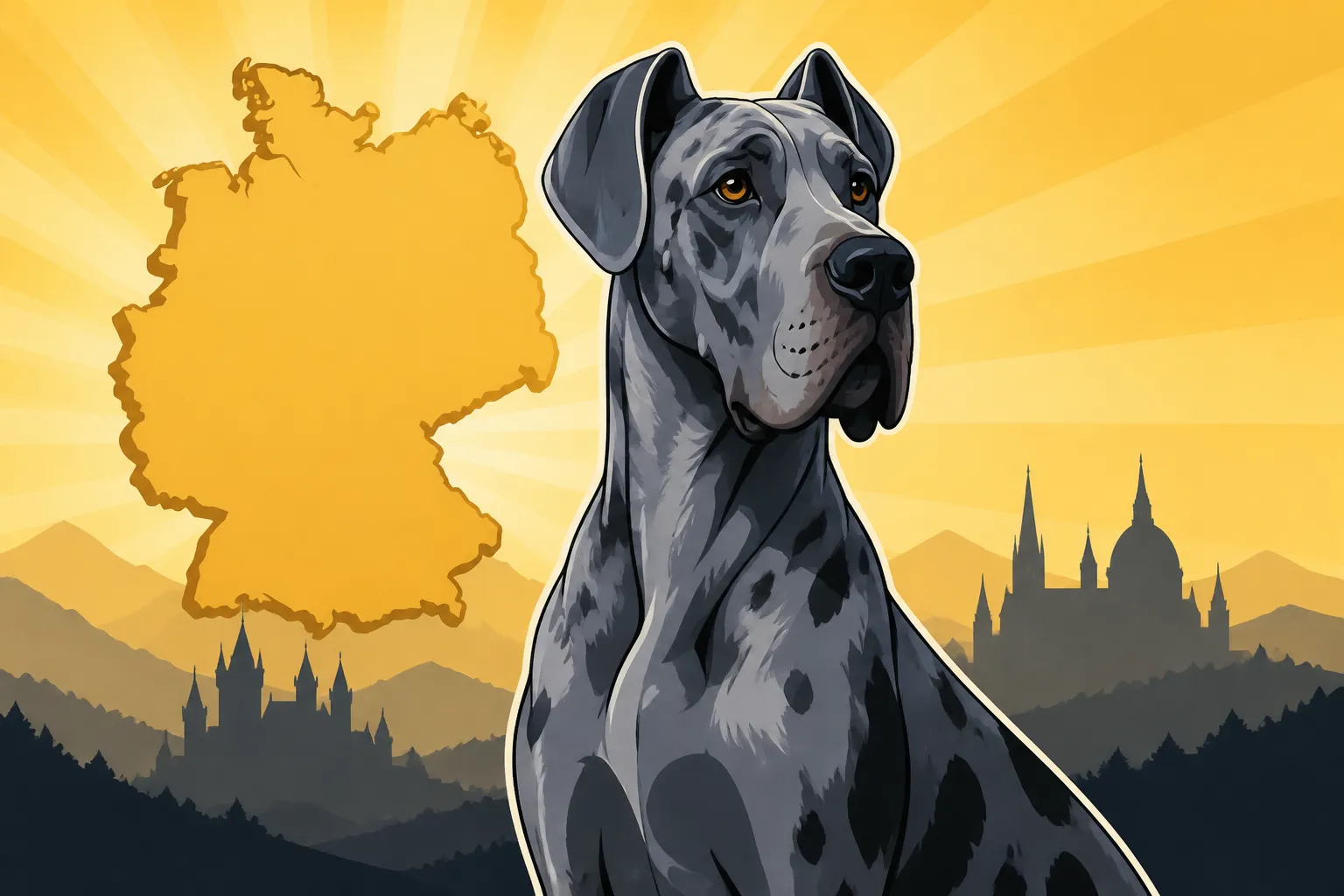
It's quite a common misconception, isn't it? Many people hear "Great Dane" and immediately picture windswept Danish coastlines or Viking sagas. But the truth is, this majestic and often misunderstood giant dog breed has a deeply entrenched history right in the heart of Germany. It can be frustrating to see such a powerful national symbol attributed elsewhere, especially when its heritage is so rich. This comprehensive guide will peel back the layers of history, showcasing how the Great Dane, or as the Germans proudly call it, the "Deutsche Dogge," became an iconic national breed, from its formidable origins to its place in modern German culture.
Unraveling the Name: Why "Great Dane" Despite German Roots?
It's one of those historical quirks that sticks around and causes so much confusion for new and even experienced Great Dane owners. You get a beautiful puppy, learn about its incredible temperament, and then you hear someone call it Danish, and you think, "Wait, what?" It's a common frustration, and one that highlights how names can sometimes be misleading, obscuring the true origins of something truly special.
The Lingering Danish Misconception
The idea that Great Danes come from Denmark is a really persistent one, and honestly, it's easy to see why. The name itself, "Great Dane," just rolls off the tongue and sounds so definitive. For centuries, various large dogs were spread across Europe, often labeled by their country of origin or a key characteristic. At one point in the 18th century, a large, smooth-coated dog resembling today's Dane was indeed described as "Grand Danois" in France, which translates to "Big Danish." This term likely found its way into English, solidifying the "Dane" part of the name, even though the breed's systematic development was happening elsewhere. Why the Great Dane Is Not Danish explores this linguistic journey in more detail, but the short version is that it was more of a geographical descriptor for large dogs in general than a specific breed origin.
This early terminology, propagated through travel writings and early canine literature, unfortunately cemented the misattribution. It wasn't about a specific Danish breeding program or unique lineage from Denmark, but rather a catch-all term that happened to stick. Imagine calling all large, shaggy dogs "Irish Wolfhounds" just because one impressive specimen came from Ireland; it doesn't mean every shaggy dog is Irish. This historical accident has led to generations of people associating the breed with a country that, while certainly having large dogs, wasn't the primary force behind the Great Dane as we know it today.
For those of us who adore the breed, it can be a little disheartening when people consistently misidentify their origins. It’s like someone calling a German Shepherd an "Alsatian" (which it was during wartime, for different reasons) and completely overlooking its rich German heritage. The Great Dane’s true story is so much more fascinating, rooted in centuries of careful selection and purpose in Germany, making the lingering "Danish" label feel like a historical oversight.
What "Deutsche Dogge" Truly Means
In Germany, there’s no such confusion. Our beloved Great Danes are known universally as "Deutsche Dogge," which translates directly to "German Mastiff" or "German Dogge." This name is a source of immense pride and accurately reflects the breed’s deep German heritage. The term "Dogge" itself refers to a group of large, powerful European dogs, often associated with a strong build and a protective nature, much like the English Mastiff or the Dogue de Bordeaux.
The adoption of "Deutsche Dogge" wasn't accidental; it was a deliberate act of national identity. As breeders and enthusiasts in Germany worked tirelessly to standardize the breed in the late 19th century, they wanted a name that unequivocally proclaimed its origin and lineage. This was a direct move to reclaim the breed from the generic "Danish" label and firmly establish its German roots. What Deutsche Dogge Means for a Great Dane Owner delves into the significance of this designation, not just as a name, but as a reflection of the breed's role in German culture and its precise characteristics.
This official German designation is more than just a name; it embodies the spirit and history of the breed. It speaks to the dedication of German breeders who, for generations, refined these magnificent dogs for specific roles, ensuring their powerful physique and noble temperament were preserved and enhanced. When you say "Deutsche Dogge," you're not just naming a dog; you're invoking a lineage, a purpose, and a national heritage that truly belongs to Germany.
The Historical Role of English and German Bloodlines
While the Great Dane is undeniably a German breed, its ancestry is a fascinating tapestry woven from various European dogs, including those with English roots. The powerful "Boar Hounds" of medieval Germany, ancestors to today’s Great Dane, were formidable dogs bred for hunting dangerous wild boar. These were robust, fearless dogs, but they also needed speed and agility to contend with such a formidable opponent.
To achieve this balance of strength and swiftness, historical records suggest that early German breeders likely incorporated mastiff-type dogs from England, known for their size and power, with tall, nimble hounds, possibly resembling the Irish Wolfhound, to infuse speed and elegant lines. This strategic crossbreeding was essential in developing the unique combination of power, grace, and athleticism that characterizes the Great Dane. The Boar Hound the Great Dane Descends From gives a glimpse into this historical blending, illustrating how different bloodlines contributed to the eventual emergence of the Deutsche Dogge.
It’s crucial to understand that while English mastiffs contributed to the Great Dane's foundation, the subsequent breeding programs, standardization, and focused development into the modern Great Dane happened almost exclusively in Germany. German breeders carefully selected for specific traits – a particular head shape, a flowing gait, a noble expression – solidifying the breed's identity distinct from its component parts. This process of refinement and standardization over centuries is why Germany rightfully claims the Great Dane as its own.
From Boar Hound to Noble Companion: The Early Great Dane
Before they were lounging on velvet sofas or gracing the pages of breed standards, Great Danes were tough, working dogs with a crucial, dangerous job. Their journey from the wild forests of Germany to the comfortable homes of today is a testament to their adaptability and the foresight of early breeders. Understanding this original purpose really helps you appreciate the physical and mental traits we see in our Danes today.
Hunting Wild Boar: The Breed's Original Purpose
Picture this: medieval German forests, dense and teeming with wild boar—an incredibly fierce and dangerous animal. These hunts were not for the faint of heart, and the dogs needed to be even tougher. The early ancestors of the Great Dane were specifically bred as "Boar Hounds" or "Saupacker" (literally "boar-packers"), whose job it was to locate, corner, and hold these powerful, tusked animals until the hunter could dispatch them. This wasn’t a gentle task; it required immense courage, strength, and an almost reckless bravery.
These dogs weren't simply chasing the boar; they were actively engaging it in a fight to the finish. This explains so much about the Great Dane's physical prowess and, ironically, its gentle nature today. A dog that is constantly "on edge" or overly aggressive would be a liability in such a high-stakes hunt, often turning on its handlers. Instead, they needed a dog that could be fiercely brave and resolute when confronting the boar, but also calm, steady, and obedient with its human companions. The Wild Boar the Great Dane Was Bred to Hold provides more context on the sheer danger and skill involved in these ancient hunts.
This original purpose instilled in the breed an incredible combination of power and control. They had to be quick enough to pursue, strong enough to hold, and intelligent enough to work in tandem with hunters. This dangerous work shaped their very being, creating a dog that could be a formidable presence when necessary, but utterly devoted and tractable in the home.
The Physical Traits Built for the Hunt
When you look at a Great Dane today, you might see a gentle giant, but every line of its body speaks to its history as a hunter. Their imposing size, often reaching significant heights, wasn't just for show; it was essential for facing down a charging boar. They needed long, powerful legs for speed over varied terrain and immense stamina to sustain a pursuit. The deep chest, characteristic of the breed, provided ample lung capacity for prolonged exertion, which was critical during a strenuous hunt.
Beyond sheer size, their musculature and bone structure were built for impact. A boar hound needed to be able to withstand the force of a tusked animal and maintain its grip. Their strong jaws and broad muzzle were functional, designed for holding and incapacitating. Even the set of their ears (traditionally cropped in some historical contexts, though less common now, and often historically done to prevent tears during boar encounters) was practical, aimed at minimizing injury during a fight. How Big a Great Dane Actually Gets hints at the impressive stature developed for these tasks.
Imagine equipping an athlete for a specific sport: every aspect of their training and physique is tailored. The same was true for these early Great Danes. They were living tools, perfectly engineered by centuries of selective breeding to perform an incredibly demanding and dangerous job. This profound functional history is why the breed standard today emphasizes a well-muscled, powerful, yet elegant physique – it's a direct echo of their past.
The Transition from Hunter to Estate Guardian
As hunting practices evolved and large game became less prevalent, the role of the Great Dane began to shift. The very traits that made them exceptional boar hounds – their intimidating size, courage, and protective instincts – made them ideal candidates for guarding estates and protecting their noble owners. From holding a boar, they transitioned to guarding a castle. Their imposing presence alone was often enough to deter intruders, and their loyalty made them unwavering protectors.
They became symbols of status and power, gracing the halls of German nobility. Their gentle disposition when not provoked, combined with their capacity for fierce defense, made them perfect family guardians. They were often kept close to their owners, demonstrating their inherent loyalty and desire for companionship. This close association with noble families further cemented their image as dogs of distinction and high standing within German society.
This transition wasn't just about a change in job; it was also about refinement. While still powerful, breeders began to emphasize their noble appearance, elegant gait, and steady temperament even more. The focus shifted from raw hunting prowess to a more refined guardian and companion, capable of impressing guests while still providing formidable protection. This dual role paved the way for the Great Dane to become not just a working dog, but a beloved and revered member of the household, a true noble companion.
Bismarck and the Unification of the Great Dane Standard
The latter half of the 19th century was a pivotal time for Germany, marked by significant political unification under Otto von Bismarck. Intriguingly, this era of national consolidation also played a crucial role in solidifying the identity of the Deutsche Dogge. It was a time when a growing sense of national pride extended even to the country's dogs, with a desire to formally recognize and define what made a German dog truly German.
Otto von Bismarck's Enduring Influence
Otto von Bismarck, often hailed as the architect of German unification, was a towering figure in 19th-century European politics. But beyond his political prowess, Bismarck was also a devoted dog lover, specifically of Great Danes. He famously kept several, and they were often seen accompanying him, lending an air of powerful dignity to the Iron Chancellor. Imagine a dog so majestic and imposing that it complements the presence of one of history's most formidable statesmen! Bismarck and His Great Danes offers a fascinating glimpse into his personal connection with the breed and how his affection further elevated its status.
His visible association with the breed undoubtedly boosted its profile and prestige within Germany. When a national leader of Bismarck's stature openly favors a particular dog, it naturally creates a sense of national pride and encourages others to appreciate and uphold the breed. This endorsement wasn't just a casual fancy; it aligned with the broader nationalist sentiment of the time, where everything "German" was being celebrated and codified. Bismarck's personal connection helped cement the Great Dane's place as a symbol of strength, nobility, and German character.
His influence went beyond mere popularity. It created an environment where the idea of a uniquely German dog breed, worthy of a national standard, could truly flourish. His presence and preference for the Deutsche Dogge provided a powerful, albeit indirect, impetus for the systematic development and formal recognition of the breed that was soon to follow.
The Drive for a Unified German Breed
Before Bismarck's era, various large mastiff-type dogs existed across Germany, often differing in appearance and type depending on the region. There were the "Ulmer Dogge" (from Ulm), "Danziger Dogge" (from Danzig), and "Hatzrüde" (hunting dogs), among others. This regional variation, while interesting, meant there wasn't a single, universally recognized "German Dogge." This lack of a unified standard was a challenge for breeders who envisioned a distinct national breed.
The spirit of German unification under Bismarck spurred a parallel movement in the canine world: the desire to create a single, definitive "Deutsche Dogge." Breeders and enthusiasts recognized the inherent qualities of these various regional "Doggen" and saw the potential to coalesce them into one magnificent breed. This wasn't about erasing history but about synthesizing the best characteristics into a cohesive, recognizable standard that everyone could agree upon.
This drive was fueled by a strong sense of national identity. Just as Germany was unifying politically, there was a cultural desire to define and celebrate distinct German contributions, and a national dog breed was a perfect fit. The breeders wanted to establish a clear German identity for these powerful dogs, distinguishing them from mastiff types found in other countries and cementing their place in Germany's heritage.
The Formation of the First German Great Dane Club
This collective desire for a unified breed culminated in a landmark event: the formation of the first official Great Dane club in Germany. In 1888, the "Deutscher Doggen-Club 1888 e.V." was founded in Berlin, marking a crucial turning point for the breed. This club wasn't just a social gathering; it was a dedicated organization with a serious mission: to define, standardize, and protect the Deutsche Dogge.
The establishment of this club provided the necessary structure and authority to bring order to the diverse types of large German dogs. It allowed breeders from different regions to come together, discuss, and agree upon a single, coherent breed standard. This was a monumental task, requiring extensive collaboration and compromise, but the shared vision of a true national breed propelled them forward.
Crucially, it was under the auspices of this club that the first comprehensive German breed standard was drafted and adopted. This document meticulously described the ideal physical characteristics and temperament of the Deutsche Dogge, providing a blueprint for future breeding programs. It outlined everything from head shape and ear set to gait and coat color, ensuring consistency and quality across the breed. This standardization was instrumental in elevating the Great Dane from regional varieties to a globally recognized national treasure.
The Official Recognition: Germany's National Dog
The journey from a formidable boar hound to a universally recognized symbol required more than just devoted breeders; it needed official recognition. The moment Germany formally adopted the Great Dane as its national breed was a declaration of pride, solidifying its place in the country’s cultural fabric.
When Germany Adopted the Great Dane Officially
The formal recognition of the Great Dane as Germany's national breed is often attributed to the year 1878, when a committee of judges and breeders met in Berlin, under the leadership of Bodinus, to declare the various "Dogge" types (like the Ulmer Dogge and Danziger Dogge) as a single breed named "Deutsche Dogge." This was a pivotal moment, a clear statement that these magnificent dogs were to be considered a unified German entity. This declaration was further solidified by the aforementioned formation of the Deutscher Doggen-Club in 1888, which then formalized the standard.
This act of official adoption wasn't merely symbolic; it had practical implications for breeders and the future of the breed. It meant that resources, focus, and prestige would be directed towards developing and promoting this specific type of dog, rather than fragmented regional variations. When Germany Adopted the Great Dane Officially outlines the historical context and significance of this crucial period, highlighting how a nation's identity can be intertwined with its chosen animal symbols.
By embracing the Deutsche Dogge as its own, Germany provided a clear direction for the breed's future. It fostered a sense of collective responsibility among breeders to uphold the highest standards, ensuring that the integrity and unique characteristics of this "German Mastiff" would be preserved for generations to come. It was a true culmination of centuries of informal breeding and decades of dedicated formalization.
The Evolution of the German Breed Standard
The initial breed standard, penned shortly after the club's formation, was a living document, evolving over time to reflect the ongoing refinement of the Deutsche Dogge. These standards are incredibly detailed, dictating everything from the desired expression of the eyes to the length of the tail and the precise angles of the hindquarters. For a dedicated German breeder, this standard isn't just a guideline; it's a sacred text outlining the ideal embodiment of the breed.
The standard emphasizes a powerful, elegant, well-balanced dog with a regal bearing. It calls for a majestic presence combined with an inherently friendly and devoted temperament. Deviations from the standard, whether in physical traits or temperament, are carefully noted and addressed in breeding programs to ensure the purity and quality of the bloodline. This meticulous approach to breeding is why German lines are often celebrated for their consistency and adherence to type.
This continuous evolution and strict adherence to the standard highlight the German commitment to breeding excellence. It's a never-ending process of careful selection, with breeders striving to produce dogs that not only look the part but also embody the sound health and temperament that the Deutsche Dogge is famous for. For anyone considering a Great Dane, understanding the depth of this commitment, especially from German-line breeders, is crucial.
Protecting the Breed's Identity and Future
Even with official recognition, the work of preserving a national breed is ongoing. German breeders and breed clubs have always been vigilant in protecting the Deutsche Dogge's identity from trends that might compromise its health, temperament, or adherence to the established standard. This often involves strict breeding regulations, mandatory health testing, and a strong emphasis on maintaining a comprehensive pedigree.
One of the ways this protection manifests is in the careful management of bloodlines and genetic diversity. Responsible German breeders are deeply committed to ensuring their dogs are free from inheritable conditions, contributing to the overall health of the breed. This proactive approach helps to safeguard the future of the Deutsche Dogge, ensuring that it remains robust and healthy for years to come.
This commitment extends to education, both for new breeders and prospective owners. Ensuring that people understand the breed's history, its true temperament, and its specific needs is vital for its continued well-being. By fostering a knowledgeable community, German breed enthusiasts ensure that the Deutsche Dogge's legacy as a noble, healthy, and beloved national dog endures.
The Modern German Great Dane: Distinguishing Characteristics
When you look at a Great Dane today, you might not immediately realize that there can be subtle, yet significant, differences depending on its lineage. The German commitment to its national breed has resulted in a distinct type, often contrasted with its counterparts in other parts of the world.
Comparing European and American Lines
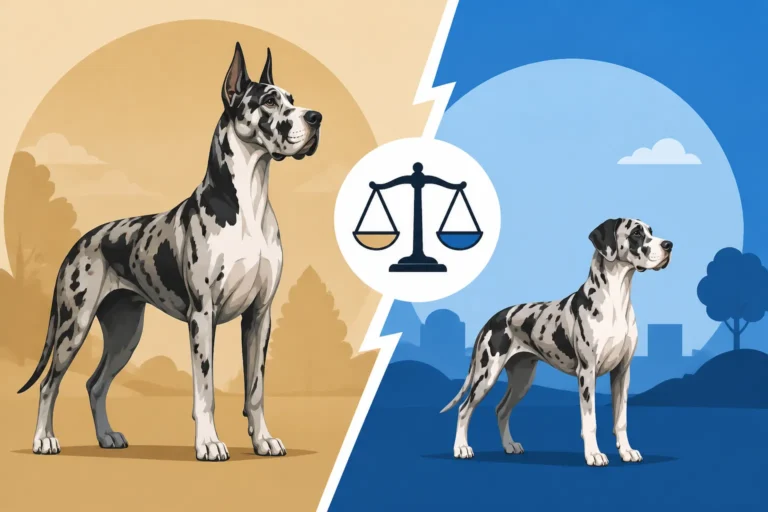
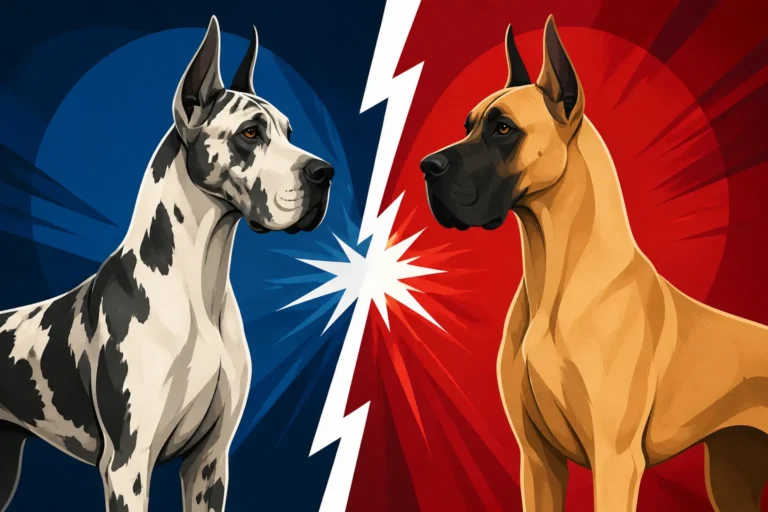
It’s an interesting topic that often comes up in discussions among Great Dane enthusiasts: are there differences between European (often meaning German) and American Great Danes? While they are all fundamentally the same breed, years of differing emphasis in breeding programs have led to some discernible characteristics. Generally, European Great Danes, particularly those from German lines, often maintain a slightly heavier bone structure, a more robust build, and a somewhat more substantial head.
American lines, while still impressive, sometimes lean towards a slightly more refined or elegant look, with a focus on a more extreme angle in the rear and a slightly lighter frame for some. These aren't vast, glaring differences, but they are noticeable to the discerning eye or when you see dogs from both lines side-by-side. The German standard tends to prioritize overall substance and powerful movement, directly reflecting the breed's historical function. European Great Danes Against American Lines offers a deeper dive into these nuanced distinctions, showing how regional preferences shape a breed.
Neither approach is inherently "better," as both aim to produce healthy, well-tempered Great Danes. However, for those seeking a dog that very closely embodies the historical and functional type of the Deutsche Dogge, German lines often represent that robust, classic ideal. It simply comes down to understanding the slight variations and personal preference when seeking a new canine companion.
The Ideal Conformation According to the German Standard
The German breed standard for the Deutsche Dogge is exceptionally precise, detailing every aspect of the dog's physical conformation. It seeks a harmonious blend of power, elegance, and nobility. A strong, well-defined head with parallel planes is crucial, showcasing intelligence and character. The neck should be long, muscular, and arched gracefully, flowing seamlessly into a strong, level topline. The chest is deep and well-sprung, not overly narrow or barrel-shaped, indicating powerful lung capacity and heart room.
Movement is also heavily emphasized. The German standard calls for a long-reaching, powerful, and flowing gait, demonstrating both elegance and ground-covering efficiency. This "effortless" movement is a direct callback to their hunting days, where stamina and agility were paramount. Every element, from the angulation of the shoulders and hindquarters to the firmness of the feet, is carefully considered to contribute to this ideal, functional structure. The Great Dane the Show Ring Is Looking For outlines many of these precise conformational requirements.
This rigorous focus on conformation ensures that the Deutsche Dogge remains true to its historical type, capable of performing with grace and power. It's not just about aesthetics; it's about maintaining a structurally sound dog that can live a long, active, and comfortable life. Breeders work tirelessly to achieve this ideal, understanding that a sound structure is the foundation of a healthy dog.
Understanding Color and Genetics in German Lines
While the Great Dane comes in a variety of beautiful colors, German breeding practices often have a very strict approach to color genetics, emphasizing health and temperament above all. The recognized colors in Germany generally align with the traditional Fawn, Brindle, Blue, Black, Harlequin, and Mantle. However, the German standard is often very clear about what is considered correct and what deviations are seen as faults.
For example, while merle patterns exist, historically, the breeding of two merle parents is strongly discouraged due to the high risk of producing "double merles," which often come with severe health issues like deafness and blindness. Responsible German breeders prioritize genetic health, even if it means not breeding for certain "trendy" or rare colors if those pairings pose genetic risks. They understand that protecting the breed means understanding the complexities of its genetics.
This careful approach means that when looking at German lines, you're likely to find a strong adherence to the established color standards and a deep understanding of the genetic implications of breeding choices. It’s a testament to their commitment to long-term breed health rather than short-term aesthetic fads. If you’re ever considering a Great Dane puppy, particularly from European lines, a breeder who can articulate their approach to color genetics and health screening is a huge positive.
Living with a German-Bred Great Dane
Bringing any Great Dane into your home is a huge commitment, but understanding the nuances of a German-bred Dane can help set expectations and ensure a harmonious life together. These dogs are truly special, but their size and temperament require mindful ownership.
Temperament and Training Considerations
The German standard describes the Deutsche Dogge's temperament as friendly, loving, and devoted to its family, while also being reserved and confident with strangers. This isn't a shy dog, nor should it be overtly aggressive. It's a balanced temperament born from its historical role: powerful enough to face a boar, yet calm enough to live within a noble household. While often called "gentle giants," remember that "gentle" means controlled power, not weakness. They are very much "Doggen" – mastiff-type dogs.
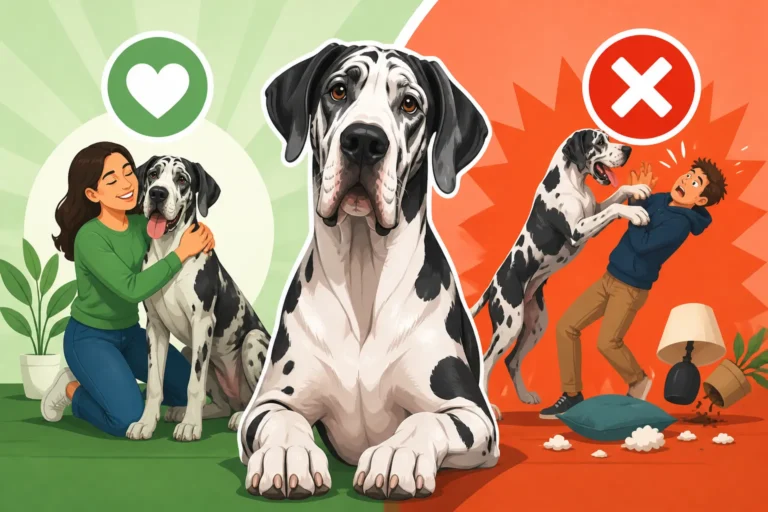
Early and consistent training is absolutely non-negotiable for a Great Dane, regardless of its lineage. Their immense size means that even playful jumping or leaning can knock over an adult, let alone a child. From the moment you bring home a German-bred Great Dane puppy, focus on socialization and basic obedience. Consistent positive reinforcement, clear boundaries, and early exposure to various sights, sounds, and people are vital. They are intelligent and eager to please, but their size demands that good manners become ingrained habits from a young age. The Manners a Great Dane Needs Before It Grows is a fantastic resource for tackling these early training milestones.
A well-socialized and properly trained German-bred Dane is an absolute joy. They thrive on companionship and want to be involved in family life. They are generally calm indoors, preferring to lounge on a comfortable bed near their people. However, their size means they need consistent, gentle guidance to ensure they are polite members of the household, especially around visitors or children.
Health Screening and Responsible Breeding Practices
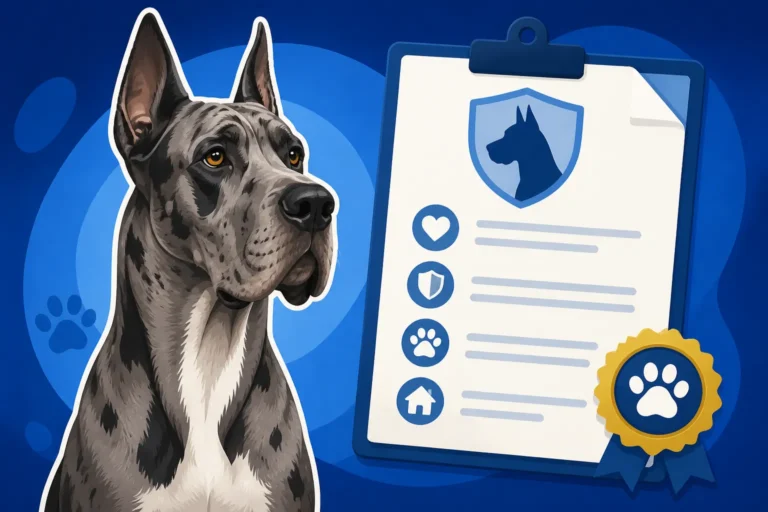
Responsible German breeders are champions of health screening. Given the Great Dane's predisposition to certain health issues, such as bloat (gastric torsion), dilated cardiomyopathy (DCM), and various orthopedic problems, thorough health testing of breeding stock is paramount. This isn't just a suggestion; it's a core tenet of responsible German breeding. Potential breeding dogs undergo evaluations for hips, elbows, eyes, and cardiac health, often by board-certified specialists.
For instance, cardiac screening for DCM is incredibly important, often involving Holter monitoring and echocardiograms. Reputable German breeders will be transparent about these results and eager to discuss the health history of their breeding lines. They understand that while no breeder can guarantee a dog will never have a health issue, they can significantly reduce the risk by making informed breeding decisions based on comprehensive health data. What a Great Dane Breeder Should Be Screening For details the extensive health checks necessary for the breed.
When you're looking for a German-bred Great Dane, don't be shy about asking for proof of health clearances on both parents. A good breeder will welcome your questions and provide documentation. This commitment to health screening is a hallmark of breeders who prioritize the well-being of the breed over profit, ensuring you get the best possible start with your new family member.
The Importance of a Solid Foundation
Beyond genetic health, the early care and nutrition of a Great Dane, especially from German lines, lay the foundation for its adult life. Their rapid growth rate makes them particularly susceptible to developmental orthopedic issues if not managed correctly. This means feeding a high-quality, large-breed puppy food specifically formulated for giant breeds, which controls the calcium and phosphorus balance to promote slow, steady growth, rather than rapid weight gain. You'll often find resources for these specialized foods on sites like Chewy, making it easier to find appropriate nutrition.
Exercise, too, must be carefully managed during puppyhood. While they need regular activity for mental and physical development, strenuous, high-impact exercise should be avoided until their growth plates have closed. This means no forced running or prolonged jogging until they are at least 18-24 months old. Over-exercising a growing Great Dane can lead to irreversible joint damage.
A reputable German breeder will provide extensive guidance on puppy care, feeding, and appropriate exercise regimens. They know that what happens in the first year or two of a Great Dane's life profoundly impacts its long-term health and well-being. Investing in a puppy from a breeder who emphasizes this solid foundation is investing in your dog's future, ensuring they grow into the magnificent, healthy adult they are meant to be.
| Historical Period | Key Development in Germany | Significance for Great Dane |
|---|---|---|
| Medieval Era | Breeding of "Saupacker" (Boar Hounds) | Original purpose: tenacious hunters of wild boar. Defined early traits of courage and power. |
| 17th – 18th Century | Regional "Dogge" types (Ulmer, Danziger) emerge | Diverse but related large dogs exist across German states, lacking a unified standard. |
| 19th Century | Otto von Bismarck's patronage of the breed | Increased prestige and visibility for the "Dogge" types; contributed to national pride. |
| 1878 | Berlin Committee declares "Deutsche Dogge" as a single breed | Official unification of various regional types into one distinct German breed name. |
| 1888 | Formation of Deutscher Doggen-Club 1888 e.V. | Establishment of formal club for breed standardization and protection. |
| 1891 | First official German Breed Standard published | Detailed blueprint for ideal Great Dane conformation and temperament. |
| 20th Century Onward | Continued refinement, health screening, breed protection | Emphasis on genetic health, responsible breeding, and adherence to the established standard. |
The Enduring Legacy: Why the Great Dane Remains a German Icon
The story of the Great Dane as Germany’s national breed is a testament to the dedication of breeders, the vision of enthusiasts, and the deep cultural connection forged over centuries. This isn’t just a dog; it’s a living piece of German history, a noble and beloved icon that continues to capture hearts worldwide.
Cultural Significance Beyond the Show Ring
Beyond the structured world of breed shows and pedigrees, the Deutsche Dogge holds a special place in the hearts of many Germans. It embodies qualities that are often associated with German ideals: strength, loyalty, dignity, and a disciplined yet affectionate nature. It’s a dog that commands respect without needing to be aggressive, much like the German ethos of quiet strength and reliable character.
You’ll find the image of the Great Dane adorning various aspects of German culture, from art to literature, symbolizing a steadfast companion and a protector of the home. It’s not uncommon for German families to speak of their "Dogge" with immense pride, sharing stories of their loyalty and the unique bond they form. This deep-seated appreciation transcends mere pet ownership; it's a recognition of a national treasure.
This cultural resonance is part of what makes the German heritage of the Great Dane so powerful. It's not just a technical classification, but an emotional connection that resonates deeply within the country. It’s a symbol that represents aspects of national identity, echoing centuries of shared history and mutual respect between humans and these magnificent animals.
Great Danes in German Art and Folklore
Throughout German history, artists and storytellers have often depicted the Great Dane, or its ancestors, in their works. In historical paintings, you might see large, mastiff-type dogs accompanying noblemen or standing guard, embodying protection and status. While perhaps not always explicitly named "Deutsche Dogge," these canine figures clearly draw from the same powerful lineage that would eventually be formalized into the breed we know today.
In folklore or local legends, a giant, loyal dog could easily be interpreted as a precursor to the modern Great Dane, standing as a protector against malevolent forces or a faithful companion on epic journeys. This presence in the artistic and narrative landscape of Germany further solidifies its status as an integral part of the nation's heritage, weaving the dog into the very fabric of its cultural consciousness.
This artistic and folkloric representation helps us understand how deeply ingrained the Great Dane has become in the German psyche. It’s not merely a practical animal but a creature imbued with symbolic meaning—a guardian, a loyal friend, and a majestic presence that has inspired generations of artists and storytellers.
International Influence and Global Appreciation
While fiercely proud of their national breed, German Great Dane enthusiasts are also deeply committed to sharing the beauty and integrity of the Deutsche Dogge with the world. German lines are highly sought after by breeders internationally who wish to incorporate the robust health, stable temperament, and adherence to the original type that German breeding programs are known for. This global appreciation speaks volumes about the quality and consistency achieved by German breeders.
Many international Great Dane clubs and organizations look to the German standard as a foundational reference, recognizing its meticulous approach and historical significance. When you see a beautifully conformed Great Dane anywhere in the world, there's a good chance its ancestry, at some point, traces back to the dedicated efforts of German breeders. Even when sourcing supplies, many owners prioritize quality, much like German breeders do, often looking for durable beds or robust toys, perhaps even from pet supply giants like Chewy, to ensure their magnificent Danes are well cared for.
The Great Dane, originally a "German Mastiff," has truly become a global ambassador for its country of origin. Its journey from the boar-hunting forests to a beloved family companion in homes across continents is a powerful testament to the vision of those who recognized its potential and worked tirelessly to define and preserve it as Germany's proud national breed.
Disclaimer
This article is for general informational purposes only and does not constitute professional advice. Laws, prices and regulations vary by location and change over time. Consult a qualified professional for guidance on your specific situation.