Great Danes in Advertising and Cartoons
A Great Dane in a cartoon can look like a lovable, oversized clown; in an advertisement, that same towering silhouette can signal warmth, protection, or instant attention. The tricky part is separating what pop culture gets right from what it exaggerates. This guide looks at famous animated Danes, why advertisers use the breed’s image, and what those portrayals mean for real dogs and their owners.
Why Great Danes Work So Well on Screen
A silhouette audiences recognize immediately
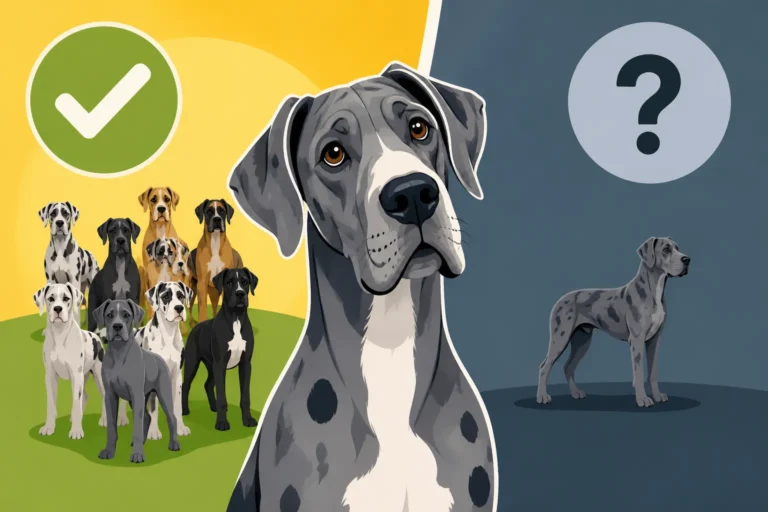
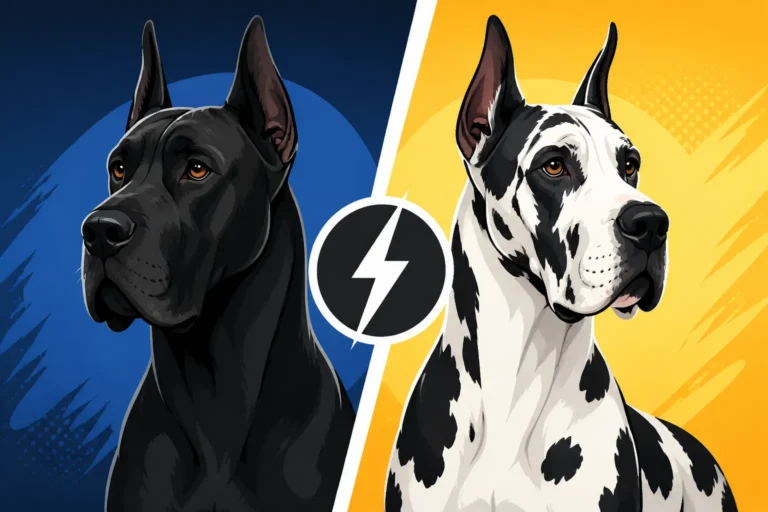
Great Danes are visually useful characters. Their height, long legs, deep chests, and large heads make them easy to recognize, even in a quick scene or a small illustration. Artists can stretch those features for comedy or simplify them into a bold outline without losing the basic impression of a giant dog.
That scale also gives animators a natural way to create contrast. A Dane can loom beside a small human character, curl into a tiny space, or accidentally knock something over with a wagging tail. The joke is readable before the dog does anything. In live-action advertising, a tall dog can command attention in a crowded frame in much the same way.
The breed’s size has become part of its cultural shorthand. A Great Dane can suggest grandeur and elegance, but it can also be portrayed as awkward, silly, or sweet. That range is one reason the breed has a durable screen presence. For a closer look at how much of the size is real rather than cartoon exaggeration, see How Big a Great Dane Actually Gets.
The gentle giant image is powerful storytelling
A huge dog that behaves gently creates an appealing contrast. Viewers may expect a large animal to be intimidating, so a relaxed expression, soft voice, or clumsy attempt to fit on a sofa can quickly make the character seem approachable. That “gentle giant” idea is a major part of the breed’s popular image, though individual dogs vary in temperament and still need training and careful handling.
This contrast works especially well in family entertainment. A giant dog can appear protective without being aggressive, or look formidable while behaving like a devoted companion. Those qualities make the breed useful in stories where creators want a character who seems impressive at first glance but is emotionally safe and funny once the audience gets to know him.
Real Great Danes can be affectionate and people-oriented, but a screen character is not a reliable guide to any individual dog. A real dog’s comfort around children, visitors, or other pets depends on temperament, socialization, supervision, and training. Whether Great Danes Are Actually Gentle explores why the breed’s reputation needs a little more nuance than the familiar nickname suggests.
Famous Great Danes in Cartoons and Popular Culture
Scooby-Doo turned the breed into a household image
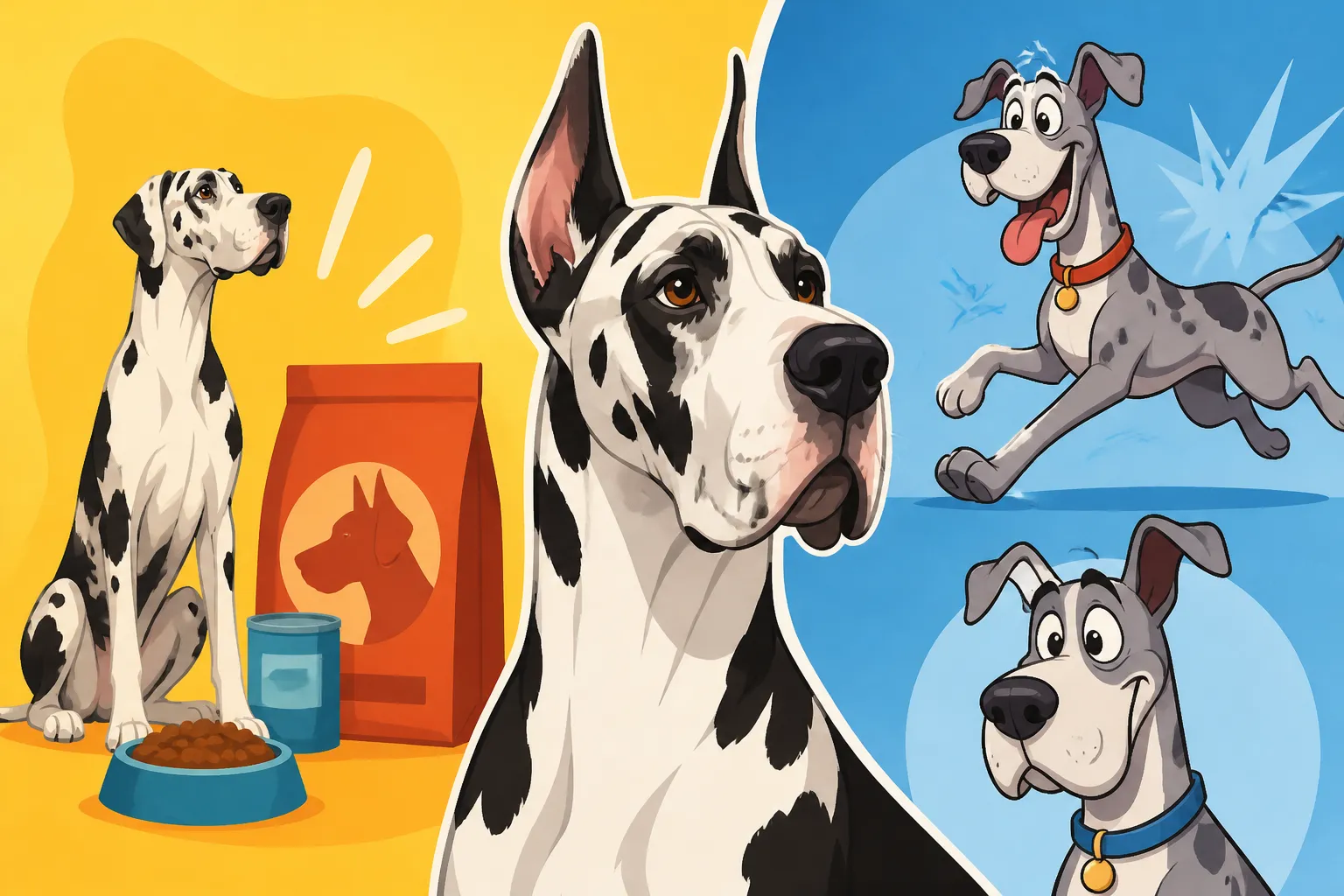
Scooby-Doo is one of the best-known fictional Great Danes. The character’s floppy features, large frame, and comic reactions helped make the breed familiar to generations of viewers who might never have met a real Dane. His adventures use a classic comic pattern: Scooby looks imposing because of his size, then reveals himself as nervous, food-motivated, and deeply attached to his friends.
The character is stylized rather than a precise portrait of canine anatomy or behavior. His expressions and movements are designed to communicate emotions instantly, and his reactions are often exaggerated for comedy. That does not diminish his influence. For many people, Scooby-Doo is their first mental picture of a Great Dane. The character’s effect on the breed’s public image is explored in Scooby-Doo and the Great Dane Image.
It is worth keeping the distinction between a character and a real dog in mind, especially for children. Scooby’s friendliness does not mean every unfamiliar Great Dane wants to be hugged, climbed on, or approached while eating. A simple explanation helps: cartoons are written to behave in predictable ways; real dogs communicate through body language and need space when they ask for it.
Marmaduke and Astro show different sides of the breed
Marmaduke is another familiar fictional Dane, best known from the comic strip created by Brad Anderson and later screen adaptations. The humor often comes from a very large dog moving through ordinary human settings: a kitchen, a car, a living room, or a neighborhood. The result captures a real part of giant-breed life—furniture, doorways, and household routines can feel a little different when a dog occupies so much space.
Astro from The Jetsons is also depicted as a Great Dane. His character leans into the affectionate family-dog image, with expressive behavior and a close bond with the people around him. Compared with Marmaduke’s domestic chaos or Scooby’s comic fright, Astro is often remembered as a loyal companion in a futuristic household.
These characters are not interchangeable, even though they share a breed label. Their personalities serve different stories: one may be a source of physical comedy, another a nervous adventurer, and another a devoted family pet. For more on how Marmaduke’s appearances shaped the breed’s screen reputation, see Marmaduke and Great Danes on Screen.
| Character | Where audiences know the character from | Common portrayal | What the portrayal emphasizes |
|---|---|---|---|
| Scooby-Doo | Animated television and films | Nervous, funny, loyal, and food-loving | Comedy and friendship |
| Marmaduke | Comic strip and screen adaptations | Mischievous and physically oversized | Everyday chaos caused by a giant dog |
| Astro | The Jetsons | Affectionate and family-oriented | Companionship and loyalty |
How Advertising Uses the Great Dane Image
Size attracts attention, while expression builds trust
Advertising often needs an image that people can understand in seconds. A Great Dane’s height and unmistakable outline can make a scene memorable, while a relaxed face or gentle interaction can soften the first impression. Depending on the setting, the dog may suggest confidence, companionship, humor, or a sense of scale.
That does not mean every campaign featuring a large dog is making a factual claim about the breed. The dog may simply be a visual device: a way to make a household look lively, a product seem approachable, or a character stand out. A real Dane’s behavior should never be inferred from a short commercial or a carefully staged photograph.
The breed’s visual impact also depends on contrast. Put a Dane beside a small object, child-sized chair, or compact car, and its size becomes the story. Put the same dog curled beside a person, and the image can feel intimate and comforting. The message comes not just from the dog but from what the scene places around it.
The gentle giant is a useful but incomplete stereotype
The “gentle giant” is an easy advertising idea to understand: impressive in size, tender in nature. It can be charming, but it risks making the dog seem effortless to live with. A Great Dane is still a powerful animal whose leash manners, greetings, and ability to settle around guests matter. Good intentions alone do not stop a large adolescent dog from pulling someone off balance or sweeping a coffee table with its tail.
When you see a Dane used to represent a product or a lifestyle, remember that the scene is arranged for the camera. The dog may have a handler nearby, the room may be cleared, and the interaction may have taken many takes. That is quite different from everyday life, where training, safe introductions, and appropriate supervision matter.
The breed’s impressive stature has also helped create its association with elegance and nobility. That idea connects to the nickname “Apollo of Dogs,” but it is only one part of the breed’s public image. The Great Dane's Reputation as the Apollo of Dogs looks at the history behind that grand description and why it sits alongside the breed’s more comic portrayals.
What Pop Culture Gets Right and What It Leaves Out
Real size changes ordinary household routines
Cartoons can make a Great Dane seem as if he can squeeze anywhere or sprawl wherever he likes without consequence. In an actual home, the dog’s size affects practical details: turning around in a narrow hallway, getting into a vehicle, finding a bed that supports the body, and keeping water bowls from becoming part of the traffic pattern.
If a fictional Dane has made you fall in love with the breed, it can help to picture the unglamorous details alongside the fun ones. A full-grown dog may need room to rest without blocking a doorway, a sturdy leash setup, and furniture arrangements that can handle an enthusiastic tail. Owners often look at giant-breed beds, bowls, and other basics through retailers such as Chewy, but the important step is choosing items that actually fit the dog and your home rather than buying what a character appears to use.
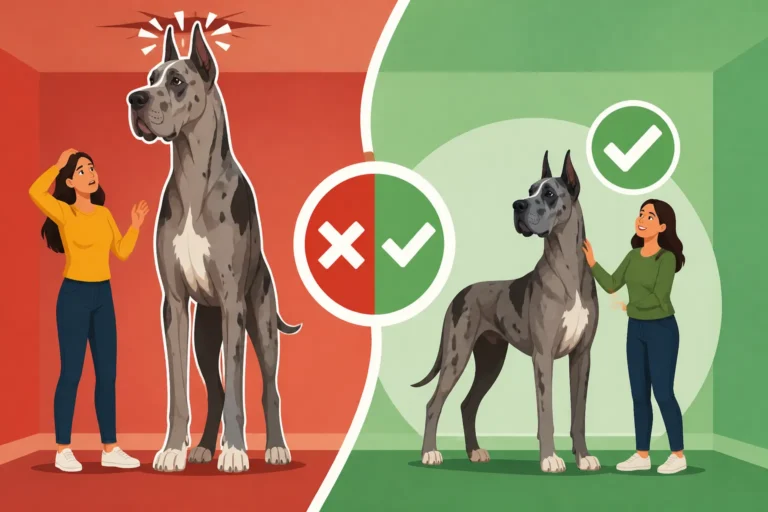
Living with a Dane does not automatically require a mansion or a huge yard. What matters is whether the dog can move comfortably, get regular activity, and share the space safely with the people in it. Whether a Great Dane Suits Your House is useful if you are weighing the breed against your real floor plan and routine, rather than the roomy cartoon home on screen.
A character’s charm is not a training plan
Fictional dogs can be naughty, noisy, or poorly mannered without consequences because the story resets after each episode. Real dogs do not get that reset. A young Dane who jumps up for attention may be amusing while small; as the dog grows, the same habit can frighten a visitor or knock someone over. Teaching calm greetings and a reliable settle cue early is far more practical than hoping an adult dog will simply understand its own size.
The same goes for interactions with children and smaller pets. A friendly giant can still cause accidental bumps, and a playful Dane may be too energetic for a much smaller dog. Adult supervision, thoughtful introductions, and clear rules protect everyone. For real-life family considerations, Great Danes in Homes With Small Children offers a grounded counterpoint to the effortless companionship often shown in entertainment.
Pop culture can still be a lovely starting point for learning about the breed. A child who loves Scooby-Doo may become curious about dogs, and an adult who laughs at Marmaduke may start researching what giant-breed care involves. If that curiosity turns into planning, use practical checklists for supplies and routines; a retailer such as Chewy may be one place owners compare basics like large-dog beds or chew toys, but a veterinarian or qualified trainer can help with health and behavior questions that a shopping list cannot answer.
Let the fiction inspire you, not set expectations
The best way to enjoy Great Danes in advertising and cartoons is to appreciate what each portrayal is doing. Scooby-Doo uses the breed’s size and expressive personality for comedy. Marmaduke turns ordinary household life into a physical gag. Astro represents companionship in a futuristic family. Advertisers may use the same silhouette to create warmth, humor, or instant recognition.
None of those portrayals can tell you exactly what living with a real Great Dane will be like. Real dogs have individual personalities, needs, and limits. If you are considering one, learn about exercise, training, health, and household fit before making a decision. If you already share your home with a Dane, enjoy the pop-culture nods—but let your own dog’s comfort and behavior guide your expectations.
Disclaimer
This article is for general informational purposes only and does not constitute professional advice. Laws, prices and regulations vary by location and change over time. Consult a qualified professional for guidance on your specific situation.