Whether a Great Dane Would Hunt Today
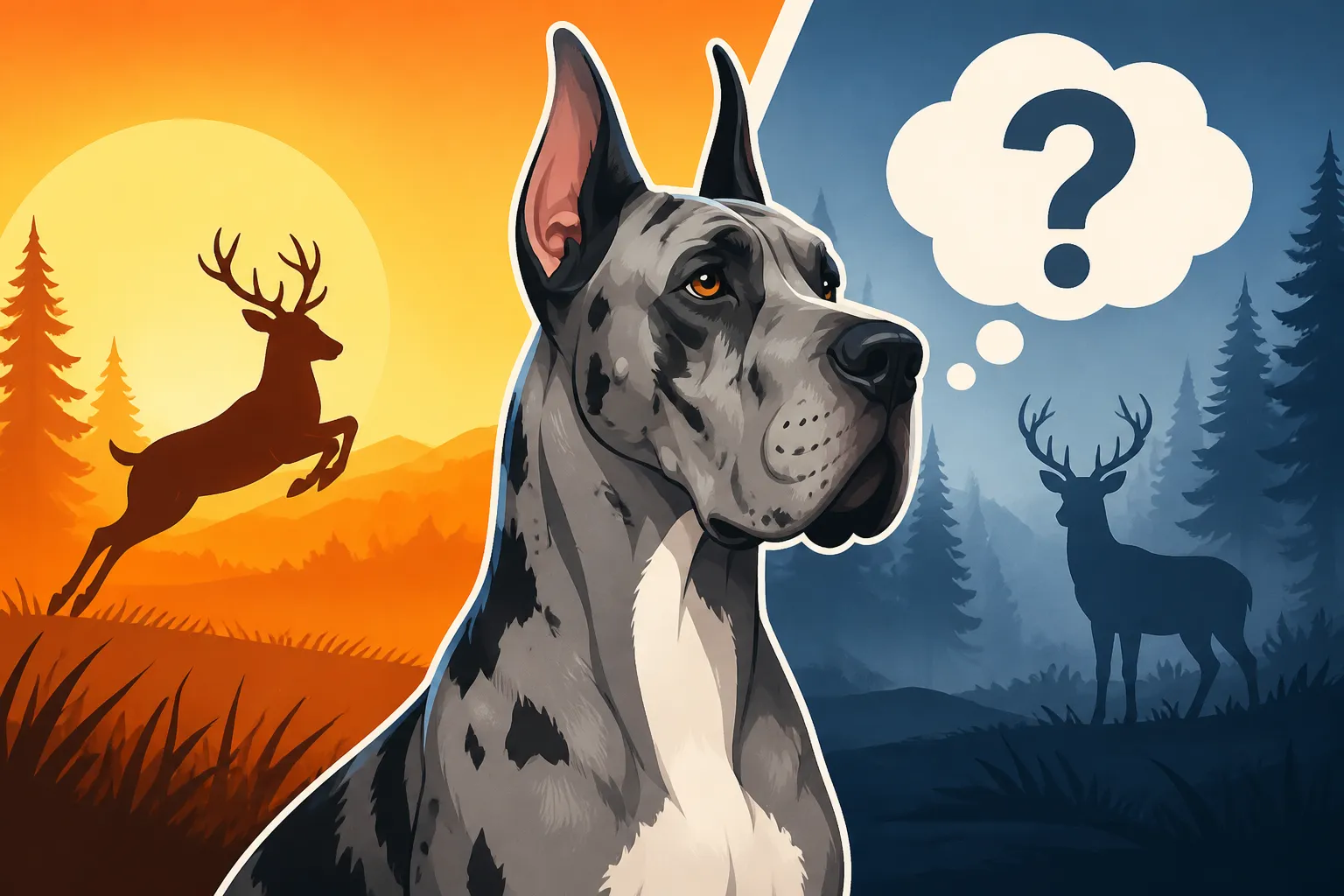
A Great Dane can still chase wildlife, follow a scent, or show interest in moving animals, but that does not automatically make the breed a practical hunting dog today. If you are wondering whether a Dane could join you in the field, the answer depends on its individual instincts, training, health, and the kind of hunting you have in mind. This guide explains what to expect and how to keep the dog safe.
What Great Danes Were Bred to Do
From boar hound to companion
The Great Dane’s history is tied to large-game hunting in Europe. Early dogs associated with the breed were used to pursue and hold wild boar, a demanding task that called for size, strength, courage, and the ability to work with people and other dogs. The breed’s historical role is explored in The Boar Hound the Great Dane Descends From and The Boar Hunts the Great Dane Was Built For.
That history does not mean today’s Great Dane is automatically equipped for modern hunting. Breeding priorities, individual temperaments, and the jobs dogs are expected to do have changed over generations. Most Danes now live as companion animals, and a particular dog may have little interest in tracking or pursuing wildlife. Another may be intensely curious about rabbits or deer despite never having been encouraged to hunt.
Great Danes also were not simply sent out to independently track and retrieve game in the same way as many purpose-bred hunting dogs. Historically, their size and strength suited a particular role in a larger hunting effort. The shift from working animal to household companion is part of the story in How Great Danes Went From Hunting to Guarding. A dog’s ancestry can offer context, but it cannot tell you exactly how that individual will behave in the woods.
What the old role means for a modern dog
A Dane’s history may help explain why some dogs are bold, athletic, or interested in moving animals. But it is not a reliable prediction of hunting ability. Breed traits are tendencies, not guarantees. Two Great Danes from the same litter can respond very differently to birds, squirrels, scent trails, or unfamiliar outdoor settings.
It is also useful to distinguish between showing prey interest and being a safe, capable hunting companion. A dog that lunges toward a rabbit may be reacting to movement, not demonstrating controlled hunting behavior. A dog that follows a scent on a walk may lose focus on its handler, while a trained hunting dog needs to work within a defined routine and respond reliably to cues.
The Great Dane’s familiar image as a gentle, impressive companion can obscure that variety. A calm dog at home can still become excited outdoors, and a large, friendly dog can be difficult to hold if it suddenly pulls toward wildlife. The Great Dane's Reputation as the Apollo of Dogs offers broader context on the breed’s public image, but no nickname can replace observing the dog in real situations.
Could a Great Dane Hunt Today
It depends on the kind of hunting
“Would hunt” can mean several different things: following a scent, flushing game, retrieving, or pursuing and holding an animal. Those activities require different instincts, training, fitness, and equipment. A Great Dane might enjoy scent-based games or carefully supervised tracking exercises without being suited to a demanding hunt.
A large dog’s size may be an advantage in some circumstances, but it also creates practical challenges. Dense brush, steep or uneven ground, long periods of exertion, and hot weather can be hard on a heavy-bodied dog. Great Danes can also be vulnerable to injury if they charge through rough terrain or collide with obstacles. Whether a Dane can keep up safely depends on its health and conditioning, not just its apparent enthusiasm.
| Activity or role | What it involves | Considerations for a Great Dane |
|---|---|---|
| Scent games | Finding a hidden treat or object by smell | Often a useful, lower-impact way to provide mental enrichment |
| Supervised tracking | Following a scent trail with a handler | Requires controlled practice and reliable leash handling |
| Flushing or pursuing game | Moving wildlife from cover or chasing it | Can trigger chasing and create risks around roads, wildlife, and other people |
| Retrieving | Bringing a thrown or located object back | Some Danes enjoy it, but interest and stamina vary |
| Holding large game | Confronting or restraining an animal | High risk; not an appropriate activity to attempt casually with a pet |
If what appeals to you is giving your dog a job, hunting is not the only option. Scent work, obedience, structured hikes, and other supervised activities can use a Dane’s curiosity without exposing it to the hazards of live game. Whether a Great Dane Can Do Scent Work is a helpful next read if your dog enjoys sniffing and searching.
Why prey drive does not equal hunting skill
Prey drive is the tendency to notice, pursue, or investigate animals. It can show up as staring, freezing, pulling, barking, or trying to chase. Those behaviors may be strong in one Dane and barely noticeable in another. They do not mean the dog understands how to hunt safely or will listen once excited.
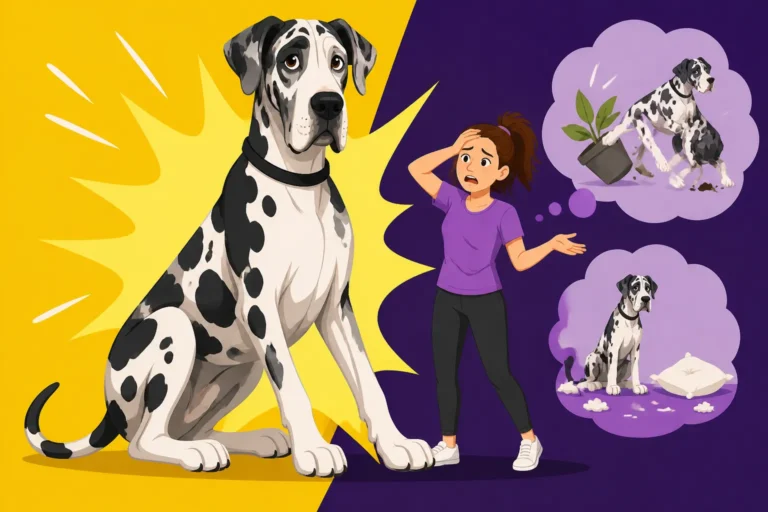
Training matters, but it cannot guarantee that a dog will ignore every animal in every setting. A recall that works in the garden may fail when a deer suddenly crosses a trail. For a very large dog, even a few seconds of pulling can be enough to knock a handler off balance or break equipment. That is why a secure leash and realistic expectations matter, even if the dog has had obedience training.
Before considering field work, talk with your veterinarian about your dog’s fitness, joints, heart health, and any other individual concerns. Great Danes can have health issues that affect exercise tolerance, and high-impact activity is not a good fit for every dog. If the plan involves an organized hunting activity, seek guidance from a qualified trainer familiar with both the activity and large breeds, and follow local hunting, leash, and wildlife rules.
Keeping a Great Dane Safe Around Wildlife
Build control before adding distractions
Start in a low-distraction place and teach practical skills such as coming when called, staying close, leaving an item alone, and settling when asked. Reward the behavior you want rather than waiting until the dog is already pulling toward an animal. Short, calm practice sessions are more useful than testing a young dog’s control in a busy park or near wildlife.
A well-fitted harness can make walks more manageable, but it is not a substitute for training. Choose equipment that is strong enough for the dog and comfortable for its body; when comparing options, some owners look at the range of harnesses and long lines available through retailers such as Chewy. Test the fit at home and check for rubbing, loose straps, or hardware that could fail before relying on it outdoors.
Use a leash where required and whenever wildlife, roads, livestock, or unfamiliar dogs may be nearby. A long line can allow more room to sniff while preserving a physical connection, but it needs attentive handling so the dog does not build up speed and hit the end of the line. It is especially important not to wrap a line around your hand or body when walking a powerful dog.
Choose enrichment that suits the individual
If your Great Dane is fascinated by scents but not ready for field conditions, hide treats or a favorite toy around a safe room or fenced area and encourage the dog to search. Keep early rounds simple so the dog learns to use its nose without becoming frustrated. Over time, you can vary hiding places and introduce a clear start and finish cue.
Food puzzles and durable search toys can also help occupy a dog indoors, particularly when weather or limited outdoor space makes a long outing impractical. When choosing enrichment, size and sturdiness matter: a toy that is too small may be unsafe, while one that is easily crushed may not hold a determined Dane’s attention. Chewy is one place owners may compare puzzle toys and larger dog equipment, but supervise the first sessions and remove anything damaged.
For dogs that chase cats or small dogs, management is just as important as enrichment. Use barriers, careful introductions, and a leash when needed; do not assume that a dog who has been friendly with one animal will automatically be safe around every animal. For more on the issue, see Whether a Great Dane Chases Cats and Great Danes and Small Dogs Playing Together. A separate guide, Off-Leash Walking With a Great Dane, can help you think through why reliable control matters before unclipping a leash.
Is Hunting a Good Fit for Your Great Dane
Signs to assess before deciding
Pay attention to what your dog actually does, rather than what you expect from its breed history. Does it stay responsive when it notices birds or squirrels? Can it disengage and return to you? Does it become frantic, or can it investigate a scent and move on? These observations give you a more useful picture than assuming that every Dane is either a natural hunter or entirely uninterested.
Also consider how your dog handles physical exertion. A Dane that enjoys a short sniffing game may not be comfortable with a long day over rough ground. Watch for unusual fatigue, heavy panting, limping, reluctance to continue, or difficulty recovering after exercise. Stop the activity and contact a veterinarian if you have concerns, particularly if the behavior is new or pronounced.
Age and training history matter too. Puppies and adolescent dogs are still developing, so strenuous or repetitive activity should be approached cautiously. A rescue dog may need time to settle and learn household routines before being introduced to an exciting outdoor activity. For broader advice on matching a dog to your lifestyle, read Whether a Great Dane Suits Your House.
A realistic answer
Yes, a Great Dane today may show hunting-related behaviors and may enjoy carefully designed activities that involve scent and searching. Some individuals may take part in suitable, supervised field activities with experienced handlers. But the breed’s historic connection to hunting is not proof that a modern Dane is trained, safe, or physically suited to hunt.
For most owners, the best starting point is controlled enrichment rather than live game. Build recall and leash skills, learn how your dog responds to wildlife, check that the activity is appropriate for its health, and follow local rules. If the dog’s interest turns into hard pulling or unreliable recall, keep it leashed and choose a safer way to meet its needs. Chewy may be useful for comparing basic training or enrichment supplies, but no piece of equipment replaces sound handling and a plan tailored to your dog.
A Great Dane does not need to hunt to make good use of its instincts. A scent trail in the yard, a structured search game, or a calm walk that allows plenty of sniffing can be rewarding without asking the dog to chase or confront wildlife. For many Danes, that balance is the most realistic way to connect the breed’s working past with safe modern life.
Disclaimer
This article is for general informational purposes only and does not constitute professional advice. Laws, prices and regulations vary by location and change over time. Consult a qualified professional for guidance on your specific situation.