Great Danes in Homes With Small Children
Bringing a magnificent Great Dane into a home already bustling with small children is a dream for many families, but it also comes with a unique set of worries. The sheer size of these gentle giants can be intimidating, leading to fears about accidental bumps, knocked-over toddlers, or even jealousy. This guide will walk you through everything you need to know to ensure a harmonious, safe, and loving environment for both your Great Dane and your little ones, addressing the practicalities and easing those understandable concerns.
The Gentle Giant Reputation: Fact or Fiction with Children?
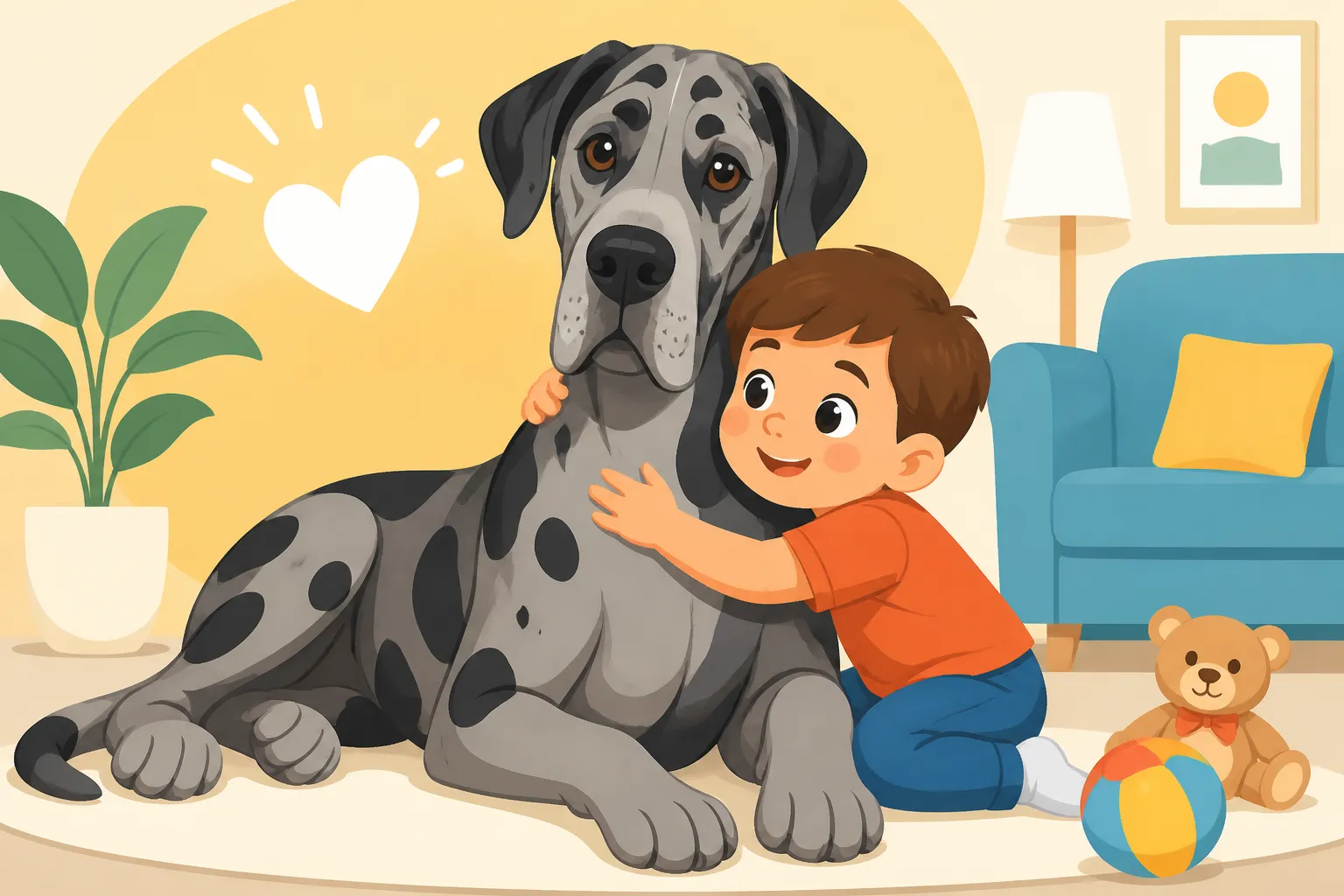
It's a common image: the enormous Great Dane, sprawled on the rug, a tiny child nestled against its side. But is this picture-perfect scene truly representative of how these colossal canines interact with the most vulnerable members of your family? The truth is, while Great Danes are renowned for their gentle nature, their size always demands respect and careful management, especially around curious, unpredictable toddlers.
Understanding the Great Dane Temperament
Great Danes are often described as "gentle giants" for a reason. Their temperament is typically calm, affectionate, and remarkably patient, particularly with their human family. They crave companionship and are known for their strong desire to be close to their people, often attempting to become lap dogs despite their substantial weight and height. This inherent sweetness and tolerance are huge assets when introducing them to children. They tend to be less reactive to sudden noises or movements than some smaller, more excitable breeds. They truly want to be part of the family, and that extends to the smallest members. Their placid demeanor means they often absorb a lot of childhood chaos without batting an eye, preferring to observe rather than react strongly. However, this doesn't mean they are immune to stress or discomfort, and it's crucial to understand that every dog is an individual. While the breed standard promotes a calm and confident nature, not every Dane puppy will inherently possess these traits without proper socialization and training.
Why Size Can Be Misleading
While their hearts might be soft, their bodies are undeniably massive. A Great Dane can easily weigh over 100 pounds, with some males tipping the scales at 150 pounds or more, standing nearly three feet tall at the shoulder. This sheer scale is often where the perception of danger comes from, even if their intentions are nothing but pure. Imagine a fully grown human trying to navigate a room full of delicate glassware; that's often how a Great Dane moves through a home with small children. They might turn too quickly, wag a powerful tail, or simply stand up and accidentally bump into a child who happens to be nearby. It's not malice; it's physics.
A Great Dane's wagging tail, while a sign of happiness, can easily sweep toys off tables or, more concerningly, knock a toddler off balance. A playful greeting jump that might be inconvenient for an adult can be genuinely dangerous for a child. This isn't to say Great Danes are inherently clumsy or destructive, but rather that their sheer mass means that even minor movements can have significant impact. It underscores why understanding their physical presence and training them to be aware of their surroundings is paramount, particularly when little ones are underfoot.
Setting the Stage: Preparation Before the Dane Arrives
Bringing any new dog into a family with children requires forethought, but with a Great Dane, the stakes are a little higher due to their eventual size. Proper preparation can make all the difference between a chaotic household and a calm, happy coexistence. Thinking through these points before your new family member even steps paw in the door will set everyone up for success.
Puppy vs. Adult Dane: Which is Better for Kids?
This is often one of the first questions aspiring Great Dane owners with children ponder, and there are valid arguments for both. A Great Dane puppy offers the chance to integrate them into your family from a young age, allowing you to shape their behavior and socialize them extensively with your children from day one. You can teach them gentle play, appropriate greetings, and how to respect boundaries right from the start. However, puppies, regardless of breed, are bundles of boundless energy, sharp teeth, and often, an inability to control their bladder. A Great Dane puppy will grow at an astonishing rate, and their clumsy "puppy phase" can last longer and be far more impactful than with a smaller breed. Nipping, jumping, and housetraining accidents from a fast-growing Dane can be overwhelming for families with young children.
On the other hand, adopting an adult Great Dane can be an excellent option, especially if you find one through a reputable rescue organization. Adult Danes often come with known temperaments; the rescue can tell you if they've lived with children before and how they behaved. Many adult Danes have already passed through their most boisterous puppy stages and may settle into a new routine more easily. However, an adult dog's history might be unknown, or they may have past experiences that require specific training and patience. If considering an adult, ensure you spend ample time assessing their temperament and asking detailed questions about their past interactions with children, other pets, and their general demeanor. A rescue might have specific dogs that are known to be fantastic with kids, making it a very appealing choice. Adopting a Great Dane at Five Years Old
Essential Training for a Great Dane in a Family Home
Training a Great Dane isn't just about obedience; it's about safety and harmonious living. Because they grow so large so quickly, there's no luxury of waiting until they're "older" to start. Early and consistent training is absolutely critical. Basic commands like "sit," "stay," "down," "off," and "leave it" aren't just polite manners; they are vital safety cues. Imagine a 150-pound dog jumping on a toddler – the command "off" needs to be second nature. Teaching them to walk politely on a loose leash is equally important, as a Great Dane pulling on the leash can easily drag an adult, let alone a parent juggling a child or stroller.
Positive reinforcement training methods work best with Great Danes, who are sensitive souls and respond poorly to harsh corrections. Keep training sessions short, fun, and consistent. Involving older children in age-appropriate training activities (under strict adult supervision) can also help build a strong bond and reinforce the dog's understanding of family hierarchy. Focus particularly on greeting manners, ensuring your Dane knows to keep all four paws on the floor when meeting anyone, especially small children. This isn't just about protecting the child, but also preventing the dog from being perceived as unruly or dangerous. Establishing these habits early, when the dog is still manageable, prevents significant problems down the line. The Manners a Great Dane Needs Before It Grows
Child-Proofing Your Home (and Great Dane-Proofing Your Child!)
Preparing your home for a Great Dane means more than just having a big bed. It means looking at your environment from both a child's and a giant dog's perspective. For children, this means securing fragile items, putting away small toys that could be choking hazards or easily ingested by a curious pup, and establishing clear boundaries for where the dog is allowed (and not allowed) to go. Baby gates become essential tools, not just for kids, but for creating safe zones for your Dane too. Baby Gates a Great Dane Cannot Step Over
Just as important is "Great Dane-proofing" your child. This involves teaching children, from the earliest age possible, how to interact respectfully and safely with a dog. This includes no pulling tails, no climbing on the dog, no disturbing the dog while it's eating or sleeping, and understanding that the dog needs its own space. Use clear, simple rules and consistent messaging. Emphasize gentle touches on safe areas like the chest or shoulder, rather than the face or tail. A designated "safe spot" for your Dane, like a large crate or a dog bed in a quiet corner, should be introduced and respected by all family members as the dog's private sanctuary. Teaching Children to Move Around a Great Dane
Day-to-Day Living: Managing Interactions Safely
Once your Great Dane is home with your family, the real work of managing daily interactions begins. It’s a continuous process of supervision, education, and creating an environment where everyone feels safe and respected. This is where the commitment to safety truly shines through.
Supervised Interactions are Non-Negotiable
This is perhaps the most critical rule for any dog and child household, but especially with a Great Dane. Never, ever leave your Great Dane unsupervised with small children. Even the calmest, most well-trained Great Dane can accidentally knock a child over or react unpredictably if startled or hurt. Accidents happen in a blink of an eye. This means active supervision, not just being in the same room while engrossed in your phone or a book. An adult should always be physically present and engaged, ready to intervene if needed.
Think of it like being a lifeguard at a pool: you're not just there, you're watching. This allows you to redirect an overly boisterous greeting from your Dane, or prevent a child from inadvertently bothering the dog. It’s about being proactive and anticipating potential scenarios before they escalate. Over time, as your children grow and your Great Dane matures and demonstrates consistent, reliable behavior, supervision might become less intense, but it should never be completely absent. This level of vigilance is not a reflection on your dog's character, but rather a responsible acknowledgement of their size and strength. Whether a Great Dane Is Safe With a Baby
Teaching Children How to Interact Respectfully
Just as you train your Great Dane, you must educate your children on appropriate behavior around dogs. Small children instinctively want to hug, climb, or pull on a dog's ears or tail. They don't understand that these actions can be uncomfortable or even painful for a dog. Teach them to pet gently, focusing on areas like the dog's chest or shoulders, rather than the face, head, or tail. Show them how to approach calmly, offering a hand for the dog to sniff before petting.
It’s also crucial to teach children to recognize and respect a dog’s body language. Signs like lip licking, yawning, turning the head away, freezing, or showing the "whale eye" (where the whites of the eyes are visible) are all signals that the dog is uncomfortable and needs space. Teach children to give the dog space when it retreats to its bed or turns away. These lessons are not about fear, but about fostering mutual respect and understanding. Understanding these cues helps prevent situations where a dog might feel cornered or threatened, which can lead to a reactive response.
Providing Your Great Dane a Safe Retreat
Every dog, especially one living with active children, needs a designated safe space where they can retreat and feel undisturbed. For a Great Dane, this often means a large, comfortable crate or a generously sized dog bed placed in a quiet corner of the house. This isn't a punishment area; it's their den, their sanctuary, a place where they know they won't be bothered. When they go to their safe space, children must be taught to leave them alone. This teaches both dog and child respect for boundaries.
Having a safe retreat is particularly important during busy times, like playdates or mealtimes, when noise and activity levels can be high. Offering a chew toy or a puzzle feeder from Chewy in their crate can help them relax and associate their safe space with positive experiences. This strategy empowers your Great Dane to manage their own stress levels and provides a much-needed break from constant interaction, which can prevent them from becoming overwhelmed or anxious. Choosing a Crate a Great Dane Can Stand In
Common Challenges and How to Address Them
Even with the best intentions and training, living with a Great Dane and small children will inevitably present some challenges. Their enormous size means that even minor behavioral quirks can have significant consequences. Anticipating these issues and having strategies in place can help maintain a calm and safe environment.
Accidental Bumps and Knocks
This is perhaps the most common, and often unavoidable, challenge. Great Danes, especially as puppies and adolescents, can be notoriously clumsy. Their long legs, gangly bodies, and powerful tails can turn them into unwitting bulldozers. A happy tail wag, while endearing, can easily send a toddler sprawling or sweep a glass off a coffee table. The key here is management and training. Encourage calm indoor behavior with commands like "settle" or "place," training your Dane to lie down in a designated spot when activity levels are high.
Consider gates to restrict access to certain areas, especially during boisterous play or when children are very young. Teaching your Dane excellent spatial awareness is a continuous process. You can gently guide them with verbal cues and body blocking to move around furniture or people without colliding. Remember, they aren't trying to be disruptive; their sheer scale means they need a little more time and space to maneuver. Always ensure clear pathways and try to keep floors free of tripping hazards for both your dog and your children. A Great Dane Wagging Its Tail Into a Child
Resource Guarding and Food Theft
Any dog can develop resource guarding behavior, but when it's a Great Dane, the implications are more serious. This refers to a dog's tendency to guard food, toys, or even sleeping spots from perceived threats, which can unfortunately include children. Additionally, a Great Dane's height means counters and even some tabletops are within easy reach, making food theft a constant temptation, especially with enticing kid-level snacks.
To mitigate resource guarding, teach your children never to approach the dog while it's eating or to try and take its toys. Feed your Great Dane in a quiet, separate area where they won't be disturbed. Practice "trade" games where you offer a higher-value treat in exchange for a toy, teaching them that giving things up is rewarding. For counter surfing, the "leave it" command is invaluable. Consistently enforce it, rewarding your Dane for ignoring tempting items on counters or tables. Investing in slow feeder bowls, readily available at places like Chewy, can also help manage meal times and reduce the frantic gulping that might contribute to guarding behaviors. Always keep children's snacks securely out of reach, teaching both the dog and the child about boundaries. A Great Dane That Takes Dinner Off the Table
Jumping and Over-Excitement
A Great Dane expressing excitement by jumping up is a huge problem. A 100-plus pound dog launching itself can easily injure an adult, and for a small child, it can be terrifying and genuinely dangerous. This behavior needs to be addressed consistently and immediately from puppyhood. The moment your Great Dane's paws leave the ground in greeting, turn your back, cross your arms, and completely ignore them. Only offer attention when all four paws are firmly on the floor.
Teach and reward an alternative greeting behavior, such as a "sit" or a "down." Practice this with everyone who enters your home, ensuring consistency. Management is also key: keep your Dane on a leash when visitors (especially children) first arrive, allowing you to control their greetings. Teach them a "place" command to send them to their bed when guests arrive, releasing them for calm greetings only when they are settled. This patience and consistency are crucial in curbing a behavior that, while stemming from excitement, can lead to serious injury. Stopping a Great Dane Jumping Up on People
Ongoing Socialization and Support
Bringing a Great Dane into a home with small children isn't a "one-and-done" effort. It requires continuous commitment to socialization, education, and knowing when to seek professional help. Your role as a responsible owner is to advocate for both your dog and your children, ensuring a safe and happy environment for all.
Continuing Socialization Beyond Puppyhood
Socialization isn't just for puppies; it's a lifelong endeavor, especially for giant breeds like Great Danes. Continued positive exposure to a variety of sights, sounds, people, and well-behaved dogs helps maintain their calm and confident demeanor. This means regularly taking your Great Dane on walks in different environments, exposing them to children of various ages (always supervised and with permission from parents), and ensuring they have pleasant interactions with other animals.
Avoid overwhelming your Dane with too much stimulation at once. Instead, opt for controlled, positive experiences. A visit to a friend's house with calm, older children, or a quiet walk in a park where you might encounter families, can be invaluable. The goal is for your Great Dane to see children as a normal, positive part of their world, not as a source of stress or over-excitement. This ongoing work helps reinforce their "gentle giant" nature and prevents them from becoming fearful or reactive in new situations. Getting a Great Dane Puppy Out Before It Is Huge
Recognizing Signs of Stress or Discomfort in Your Dane
Great Danes, despite their size, can be very stoic and subtle in showing signs of discomfort or stress. It's vital for you, as their owner, to become an expert in reading their body language. Beyond the obvious growl or snap, look for more subtle cues: lip licking, excessive yawning when not tired, turning their head or body away, a stiff posture, flattened ears, or "whale eye" (where the whites of their eyes are visible). These are all indicators that your dog is feeling uneasy, anxious, or is trying to de-escalate a situation.
If you observe these signs, it's your responsibility to intervene immediately. This might mean physically separating your dog and child, redirecting the child, or giving your Dane a quiet retreat to decompress. Never punish your dog for showing these warning signs, as doing so can suppress the warnings, making a more severe reaction (like a bite) seem to come "out of nowhere." Understanding and respecting these signals is fundamental to preventing escalation and maintaining a safe environment. The Gentle Great Dane Temperament and Its Limits
Seeking Professional Guidance
There's no shame in admitting you need help, especially when managing a powerful breed like a Great Dane alongside small children. If you find yourself struggling with persistent behavioral issues – such as excessive jumping, resource guarding, leash pulling, or any signs of anxiety or aggression – do not hesitate to contact a certified professional dog trainer or a veterinary behaviorist. These experts can assess your specific situation, identify the root cause of the behavior, and develop a tailored training plan.
Waiting until a serious incident occurs is a mistake that can have devastating consequences. Early intervention is always best. A good trainer can provide invaluable tools, techniques, and support to help you navigate challenges and build a stronger, safer bond between your Great Dane and your children. They can also offer specialized advice on managing a very large dog in a busy family environment. Investing in professional guidance is an investment in the safety and happiness of your entire family. Finding a Trainer Comfortable With a Great Dane
Comparing Puppy vs. Adult Great Dane for Homes with Small Children
| Feature | Great Dane Puppy (8-16 weeks) | Adult Great Dane (1+ years) |
|---|---|---|
| Temperament | Unknown, highly moldable; can be nippy and boisterous. | Known temperament; often calmer if previously socialized. |
| Training Needs | Intensive foundational training required immediately. | May come with some training; potential to retrain bad habits. |
| Socialization | Critical window for early, broad exposure. | Needs ongoing, positive exposure to maintain good manners. |
| Energy Levels | High, playful, clumsy; can accidentally knock children over. | Generally calmer, but can still have bursts of energy. |
| House Training | Requires consistent supervision, frequent potty breaks. | Often already house-trained, but new environment can cause regressions. |
| History | Blank slate; health and background from breeder. | Previous history may be unknown or require specific management. |
| Time Commitment | Very high in early months for training, socialization, supervision. | High for exercise, ongoing training, and integration. |
| Accidental Risk | Higher risk of accidental bumps, nips, and jumps due to clumsiness and puppy behavior. | Lower risk of nips; accidental bumps from size still a factor. |
Disclaimer
This article is for general informational purposes only and does not constitute professional advice. Laws, prices and regulations vary by location and change over time. Consult a qualified professional for guidance on your specific situation.