Cartilage Flaps in a Great Dane Shoulder
It's incredibly frustrating when your magnificent Great Dane, full of youthful energy, suddenly starts to limp or show signs of discomfort, especially when they're still in their growth phase. You watch them, trying to figure out if it's just a clumsy moment, a minor tweak from enthusiastic play, or something more serious. This guide is here to shed light on a common, yet often misunderstood, orthopedic issue in giant breeds like ours: cartilage flaps in a Great Dane's shoulder, medically known as osteochondritis dissecans (OCD), and what you can do about it.
Understanding Cartilage Flaps in Your Great Dane's Shoulder
When we talk about a Great Dane's shoulder, we're really thinking about a complex joint that carries an immense amount of weight and stress, especially during their rapid growth period. It's a marvel of engineering, but sometimes, during this intense development, things can go a little awry, leading to conditions like OCD.
What Exactly is Osteochondritis Dissecans (OCD)?
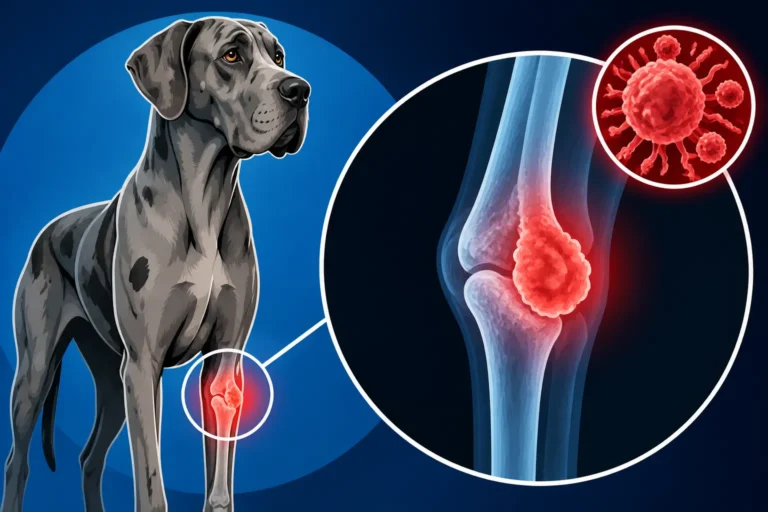
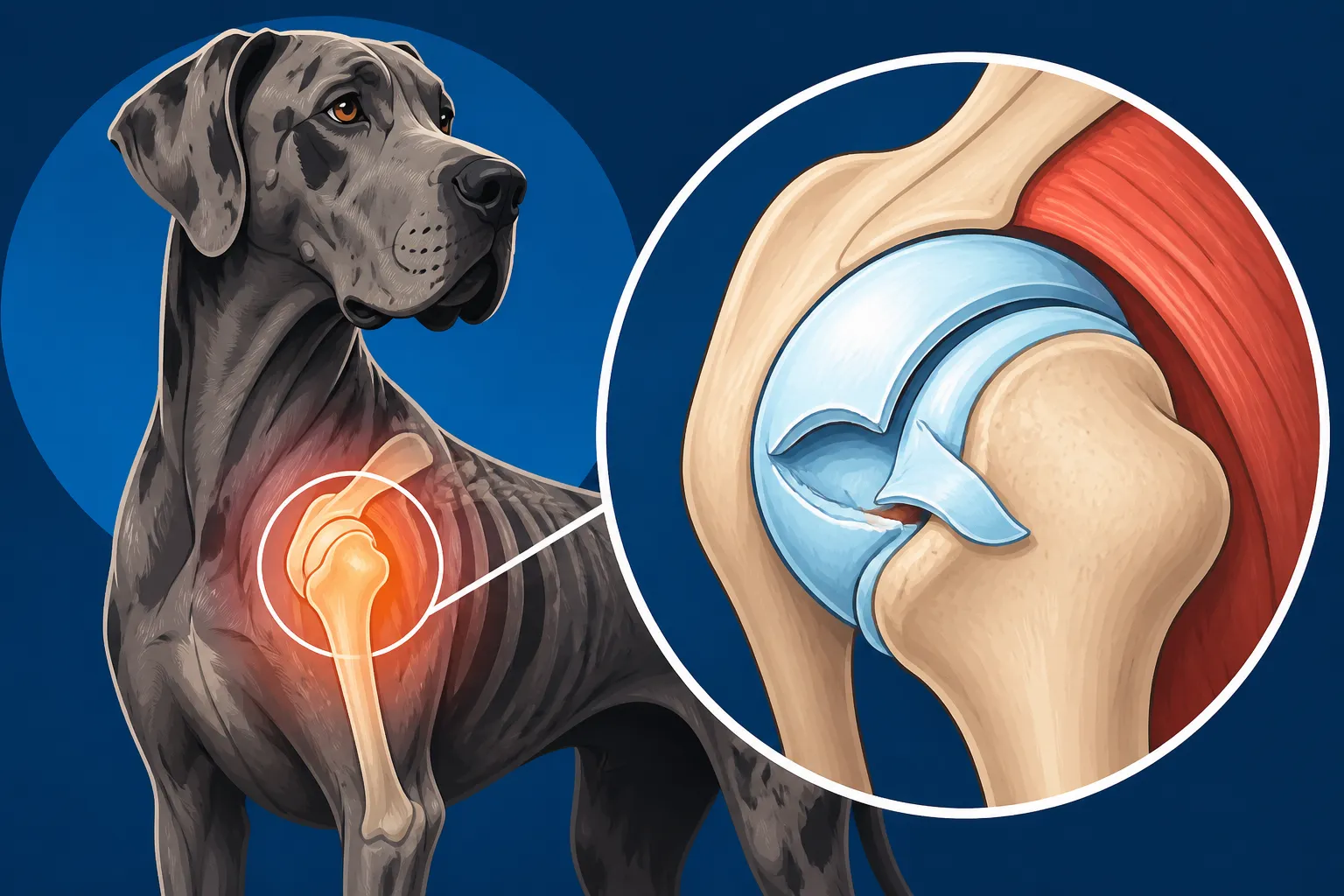
Osteochondritis dissecans, or OCD, sounds like a mouthful, but it simply refers to a condition where the cartilage on the end of a bone in a joint doesn't mature and attach properly to the underlying bone. Think of it like this: healthy cartilage is smooth, firm, and perfectly adhered, providing a slippery, shock-absorbing surface for the joint to move effortlessly. With OCD, a piece of this immature cartilage can actually lift away or detach, creating a "flap." This flap, sometimes accompanied by a piece of bone, then floats around in the joint or irritates the joint surface.
This isn't just a random occurrence; it's a developmental orthopedic disease that typically affects fast-growing, large, and giant breed dogs. Great Danes fit this description perfectly, growing at an astonishing rate in their first year. The process starts when the cartilage in the joint fails to ossify (turn into bone) correctly. Instead of smoothly transitioning from cartilage to bone, areas remain cartilaginous and are more fragile. The stress of movement, even normal puppy play, can then cause a crack or fissure, leading to the formation of that irritating flap.
Why the Shoulder is a Common Spot for OCD in Great Danes
While OCD can affect several joints in a Great Dane, including the elbows, stifles (knees), and hocks (ankles), the shoulder is unfortunately one of the most frequently affected sites, specifically the humeral head, which is the ball portion of the shoulder joint. Why the shoulder? For a Great Dane, the front limbs bear a significant portion of their rapidly increasing body weight. Every step, every jump, every playful lunge puts tremendous pressure on these developing joints.
Imagine a growing puppy, already weighing many pounds at just a few months old, bounding around. The stress on the immature cartilage in the shoulder is immense. If the cartilage development is already compromised, this constant loading can easily lead to a flap forming. The sheer scale of a Great Dane means any issue in their joints is amplified. A small cartilage flap that might cause minor irritation in a smaller dog can lead to significant pain and lameness in a Great Dane due to their size and weight. Understanding "Great Dane Hips, Elbows and Growing Joints" gives you a broader perspective on the various skeletal challenges our gentle giants can face.
Spotting the Signs and Getting a Diagnosis
It can be heartbreaking to see your usually robust Great Dane start to favor a limb. Knowing what to look for and how veterinarians diagnose this condition is crucial for getting them back to their happy, comfortable selves.
Recognizing the Early Symptoms of Shoulder OCD
The signs of shoulder OCD can be subtle at first, often appearing between 4 to 12 months of age, which is a critical period for "Growth Disorders in a Great Dane Puppy". You might notice an intermittent lameness, meaning your Great Dane isn't consistently limping, but rather on and off, or more noticeable after periods of rest or strenuous activity. They might seem stiff when they first get up, or reluctant to engage in activities they usually love, like a long walk or a game of fetch.
Sometimes, owners might mistake these early symptoms for typical "growing pains in a Great Dane at eight months," which can occur but are distinct from OCD. A dog with OCD might hold the affected leg slightly out or close to their body, or you might observe a reduced range of motion in the shoulder. Because Great Danes are such stoic dogs, they can often mask pain until it's quite advanced. Any persistent, recurring, or worsening lameness in a growing Great Dane should be taken seriously and warrants a veterinary visit. Pay close attention to how they get up, lie down, and move during their daily routines.
The Diagnostic Journey: From Exam to Imaging
When you bring your Great Dane to the vet with suspected lameness, the diagnostic process usually begins with a thorough physical examination. Your vet will carefully palpate the affected limb, manipulating the joint through its range of motion, looking for signs of pain, swelling, or crepitus (a grinding sensation). They might also observe your dog walking and trotting to pinpoint the source of the lameness.
X-rays are typically the first imaging step. While cartilage doesn't show up directly on standard X-rays, the underlying bone might reveal changes indicative of OCD, such as flattening of the humeral head, irregular bone surfaces, or even visible loose bone fragments within the joint capsule. However, sometimes early or small cartilage flaps might not be clearly visible on X-rays. In such cases, or if surgery is being planned, your vet might recommend more advanced imaging techniques like a CT (computed tomography) scan or an MRI (magnetic resonance imaging). These provide a much more detailed view of the soft tissues and bone structures, clearly outlining the cartilage flap and the extent of any damage.
To help you understand the diagnostic choices, here's a quick comparison:
| Diagnostic Method | What it Shows | Pros | Cons |
|---|---|---|---|
| Physical Exam | Pain, swelling, range of motion, lameness | Non-invasive, quick | Subjective, doesn't show internal damage |
| X-rays | Bone changes, loose bone fragments | Readily available, relatively inexpensive | Doesn't show cartilage directly, misses early/small lesions |
| CT Scan | Detailed bone and joint surface, some soft tissue | Excellent for bone, 3D view, good for surgical planning | Higher cost, requires sedation, radiation exposure |
| MRI | Soft tissue details (cartilage, ligaments), bone changes | Best for cartilage and soft tissue detail | Highest cost, requires sedation, less available |
Treatment Options for Cartilage Flaps
Discovering your Great Dane has a cartilage flap can be daunting, but there are effective treatment paths available. The best approach depends on several factors, including the size of the lesion, your dog's age, and the severity of symptoms.
Conservative Management: When It's an Option
For very young puppies with small lesions, or when the lameness is mild and intermittent, your veterinarian might suggest a period of conservative management. This approach focuses on reducing inflammation and allowing the body a chance to heal naturally, if possible. Strict rest is paramount here, often involving crate rest for several weeks to prevent further irritation to the joint. This can be challenging with an energetic Great Dane puppy, but it's vital.
Alongside rest, anti-inflammatory medications (NSAIDs) and pain relievers will be prescribed to manage discomfort and reduce swelling. Your vet might also recommend joint supplements containing ingredients like glucosamine, chondroitin, and MSM, which can support cartilage health, although their direct role in healing existing OCD lesions is debated. The key here is absolute consistency and patience. If conservative treatment is chosen, it’s often combined with a strict program of limited and controlled exercise, such as short, leashed walks, once the initial period of rest is over. This slow and steady approach aligns with principles of "Why a Great Dane Puppy Should Grow Slowly."
Surgical Intervention: The Most Common Approach
In most cases of shoulder OCD in Great Danes, especially with larger or persistent lesions, surgical intervention is considered the most effective treatment. The goal of surgery is to remove the irritating cartilage flap and any loose bone fragments, and to address the damaged surface of the bone to encourage the formation of new, albeit less perfect, scar cartilage.
There are primarily two surgical methods:
- Arthroscopy: This is a minimally invasive technique where a small camera and specialized instruments are inserted into the joint through tiny incisions. It allows the surgeon to visualize the joint, remove the flap, and debride (clean up) the affected bone surface with much less trauma to the surrounding tissues. Recovery can be quicker with arthroscopy, making it a preferred choice for many cases.
- Open Arthrotomy: In some situations, particularly with very large flaps or complex joint damage, a traditional open surgery might be necessary. This involves making a larger incision to gain direct access to the joint.
Following surgery, your Great Dane will need a period of restricted activity, pain management, and often, a referral for physical therapy. This can be a significant financial undertaking, but it's crucial for your dog's long-term comfort. This is where a good pet insurance plan, like Healthy Paws, can be a lifesaver, helping to cover the substantial costs of diagnostics, surgery, and post-operative care. Thinking about "Insuring a Great Dane Against Bloat and Heart Bills" should also include coverage for orthopedic issues like OCD.
Post-Surgery Rehabilitation and Long-Term Care
Surgery is a big step, but the journey doesn't end there. Post-operative rehabilitation is absolutely vital for a successful outcome. Your Great Dane will require a carefully structured recovery plan that typically includes:
- Pain Management: Continuing with prescribed pain medication and anti-inflammatories to keep them comfortable.
- Restricted Activity: Strict leash walks and avoiding stairs, jumping, or rough play for several weeks or even months. Gradually, controlled exercises will be introduced.
- Physical Therapy: This is often the cornerstone of recovery. A certified canine physical therapist can guide you through exercises like passive range of motion, controlled swimming, underwater treadmill therapy, and therapeutic exercises to rebuild strength, improve flexibility, and restore proper gait.
- Weight Management: Keeping your Great Dane lean is always important, but especially after joint surgery. Excess weight puts additional strain on healing and healthy joints alike. You can learn more about "The Hundred and Forty Pound Great Dane Male" and maintaining ideal body condition.
- Ongoing Joint Support: Many vets will recommend continued use of joint supplements throughout your Great Dane's life to support joint health and potentially mitigate the development of arthritis in the future, as even successful OCD surgery can predispose the joint to degenerative changes over time.
While surgery often leads to excellent results, it's important to understand that a joint affected by OCD may always be more susceptible to arthritis later in life. Consistent, proactive care, combined with monitoring for any recurrence of lameness, will give your Great Dane the best chance at a comfortable, active life.
Preventing OCD and Supporting Healthy Joint Growth
While we can't entirely eliminate the risk of OCD in a Great Dane, there are significant steps we, as responsible owners, can take to promote healthy joint development and minimize their chances of developing this challenging condition.
Nutritional Strategies for Slow, Steady Growth
One of the most critical factors in preventing developmental orthopedic diseases like OCD is controlling the rate of a Great Dane puppy's growth. It might seem counterintuitive, but a Great Dane puppy should not grow as fast as possible. "Why a Great Dane Puppy Should Grow Slowly" is a concept every owner must embrace. Rapid growth puts immense stress on developing bones and joints, making them more susceptible to problems.
This means choosing the right food. Opt for a high-quality, large-breed puppy formula designed specifically for giant breeds. These foods have carefully balanced calcium-to-phosphorus ratios and moderate calorie levels. Avoid regular puppy foods, which are often too high in calories and calcium for a Great Dane, leading to "Why Regular Puppy Food Hurts a Great Dane." Crucially, never supplement your Great Dane puppy with extra calcium. This is a common misconception, and actually, "Why Calcium Supplements Damage a Great Dane" is a critical point to understand; excess calcium can severely disrupt bone and cartilage development. Focus on feeding the recommended amounts to maintain a lean body condition, observing "What a Great Dane Puppy Should Weigh at Four Months" as a guide, but always prioritizing feeling their ribs rather than just a number on the scale.
Responsible Exercise and Activity Guidelines
Just as important as diet is controlled exercise during puppyhood. An enthusiastic Great Dane puppy has boundless energy, but their delicate growth plates and developing joints are not ready for strenuous activity. "How Much a Great Dane Puppy Should Walk" should be a measured answer, not an invitation for endless romps. Avoid high-impact activities such as:
- Long-distance running or jogging: Until their growth plates close (typically around 18-24 months), forced, repetitive impact is detrimental.
- Excessive jumping: Repeated jumping on and off furniture, in and out of cars, or during play can strain immature joints.
- Hard, slippery surfaces: These can lead to slips and falls, causing sudden trauma.
- Stairs: Frequent stair climbing can put undue pressure on developing joints.
Instead, focus on short, frequent, controlled walks on soft surfaces like grass, and supervised playtime that allows the puppy to self-regulate. Swimming can be an excellent, low-impact exercise for strengthening muscles without stressing joints. The goal is to build muscle tone and provide mental stimulation without overtaxing their growing skeletal system.
The Role of Genetics and Breeder Responsibility
While diet and exercise play huge roles, genetics also contribute to the risk of OCD. Responsible breeding practices are essential. When looking for a Great Dane puppy, it's critical to choose a reputable breeder who performs comprehensive health testing on their breeding stock. This includes "Great Dane Hip and Elbow Screening" as well as evaluations for other common Great Dane health concerns like heart conditions.
A good breeder will be transparent about their dogs' health histories and pedigrees, and will work to select parents with sound joint health. While no breeder can guarantee a puppy will never develop a health issue, choosing wisely significantly improves your odds. Even with the best genetics, proper nutrition and exercise are still crucial, as environmental factors can certainly influence the expression of these conditions. It's a team effort between responsible breeding and dedicated, informed ownership to give our magnificent Great Danes the best start in life.
Disclaimer
Please remember that the information provided in this article is for educational purposes only and should not replace professional veterinary advice. Always consult with your veterinarian for any health concerns or before making any decisions regarding your Great Dane's care.