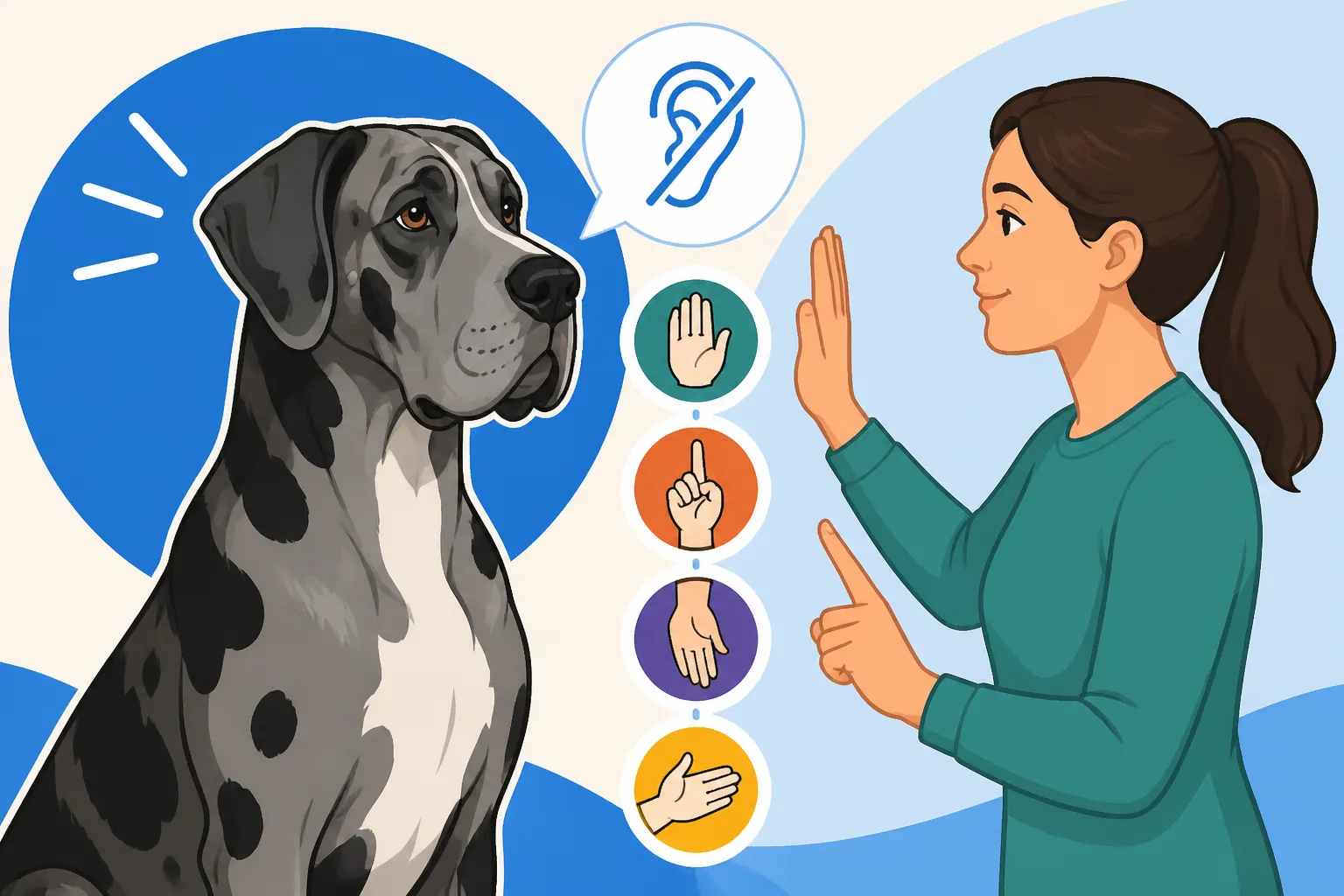
Hand Signals for a Great Dane That Cannot Hear
Living with a Great Dane is an incredible journey filled with massive love and even bigger slobber, but when your gentle giant can't hear you, it throws a whole new curveball into daily life. The frustration can be immense – you call their name, they don't respond, and you worry constantly about their safety, especially outdoors or in busy environments. This guide is here to walk you through how to effectively communicate with your deaf Great Dane using hand signals, ensuring both of you can lead a fulfilling, safe, and connected life.
Understanding Deafness in Great Danes and Its Impact
Discovering your Great Dane has hearing loss can be a really emotional moment. It might be something you've suspected for a while, or it could be a sudden realization. Either way, it presents unique challenges that are important to acknowledge and address. It's not just about them not hearing you; it's about how they perceive and interact with their world.
Recognizing the Subtle Signs of Hearing Loss
Sometimes, deafness isn't immediately obvious, especially if it's partial or unilateral (in one ear). You might first notice your Dane isn't startled by loud noises, or they sleep through things that would typically rouse them. Perhaps they don't come when called unless they see you, or they seem to ignore commands they once knew. In puppies, a good indicator is if they don't react to squeaky toys or the jingle of keys. Owners often report their deaf dogs are "heavy sleepers" or seem "selectively deaf," but a vet visit can confirm your suspicions. If you suspect hearing loss, it's a good idea to seek veterinary advice for proper diagnosis and to rule out any treatable causes like ear infections. Early testing, especially for puppies, can be invaluable, and you can learn more about Testing a Great Dane Puppy's Hearing to ensure you're on the right track.
Genetic Factors: The Link Between Coat Color and Deafness
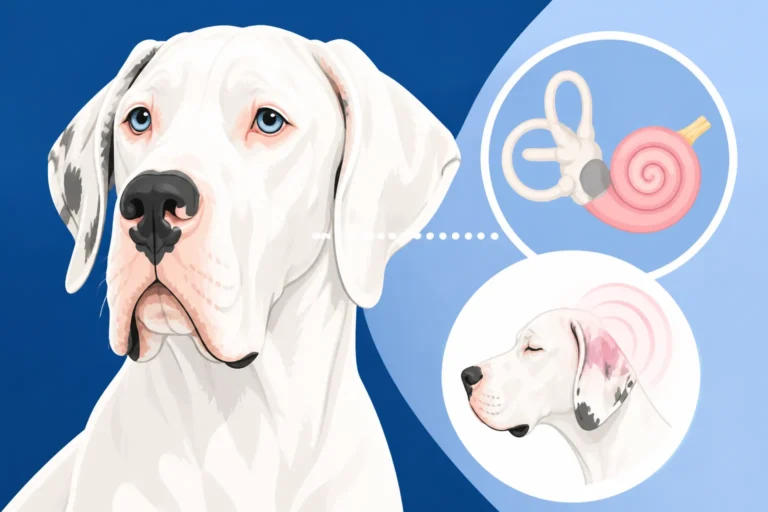
For Great Danes, deafness isn't always just bad luck; there's a significant genetic component, especially tied to certain coat colors. You might already know about the specific concerns for Danes with white or merle markings. The gene responsible for these stunning patterns can, unfortunately, also be linked to congenital deafness. This is why you often hear of white-coated Danes or those with extensive white markings being deaf or hearing-impaired. It's a sad reality, but understanding this connection is crucial. Responsible breeders go to great lengths to avoid breeding dogs that might produce deaf puppies, and there's a lot more to unpack about Why a White Great Dane Is Often Deaf. If you're getting a puppy, always review their health papers thoroughly, which includes understanding Reading a Great Dane Puppy's Health Papers for any indications of potential genetic predispositions.
The Immediate Challenges of Living with a Deaf Great Dane
Once you know your Great Dane can't hear, a whole new world of considerations opens up. The biggest initial challenge is often safety. A deaf dog cannot hear an approaching car, a shouted warning, or the doorbell ringing. This means off-leash time needs to be carefully managed, and your home environment might need some adjustments. Communication becomes a visual game, and shouting louder certainly won't help! It can be disheartening at first, feeling like you've lost a key connection, but trust me, the bond you share can become even stronger as you adapt. You'll learn a new language together, and it's an incredibly rewarding process.
The Indispensable Role of Hand Signals for Communication
When vocal cues are off the table, hand signals become your Great Dane's primary language. This isn't just about teaching them tricks; it's about establishing a robust, clear, and consistent communication system that ensures their well-being and strengthens your relationship. Think of it as opening up an entirely new dialogue with your beloved companion.
Bridging the Gap: More Than Just Commands
Hand signals do so much more than convey simple commands like "sit" or "stay." They are the very foundation of your deaf Great Dane's understanding of your expectations and the world around them. Imagine trying to explain danger or express affection without a shared language – it's impossible. Hand signals fill this void, allowing you to tell your Dane when they've done something good, when it's time to eat, or even just to get their attention. This visual language fosters a sense of predictability and security for them, which is especially important for a dog that can't rely on auditory cues. It also helps prevent misunderstandings, reducing frustration for both of you.
Ensuring Safety in a Silent World
Safety is probably the most pressing concern for owners of deaf Great Danes. Without the ability to hear, traditional verbal warnings like "stop!" or "leave it!" are useless. This is where well-established hand signals become life-savers. A clear "come" signal, a "stay" signal, or even a visual cue for "watch me" can mean the difference between a close call and a serious accident. For example, when you're on walks, a quick flash of the "stop" signal can prevent them from stepping into traffic if they're focused elsewhere. In the home, signals can help manage their behavior, such as using a "wait" signal before going out the door or a "down" signal to prevent them from jumping on guests. This vigilance and consistent use of signals become second nature for you and your Dane, creating a much safer environment.
Fostering a Deeper Bond Through Visual Cues
It might seem counterintuitive, but communicating with hand signals can actually deepen the bond you share with your Great Dane. You become incredibly attuned to their body language, their gaze, and their focus. They, in turn, learn to constantly look to you for guidance and information. This heightened visual connection builds a unique form of trust and reliance. Every successful signal-response interaction reinforces that you are their clear, reliable source of information. It's an intimate dance of observation and response that strengthens your partnership in profound ways. Plus, the shared accomplishment of learning this new language together is incredibly rewarding.
Developing Your Deaf Dane's Hand Signal Vocabulary
Embarking on the journey of teaching hand signals to your deaf Great Dane is an exciting and highly effective way to communicate. It requires patience, consistency, and a good understanding of positive reinforcement. Remember, your Dane is just as capable of learning as any other dog; they just use different senses.
Starting with Foundation Signals: The "Must-Haves"
When you begin, focus on the most crucial commands that will impact your Great Dane's safety and your daily interactions. Think about The Manners a Great Dane Needs Before It Grows, but translate them visually.
Here are some essential hand signals to start with:
- Attention/Watch Me: This is arguably the most important. It's a quick, distinct signal to get your Dane to look at you. Many people use a quick flick of the wrist or tapping their chest. Once they look at you, immediately reward them. This signal is your "hello" and your way of initiating any communication.
- Come: For safety, especially outdoors, this is critical. A sweeping motion of your arm towards your body, perhaps accompanied by a low, inviting crouch, works well. Practice this in a controlled, enclosed space initially.
- Sit: A classic. Holding your hand flat, palm up, and raising it slowly from their nose level to just above their head often encourages them to sit.
- Stay/Wait: Extend a flat palm towards your Dane, much like a "stop" sign. This can be coupled with stepping back slowly.
- Lie Down: Sweep your hand downwards from their nose to the floor.
- Good Dog/Yes: A thumbs-up or a specific hand rub on their chest (their favorite spot!) can act as your verbal marker, indicating they've done something right.
The key is to keep each signal distinct and easy for you to perform consistently. Avoid overly complex gestures. If you're ever in a situation where your Great Dane needs emergency care, having these basic signals firmly established can make a huge difference in managing them in a stressful environment.
Effective Teaching Strategies: Patience and Positive Reinforcement
Teaching a deaf Great Dane requires a bit of a different approach than teaching a hearing dog, but the core principles of positive reinforcement remain the same. The moment your Dane performs the desired action, they need an immediate, clear reward.
- High-Value Treats: Forget the boring kibble. Get some really delicious, small treats that your Dane absolutely loves. These are your primary communication tools for "good job!"
- Visual Lures: Initially, you'll use "lures" to guide them into position. For example, to teach "sit," hold a treat near their nose and slowly move it upwards and back over their head. As their nose follows the treat, their rear end will naturally lower into a sit. The moment their butt touches the ground, give your "good dog" hand signal and reward them.
- Fading the Lure: Once your Dane understands the movement, gradually remove the treat from your hand. You'll still perform the motion, and when they sit, then present the treat from your pocket or another hand. Eventually, the hand motion alone becomes the cue.
- Light Touch/Vibration: For getting their attention when they're not looking at you, a gentle tap on their shoulder or back can work. Some owners even use vibrating collars (not shock collars!) to get their dog's attention for the "come" signal, but this should be introduced very carefully and gently, purely as a 'tap on the shoulder' rather than a punishment.
Remember that Great Danes are sensitive souls, and harsh corrections don't work. Celebrate every small success, and keep training sessions short, fun, and positive. If your Dane gets frustrated, take a break. Building confidence is just as important as learning commands, especially for a dog that might be more easily startled, and you can find helpful advice on Building Confidence in a Nervous Great Dane.
Building Consistency Across Environments
It's one thing for your Great Dane to perform a signal in your quiet living room, and quite another for them to do it in a busy park. Consistency is paramount.
- Family Involvement: Everyone in the household needs to use the same hand signals and reward system. Inconsistent signals will only confuse your Dane.
- Varying Locations: Practice in different parts of your house, then your yard, then quiet public spaces, gradually increasing distractions. This helps generalize the behavior so your Dane understands the signal means the same thing everywhere.
- Managing Distractions: Start with minimal distractions and slowly introduce more. If your Dane isn't responding, reduce the distraction level and build up again. For example, if you're teaching "stay," practice with a toy on the floor, then with a person walking by, then with another dog at a distance.
- Routine and Predictability: Establish routines that incorporate your hand signals. For instance, always use the "sit" signal before putting down their food bowl or the "wait" signal before opening the door. This predictability helps them understand and anticipate. Even if you have a Great Dane that struggles to be alone, consistent signals for departure and return can help. Learn more about managing these behaviors in A Great Dane That Cannot Be Left in the House.
Creating this consistent visual world will make your deaf Great Dane feel secure and understood, helping them navigate their environment with confidence.
| Vocal Command | Common Hand Signal Example | Description of Movement |
|---|---|---|
| Attention | Tapping chest/Flick wrist | Tap two fingers on your chest, or a quick flick of the wrist. |
| Come | Sweeping arm motion | Arm sweeps from extended position inwards towards your chest. |
| Sit | Hand up, palm out | Hand flat, palm up, moving upwards from nose to above head. |
| Down | Point to ground | Index finger points directly to the ground in front of them. |
| Stay/Wait | Flat palm out (stop sign) | Hand flat, palm facing dog, held steady like a stop sign. |
| Good Dog | Thumbs Up/Rub Chest | Thumbs up sign, or gently rub their favorite spot on their chest. |
| No/Leave It | Sharp chop downwards | Flat hand, palm down, makes a quick, firm chopping motion downwards. |
| Eat | Finger to mouth | Tap two fingers near your mouth, mimicking eating. |
| Potty | Closed fist twist | Twist a closed fist back and forth at hip level. |
Beyond Basics: Advanced Hand Signals and Daily Life Adaptations
Once your Great Dane has mastered the basic hand signals, you'll find there's an endless array of possibilities for deeper communication. Living with a deaf Dane means constantly adapting and finding creative solutions to common challenges, transforming obstacles into opportunities for connection.
Expanding Your Dane's Repertoire: Complex Cues
With the foundations solid, you can start building a more comprehensive vocabulary. Think about all the things you'd want a hearing dog to understand and translate them into visual cues.
- "Go to Bed/Crate": Point towards their bed or crate, then make a sweeping motion to indicate "go inside." This is invaluable for managing their space, especially with a Great Dane who loves to be near you.
- "Quiet/No Barking": A finger to your lips, similar to "shush," can be effective. This can be taught by capturing the moment they stop barking at something.
- "Off/Down (from furniture)": A downward sweep of your hand can indicate "get down" from the sofa or bed. This is essential for maintaining household rules.
- "Leave It": A sharp, flat-hand "chop" motion downwards, combined with turning your body away from the enticing item, can teach them to ignore something. This is a critical safety command for things they shouldn't eat or bother. It can even be used to help with Teaching a Great Dane to Stay Out of the Kitchen.
- "Look Left/Right": For outdoor safety, a distinct head turn or pointing motion to the left or right can alert them to things they can't hear.
- "Find It": A sweeping motion of your hand, encouraging them to sniff the ground, can be used for fun scent games and enrichment.
The key here is to keep signals distinct and ensure you're always reinforcing the correct action with positive rewards. Think about what your individual Great Dane needs and what behaviors would improve their quality of life and your shared experience.
Navigating the World: Practical Scenarios and Solutions
Living with a deaf Great Dane means constantly being a bit more proactive and creative in how you manage their interactions with the world.
- Getting Attention from a Distance: When your Great Dane isn't looking at you, how do you get their attention?
- Stomping Feet: A firm stomp on the ground creates vibrations that many deaf dogs can feel, prompting them to look your way.
- Flashing Lights: A quick flash of a flashlight (especially useful at night or indoors) can grab their gaze.
- Gentle Touch: If they're close enough, a light tap on the shoulder is often sufficient.
- Vibration Collars: As mentioned before, these non-shock collars can be used with extreme caution and positive association as a "silent tap." Never use them for punishment.
- Off-Leash Safety: This is where things get really serious. Off-leash time for a deaf Great Dane should only ever happen in a completely secure, fenced area. Even then, consistent "come" signals and frequent "check-ins" (where they look to you for direction) are vital. Always assume they cannot perceive any unseen danger.
- Stranger Interactions: Advise people approaching your dog that they are deaf and to get your attention before reaching out. A vest or bandana stating "DEAF DOG" can be incredibly helpful for public awareness and preventing startling encounters.
- Traveling and Boarding: When traveling or if you need to board your Dane, ensure anyone caring for them understands their deafness and the specific hand signals you use. Provide written instructions and possibly a video demonstration. Some excellent pet sitters are accustomed to dogs with special needs; seek out Pet Sitters Who Can Handle a Great Dane if you need to travel.
Every day presents a new opportunity to refine your system and make life smoother for your special Great Dane. It takes extra effort, but it's always worth it. Considering the unique needs and potential health issues of Great Danes, having robust pet insurance like Healthy Paws can really help alleviate some of the financial burden if unexpected vet visits or specialist care arise. It allows you to focus on their well-being, knowing you have support.
Enriching the Life of Your Hearing-Impaired Great Dane
A deaf Great Dane might not hear the birds sing, but their other senses are often heightened, offering unique avenues for enrichment. Don't let deafness limit their joy!
- Scent Games: Great Danes have incredible noses. Engage them with "find the treat" games, scent trails, or even nose work classes. Hiding treats around the house or yard and giving them a "find it" signal can be endlessly entertaining.
- Visual Toys: Invest in toys that are visually stimulating. Brightly colored balls, toys with interesting textures, or even puzzle toys that require manipulation can be fantastic.
- Physical Activity: Regular, appropriate exercise is still crucial. Long walks (on leash, of course), supervised playtime in a secure yard, or even gentle hikes can keep them mentally and physically fit. Remember to follow guidance on Exercise Limits While a Great Dane Is Still Growing to protect their developing joints.
- Tactile Stimulation: Many deaf dogs love massages, brushing, and gentle touch. This can be a wonderful way to bond and provide comfort.
- Socialization: Continue to socialize your deaf Great Dane with other calm, well-behaved dogs and people. Positive interactions are vital for their mental health. Always supervise closely and introduce them in controlled environments, making sure the other dogs are tolerant. Learn more about Socializing a Great Dane Puppy Early for best practices.
- Consistent Routine: A predictable daily schedule helps deaf dogs feel secure and confident in their environment. They thrive on knowing what to expect next.
Life with a deaf Great Dane is a beautiful dance of observation, communication, and unwavering love. They teach us to be more present, more patient, and more aware of the subtle cues of the world. With consistent hand signals and a loving, adapted environment, your deaf Dane will not only survive but truly thrive. Remember, even with the best intentions, unexpected costs can crop up, and having a good emergency fund or exploring options like Healthy Paws for pet insurance can be a huge relief, especially for a breed prone to various health concerns. Maintaining a healthy lifestyle, including a good diet and appropriate exercise, contributes to their overall longevity, and you can learn more about Caring for a Great Dane Past Six as they age. Don't let hearing loss define your Great Dane; instead, let it inspire a deeper, more visually rich connection.
Disclaimer
This article is for general informational purposes only and does not constitute professional advice. Laws, prices and regulations vary by location and change over time. Consult a qualified professional for guidance on your specific situation.