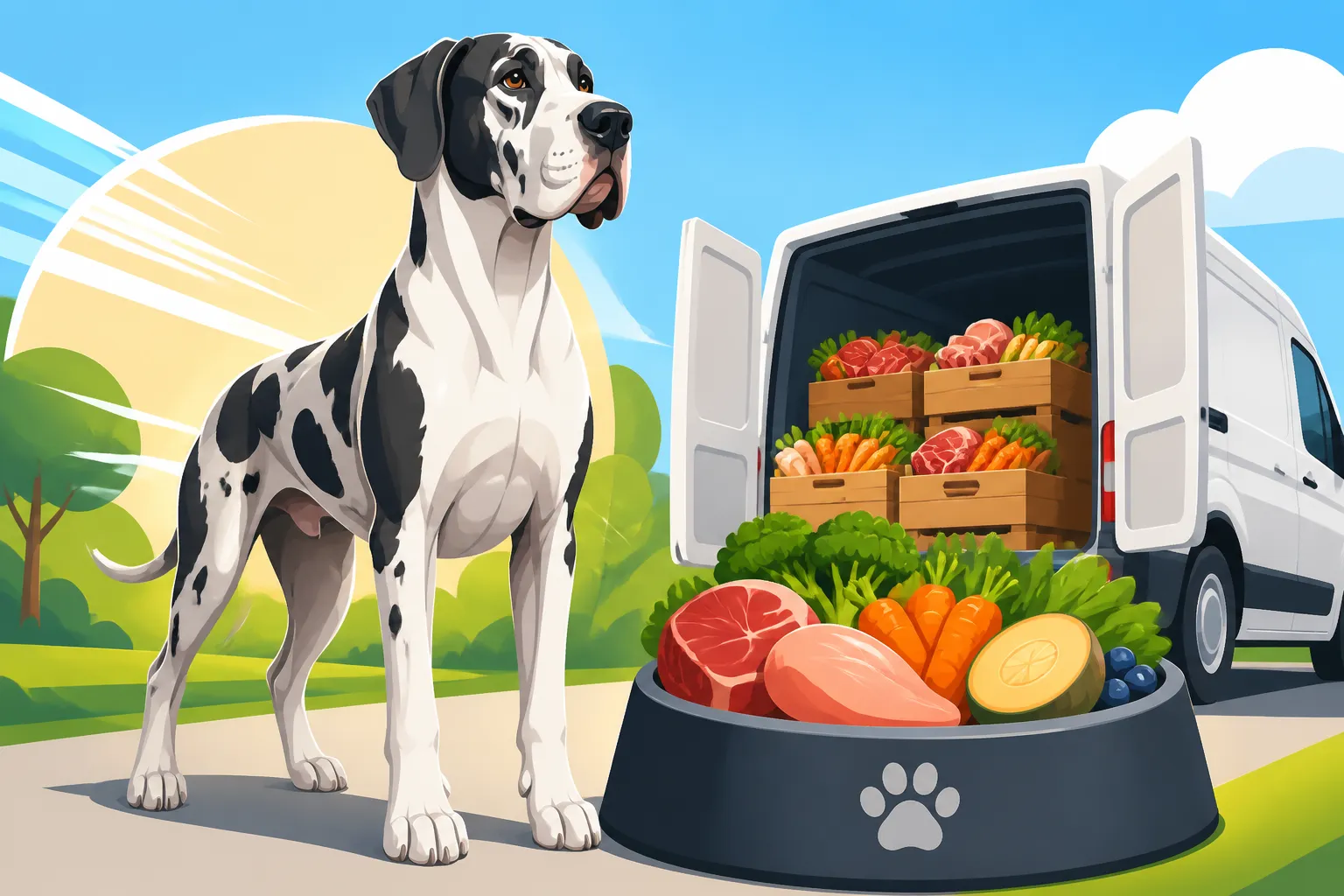
Fresh Delivered Food at Great Dane Volume
For Great Dane guardians, the sheer volume of food consumed by our beloved giants is a constant, often bewildering, reality. You're likely wrestling with the daily question of how to provide the best nutrition without breaking the bank or turning your kitchen into a commercial prep facility, especially when considering the rising popularity of fresh, human-grade dog food. This guide is here to walk you through everything you need to know about navigating the world of fresh delivered food for your magnificent, hungry Great Dane, addressing the unique challenges their size brings to this feeding approach.
The Appeal and the Awe of Fresh Food for Great Danes
It's easy to be drawn to the idea of fresh food for your Great Dane. We see advertisements showing vibrant, wholesome meals that look good enough for us to eat, and naturally, we want the best for our dogs. The thought of moving away from highly processed kibble to something more 'natural' or 'human-grade' is incredibly appealing, especially when you're dedicated to their long-term health and well-being. But with a Great Dane, "natural" and "human-grade" also come with a significant asterisk: volume.
Why Fresh Food Captures Our Attention
Many Great Dane owners are incredibly proactive about their dog's health, constantly seeking ways to support their joints, coat, digestion, and overall vitality. The promise of fresh food often includes claims of improved energy, shinier coats, better digestion, and even a stronger immune system. For a breed like the Great Dane, which is prone to certain health issues, any perceived edge in nutrition feels like a worthwhile pursuit. You might be tired of looking at ingredient lists on kibble bags that read like a science experiment, yearning for something simpler and more recognizable. This desire for transparency and quality is a huge driver behind the fresh food movement.
For a Great Dane, every aspect of their diet feels magnified. If a smaller dog has a sensitive stomach, it's an annoyance. If a Great Dane has one, you're dealing with colossal messes and potentially expensive vet visits. This intensifies the search for a diet that minimizes issues and maximizes health. The idea of feeding a diet free from artificial preservatives, fillers, and by-products resonates deeply with owners who feel their dogs deserve the same quality of food they strive for themselves.
The Great Dane Volume Reality Check
Here's where the dream often meets the dizzying reality: a Great Dane can eat an astonishing amount of food. While a typical Great Dane needs about six to ten cups of quality kibble per day, translating that to fresh food means massive portions. Imagine preparing or storing ten cups of fresh, moist food daily. This isn't just about scooping a few kibble pellets; it's about significant caloric density, protein requirements, and a balanced nutrient profile.
If you've ever tried "Cooking for a Great Dane and the Volume Problem", you know the sheer scale involved. A Great Dane isn't getting by on a cup or two. They are consuming meals that could easily feed a smaller family, sometimes twice a day. This physical volume affects everything from how much fridge or freezer space you need, to how often deliveries must occur, and, inevitably, the cost. It's a fundamental difference that smaller dog owners simply don't have to contend with.
Decoding Fresh Delivered Food Services for Giants
The market for fresh delivered dog food has exploded, with many companies promising convenience and quality. However, not all services are created equal, especially when it comes to catering to the specific needs, and more importantly, the immense appetites, of a Great Dane. It's a different ballgame when your dog eats like a small horse.
How Fresh Food Delivery Works
Most fresh dog food services operate on a subscription model. You typically provide information about your dog—their breed, age, weight, activity level, and any dietary sensitivities—and the service calculates a recommended daily portion. Meals are then prepared, often human-grade ingredients, cooked gently, and frozen or refrigerated before being portioned and delivered to your doorstep. The frequency of delivery can vary, from weekly to monthly, depending on the company and your storage capacity.
The appeal of this model is clear: no grocery shopping for dog food, no deciphering confusing labels, and ideally, a perfectly balanced meal ready to serve. For Great Dane owners, this convenience factor is huge. Knowing your dog's meals are taken care of and nutritionally complete without you having to spend hours in the kitchen is a major draw. Companies like Ollie offer these kinds of services, aiming to simplify feeding while elevating quality.
Portioning and Nutritional Balance: A Giant Breed Conundrum
When you're dealing with a giant breed, getting the nutrition right is paramount. Great Dane puppies, in particular, need careful management of their growth to prevent orthopedic issues. Rapid growth caused by an imbalance in calcium and phosphorus, or simply too many calories, can be detrimental. This is why you need to pay close attention to the details on your Great Dane puppy food bag and understand "Why a Great Dane Puppy Should Grow Slowly".
For adult Great Danes, maintaining a lean body condition is vital for joint health, as detailed in "Keeping a Great Dane Lean for Its Joints". Fresh food services should be able to provide precise caloric and macronutrient breakdowns to ensure your Dane is getting exactly what they need without over or underfeeding. This means looking beyond just "human-grade" and digging into the actual nutritional analysis. A great service will customize the meal plan not just for weight, but for activity level and age, to ensure the optimal "The Calorie Load a Great Dane Actually Needs".
It's crucial to confirm that any fresh food provider understands the specific dietary needs of giant breeds, particularly regarding appropriate "Protein and Fat Levels for a Great Dane" and calcium-to-phosphorus ratios for growing puppies. Some services excel at this, while others might offer a more generic "all sizes" approach that may not be ideal for a Dane.
Cost Implications and Value Proposition
Let's be blunt: feeding a Great Dane is expensive, regardless of the food type. When you transition to fresh delivered food, prepare for those costs to multiply significantly. This is often the biggest hurdle for owners, but understanding where the costs come from can help you make an informed decision.
The Sticker Shock of Fresh Food Volume
The reality is that fresh, human-grade ingredients cost more than rendered animal by-products and grains found in many kibbles. Add to that the cost of preparation, packaging, refrigeration, and delivery, and the price per serving quickly adds up. For a Great Dane consuming a vast quantity of food daily, these costs become substantial. You're no longer just looking at "Monthly Food Spending on a Great Dane" with kibble prices; you're entering a new financial league.
Imagine a single bag of high-quality kibble lasting a few weeks for a smaller dog. For a Great Dane, that bag might last a week, if you're lucky. Now apply that same principle to fresh food. A month's supply of fresh-delivered meals for a Great Dane can easily exceed what many people spend on their own groceries. It’s not uncommon for these plans to run into several hundred dollars per month, sometimes even more. This makes "Whether a Great Dane Fits a Normal Budget" a very real question for many considering this diet.
Comparing Costs: Fresh vs. Other Options
To truly evaluate the financial commitment, it helps to compare.
Most Great Dane owners know the cost of high-quality kibble. Some also explore "Raw Feeding at Great Dane Volume" which can involve significant cost and time commitment for sourcing and preparation.
Here's a simplified look at cost considerations:
| Feature | High-Quality Kibble | DIY Fresh Food (Cooked) | Fresh Delivered Food |
|---|---|---|---|
| Ingredient Cost | Lower (bulk, rendered products) | Moderate to High (human-grade groceries) | High (human-grade, often organic/specialty) |
| Preparation Time | Minimal (scoop and serve) | High (shopping, cooking, portioning) | Minimal (open and serve) |
| Nutritional Balance | Formulated, but quality varies | Requires expert knowledge or vet consultation | Formulated by experts, tailored to dog's profile |
| Storage Requirements | Dry, cool pantry space | Significant fridge/freezer space | Significant fridge/freezer space |
| Convenience | Very high | Very low | High (delivered, pre-portioned) |
| Cost for Great Dane | Moderate (high volume, but lower unit price) | Variable, potentially lower than delivered if DIY | High (high unit price, plus high volume and service) |
When factoring in these elements, it becomes clear why fresh delivered food is at the higher end of the spectrum. It's paying for convenience and expertise on top of the quality ingredients. You might find services like Chewy offer excellent kibble options if fresh delivery strains your budget, allowing you to prioritize other health expenses, or building up a fund for potential emergencies as discussed in "How Much Cash a Great Dane Owner Should Keep Ready".
Practical Considerations for Great Dane Owners
Beyond the nutritional science and the balance sheet, there are real-world implications of feeding a massive dog a fresh, delivered diet. These are the day-to-day things that can make or break the experience.
Storage and Logistics: The Fridge Wars
This is a big one. A week's worth of fresh, delivered food for a Great Dane takes up a shocking amount of space. If you have a two-door fridge/freezer combo, you might find yourself struggling to fit both your family's groceries and your Dane's meals. Many owners find they need a dedicated chest freezer or a second refrigerator just for their dog's food.
Consider the packaging too. Is it bulky? Stackable? Does it arrive frozen solid, or does it need immediate refrigeration? How often do deliveries occur? If they're infrequent, you'll need even more storage. If they're weekly, you'll need to be home for them or have a secure, cool place for them to be left. This logistical dance is often underestimated until you have a week's supply of huge food tubs crowding your kitchen.
Transitioning Your Great Dane to a New Diet
Great Danes, like many dogs, can have sensitive digestive systems. A sudden switch to a new food, especially from kibble to fresh, can lead to upset stomachs, diarrhea, and other unpleasant issues. It's vital to transition your Great Dane slowly and carefully over a period of seven to ten days, gradually mixing the new food with the old. Start with a small percentage of fresh food and slowly increase it while decreasing the old food.
During this transition, keep a close eye on your Dane's stool and overall demeanor. Any signs of severe gastrointestinal distress mean you should slow down the transition or consult your veterinarian. Even with the best intentions, some Danes simply don't tolerate certain ingredients or types of food as well as others.
Monitoring Health and Performance
Once your Great Dane is fully on a fresh delivered diet, it's important to monitor their health, weight, and energy levels. While many owners report positive changes, every dog is an individual. You should still be able to easily feel your Dane's ribs, as highlighted in "Feeling a Great Dane's Ribs and Spine", to ensure they aren't gaining too much weight.
Regular vet check-ups are still essential, and discussing your Dane's diet with your vet can provide valuable insight. They can help you determine if the chosen fresh food truly meets all your dog's specific needs, especially if your Dane has underlying health conditions. Remember, while a fresh diet aims for optimal health, pet insurance from providers like Healthy Paws is still a crucial consideration for a breed known for significant vet bills. Keeping your Great Dane insured before any major health events occur can be a financial lifeline.
Making the Fresh Food Choice for Your Great Dane
Deciding on fresh delivered food for your Great Dane is a significant commitment of both time and money. It's not a decision to be taken lightly, but with careful consideration, it can be a rewarding choice for some owners.
Is Fresh Delivered Food Right for You?
Consider your priorities. If the convenience of pre-portioned, nutritionally balanced, human-grade meals delivered to your door is worth the premium price, and you have the storage capacity, then fresh delivered food could be a great fit. It eliminates the guesswork of DIY fresh feeding and the perceived compromises of kibble.
However, if budget is your absolute top concern, or if you simply don't have the freezer space, there are many other excellent ways to provide high-quality nutrition to your Great Dane. High-quality kibble from a reputable brand, perhaps supplemented with fresh ingredients you add yourself, can also be a fantastic option. The goal is always to feed your individual Great Dane what helps them thrive, within your practical means. What works for one Great Dane family in a city apartment might not work for another in a sprawling rural home.
Tips for Success with Fresh Delivered Food
If you decide to go this route, here are a few tips to make it work:
- Start with Trials: Many companies offer trial periods or introductory discounts. Take advantage of these to see how your Great Dane tolerates the food and if the logistics work for your household.
- Evaluate Portions Carefully: Don't just trust the automated calculator. Always cross-reference with your vet and observe your Dane's body condition. You might need to adjust the actual quantity. Learn to accurately assess "Weighing a Great Dane's Ration" for their specific needs.
- Plan Storage: Before you commit, physically measure your available fridge and freezer space. A dedicated mini-freezer might be a smart investment.
- Read the Fine Print: Understand delivery schedules, cancellation policies, and ingredient sourcing. Don't be afraid to ask detailed questions about their giant breed formulation.
- Supplement Wisely (If Needed): If you're concerned about specific joint support, discuss with your vet whether "Joint Support Built Into Great Dane Food" is sufficient, or if additional supplements are warranted.
Ultimately, providing optimal nutrition for your Great Dane is about making choices that align with their health needs, your lifestyle, and your budget. Fresh delivered food presents a compelling, albeit expensive, option that many Great Dane owners are successfully integrating into their lives.
Disclaimer
This article is for general informational purposes only and does not constitute professional advice. Laws, prices and regulations vary by location and change over time. Consult a qualified professional for guidance on your specific situation.