Trainer Rates for a Great Dane That Pulls
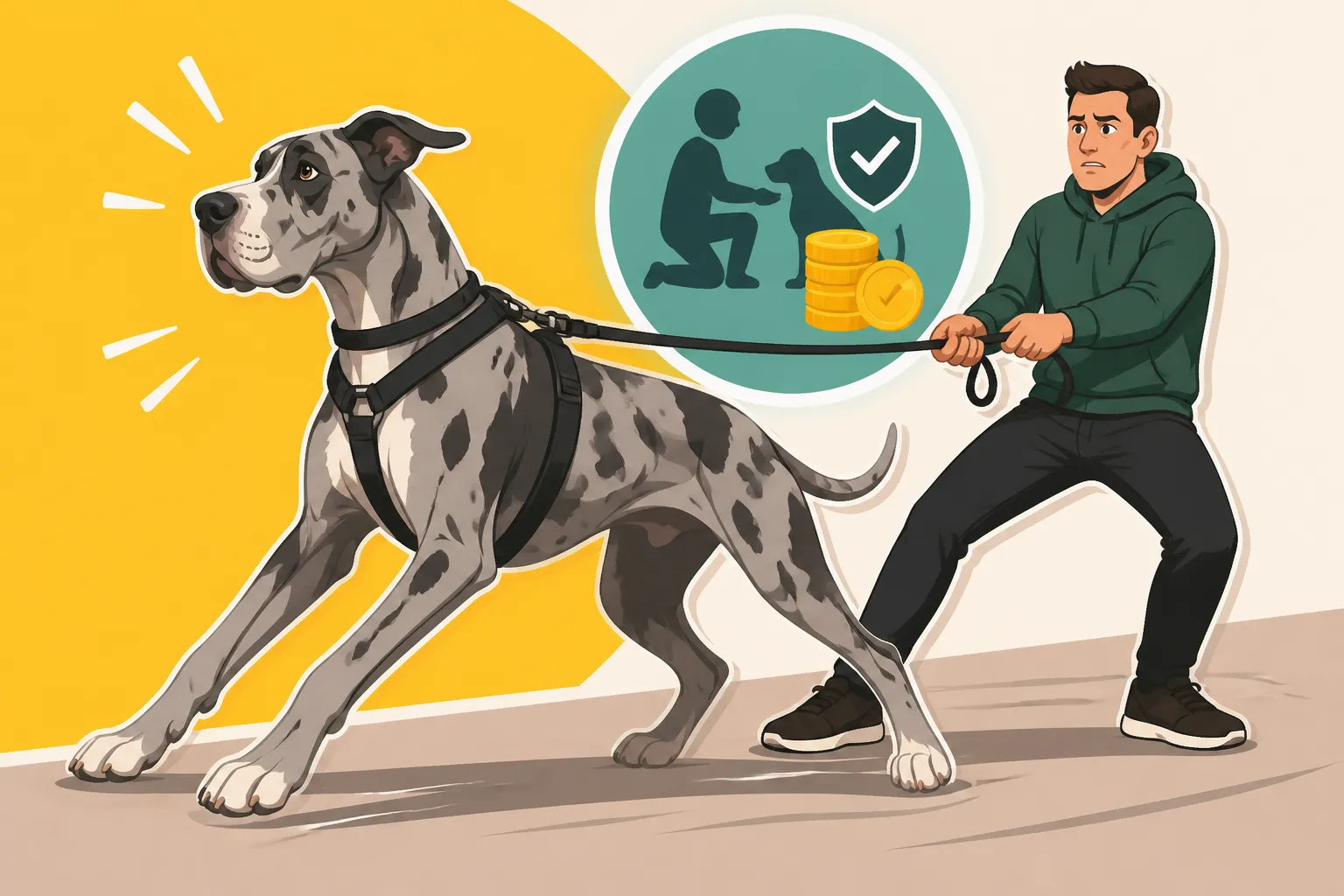
There are few things more frustrating, or frankly, terrifying, than being dragged down the street by a Great Dane who has decided something on the horizon is more interesting than your polite request to "heel." It's not just annoying; it's a genuine safety hazard for both you and your giant companion, not to mention anyone else nearby. If you're struggling with a powerful puller and are ready to seek professional help, understanding the various training options and their associated costs is the first crucial step. This guide will walk you through what to expect when hiring a trainer for your Great Dane, breaking down the factors that influence pricing and how to make the most of your investment.
The Unique Challenges of Training a Pulling Great Dane
When you're dealing with a dog that can easily outweigh many adult humans, the stakes of leash pulling are incredibly high. This isn't just about a minor inconvenience; it's about control, safety, and maintaining a positive relationship with your gentle giant.
Why "Just Hold Tighter" Doesn't Work for a Dane
Let's be real, you're not imagining it – your Great Dane is strong. When a Dane puts its shoulder into a pull, it's often a full-body commitment. For an owner, this can translate to strained shoulders, wrenched backs, scraped knees, or even a full face-plant onto the pavement. The common advice to "just hold tighter" simply doesn't account for the sheer physical power these magnificent dogs possess. It's not a reflection of your ability as an owner or your dog's intelligence; it's a matter of physics. No matter how much you brace yourself, a sudden lunge from a motivated 150-pound dog can easily overpower you, turning a pleasant walk into a terrifying ordeal. We've all been there, feeling that jolt and wondering if this walk is going to end with us still upright. It's exhausting, both physically and mentally, and it can quickly lead to avoiding walks altogether, which is unfair to a dog that needs appropriate exercise.
The Importance of Early Intervention
With a breed that grows as quickly and as large as a Great Dane, bad habits escalate at an alarming rate. A cute puppy playfully tugging on the leash at four months old becomes an uncontrollable adult by the time it's a year or two old. Waiting until your Dane is a full-grown behemoth to address pulling issues is like trying to stop a freight train with a piece of string. The sheer momentum and ingrained habit are far harder to break. The Manners a Great Dane Needs Before It Grows are critical, and leash manners are at the top of that list. Early intervention, ideally from the moment you bring your puppy home, is paramount. This isn't just about making your walks more pleasant; it's about ensuring your dog's safety, preventing injuries to you and others, and ensuring your Great Dane can be a well-adjusted member of society who can accompany you confidently in public.
Beyond Basic Obedience: Addressing the Root Cause
Leash pulling isn't always just a simple lack of understanding the "heel" command. Often, it's a symptom of deeper behavioral patterns. Is your Great Dane pulling because they are overly excited to greet other dogs or people? Are they reactive to certain stimuli like squirrels, cars, or children? Are they feeling anxious or overwhelmed by their environment? A good trainer won't just teach your dog to walk politely for 20 feet; they'll help you identify why your Great Dane pulls. They'll assess their environment, their triggers, and their emotional state to craft a comprehensive plan. This might involve building confidence, working on focus in distracting environments, or teaching impulse control. It’s about understanding the entire picture, not just slapping a band-aid on the visible problem of pulling. This holistic approach is what truly makes a difference in the long run.
Different Types of Great Dane Training and Their Cost Structures
Just like finding the right doctor, finding the right dog trainer involves considering various approaches and understanding what each offers. The cost will vary significantly depending on the format and intensity of the training.
Group Classes: The Budget-Friendly Option
Group classes are often the first step many owners consider, and for good reason. They are typically the most affordable option, offering a structured environment where dogs learn basic obedience and socialization skills alongside other dogs and their owners. You'll often find classes focused on puppy socialization, basic obedience, or even more advanced manners. The cost usually ranges from a flat fee for a multi-week course or a per-class rate, making it a manageable entry point for many budgets. You might pay a few hundred dollars for a 6-8 week course, for instance.
The pros of group classes include the opportunity for your Great Dane to socialize in a controlled setting, which is vital for a giant breed. They also provide a supportive community where you can learn from other owners and practice skills with distractions. However, the cons are that the instructor's attention is divided among several students, so individual issues like severe pulling might not get the in-depth focus they need. If your Great Dane is already a strong puller or highly reactive, the distractions of a group class might actually be counterproductive until some foundational work is done. These classes often expect you to bring your own equipment, so be ready to invest in a sturdy harness or head halter, which you can easily find on sites like Chewy.
Private In-Home Training: Tailored Solutions
When a Great Dane's pulling is persistent, or if you need a solution customized to your unique living situation, private in-home training can be incredibly effective. With this option, a trainer comes to your home, observing your dog in its natural environment and working one-on-one with you and your Dane. This allows for a truly tailored plan, addressing specific challenges like pulling out the front door, reacting to neighbors, or simply learning to walk politely in your neighborhood. Getting a Great Dane to Walk on a Loose Leash in their familiar surroundings is often much more successful initially.
The cost for private in-home training is usually higher per session than group classes, reflecting the individualized attention and convenience. Trainers might charge an hourly rate, or offer packages of several sessions at a slightly reduced cost. Expect to pay a few hundred dollars per session, with packages typically ranging into the low thousands for a comprehensive program. The biggest pros are the personalized approach, the ability to work on real-world problems directly, and the flexible scheduling. The main con is the higher investment, but for many Great Dane owners struggling with serious pulling, the effectiveness often justifies the cost.
Board-and-Train Programs: Intensive Immersion
For owners facing severe pulling issues, reactivity, or a lack of time to commit to consistent daily training, a board-and-train program might seem like a tempting solution. In these programs, your Great Dane lives with the trainer for an extended period—typically a few weeks to a month or more—receiving intensive, consistent training. The idea is that the dog develops new habits in a highly controlled environment before returning home to the owner.
These programs are usually the most expensive option, often costing several thousand dollars for a full program. The price reflects the round-the-clock care, the trainer's expertise, and the intensive nature of the work. The pros are that you can see rapid and significant changes in behavior, as the dog is immersed in training. However, there are significant cons. The high cost is a major barrier, and you're separated from your dog for an extended period. More importantly, the owner still needs to learn how to maintain these new behaviors once the dog comes home. Without diligent follow-up from the owner, the dog can quickly revert to old habits. Make sure any board-and-train program includes extensive "transfer" sessions where you learn how to handle your "newly trained" Great Dane.
Online Courses and Virtual Consultations: Modern Alternatives
In our increasingly connected world, online training and virtual consultations have become popular, offering a flexible and often more accessible way to address behavioral issues. These can range from pre-recorded courses you work through at your own pace to live video calls with a professional trainer.
The cost for online resources varies widely. A subscription to a comprehensive online training platform might be a relatively low monthly fee, while a personalized virtual consultation with an experienced trainer could be similar to a private in-home session, albeit without the trainer physically present. The pros are immense flexibility, the ability to learn from experts anywhere in the world, and often a lower entry cost than in-person training. This can be especially good for getting tips on Harnesses and Collars That Control a Great Dane or understanding basic leash skills. The main con is the lack of hands-on physical intervention. For a powerful Great Dane that pulls, a virtual trainer can guide you, but they can't physically show your dog what to do or help you manage their strength directly. It requires a high degree of owner commitment and self-discipline to implement the training effectively.
Factors Influencing Great Dane Training Rates
You've probably noticed that trainer rates aren't uniform. Several key factors contribute to how much you'll pay, and understanding them can help you budget and make an informed decision.
Trainer Experience and Certifications
Just like in any profession, experience and advanced certifications command higher rates. A trainer who has spent decades working with giant breeds, holds certifications such as Certified Professional Dog Trainer – Knowledge Assessed (CPDT-KA), Certified Behavior Consultant Canine (CBCC-KA), or is a Karen Pryor Academy Certified Training Partner (KPA-CTP), will generally charge more than a novice trainer. These credentials indicate a commitment to ongoing education, ethical training practices, and a deep understanding of canine behavior.
Specialization also plays a big role. A trainer renowned for working specifically with large breeds or those with reactivity issues might have a premium rate due to their expertise in these challenging areas. You're paying not just for their time, but for their proven track record and the specialized knowledge that can make a real difference in controlling a powerful Great Dane. When looking for Finding a Trainer Comfortable With a Great Dane, always inquire about their experience with giant breeds specifically.
Geographic Location and Local Market
Where you live significantly impacts the cost of dog training, much like the cost of living in general. Trainers in major metropolitan areas with higher overheads and strong demand will naturally charge more than those in rural or less populated regions. For example, a private session in a bustling city might be substantially more expensive than a comparable session in a quiet suburb or small town.
Competition among trainers in a given area can also influence pricing. In regions with many qualified trainers, rates might be more competitive. Conversely, if there are only a few trainers specializing in giant breeds or complex behavioral issues in your area, their services may come at a premium due to limited supply. It always pays to do a local search and compare rates from several professionals in your region.
The Severity of the Pulling Behavior and Required Techniques
The complexity of your Great Dane's pulling problem will directly affect how much training is required and, consequently, the total cost. If your Dane occasionally pulls out of excitement but generally walks well, a few private sessions focusing on Teaching a Great Dane to Heel Beside You might be sufficient. However, if you have A Great Dane That Pulls You Off Your Feet the moment you step outside, lunges at every dog, or shows signs of fear-based reactivity, the training program will be much more intensive and prolonged.
Addressing deep-seated behavioral issues like severe reactivity or anxiety requires more time, specialized techniques, and often a multi-modal approach. This might involve counter-conditioning, desensitization, and significant environmental management, all of which extend the duration and complexity of the training, leading to a higher overall expense. Trainers will often assess the severity of the issue during an initial consultation and then provide a recommendation and quote.
Duration and Number of Sessions
Most trainers offer various pricing structures based on the length of individual sessions and the total number of sessions purchased. A single, one-off consultation might be a convenient way to get some initial advice, but for actual behavior modification, you'll almost always need multiple sessions.
Many trainers offer package deals, where buying a block of 3, 5, or 10 sessions upfront comes with a reduced per-session rate compared to booking them individually. This is beneficial for both the owner and the trainer, as it commits to a longer-term plan, which is essential for lasting change, especially with a Great Dane. For instance, What a Great Dane Puppy Course Runs might be a fixed rate for 6 weeks, while private sessions might be priced individually or as a package for ongoing support. Be realistic about the time investment needed; fixing a long-standing pulling problem in a large, powerful dog is rarely a quick fix.
Making Training More Affordable and Effective
While training a Great Dane can be an investment, there are smart ways to approach it that can save you money in the long run and maximize the effectiveness of the training you do undertake.
Proactive Training and Socialization from Puppyhood
This is perhaps the single most impactful way to reduce future training costs. Investing time and effort into Paying to Train a Great Dane Early when they are a puppy is infinitely easier and cheaper than trying to undo deeply ingrained habits in a full-grown adult. Puppy classes, consistent positive reinforcement, and careful socialization during those critical first few months lay a solid foundation for a well-mannered dog.
Teach loose-leash walking principles from day one, even if it's just practicing in your living room. Introduce your puppy to various sights, sounds, and people in a positive way. The goal is to build a confident, calm dog who doesn't feel the need to pull or react out of fear or overexcitement. By being proactive, you're not just saving money on expensive behavioral interventions later; you're setting your Great Dane up for a happier, more integrated life with your family. For high-value training treats to keep your pup engaged, consider quality options from brands like Ollie, which can make training sessions much more appealing.
Utilizing Appropriate Equipment
While equipment is never a substitute for training, the right tools can be incredibly helpful in managing a pulling Great Dane while you're working on the underlying behavior. Front-clip harnesses and head halters (like a Halti or Gentle Leader) can redistribute pressure and give you more leverage without causing discomfort to your dog. Whether a Head Halter Fits a Great Dane's Muzzle is an important consideration, as proper fit is key. These tools make walks more manageable and allow you to practice loose-leash walking more effectively, preventing you from being pulled off your feet and thus making the training process safer and more enjoyable for both of you.
Remember, the goal is to use these tools temporarily as an aid while you teach your dog how to walk politely, not as a permanent crutch. A good trainer can help you select the most appropriate equipment for your Great Dane's size and temperament, and you can find a variety of Leashes Rated for a Great Dane and harnesses on sites like Chewy that are built for strength and durability.
The Value of Consistency and Owner Participation
Hiring a trainer is a partnership. The trainer provides the expertise, the structure, and the guidance, but you are the one who lives with your Great Dane every single day. Your consistency in reinforcing the lessons learned, practicing between sessions, and adapting your daily routine is the single most important factor in the success of any training program. A trainer can teach your dog in an hour, but if you don't follow through for the other 23 hours of the day, those lessons will quickly fade.
This commitment extends beyond just training sessions. Ensuring your Great Dane receives proper exercise, mental stimulation, and a healthy diet also contributes to their overall well-being and receptiveness to training. While pet insurance from providers like Healthy Paws focuses on medical emergencies and ongoing care, budgeting for your Dane's overall health – including preventive measures and quality nutrition from brands like Ollie – helps ensure you have the financial flexibility to invest in training when needed, and to avoid other issues like high Monthly Costs for an Adult Great Dane that might otherwise consume your budget.
Asking the Right Questions Before Committing
Before you hand over your hard-earned money, do your homework. Interview several trainers to find the best fit for you and your Great Dane. Ask about their training philosophy (positive reinforcement is generally recommended for Great Danes), their experience with giant breeds, their certifications, and if they can provide references.
Clarify their rates, what's included in any packages, and if there are any additional fees. Ask about their cancellation policy and if they offer any follow-up support after the main program concludes. A reputable trainer will be transparent about their methods and pricing and happy to answer all your questions. Don't be afraid to trust your gut feeling; you need to feel comfortable and confident in the person you're entrusting with your Great Dane's behavioral development.
| Training Type | Typical Cost Structure | Pros | Cons |
|---|---|---|---|
| Group Classes | Per class or package of classes | Most affordable, good for socialization, structured learning | Less individualized, may not suit severe pulling, fixed schedule |
| Private In-Home Training | Per hour/session, or package | Highly tailored, addresses specific home issues, flexible scheduling | Higher cost per session, requires consistent owner follow-through |
| Board-and-Train Programs | Weekly or per program | Intensive, rapid results for complex issues, professional handling | Most expensive, dog away from home, owner misses initial learning |
| Virtual/Online Training | Subscription or per session | Flexible, accessible, often lower entry cost, convenient | Less hands-on, requires strong owner commitment, less direct feedback |
Disclaimer
This article is for general informational purposes only and does not constitute professional advice. Laws, prices and regulations vary by location and change over time. Consult a qualified professional for guidance on your specific situation.