Harnesses and Collars That Control a Great Dane
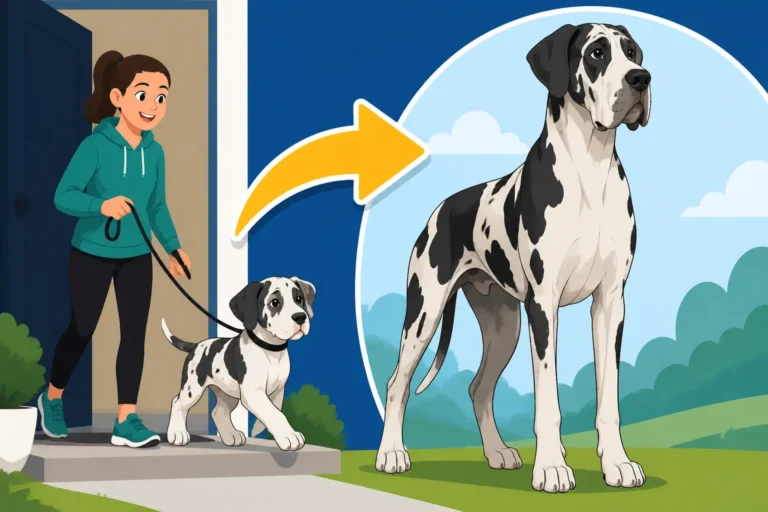
Walking a Great Dane can sometimes feel less like a stroll and more like being dragged down the street by a small horse, especially if your gentle giant decides to investigate a squirrel or greet a new friend with unbridled enthusiasm. The sheer size and power of these magnificent dogs mean that selecting the right control equipment isn't just about comfort for them, it's about safety and enjoyment for both of you. This comprehensive guide will walk you through the various types of collars and harnesses, helping you find the perfect tools to manage your Great Dane's strength and ensure pleasant, controlled walks.
Understanding the Unique Challenges of Great Dane Leash Control
Let's be real: controlling a Great Dane on a leash is an entirely different ballgame than walking a beagle. Their size isn't just intimidating; it comes with a remarkable amount of power and momentum that can quickly turn a peaceful walk into an Olympic event you didn't sign up for. Understanding these challenges is the first step toward finding effective solutions.
The Sheer Power and Size of a Great Dane
When you're dealing with a dog that can easily weigh over 100 pounds, sometimes even tipping the scales at 150 or more, you're looking at a formidable amount of moving mass. A Great Dane, even a well-intentioned one, can exert incredible force with a sudden lunge or pull. Imagine trying to hold back a person who outweighs you by 50 or 100 pounds – that's often the reality of a Great Dane on a leash. Their deep chests and powerful shoulders are built for driving forward, and without the right equipment and training, that drive translates directly to your arm and shoulder. It's not about malice; it's simply physics.
This physical strength means that equipment designed for smaller or even medium-sized dogs simply won't cut it. A flimsy collar or harness won't just fail to provide control; it can actually break, leaving you in a potentially dangerous situation. We need equipment that can stand up to the challenge, not just in terms of durability, but in how it physically distributes force and helps you guide your dog.
Common Frustrations for Owners
Many Great Dane owners know the feeling all too well: the sudden jerk that nearly yanks your arm out of its socket, the scraped knees from an unexpected lunge, or the sheer exhaustion after battling your dog for a mile. It’s frustrating when you just want to enjoy a walk with your beloved companion, but every outing feels like a struggle. You might start avoiding busy areas, or even walks altogether, because you're worried about your dog's reaction to other people or dogs, or simply about maintaining your balance.
The embarrassment when your Great Dane decides to enthusiastically jump on a stranger, or drag you towards a sniff, is also a very real feeling. It can make you feel inadequate as an owner, even when you know you love your dog deeply. These common frustrations are precisely why investing time in proper training and selecting the right tools, like those discussed in Great Dane Leash Manners at a Hundred and Fifty Pounds, is so incredibly important for the well-being and confidence of both you and your Great Dane.
The Importance of Early Training vs. Equipment
It's crucial to remember that no collar or harness, no matter how "corrective" or sophisticated, is a substitute for solid training. Think of control equipment as a supportive tool, not a magical fix. While the right harness can certainly make managing a pulling Great Dane easier and safer, it won't inherently teach your dog not to pull. That comes from consistent positive reinforcement, clear communication, and patience.
Starting training early, when your Great Dane puppy is still small enough to manage, is absolutely vital. Teaching basic cues like "heel," "stay," and "leave it" will lay the groundwork for a well-behaved adult dog. Equipment, then, becomes an aid to reinforce those learned behaviors, giving you a mechanical advantage while your dog learns the ropes. Relying solely on equipment without the underlying training can lead to a dog who only behaves when a specific device is on, or who simply learns to pull through the equipment, potentially leading to further frustration or even injury. Remember, The Cues a Great Dane Needs Before Six Months are foundational for their entire lives.
Exploring Different Collar Types for Great Danes
When it comes to Great Danes, not all collars are created equal. What works for a smaller breed might be ineffective or even dangerous for a dog of this magnitude. Let's delve into the different types and their suitability for your gentle giant.
Standard Flat Buckle Collars
The standard flat buckle collar is what most people picture when they think of a dog collar. It's a simple strip of nylon, leather, or other material with a buckle closure and a D-ring for leash attachment and identification tags. For a Great Dane, these collars are primarily for holding ID tags and can offer very basic control for a dog that already walks perfectly on a loose leash.
Pros: They are comfortable, readily available, and great for holding identification, which is essential for any dog. For a Great Dane that has impeccable leash manners and never pulls, a flat collar is perfectly acceptable for walks. They are also useful for attaching your dog's rabies tag and city license.
Cons: The moment a Great Dane decides to pull, a flat buckle collar offers minimal control. All the pressure is concentrated on the delicate structures of their neck, including the trachea, thyroid, and blood vessels. A strong pull can lead to gagging, choking, or even serious neck injury. For dogs that lunge or pull, these collars are generally not recommended for primary leash attachment due to the risk of damage to the dog's throat and the owner's inability to manage them effectively. Furthermore, if the fit isn't precise, a Great Dane can often back out of a flat collar with surprising ease when startled or determined, which is a scary thought given their size.
Martingale Collars
Martingale collars, sometimes called "limited-slip" collars, are designed specifically for dogs with necks larger than their heads, like Greyhounds or, in many cases, Great Danes. They consist of a larger loop that goes around the dog's neck, and a smaller loop with a D-ring where the leash attaches. When the dog pulls, the smaller loop tightens the larger loop just enough to prevent the dog from backing out, but not to choke them.
Pros: Martingale collars are excellent for preventing escapes. If your Great Dane is a master of wiggling out of traditional collars, a martingale can provide peace of mind. They offer a gentle, even pressure around the neck when the dog pulls, which is less harsh than a choke chain but still provides a clear signal. For a Great Dane that needs a little extra security and a moderate amount of leash guidance, but isn't a constant, heavy puller, this can be a good option. Many owners find them a good balance for their well-trained Danes, offering a touch more control than a flat collar without being overtly restrictive.
Cons: While better than a flat collar for prevention of escape and some mild pulling, a martingale still puts pressure on the neck. For a Great Dane that truly leans into the leash with all its might, it won't provide the directional control a harness can. It also still carries the risk of tracheal irritation or injury if the dog pulls continuously or violently. Proper fitting is paramount; too loose and it's ineffective, too tight and it can still cause discomfort or injury. You also have to be mindful of the potential for neck injury from repeated strong pulls. A similar but more advanced option for specific control might be a head halter, and it’s worth considering Whether a Head Halter Fits a Great Dane's Muzzle if you're exploring options that offer more directional control with less neck pressure.
Choke Chains and Prong Collars: Why Caution is Advised
These types of collars are designed for significant correction and can be highly controversial. Choke chains (also known as slip collars) are metal chains that tighten continuously around the dog's neck when they pull. Prong collars (or pinch collars) have blunt metal prongs that pinch the skin around the neck when pressure is applied.
Mechanics and Potential Harm: Both types work by causing discomfort or pain to deter pulling. While they can be very effective at stopping a dog from pulling immediately, they come with substantial risks. Choke chains can cause severe tracheal damage, nerve damage, laryngeal paralysis, and even injury to the eyes or brain from lack of oxygen due to extreme pressure on the neck. Prong collars, despite their blunt tips, can also cause punctures, skin irritation, and psychological distress. The constant fear of correction can lead to a dog becoming anxious, fearful, or even reactive, rather than truly learning to walk politely.
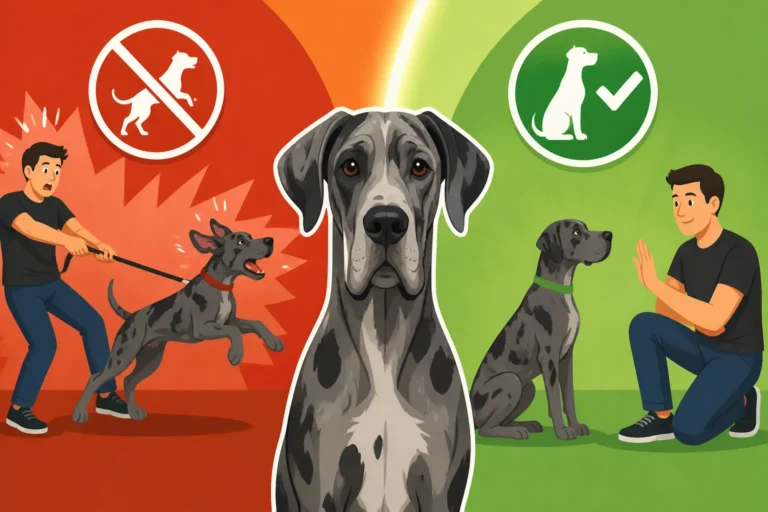
Ethical Considerations and Alternatives: Many modern dog trainers, particularly those specializing in positive reinforcement, strongly advise against the use of choke and prong collars due to their potential for physical harm and negative impact on a dog's emotional well-being. The goal of training should be to build a positive relationship based on trust and clear communication, not fear or pain. Instead of punishing pulling, focus on rewarding loose-leash walking, redirecting attention, and using equipment that provides a physical advantage without causing pain. If you're struggling with a Great Dane that pulls you off your feet, it's far more beneficial to explore positive reinforcement techniques and consider a front-clip harness or working with a professional trainer. Finding a Trainer Comfortable With a Great Dane can guide you towards safer, more humane methods.
Harnesses: The Go-To for Great Dane Control
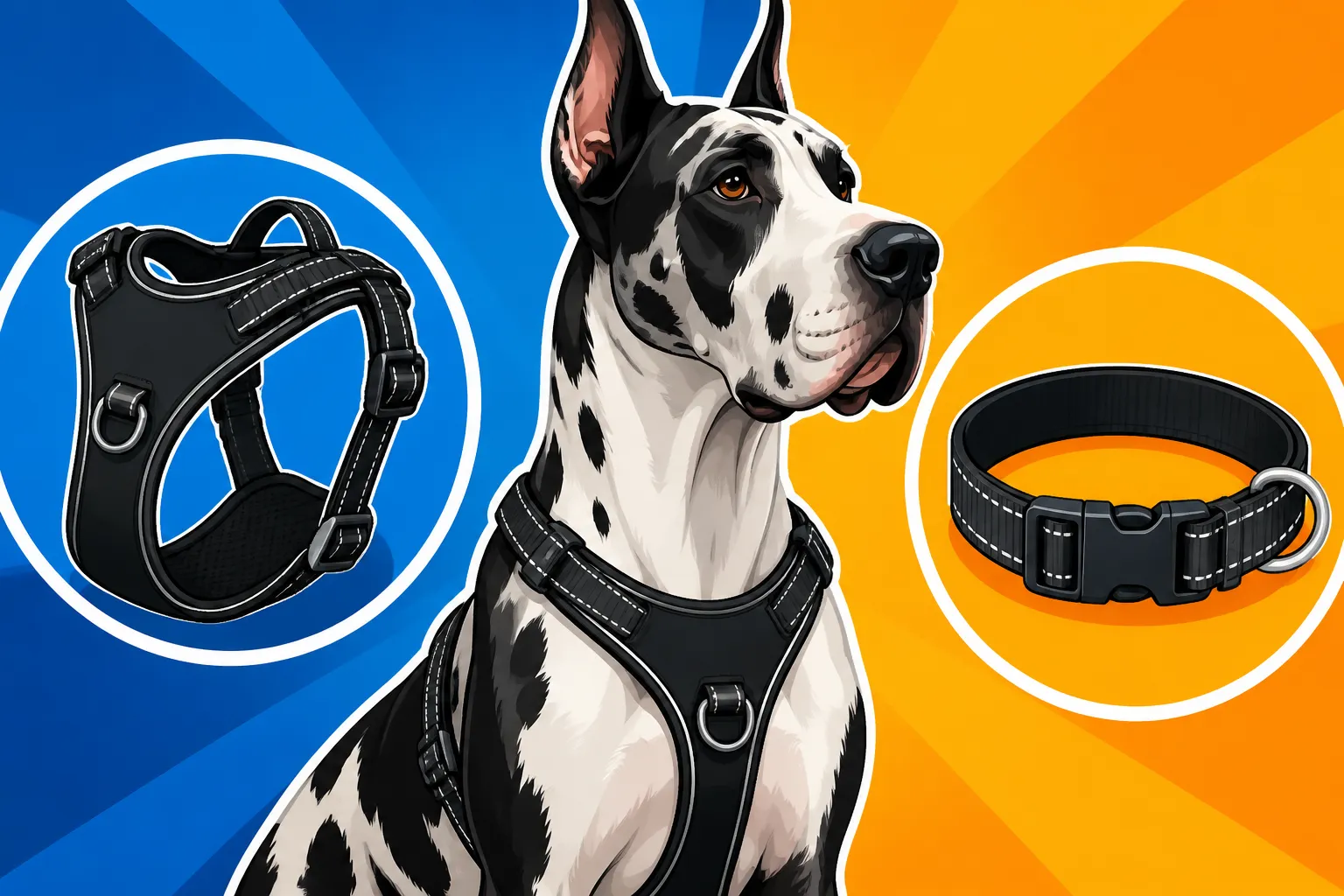
For most Great Dane owners, a well-fitting harness is often the superior choice for control, comfort, and safety during walks. They distribute pressure more evenly across the dog's body, reducing strain on the neck and trachea.
Front-Clip Harnesses and Their Mechanics
Front-clip harnesses, often called "no-pull" harnesses, have the leash attachment ring located on the dog's chest, rather than on their back. This seemingly small design change makes a monumental difference in how you control a powerful Great Dane.
How They Work: When your Great Dane pulls forward with a front-clip harness, the leash attachment point on their chest causes them to be gently redirected to the side, or even to turn back towards you. This makes it physically uncomfortable and inefficient for the dog to continue pulling straight ahead. Instead of pulling against you, they are effectively turning into themselves, which discourages the pulling behavior without causing pain or discomfort to their neck. It's a fantastic way to regain leverage and make walks much more manageable, especially if you're struggling with A Great Dane That Pulls You Off Your Feet.
Pros: Front-clip harnesses are incredibly effective at reducing pulling for most dogs, including large breeds like Great Danes. They distribute pressure across the chest and shoulders, away from the delicate neck and throat, making them much safer than collars for dogs that pull. They offer significantly more control and can make walks more enjoyable and less physically taxing for the owner. Many owners report an immediate improvement in their dog's leash manners. As discussed in Whether a Front-Clip Harness Slows a Great Dane, this type of harness really does make a difference.
Cons: The main potential downside is that if not properly fitted, the straps can sometimes rub or chafe in the armpit area, especially on a deep-chested breed like a Great Dane. Also, if the leash is too long or the dog spins quickly, the leash can sometimes get tangled under their front legs. It's vital to choose a harness designed for giant breeds, with ample padding and adjustability, to prevent these issues. Some dogs may also try to chew the chest strap if left unattended in the harness.
Back-Clip Harnesses: When They Work and When They Don't
Back-clip harnesses have the leash attachment ring located on the dog's back, typically between the shoulder blades. These are very common and widely available.
How They Work: When the leash is attached to the back, any pulling force is distributed across the dog's back and shoulders. This makes them very comfortable for the dog, as there is no pressure on the neck or throat. However, from a control perspective, it's the opposite of a front-clip harness. When a dog pulls on a back-clip harness, they are essentially pulling from their strongest point, using their full body weight and momentum to lean into the pull, much like a sled dog.
Pros: Back-clip harnesses are excellent for dogs who don't pull on the leash. They are comfortable, secure, and ideal for attaching ID tags or for situations where you want your dog to have maximum freedom of movement, such as off-leash areas (with the leash clipped when needed for safety). For a Great Dane that has already mastered loose-leash walking, a back-clip harness can be a perfectly suitable and comfortable option, serving as a secure way to hold identification and for minimal guidance.
Cons: For a Great Dane that pulls, a back-clip harness will likely exacerbate the problem. It actually gives them more leverage to pull you, making it harder, not easier, to control them. If your goal is to reduce pulling, this is generally not the harness type to choose as your primary walking tool. It offers very little directional control, making it difficult to correct lunging or guide your dog away from distractions effectively.
Dual-Clip (Combination) Harnesses
Some harnesses offer the best of both worlds by featuring both a front-clip attachment point (on the chest) and a back-clip attachment point (on the back). These are often called dual-clip or multi-functional harnesses.
How They Work: With a dual-clip harness, you have the flexibility to choose which attachment point to use based on the situation, or even use both simultaneously for maximum control. You might start by clipping to the front for training and control, and then switch to the back clip once your Great Dane has learned better leash manners. For advanced training, some trainers advocate using a double-ended leash, attaching one clip to the front and one to the back, which gives you incredible control and the ability to steer your dog with precision.
Pros: The primary benefit of a dual-clip harness is its versatility. You can use the front clip for reducing pulling and gaining better control during walks, and the back clip for casual strolls with a well-behaved dog, or for attaching a seatbelt tether in the car. This eliminates the need to buy two different harnesses for different purposes. They are often robust and well-designed, offering a secure fit. Many quality brands available on platforms like Amazon will offer these dual-clip options, making them a great investment for a Great Dane owner who values adaptability.
Cons: These harnesses can sometimes be a bit more complex to adjust and put on initially due to the multiple straps and attachment points. They might also be slightly bulkier than a simple back-clip harness. However, once properly fitted, the benefits usually far outweigh these minor inconveniences, especially when you consider the powerful nature of a Great Dane.
Choosing the Right Fit and Material for Your Dane
Finding the perfect harness or collar for a Great Dane isn't just about picking a type; it's about ensuring it fits properly and is built to last. These dogs are giants, and their equipment needs to reflect that.
Sizing Up Your Great Dane
This is arguably the most critical step. A poorly fitting harness or collar is not only ineffective but can cause discomfort, chafing, or even injury. When shopping for your Great Dane, forget about standard "XL" sizes you might see in generic pet stores. Your Great Dane probably needs something labeled "Giant," "XXL," or specifically designed for large and giant breeds.
Key Measurements: You'll need a flexible measuring tape and a patient Great Dane!
- Chest Girth: This is the most important measurement for a harness. Measure around the widest part of your dog's rib cage, just behind their front legs. You want to ensure there's enough room for two fingers comfortably under the strap.
- Neck Circumference: For collars, measure around the middle of their neck. Again, the two-finger rule applies.
- Length (for some harnesses): Some full-body harnesses might require a measurement from the base of the neck to the base of the tail to ensure proper coverage without restricting movement.
The "Great Dane Specific" Difference: Many standard brands simply scale up smaller dog designs, which doesn't always work for the unique proportions of a Great Dane. Their deep chests and powerful shoulders require specific designs that don't rub in the armpits or restrict the natural movement of their massive front legs. Look for brands that clearly cater to giant breeds. Trying on equipment in person (if possible) is always best, but if buying online, scrutinize sizing charts and customer reviews from other Great Dane owners.
Materials and Durability for a Giant Breed
A Great Dane's equipment needs to withstand significant force and wear. You can't compromise on quality here.
Strong Nylon Webbing: This is the most common and generally durable material. Look for thick, tightly woven nylon that feels substantial, not flimsy. The stitching should be reinforced at all stress points, especially where the D-rings and buckles are attached.
Robust Hardware: Plastic buckles, while convenient, can be a weak point for a powerful Great Dane. Opt for metal buckles and D-rings whenever possible, or extremely heavy-duty, reinforced plastic. Springs in clips should be strong and secure. Cheap, thin hardware will fail under pressure and is a false economy.
Padding: Comfort is key. Look for harnesses with ample padding, especially under the chest strap and in the armpit areas. This prevents chafing and rubbing, which can lead to skin irritation or even a Why a Great Dane's Elbows Swell type of friction injury over time. Neoprene or fleece lining can make a huge difference in comfort for daily wear.
Leashes: Don't forget the leash! A strong harness needs an equally strong leash. You'll want a lead that is rated for a substantial weight, typically with heavy-duty metal clips. Check out Leashes Rated for a Great Dane for more details on choosing the right one. When buying online, places like Amazon often have filters for "heavy duty" or "giant breed" to help narrow down your search for suitable products.
Ensuring Comfort and Preventing Chafing
Even the best-designed equipment can cause problems if it doesn't fit comfortably. Great Danes have sensitive skin and can develop issues if straps rub or dig in.
Check for Rubbing Points: Once you've fitted the harness or collar, take your Great Dane for a short test walk. Afterward, carefully check their skin, especially in the armpit area, behind the elbows, and along the sternum for any redness, irritation, or hair loss. These are common spots for chafing. If you notice any, the harness either needs adjusting or it's not the right fit for your dog's unique conformation.
Adjustability: A good harness will offer multiple points of adjustment – around the neck, chest, and sometimes along the back. This allows you to customize the fit precisely, ensuring it's snug enough not to shift but loose enough not to restrict movement or rub. Remember that puppies grow rapidly, so you may need to adjust frequently or even buy multiple sizes as they mature.
Weight Distribution: A wide, padded chest strap on a harness helps to distribute pressure more broadly across the sternum, rather than concentrating it in one narrow line. This is much more comfortable for your dog and prevents the harness from digging in when they exert force. Prioritizing comfort ensures your Great Dane enjoys their walks and doesn't develop a negative association with their equipment.
Training with Your Chosen Equipment
Even with the perfect harness or collar, the journey to harmonious walks isn't complete without consistent training. Equipment is a tool; training is the skill that makes it effective.
Introducing the Harness or Collar Positively
For some dogs, particularly puppies or those new to harnesses, the equipment itself can be a strange or even scary object. A positive introduction is key to ensuring your Great Dane associates their gear with good things, not stress.
Step-by-Step Desensitization: Don't just clip it on and go. Start by letting your Great Dane sniff the harness or collar. Give them a treat. Repeat this several times. Then, gently place it on their back without buckling, treat, and remove. Gradually build up to buckling it for a few seconds, then longer periods, always paired with praise and high-value treats.
Make it a Game: Turn the process into a positive game. Hold the harness, call your dog, and as they approach, reward them. Slip it on, reward, then take it off. Short, fun sessions are far more effective than forcing it. If your Great Dane shows any signs of anxiety or discomfort, back off and go slower. The goal is for them to eagerly anticipate putting on their walking gear because they know it means fun and treats are coming. BAXTER & Bella, a popular online dog training program, emphasizes these positive introduction techniques, which are crucial for any dog, but especially for a sensitive giant like a Great Dane.
Practicing Loose-Leash Walking Techniques
Once your Great Dane is comfortable wearing their equipment, it's time to teach them how to walk politely on a leash. This isn't just about stopping pulling; it's about developing a harmonious rhythm between you and your dog.
Reward, Reward, Reward: The core of loose-leash training is rewarding your Great Dane for being in the correct position – walking calmly by your side with a slack leash. Every time the leash is loose, even for a second, mark it with a verbal cue like "yes!" or a clicker, and give a treat. The more you reinforce the desired behavior, the faster they'll learn.
Change Direction Often: If your Great Dane starts to pull, immediately change direction without warning. This makes pulling ineffective and uncomfortable, as they have to stop pulling to keep up with you. This technique, often called the "180-degree turn," is incredibly powerful. As soon as they loosen the leash, reward them. This teaches them to pay attention to your movements and anticipate changes, making them less likely to pull. This is one of the effective methods highlighted in Getting a Great Dane to Walk on a Loose Leash.
Consistency is Key: Everyone in the household who walks the dog needs to use the same techniques and be consistent. If one person allows pulling, it undermines the training efforts of everyone else. Short, frequent training sessions (5-10 minutes) are often more effective than long, infrequent ones.
When to Seek Professional Guidance
Sometimes, despite your best efforts, you might feel like you're not making progress, or your Great Dane's pulling is simply too strong to manage on your own. There's absolutely no shame in seeking professional help.
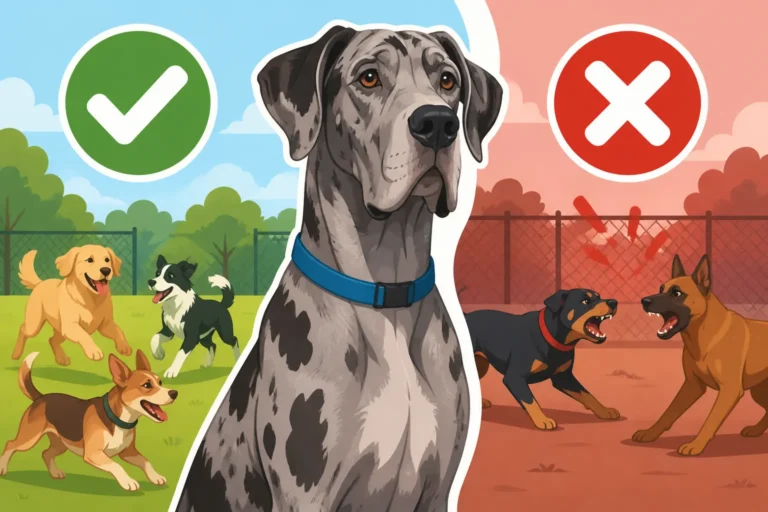
Signs You Might Need a Trainer: If you're consistently frustrated, if your walks are stressful rather than enjoyable, if your Great Dane is showing reactivity (barking/lunging) towards other dogs or people, or if you feel physically unsafe walking your dog, it's definitely time to bring in an expert. A trainer can observe your interactions, identify specific challenges, and provide tailored strategies that work for you and your Great Dane.
Finding the Right Professional: Look for trainers who have experience with giant breeds and who use positive, reward-based methods. Avoid trainers who rely heavily on force or punitive tools like choke or prong collars. Ask about their certifications, experience, and training philosophy. Often, a good trainer can teach you techniques that will transform your walks and strengthen your bond with your Great Dane. For more on finding qualified assistance, read Finding a Trainer Comfortable With a Great Dane. Investing in professional guidance is an investment in years of happy, controlled walks.
| Collar/Harness Type | Primary Function | Control Level (for Great Danes) | Comfort (for Great Danes) | Pros | Cons |
|---|---|---|---|---|---|
| Flat Buckle Collar | ID holder, basic attachment | Low (only for non-pullers) | High | Comfortable for daily wear, good for ID tags | No pulling control, neck injury risk if pulling, easy to slip out |
| Martingale Collar | Escape prevention, mild cue | Moderate | Moderate to High | Prevents backing out, gentler than choke, slight control | Still puts pressure on neck, less effective for strong pullers |
| Choke/Prong Collars | Correction, deter pulling | High (by causing discomfort) | Low | Can immediately stop pulling (short-term) | High risk of physical injury, psychological distress, fear-based |
| Front-Clip Harness | Anti-pulling, directional | High | High | Greatly reduces pulling, no neck pressure, good directional control | Can rub armpits if ill-fitting, leash tangling (rare) |
| Back-Clip Harness | Comfort, ID, casual walks | Low (encourages pulling) | High | Comfortable, good for non-pullers or ID | Provides leverage for pulling, poor directional control |
| Dual-Clip Harness | Versatile control | High | High | Combines front/back benefits, flexible for training & walks | Can be bulkier, more straps to adjust |
Disclaimer
This article is for general informational purposes only and does not constitute professional advice. Laws, prices and regulations vary by location and change over time. Consult a qualified professional for guidance on your specific situation.