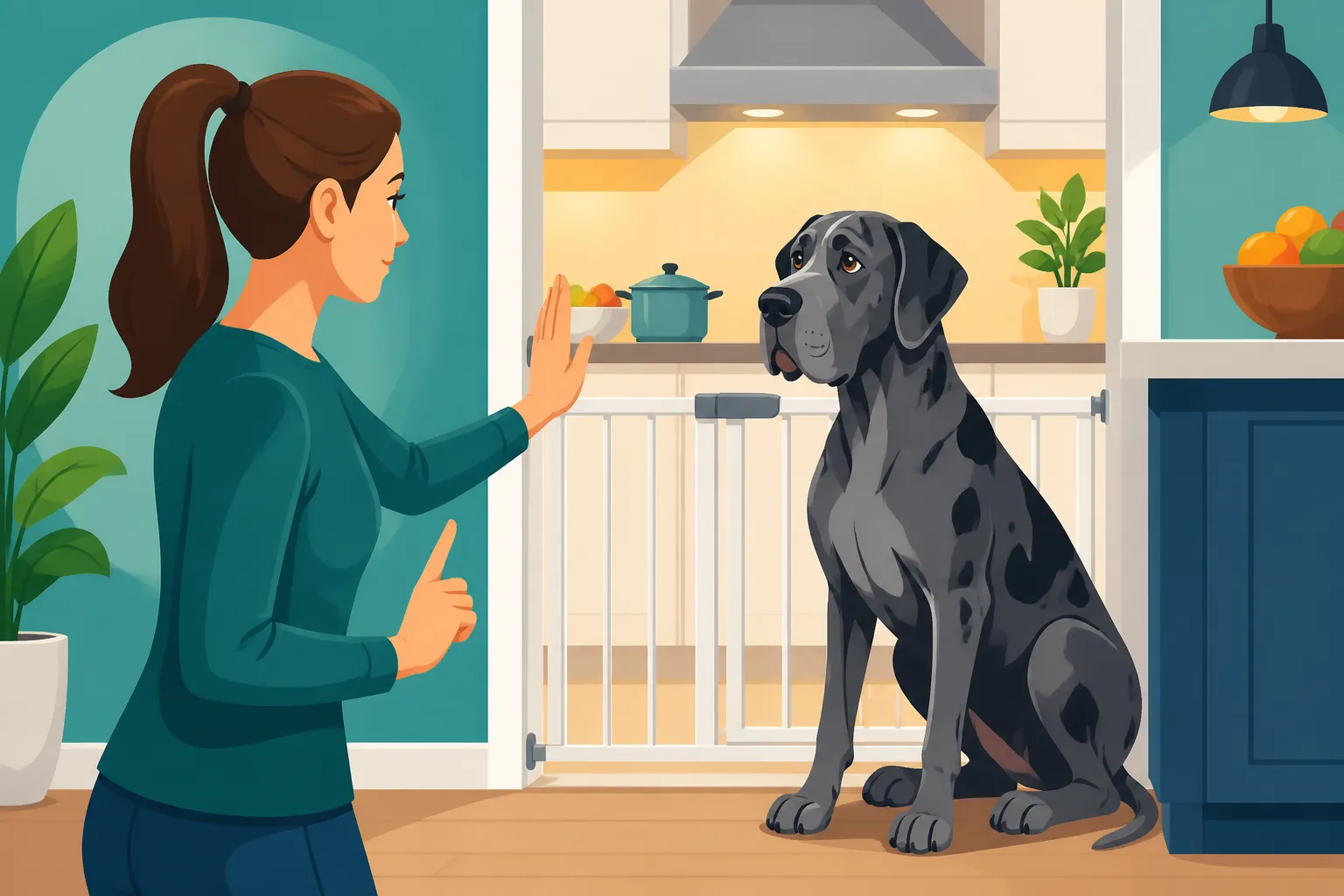
Teaching a Great Dane to Stay Out of the Kitchen
Oh, the kitchen. For many Great Dane owners, it's less a culinary sanctuary and more a canine-sized obstacle course where gravity-defying counter-surfing and strategic floor-patrolling are daily events. You're not alone if you've ever turned your back for a second only to find a colossal head hovering over your dinner prep, or an entire loaf of bread mysteriously vanished from what you thought was a secure spot. It's a common, often frustrating, battle when you live with a dog that can practically see over your refrigerator. This guide is here to walk you through understanding why your gentle giant is so obsessed with your kitchen and, more importantly, how to teach them to respect those invisible culinary boundaries, creating a more peaceful and safer home for everyone.
Understanding Why Your Great Dane Becomes a Kitchen Intruder
It’s easy to get frustrated when your Great Dane is constantly underfoot or, worse, on your counters in the kitchen. But before we dive into solutions, it’s really helpful to step back and understand why they do what they do. They’re not usually being malicious; they're just being dogs, albeit very, very large ones. Their motivations are often rooted in instinct, learned behaviors, and their deep desire to be close to their people.
The Allure of Scents and Sounds
Think about it from your Great Dane's perspective. The kitchen is a sensory wonderland. For a dog with an incredible sense of smell, it’s like a giant, ever-changing buffet. Every sizzle, every chop, every clinking pot is an invitation. When you're cooking up a storm, the air fills with irresistible aromas – that roasting chicken, the sweet scent of baking cookies, or even just the lingering smell of last night's dinner. These aren't just faint whiffs to your Dane; they're vibrant, compelling invitations to investigate.
Then there are the sounds. The rustle of a bag, the opening of a cupboard, the clang of a dropped utensil – each sound cues your dog that something interesting, potentially edible, is happening. They learn quickly that these sounds often precede food appearing, whether it's for them, for you, or accidentally on the floor. Their natural curiosity, combined with their powerful noses and ears, makes the kitchen the most exciting room in the house during meal prep. It's not just about stealing food, sometimes it's simply a profound desire to be part of the most interesting activity in the house.
Counter Surfing as a Learned Behavior
This is a big one for Great Danes, precisely because of their impressive stature. What might be an unreachable counter for a smaller dog is often eye-level or chest-level for a Great Dane. Counter-surfing isn't usually something they're born knowing how to do; it's a behavior that gets accidentally reinforced. Imagine this scenario: you put down a plate of cookies to cool, turn to grab a drink, and poof, the cookies are gone. Maybe your Great Dane just sniffed them out, maybe they nudged the plate with their nose, or perhaps they’ve even learned to gently paw things closer to the edge.
Every time they successfully get a "reward" – even a crumb that falls to the floor because they nudged the counter – that behavior is reinforced. They learn that sticking their head over the counter can lead to delicious things. It's a classic case of operant conditioning: action (counter-surfing) leads to reward (food), so the action becomes more likely to happen again. It only takes one or two accidental successes for them to decide that counter-surfing is a worthwhile endeavor. You might think they know they're "not supposed to," but in their minds, if there's food, it's fair game, especially if they’ve had past successes. You might also want to review A Great Dane That Opens Doors and Bins as this is another common behavior learned through accidental rewards.
Seeking Attention or Company
Sometimes, the kitchen isn't just about food; it's about proximity and attention. Great Danes are deeply affectionate dogs who thrive on being near their families. When you're in the kitchen, you're a focal point of activity, and they want to be part of it. If they feel excluded, or if they’ve learned that pushing their way into the kitchen gets a reaction from you (even a negative one like a sigh or a gentle push), that interaction can still feel like attention.
Think about how often you talk to your dog, pet them, or even just make eye contact when they're in the kitchen. For a dog that craves connection, any form of acknowledgment can be a motivator. They might lean on you while you're chopping vegetables, or place their head on your hip, or just stand there, silently observing, hoping for a scratch or a treat. They might be genuinely bored if left alone in another room while all the action is happening where the food smells so good. It's their way of saying, "Hey, I'm here! Don't forget about me!"
Setting Up Your Kitchen for Success and Safety
Now that we understand a bit more about why your Great Dane might be so drawn to the kitchen, let's talk about practical strategies to manage the situation. The key here is not just training, but also setting up their environment for success. It’s much harder for a dog to make the wrong choice if you’ve made it impossible or unappealing.
Physical Barriers and Management Tools
When you're dealing with a giant breed, simply saying "no" often isn't enough, especially when you're busy or when guests are over. This is where physical barriers become your best friend. A sturdy baby gate, but not just any baby gate – you need one that's tall and robust enough to contain a Great Dane. Standard baby gates are often too short, allowing a determined Dane to simply step over or lean on it until it buckles. Look for extra-tall pressure-mounted or hardware-mounted gates.
I've had success finding gates on platforms like Amazon that specifically market themselves as "extra tall" or "pet gates for large breeds." Measure your doorways carefully, and don't underestimate your Dane's ability to test the limits. Some gates even come with a small pet door at the bottom for smaller animals if you have multiple pets, ensuring your smaller furry friends can still access areas. Using these gates consistently teaches your dog that the kitchen entrance is a boundary. For temporary situations, like when you're hosting a party or have a lot of cooking to do, an extra-large exercise pen might also work to create a secure, comfortable space for your Great Dane just outside the kitchen. You might find some excellent options when looking into Baby Gates a Great Dane Cannot Step Over.
Removing Temptations and "Great Dane-Proofing"
This might sound obvious, but it's absolutely crucial for a Great Dane. Their height means that what's safe from a Beagle is still very much in reach for your gentle giant. Every counter, every tabletop, every shelf within reach needs to be considered a potential landing zone for their nose or paw.
This means a zero-tolerance policy for leaving food unattended on counters. Don't leave your cooling pie on the edge, don't let groceries sit on the island while you put them away, and certainly don't leave dirty plates within reach. Even crumbs can be a huge motivator. Investing in secure, heavy-duty trash cans with locking lids is also a must, as a Great Dane's determination (and strong nose) can make quick work of a standard bin. Think about where you store things like bread, fruits, and treats. If it's at their head height, it needs to be behind a closed cabinet door or in a sturdy container they can't manipulate. Remember, you're trying to prevent accidental rewards that reinforce the counter-surfing behavior. This is also vital for their safety, as many common human foods are Poisons a Great Dane Can Reach on a Counter.
Creating an Alternative "Place" for Your Dane
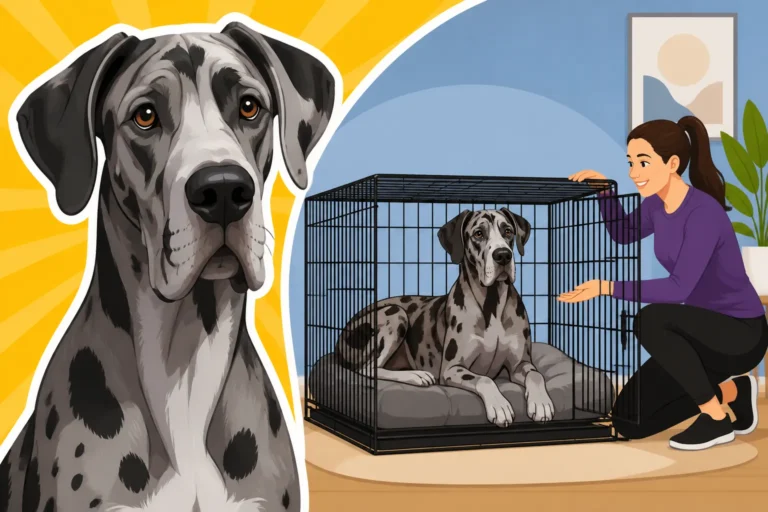
While you're setting up barriers, it's equally important to give your Great Dane a desirable alternative. This isn't about banishing them; it's about teaching them where they should be. Choose a comfortable, safe spot just outside the kitchen, or in an adjacent room, that can become their "place." This might be a luxurious orthopedic dog bed, a cozy crate with soft bedding, or a designated mat. For a Great Dane, comfort is paramount, especially as they get older and their joints might start to ache, so a high-quality, supportive bed is a worthwhile investment. You can find large, comfortable options designed to support their weight on various online retailers.
The "place" should be a positive space. Make it inviting with their favorite blanket, a safe chew toy, or a puzzle feeder that keeps them engaged. The goal is for them to associate this spot with calm, pleasant experiences, making it their preferred location rather than feeling like a punishment. When you ask them to go to their place, they should be happy to comply, knowing good things happen there. This also lays the groundwork for training, which we'll discuss next. For help choosing a suitable den, consider Crates That Hold a Full-Grown Great Dane.
Training Strategies for a Kitchen-Free Zone
While physical management is incredibly effective, combining it with consistent training is the gold standard for long-term success. Training gives your Great Dane the tools to make good choices even when a physical barrier isn't present, and it strengthens your bond through clear communication.
The "Go to Your Place" Command
This command is incredibly powerful for teaching your Great Dane kitchen boundaries. It provides a clear, actionable alternative to being underfoot. Start training "place" in a low-distraction environment, ideally with a comfortable dog bed or mat.
- Lure and Reward: With a high-value treat, lure your Dane onto their designated bed or mat. As soon as all four paws are on it, say "Place" (or "Bed," "Mat," whatever command you choose) and reward them with the treat and praise. Repeat this many times.
- Add Duration: Once they understand to go to the mat, start asking for short durations. Say "Place," reward when they're on it, then pause for a second or two before giving another treat. Gradually increase the time they need to stay on the mat before getting a reward.
- Increase Distance: Begin asking them to go to their place from further away. Stand a few feet back, give the "Place" command, and reward when they get there. Slowly increase the distance until you can send them to their place from another room.
- Introduce Distractions: Once they're reliable, start practicing during low-level kitchen activity. Have someone else lightly chop vegetables or open a cabinet while your Dane is on their place, rewarding for staying. Slowly build up to more realistic kitchen scenarios.
The key is consistency and making "place" incredibly rewarding. Always use positive reinforcement. When you're busy in the kitchen, send them to their place, and periodically go over and reward them with a small treat or a calming pat for staying.
Consistent "Stay" and "Leave It" Training
These fundamental commands are indispensable for managing your Great Dane's kitchen behavior. "Stay" teaches them to remain in a designated spot, even when tempting smells are wafting their way. "Leave It" is crucial for stopping them from snatching dropped food or investigating forbidden items.
For "Stay": Once your Dane is comfortable with "Place," you can build on it by adding a "Stay" cue. After they go to their place, tell them "Stay" and take a single step back. If they remain, step back to them, reward, and release. Gradually increase distance and duration. Practice in various locations, not just the kitchen, to generalize the command.
For "Leave It": This command is a lifesaver. Start by placing a low-value treat on the floor, covering it with your hand. When your Great Dane tries to get it, say "Leave It." The moment they look away from the treat, even for a split second, reward them with a much higher-value treat from your other hand. This teaches them that ignoring the forbidden item leads to something even better. Gradually progress to leaving the treat uncovered, then dropping treats accidentally, and finally practicing with actual food items they might find tempting. You can find more detailed instructions for Teaching a Great Dane to Leave Food Alone in another one of our posts.
Using Lure-and-Reward vs. Aversion
With a Great Dane, especially due to their sensitive nature and size, positive reinforcement (lure-and-reward) is always the most effective and humane approach. This method focuses on rewarding desired behaviors, making your dog want to do what you ask. When you use treats, praise, and gentle encouragement, you build trust and strengthen your bond. Many online training platforms, such as BAXTER & Bella, emphasize these positive methods, offering structured programs that can guide you through training a well-mannered Great Dane from puppyhood to adulthood.
Aversion techniques, which involve punishment or startling your dog for unwanted behavior, are generally counterproductive with Great Danes. Not only can they damage your relationship and make your dog fearful or anxious, but they rarely teach the dog what to do instead. A Great Dane might become sneaky, waiting until you're not looking to counter-surf, rather than truly understanding or respecting the boundary. Furthermore, their sheer size means that any physical correction can easily be misconstrued or lead to accidental injury to either dog or owner. Focus on making good choices easy and rewarding. You want your Great Dane to willingly stay out of the kitchen, not fear being in it. High-value Treats a Great Dane Will Work For will be your best friend in this process.
Handling Setbacks and Maintaining Consistency
Even with the best intentions and the most consistent training, there will be days when your Great Dane tests the boundaries. This is completely normal! Dogs aren't robots, and life happens. The key to long-term success isn't perfection, but rather how you manage these inevitable setbacks and maintain consistency over time.
What to Do When They Slip Up
When your Great Dane makes an uninvited appearance in the kitchen, or worse, snatches something from the counter, it’s natural to feel a surge of frustration. However, reacting emotionally often doesn't help. Yelling or chasing them will likely just teach them to be quicker or more fearful, not to stay out.
Instead, aim for calm redirection. If they're in the kitchen, calmly lead or lure them out with a treat, and then immediately ask for their "place" command outside the kitchen. Reward them for going to their place. If they grab something, avoid a tug-of-war. Instead, calmly offer a trade: present a higher-value treat, and when they drop the forbidden item to take your treat, immediately put the forbidden item out of reach. It teaches them that giving something up leads to something better, rather than creating a guarding behavior. Review your management strategies: was something left within reach? Was the gate left open? These moments are learning opportunities for both you and your dog.
Enlisting the Family and Guests
One of the biggest hurdles to maintaining kitchen boundaries is inconsistency from other people in your home. It only takes one family member leaving a plate on the coffee table or a guest accidentally dropping food and then not redirecting the dog for all your hard work to be undermined. Great Danes are smart, and they quickly learn who the "soft touch" is.
It's essential to have a family meeting and ensure everyone is on the same page about the "no Great Dane in the kitchen" rule and how to enforce it. Explain the training methods you're using ("place," "leave it") and ask everyone to use them consistently. For guests, a simple, polite explanation usually works: "Please don't feed him from the table, and we're working on keeping him out of the kitchen." You might even put your Dane on their "place" with a long-lasting chew when guests arrive or during mealtimes, to manage the temptation. Consistency across all humans is vital for your Great Dane to truly understand and respect the rules. Many of the fundamental lessons you learned in a What a Great Dane Puppy Course Runs will apply here, especially regarding family consistency.
When to Seek Professional Help
Sometimes, despite your best efforts, a behavior can feel ingrained, or perhaps your Great Dane exhibits other challenging behaviors alongside kitchen intrusion, such as resource guarding food they've stolen, or intense separation anxiety when left out of the kitchen. If you're feeling overwhelmed, frustrated, or concerned for your dog's safety (or your own), it's absolutely okay – and often highly beneficial – to seek professional help.
A certified professional dog trainer or a veterinary behaviorist can assess your specific situation, identify underlying causes, and develop a tailored training plan. They can offer hands-on guidance, refine your techniques, and help troubleshoot any persistent issues. Look for trainers who specialize in positive reinforcement and have experience with large breeds like Great Danes. Online platforms or local dog training facilities often have resources to help you find a qualified professional. Some training services, like BAXTER & Bella, offer virtual consultations or comprehensive online courses that can provide expert guidance from the comfort of your home. Don't hesitate to reach out if you need that extra layer of support. Finding a trainer who is truly Finding a Trainer Comfortable With a Great Dane is paramount.
Here's a quick comparison of various tools you might use in your kitchen training:
| Tool/Strategy | Description | Pros | Cons | Best Use Case |
|---|---|---|---|---|
| Extra-Tall Gates | Physical barriers to block kitchen access. | Clear boundary, effective when supervised, prevents accidental entry. | Requires proper installation, can be inconvenient for humans, Danes can test limits. | Creating a defined "no-go" zone for casual kitchen access. |
| "Place" Command | Training your Dane to go to a designated, comfortable spot. | Teaches self-control, provides a positive alternative, builds confidence. | Requires consistent training, needs a comfortable "place" item. | When you need your Dane out of the kitchen but still nearby. |
| "Leave It" Command | Teaches your Dane to ignore tempting items. | Prevents counter-surfing, stops grabbing dropped food, enhances safety. | Requires consistent practice with varied distractions and rewards. | Preventing snatching food from counters, floors, or hands. |
| Crates/Ex-Pens | Secure enclosure for temporary confinement. | Provides a safe space, highly effective during high-distraction times. | Needs to be appropriately sized for a Great Dane, can feel like punishment if overused. | When active cooking, hosting, or when you cannot supervise directly. |
| Counter-Proofing | Removing all food and tempting items from accessible surfaces. | Prevents accidental reinforcement, reduces temptation, increases safety. | Requires constant vigilance from all household members. | Foundational step for all kitchen training efforts. |
The journey to a kitchen-free Great Dane might have its ups and downs, but with patience, consistency, and a little strategic planning, you can absolutely achieve a harmonious home where your gentle giant respects your culinary space.
Disclaimer
This article is for general informational purposes only and does not constitute professional advice. Laws, prices and regulations vary by location and change over time. Consult a qualified professional for guidance on your specific situation.