A Great Dane That Growls at Strangers
It’s a deeply unsettling moment when your beloved, gentle giant, your Great Dane, growls at a stranger. You feel a knot of anxiety tighten in your stomach, not just for the stranger, but for your dog and what this behavior might mean. After all, Great Danes are famous for being "gentle giants," so when they break character, it’s alarming. This guide is here to help you understand why your Great Dane might be growling at strangers, how to interpret their signals, and what practical steps you can take to manage and kindly modify this challenging behavior, ensuring peace of mind for everyone.
Understanding Why a Great Dane Might Growl at Strangers
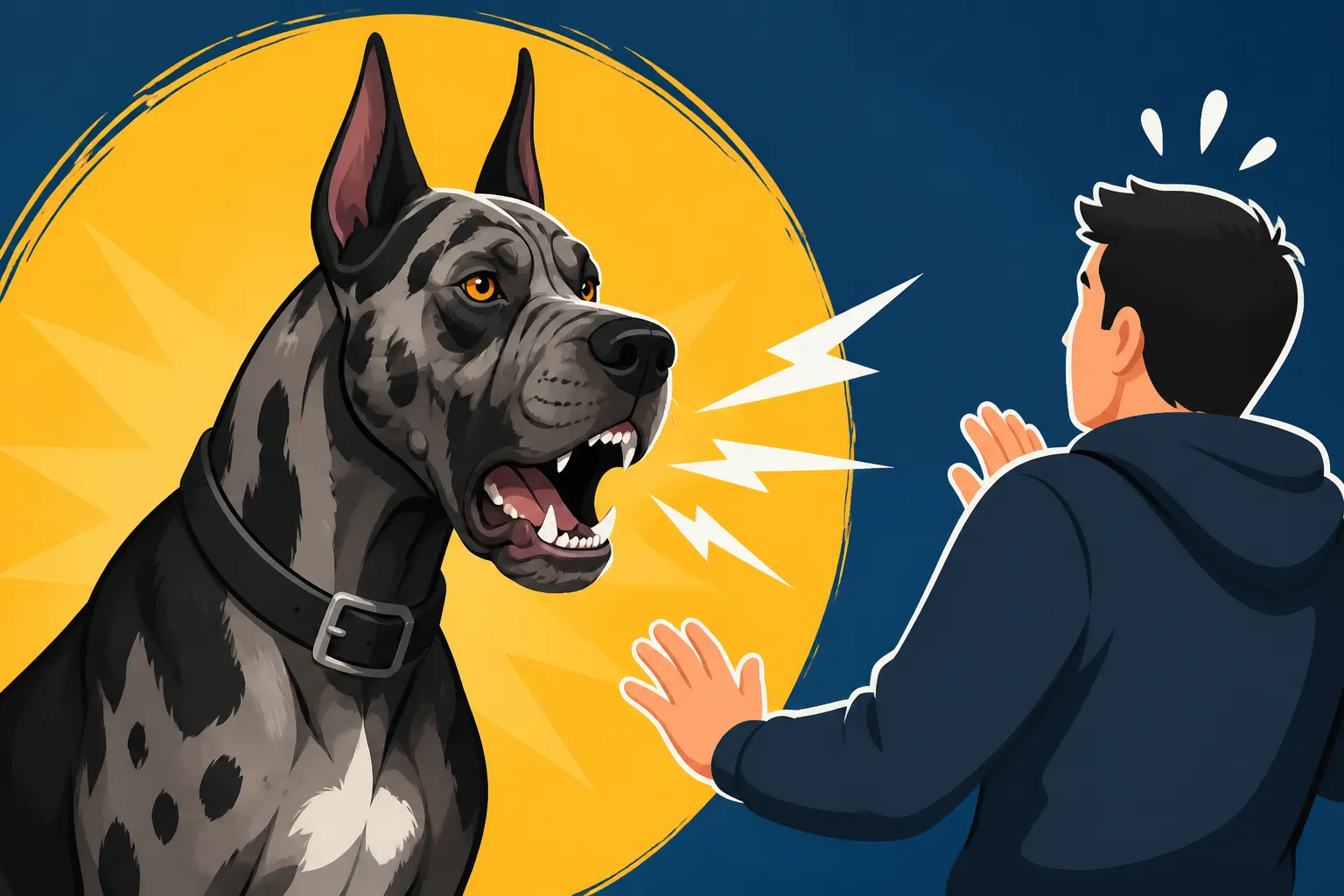
When a Great Dane growls, it often catches owners by surprise. These magnificent dogs are lauded for their calm demeanor and loving nature, leading many to believe they wouldn't, or couldn't, display such an overt warning signal. However, even the most serene Dane has a complex emotional world, and a growl is simply their way of communicating a strong feeling. It's a signal that should always be taken seriously, never punished, and understood in its full context.
The Gentle Giant Misconception vs. Reality
The image of the "gentle giant" is deeply ingrained in our perception of Great Danes, and for good reason—most of them are incredibly sweet, tolerant, and affectionate with their families. They often bond deeply and can be wonderfully patient. However, this reputation sometimes leads to a misconception that they are incapable of fear, discomfort, or protectiveness, or that any display of these emotions is "wrong." The reality is, a Great Dane is still a dog, albeit a very large one, with natural instincts and individual personalities.
Their sheer size means that any display of fear or protective instinct, such as a low growl or stiff posture, is amplified. What might be easily dismissed in a smaller dog can become immediately intimidating when coming from a dog that stands eye-to-eye with many adults. Owners might, inadvertently, overlook early, more subtle signs of discomfort because they believe their Dane is too gentle to ever be truly bothered. This can lead to a situation where the dog's warnings escalate until a growl becomes necessary to communicate their feelings. Understanding The Gentle Great Dane Temperament and Its Limits means recognizing that even a gentle giant has boundaries and feelings that need to be respected and understood.
Common Causes Behind the Growl
Pinpointing the exact reason for a growl can feel like detective work, but it’s crucial for effective management. There are several common threads that lead to this behavior in Great Danes:
- Fear or Anxiety: This is arguably one of the most common reasons for a Great Dane to growl at a stranger. Despite their imposing size, many Danes are actually quite sensitive souls. A lack of proper Socializing a Great Dane Puppy Early can leave them feeling overwhelmed or threatened by new people, sights, and sounds. They might have had a negative past experience, or simply be genetically predisposed to being more cautious or nervous. When a stranger approaches, especially one who doesn't understand canine body language, the Dane might feel trapped, cornered, or simply unsure, resorting to a growl as a plea for distance.
- Territoriality or Protectiveness: Great Danes were originally bred for hunting and guarding, and a protective instinct can certainly be present. While they aren't typically "attack dogs," they can be fiercely loyal to their family and home. If a stranger enters their perceived territory (your home, yard, or even your personal space on a walk) and the Dane feels their family is threatened, a growl can be an effective warning to keep the perceived threat at bay. This is less about aggression and more about a deep-seated desire to keep their loved ones safe.
- Lack of Socialization: As mentioned above, inadequate exposure during critical puppyhood development can create lasting issues. Puppies need to meet a wide variety of friendly people, experience different environments, and hear diverse sounds in a positive way. If a Great Dane puppy is kept isolated or doesn't have these crucial early experiences, strangers can forever seem novel and potentially frightening. Without the tools to cope, a growl becomes their fallback.
- Pain or Discomfort: Imagine you're not feeling well, maybe you have a headache or a sore joint, and someone you don't know tries to touch you or get too close. Your natural instinct might be to pull away or voice your discomfort. Dogs are no different. A Great Dane experiencing pain, perhaps from arthritis in an older dog, or even a hidden injury, might growl at a stranger who approaches too quickly or tries to pet them in a sensitive area. They are communicating, "Stay away, I hurt." This is why a veterinary check-up is always a wise first step when new behaviors suddenly emerge.
- Learned Behavior: Dogs are master associators. If a Great Dane growls at a stranger, and that stranger immediately backs away, the dog has just learned a powerful lesson: "Growling works!" They've successfully created distance and relieved their own stress. This doesn't mean the dog is "manipulative," but rather that the behavior was reinforced. Without intervention, this pattern can solidify, making the growl a go-to response whenever a stranger appears.
Assessing the Situation: Is It Fear or Something Else?
Understanding the root cause of your Great Dane's growl is paramount. It’s not enough to simply know that they growl; you need to understand why. This often involves keen observation of their body language and a detailed analysis of the circumstances surrounding the growl. Punishing a growl, which is a warning signal, would be akin to disabling the smoke detector when there’s a fire—it removes the warning but not the underlying problem.
Reading Your Dane's Body Language
Before and during a growl, your Great Dane will likely be communicating volumes with their body. Learning to "read" these signals can give you invaluable insight into their emotional state and allow you to intervene before a growl even happens.
Consider these cues:
- Fear/Anxiety Signals: These often involve attempts to make themselves smaller or create distance. You might see a tucked tail, ears flattened back against the head, lip licking, yawning (especially when not tired), a stiff or frozen posture, or "whale eye" where the whites of their eyes are visible as they turn their head away but keep an eye on the stranger. They might also try to lean into you, hide behind your legs, or even tremble. A Great Dane that is A Great Dane That Is Anxious Rather Than Gentle will often display these signs.
- Assertive/Protective Signals: While less common for Danes growling out of pure aggression, these signals indicate a dog trying to appear larger or more dominant. This might include a high, stiff tail wag (not a loose, happy one), a direct, unblinking stare, hackles raised along their back, or a forward-leaning posture. Their growl might be lower and more guttural, a deliberate warning rather than a plea.
It's crucial to remember that a growl, regardless of the underlying emotion, is a warning. It’s a dog’s way of saying, "I'm uncomfortable, please give me space." It's their attempt to avoid a more intense confrontation. If this warning is ignored, the dog might feel compelled to escalate their behavior.
Identifying Triggers and Context
To truly understand the growl, you need to become a keen observer of patterns. Ask yourself the following questions every time your Dane growls:
- When and where does this happen? Is it always in the house when someone comes to the door? Only on walks when passing certain types of people (e.g., men with hats, children, people carrying umbrellas)? Is it in crowded places or quiet ones? Does it happen when people approach the car?
- What happens before the growl? Did the stranger make direct eye contact? Reach out to pet your dog without asking? Approach too quickly? Make a sudden noise? Did your Dane see them from a distance or were they suddenly "there"?
- Who is the stranger? Does your Dane react to all strangers, or specific types (e.g., only children, only men, only people wearing uniforms)? Does your Great Dane seem wary of A Great Dane That Hides Behind Its Owner when new people are around?
- What is your Dane doing immediately before and after? Are they pacing nervously, trying to get away, or are they holding their ground?
Keeping a small journal or a note on your phone to log these details can be incredibly helpful. Note the date, time, location, who was present, what happened, your dog's body language, and the outcome. Over time, you'll start to see clear patterns emerge, which will guide your training strategy. For instance, you might discover that your Dane growls primarily when strangers invade their personal space in your home, indicating a territorial component, or only when approached by fast-moving children, pointing to fear.
Practical Strategies to Manage and Modify Growling Behavior
Once you have a better understanding of why your Great Dane is growling, you can implement a two-pronged approach: management to prevent immediate incidents, and training to modify the underlying emotional response. Consistency is key, and remember that Why Great Dane Training Cannot Wait applies to all behaviors, especially those rooted in fear or anxiety.
Management First: Preventing the Growl
Management isn't a cure, but it's the critical first step to prevent your dog from practicing the unwanted behavior. Every time your Great Dane growls, it reinforces that growling is an effective strategy for them.
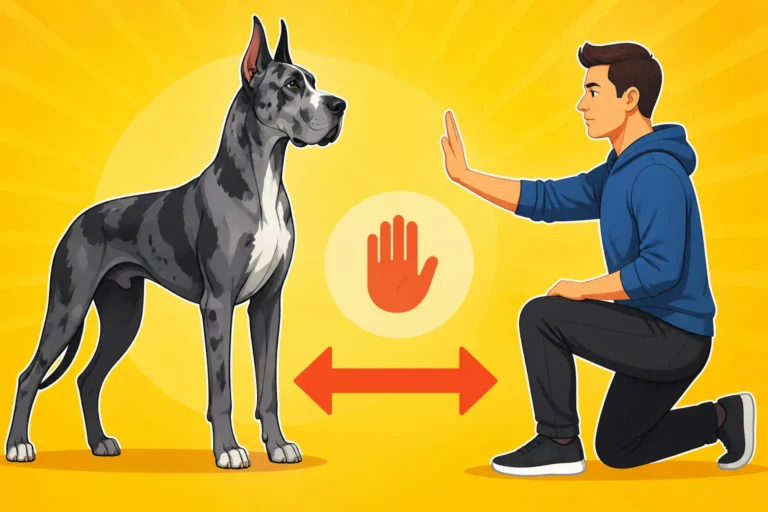
- Avoidance: This sounds simple, but it’s often overlooked. If you know your Great Dane is uncomfortable with strangers approaching them on leash, don't put them in situations where that's likely to happen. Cross the street, choose less-trafficked walking routes, or go out during quieter times. When guests come over, manage the situation.
- Space and Barriers: Create a safe space for your Dane. When visitors are expected, consider putting your Great Dane in another room or a sturdy crate (sized for a giant breed, of course) with a long-lasting chew or puzzle toy. This gives them a quiet retreat and prevents unintended interactions. On walks, maintain a respectful distance from others. If your Great Dane is prone to A Great Dane That Barks at the Door, having them behind a baby gate when someone knocks can provide a barrier and a sense of security.
- Clear Communication with Strangers: You are your dog's advocate. Don't be shy about speaking up. A simple, "Please give us some space, we're training," or "My dog isn't friendly with strangers" (even if they're just scared) can effectively deter well-meaning but misguided approaches. You can even invest in a leash or harness (many great options are available on Amazon) that says "DO NOT PET" or "NERVOUS DOG." For a dog as large as a Dane, having Harnesses and Collars That Control a Great Dane is essential for both management and safety.
Training for a Positive Association
Now for the proactive part: changing your Great Dane's emotional response to strangers from negative (fear, protectiveness) to positive (neutrality, even mild curiosity).
- Counter-Conditioning: This is about changing how your dog feels about strangers. The core idea is "Stranger = awesome things happen!" Find a high-value treat your Dane absolutely loves—think cooked chicken, cheese, or hot dogs. (Remember that Treats a Great Dane Will Work For will vary, so experiment!).
- The Set-Up: Start at a distance where your Great Dane notices the stranger but doesn't react (no growling, no stiff body language).
- The Exchange: The moment your Dane sees the stranger, immediately give them a treat. Stranger appears, treat appears. Stranger disappears, treat disappears.
- The Goal: Over many, many repetitions, your Dane will start to associate the sight of a stranger with something wonderful. Their emotional response will shift. This needs to be done gradually and patiently.
- Desensitization: This works hand-in-hand with counter-conditioning. It involves gradually exposing your Dane to the trigger (strangers) at a low intensity, slowly increasing the intensity as your dog becomes more comfortable.
- Distance is Your Friend: Begin with strangers at a far distance where your Dane shows absolutely no signs of stress. This might be across a park or down the street.
- Slow Progress: Only when your Dane is consistently calm and happy at one distance do you slightly decrease the distance. If your Dane shows any signs of discomfort, you've gone too fast, and you need to increase the distance again.
- Short Sessions: Keep training sessions short and positive. Always end on a good note.
- "Look at That" (LAT) Game: This teaches your Great Dane to look at a stranger and then look back at you for a reward. It helps redirect their focus and empowers them to disengage from the trigger.
- How to Play: When your Dane notices a stranger, say "Look at that!" (or whatever cue you choose).
- Reward: The instant your Dane looks at the stranger and then back at you, mark the behavior (with a clicker or a verbal "Yes!") and give a high-value treat.
- Empowerment: This gives your dog a job to do and a way to earn a reward, rather than feeling like they have to protect themselves.
- Professional Guidance: For Great Danes, especially given their size, professional guidance is highly recommended. A Certified Professional Dog Trainer (CPDT-KA) or a Veterinary Behaviorist can provide personalized plans, observe nuances you might miss, and ensure safety. Organizations like BAXTER & Bella offer online training programs that can be incredibly helpful for owners, offering structured approaches to behavior modification. If your Great Dane is showing signs of anxiety, seeking advice on Building Confidence in a Nervous Great Dane from a professional can make all the difference. Remember, Why Physical Corrections Fail on a Great Dane because they are often sensitive and can shut down or become more fearful with harsh methods.
Building Confidence and Trust
Beyond specific training techniques, fostering an environment of trust and confidence is vital for a sensitive breed like a Great Dane.
- Consistent Routine and Clear Boundaries: Dogs thrive on predictability. A consistent daily routine for feeding, walks, and playtime can reduce overall anxiety. Clear, consistent rules help your Dane understand what's expected of them, reducing uncertainty.
- Positive Reinforcement: Focus on rewarding desired behaviors. When your Dane is calm around a stranger, or simply looks at a stranger without reacting, acknowledge and reward that. This builds a positive association and encourages them to offer more of that calm behavior.
- Engaging Activities: Provide outlets for mental and physical energy. Scent work, puzzle toys, and calm, enjoyable walks in safe areas can boost your Dane's confidence and overall well-being. Ensuring they get appropriate exercise, while being mindful of Exercise Limits While a Great Dane Is Still Growing, is important.
- Addressing Underlying Anxieties: Sometimes, growling at strangers is just one symptom of broader anxiety. Work with your vet or a behaviorist to identify and address any general anxiety your Dane might be experiencing. This might involve environmental changes, management strategies, or, in some cases, veterinary intervention.
When to Seek Professional Help
While many cases of growling can be managed with consistent training and management at home, there are times when professional intervention is not just helpful, but absolutely necessary. Ignoring escalating behavior in a large breed like a Great Dane can have serious consequences.
Recognizing Escalating Behavior
It's natural to want to handle things yourself, but knowing when to call in the cavalry is a sign of responsible pet ownership.
- When Growling Turns into More: If the growling is consistently escalating to snapping, lunging, or even biting, it's a clear signal that you need professional help immediately. A Great Dane's size means their bites are incredibly powerful, and preventing injury must be the top priority.
- Extreme Fear or Anxiety: If your Great Dane's fear of strangers is so intense that it significantly impacts their quality of life—they're constantly stressed, can't enjoy walks, or are a wreck when anyone comes to the door—a professional can help. This level of stress isn't fair to your dog.
- Feeling Overwhelmed or Unsafe: If you, as the owner, feel overwhelmed, frustrated, or, most importantly, unsafe, it's time to get help. Training a large, fearful, or reactive dog can be emotionally and physically taxing. A professional can provide the tools, guidance, and support you need to navigate these challenges safely.
- Lack of Progress: If you've diligently applied the management and training strategies for several weeks or months and aren't seeing any improvement, or if the behavior seems to be getting worse, a professional can offer new insights and techniques.
Finding the Right Expert
Choosing the right professional is critical. Not all dog trainers are created equal, especially when dealing with behavior issues like fear-based growling.
- Veterinary Behaviorists (DACVB): These are veterinarians who have gone on to specialize in animal behavior. They can diagnose underlying medical conditions contributing to behavior issues and are qualified to prescribe medication if anxiety or fear is severe. They offer a comprehensive approach, combining medical and behavioral strategies.
- Certified Professional Dog Trainers (CPDT-KA, CDBC): Look for certifications that demonstrate a commitment to ethical, science-based, and positive reinforcement methods. A CPDT-KA (Certified Professional Dog Trainer – Knowledge Assessed) or a CDBC (Certified Dog Behavior Consultant) has undergone rigorous testing and adheres to professional standards. Avoid trainers who advocate for dominance theory, harsh corrections, or punitive tools, as these methods can exacerbate fear and aggression, especially in sensitive Great Danes.
- Experience with Giant Breeds: Whenever possible, seek out a professional who has specific experience working with Great Danes or other giant breeds. They will understand the unique challenges and sensitivities that come with their size and temperament.
Remember, addressing a Great Dane that growls at strangers is a journey of patience, understanding, and consistent effort. By putting management first, employing positive reinforcement training, and knowing when to enlist expert help, you can guide your magnificent companion toward a more confident and peaceful life for everyone.
| Growl Type | Potential Meaning | Associated Body Language | Recommended Action |
|---|---|---|---|
| Low, rumbling | "Stay away, I'm uncomfortable/threatened." | Tense body, stiff tail (high or low), direct stare, hackles up, lip curl. | Increase distance from trigger. Advocate for your dog. Begin counter-conditioning. Seek professional help if intense. |
| Short, sharp | "Surprised! Startled! That caught me off guard!" | Startled jump, ears may go back initially, then forward. Might recover quickly if stimulus is not threatening. | Assess the environment for sudden stimuli. Provide reassurance if needed. |
| Soft, worried | "I'm scared, please don't come closer." | Tucked tail, ears flattened, leaning away/hiding, yawning, lip licking, whale eye. | Immediately increase distance. Do not force interaction. Begin gentle counter-conditioning and desensitization. |
| Play growl | "This is fun! Let's play!" | Loose, wiggly body, play bow, open mouth, happy tail wag, often combined with playful nips. | Ensure it's clearly play. Monitor interaction to prevent over-arousal. |
| Resource guard | "This is mine, don't come near it." | Stiff body over item (food, toy, bed), direct stare, quick head turns if approached. | Do not challenge. Work with a professional on resource guarding protocols. |
Disclaimer
This article is for general informational purposes only and does not constitute professional advice. Laws, prices and regulations vary by location and change over time. Consult a qualified professional for guidance on your specific situation.