Merle Great Danes Since 2019
Merle Great Dane genetics, historical controversies, and breeding responsibilities explain the shift in breed standards.
Is this the right one for you?
Origins and temperament, size and coat, what living with one is actually like, and how it compares to the breeds people weigh against it.
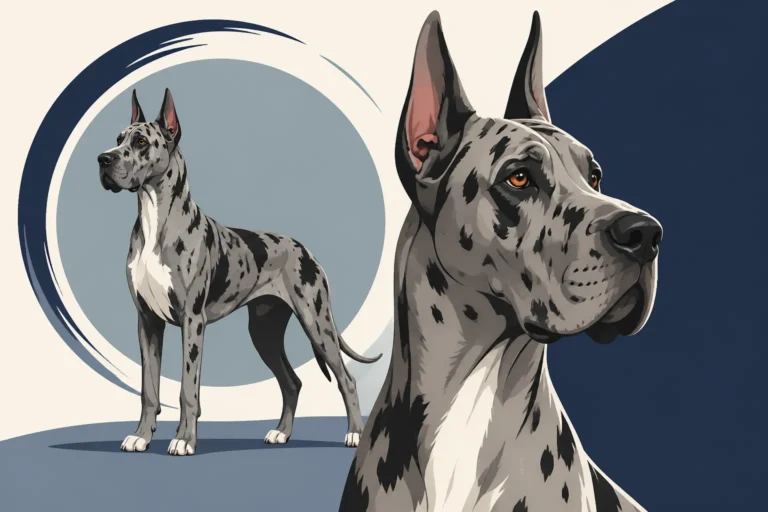
Merle Great Dane genetics, historical controversies, and breeding responsibilities explain the shift in breed standards.
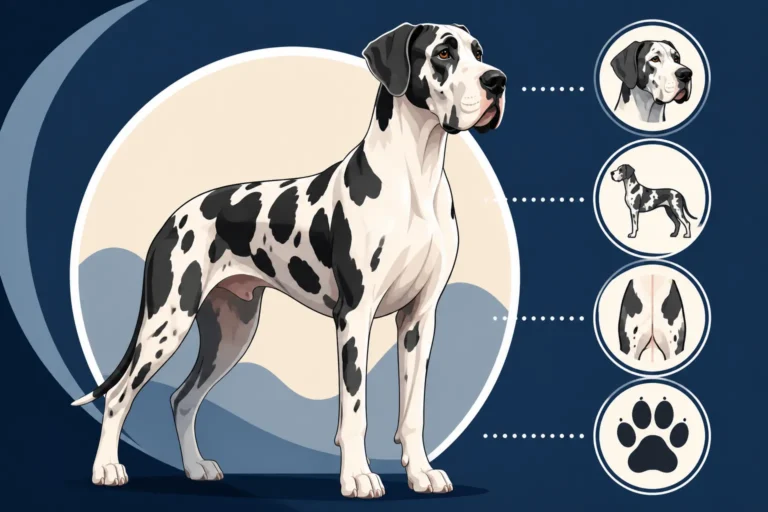
Harlequin Great Dane coat standards require a pure white base, torn black patches, and sharp, defined color contrast.

Black and mantle Great Danes possess distinct coat genetics, breed standards, and color pattern characteristics that define their unique appearances.
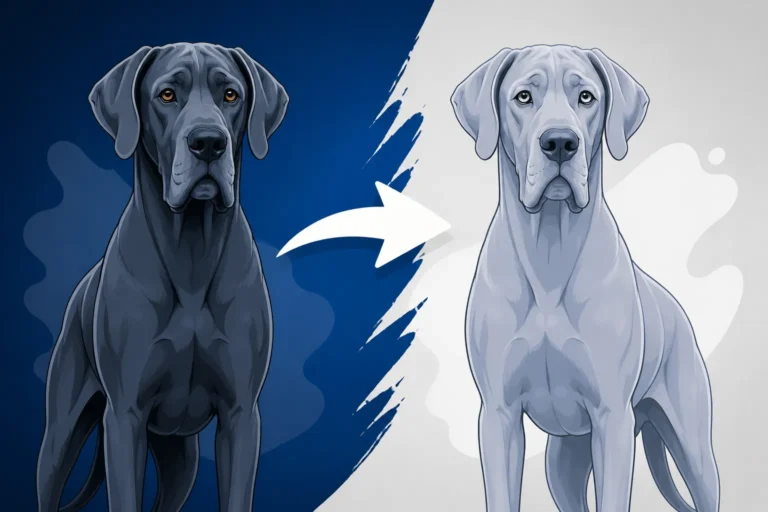
Color dilution gene science and melanocytes explain how black eumelanin creates the steel gray coat of a blue Great Dane.
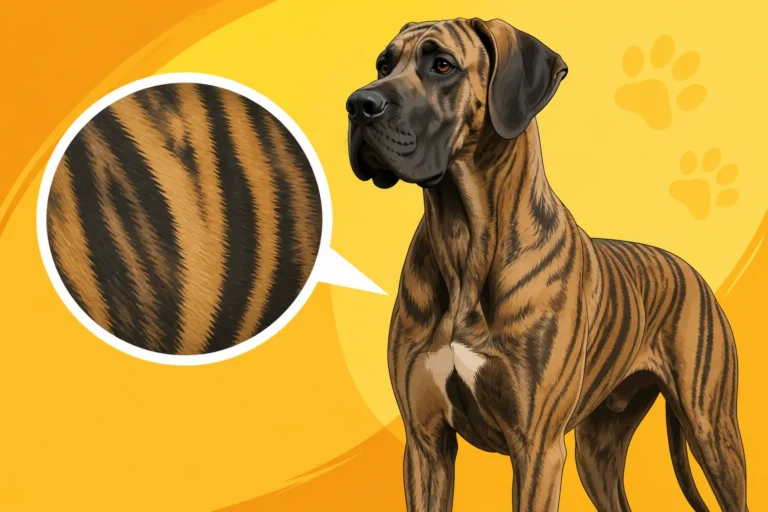
Brindle Great Dane coat patterns, the Kbr allele, and fawn base colors explained through canine genetics and pigment distribution.
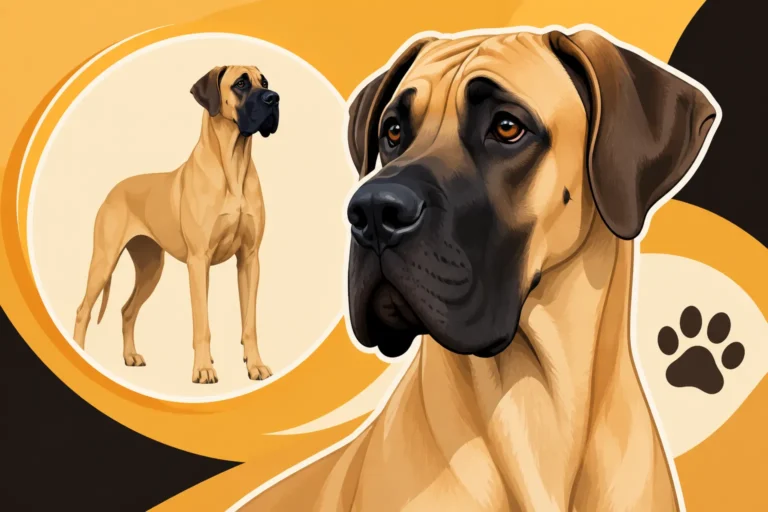
The fawn Great Dane features a golden-yellow coat and a black mask, with origins linked to nineteenth century German boar hounds.
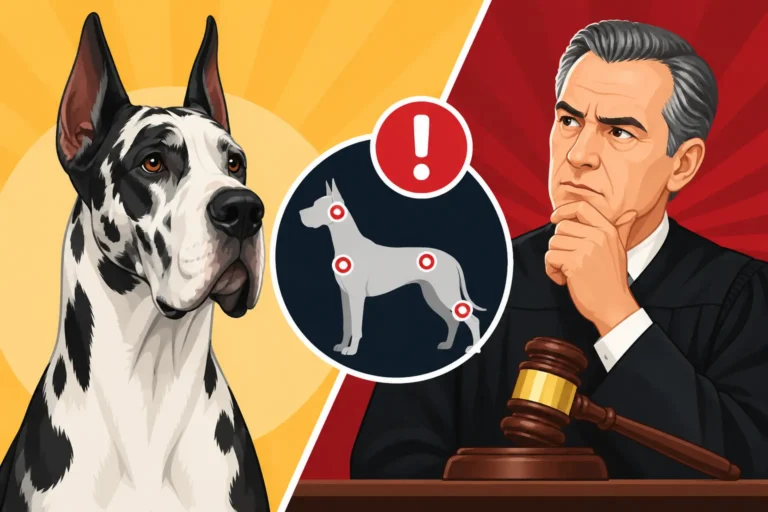
Great Dane physical and temperamental faults that judges penalize, including size, bone substance, proportion, and balance.
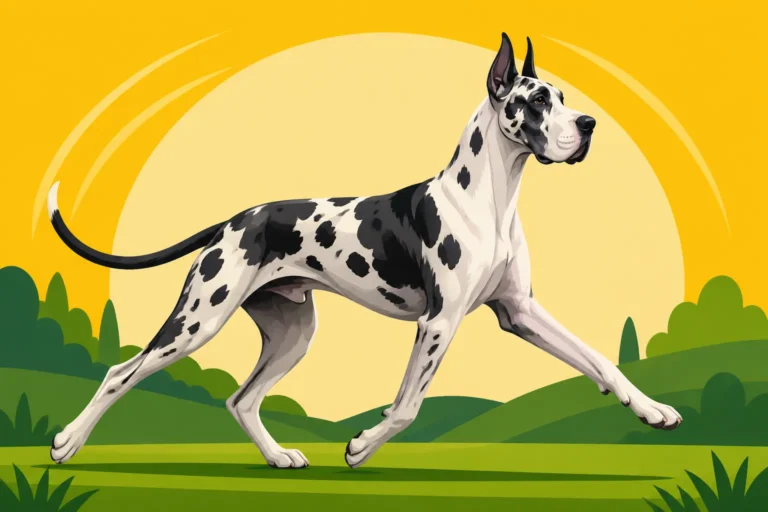
Great Dane movement mechanics and history explain the unique long-reaching stride and efficient canine biomechanics.
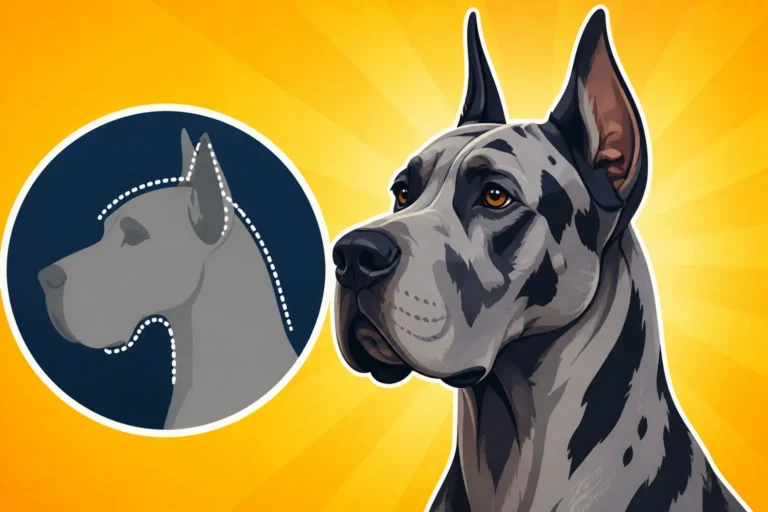
The Great Dane head standard details specific proportions and features that ensure proper health, jaw strength, and breed identity.
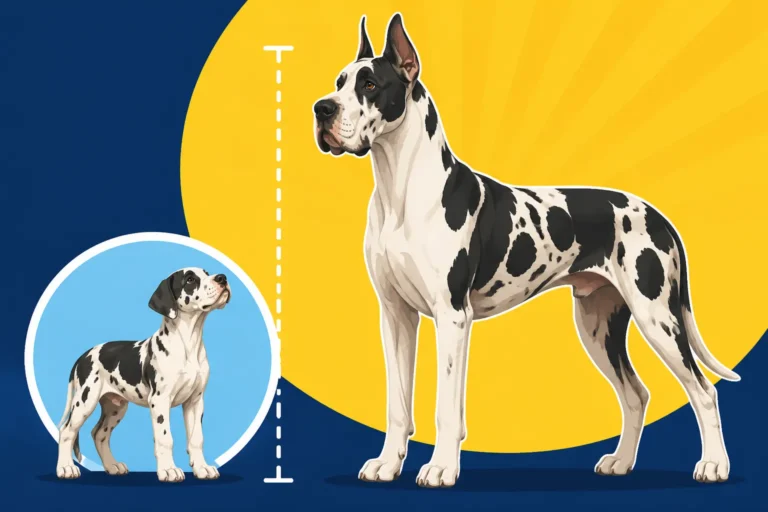
The American Kennel Club breed standard details the precise minimum shoulder height and weight required for Great Danes.