Handling a Great Dane That Outweighs You
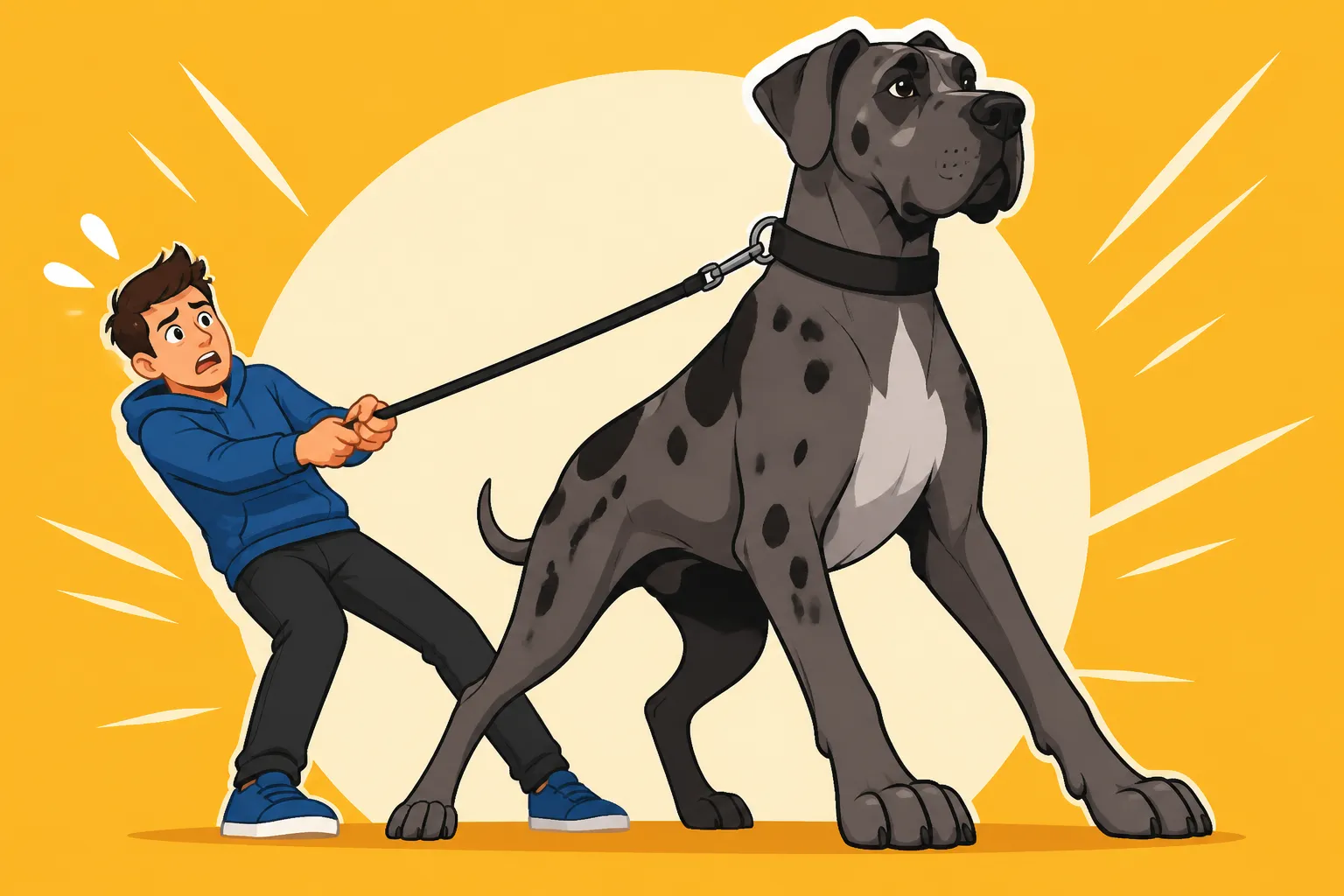
It's a familiar scenario for many Great Dane owners: you're walking your magnificent dog, feeling proud, when suddenly a squirrel darts across the path, or another dog appears, and in an instant, you feel a massive tug that threatens to pull your arm clean off. Handling a Great Dane that literally outweighs you can feel like trying to anchor a small boat in a hurricane. This guide is here to help you navigate those moments, providing practical strategies and a deep understanding of why managing your gentle giant effectively is absolutely crucial for both your safety and theirs.
Understanding the Power Dynamics: Why Your Great Dane Outweighs You
Let's be real, even a smaller female Great Dane can easily outweigh many adult humans, and a large male can feel like a small pony on the end of a leash. This isn't just about their weight; it's about the incredible leverage and raw power they possess, which makes handling them a unique challenge that requires more than just physical strength.
The Sheer Size and Strength of a Great Dane
It's not just a cute nickname; Great Danes are truly giants among dogs. We're talking about dogs that can stand over 30 inches tall at the shoulder and easily weigh anywhere from 120 to over 170 pounds, sometimes even more. This isn't just dead weight; it's muscle, bone, and a deep chest that provides immense power. When a Great Dane decides to go in a particular direction, whether it's to chase a blowing leaf or greet a new friend with enthusiastic zeal, their momentum is incredible. A sudden lunge can easily dislodge a shoulder, drag you off your feet, or send you sprawling, even if you’re a reasonably strong individual. The sheer physics of a larger, faster-moving object against a smaller, less prepared one means you're almost always at a disadvantage if you rely solely on brute force.
Think about it: a child could never hold back a grown adult if that adult suddenly decided to run. The same principle applies here, but with an animal whose instincts can sometimes override their training in a split second, especially if they are highly excited or fearful. Understanding this fundamental power imbalance is the first step towards effective management, because it shifts your approach from a battle of strength to a strategy of control and communication. It's not about being stronger than your dog, it's about being smarter and more consistent.
Dispelling the "Gentle Giant" Myth for Handling Purposes
The "Gentle Giant" moniker for Great Danes is absolutely true to their temperament; they are renowned for being sweet, affectionate, and generally tolerant dogs. However, this wonderful trait can sometimes lead new owners, and even experienced ones, to underestimate the physical challenges they present. A "gentle giant" can still accidentally knock over a small child with an enthusiastic tail wag, or pull you down a flight of stairs trying to greet a visitor. Their gentleness of spirit does not translate to gentleness of physical impact.
The problem arises when owners rely too heavily on the "gentle" part and forget the "giant" part. This can lead to lax training in puppyhood, assuming that their inherent good nature will magically translate into perfect leash manners or calm greetings. Unfortunately, a well-meaning 150-pound dog who hasn't been taught not to jump is still a 150-pound dog who will bowl over your elderly aunt. We love them for their kind hearts, but we must also respect their incredible physical presence. This means actively teaching them how to control their bodies, even when their hearts are full of joy. It’s about channeling that gentle spirit into appropriate behaviors, rather than just hoping their size won't cause problems.
Laying the Foundation: Early Training is Non-Negotiable
When you have a dog that will eventually outweigh many adult humans, proactive and consistent training from the moment they enter your home is not just recommended, it's absolutely essential. You cannot afford to wait until your Great Dane puppy is a lanky, powerful adolescent to start teaching them manners.
The Critical Window: Puppyhood Matters Most
The period from 8 to 16 weeks of age is often referred to as the "critical socialization window," but it's equally critical for foundational training. This is when your Great Dane puppy is small enough to be easily managed, but their brain is a sponge, soaking up every lesson. What seems like an adorable little puppy behavior now—a jump for attention, a pull on the leash, a sneaky counter-surf—will be a dangerous, destructive, or downright impossible habit to break when that puppy weighs 120 pounds.
Starting early means you're shaping good habits before bad ones even have a chance to solidify. Teaching cues like "sit," "stay," "leave it," and a polite "walk" from the get-go means you're investing in a future where you can confidently control your dog, regardless of their size. It also builds a strong bond and a clear communication channel between you and your Dane. Enrolling in puppy classes, or utilizing online resources like the BAXTER & Bella online puppy school, can provide structured learning and guidance during this crucial time. Don't underestimate the impact of these early weeks; they are the blueprint for your Dane's entire life. The Manners a Great Dane Needs Before It Grows is a fantastic resource for diving deeper into what needs to be prioritized.
The Importance of Basic Obedience Cues
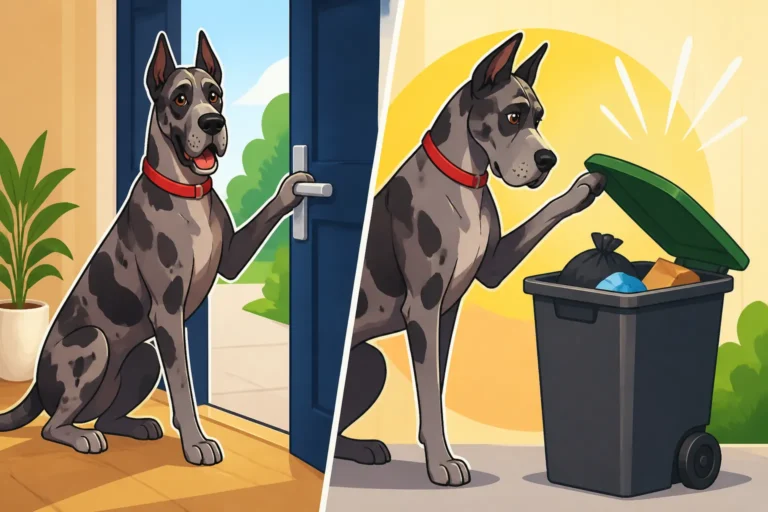
Basic obedience cues aren't just tricks; they are vital safety commands and tools for managing your Great Dane's immense power. A solid "sit" can prevent jumping, a reliable "stay" can keep them safe from an open door, and an immediate "come" can be a lifesaver in an off-leash situation. For a Great Dane, these aren't optional extras; they are fundamental requirements for a harmonious and safe life.
Consider the common issue of jumping. A small dog jumping might be annoying, but a Great Dane jumping can cause serious injury. Teaching "four on the floor" from puppyhood, coupled with a solid "sit" or "place" command, provides an alternative behavior for greetings. Similarly, a strong "leave it" prevents them from grabbing something potentially dangerous off the ground or, let’s be honest, off your kitchen counter. These cues give you control and give your Great Dane a clear understanding of what you expect, which reduces their anxiety and impulsive behaviors. Consistency is key here; every family member must use the same commands and expectations for the cues to be truly effective, otherwise, your Great Dane will just learn to listen to the person who is most consistent.
Tools and Techniques for Managing a Powerful Dane
When you're dealing with a dog whose strength surpasses your own, having the right equipment and knowing how to use it effectively becomes paramount. It's not about being harsh; it's about clear communication and leverage.
Choosing the Right Leash and Collar/Harness
Forget the thin nylon leash and flimsy collar you might use for a smaller dog. For a Great Dane, you need gear that is robust, comfortable, and designed to help you maintain control without causing discomfort or injury to your dog.
Firstly, a strong, wide collar (at least 1-1.5 inches) is essential for their neck and provides a secure base. Flat buckle collars are fine for ID tags, but for walking, many owners find a martingale collar or a well-fitting front-clip harness to be more effective. Martingale collars provide a gentle tightening action when pulled, preventing your Dane from slipping out without choking them. Front-clip harnesses, often available on platforms like Amazon, are fantastic because they redirect your dog's forward momentum. When your Great Dane pulls, the leash attachment on their chest turns them sideways, making it much harder for them to drag you along. This means you’re using physics to your advantage, rather than fighting against their sheer power.
Avoid retractable leashes entirely with a Great Dane. They offer zero control over a sudden lunge and can cause severe rope burns or even break, leaving you with an out-of-control giant. Instead, opt for a sturdy 6-foot nylon or leather leash with a strong clasp. If you're struggling, a head halter (like a Gentle Leader) can also be incredibly effective, as it gives you control over their head, and where the head goes, the body follows. However, these require careful introduction to ensure your Great Dane accepts them comfortably. Always prioritize comfort and safety for your dog, even as you prioritize control for yourself. For more in-depth advice on gear, check out Harnesses and Collars That Control a Great Dane.
Mastering Loose-Leash Walking Techniques
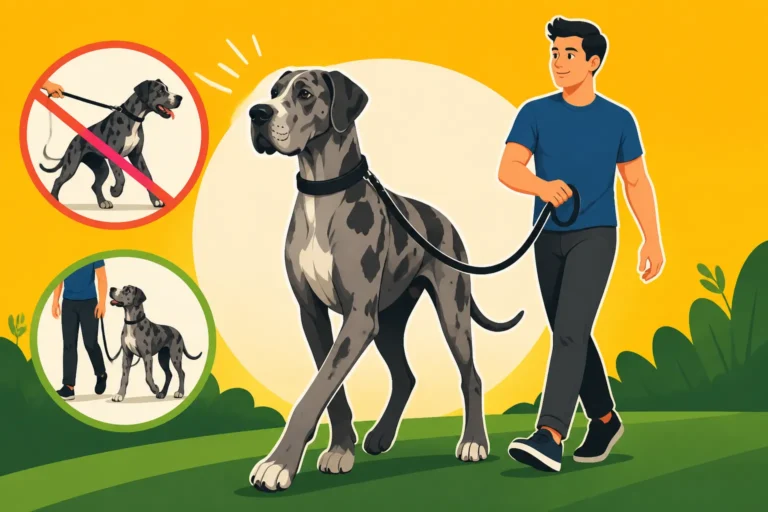
Loose-leash walking is perhaps one of the most important skills for a Great Dane owner to master. A Great Dane that pulls constantly is not only exhausting but can be dangerous. The goal is for your dog to walk calmly by your side, with a loose leash, even in distracting environments.
This isn't about punishment; it's about rewarding desired behavior. Start in a low-distraction environment, like your backyard. When your Great Dane is walking nicely beside you, with a loose leash, immediately reward them with a high-value treat and verbal praise. If they pull, simply stop moving. Stand still like a tree. Your Great Dane will eventually look back at you, confused. The moment the leash goes slack, even for a second, start walking again. This teaches them that pulling gets them nowhere, but a slack leash means progress and rewards. Consistency is vital. Every single walk, every single step, must reinforce this lesson. It takes patience, especially with a strong-willed or easily distracted Dane, but it pays off exponentially in the long run.
Practice changing directions frequently. If your Dane starts to forge ahead, make a sharp, unexpected turn in the opposite direction. This keeps them paying attention to you and prevents them from getting into a steady pulling rhythm. Over time, your Great Dane will learn that staying close and attentive to you is far more rewarding than dragging you down the street. It’s a dance of communication, not a tug-of-war. For additional guidance, consider exploring Getting a Great Dane to Walk on a Loose Leash.
Utilizing Positive Reinforcement and Rewards
When handling a Great Dane, especially one that outweighs you, positive reinforcement isn't just a training method; it's the safest and most effective strategy. Trying to physically overpower a Great Dane is a losing battle and can damage your relationship with your dog. Instead, focus on motivating them to want to do what you ask.
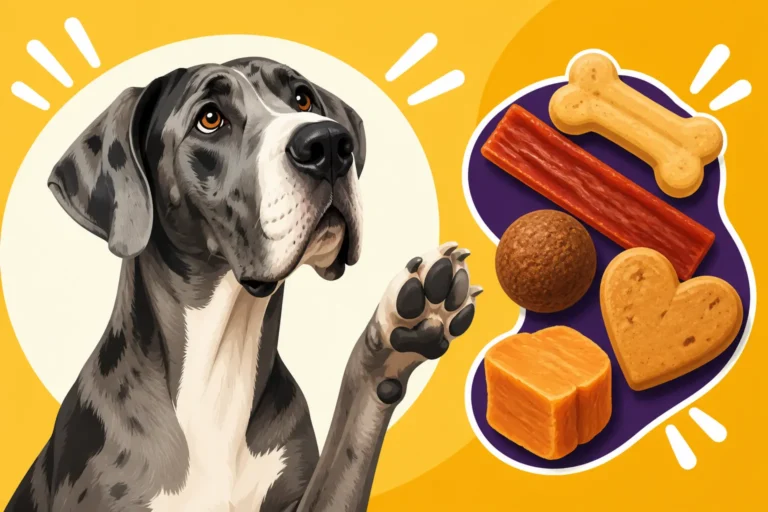
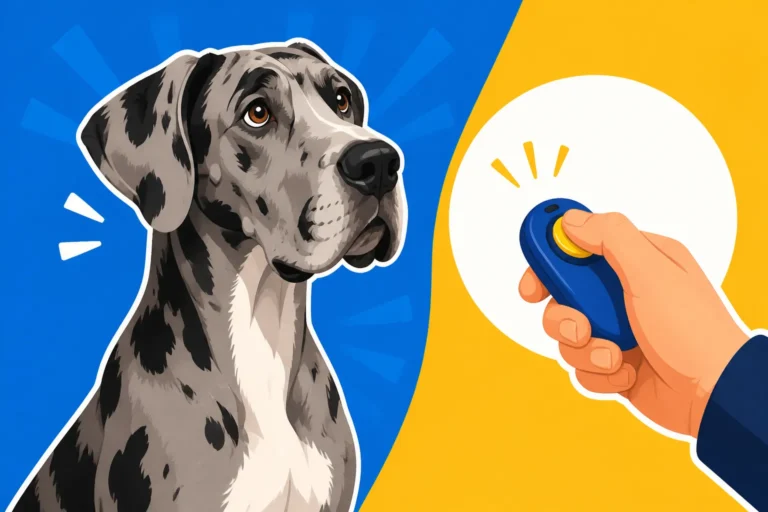
High-value treats are your best friend. These aren't just everyday kibble; think small pieces of cooked chicken, cheese, or specialized training treats. Use these to reward immediately and enthusiastically for any desired behavior – a loose leash, a polite sit, ignoring a distraction. The timing of the reward is critical; it needs to happen within 1-2 seconds of the behavior for your Dane to make the connection. Verbal praise and enthusiastic petting (if they enjoy it) also reinforce good choices.
Beyond treats, consider other rewards like a quick game of fetch, access to a favorite toy, or even just continuing the walk after a moment of calm. The idea is to make good behavior incredibly rewarding and undesirable behavior unrewarding (e.g., stopping the walk when they pull). This builds a dog that is engaged, responsive, and happy to work with you, rather than a dog that resents being commanded. It fosters a trusting relationship where your Dane sees you as the provider of all good things, making them much more likely to listen, even when their size gives them the physical advantage.
Everyday Scenarios: Managing Strength in the Home and Public
A Great Dane's size isn't just a factor on walks; it influences every aspect of daily life, from greeting guests to riding in the car. Proactive management and consistent training are key to navigating these common situations.
Preventing Jumping and Counter Surfing
The sight of a Great Dane standing on its hind legs, paws on your shoulders, can be startling or even frightening for guests, and it's certainly not safe. Similarly, their ability to reach kitchen counters means that a forgotten snack or even ingredients for dinner are fair game. Preventing these behaviors requires vigilance and a clear strategy.
For jumping, the most effective approach is to never reward the jump. This means turning your back, stepping away, or simply ignoring your Dane the moment their paws leave the floor. The instant all four paws are on the ground, even if just for a second, calmly reward them with praise and a treat. You can also teach an incompatible behavior, such as "sit" or "place," and reward them for doing that instead of jumping. When guests arrive, have your Dane on a leash initially so you can easily manage their greetings, guiding them into a "sit" or a "down" before they can jump. This helps teach them polite manners around new people. Stopping a Great Dane Jumping Up on People offers more strategies for this common challenge.
Counter surfing is another consequence of their impressive height. The easiest prevention is management: don't leave tempting food on the counter. If you need to cook, consider crating your Great Dane or keeping them behind a baby gate (a sturdy one, sized for a Great Dane, of course) in another room. Actively teach the "leave it" command and practice it with food on low surfaces, gradually increasing the challenge. If you catch them in the act of counter surfing, a firm "off" or "leave it" command, followed by redirecting them to a chew toy or a designated mat, can be effective. Never allow them to succeed, even once, as success is a powerful motivator for a Great Dane.
Navigating Public Spaces and Interactions
Taking a Great Dane into public spaces is a mixed bag. Many people are enamored by their majestic presence, but others might be intimidated or even fearful. As an owner, you have a responsibility to ensure your Dane is a polite, well-mannered ambassador for the breed. This means constant awareness and control.
Always have your Great Dane on a secure leash and harness in public. Even if your dog is impeccably trained, a sudden unexpected stimulus could trigger an instinctual lunge. A front-clip harness or head halter can be invaluable here for managing any sudden pulls. When encountering other people or dogs, anticipate your Dane's reactions. If they tend to get overly excited, create space, ask them to "sit" or "watch me," and reward them for calm behavior. Don't be afraid to advocate for your dog; if someone rushes up to pet your Dane without asking, or if another dog is approaching too quickly, step in and manage the interaction. Your Great Dane relies on you to be their advocate and protector.
Socialization, while critical in puppyhood, is an ongoing process. Continue to expose your Great Dane to various sights, sounds, and controlled interactions with calm dogs and people. The goal isn't necessarily for them to greet every person or dog they see, but to be neutral and calm in their presence. If your Dane exhibits reactivity, lunging, or barking, it's a clear signal that you need to revisit training fundamentals or seek professional help to address the underlying issues. Remember, a single negative encounter due to poor management can reinforce fear or reactivity in your Great Dane and make future public outings even more challenging.
Getting Your Great Dane into a Car or Up Stairs
The sheer mass of a Great Dane makes tasks that are simple with smaller dogs, like getting into a car or navigating stairs, significant undertakings. For their safety and yours, it's important to approach these situations with forethought and proper technique.
Car Travel: Many Great Danes struggle to jump into the back of an SUV or car, especially as they get older or if they have joint issues. Forcing them can lead to injury for both of you. The best solution is a sturdy ramp. Invest in a high-quality, non-slip ramp that can support your Dane's weight. Introduce the ramp slowly and positively, using treats to encourage them to walk up and down. Start with the ramp flat on the ground, then gradually raise one end. Patience is key. If your Dane is reluctant, you may need to physically guide them a few times, but always make it a positive experience. Once they're in the car, ensure they are securely restrained in a crash-tested harness or a large, robust crate that fits your vehicle. This is for their safety in case of an accident and prevents them from becoming a projectile. Find out more on Teaching a Great Dane to Get Into a Car.
Stairs: While Great Danes are physically capable of climbing stairs, it's generally advised to limit stair use, especially during puppyhood when their joints are still developing. Excessive stair climbing on developing joints can contribute to long-term orthopedic issues. For adult Danes, particularly those prone to conditions like hip or elbow dysplasia, stairs can become difficult or painful. If stairs are unavoidable, teach your Great Dane to take them slowly and calmly. Avoid letting them bound up and down, which puts immense strain on their joints. As they age, you might need to assist them with a mobility sling or even carry them if they're still able to be lifted by two people (a feat in itself!). Always consider what's best for their long-term joint health. Whether a Great Dane Should Climb Stairs provides more information on this topic.
Advanced Strategies for Confident Handling
Beyond basic training and the right tools, handling a Great Dane that outweighs you often comes down to your own confidence and knowing when to call in the experts. It's a journey, not a destination, and continuous learning benefits both you and your giant companion.
Building Your Own Physical Confidence
It might sound obvious, but your own physical confidence and ability to move with intention are hugely impactful when handling a powerful dog. If you’re hesitant, unsure, or physically unbalanced, your Great Dane will pick up on that and may be more likely to pull or ignore commands. You don't need to be a bodybuilder, but understanding your own balance and how to use your body effectively can make a significant difference.
This includes how you hold the leash, your stance, and even your breathing. Keep the leash securely in one hand, close to your body, with the excess slack gathered. Your posture should be upright and balanced, not leaning forward or backward. If your Dane pulls, brace yourself, use your core, and keep your feet firmly planted. Don't engage in a tug-of-war; instead, use the techniques we discussed, like becoming a "tree." Simple exercises that improve your core strength, balance, and general fitness can subtly enhance your ability to handle a large dog with greater ease and safety. This isn't about overpowering them, but about being stable and clear in your physical cues. When you move with confidence, your Great Dane is more likely to trust your leadership.
When to Seek Professional Help
Sometimes, despite your best efforts, you might encounter behavioral challenges that feel insurmountable. This is where professional help becomes invaluable, not a sign of failure. Great Danes, due to their size, can present unique training complexities, and a qualified professional can offer tailored guidance.
Consider seeking professional help if:
- Your Great Dane's pulling is still unmanageable, despite consistent effort with appropriate tools.
- They display reactivity (barking, lunging, growling) towards other dogs or people, posing a safety risk.
- You're struggling with specific behaviors like aggression, severe separation anxiety, or intense fear.
- You feel overwhelmed or are losing confidence in your ability to manage your dog.
- Your Dane's behavior is causing physical strain or injury to you or others.
Look for trainers who use positive reinforcement methods and have experience with giant breeds. A good trainer won't just tell you what to do; they'll teach you how to effectively communicate with and train your Great Dane. They can provide new perspectives, identify subtle cues you might be missing, and help you develop a comprehensive training plan. Finding a Trainer Comfortable With a Great Dane is a useful resource for vetting potential professionals. Many reputable trainers offer individual sessions or group classes specifically for large breeds, and some, like BAXTER & Bella, even offer virtual consultations that can be incredibly helpful for owners facing unique challenges. Don't wait until a problem becomes a crisis; early intervention can prevent escalation and ensure a happier, safer life for both you and your beloved Great Dane.
Comparison of Leash and Harness Types for Great Danes
| Type of Gear | Description | Pros | Cons | Ideal Use Case |
|---|---|---|---|---|
| Flat Collar | Standard collar around the neck, buckles or clips. | Holds ID tags, generally comfortable for everyday wear. | Little control over pulling, easy for strong pullers to slip out if not properly fitted. | For ID tags, casual use, and well-trained dogs that don't pull. |
| Martingale Collar | Loop design that tightens gently when pulled, preventing slip. | Prevents escape without choking, gentle correction. | Can still allow pulling, requires proper fit to be effective. | Dogs with narrow heads (like Danes) who might slip a flat collar, or those needing mild control. |
| Front-Clip Harness | Attaches leash at the chest, redirects pulling force. | Excellent for reducing pulling, does not put pressure on neck. | Can sometimes restrict shoulder movement if poorly designed, may tangle legs on some dogs. | Dogs that pull strongly, owners needing more leverage without force, available on Amazon. |
| Head Halter | Fits over the muzzle and behind the ears, like a horse halter. | Offers maximum control over the dog's head, stopping pulling effectively. | Some dogs dislike it initially, can look like a muzzle (though it isn't), requires careful introduction. | Dogs with extreme pulling issues, reactivity, or owners needing immediate, precise control. |
| Back-Clip Harness | Attaches leash at the back between the shoulder blades. | Comfortable, good for dogs who don't pull, no neck pressure. | Can encourage pulling (like a sled dog harness), offers less control for strong pullers. | Well-behaved dogs who don't pull, for comfort during casual walks. |
Disclaimer
This article is for general informational purposes only and does not constitute professional advice. Laws, prices and regulations vary by location and change over time. Consult a qualified professional for guidance on your specific situation.