Teaching a Great Dane to Get Into a Car
Getting your majestic Great Dane into a car can feel like an Olympic feat, especially if they're reluctant or you're trying to hoist a growing puppy that already outweighs you. It's a common struggle for Dane owners, and it's not just about brute strength; it's about making the experience comfortable and positive for a dog that simply can't hop into the back seat like a terrier. This guide will walk you through practical, empathetic strategies to teach your Great Dane to willingly and safely enter your vehicle, turning a potential wrestling match into a calm routine.
The Unique Challenges of Car Travel for a Great Dane
Let's be honest, Great Danes aren't built for compact spaces, and that includes the average family car. Their sheer size, combined with their sometimes sensitive nature, presents a unique set of hurdles when it comes to vehicle entry. It’s not just about lifting them; it’s about their perception of the car, their physical comfort, and even their joint health.
Overcoming the Physical Barrier of Size
The most obvious challenge is simply the physical act of getting a hundred-plus-pound dog into a car. Unlike smaller breeds that can be easily picked up or encouraged to jump, a Great Dane often needs significant assistance. Imagine trying to lift a small horse into your SUV – that's roughly the scale we're talking about! Their long legs and substantial weight mean a simple jump might be too high or uncomfortable, especially for younger dogs whose growth plates are still developing, or older Danes with Arthritis in a Six-Year-Old Great Dane. Owners often try to push, pull, or even physically hoist their Dane, which can be both exhausting and dangerous for both human and dog, potentially leading to injuries.
This physical barrier isn't just an inconvenience; it can create a cycle of negative associations. If every car ride starts with a stressful struggle, your Dane quickly learns to dread the car. This can manifest as bracing against you, flattening themselves to the ground, or even trying to run away when the car door opens. It’s crucial to understand that their reluctance isn't stubbornness, but often a combination of discomfort, fear, or simply not understanding what's expected of them in a situation that feels unnatural.
Addressing Fear and Anxiety Related to Cars
Beyond the physical challenge, many Great Danes develop a fear or anxiety around cars. This can stem from a variety of experiences, or lack thereof. Perhaps their only car rides have been to the vet, or they might have had a jarring experience, like a sudden brake or a bumpy turn, that scared them. Some Danes, especially those from rescues, may have had traumatic pasts involving car travel, or simply not been properly socialized to cars as puppies. A Great Dane That Is Anxious Rather Than Gentle can show this anxiety in many ways – trembling, excessive drooling, panting, whining, or even destructive behavior if left alone in the car.
It’s important to distinguish between a Dane who simply hasn’t learned how to get in and one who is genuinely afraid. A scared Dane won't just need a ramp; they'll need patience, desensitization, and positive reinforcement to change their emotional response to the vehicle. This process isn't about forcing them to endure their fear, but slowly and systematically building positive associations until the car becomes a neutral, or even pleasant, space. Recognizing these subtle signs of fear early on can save a lot of heartache and make the training process much smoother and more effective.
Building Positive Associations with the Car
The key to successful car loading for a Great Dane, especially one who is hesitant, lies in making the car a source of good things. This is a gradual process of desensitization and positive reinforcement, transforming the vehicle from a scary unknown into a place where good things happen.
Introducing the Car in a Neutral, Calm Setting
Before you even think about getting your Great Dane into the car, let's just make the car a part of their everyday landscape, but in a non-threatening way. Start by simply having the car present. Park it somewhere accessible, maybe in your driveway, and just let your Dane observe it. Don't open the doors, don't try to interact with it, just let it be. Later, you can sit near the car with your Dane, offering calm praise and high-value treats. The goal is for them to see the car and not immediately associate it with being poked, prodded, or lifted.
Gradually, you can open the car doors, allowing your Dane to sniff around the interior and exterior without any pressure to get in. Toss some treats near the car, then on the floorboard, and eventually just inside the doorway. The idea is to build a positive Pavlovian response: car = treats and good things. Keep these sessions short and sweet, always ending on a positive note, even if it just means your Dane voluntarily walks past the car without pulling away. You're trying to create a foundation of comfort and curiosity, rather than apprehension. Socializing a Great Dane Puppy Early often includes exposure to various sights and sounds, and the car should be one of them.
Luring and Rewarding Initial Interactions
Once your Great Dane is comfortable being near the open car, you can start gently encouraging closer interaction using high-value treats and praise. Don't push or pull. Instead, use a treat to lure them closer. Hold the treat just outside the car door, let them sniff it, then move it a tiny bit further inside. If they take even one step towards the car or put a paw on the sill, reward them immediately and enthusiastically. The moment they show any positive engagement, even a curious sniff, mark it with a verbal "yes!" or a clicker, followed by a reward.
The process might be excruciatingly slow, and that's perfectly okay. One day they might just touch the bumper, the next they might put their front paws on the threshold, and eventually, with consistency, they might even step a bit further inside. Never force them. If they resist, back off and make the task easier. For instance, if they won't put a paw on the sill, just reward them for approaching the open door again. The goal is to build confidence and reinforce voluntary participation. Remember, you're teaching a huge dog a complex behavior in a confined space. Patience is truly your greatest tool here.
Utilizing Ramps and Other Entry Aids
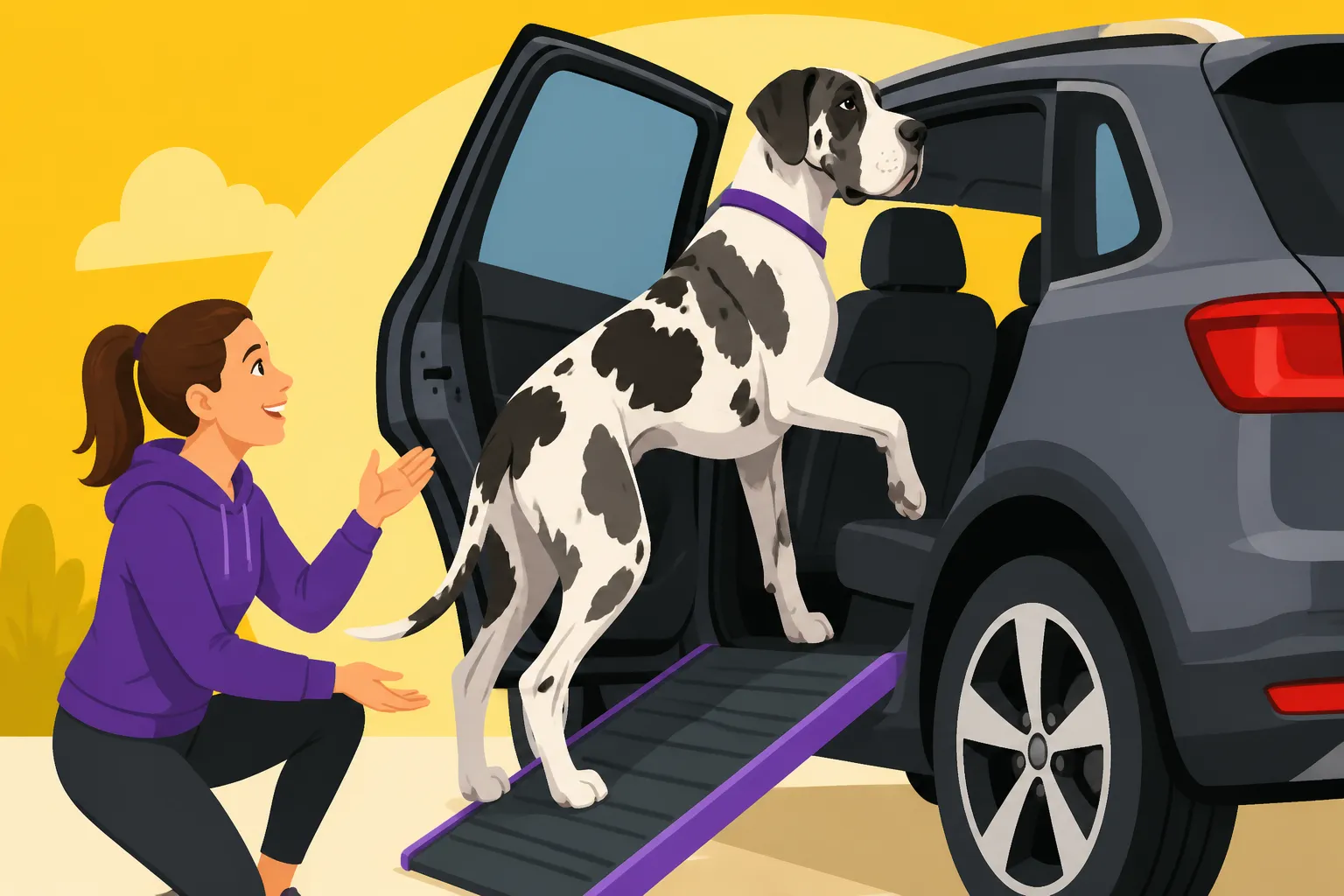
For a Great Dane, a car ramp isn't just a convenience; it's often a necessity. Their size and the potential for joint issues mean that jumping in and out of a vehicle repeatedly can be detrimental to their long-term health. Choosing the right ramp and teaching them to use it safely is a game-changer.
Choosing the Right Ramp for Your Great Dane
When it comes to ramps, one size definitely does not fit all, especially for a Great Dane. You need a ramp that is robust enough to safely support their substantial weight without bending or buckling. Look for ramps with a weight capacity well over your Dane's current or expected adult weight; this margin of safety is crucial. Material matters too: aluminum ramps tend to be lighter and more durable than plastic options, but can be pricier. Surface traction is another critical feature. A good ramp will have a non-slip surface, like sandpaper-like grip tape or a rubberized texture, to prevent slips and falls, particularly in wet weather.
Length and incline are also paramount. A ramp that's too short will be too steep, making it difficult and potentially scary for your Dane to ascend or descend. Aim for a longer ramp that provides a gentler incline, allowing for a more comfortable climb. Measure the height from your car's entry point to the ground and calculate the ideal ramp length for a gentle slope. For taller vehicles like SUVs or trucks, a longer, telescopic ramp might be necessary. Some ramps also fold or collapse for easier storage, which is a big plus for traveling. You can often find a wide variety of suitable ramps on platforms like Amazon, allowing you to compare features and read reviews from other large dog owners.
Step-by-Step Ramp Introduction and Training
Introducing the ramp needs to be as calm and positive as introducing the car itself. Start by laying the ramp flat on the ground in a neutral area, without the car involved. Let your Dane explore it, sniff it, and walk over it at their leisure. Toss treats on it, make it a fun game. Once they're comfortable walking over it on flat ground, you can prop it up slightly, maybe against a low step or curb, gradually increasing the incline. Always use high-value treats to lure them up and down, rewarding every step they take voluntarily.
When they are confidently using the ramp at a gentle incline, it's time to introduce it to the car. Position the ramp securely against the vehicle's entry point. Ensure it's stable and doesn't wobble, which can be terrifying for a dog. Repeat the luring and rewarding process, starting from the bottom of the ramp and working your way up. One popular online training platform, BAXTER & Bella, emphasizes positive reinforcement techniques that would be perfect for this gradual approach, helping you break down the task into tiny, achievable steps. If your Dane hesitates, don't force them. Go back a step, make it easier, and build their confidence again. It might take several short sessions over days or even weeks. Remember, the goal is a stress-free entry. Ramp Training a Great Dane for the Car can prevent injury and stress.
Harnesses and Slings for Additional Support
While a ramp is primary, there might be times you need a little extra assistance, especially if your Dane is recovering from an injury or is a senior dog with Mobility Aids for a Failing Great Dane. A sturdy harness with a handle on the back can provide a crucial bit of support without putting strain on your dog's neck. When choosing a harness, ensure it's specifically designed for large breeds, with wide straps that distribute pressure evenly and durable hardware. This allows you to gently steady them as they navigate the ramp, or even offer a slight lift if they're struggling with a particular step.
For older or infirm Great Danes who might no longer be able to use a ramp, or during an emergency, a lifting sling can be invaluable. These slings typically support the dog's midsection, allowing you to bear some of their weight. They come in various designs, from full-body supports to those that assist only the hindquarters or front legs. Always ensure the sling is properly fitted to prevent discomfort or injury. Practicing with a sling beforehand, just like with a ramp, in a calm, non-emergency situation, will make it less stressful if you ever need to use it in earnest. These aids are about safety and comfort, ensuring your Dane can maintain their dignity and avoid injury, no matter their age or physical condition.
| Aid Type | Best Use Case | Pros | Cons |
|---|---|---|---|
| Car Ramps | Regular car entry/exit for all Danes, especially growing puppies or seniors. | Reduces joint strain, builds independence, less physical effort for owner. | Can be bulky to store, requires training, some Danes may be fearful initially. |
| Support Harness | Steadying Dane on ramp, mild assistance, general walking. | Provides a handle for guidance, comfortable for dog, versatile. | Not a primary lifting tool for full body weight. |
| Lifting Sling | Emergency situations, senior/injured Danes with severe mobility issues. | Allows full body support for lifting, prevents injury to dog and owner. | Requires two people for large Danes, not for daily use, can be awkward. |
Step-by-Step Car Entry Training
Once your Great Dane is comfortable with the ramp and the general presence of the car, it’s time to put it all together. This isn't a race; it's a methodical process that prioritizes your dog's comfort and confidence.
Practicing Entry and Exit without the Car Moving
The first actual car entry practice should happen with the car turned off and parked in a familiar, quiet location. Use your high-value treats and enthusiastic praise to lure your Dane up the ramp and into the car. Once they are inside, don't immediately close the door or start the engine. Let them explore the interior, sniff around, and settle. Give them a special chew toy or a food puzzle to enjoy inside the car for a few minutes. The goal is for them to associate the interior of the car with positive, calm experiences.
After a short, calm period, lure them back down the ramp, again rewarding them for each step. Repeat this process multiple times in short sessions. You want to normalize the act of getting in and out of the car, making it a routine without the added stress of actual travel. It’s like practicing getting into a bed – no pressure, just a comfortable space. If you find your Dane is still hesitant at any point, go back to basics, rewarding even smaller advancements. Remember, consistency is key, and never force them.
Short Trips and Gradual Increases in Duration
Once your Great Dane is confidently entering and exiting the stationary car, it's time for the absolute shortest of trips. We're talking about starting the engine, driving ten feet, and then stopping. The key here is to keep it incredibly brief and end with a positive reward. Get them in the car, give them a treat, start the engine, move a tiny bit, stop, give another treat, and then let them out. This helps them get used to the sounds, vibrations, and movements of the car in motion, but in manageable doses.
Gradually, and I mean gradually, increase the duration of these trips. Drive around the block, then to the nearest park, then to a friend's house. Always make the destination something positive if possible – a walk, a playdate, a favorite treat. Avoid making their first long car ride a trip to the vet! The idea is to build up their tolerance and positive associations with longer periods of travel. During these trips, ensure your Dane is secured, either in a crate or with a safety harness, to prevent injury and make them feel more secure. Whether a Great Dane Should Be Crated in a Vehicle is a crucial consideration for their safety.
Ensuring Safety and Comfort During Travel
Getting your Great Dane into the car is only half the battle. Ensuring their safety and comfort during the actual journey is equally important, not just for their well-being, but for yours and other road users too.
Secure Crates and Safety Harnesses
For a dog the size of a Great Dane, proper restraint in a vehicle isn't just a recommendation; it's a safety imperative. In the event of a sudden stop or collision, an unrestrained Great Dane can become a projectile, posing a severe risk to themselves and passengers. The best option for many is a crash-tested travel crate. While finding one truly large enough for an adult Dane can be a challenge, they offer the highest level of protection. Look for crates made from strong materials like aluminum or heavy-duty steel, designed to withstand impacts. Make sure the crate is securely anchored in your vehicle, preventing it from sliding or tipping. Crates That Hold a Full-Grown Great Dane will typically require a large SUV, van, or truck bed with a topper.
If a crate isn't feasible, a quality car safety harness specifically designed for large breeds is the next best thing. These harnesses attach to the vehicle's seatbelt system, keeping your Dane restrained in their seat. They prevent your dog from moving around the car, distracting the driver, or being thrown forward during a sudden stop. Look for harnesses that are crash-tested and fit snugly but comfortably, distributing any force across their chest and shoulders rather than their neck. Never use a standard walking harness or collar with a seatbelt attachment, as these are not designed for impact protection and can cause serious neck injuries.
Providing Ample Space and Ventilation
Great Danes are big dogs, and they need big space, even in a car. Cramming them into a small area will lead to discomfort, stress, and potential overheating. If using a crate, ensure it's large enough for them to stand up, turn around, and lie down comfortably. If they're using a harness and sitting on the back seat or in the cargo area, make sure there's enough room for them to stretch out without hitting their head or limbs on the vehicle's interior. This often means folding down back seats or having a designated large cargo area.
Ventilation is also critical, especially for a large dog who can overheat easily. Always ensure there's adequate airflow, whether by slightly opening windows (but not so much that they can stick their head out dangerously) or by using your car's air conditioning. Never leave your Great Dane alone in a car, even for a few minutes, on a warm day. The interior temperature can rise rapidly to dangerous levels, leading to heatstroke. Even on cooler days, sufficient airflow prevents stuffiness and keeps your Dane more comfortable. A well-ventilated space prevents anxiety and keeps your Dane happier during the journey.
Minimizing Motion Sickness and Stress
Just like people, Great Danes can suffer from motion sickness or become stressed during car rides. Signs of motion sickness include excessive drooling, yawning, whining, lip-licking, vomiting, and general lethargy. To combat this, try to feed your Dane a light meal a few hours before travel, or no meal at all if it's a short trip. Keeping the car cool and well-ventilated can also help. Some Danes benefit from looking out the window, while others feel more secure if their view is partially obstructed by a crate cover, reducing visual stimuli.
For stress, remember all those positive associations we built? Keep them up! Bring their favorite toy, a comfort blanket, or a long-lasting chew to occupy them. You can also try calming pheromone sprays specifically designed for dogs, which can be sprayed in the car or on their blanket before travel. In more severe cases of anxiety or motion sickness, consult your veterinarian. They might suggest anti-anxiety medications or anti-nausea drugs for travel, especially for longer journeys. A calm, comfortable Great Dane makes for a much more pleasant road trip for everyone involved.
Troubleshooting Common Car Entry Problems
Even with the best intentions and consistent training, you might still encounter some bumps in the road when teaching your Great Dane to love the car. It’s important to understand why they might be refusing and to address those underlying issues with patience and problem-solving.
Addressing Complete Refusal or Fear
If your Great Dane is simply refusing to go near the car, flattening themselves to the ground, or showing clear signs of fear like trembling or panting, you need to go back to square one. Forget about the ramp and getting inside for a moment. Focus entirely on changing their emotional response to the car itself. Start with very basic desensitization: simply being in the vicinity of the car, offering high-value treats and praise. Leave the car doors open, but don't ask them to approach. Just let them observe from a distance, rewarding calm behavior.
Gradually decrease the distance over days or weeks, making sure to keep all interactions positive. If they're truly petrified, consider consulting a professional dog trainer or a veterinary behaviorist. They can offer tailored strategies, potentially including counter-conditioning exercises or even medication to help manage severe anxiety. Never punish your Dane for being afraid; this will only worsen their fear and damage your bond. Patience, empathy, and making the experience overwhelmingly positive are your best tools. Building Confidence in a Nervous Great Dane is paramount.
Handling a Great Dane That Won't Use the Ramp
Sometimes, a Great Dane might be fine with the car but views the ramp with suspicion or outright fear. This is often because ramps feel unstable, unfamiliar, or just plain weird to walk on. If your Dane won't use the ramp, go back to introducing the ramp on flat ground, totally separate from the car. Make it a fun game with treats and toys. Get them trotting over it happily before reintroducing it to the vehicle.
Ensure the ramp is absolutely stable and doesn't wobble or slide when your Dane puts weight on it. Any instability will erode their confidence immediately. You might also try covering the ramp with a familiar blanket or a non-slip mat if the texture or feel of the ramp itself is the issue. Another trick is to have two people: one to lure from the front with treats, and another to gently guide from behind with a hand on their harness, offering reassurance. Again, never force them. If they hesitate, make the task easier. It might mean rewarding them just for sniffing the ramp, then a paw, then two paws, building up very slowly.
Preventing Destructive Behavior or Excessive Barking Inside the Car
Some Great Danes, particularly if they're anxious or under-exercised, might resort to destructive chewing or incessant barking once inside the car. This is often a sign of boredom, stress, or separation anxiety. To mitigate this, ensure your Dane has had adequate exercise before car travel. A tired Dane is generally a well-behaved Dane. Provide mentally stimulating toys, like puzzle feeders filled with treats or a long-lasting chew, to keep them occupied during the ride.
If barking is the main issue, try to identify the trigger. Are they barking at people walking by? Other cars? If so, partially covering their crate or using window shades might help reduce visual stimuli. For anxiety-related barking, revisit your positive association training, ensuring the car is a calm and secure space. Sometimes, a well-fitting thundershirt or calming supplements recommended by your vet can also help. Just like with all training, consistency and understanding the root cause of the behavior are key to finding an effective solution. Remember, a car ride should be a calm experience, not a chaotic one, for A Great Dane That Cannot Be Left in the House or car.
Disclaimer
This article is for general informational purposes only and does not constitute professional advice. Laws, prices and regulations vary by location and change over time. Consult a qualified professional for guidance on your specific situation.