Teaching Children to Move Around a Great Dane
Living with a Great Dane means living with a gentle giant, but that doesn't mean their immense size can't pose unique challenges, especially when you have children in the home. It’s completely understandable to feel overwhelmed by the sheer scale of managing a massive dog alongside curious, energetic kids. This comprehensive guide will equip you with practical strategies and a realistic perspective for teaching children how to navigate life safely and respectfully around your Great Dane, ensuring a harmonious and happy household for everyone.
Understanding the Great Dane's Size and Temperament Around Children
It’s easy to romanticize the "gentle giant" image of a Great Dane, and for good reason – they are often incredibly sweet, patient, and loving dogs. However, their sheer size means that even an accidental bump or an enthusiastic tail wag can have serious consequences for a small child. Understanding both their physical presence and their innate behaviors is the first step in creating a safe environment.
The "Gentle Giant" Reality Check
While Great Danes are generally renowned for their calm and affectionate nature, it's crucial to remember they are still powerful animals. A Great Dane can easily weigh over 100 pounds, with some males topping 170 pounds and standing well over two feet tall at the shoulder. Imagine a small child, perhaps a toddler, standing near a dog that is easily twice their weight and significantly taller. A happy lean, a playful nudge, or even just standing up quickly can send a child sprawling without any malice intended. This isn't about aggression; it's about physics. We have to be realistic about the potential for accidental injury simply due to the size disparity. A Great Dane That Steps on a Toddler is a very real concern for many Dane owners.
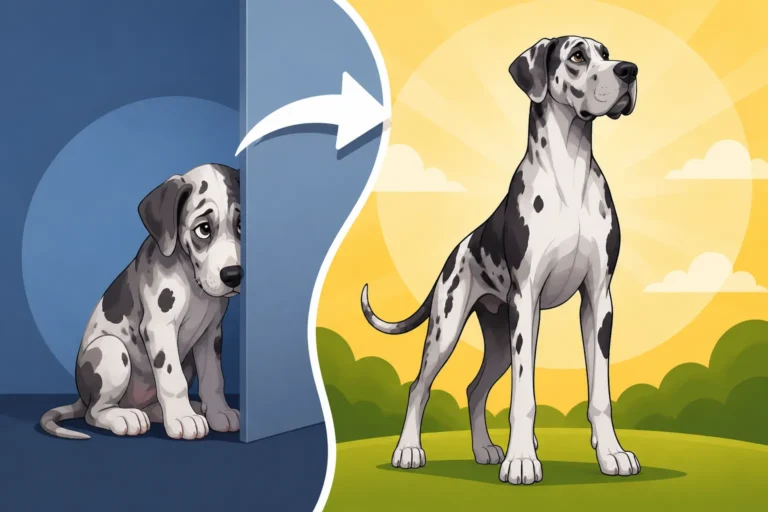
It’s also important to consider the Great Dane's natural exuberance, especially in their younger years. A six-month-old Great Dane puppy might already be the size of a full-grown Labrador, and they often retain a clumsy, boisterous puppy mentality for longer than smaller breeds. Their play can be vigorous, involving large paws and open mouths, which, while not aggressive, can be intimidating or even painful for a child not used to it. The "gentle giant" moniker applies to their intent, but it doesn't negate the impact of their physical presence.
Why Size Alone Isn't the Whole Story
Beyond their physical dimensions, a Great Dane’s temperament plays a huge role in their interactions with children. Most Danes are incredibly tolerant, often allowing children to climb on them, pull their ears (though this should always be discouraged!), and generally treat them like a living, breathing pillow. This incredible patience is a blessing, but it can also be a trap. Children might learn that they can take liberties, not realizing there's a limit to even the most patient dog's tolerance.
Conversely, some Great Danes can be naturally reserved or even anxious, especially if not well-socialized as puppies. A shy Dane might react defensively if startled or cornered by an overly enthusiastic child. It's not always about aggression; it can be about fear or discomfort. Ignoring a dog's subtle cues of stress can lead to unwanted behaviors. This is why it's so important to really know your individual Dane and not just rely on breed stereotypes, however positive they may be. The Gentle Great Dane Temperament and Its Limits explores this in more detail.
Recognizing Your Dane's Signals
One of the most vital skills you can teach your children, and learn yourself, is how to "read" your Great Dane. Dogs communicate constantly through body language, and understanding these signals is key to preventing problems. A happy, relaxed Dane will have a loose body, a gently wagging tail (not stiff and high), and soft eyes. Their ears will be in a natural position, and their mouth might be slightly open in a relaxed "smile."
On the other hand, signs of stress, discomfort, or fear can include:
- Lip licking or yawning: Often out of context, indicating mild stress.
- Turning head away or avoiding eye contact: Trying to de-escalate or signal discomfort.
- Stiff body or tucked tail: A clear sign of fear or tension.
- Growling or snarling: This is a clear warning that should never be ignored or punished, but understood as a desperate plea for space.
- Whale eye: When the whites of the eyes are visible, often a sign of stress or fear.
Teaching children to recognize these signals empowers them to back off and give the dog space before the situation escalates. This isn't about blaming the dog; it's about proactive management and respect for an animal that can only communicate non-verbally. This really goes hand-in-hand with Great Danes Around Toddlers.
Establishing Safe Interaction Rules for Kids
Once you understand your Great Dane’s temperament and how they communicate, the next step is to set clear, consistent rules for how children interact with them. Consistency is key, and every adult in the household needs to be on the same page.
The Golden Rules: No Running, No Screaming, No Teasing
These three rules are non-negotiable in any household with a large dog and small children.
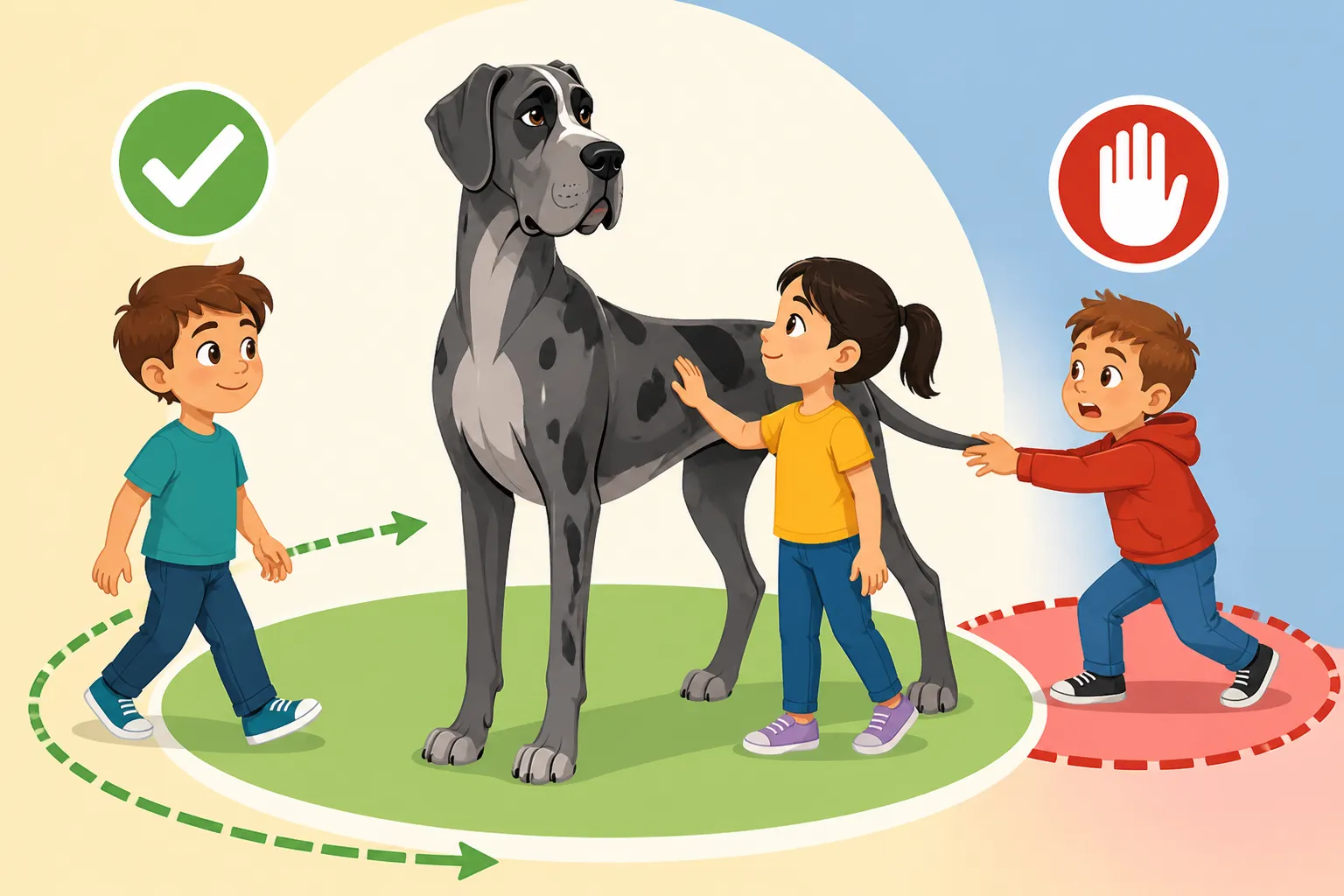
- No Running: A running child can trigger a Great Dane's prey drive or simply excite them into wanting to play chase. A Dane chasing a child, even playfully, can result in the child being knocked over or stepped on. Teach children to walk calmly, especially when near the dog.
- No Screaming: Loud, high-pitched noises can startle a Great Dane, especially one prone to anxiety, or over-excite a playful Dane. It’s best to keep voices calm and at a normal volume around the dog.
- No Teasing: This includes pulling tails, ears, poking, taking toys or food, or startling the dog when it’s sleeping. Teasing is a surefire way to erode trust and can lead to a defensive reaction from even the most tolerant dog. A sleeping dog should always be left undisturbed.
It's not enough to just tell kids these rules; you need to demonstrate them and enforce them consistently. Think of it as teaching basic manners, not just to your dog, but to your children as well when it comes to living with an animal.
Teaching Gentle Touches and Personal Space
Great Danes are incredibly cuddly, but children need to learn how to pet them appropriately. Teach children to:
- Pet gently: Stroke in the direction of the fur, avoiding rough pats or grabbing.
- Avoid sensitive areas: Ears, tail, and paws can be sensitive. Teach them to stick to the back or sides.
- Respect their space: Just like people, dogs need personal space. This means no climbing on the dog, especially when it’s lying down. No riding the dog, ever.
- Ask permission: Teach older children to "ask the dog" if it wants attention by offering a hand for a sniff before petting. If the dog leans in, it's an invitation. If it turns away, it’s a polite refusal.
These lessons are best taught through active supervision and positive reinforcement. When a child pets gently, praise them lavishly. If they get too rough, immediately intervene calmly and redirect their actions. You might also find resources from organizations that offer specific programs for kids on dog safety helpful.
Supervising Play and Interactions
This might be the most critical piece of advice: never leave young children unsupervised with a Great Dane, or any dog. "Supervised" means an adult is actively observing their interaction, not just in the same room scrolling on their phone. This allows you to intervene immediately if signals are missed or rules are broken. Whether a Great Dane Is Safe With a Baby is a constant worry for new parents, and active supervision is the answer.
When supervising, look for:
- Mutual enjoyment: Is both the child and the dog engaged happily?
- Appropriate play: Is the play calm, or is it getting too rough or over-excited?
- Dog's body language: Are there any signs of stress or discomfort from the dog?
Consider creating a "safe zone" for your Great Dane, perhaps a large crate or a designated bed in a quiet corner where they can retreat if they need a break from children. Teach children that when the dog is in its "safe zone," they are not to disturb it. This gives your Dane a much-needed escape route, preventing them from feeling overwhelmed.
Creating a Safe Home Environment for Both Kids and Dane
Beyond teaching rules, you can proactively set up your home to minimize potential issues and foster a positive co-existence. This involves physical barriers, management strategies, and using appropriate tools.
Designated Safe Zones for Everyone
In a multi-species household, clear boundaries are incredibly important.
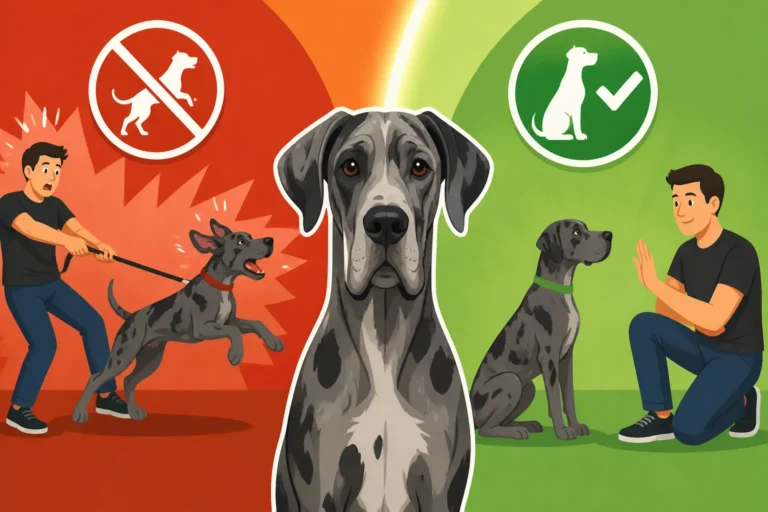
- Dog's Retreat: As mentioned, a large crate or a comfortable, elevated dog bed in a quiet area can serve as your Great Dane’s sanctuary. Teach your dog a "place" command using positive reinforcement, rewarding them for going to and staying on their bed. Companies like BAXTER & Bella offer excellent online training resources that can guide you through this process with positive, reward-based methods. This allows your Dane to disengage and relax away from the hustle and bustle of children. This also ties into Teaching a Great Dane a Place to Settle.
- Kid's Play Area: For very young children, consider baby gates to create a separate play area where they can be safe from accidental bumps or curious noses. Ensure the gates are sturdy enough to withstand a Great Dane leaning on them, as many standard baby gates are simply too flimsy for a giant breed. Investing in robust gates found on platforms like Amazon designed for wider or taller doorways can make a huge difference.
These physical boundaries aren't meant to isolate your dog or child but to give each individual space when needed, especially during high-energy times or when you can't offer 100% focused supervision.
Managing High-Energy Moments
Life with children is often loud and unpredictable, which can be challenging for a Great Dane, especially one that might be prone to anxiety or over-excitement.
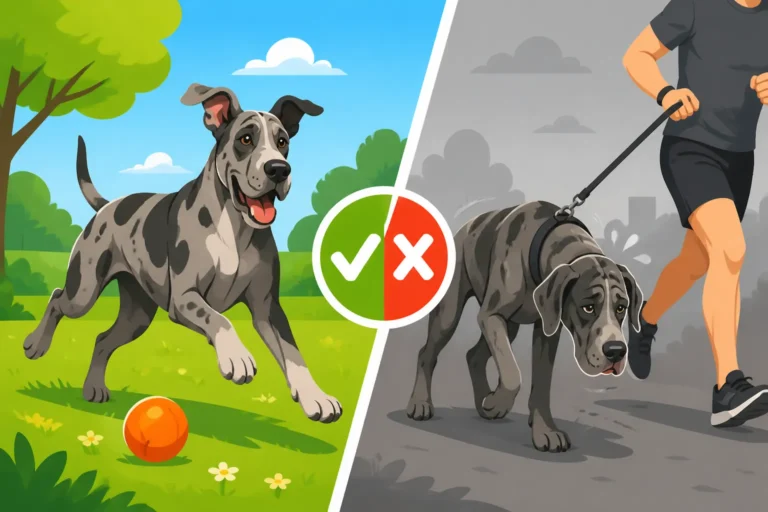
- Structured Play: Instead of allowing chaotic free-for-all play, engage children and the Great Dane in structured activities. Think fetch in a large, fenced yard, or hide-and-seek with treats for the dog while the children are supervised. This provides mental and physical stimulation for your Dane in a controlled manner.
- Quiet Time Routines: Establish predictable quiet times throughout the day. This could involve reading to your children while your Great Dane relaxes on its bed, or engaging in calm, floor-level play. Routines help both children and dogs understand expectations and reduce overall household stress. If your Dane is regularly in a state of high energy indoors, consider Wearing Out a Great Dane Without Wrecking Its Joints for safe exercise ideas.
Remember that a tired dog is often a well-behaved dog. Ensuring your Great Dane gets adequate physical and mental exercise can significantly reduce hyperactive behaviors that might accidentally impact children.
Using Tools for Structured Interactions
Sometimes, you need a little help to manage interactions safely, especially when teaching new behaviors or managing a dog's enthusiasm.
| Tool Category | Purpose | Example/Description |
|---|---|---|
| Physical Barriers | To create safe spaces and prevent unsupervised access. | Heavy-duty baby gates, exercise pens, secure crates. |
| Management Leashes | For control during greetings or high-traffic areas. | Front-clip harnesses or head halters for walking with a child nearby. |
| Calming Aids | To help reduce anxiety or over-excitement in stressful situations. | Calming pheromone diffusers, Thundershirts (for temporary use), puzzle toys. |
| Chew Toys | To redirect unwanted behaviors (mouthing, chewing) and provide outlets. | Durable chew toys (e.g., Kongs filled with treats), bones appropriate for a Great Dane. |
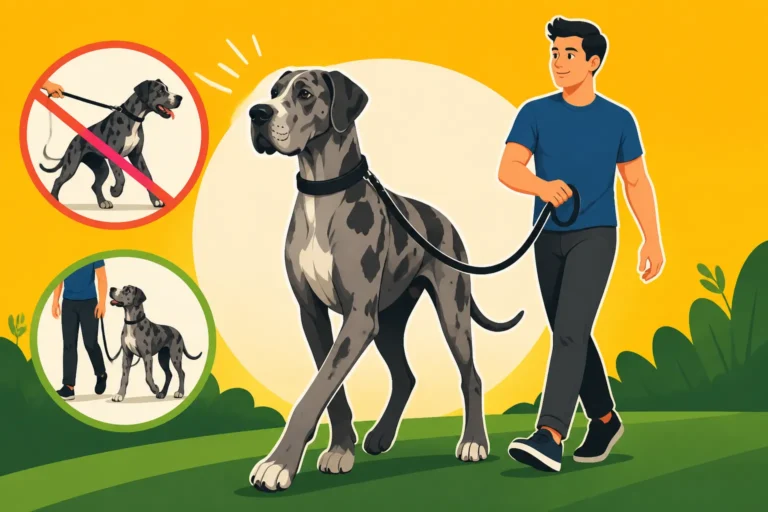
When using management leashes, choose options that give you maximum control without causing discomfort to your Dane. A well-fitted front-clip harness can make a huge difference in managing a pulling Great Dane, keeping them from accidentally knocking into a child during walks or greetings. Brands available on Amazon often provide a good range of sizes suitable for large breeds. Regularly practicing loose-leash walking, perhaps with online guidance from a training program like BAXTER & Bella, can also significantly improve your dog's manners around children and strangers.
Fostering a Positive Relationship Between Child and Dane
The goal isn't just to prevent accidents, but to cultivate a loving, respectful bond between your children and your Great Dane. When done right, this relationship can be incredibly enriching for everyone involved.
Involving Children in Care Routines
Children are often more engaged and respectful of a pet when they feel a sense of ownership and responsibility. Involve them in age-appropriate care tasks:
- Feeding (supervised): Older children can help measure out kibble. Even young children can be present during feeding time, learning to respect the dog’s mealtime.
- Grooming: Teach children how to gently brush your Great Dane’s coat (with a soft brush) or wipe away drool from their jowls. This teaches gentle touch and responsibility.
- Training Games: Simple obedience commands like "sit" or "stay" can be taught by older children under adult supervision, using treats. This builds a positive association and helps the dog see the child as a source of good things. The Manners a Great Dane Needs Before It Grows is a great resource to ensure your Dane is well-mannered for these interactions.
Make sure these interactions are always positive for both child and dog. If the dog shows any discomfort, stop and reassess. If the child isn't enjoying it, don't force it.
Building Mutual Respect
True harmony comes from mutual respect. For children, this means understanding that the Great Dane is a living being with feelings and needs, not a toy. For the Great Dane, it means associating children with positive experiences and feeling secure in their presence.
- Role Modeling: Children learn by observing. If you are consistently respectful, gentle, and patient with your Great Dane, your children are more likely to emulate that behavior.
- Advocacy for Your Dog: Always be your dog's advocate. If your Dane is showing signs of stress or needing space, step in and create that space for them. This teaches children that the dog's needs are important and reinforces the idea of respect.
- Positive Reinforcement for Both: Praise children for gentle interactions and reward your Great Dane for calm behavior around kids. This creates a positive feedback loop that strengthens good habits.
This approach ensures that instead of just "tolerating" each other, your children and Great Dane can truly thrive together. When A Great Dane Wagging Its Tail Into a Child happens, it's a sign of enthusiastic, if sometimes clumsy, affection that needs to be managed with patience and guidance.
When to Seek Professional Guidance
Even with the best intentions and consistent effort, some situations may require professional help. Don't hesitate to reach out if you notice:
- Persistent fear or anxiety: If your Great Dane consistently shows signs of fear or aggression towards children, even after implementing management strategies.
- Unmanageable excitement: If your Great Dane's excitement around children consistently leads to rough play or accidental injury.
- Regression in behavior: If a previously well-behaved Great Dane starts showing new problematic behaviors around children.
A certified professional dog trainer or a veterinary behaviorist can assess your specific situation, identify underlying causes, and develop a tailored plan. They can offer invaluable insights and practical solutions, whether it's through in-home sessions or suggesting specific training programs like those offered by BAXTER & Bella, which focus on building foundational manners and addressing specific behavioral challenges with positive reinforcement. It's an investment in the safety and happiness of your entire family.
Disclaimer
This article is for general informational purposes only and does not constitute professional advice. Laws, prices and regulations vary by location and change over time. Consult a qualified professional for guidance on your specific situation.