A Great Dane That Steps on a Toddler
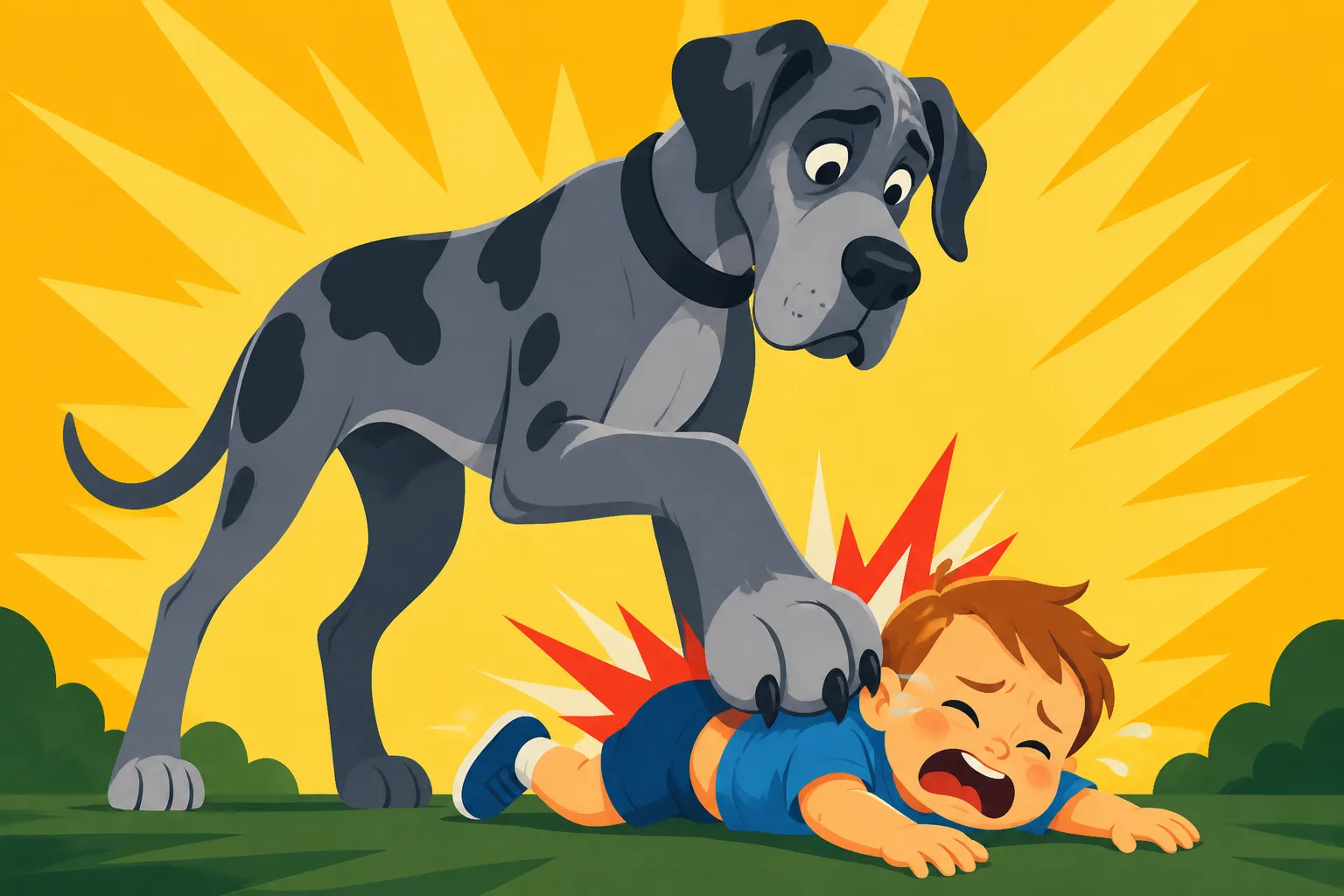
There's a specific kind of fear that washes over you when you have both a giant dog and a tiny human under the same roof. Great Danes, for all their "gentle giant" reputation, are massive animals, and their sheer size can lead to accidental bumps, knocks, and even stepping on a toddler. This guide aims to tackle this very real concern head-on, offering practical advice and strategies to ensure harmonious and safe living for your towering Dane and your little ones.
Understanding Why a Great Dane Might Accidentally Step on a Toddler
It's easy to assume that because a Great Dane is so sweet, they automatically know how to be delicate around a small child. The truth is, while their intentions are almost always pure, their understanding of their own body in relation to a wobbly, unpredictable toddler isn't always perfect. It’s not maliciousness; it’s often simply a lack of awareness and impulse control that needs careful management and training.
The "Gentle Giant" Misconception
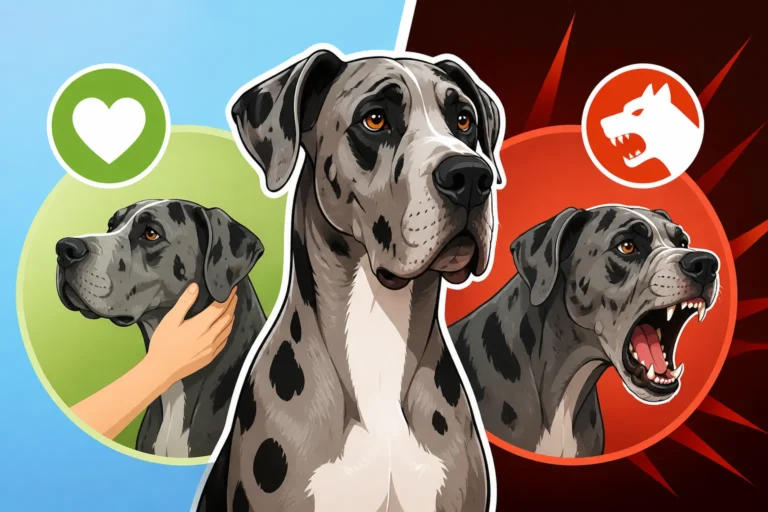
We love our Great Danes for their calm demeanor and affectionate nature, earning them the endearing moniker "gentle giants." And truly, many of them are incredibly gentle, especially with children they've grown up with. However, this "gentle" label can sometimes lull owners into a false sense of security. While a Great Dane might not intentionally harm a child, their massive weight and sheer bulk mean that even an accidental misstep or clumsy lean can have serious consequences for a small, fragile toddler. A swipe of a powerful tail, a sudden turn, or a playful nudge can send a little one sprawling, even if the dog meant no harm at all. It's crucial to remember that "gentle" doesn't automatically mean "spatially aware" or "always cautious."
Think about a full-grown male Great Dane, easily topping 150 pounds or more, standing next to a toddler who might weigh a mere 25-30 pounds. The size differential is staggering. If that Dane gets a burst of zoomies, or even just shifts its weight quickly to get a toy, the ground beneath a toddler's feet can become precarious. This isn't about blaming the dog; it's about acknowledging the inherent physical disparity and the very real potential for an unintended accident. Their size is part of their charm, but it's also their biggest management challenge when tiny humans are involved.
Lack of Spatial Awareness in Young Danes
Great Dane puppies, and even adolescent Danes, are like clumsy teenagers growing into their bodies. They're often gangly, uncoordinated, and genuinely haven't fully developed the spatial awareness needed to navigate tight spaces or the unpredictable movements of a toddler. Imagine a giant puppy trying to maneuver around a child who is crawling, running, or suddenly changing direction. The dog might simply not register the small human as a solid, vulnerable obstacle in their path, especially if they are focused on a toy, a treat, or a greeting.
This lack of awareness isn't unique to Great Danes, of course, but it's amplified by their sheer scale. A small terrier might accidentally trip a child, but the force behind a Great Dane doing the same is vastly different. It’s a learning curve for them, just as it is for us, to teach them where their paws are in relation to everything else. This is why starting early with spatial awareness exercises and teaching them controlled movements is so paramount, long before an incident can occur.
Exuberance and Overstimulation
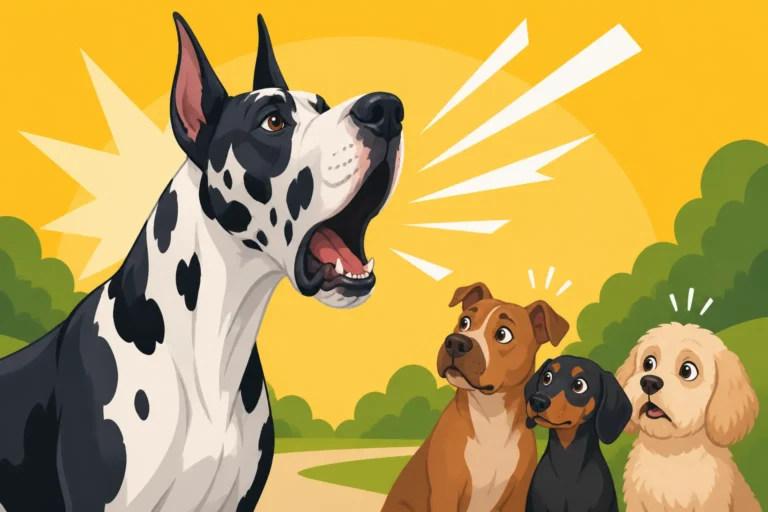
Even the calmest Great Dane can get swept up in a moment of excitement. A doorbell ringing, a new toy appearing, or the sheer joy of seeing their favorite human walk through the door can turn a placid dog into an excited, less-than-coordinated whirlwind. In these moments of high arousal, their natural caution can fly out the window, and they might charge forward, spin around, or leap without truly looking where they are going. A toddler, being low to the ground and often moving quickly, is directly in the potential line of fire.
Consider a scenario where your Great Dane is happily playing with a squeaky toy, tossing it around the living room. If a toddler suddenly decides to crawl into the dog's play space, the Dane, focused on its game, might not see the child and accidentally step on a hand or foot while retrieving the toy. These are the moments that keep Great Dane owners with toddlers awake at night – the unexpected, high-energy bursts where their gentle giants inadvertently become a hazard. Managing these bursts requires careful observation and proactive intervention to keep everyone safe.
Proactive Measures to Prevent Accidents
Prevention is always better than reaction, especially when it comes to the safety of our children and our beloved Great Danes. Establishing clear boundaries, consistent training, and active supervision are the cornerstones of a safe household. It’s a lot of work, but it’s absolutely worth it for peace of mind.
Early Training and Foundation Cues
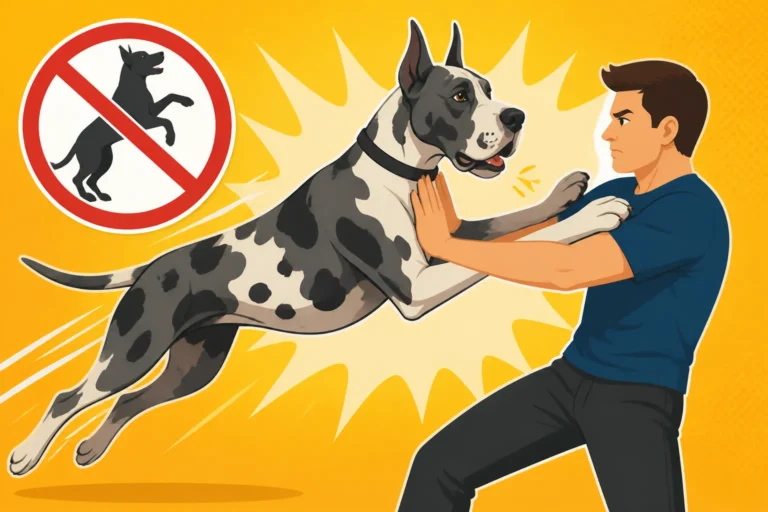
The moment you bring a Great Dane puppy home, or even an older rescue, the training needs to begin. Don't wait until they're 100 pounds and still jumping to teach manners. For a Great Dane, their physical presence demands impeccable obedience. Focusing on foundation cues like "sit," "stay," "down," and especially "off" is crucial. "Off" is vital for preventing them from jumping up on people, but also for getting them to move off of furniture or off of an area where a child might be. Teaching a solid "place" or "go to your mat" cue gives your dog a designated safe space to retreat to, which is invaluable when toddlers are active. You can read more about The Cues a Great Dane Needs Before Six Months to get a head start.
Consistency is key. Every member of the household, including older children, needs to reinforce these commands every single time. A Great Dane learns quickly, but they are also masters of figuring out who they can get away with things with. If one family member lets them jump, they'll assume it's okay. Consider professional training classes or online programs like those offered by BAXTER & Bella, which provide comprehensive guidance for puppy and adult dog training, often with a focus on real-world scenarios that include family dynamics. Investing in training early pays dividends throughout their life, preventing many common issues from escalating. The Manners a Great Dane Needs Before It Grows are not optional; they are essential for such a large dog.
Strict Supervision and Physical Barriers
This might sound obvious, but it bears repeating: never leave a Great Dane unsupervised with a toddler. Not for a second. Even if your dog is the sweetest, most well-behaved animal, the potential for an accidental injury is too high. This isn't just about direct interaction; it's about the dog simply moving around the house. Toddlers are unpredictable, and dogs can be easily startled or overstimulated.
Physical barriers are your best friends. Invest in sturdy baby gates that are tall enough and strong enough to withstand a Great Dane. You can find excellent options on Amazon that are pressure-mounted or hardware-mounted, depending on your needs. Create designated "safe zones" where the toddler can play freely without the dog, and vice-versa. A playpen for the toddler, or a sturdy crate for the dog, allows both to have their own space without constant worry. These boundaries are not just for separation; they teach both dog and child appropriate interaction and respect for personal space. Regularly practicing polite greetings and ensuring that the dog understands the "leave it" command when a toddler's toy or food is involved further strengthens these boundaries.
Teaching Children How to Interact
It's a two-way street when you have Great Danes and toddlers coexisting. While we train our dogs, we also need to teach our children how to behave around them. Toddlers, by nature, are curious, clumsy, and often lack impulse control. They might pull ears, grab tails, try to climb on the dog, or get too close to their face. This is not only risky for the child but can also stress out the dog, potentially leading to a defensive snap (which is rare for Danes but still possible) or simply them moving away quickly, potentially stepping on the child in the process.
Teach your children the "gentle hands" rule from a very young age. Show them how to gently pet the dog on the back or side, avoiding sensitive areas like the head or tail. Emphasize respecting the dog's space, especially when they are eating, sleeping, or in their designated "place." Never allow children to approach a dog that is resting or eating. Having a strong "leave it" command for your Great Dane is important, but so is teaching your child not to tease or bother the dog. Enroll in classes like "Dogs & Storks" or "Doggy & Baby Ready" if available in your area, which provide resources for preparing families with dogs for a new baby or managing existing interactions. This helps both species understand their roles and boundaries. You can find more comprehensive advice on Teaching Children to Move Around a Great Dane.
Managing Interactions and Creating Harmony
Beyond prevention, establishing structured interactions and maintaining a calm environment is crucial for a Great Dane and toddler household. It's about building a predictable routine that fosters respect and understanding between both parties.
Controlled Introductions and Playtime
Every interaction between your Great Dane and toddler should be carefully managed, especially in the early stages. Think of it as a carefully choreographed dance rather than a free-for-all. When they are together, it should always be under direct, active adult supervision. Keep initial interactions short and positive, ending before either party gets overstimulated or tired. Praise your Great Dane for calm behavior around the child, and praise your child for gentle interactions.
Avoid high-energy games like tug-of-war or fetch in the same space as a toddler. A Great Dane in full play mode can inadvertently barrel over a small child without meaning to. Instead, consider giving the dog a puzzle toy or a long-lasting chew in their "place" while the toddler is playing nearby, providing a calm, separate activity. If the dog shows any signs of stress, such as lip-licking, yawning, turning its head away, or a stiff body, immediately create distance. The goal is positive association, building a foundation of mutual respect and understanding.
Designated Safe Spaces for Both
Having dedicated safe spaces is non-negotiable. For your Great Dane, this often means a comfortable crate or a dog bed in a quiet corner of the house. This "den" should be a place where they can retreat, relax, and know they won't be bothered. Teach your toddler that when the dog is in its crate or on its bed, it's off-limits. This is the dog's personal sanctuary. A large, sturdy crate is essential for a Great Dane; you'll want to review Choosing a Crate a Great Dane Can Stand In to make sure you have the right size.
Similarly, create a safe zone for your toddler. This could be a playpen, a gated-off room, or even just a designated rug where they can play with their toys undisturbed. This allows the child to explore and play without the constant risk of being in the dog's path, especially during times when the dog might be more active or when you simply can't offer 100% focused supervision. This isn't about isolating either one, but about providing peace and security for both, reducing stress and the chance of accidental contact.
Consistent Reinforcement and Redirecting Behavior
Consistency is the bedrock of successful training, especially with a dog of the Great Dane's size. Every time your Great Dane exhibits calm, appropriate behavior around your toddler, reward it enthusiastically. This could be with a high-value treat, gentle praise, or a favorite toy. The more you reinforce the desired behavior, the more likely your dog is to repeat it. If your Dane starts to get too excited or shows signs of losing spatial awareness, immediately and calmly redirect them. This might mean calling them to their "place," asking for a "sit-stay," or engaging them with a calm, focused activity away from the child.
Avoid punishment, as it can create fear and resentment, potentially making the dog unpredictable around children. Instead, focus on positive reinforcement and redirection. If you notice your Great Dane heading towards your toddler in an exuberant way, intervene before they make contact. A firm "Easy" or "Slow" command, coupled with a gentle hand on their side to guide them, can help them learn to moderate their movements. Online training platforms, such as BAXTER & Bella, often provide step-by-step guidance on how to manage these exact scenarios, offering virtual support for consistent reinforcement. Regular, short training sessions throughout the day will reinforce these behaviors.
| Strategy | Dog's Behavior Goal | Toddler's Behavior Goal | Management Tools |
|---|---|---|---|
| Early Training | Responds to "sit," "stay," "place," "off," "leave it" | Understands gentle petting | Treats, clicker, consistent commands |
| Supervision | Remains calm, ignores child's movements | Plays safely, respects dog's space | Active adult presence |
| Physical Barriers | Has a safe, undisturbed retreat (crate) | Has a safe play zone (playpen/gated area) | Baby gates (Amazon), dog crate |
| Controlled Play | Engages in calm, structured activities | Learns to observe dog from a distance | Puzzle toys, long-lasting chews |
| Positive Reinforcement | Learns that calm behavior earns rewards | Learns that gentle interactions are good | High-value treats, praise, verbal cues |
| Redirection | Moves away from child when overstimulated | Learns to move away if dog becomes overstimulated | Leash guidance, "place" command, engaging toy |
What to Do If an Accident Happens
Even with the most meticulous planning and training, accidents can sometimes happen. When a Great Dane accidentally steps on a toddler, it's naturally terrifying and upsetting. Knowing how to react calmly and effectively in the immediate aftermath, and then learning from the incident, is vital for everyone's well-being.
Immediate Steps for the Child's Safety
First and foremost, your child's safety is the priority. If your Great Dane accidentally steps on your toddler, remain calm, but act swiftly. Immediately separate the dog and child. Move the dog to its crate or another secure room to prevent further interaction and allow you to fully focus on your child without distraction. Then, assess your child for any injuries. Even if they seem fine, check for scrapes, bruises, swelling, or any signs of pain or discomfort. A Great Dane's weight can cause internal injuries, even if no external marks are visible.
If there's any visible injury, or if your child seems unusually upset, listless, or is crying uncontrollably, seek medical attention immediately. Don't hesitate to contact your pediatrician or head to an urgent care facility or emergency room. Explain exactly what happened – that a large dog accidentally stepped on them – so medical professionals can assess for appropriate care, including possible X-rays. It's better to be overly cautious than to regret not getting them checked out.
Addressing the Dog's Role Without Blame
Once your child is safe and assessed, turn your attention to your Great Dane. It's crucial not to punish or scold your dog in this situation. The accident was almost certainly unintentional, and your dog will likely pick up on your distress without understanding why you're upset. Punishing them now could create fear, anxiety, or even aggression, making future interactions even more challenging. Instead, observe your dog's demeanor. They might seem confused, guilty, or even worried because they sense your emotional state.
Review the circumstances that led to the incident. Was the dog overstimulated? Was there a sudden noise? Was the toddler in a space they shouldn't have been? This isn't about assigning blame, but about understanding the trigger so you can prevent it from happening again. Gently reassure your dog once the immediate crisis has passed, letting them know they're not "bad," but reinforcing the boundaries you've established. This helps maintain their trust and confidence, which is vital for ongoing training and harmony in your home.
Re-evaluating Management Strategies
An incident like a Great Dane accidentally stepping on a toddler is a stark reminder that even the most careful plans can sometimes fail. Use it as a learning opportunity to critically re-evaluate your current management strategies. Were there gaps in supervision? Were the physical barriers sufficient? Was the dog getting enough appropriate exercise and mental stimulation? Could your child have been taught to respect boundaries more effectively?
This might mean increasing the amount of time your Great Dane spends in its crate or a separate room when the toddler is active, or installing more robust gates. It could involve intensifying your dog's training regimen, perhaps focusing more on precise "place" commands or emergency "stay" cues. You might also need to refine how you teach your child about dog safety, making sure they understand and consistently follow rules like "no bothering the dog while it's resting." Remember, the goal isn't to live in fear, but to implement practical, realistic strategies that create the safest possible environment for every member of your family. Staying vigilant and adaptable is key to coexisting happily with these magnificent, but immensely powerful, dogs.
Disclaimer
This article is for general informational purposes only and does not constitute professional advice. Laws, prices and regulations vary by location and change over time. Consult a qualified professional for guidance on your specific situation.