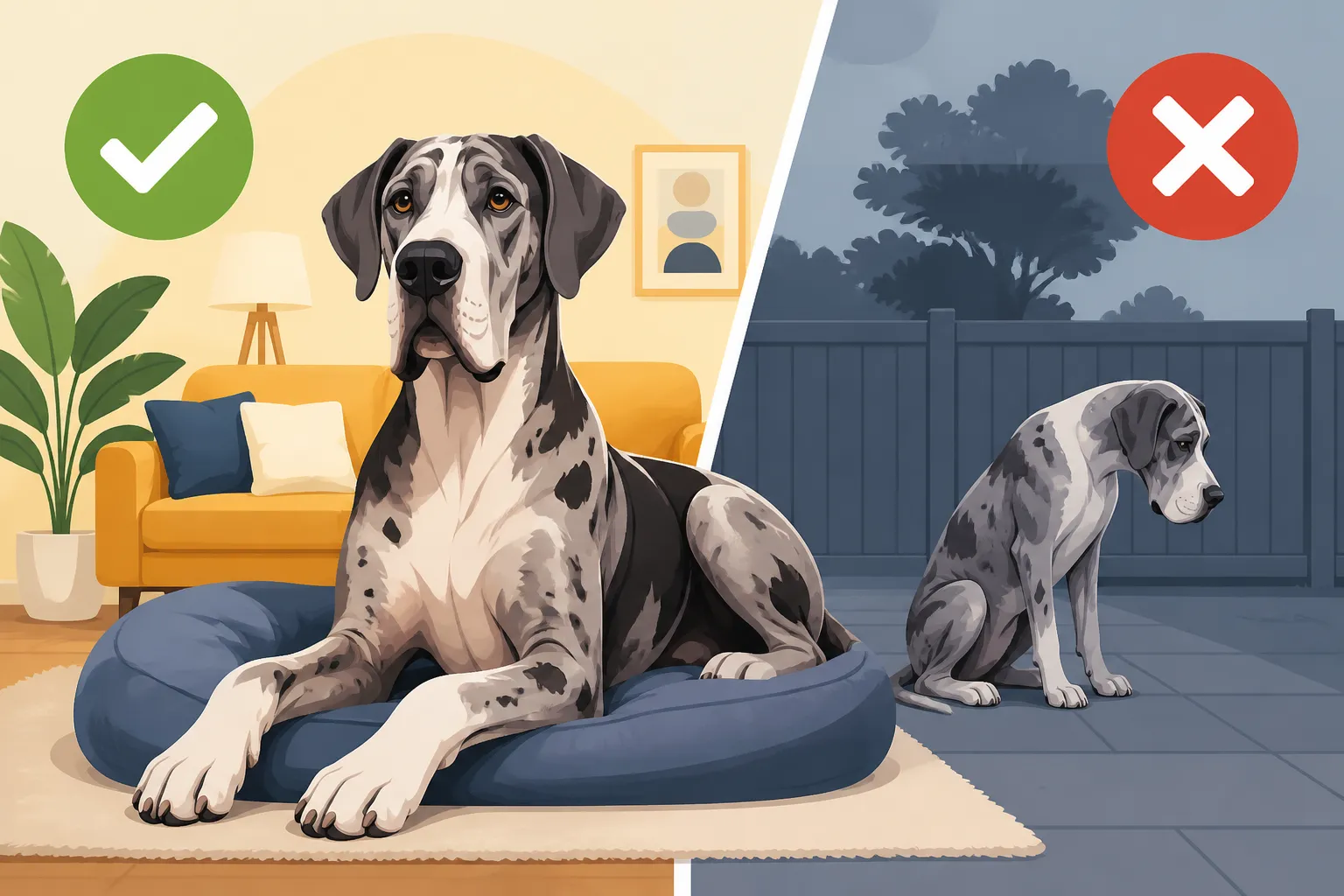
Whether a Great Dane Manages Without Outdoor Space
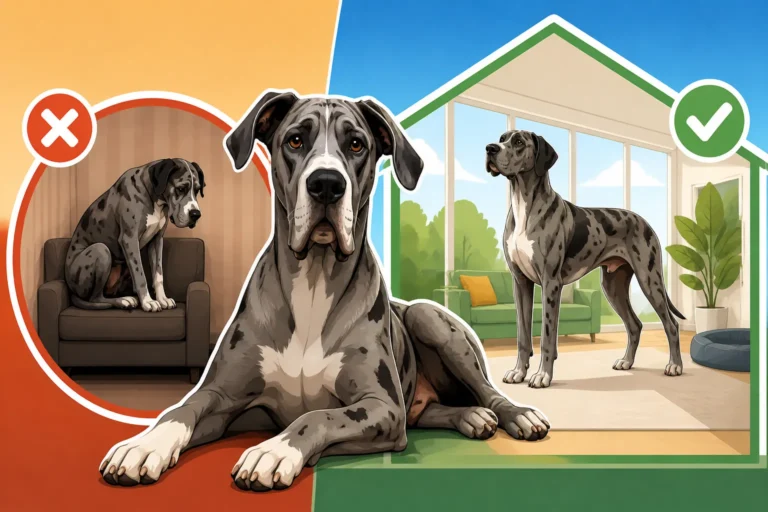
It’s a common image, isn't it? The majestic Great Dane, galloping across acres of open land, looking every bit the noble giant. And if you're considering bringing one of these magnificent dogs into your life, you might be stressing about whether your home has enough outdoor space for them to truly thrive. Many prospective owners feel a huge amount of guilt or worry that they can't provide a sprawling yard. But here's a little secret: while their size might suggest they need vast outdoor expanses, Great Danes are often surprisingly adept at living in smaller homes, even apartments, provided their core needs are met. This guide will help you understand the true space requirements of a Great Dane and how to ensure your "Apollo of Dogs" is happy and healthy, regardless of your backyard situation.
The "Gentle Giant" Misconception vs. Reality
When you see a Great Dane, their sheer scale naturally makes you think of wide-open spaces. It's easy to assume such a large animal must require an equally large territory to roam and expend energy. However, this often leads to a misunderstanding of their actual temperament and needs. The truth is, their nickname "gentle giant" isn't just about their demeanor with people; it also speaks to their surprisingly calm and often sedentary nature indoors.
Understanding the Great Dane Temperament Indoors
Great Danes are, at their heart, companion animals. They thrive on being close to their families and often prefer the comfort of a soft bed or a spot on the sofa to an outdoor adventure, especially if the weather isn't perfect. Picture this: a rainy afternoon, and your Great Dane is most likely curled up in a seemingly impossible knot on their favorite dog bed or draped across the sofa like a fur rug, utterly content. They aren't typically a breed that bounces off the walls with boundless energy inside the house. In fact, due to their size, their indoor movements tend to be slow and deliberate, designed to navigate tight spaces without causing too much chaos (most of the time, anyway!).
Their immense size means that vigorous indoor activity is often impractical and can even be dangerous, both for the dog and your household items. A Great Dane trying to zoom around a living room is asking for trouble – lamps will topple, vases will shatter, and small children might become accidental bowling pins. Because of this, they quickly learn to conserve their energy indoors, becoming quite the professional nappers and leaners. Their priority is usually proximity to their people, not square footage.
The Myth of the Backyard-Dwelling Great Dane
Despite their imposing size, Great Danes are fundamentally not outdoor dogs in the way some working breeds might be. Many people envision them happily spending hours alone in a large yard, supervising the territory. In reality, leaving a Great Dane outdoors for extended periods, especially without companionship, goes against their very nature. They are people-oriented dogs who can suffer from anxiety and loneliness if isolated.
Furthermore, their physical characteristics make them ill-suited for prolonged outdoor living. Great Danes have relatively thin coats with little undercoat, making them susceptible to extreme temperatures, both hot and cold. In winter, they'll shiver uncontrollably; in summer, they can overheat quickly. Their large paws and lean bodies are not built for insulation against the elements. If you left a Great Dane outside all day, you wouldn't be meeting their needs, you'd be putting them at risk and likely creating a very unhappy, potentially destructive, dog craving human interaction. They belong inside with their family, no matter how big or small your home is.
Essential Exercise Needs Beyond a Yard
Just because a Great Dane is comfortable indoors doesn't mean they don't need exercise. In fact, regular physical activity is crucial for their health, mental well-being, and joint longevity. The key distinction here is that this exercise comes from structured activity, not necessarily from free-roaming in a yard. A big yard can be a bonus, but it's rarely a substitute for dedicated walks and engagement.
Structured Walks and Leash Time are Non-Negotiable
A Great Dane, regardless of whether you have a small patio or a sprawling ranch, absolutely requires daily walks. These aren't just potty breaks; they are opportunities for physical exertion, mental stimulation from new sights and smells, and quality bonding time with you. Aim for at least two good walks a day, each lasting 20-40 minutes, depending on your dog's age, fitness level, and the weather. Young, growing Danes need their exercise carefully managed to protect their developing joints, but still need regular outings. How Much a Growing Great Dane Should Walk discusses this in more detail.
These walks are vital for maintaining a healthy weight, strengthening muscles, and keeping their minds engaged. Think of the simple joy a Dane gets from sniffing a new lamppost or greeting a friendly neighbor (politely, of course!). Without these excursions, even the calmest indoor Dane can become restless, bored, and prone to destructive behaviors. A quick dash around a small yard just doesn't offer the same mental and physical enrichment as a purposeful walk around the block or through a local park.
Mental Stimulation in Smaller Spaces
Exercise isn't just about moving the body; it's about engaging the mind. For Great Danes living without a large yard, mental stimulation becomes even more critical. Boredom is the enemy, and a bored Great Dane can quickly turn into a destructive one. Their size means that when they get bored, the damage they can inflict is substantial.
Incorporate short, daily training sessions into your routine. Even basic commands like "sit," "stay," "down," and "come" practiced consistently can be incredibly engaging for them. Puzzle toys, especially those that dispense treats, are fantastic for keeping their minds busy. You can find a great selection of durable, large-dog-appropriate puzzle toys and treat dispensers on platforms like Chewy. Interactive games, such as hide-and-seek with their favorite toy or a simple game of "find the treat" where you hide small, healthy snacks around the house, can also provide valuable mental exercise. Remember, a tired mind can be just as important as a tired body for a well-behaved Great Dane.
Adapting Your Home Environment for a Large Indoor Dog
The idea of a Great Dane in an apartment might seem laughable to some, but it’s entirely feasible with the right approach and expectations. It's not about the amount of space so much as how you manage the space you have. Preparing your home for a large indoor dog means thinking about their comfort, safety, and your sanity.
Space and Furniture Considerations
While a Great Dane doesn't need acres to roam indoors, they do need enough floor space to stretch out comfortably. This often means designating certain areas for them. A truly comfortable dog bed is not a luxury, but a necessity for their joint health. These aren't your average dog beds; you'll need substantial, orthopedic options that can support their immense weight and protect their elbows and hips. Orthopedic Beds a Great Dane Needs offers more insights here. Expect to invest in beds specifically designed for giant breeds, and you might even want a couple in different rooms.
Your furniture will also need to be considered. Great Danes love to lean, and sometimes they forget their own strength. Expect leaning against sofas, walls, and even you! Durable, sturdy furniture is a plus. If you're concerned about slobber or shedding on upholstery (and Great Danes do shed, despite their short coats), washable slipcovers are your best friend. Planning for their presence is key to harmonious living.
Managing Great Dane Size in Everyday Living
Living with a Great Dane in a compact space requires some logistical planning. Navigating narrow hallways or tight turns can be an amusing challenge. You’ll quickly learn to anticipate their movements and teach them commands like "back up" or "move" to help them get out of the way gracefully. Child-proof latches on lower cabinets become Great Dane-proof latches, as their long snouts are surprisingly dexterous.
Baby gates, often employed for toddlers, are also indispensable for managing a Great Dane, especially during puppyhood or if you need to keep them out of certain rooms. Just be sure to get gates that are tall and sturdy enough; a standard baby gate is often no match for a determined Dane. Crates and Gates Sized for a Great Dane can help you find appropriate options. Crates, if used for training, must also be industrial-strength and appropriately sized to allow them to stand up, turn around, and lie down comfortably. Many Great Dane owners find themselves purchasing specialized gates and crates from big-dog suppliers, often found on sites like Chewy, because standard pet store fare simply doesn't cut it. Furthermore, you'll need to consider what Replacing What a Great Dane Knocks Over might entail, and proactively secure or remove fragile items that are within their reach – and their reach is extensive!
| Aspect | With Large Outdoor Space | Without Dedicated Outdoor Space |
|---|---|---|
| Primary Exercise | Daily walks, supplemental free-play in yard | Daily structured walks (2x/day minimum) |
| Mental Stim. | Training, occasional yard games, human interaction | Daily training, puzzle toys, indoor games, human interaction |
| Potty Breaks | Easy yard access throughout day | Frequent, scheduled leash walks outside |
| Socialization | Still requires exposure to external world & other dogs | Essential to seek out external environments proactively |
| Home Prep | Durable furniture, designated indoor resting spots | Strategic furniture placement, robust dog beds, secure lower cabinets, wide walking paths |
| Boredom Risk | Moderate, if left alone for long periods | Higher, if mental & physical needs aren't met consistently |
The Social and Behavioral Aspects of Limited Outdoor Space
The perception that a large yard equals a well-adjusted dog can be misleading, especially for a breed like the Great Dane. A yard, no matter how big, cannot replace critical socialization and mental engagement. In fact, relying solely on a yard for a Great Dane's "social life" or stimulation can actually be detrimental.
Importance of Socialization Without a Private Dog Park
One of the most crucial elements for a well-behaved and confident Great Dane is extensive socialization, starting from puppyhood. A large yard might give your dog space, but it doesn't expose them to the outside world, different people, other dogs, strange noises, or varied environments. These are all vital experiences that help a Great Dane grow into a stable, non-reactive adult. Socializing a Great Dane Puppy Early cannot be emphasized enough.
For Danes in smaller homes, this means you, the owner, become the primary facilitator of these experiences. Regular trips to dog-friendly parks (always on-leash, especially with their size), outdoor cafes, or even just walks in busy urban areas are invaluable. Puppy classes and obedience training are not just for manners; they're prime opportunities for supervised social interaction. The quality of their socialization experiences far outweighs the quantity of square footage they have at home. A Great Dane that's only ever experienced its own backyard might be fearful or overly excited when encountering new situations, which, given their size, can be a significant challenge to manage.
Preventing Boredom and Destructive Behavior
A Great Dane that is physically and mentally under-stimulated, regardless of how much space they have, is a recipe for disaster. This is especially true in homes without a large yard where boredom might seem more likely to set in. If a Great Dane isn't given appropriate outlets for their energy and intelligence, they will find their own entertainment, and it usually involves things you'd rather they didn't. This could mean chewing on furniture, digging at carpets, excessive barking, or even self-mutilation due to anxiety.
The key to preventing these issues is consistency in their routine: regular walks, engaging playtimes, and ongoing training. Think about providing a variety of chew toys – again, durable, large-breed appropriate toys are crucial. Rotation helps keep things interesting. Even simple games like fetching a soft toy down a hallway can provide a burst of activity and engagement. Remember, a Great Dane's mental and emotional needs are just as significant as their physical ones, and addressing them proactively is far easier than trying to correct ingrained destructive habits.
Health Implications and Preventative Care
Living without a sprawling outdoor space means you need to be particularly diligent about your Great Dane's health and preventative care. Their size makes them prone to certain conditions, and lack of appropriate exercise or an unsuitable home environment can exacerbate these issues.
Weight Management and Joint Health
One of the biggest concerns for any Great Dane, especially those with limited room for spontaneous bursts of energy, is weight management. An overweight Great Dane is at a significantly higher risk for a host of health problems, particularly concerning their joints. Their large frames already put immense stress on their hips, elbows, and other weight-bearing joints. Adding extra pounds drastically increases this burden, leading to premature arthritis, pain, and reduced mobility. Keeping a Great Dane Lean for Its Joints is absolutely critical for their long-term well-being and quality of life.
This means being incredibly mindful of their diet. Portion control is essential, as is choosing high-quality food appropriate for giant breeds. Avoid free-feeding and be strict with treats. Regular, consistent exercise, as discussed, is the other half of the equation. Walks help burn calories and build muscle, which in turn supports their joints. If your Great Dane isn't getting enough activity, you might need to adjust their food intake even further to prevent weight gain.
Environmental Enrichment for Well-being
Environmental enrichment isn't just about toys; it's about creating an environment that stimulates all of your Great Dane's senses and provides comfort. In a smaller home, this means paying extra attention to their comfort zones. Ensure they always have access to fresh water in bowls large enough for their colossal heads and thirst. Provide a variety of comfortable, strategically placed beds to prevent pressure sores or elbow hygromas, which can result from consistently lying on hard surfaces.
Additionally, consider using sound enrichment, like playing calming music, especially if you're out of the house for periods. Safe, interactive toys that challenge them mentally can prevent boredom and anxiety. Regular veterinary check-ups are also crucial to catch any potential health issues early, which is especially important for a breed prone to serious conditions like bloat or heart disease. Great Dane Vet Costs Year by Year can be substantial, so preventative care and maintaining a healthy lifestyle are your best defenses. Remember, a Great Dane's overall well-being is a combination of physical health, mental stimulation, and emotional security, all of which you can provide beautifully, regardless of your backyard size.
Practical Tips for Apartment or Small-Home Great Dane Owners
Making a smaller space work for a Great Dane isn't just about adjusting the physical environment; it's also about establishing smart routines and maximizing every opportunity for engagement. With intention and consistency, you can create a thriving home for your gentle giant.
Crafting a Daily Routine
Consistency is a Great Dane's best friend, especially when living in a smaller footprint. A predictable daily routine helps them feel secure and understand what's expected. This means scheduled potty breaks, meal times, walk times, and dedicated play or training sessions. Don't underestimate the power of routine in managing a giant breed.
Here’s a sample routine for a Great Dane in a smaller home:
- Early Morning (6:00-7:00 AM): Potty break, followed by a brisk 30-minute walk. This helps expend initial energy and allows for sniffing new smells.
- Breakfast (7:00-7:30 AM): Serve their meal in a slow feeder bowl to prolong the activity and aid digestion.
- Mid-morning/Lunch (if someone is home): Quick potty break and a short indoor training session (5-10 minutes) or a puzzle toy to keep them engaged.
- Afternoon (4:00-5:00 PM): Another substantial 30-40 minute walk, perhaps to a different route for variety.
- Dinner (5:00-6:00 PM): Mealtime, again with a slow feeder.
- Evening (before bed): Final potty break, quiet cuddle time, maybe a long-lasting chew toy.
This structured approach ensures they get their needs met, reducing the likelihood of boredom-driven destructive behavior.
Maximizing Limited Space
Living with a Great Dane means you become quite adept at spatial awareness. To make your limited space feel larger and more functional for both you and your dog, consider these strategies:
- Designated "Dane Zones": Give your Great Dane a specific, comfortable spot in each main living area where they can relax. This might be a large orthopedic bed in the living room and another in your bedroom. This teaches them where to settle and prevents them from sprawling across critical pathways.
- Strategic Furniture Placement: Arrange furniture to create clear walking paths, allowing your Dane to move around without bumping into things or getting stuck. Push sofas against walls to maximize open floor space.
- Durable & Washable Textiles: Invest in washable rugs, slipcovers, and dog beds. Great Danes drool, they shed, and they track in dirt. Easy-to-clean fabrics will save you endless frustration.
- Vertical Storage: Use shelves and wall-mounted storage to keep items off the floor and out of reach of curious noses and swishing tails. This also frees up precious floor space.
- Large, Appropriate Gear: Ensure all your dog's gear is appropriately sized and durable. This includes water bowls (consider two very large ones to prevent spills and ensure constant hydration), food bowls (slow feeders are excellent), and especially toys that they cannot easily ingest or destroy. You'll find a wide range of these specialized items on pet supply sites like Chewy that cater to giant breeds.
- Ramps and Steps: For older Great Danes, or simply to protect joints, consider ramps for getting into cars or onto elevated beds. This can be especially helpful if they start to show signs of arthritis. Mobility Aids for a Failing Great Dane can be lifesavers as they age.
By being mindful and proactive, your Great Dane can absolutely thrive without a massive backyard. Their happiness and health stem from consistent care, quality interaction, and a well-managed routine, not just square footage.
Disclaimer
This article is for general informational purposes only and does not constitute professional advice. Laws, prices and regulations vary by location and change over time. Consult a qualified professional for guidance on your specific situation.