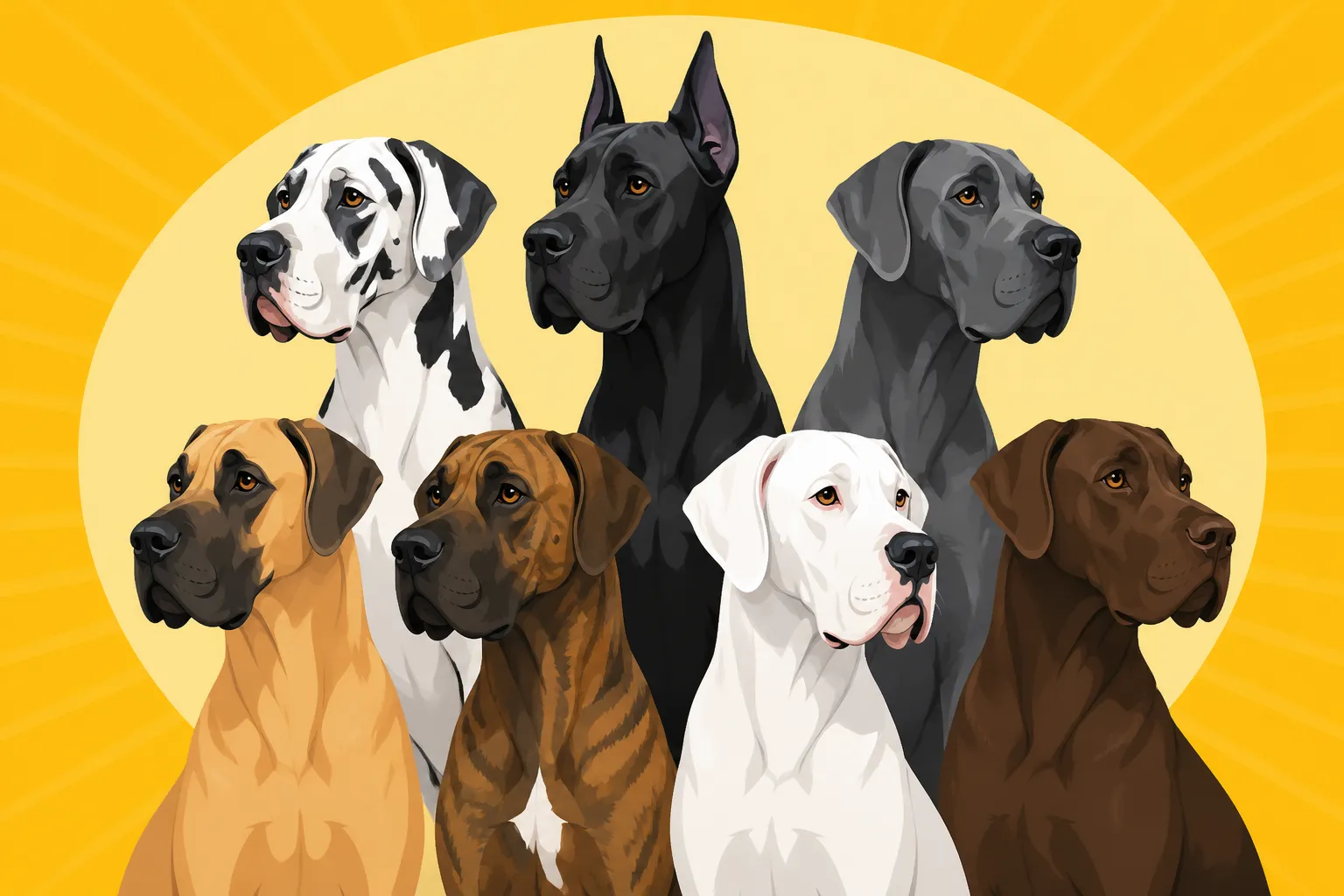
The Seven Great Dane Colors
Choosing a Great Dane is an exciting journey, but when you start looking at puppies, the sheer variety of colors can be overwhelming. You might hear about "rare" colors or see intriguing patterns, leading to confusion and sometimes even pushing you toward a less reputable breeder. This comprehensive guide is here to walk you through the seven officially recognized Great Dane colors, helping you understand their unique traits, genetic backgrounds, and what to look for in a healthy, well-bred dog.
Understanding the Great Dane Color Standard
When you’re seeking out a Great Dane, whether for companionship, show, or sport, the color standards are more than just about aesthetics. They represent a commitment to the breed's health, temperament, and historical lineage. It's easy to get swept up in the beauty of a particular hue, but understanding the underlying genetics and breed club guidelines is crucial for making an informed choice.
Why Standards Matter for Health and Temperament
Breed standards exist for a reason, and it’s not just to ensure dogs look pretty in the show ring. These standards are developed over many years by dedicated fanciers and veterinarians who understand the breed’s unique predispositions. For Great Danes, this means recognizing which color genetics are tied to specific health concerns. For example, certain dilute genes or patterns, when improperly bred, can lead to issues like deafness or vision problems. A reputable breeder adheres strictly to these standards because they are directly linked to the long-term well-being of the puppies they produce. They're trying to breed out inherited health problems, not accidentally breed them in through novel colors. A dog that doesn't meet the standard might still be a wonderful pet, of course, but a breeder who disregards color standards altogether might also be cutting corners on health screening or temperament testing.
Temperament is another critical factor often linked to responsible breeding. Great Danes are known as "gentle giants," a reputation earned through generations of careful selection. When breeders focus solely on producing unusual colors without considering the comprehensive standard, they risk overlooking vital aspects of health and personality. The goal is always to produce a dog that is not only beautiful but also robust, stable, and true to the breed's inherent gentle nature. The Great Dane the Show Ring Is Looking For helps outline these expectations beyond just color.
The Role of the American Kennel Club AKC and Breed Clubs
The American Kennel Club (AKC) and the Great Dane Club of America (GDCA) are the official bodies that set and maintain the breed standard in the United States. These organizations define what constitutes a correct Great Dane, including the acceptable colors and patterns. For a color to be "officially recognized," it means it falls within these established guidelines, having been historically present in the breed and generally not associated with severe, avoidable genetic health issues when bred responsibly.
These clubs provide resources and education for breeders and owners, emphasizing the importance of ethical breeding practices. They outline specific disqualifications for colors or markings that indicate poor breeding choices or health risks. For example, excessive white on certain colors or "off-standard" colors might be perfectly fine for a pet, but they would be disqualified in the show ring, signaling that a breeder who consistently produces them might not be prioritizing the health and integrity of the breed. This guidance is meant to protect the breed as a whole, ensuring its future health and stability.
Beyond the "Rare" Color Trap
Beware the siren call of "rare" Great Dane colors. While it's natural to be drawn to something unique, many so-called "rare" colors are simply combinations that fall outside the breed standard. In some cases, these colors are created by breeding dogs with genetic markers that, when combined, can lead to serious health problems like deafness, blindness, or other structural defects. For instance, some unusual white markings or heavily diluted colors can indicate a higher risk for these issues.
A reputable breeder will always prioritize health, temperament, and adherence to the breed standard over novelty. They will be transparent about their breeding practices and the health clearances of their parent dogs. If a breeder is emphasizing a color as "rare" and charging a premium for it, especially if it's not one of the seven recognized colors, it should be a major red flag. Always ask to see health testing documentation for the parents, regardless of color. Remember, Whether a Rare Colored Great Dane Is Worth Chasing often leads to heartache and significant vet bills down the line.
Fawn: The Classic Golden Hue
Fawn is perhaps the most iconic and recognizable Great Dane color, instantly bringing to mind images of majestic, golden-coated dogs with dark, intelligent eyes. It’s a truly classic look that embodies the nobility of the breed.
The Warmth of a Fawn Coat and Its Black Mask
A fawn Great Dane is characterized by its rich, golden-yellow coat, which can range from a light, almost creamy tan to a deep, lustrous gold. The defining feature that completes this regal look is the distinct black mask that covers the muzzle and often extends up around the eyes. This mask gives the fawn Dane an expressive and striking face. It's a hallmark of the color and a required trait in the breed standard. Without that black mask, a fawn Dane wouldn't be considered correct in the show ring. The Fawn Great Dane and Its Black Mask is crucial to the overall appearance.
Imagine watching your fawn Dane stretch out in a sunbeam, their golden fur gleaming, the black of their mask creating a beautiful contrast. It’s a sight that never gets old. This combination makes them highly photogenic and truly stand out, whether they're lounging on a sofa or striding confidently on a walk. The depth of color can vary, but the warmth of the golden tones is always present, making them look perpetually cheerful and inviting.
Variations in Fawn Shading
While the overall description of fawn is golden-yellow with a black mask, there's a lovely spectrum of shading within this color. You'll see Danes that are a very pale, almost light beige fawn, while others boast a deep, burnished copper. Some fawn Danes might also have subtle black tipping on their guard hairs, especially along their topline, which can give their coat an added dimension without being considered brindle.
These variations are perfectly acceptable within the breed standard and are often a matter of personal preference for owners. One fawn might look almost creamy, while another is a vibrant caramel. What remains consistent across all fawn variations is the underlying golden hue and the mandatory black mask. These subtle differences ensure that even within the "fawn" category, each Great Dane has its own unique charm and appearance.
Grooming a Fawn Great Dane
Grooming a fawn Great Dane is generally straightforward, as their short, smooth coat doesn't require extensive daily maintenance. However, like all Great Danes, they do shed, and regular brushing is key to keeping their coat healthy and minimizing loose hair around your home. A good rubber curry brush or a shedding blade works wonders on their dense, short fur, especially during seasonal shedding cycles. You can often find excellent grooming tools on sites like Chewy that are specifically designed for short-coated breeds, making the job much easier.
Beyond brushing, occasional baths are necessary to keep their coat clean and shining. Because of their sheer size, bathing a Great Dane at home can be a bit of an adventure, often requiring a walk-in shower or even a kiddie pool outside! Pay attention to their black mask area, ensuring it stays clean, as any debris can detract from their distinguished look. Their short coats are also relatively easy to keep clean in between baths with a damp cloth or grooming wipe. The Brush That Covers a Great Dane Fastest can make this task much more efficient.
Brindle: Stripes of the Wild
If you're looking for a Great Dane with a truly unique and dynamic appearance, the brindle pattern is an absolute showstopper. It evokes a sense of strength and wildness, while still maintaining that undeniable Great Dane elegance.
The Distinctive Brindle Pattern
Brindle Great Danes feature a striking pattern of black stripes over a fawn, golden-yellow, or orange-yellow base coat. Imagine tiger stripes, but on a majestic Great Dane! The stripes should ideally be distinct, running across the body, and not so heavy that they obscure the fawn background color. The intensity and distribution of these stripes can vary greatly from dog to dog, making each brindle Dane truly one-of-a-kind. Some will have very fine, delicate stripes, while others might have bold, wide bands of black.
This pattern is genetically related to fawn, meaning that brindle Danes also typically have a black mask, just like their fawn counterparts. This black mask beautifully complements the black stripes, tying the whole look together. Brindle Striping on a Great Dane is a testament to the breed's diverse genetics and creates a stunning visual effect that sets them apart from solid-colored Danes.
How Brindle Differs from Other Patterns
It’s important to understand that brindle is a specific pattern of stripes, not just a mixed-color coat. It's distinct from, say, a heavily marked Harlequin or a mottled Merle. The key is the underlying fawn base with clear black stripes. If the markings were irregular patches rather than stripes, or if the base color was different, it wouldn't be a brindle.
Sometimes, a poorly marked brindle might have stripes that are too "washed out" or so dense that the dog appears almost black with faint fawn undertones. While still technically brindle, the ideal is a clear distinction between the fawn base and the black stripes. The pattern should be evenly distributed throughout the body, providing that classic striped appearance that makes brindle Danes so eye-catching.
Finding a Well-Marked Brindle
When selecting a brindle Great Dane, a well-marked specimen will exhibit clear, distinct black stripes against a clean, rich fawn base. The stripes should not be muddy or indistinct. You want to be able to clearly see both the fawn and the black. The black mask is also a must for a correct brindle. Look for a balance in the markings; neither too few nor too many stripes. A dog with too few stripes might look like a slightly "dirty" fawn, while one with too many might appear almost solid black.
Reputable breeders will be able to show you the parents and describe the lineage, often pointing out the quality of the brindle markings in their lines. They understand the nuances of the pattern and strive for well-defined, attractive brindles. As with any color, focus on the overall health and temperament of the puppy first, but appreciate the artistry of a truly striking brindle coat.
Blue: The Steel Gray Elegance
For those who are drawn to a more subtle, sophisticated aesthetic, the blue Great Dane offers an undeniable elegance. This color, a stunning shade of steel gray, often has a deep, almost velvety quality that is truly captivating.
The Genetic Basis of the Blue Color
The blue color in Great Danes isn't actually blue in the traditional sense; it's a dilute form of black. Genetically, the black pigment is present, but a recessive "dilution" gene acts upon it, turning what would normally be black into a beautiful slate or steel gray. This dilution gene is responsible for similar colors in other breeds, creating a soft, cool tone that is incredibly distinctive. The blue can range from a very light, almost silvery gray to a deep, dark charcoal.
Just like with black Danes, blue Great Danes should ideally be a solid color, without any white markings beyond a very small patch on the chest and toes (which is acceptable but not preferred in the standard). Their nose and eye rims should also be slate gray, matching their coat color, rather than black. This consistency in pigmentation is part of what makes a blue Dane so striking and cohesive in appearance. What Dilution Does to a Blue Great Dane is a fascinating look into the genetics behind this color.
Health Considerations for Blue Danes
While blue is a recognized and beautiful color, there are specific health considerations related to the dilution gene, though these are typically more pronounced in certain other breeds and less common in responsibly bred Great Danes. The primary concern often linked to dilute colors in general is Color Dilution Alopecia (CDA), a condition that can cause hair thinning, brittle fur, and skin issues. However, CDA is relatively rare in Great Danes compared to some other breeds that carry the dilution gene.
A reputable breeder of blue Great Danes will be aware of these potential issues and will not breed dogs showing signs of skin or coat problems. They will also prioritize overall health testing, ensuring that the blue parent dogs are free from other common Great Dane ailments like heart disease or hip dysplasia. It's always crucial to choose a breeder who prioritizes health over color, ensuring your blue Dane has the best chance at a long, healthy life.
Caring for a Blue Great Dane's Coat
Caring for a blue Great Dane's coat is much like caring for any other short-coated Dane. Regular brushing will keep their fur sleek and reduce shedding. While the coat itself is generally hardy, paying attention to skin health is always wise, especially with dilute colors, just in case any sensitivity arises. Good nutrition, including omega fatty acids, can also contribute to a healthy, lustrous coat.
If you notice any unusual thinning, dullness, or flaky skin on your blue Dane, it’s always best to consult with your veterinarian. This could be anything from a simple allergy to a nutritional deficiency or, in very rare cases, an indication of CDA. Keeping their skin clean and moisturized with dog-specific products, which you can easily find at a pet supply store like Chewy, can also help maintain coat health and prevent dryness, especially in harsher climates.
Black: The Sleek and Striking Dane
The solid black Great Dane is a picture of power and sophistication. There's an undeniable gravitas and classic beauty to a Dane clad in a deep, gleaming black coat, making them a truly imposing and elegant presence.
The Depth and Shine of a Solid Black Coat
A truly stunning black Great Dane boasts a deep, jet-black coat that appears solid and rich from nose to tail. The ideal black Dane has a coat that shines with a healthy luster, reflecting light beautifully. There should be no hints of red, brown, or gray in the coat – it should be uniformly black. This depth of color makes them incredibly striking, especially when they move with their characteristic powerful, graceful stride.
The black coat can absorb sunlight, making them feel warmer in direct sun than lighter-colored Danes, something to keep in mind during summer months. However, the visual impact of a well-conditioned, solid black Great Dane is simply breathtaking. They carry themselves with an air of quiet dignity, and their dark eyes often seem to hold a profound wisdom.
What Defines a "True" Black Great Dane
For a black Great Dane to meet the breed standard, the color must be solid black, meaning no brindle stripes, no merle patching, and minimal white markings. A small patch of white on the chest and white on the toes are generally permissible, but any extensive white on other parts of the body would be considered a fault in the show ring. The nose, eye rims, and toenails should also be black, consistent with the rich pigmentation of their coat.
Sometimes, you might see "faded" black Danes, where the coat has a reddish or brownish tint, especially if exposed to a lot of sun or if their nutrition isn't quite right. This isn't the ideal deep, true black. A responsible breeder will strive for solid, intense black pigmentation in their lines, ensuring the "true" black Great Dane standard is upheld. Black and Mantle Great Danes Compared highlights the key differences between these two dark-coated varieties.
Black Danes in the Show Ring
In the show ring, a black Great Dane is judged on the intensity and uniformity of its color, alongside all the other conformational and temperament requirements. Judges look for that rich, glossy, jet-black coat without any off-colors or excessive white. A faded, rusty black or a black with significant white markings would be considered a fault.
Beyond color, a black Dane in the ring must exemplify the breed's standard for head type, body structure, gait, and temperament. Their powerful, balanced movement is especially striking against their dark coat. Ultimately, while the color is a factor, it’s the entire package of a healthy, well-conformed, and confident Great Dane that earns accolades.
Mantle: The Tuxedo of the Dane World
Mantle Great Danes are often described as wearing a "tuxedo" due to their distinctive black and white pattern. This elegant combination creates a sophisticated and balanced appearance that is both classic and eye-catching.
The Classic Black and White Mantle Pattern
The mantle pattern is a very specific arrangement of black and white, resembling a blanket or cape of black over the body, with distinct white markings. The ideal mantle Dane has a solid black body, much like a black Great Dane, but with a full white collar around the neck, a white chest, white on the legs, and a white blaze on the face. The tail should have a white tip. This creates a striking contrast between the dominant black and the crisp white accents.
Think of it as a solid black dog, but someone carefully draped a white scarf around its neck, painted its chest and legs white, and added a splash of white to its face and tail tip. This specific pattern is what defines a mantle and makes it so visually appealing.
Understanding the Mantle Markings
The exact distribution and clarity of the white markings are critical for a correct mantle. The white collar should be complete, encircling the entire neck, though slight breaks are sometimes seen. The white blaze on the face can vary in width, but it should be present. The white on the legs should extend upwards, creating distinct "socks" or "stockings." The white tip on the tail is another key feature.
Any variations where the white is too extensive, or the black 'mantle' is broken up by patches of white on the body, would lean towards a different pattern, like a heavily marked Harlequin, or be considered a fault. The beauty of the mantle lies in the clear definition between the two colors and the consistent pattern.
Mantle Versus Other Black and White Combinations
Mantle is often confused with Harlequin, but they are distinctly different. A Harlequin has irregular black patches on a pure white background, whereas a Mantle has a solid black body with specific white trim. Think of it this way: a Harlequin is primarily white with black patches, while a Mantle is primarily black with white trim.
It's also different from a simple "black with white markings" where the white isn't in the specific collar-chest-legs-face blaze pattern. The breed standard is quite precise about the mantle pattern, requiring that clear, consistent "tuxedo" look. Knowing these distinctions helps appreciate the unique beauty of each color and identify accurately bred dogs. For a visual comparison, Black and Mantle Great Danes Compared can be very helpful.
Harlequin: The Patchwork Masterpiece
The Harlequin Great Dane is arguably one of the most visually stunning and unique color patterns in the dog world. Their mosaic of black patches on a pure white background makes each dog a living work of art.
The Striking Irregular Patches of a Harlequin
A Harlequin Great Dane features irregular, torn black patches scattered across a pure white body. The patches should be distinctly black, not blue or gray, and should appear as though they've been randomly splattered onto the white canvas. The base color is critical: it must be a pure, brilliant white, not cream or off-white. This contrast is what makes the Harlequin so arresting.
The patches themselves should be torn or jagged at the edges, not round or blocky, which gives them their distinctive "harlequin" appearance. There's no set rule for how many patches, or where they should be, but a good distribution across the body is preferred. What Makes a Harlequin Great Dane Correct is a deep dive into these intricate markings.
The Importance of Pigmentation in Harlequins
Beyond the black patches, proper pigmentation is crucial for Harlequin Danes, particularly around the eyes and nose. The eye rims should ideally be black, and the nose should be solid black. This intense pigmentation helps prevent health issues sometimes associated with extreme white markings. For instance, pale or "butterfly" noses (pink or mottled) are considered a fault, as are blue eyes, which, while striking, can sometimes be linked to vision problems.
The pure white background also means that genetic factors related to deafness need to be carefully considered in breeding. While a stunning color, the genetics involved in producing a correct Harlequin require careful, ethical breeding to ensure healthy puppies.
Breeding Challenges and Health for Harlequins
Breeding Harlequins is one of the most challenging endeavors for Great Dane breeders due to the complex genetics involved. The Harlequin gene is a modifier of the merle gene. To produce Harlequins, a dog must carry both the merle gene and the Harlequin gene, which often requires careful pairing. When bred improperly, especially "merle to merle" or combinations that lead to an excess of white, there's a higher risk of producing "double merles" or white Danes. These puppies often have severe health issues, including deafness and blindness.
A responsible Harlequin breeder will prioritize health clearances, genetic testing, and never breed merle to merle. They will be transparent about their breeding practices and the potential for "unmarked" whites or heavily patched merles in their litters. The goal is to produce healthy, well-adjusted dogs, not just a specific color. Why a White Great Dane Is Often Deaf is an important read for anyone considering a Harlequin or merle Great Dane.
Merle: The Recently Recognized Pattern
Merle Great Danes have a distinct, mottled appearance, often described as a swirling mix of gray, black, and sometimes white. This captivating pattern, though historically present, has only recently gained full recognition in the AKC breed standard.
The Swirled Gray and Black Merle Pattern
Merle Great Danes typically feature a base coat that is a dilute black (gray) or fawn, covered with irregular patches or swirls of darker black or brown. The overall impression is one of a mottled, speckled, or marbled coat. The patches can vary in size and intensity, creating a unique pattern on each dog. Unlike brindle, which has distinct stripes, merle is more of a splotchy, blended effect.
The eyes of a merle Dane can sometimes be blue or have flecks of blue within a brown eye, which is a common characteristic of the merle gene in many breeds. While visually striking, this can sometimes be associated with specific health risks if not bred carefully. Merle Great Danes Since 2019 details its journey to full recognition.
The Genetics of Merle and Associated Risks
The merle pattern is caused by the merle gene, which is an incompletely dominant gene that dilutes pigment in an irregular fashion. While beautiful, the merle gene carries significant health risks when two merle-carrying dogs are bred together. This is known as a "double merle" breeding, and it has a high probability of producing puppies with severe health defects, including profound deafness, blindness, and other ocular or auditory abnormalities. These issues stem from the merle gene's effect on pigment cells and nerve development.
For this reason, ethical breeders will never perform a "merle to merle" breeding. A merle Dane should only be bred to a non-merle (e.g., black, fawn, or brindle) to produce healthy puppies. This helps ensure that the stunning merle pattern can be enjoyed without risking the well-being of the dogs. Why Two Merle Great Danes Are Never Bred cannot be stressed enough – it is a cornerstone of responsible breeding for this color.
Ethical Breeding Practices for Merle Danes
Given the potential health risks associated with the merle gene, ethical breeding practices are paramount for merle Great Danes. Responsible breeders meticulously plan their pairings, ensuring that at least one parent is not a merle. They conduct genetic testing to confirm the merle status of their breeding dogs and avoid any combinations that could produce double merles.
They also provide comprehensive health clearances for their parent dogs, just as they would for any other color, checking for common Great Dane health issues like cardiac problems, hip and elbow dysplasia, and thyroid conditions. If you're considering a merle Great Dane, always seek out a breeder who is knowledgeable about merle genetics, transparent about their breeding program, and prioritizes the health and welfare of their dogs above all else. This includes educating potential owners about the responsibilities that come with owning a merle Dane.
Table of Great Dane Colors and Key Characteristics
To help you visualize and remember the distinctions between the seven recognized Great Dane colors, here's a quick reference table. This summarizes their main features, which are vital for understanding the breed standard.
| Color | Primary Coat Description | Key Markings/Features | Genetic Origin | Special Considerations |
|---|---|---|---|---|
| Fawn | Golden-yellow base coat | Distinct black mask on muzzle/eyes | Base color | Classic, widely recognized |
| Brindle | Golden-yellow base with black stripes | Black mask, black stripes | Base color + modifier | Striped pattern, unique look |
| Blue | Solid steel gray to dark charcoal | Slate gray nose, eye rims | Dilution of black | Generally healthy if responsibly bred |
| Black | Solid, glossy jet black | Minimal white on chest/toes allowed | Base color | Striking, powerful appearance |
| Mantle | Solid black body with white "tuxedo" markings | Full white collar, white chest, white legs, white blaze, white tail tip | Black with specific white pattern | Elegant, distinct black/white contrast |
| Harlequin | Irregular, torn black patches on pure white body | Pure white base, black patches, black nose/eye rims | Merle gene + Harlequin modifier | Pure white background crucial, careful breeding needed |
| Merle | Mottled, speckled, or marbled gray/black with darker patches | Swirling gray/black pattern, can have blue eyes | Merle gene | Avoid "merle to merle" breeding due to health risks |
Choosing Your Great Dane Color with Confidence
Navigating the world of Great Dane colors can be a journey of discovery, but armed with the right knowledge, you can make a confident and informed decision. Each of the seven recognized colors offers its own unique beauty and charm, from the regal fawn to the striking harlequin.
Remember that color is just one aspect of what makes a Great Dane magnificent. Far more important are health, temperament, and whether the puppy comes from a responsible breeder who performs The Health Testing a Great Dane Breeder Owes You. A good breeder will prioritize the overall well-being of their dogs, regardless of their coat color, ensuring they are free from hereditary diseases and have the loving, stable temperament Great Danes are famous for.
Spend time researching breeders, asking questions, and meeting the parent dogs if possible. A reputable breeder will be happy to discuss their breeding program, health clearances, and the genetics behind their puppies' colors. They'll also provide a wealth of information on caring for your new giant, from Feeding an Adult Great Dane Six to Ten Cups to ensuring their exercise is appropriate for their growth.
Ultimately, the best Great Dane color is the one that captures your heart, as long as it comes from a healthy lineage. Whether you choose a classic fawn, a dramatic black, or a playful merle, you'll be bringing home a loyal, loving companion whose majestic presence will enrich your life for years to come.
Disclaimer
This article is for general informational purposes only and does not constitute professional advice. Laws, prices and regulations vary by location and change over time. Consult a qualified professional for guidance on your specific situation.