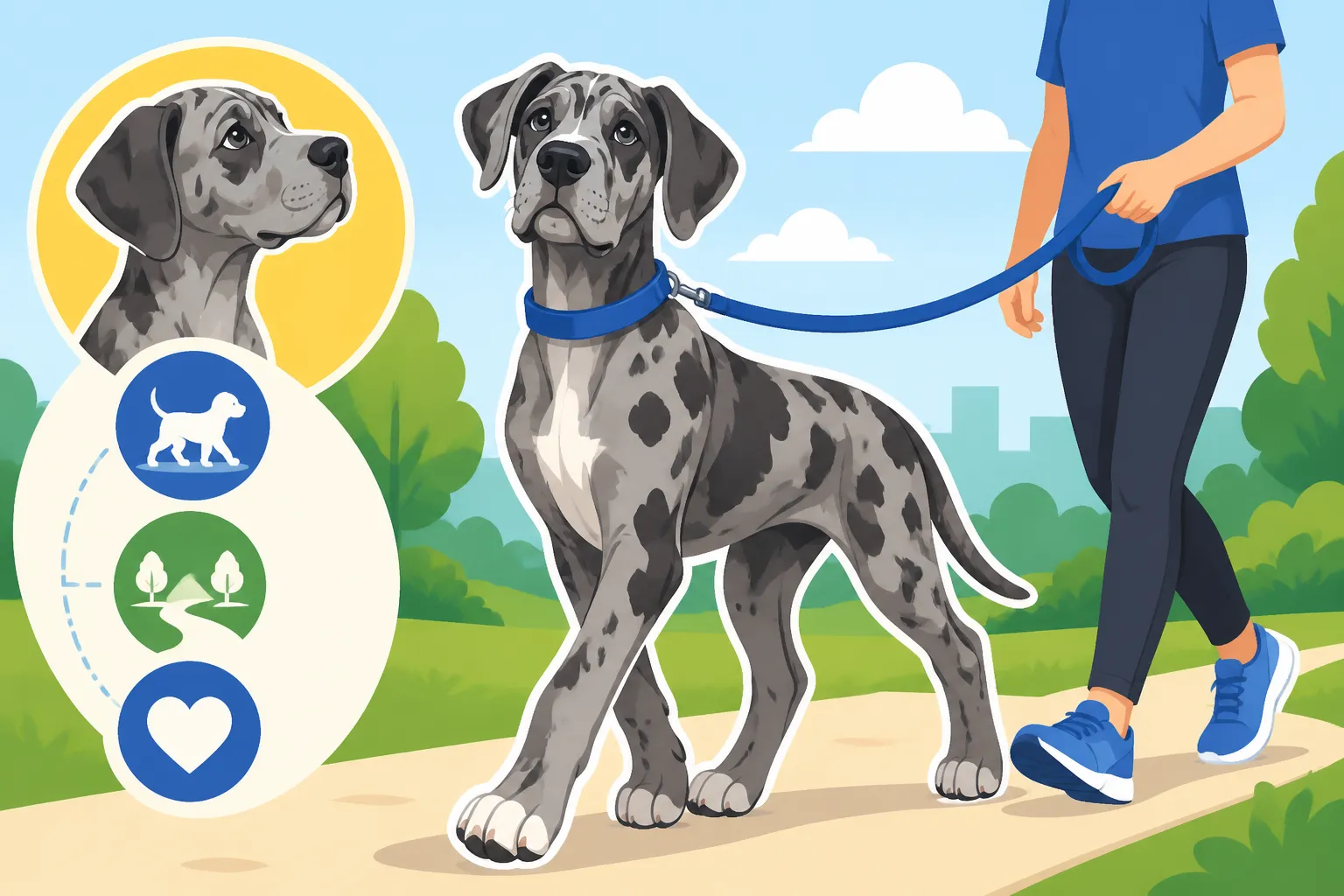
How Much a Growing Great Dane Should Walk
Bringing a Great Dane puppy into your home is an absolute joy, but it quickly becomes apparent that these magnificent creatures grow at an astonishing rate. This rapid development often leaves new owners scratching their heads, wondering how much exercise is too much or too little for their towering youngster without inadvertently causing harm to their still-developing bones and joints. This guide aims to clear up the confusion, providing realistic advice on appropriate exercise levels for your growing Great Dane, ensuring their physical well-being through every delicate stage of their impressive growth.
The Unique Growth Challenges of a Great Dane Puppy
Owning a Great Dane means signing up for a truly unique puppyhood experience. Unlike smaller breeds that might take a year or more to reach their full skeletal maturity, Danes pack on an incredible amount of size and weight in a condensed timeframe. This rapid growth spurt, while awe-inspiring to watch, places immense stress on their developing bodies, making them particularly vulnerable to certain orthopedic conditions if not managed carefully. It's not just about getting bigger; it's about the sheer speed of that growth.
Why Great Danes Aren't Like Other Puppies
When you bring home a tiny Great Dane puppy, it might seem counterintuitive to limit its exercise, especially when you see how much energy they have. However, these aren't your average puppies. They can gain several pounds a week, sometimes doubling their weight in a month. Imagine the stress this puts on their immature joints and soft bones! While a Labrador puppy might romp for hours with no ill effect, a Great Dane puppy needs a much more measured approach to physical activity to protect its delicate structure during this critical developmental phase.
This isn't to say your Great Dane puppy should be a couch potato, far from it. It simply means that their exercise needs are fundamentally different. Their enthusiasm for play can easily lead to overexertion if left unchecked, and their burgeoning size means that even seemingly innocuous activities like jumping off furniture or scrambling up and down stairs can put undue strain on their growing frames. We're not just raising a large dog; we're raising a giant, and that requires a giant amount of consideration for their specific physiological needs.
Understanding Growth Plate Vulnerabilities
A major reason for caution with Great Dane puppy exercise is their growth plates. These are areas of soft, developing cartilage at the ends of long bones in puppies and young dogs, which gradually harden into solid bone as they mature. In giant breeds like Great Danes, these growth plates remain open and vulnerable for a longer period, often not fully closing until 18-24 months of age, sometimes even later. During this time, they are extremely susceptible to injury.
Any injury to a growth plate can disrupt normal bone development, potentially leading to limb deformities, lameness, or early-onset arthritis. This is why high-impact activities, excessive running, or sudden stops and turns are so dangerous for a growing Great Dane. It's a bit like building a skyscraper on a foundation that's still curing; you wouldn't stress it with heavy loads too soon. For more in-depth information, you might want to read about Why Fast Growth Wrecks Great Dane Joints to understand the specific risks involved.
The "Rule of Five Minutes" and Its Application
When it comes to exercising a Great Dane puppy, one of the most widely cited guidelines is the "five-minute rule." While it's not an exact science, it provides a valuable framework for ensuring your puppy gets enough activity without risking injury to their developing musculoskeletal system. It’s all about controlled, beneficial movement rather than uncontrolled bursts of energy.
Decoding the Five-Minute Rule for Giant Breeds
The five-minute rule suggests that a puppy should receive approximately five minutes of structured exercise per month of age, twice a day. So, a three-month-old puppy would get 15 minutes of structured exercise, twice a day. A four-month-old would get 20 minutes, and so on. "Structured exercise" typically refers to leashed walks, where you control the pace and duration. This is distinct from "free play," which happens in a backyard or within the home.
The beauty of this rule is its simplicity and its emphasis on gradual increases. It prevents owners from overdoing it in the early, most vulnerable months. For example, by the time your Great Dane is six months old, they'd be up to 30 minutes of structured walking, twice a day. This steady progression allows their muscles, ligaments, and bones to strengthen in proportion to their increasing size, reducing the risk of injury.
| Age of Great Dane Puppy | Structured Walk Duration (Per Walk, Twice Daily) | Total Daily Structured Walk Time |
|---|---|---|
| 2 Months | 10 minutes | 20 minutes |
| 3 Months | 15 minutes | 30 minutes |
| 4 Months | 20 minutes | 40 minutes |
| 5 Months | 25 minutes | 50 minutes |
| 6 Months | 30 minutes | 60 minutes |
| 7 Months | 35 minutes | 70 minutes |
| 8 Months | 40 minutes | 80 minutes |
| 9 Months | 45 minutes | 90 minutes |
| 10 Months | 50 minutes | 100 minutes |
Tailoring the Rule to Your Great Dane's Energy Levels
While the five-minute rule is a great starting point, it's crucial to remember that every Great Dane is an individual. Some puppies are naturally more energetic, while others are content with less. The key is to be observant and responsive to your dog's cues. Watch for signs of fatigue such as lagging behind, excessive panting, lying down during a walk, or even limping after the fact. If your puppy seems tired, it's time to stop, regardless of whether you've hit your time limit.
It's also important to factor in mental stimulation. A tired mind can be just as effective as a tired body, especially for puppies whose joints are still developing. Engage your Great Dane puppy with short training sessions, puzzle toys, or even just novel experiences in a quiet environment. This helps them burn energy and develop good habits without putting physical stress on their growth plates. For ideas on how to keep your gentle giant engaged without over-exerting them, explore Wearing Out a Great Dane Without Wrecking Its Joints.
Types of Exercise: What's Safe and What's Not
Navigating the world of puppy exercise can feel like walking a tightrope, especially with a breed as large and fast-growing as a Great Dane. The goal is to provide beneficial activity that builds strength and coordination without placing undue stress on their vulnerable joints. Understanding the difference between safe and risky activities is paramount for their long-term health.
Safe and Recommended Activities for Growing Danes
For your growing Great Dane, gentle, controlled, and low-impact activities are your best friends. Leashed walks on soft, even surfaces are ideal. Think grassy fields, dirt trails, or even well-maintained sidewalks for short periods. These surfaces absorb impact better than concrete and reduce the chances of slips and strains. Keep the walks at a comfortable pace for your puppy, allowing them to sniff and explore without being rushed.
Supervised free play in a securely fenced yard is also excellent, but again, moderation is key. Allow them to potter around, chase a soft ball a few times, or interact gently with a known, calm canine companion. Swimming, when introduced safely and under veterinary guidance (especially regarding ear care and water temperature), can be a fantastic, low-impact full-body workout that builds muscle without stressing joints. Mental stimulation through short, positive reinforcement training sessions or engaging with a BAXTER & Bella online training program can also provide excellent enrichment. You can learn more about balancing free play and forced exercise in Free Play Against Forced Exercise for a Great Dane.
Exercises to Strictly Avoid During Growth
Now, for the "don'ts." It can be tough to resist the urge to take your energetic Great Dane puppy on that long hike or join you for a run, but these activities are detrimental to their developing joints. High-impact exercises, such as prolonged jogging on hard surfaces like pavement, jumping repeatedly for toys, or continuous, aggressive games of fetch that involve sharp turns and sudden stops, must be avoided. These actions can cause micro-traumas or even serious damage to their still-soft growth plates. You can read more about this in Why a Great Dane Puppy Should Not Jog.
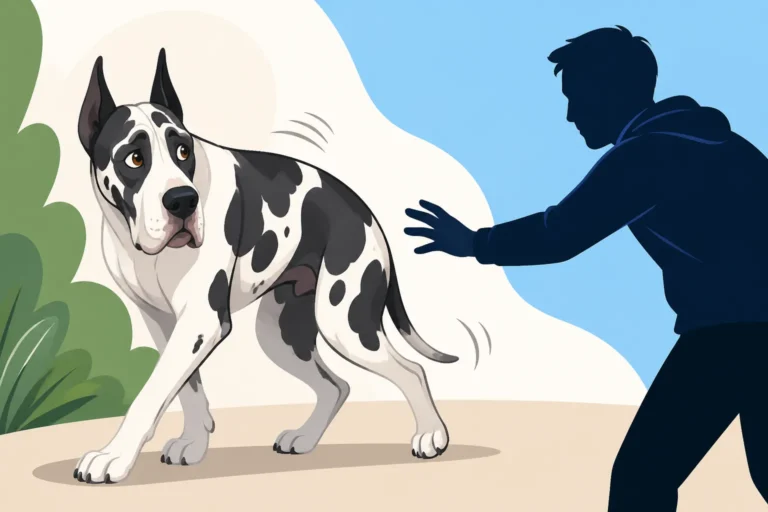
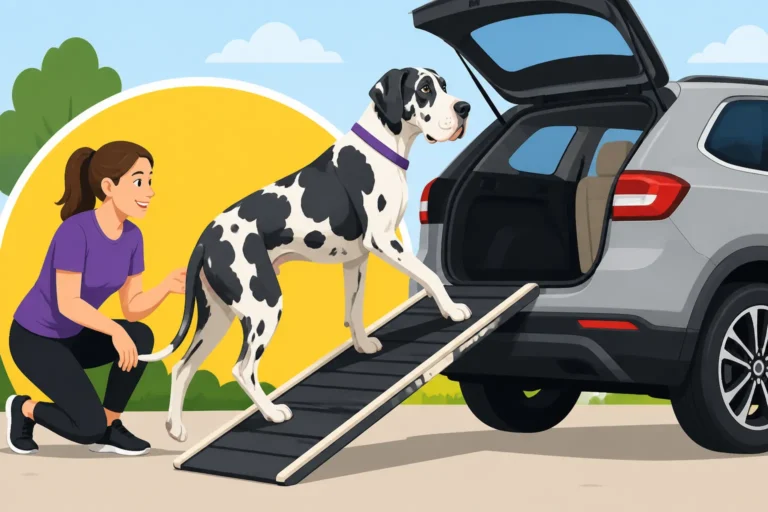
Repetitive activities like fetching a ball up and down stairs, or allowing them to constantly jump on and off furniture, are also big no-nos. While it might seem cute for a tiny puppy, a rapidly growing Dane putting all that weight on immature joints with each impact is setting themselves up for future orthopedic problems. Also be wary of overly boisterous play with unknown dogs at a dog park, especially if those dogs are much older or very rough, as accidental collisions can easily lead to injury.
Monitoring Your Great Dane's Development
Even with the best intentions and adherence to exercise guidelines, Great Danes are prone to certain orthopedic issues due to their rapid growth and sheer size. Therefore, vigilant observation and proactive veterinary care are not just recommended, but absolutely essential for any growing Great Dane puppy. Your keen eye and quick response can make all the difference.
Recognizing Signs of Over-Exertion or Pain
Your Great Dane puppy can't tell you in words if something hurts, so it's up to you to be their advocate. After any period of activity, closely observe their gait and behavior. Look for subtle signs of discomfort: a slight limp, stiffness when getting up or lying down, reluctance to jump or play, or even a change in their usual enthusiasm for walks. Sometimes, the pain might manifest as a general grumpiness or lethargy rather than an obvious yelp. Pay attention to how they carry themselves; a subtle shift in weight or an unusual way of sitting can be indicative of a problem.
They might also exhibit more specific signs like favoring a leg, or a "shifting lameness" where they seem to limp on different legs at different times. This can be a particularly tricky symptom to identify but is a strong indicator that something isn't quite right. If you notice any of these signs, even minor ones, it’s best to err on the side of caution. Give them a day or two of strict rest and if the symptoms persist or worsen, contact your veterinarian immediately. More details on this specific issue can be found in Shifting Lameness in a Growing Great Dane.
The Importance of Regular Vet Check-ups and Breeder Advice
Beyond your daily observations, regular veterinary check-ups are non-negotiable for a Great Dane puppy. Your vet can monitor their growth curve, assess their joint health, and address any potential issues before they become severe. Don't hesitate to voice any concerns you have, even if they seem minor. A good vet understands the unique challenges of giant breed growth and can offer tailored advice.
Furthermore, your breeder should be a lifelong resource. A responsible Great Dane breeder will have a wealth of experience and knowledge regarding the breed's growth and potential health concerns. They've raised many puppies and likely have valuable insights. Don't be shy about reaching out to them with questions about exercise, nutrition, or anything else related to your puppy's development. They can often provide anecdotes and practical tips specific to their lines. Ensuring you received all relevant health papers at the time of purchase, as detailed in Reading a Great Dane Puppy's Health Papers, is also key to understanding their genetic background. Remember, nutrition plays a huge role too; excessive calcium or inappropriate food can also damage developing bones, a topic covered in Why Calcium Supplements Damage a Great Dane.
From Puppyhood to Adulthood: Adjusting Exercise Routines
The puppy stage with a Great Dane feels simultaneously incredibly long and incredibly short. One minute you have a clumsy, oversized puppy, and the next you have a majestic, full-grown dog. Knowing when and how to transition their exercise routine is crucial for their long-term health and vitality. It's a gradual process, not an overnight switch.
The Transition to More Robust Exercise
Generally, Great Danes reach skeletal maturity and their growth plates close somewhere between 18 and 24 months of age, sometimes even a bit later. This is the green light to gradually increase the intensity and duration of their exercise. I emphasize gradually because even after growth plates close, their bodies are still adapting to their immense size and weight. Don't go from gentle walks to a five-mile run overnight.
Start by extending your leashed walks, perhaps adding an extra 15-20 minutes, or introducing varied terrain like gentle hills. You can begin light jogging sessions on softer surfaces, but always monitor their response. Some Danes might never be marathon runners, while others thrive on more athletic endeavors. It's about finding what suits your individual dog. If you're wondering when they can start running with you, consider reading The Age a Great Dane Can Start Running for more specific guidance.
Lifelong Exercise Needs of an Adult Great Dane
Once your Great Dane is fully mature, their exercise needs will level out, but they certainly won't disappear. Adult Danes typically require a good 60-90 minutes of moderate exercise daily. This doesn't necessarily mean high-impact sports. Two or three brisk walks, some supervised outdoor play, and mental stimulation are usually sufficient to keep them happy and healthy. Many adult Danes love exploring nature trails with their owners, which can be great exercise without being overly strenuous, provided the terrain isn't too challenging. You might be interested in Whether a Great Dane Can Hike for more tips on this.
Even as adults, Great Danes appreciate comfortable resting spots to support their large frames. Consider investing in a high-quality orthopedic bed, perhaps from a well-regarded brand available on Amazon, to support their joints after exercise. While their growth plates are closed, consistent, appropriate exercise helps maintain muscle tone, joint flexibility, and a healthy weight, all of which contribute to a longer, more comfortable life. Don't forget that mental stimulation remains important; continued training or trick-learning using positive reinforcement keeps their minds sharp and strengthens your bond.
Disclaimer
This article is for general informational purposes only and does not constitute professional advice. Laws, prices and regulations vary by location and change over time. Consult a qualified professional for guidance on your specific situation.