Raw Feeding at Great Dane Volume
Let's talk about raw feeding for your magnificent Great Dane, because let's be honest, the idea of providing a diet that mirrors what their ancestors ate is incredibly appealing. But then reality hits: the sheer volume of food a Great Dane consumes daily can make the logistics of raw feeding feel like a monumental, freezer-filling, budget-bending endeavor. This guide dives deep into the realities of feeding a giant breed a raw diet, tackling the practical challenges and offering realistic insights to help you decide if it's the right path for you and your colossal companion.
The Sheer Scale of Raw Feeding for a Great Dane
When people discuss raw feeding, they often envision a single chicken thigh or a beef patty. For a Great Dane, however, we're talking about an entirely different league of meal preparation. The phrase "raw feeding at Great Dane volume" isn't just a catchy title; it's a daily, tangible reality that impacts your kitchen, your grocery budget, and your storage solutions.
What "Volume" Really Means for a Giant Breed
Consider that an adult Great Dane can easily weigh between 100 to 180 pounds, or even more. A general guideline for raw feeding is usually 2-3% of their ideal adult body weight daily, though this can vary greatly based on age, activity level, and metabolism. Let's take a middle-of-the-road 130-pound Dane. At 2.5% of their body weight, that's over 3 pounds of food per day. Now, multiply that by seven days a week, and you're looking at well over 20 pounds of raw meat, bone, and organ per week. Suddenly, your standard kitchen fridge freezer looks woefully inadequate.
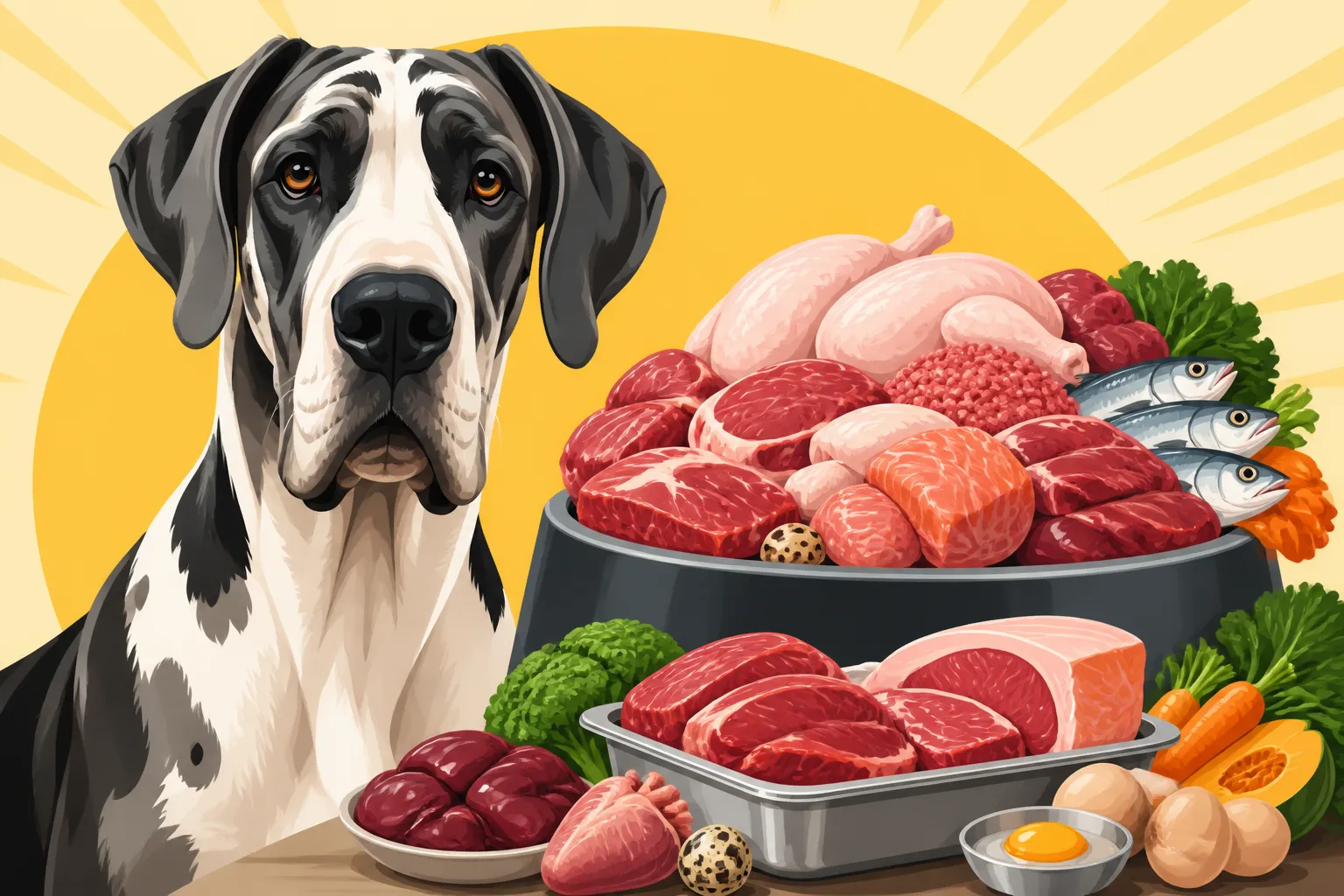
This isn't just a matter of tossing a few chicken wings into a bowl. A properly balanced raw diet for a Great Dane means a variety of protein sources, appropriate bone content (often 10-15%), and organ meats (about 5-10%, with half of that being liver). Imagine needing to source, portion, and thaw not just muscle meat, but also raw meaty bones like chicken backs or turkey necks, and delicate organs such as kidney and spleen. Each day becomes a carefully orchestrated culinary event, ensuring your giant friend gets all the necessary nutrients. It's a commitment that far surpasses scooping kibble from a bag; it's an immersive experience in canine nutrition on a truly grand scale. Feeding an Adult Great Dane Six to Ten Cups might sound like a lot, but for raw feeders, that volume often translates into significantly denser, heavier portions.
The Daily Reality of Raw Meal Preparation
Meal prep for a raw-fed Great Dane isn't just about mixing ingredients; it’s about thoughtful planning and execution. Picture your kitchen counters laid out with various cuts of meat, some still partially frozen, requiring careful handling and processing. You might be cutting up whole chickens, grinding bones, or portioning out different organ meats into individual meal sizes. This isn't a five-minute job. It could involve an hour or more of dedicated time every few days or once a week, depending on how you batch prepare.
Then there's the thawing process. Raw meals need to be thawed safely in the refrigerator, which means you need to plan ahead by at least 24-48 hours. For a Dane, that's often multiple large containers taking up valuable fridge space. If you forget to pull out tomorrow's meal, you're faced with the dilemma of rapid thawing, which can compromise food safety, or a hungry, disappointed Dane looking up at you with those soulful eyes. The cleanup afterward is also a significant consideration. Raw meat means potential bacterial contamination, so counters, cutting boards, knives, and bowls need thorough sanitization after every prep session. This vigilance is crucial for both your family's health and your dog's. The Calorie Load a Great Dane Actually Needs also plays a role here; you need to be precise to avoid over or underfeeding.
Navigating the Practicalities: Sourcing, Storage, and Safety
The decision to raw feed a Great Dane comes with a laundry list of logistical challenges that many new raw feeders, especially those with smaller breeds, might not fully appreciate. The sheer size of a Great Dane amplifies every practical aspect, from where you buy your ingredients to how you keep them fresh and safe.
Finding Reliable Raw Food Suppliers
For a Great Dane, picking up a few packages of ground beef from the local grocery store simply won't cut it, both nutritionally and economically. You'll quickly find yourself needing to source meat in bulk. This often means connecting with local butchers, farmers, or specialized raw pet food suppliers. Look for places that offer "frankenprey" components (individual cuts of meat, bone, and organ) or pre-ground mixes specifically formulated for dogs.
You might find yourself visiting restaurant supply stores, hunting clubs, or even online co-ops that offer bulk purchases of things like whole chickens, turkey necks, beef hearts, and even lamb or venison trimmings. The goal is variety and cost-effectiveness. Buying in large quantities often comes with discounts, which is essential when you're going through tens of pounds of meat a week. Sites like Chewy might offer some pre-made raw options, but for the true bulk needed, you'll likely need to explore more specialized avenues. Some services, like Ollie, offer pre-portioned fresh food, which can include raw or gently cooked options, though the volume for a Great Dane can still be substantial and costly compared to self-prepared bulk raw.
Freezer Space Requirements
This is arguably one of the biggest hurdles for Great Dane raw feeders. If your Dane eats 20-30 pounds of raw food a week, and you want to buy in bulk once a month to save money and trips, you're looking at storing 80-120 pounds of raw meat. Your standard refrigerator-freezer combination will not suffice. Period.
You will almost certainly need a dedicated chest freezer or an upright freezer. Many raw feeders invest in a large chest freezer, often 15-20 cubic feet or more, solely for their dog's food. This requires space in your home – a garage, basement, or utility room – and an understanding of the increased electricity costs. Think about how you’ll organize it, too. Labeling and stacking packages efficiently is key, so you’re not digging through frozen blocks trying to find the liver you need for tomorrow’s meal. It’s a significant upfront investment, but it quickly pays for itself in convenience and potential savings from bulk purchases.
Handling Raw Meat Safely to Prevent Contamination
The risks of bacterial contamination (like Salmonella or E. coli) are very real when handling raw meat. For Great Danes, who might have a tendency to "clean" the floor with their jowls after eating, or whose slobber can reach surprisingly high, impeccable hygiene is non-negotiable.
Always use separate cutting boards, knives, and bowls for your dog's raw food that are distinct from those used for human food. After preparation, wash all surfaces, utensils, and bowls immediately and thoroughly with hot, soapy water, followed by a sanitizing spray or wipe. Consider stainless steel bowls for your Great Dane as they are easy to sterilize. Handwashing with soap and water for at least 20 seconds before and after handling raw ingredients is paramount. Poisons a Great Dane Can Reach on a Counter also serves as a reminder that their size means they can get into things you wouldn't expect a smaller dog to reach, so cleanliness and secure storage are doubly important.
Understanding the Nutritional Philosophy and Great Dane Needs
Beyond the practicalities of sourcing and storage, lies the crucial aspect of nutrition. Raw feeding is not simply about tossing your dog a chunk of meat. For a giant breed like the Great Dane, whose growth and joint health are particularly delicate, understanding the underlying nutritional principles is absolutely critical.
BARF vs. Prey Model Raw PMR
There are two main schools of thought in raw feeding:
- Prey Model Raw (PMR): This approach aims to replicate the diet of a wild canine, focusing primarily on whole or chunked raw meat, bones, and organs, without added fruits, vegetables, or supplements. A common guideline is 80% muscle meat, 10% raw meaty bone, and 10% organ meat (5% liver, 5% other secreting organs). The variety of different animal sources is key to ensuring a broad spectrum of nutrients.
- Biologically Appropriate Raw Food (BARF): The BARF diet is a more inclusive approach, incorporating meat, bones, and organs, but also adding fruits, vegetables, seeds, and sometimes dairy or eggs. The idea is to provide additional fiber, antioxidants, and phytonutrients that might be found in the stomach contents of a prey animal or for general health benefits.
For a Great Dane, especially during their critical growth phases, careful consideration of either model is necessary. Some owners find BARF easier to ensure micronutrient diversity, while PMR purists believe supplements are unnecessary with enough variety. Whatever path you choose, the key is balance over time, not necessarily every single meal. Why Calcium Supplements Damage a Great Dane highlights the dangers of throwing off this delicate balance, especially for growing giant breed puppies.
Balancing Nutrients for a Growing Giant
This is where raw feeding for Great Danes demands extra diligence. Great Dane puppies grow at an astonishing rate, and their skeletal development is incredibly sensitive to nutritional imbalances, particularly concerning calcium and phosphorus. Too much or too little of either, or an incorrect ratio between them, can lead to devastating orthopedic issues like Hypertrophic Osteodystrophy (HOD) or Osteochondritis Dissecans (OCD).
- Calcium and Phosphorus: Raw meaty bones are the primary source of calcium and phosphorus in a raw diet. It's vital to ensure the correct proportion (usually a calcium-to-phosphorus ratio of 1.2:1 to 1.4:1). This isn't just about feeding any bone; it's about feeding appropriate bone content that doesn't overwhelm or undersupply these crucial minerals. This is why balancing across multiple meals and weeks is so important. Using a bone-in protein source like chicken backs or frames for a portion of the muscle meat requirement helps meet this need naturally. Bone Development Problems in a Great Dane Puppy can stem directly from these kinds of dietary imbalances.
- Protein and Fat Levels: Great Danes generally thrive on moderate protein and fat levels. Too much protein isn't usually an issue in and of itself, but excessive fat can lead to weight gain and pancreatitis. Ensuring a diverse range of muscle meats from different animals (beef, chicken, turkey, lamb, pork, fish) provides a broad amino acid profile. Protein and Fat Levels for a Great Dane delves into this further, emphasizing that quality over quantity is paramount.
Why a Balanced Raw Diet is Important and Risks of Imbalance
An imbalanced raw diet, particularly during a Great Dane's rapid growth phase, can cause irreversible damage. While the benefits of a properly balanced raw diet – improved coat, dental health, better digestion, and sustained energy – are often celebrated, the risks of getting it wrong are significant.
- Nutritional Deficiencies: Without proper rotation of muscle meats, organs, and bones, your Dane could be missing out on essential vitamins, minerals, and amino acids. For instance, a diet too heavy in just one type of meat might lead to deficiencies over time.
- Excess Nutrients: Conversely, excessive amounts of certain nutrients can also be harmful. We already touched on calcium and phosphorus, but too much fat can cause digestive upset or pancreatitis, and too much liver can lead to vitamin A toxicity.
- Bacterial Contamination: As discussed, this is a real risk. While dogs' digestive systems are robust, they can still get sick, and they can also shed bacteria, posing a risk to humans in the household, especially children, the elderly, or immunocompromised individuals. This makes meticulous hygiene essential.
If you're considering raw feeding, especially for a Great Dane puppy, it's highly recommended to consult with a veterinary nutritionist experienced in raw diets. They can help you formulate a diet plan that is specific to your dog's age, weight, activity level, and any underlying health conditions, ensuring all their colossal needs are met. You want to make sure your feeding approach supports Why a Great Dane Puppy Should Grow Slowly to protect their joints.
| Component | Typical Percentage (PMR) | Example Sources | Importance for Great Danes |
|---|---|---|---|
| Muscle Meat | 70-80% | Beef, Chicken, Turkey, Lamb, Pork, Fish | Primary source of protein, fats, and essential amino acids for growth and energy. |
| Raw Meaty Bone | 10-15% | Chicken backs/necks, Turkey necks/wings, Ribs | Crucial for calcium/phosphorus balance, dental health. Must be fed carefully to prevent choking or gastrointestinal issues. |
| Organ Meat | 5-10% (5% liver, 5% other) | Liver (chicken, beef), Kidney, Spleen, Pancreas | Dense source of vitamins (A, B, D, E, K), minerals, and amino acids. Essential for overall health and vitality. |
| Secreting Organs | 5% | Liver | Extremely rich in Vitamin A; balance is critical to avoid toxicity. |
| Other Organs | 5% | Kidney, Spleen, Pancreas, Brain, Testicles | Provide diverse nutrient profiles that complement liver, ensuring a broader spectrum of micronutrients. |
Is Raw Feeding Sustainable for Your Great Dane? A Realistic Look
Embarking on a raw feeding journey for a Great Dane is a marathon, not a sprint. It demands not just financial commitment, but also a significant investment of your time and mental energy. Before you dive headfirst, it's crucial to take a realistic inventory of your resources and lifestyle.
Time Commitment
Let's not sugarcoat it: raw feeding a Great Dane is time-consuming. From sourcing ingredients that often require special trips to butchers or farm suppliers, to the intricate process of portioning, grinding, and freezing, every step takes effort. You're essentially becoming your Dane's personal chef and nutritionist.
Imagine spending an afternoon once or twice a month at various stores, then another hour or two back home breaking down bulk meat, portioning out meals into freezer bags or containers, and meticulously labeling everything. Then, daily, you need to remember to pull out the next day's meal for thawing. This routine doesn't just happen; it has to be integrated into your busy life. For those with demanding work schedules or frequent travel, this consistent effort can become a source of stress. It’s a labor of love, but love still requires labor. Cooking for a Great Dane and the Volume Problem presents a similar challenge, just with cooked food instead of raw.
Financial Implications
This is often the deal-breaker for many. While you can find ways to make raw feeding more affordable by buying in bulk directly from farmers or co-ops, it's rarely cheaper than quality kibble, especially at Great Dane volumes. The cost of a few pounds of quality muscle meat, plus organ meat and bones, adds up quickly.
Consider the cost per pound of the various components. Muscle meat can range widely based on type and source, while organ meats often command a higher price. Then there's the investment in the chest freezer, sturdy storage containers, and reliable scales for accurate portioning. Many owners find that the monthly food bill for a raw-fed Great Dane can easily run into the hundreds of dollars, sometimes more, depending on where they live and their sourcing strategies. This needs to be a conscious and sustainable part of your budget. For an owner committed to the approach, Whether a Great Dane Gastropexy Pays for Itself might be a consideration, but the daily cost of raw feeding remains a constant factor.
Traveling with a Raw-Fed Dane
Taking a road trip or going on vacation with a Great Dane is already an exercise in planning. Add raw feeding to the mix, and it becomes even more complex. You can't just pack a bag of kibble. You need to transport frozen meals, which requires a large cooler with ample ice or dry ice, and access to freezer space at your destination.
Even for a weekend trip, bringing enough pre-portioned, frozen raw meals for your giant can fill a substantial cooler. Longer trips might necessitate finding raw food suppliers at your destination or relying on freeze-dried raw options, which are considerably more expensive. This added layer of logistical planning can significantly impact your travel spontaneity and options. Whether a Great Dane Suits Shift Workers and travel needs often clash with the demands of raw feeding.
Considering Alternatives or Hybrid Approaches
Given the intense commitment, it's perfectly okay to realize that full-time raw feeding isn't the right fit for your Great Dane or your family's lifestyle. There are excellent alternatives and hybrid approaches that can still offer many benefits.
- High-Quality Kibble with Raw Toppers: You can feed a high-quality, large-breed appropriate kibble (perhaps from Amazon for convenience, or from a specialized pet store) and supplement it with raw meaty bones a few times a week, or add small portions of raw muscle or organ meat as a topper. This provides some of the benefits of raw without the full commitment.
- Freeze-Dried or Dehydrated Raw: These options offer the nutritional benefits of raw food in a more convenient, shelf-stable format. While often more expensive per serving, they can be a great option for travel, as an occasional meal, or as a transitional diet. Companies like Stella & Chewy's or Primal offer excellent options in this category.
- Fresh Cooked Diets: If the idea of raw meat is unappealing, but you want to provide whole, unprocessed foods, a carefully balanced fresh-cooked diet could be an option. This also requires significant meal prep and nutritional knowledge, similar to raw, but removes some of the bacterial concerns. Whether Any Fresh Food Company Serves a Great Dane is a good article to review if you're exploring this avenue.
The most important thing is to feed a diet that is nutritionally complete, safe, and sustainable for you to provide consistently. A perfectly executed raw diet that you can't maintain is less beneficial than a high-quality, balanced alternative that you can stick to day in and day out. It's about finding the right balance for your unique Great Dane and your household.
Disclaimer
This article is for general informational purposes only and does not constitute professional advice. Laws, prices and regulations vary by location and change over time. Consult a qualified professional for guidance on your specific situation.