Bismarck and His Great Danes
It's quite something how certain figures throughout history become intertwined with specific dog breeds, almost to the point where you can't imagine one without the other. For Great Danes, one of the most powerful and recognizable historical associations comes from Otto von Bismarck, the "Iron Chancellor" of Germany. If you've ever wondered why his name often pops up when discussing this magnificent breed, or how his personal connection shaped the Great Dane's journey into becoming a national symbol, this guide will delve into the fascinating story of Bismarck and his beloved Danes.
Who Was Otto von Bismarck?
Before we dive into his canine companions, it's essential to understand the man himself. Otto von Bismarck was far more than just a statesman; he was a pivotal force in European history, a figure whose sheer will and strategic brilliance fundamentally reshaped a continent. His legacy is complex, but his impact on Germany is undeniable, and his personal life, including his affection for Great Danes, offers a glimpse into the man behind the political titan.
A Towering Figure in German History
Bismarck dominated German and European politics for nearly three decades in the 19th century. Born into a wealthy Prussian Junker family, he was a master of realpolitik – a political philosophy focused on practical objectives rather than ideology. He was known for his sharp intellect, his sometimes ruthless pragmatism, and his imposing presence. His speeches were powerful, his negotiations often decisive, and his influence was felt across the European courts. Imagine a figure who, through sheer force of personality and cunning, could orchestrate alliances and wars to achieve a singular, grand vision. That was Bismarck. He wasn't just playing the game; he was changing the rules.
The Unification of Germany
Bismarck's most significant achievement, the one that cemented his place in history, was the unification of various independent German states into a powerful German Empire under Prussian leadership. This wasn't a peaceful process of consensus-building; it involved a series of strategic wars, diplomatic maneuvering, and internal political battles. Through the Danish-Prussian War, the Austro-Prussian War, and the Franco-Prussian War, Bismarck systematically dismantled old power structures and forged a new, unified Germany. It was a monumental task, requiring a leader with immense strength, unwavering resolve, and perhaps, a need for the kind of unconditional loyalty and companionship that only a dog can provide. He steered this newly formed nation as its first Chancellor, laying the groundwork for its rise as a major European power.
Bismarck's Love for Great Danes
It might seem contradictory that such an unyielding political figure would be so devoted to dogs, but Bismarck's affection for his Great Danes was legendary. These magnificent animals weren't just pets; they were integral to his daily life, his public image, and even his personal well-being. He found solace and unwavering loyalty in their presence, a stark contrast to the often treacherous world of politics.
Early Affection for the Breed
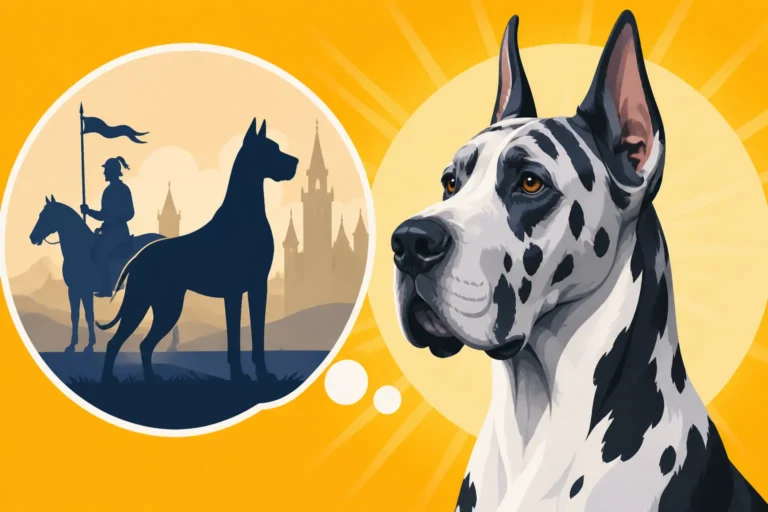
Bismarck's appreciation for the Great Dane, or "Deutsche Dogge" as it was becoming known in Germany, developed over many years. It wasn't an overnight fancy. He was drawn to their imposing size, their noble bearing, and their inherent loyalty. These were characteristics that mirrored, in a way, the aspirations he had for his burgeoning German nation: strong, dignified, and steadfast. While the exact timeline of when he acquired his very first Great Dane might be debated by historians, it's clear that by the mid-19th century, during his most active political years, Great Danes were firmly established as his breed of choice. He wasn't just a casual owner; he was a true enthusiast, recognizing the unique spirit of these giants.
Tyras I: The Famous Companion
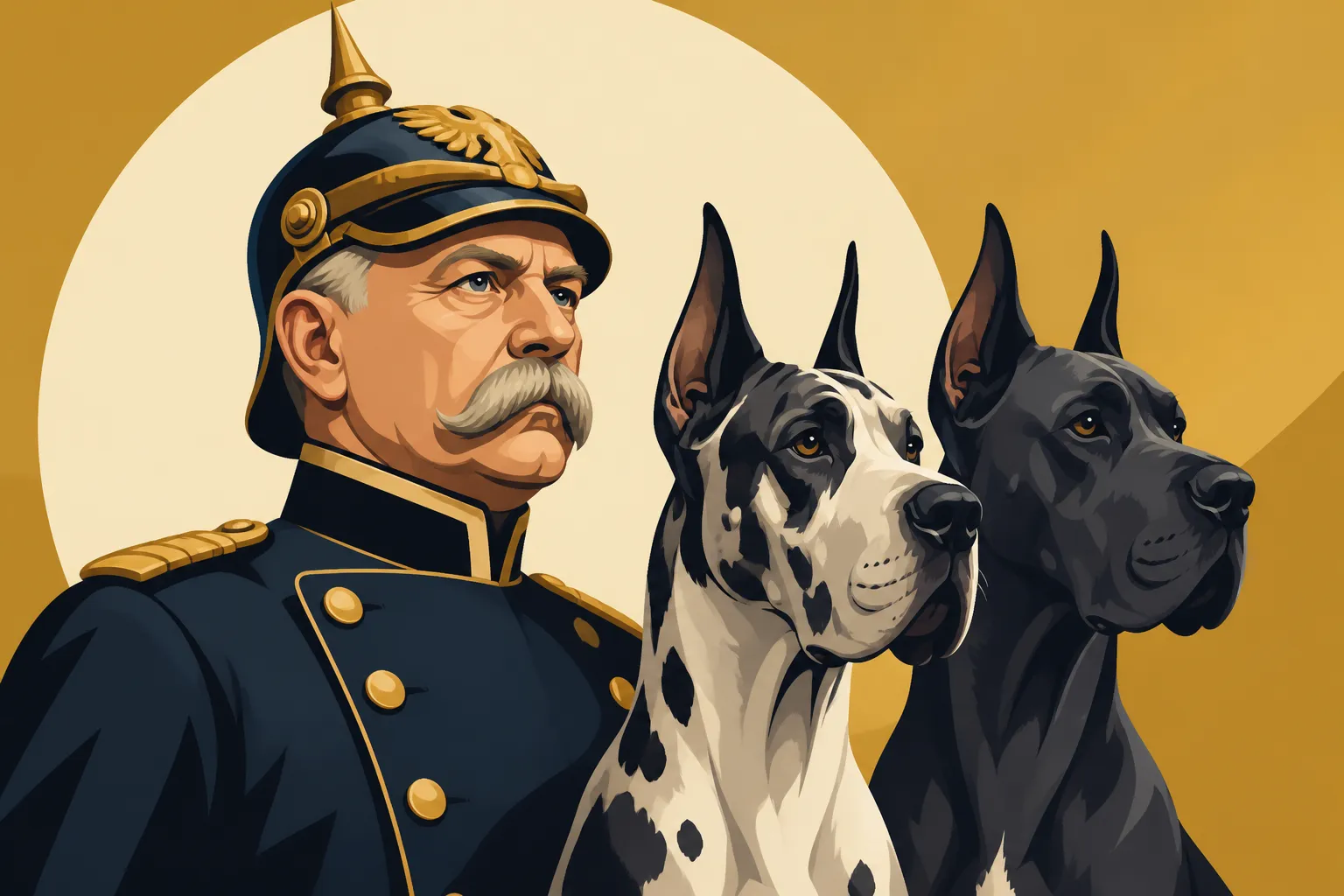
Among Bismarck's many Great Danes, none is perhaps as famous as Tyras I. This magnificent dog became almost as recognizable as Bismarck himself. Tyras was not just a pet; he was a constant companion, often depicted in paintings and photographs alongside the Chancellor. Imagine Bismarck, the man who commanded empires, with this enormous, loyal dog by his side. Tyras I was known for his gentle demeanor despite his formidable size, a trait that many Great Dane owners still cherish today. The Great Dane's Reputation as the Apollo of Dogs truly started to solidify around such examples. He was more than a guard dog; he was a confidante, a silent presence in the midst of political turmoil, offering a grounding influence to a man burdened by immense responsibility. Tyras I lived a long life for a Great Dane, reportedly passing away at the ripe old age of 11, a testament to the care and bond they shared.
The Constant Presence of Danes
Tyras I was not an anomaly; Bismarck often had multiple Great Danes at any given time, and his later dogs, including Tyras II and Tyras III, continued the tradition. They were fixtures in his household, whether at his estate in Varzin or later at Friedrichsruh. These dogs were present during his most private moments and his most public appearances. There are countless anecdotes of his Danes lying at his feet during important meetings, or joining him on his daily walks through his estates. He genuinely valued their company, often stating that he found more honesty and loyalty in his dogs than in many politicians. This constant companionship provided him with a sense of stability and an emotional outlet that was crucial for someone in his high-stress position. Their massive size meant they were always noticeable, whether trotting beside his carriage or resting by his armchair, becoming an unofficial part of the Bismarckian brand.
The Role of Great Danes in Bismarck's Life and Image
Bismarck’s Great Danes were more than just beloved pets; they played a subtle yet significant role in both his personal life and the way he was perceived by the public. They offered him solace and companionship, while also serving as powerful symbols that inadvertently shaped his formidable public image.
Personal Comfort and Companionship
For a man constantly navigating the treacherous waters of political intrigue, alliances, and warfare, his Great Danes offered a profound sense of personal comfort and unwavering loyalty. Bismarck faced immense pressure, criticism, and isolation. In this environment, the unconditional affection and simple presence of his dogs were invaluable. He often described them as his truest friends, finding in them an honesty and devotion that was rare in his human interactions. When the political battles raged, his dogs were a quiet, grounding force. Picture him retreating to his study after a grueling day of diplomacy, only to be met by the gentle nudge of a huge head, or the soft sigh of a Great Dane settling at his feet. These moments of quiet companionship were undoubtedly a vital balm for his intense and demanding life, offering a safe emotional harbor from the storms of statecraft.
Public Perception and Political Symbolism
While his love for his dogs was genuine, their presence also contributed to his public persona. In an era where photography and illustrated newspapers were becoming more widespread, images of Bismarck with his imposing Great Danes helped construct a particular narrative. These dogs, large, powerful, yet inherently noble and loyal, served as a visual metaphor for the German Empire he was building: strong, unified, and majestic. They projected an image of a leader who, despite his iron will, possessed a softer, more relatable side, a man capable of deep affection and loyalty.
This wasn't just about PR; it was about genuine human connection being subtly woven into a public figure's story. His dogs were often portrayed as guardians, loyal protectors reflecting the steadfast nature he aimed to embody for Germany. The Great Dane as Germany's National Breed was a concept that gained significant traction during his time, and his visible association with the breed certainly played a part in that. They reinforced the image of a man of substance, not easily swayed, but deeply rooted in traditional German values of strength and fidelity.
The "Iron Chancellor" and His Gentle Giants
The contrast between Bismarck's formidable "Iron Chancellor" moniker and his gentle giants was particularly striking and perhaps intentionally cultivated. He was known for his stern demeanor, his uncompromising policies, and his strategic ruthlessness. Yet, these massive dogs, often seen leaning against him or resting calmly by his side, revealed a different facet of his personality. This juxtaposition presented a more complete, and arguably more powerful, image. It showed a man capable of great strength and command, but also one with a capacity for tenderness and protection towards those he cherished.
This duality resonated with the public. It humanized the stoic statesman, making him more approachable while still maintaining his aura of power. It suggested that even the most formidable leaders have a personal side, a private world where loyalty and affection reign supreme. For many, seeing Bismarck with his Danes solidified the breed's image as "gentle giants" – powerful, yes, but also immensely loving and devoted, much like the qualities Bismarck himself, in his own way, embodied for his nation.
Great Danes as a Symbol of Germany
Bismarck’s personal affinity for Great Danes wasn't just a private matter; it significantly contributed to the breed's elevation as a national symbol, moving it from a regional hunting dog to the proud representative of a newly unified German Empire. The timing was perfect, as Germany was forging a new identity, and the Great Dane, or Deutsche Dogge, was ready to step into that role.
The Deutsche Dogge and National Identity
At the time of Germany's unification in the late 19th century, there was a strong desire to establish national symbols that reflected the country's strength, dignity, and heritage. The Great Dane, with its imposing stature, noble head, and powerful yet elegant build, fit this aspiration perfectly. It wasn't just a pretty face; it was a dog with a rich history as a fearless boar hound, demonstrating courage and loyalty. Why Germany Calls the Great Dane Deutsche Dogge is a direct reflection of this deliberate national branding. The name itself, meaning "German Mastiff," emphasized its origins and distinctiveness, distinguishing it from the earlier, more generic "Danish dog" nomenclature.
During this period, artists and sculptors frequently depicted the Deutsche Dogge as a symbol of the German nation, often alongside allegorical figures or prominent leaders. This imagery helped to engrain the breed in the national consciousness as the German dog, a living embodiment of the country’s spirit and ambition. Its large size and regal appearance commanded respect, mirroring the rising status of the German Empire on the world stage.
Bismarck's Influence on National Symbolism
Bismarck’s highly visible and well-documented fondness for Great Danes lent immense credibility and prestige to the breed’s national designation. When the "Iron Chancellor" himself chose these dogs as his constant companions, it wasn't merely a personal preference; it became an endorsement that resonated deeply with the populace. His association cemented the Great Dane's image as a dignified, loyal, and powerful breed, traits that were seen as quintessential German virtues.
Imagine the impact: the most powerful man in Germany, the architect of its unity, is consistently seen with these magnificent animals. This wasn't a subtle hint; it was a clear signal. For many, if it was good enough for Bismarck, it was certainly the embodiment of German excellence. His choice wasn't explicitly a political act to declare the breed a national symbol, but its effect was undoubtedly symbolic and far-reaching. He implicitly communicated that the Deutsche Dogge was indeed the dog of Germany, favored by its most influential leader.
Solidifying the Breed's German Roots
Historically, the breed had often been referred to as the "Danish dog" or "German Mastiff," causing some confusion about its true origin. However, under Bismarck's influence and the burgeoning German nationalism of the era, concerted efforts were made to firmly establish its German identity. Organizations like the German Mastiff Club (Deutscher Doggen Club), founded in 1888, played a crucial role in standardizing the breed and promoting its German heritage. The Year the Great Dane Became Germany's Breed is often linked to this period of national self-definition and breed development.
The first official breed standard, The First German Great Dane Standard, published around this time, emphasized characteristics that aligned with the desired national image: nobility, courage, and balance. Breeders and enthusiasts rallied around the "Deutsche Dogge" designation, actively working to differentiate it from other mastiff types and claim it definitively as a product of German breeding efforts. Bismarck's ongoing and public affection for his Great Danes provided invaluable weight to these efforts, helping to solidify the narrative that this grand dog was, unequivocally, a proud German creation.
Impact on the Breed's Perception and Popularity
Bismarck's undeniable connection to Great Danes left an indelible mark on the breed, significantly boosting its recognition, shaping perceptions of its ideal characteristics, and ensuring its enduring popularity far beyond the borders of Germany. His legacy transformed the Great Dane from a formidable hunting dog into a symbol of both national pride and refined companionship.
Increased Recognition and Desire
There's no doubt that having one of the most powerful and recognizable figures in Europe as a devotee dramatically increased the Great Dane's profile. People were naturally curious about the dogs that shared the Chancellor's side. This association sparked wider interest, not just within Germany but internationally. Owning a Deutsche Dogge became a subtle way to align oneself with a sense of prestige, power, and national pride. The breed was no longer just for specialized hunters or noble estates; it became a desirable companion for those who admired its stately appearance and loyal temperament.
This heightened visibility led to greater demand for well-bred Great Danes. Breeders likely saw an uptick in inquiries, and discussions around the breed's characteristics, temperament, and care became more widespread. If you were looking for a dog that exuded dignity and strength, one that was clearly endorsed by the nation's leader, the Great Dane became an obvious choice. Even today, echoes of this historical endorsement contribute to the Great Dane's majestic image. When you see depictions of historical Great Danes, they often carry an air of seriousness and importance, a reflection of this era.
Shaping the Ideal Great Dane
Bismarck's personal preference for certain traits in his Great Danes, particularly their noble bearing, loyalty, and calm demeanor, undoubtedly influenced the perception of what constituted an "ideal" Great Dane. While the breed standard was evolving through the efforts of breeders and clubs, the living examples accompanying the Chancellor provided powerful visual reinforcement. These were dogs of immense size and presence, yet often portrayed as gentle and devoted companions.
This helped solidify the breed's reputation as "gentle giants," capable of fierce loyalty and protection, but equally capable of profound affection and a calm temperament indoors. It pushed back against any notion of them being merely aggressive or unwieldy beasts, instead highlighting their balanced nature. His dogs exemplified the desired blend of power and grace that breeders aimed for. This influence can still be seen in the emphasis on temperament and conformation in modern breed standards, stressing nobility and dignity alongside physical impressiveness.
A Legacy of Devotion
Bismarck's devotion to his Great Danes created a lasting legacy that continues to resonate with breed enthusiasts today. His story highlights the profound bond that can exist between humans and these magnificent animals. He found solace, loyalty, and companionship in his dogs, a testament to the unique qualities that Great Dane owners cherish. This narrative of a powerful leader finding peace and unwavering support in his canine friends has cemented the Great Dane's place in history as a loyal and noble companion.
His story serves as an historical anchor for the breed, providing a tangible link to a pivotal moment in European history and to a powerful human-animal bond. It reminds us that these dogs, despite their intimidating size, possess a heart as grand as their stature. When you look at an elegant Great Dane today, whether it's lounging on a bed from Chewy or taking a regal stroll, you can almost see the echoes of Tyras I resting at the feet of the Iron Chancellor, a testament to a unique and enduring friendship that helped shape the identity of a breed and a nation.
Here's a quick look at the chronology of Bismarck's life and the Great Dane's rise:
| Year | Bismarck's Life & Career | Great Dane Development & Recognition |
|---|---|---|
| 1815 | Born in Schönhausen, Prussia | Breed exists in various forms, often called "German Mastiff" or "Danish dog" |
| 1862-1871 | Minister-President of Prussia, orchestrates German Unification | Great Danes begin to gain prominence among nobility and as hunting dogs |
| 1871 | Becomes first Chancellor of the German Empire | Breed becoming increasingly identified with Germany, Bismarck regularly seen with Danes |
| Late 1870s | Tyras I becomes Bismarck's famous companion | Efforts to standardize the "Deutsche Dogge" and solidify its German identity |
| 1881 | What the 1881 Great Dane Standard Asked For published, refining breed type | |
| 1888 | Deutscher Doggen Club (German Mastiff Club) founded | |
| 1890 | Dismissed as Chancellor by Kaiser Wilhelm II | Great Dane firmly established as Germany's national breed |
| 1898 | Dies at Friedrichsruh, surrounded by his family and often, his dogs | Breed continues to grow in popularity, image linked to nobility and loyalty |
Disclaimer
This article is for general informational purposes only and does not constitute professional advice. Laws, prices and regulations vary by location and change over time. Consult a qualified professional for guidance on your specific situation.