What the 1881 Great Dane Standard Asked For
Many Great Dane enthusiasts today are deeply familiar with the modern breed standard, the detailed blueprint that describes the ideal Great Dane. However, few realize just how crucial the very first comprehensive standard was, published way back in 1881. This document laid the foundational principles for the breed we know and love, addressing the very real challenge of unifying a diverse collection of large dogs into a coherent, recognizable type. This guide will take you on a journey back to that pivotal year, exploring exactly what the 1881 Great Dane standard asked for and how it set the stage for the magnificent dogs we share our lives with today.
The Dawn of the Modern Great Dane: A Standard is Born
Before 1881, the Great Dane, or Deutsche Dogge as it's known in its homeland, wasn't a single, universally recognized breed in the way we understand it now. Instead, there was a collection of powerful, impressive dogs often referred to as "Boar Hounds" or "German Mastiffs," bred for their strength, courage, and size, primarily used in hunting large game like wild boar. The desire to consolidate these various types into a distinct national breed led to a significant movement in Germany, culminating in the formalization of its characteristics.
Unifying a Diverse "Boar Hound" Heritage
Imagine a time when the term "Great Dane" was still more of a regional descriptor than a fixed breed name. There were different lines of large, powerful dogs across Germany, each with variations in appearance, size, and temperament, often optimized for local hunting conditions. Some were heavier, more mastiff-like, while others leaned towards a lighter, more agile build. These dogs shared a common ancestry as formidable hunting companions, but a consistent, predictable type was still elusive. The Boar Hound the Great Dane Descends From delves into this fascinating history. It was like trying to standardize a general concept rather than a specific breed, and breeders and fanciers recognized the need for a unified vision to move forward.
The challenge wasn't just aesthetic; it was also about preservation and clear identification. Without a defined standard, the unique qualities and potential health benefits of selective breeding were harder to achieve. People might be breeding for size alone, or for a particular coat color, without considering the overall balance and function that would define the emerging breed. The push for a standard was a monumental effort to bring order and direction to this diverse genetic pool, ensuring that the best traits were preserved and passed down consistently.
The German National Breed and its Early Advocates
The late 19th century was a period of burgeoning national identity in many European countries, and Germany was no exception. There was a strong desire to identify and champion national symbols, and a powerful, majestic dog like the Great Dane was a natural fit. Leading figures in German dog fancy, particularly those involved with "Deutsche Doggen," passionately advocated for the recognition of this impressive breed as Germany's own. They sought to distinguish it from other large breeds and firmly establish its German origins, despite its commonly used English name. Why the Great Dane Is Not Danish is a great read on this very topic.
These early advocates weren't just about patriotism; they were also deeply committed to the dogs themselves. They saw the potential for a truly magnificent companion and protector, one that combined strength with nobility. They believed that by creating a clear standard, they could guide breeding efforts towards producing dogs that embodied the ideal blend of physical prowess and dignified character. Their collective efforts and debates laid the groundwork for the breed's future, setting ambitious goals for its development.
Why 1881 Was a Pivotal Year
The year 1881 stands out because it marked the first official Great Dane standard. At a meeting in Berlin, a committee led by Dr. Bodinus officially defined the characteristics of the "Deutsche Dogge." This wasn't just a casual agreement; it was a concerted effort to create a written document that all breeders could adhere to, providing a common goal for future generations. Before this, ideas about the ideal Dane were often passed down orally or were subject to individual interpretation. The standard provided a concrete reference point, a rulebook for breed development.
This milestone meant that for the first time, breeders had a shared definition of what constituted a "correct" Great Dane. This allowed for more consistent breeding programs, as judges now had a formal set of criteria to evaluate dogs in the show ring, and breeders had a target to aim for. It moved the breed from a loosely defined type to a structured, recognized entity. The establishment of this standard was a declaration of intent: the Great Dane was not just a large dog, but a noble breed with specific, desirable traits to be cultivated and preserved. The First German Great Dane Standard provides even more context on this historic event.
Key Characteristics Outlined in the 1881 Standard
The 1881 standard was remarkably detailed for its time, describing everything from the overall impression of the dog to the specific nuances of its eyes and tail. It painted a clear picture of the ideal Great Dane, emphasizing both its power and its elegance.
Size, Build, and Overall Impression
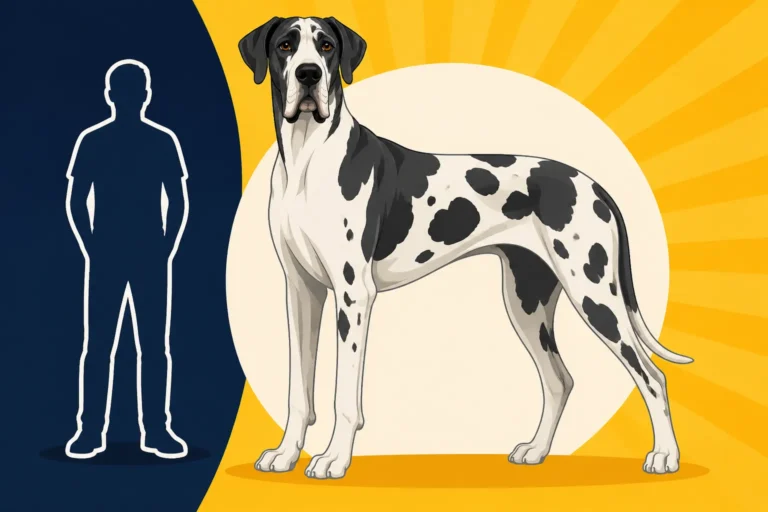
The 1881 standard immediately conveyed the importance of the Great Dane's imposing stature and powerful, yet elegant, build. It called for a dog of majestic appearance, combining strength, nobility, and grace. This was not merely a large dog; it was a dog whose size was carried with dignity and athleticism. The standard emphasized a harmonious overall picture, where no single feature was exaggerated to the detriment of others. The dog was to be well-proportioned, reflecting its history as a formidable hunting animal capable of both immense power and surprising agility.
Specifics on height and weight were emerging, though perhaps less rigidly defined than today. The goal was certainly a large dog, towering over most other breeds. Imagine seeing these dogs in person; their sheer presence would have been undeniable, a true "Apollo of Dogs," as the breed is often called. The build was described as muscular but not coarse, with a deep chest and a strong, level back. This foundation of strong bone and muscle was essential for a dog bred for boar hunting, needing both speed and the power to hold its prey.
Head and Expression
The head was given significant attention in the 1881 standard, as it contributes immensely to the Great Dane's noble expression. The skull was to be long and narrow, yet not pointed, with a well-defined stop. The muzzle was to be deep and rectangular, never snipey, and the jaws powerful. These features reflect the dog's historical function; a strong muzzle and jaw were crucial for gripping large game. The eyes were described as dark, intelligent, and lively, giving an alert yet gentle expression. It's this combination of power and gentle intelligence in the eyes that many Great Dane lovers cherish today.
The ears, in that era, were often cropped, a practice that was widespread and considered part of the breed's aesthetic for many years. While the standard would have acknowledged this, it also described the natural set and texture of the ears, which, if uncropped, would lie close to the cheeks. The overall head was to be dry, meaning no loose or excessive skin. This "dry" head, combined with the intelligent eyes, contributes to the breed's aristocratic look, a far cry from some of the heavier, dewlap-laden mastiff types. The Great Dane Head the Standard Wants goes into further detail about this iconic feature.
Coat and Color Requirements
The 1881 standard also addressed the Great Dane's coat and color, recognizing the striking beauty of its various patterns. The coat was to be short, dense, and sleek, lying flat against the body. This type of coat is easy to maintain, a practical consideration for a large working dog, and also contributes to the breed's clean, athletic lines. A harsh or wiry coat would have been deemed incorrect.
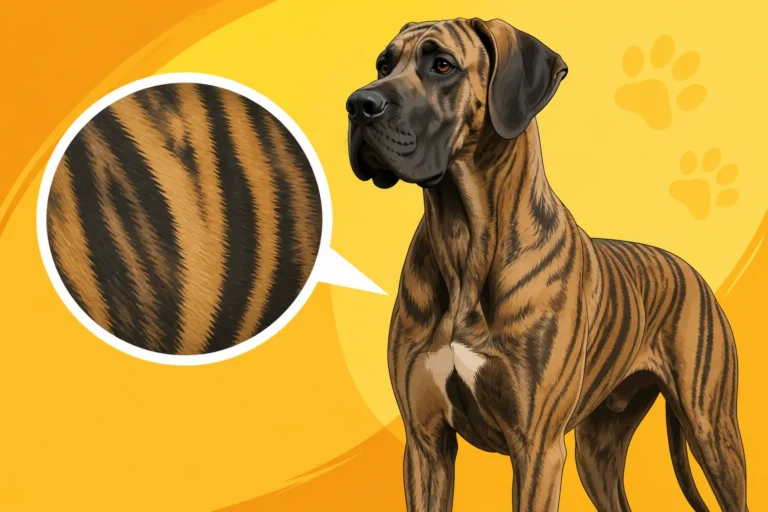
Regarding colors, the standard recognized several distinct variations, though the precise terminology might have evolved slightly over time. Fawn and brindle were certainly established, along with blue and black. Harlequin, with its distinctive torn black patches on a pure white background, was also a highly prized and recognized color. The Seven Great Dane Colors provides a comprehensive overview of these majestic coats. The standard aimed to describe the ideal expression of each color, ensuring that patterns were clear and distinct, and undesirable markings or dilutions were noted as faults. The genetic complexities behind some of these colors, particularly harlequin and merle, would become better understood later, but the appreciation for these striking appearances was already strong.
| Characteristic | 1881 Standard Description |
|---|---|
| Overall Impression | Majestic, noble, combining strength with elegance, well-proportioned, powerful but not coarse. |
| Size | Large, imposing stature, expressing a true giant breed. (Specific height measurements became more defined later) |
| Head | Long, narrow but not pointed, well-defined stop, deep rectangular muzzle, powerful jaws, dry (no loose skin). |
| Eyes | Dark, lively, intelligent, with an alert yet gentle expression. |
| Ears | Set high, often cropped and carried erect, or natural (lying close to the cheek). |
| Neck | Long, muscular, arched, flowing smoothly into the shoulders. |
| Body | Deep chest, well-sprung ribs, strong and level back, slight tuck-up. |
| Legs | Straight, strong bone, muscular, parallel. |
| Feet | Round, well-arched, tight. |
| Tail | Set high, thick at the base, tapering to a point, carried in a slight curve, not curled over the back or between legs. |
| Coat | Short, dense, sleek, lying flat. |
| Colors | Fawn, Brindle, Blue, Black, Harlequin. (Exact definitions and nuances of patterns were detailed within each color group). |
Temperament and Purpose: More Than Just a Look
While physical characteristics were central to the 1881 standard, the temperament and purpose of the Great Dane were equally vital. It wasn't enough for the dog to simply look magnificent; it also had to possess the character traits that made it a truly desirable companion and, historically, a capable working animal.
The "Gentle Giant" Ideal in its Infancy
Even in 1881, the foundation for the "gentle giant" reputation was being laid. The standard emphasized a temperament that was courageous and fearless, yet also devoted and trustworthy. This blend was critical for a dog of its size. A fearful or aggressive giant would be a liability, not an asset. The ideal Great Dane was to be bold when necessary but inherently good-natured and stable in disposition. This meant a dog that was confident rather than nervous, calm indoors but spirited when engaged in activity.
This early emphasis on good character was a testament to the breed's transition from a pure hunting dog to also being valued as a noble companion and protector. While courage was still important, especially for those who continued to hunt or guard estates, docility and a friendly nature towards its family were increasingly prized. Owners needed a dog they could live with peacefully, despite its formidable size. What Gentle Giant Means for a Great Dane perfectly captures the essence of this desired temperament.
Fitness for Function: From Boar Hunting to Noble Companion
The standard intrinsically linked the Great Dane's physical attributes to its original working purpose. The powerful build, the deep chest, the long stride – these weren't just for show; they were remnants of a past where the Great Dane was an active participant in The Boar Hunts the Great Dane Was Built For. Speed, endurance, and strength were paramount for tracking and holding large, dangerous game. The musculature and bone structure described allowed the dog to perform these demanding tasks effectively.
However, even by 1881, the role of many Great Danes was evolving. While some might still be employed in hunting, many were becoming cherished family protectors and esteemed show dogs. The standard implicitly acknowledged this shift by emphasizing a balanced temperament that allowed the dog to excel in both historical working roles and its growing role as a loyal, dignified companion. The elegant appearance, therefore, was not just about beauty, but about reflecting its noble lineage and potential as an impressive family member. This dual purpose shaped the very fabric of the breed's early development.
Early Faults and Disqualifications: What the Standard Tried to Avoid
To guide breeders away from undesirable traits, the 1881 standard also outlined specific faults and even disqualifications. These were crucial for maintaining the integrity of the breed and preventing the propagation of characteristics that deviated from the ideal or compromised health and temperament. For instance, any signs of timidity, nervousness, or aggression would have been considered serious faults, as these traits are particularly problematic in a dog of the Great Dane's size.
Physical deviations from the ideal were also meticulously noted. This included issues like bowed legs, cow hocks, an overly narrow or broad skull, light eyes, or incorrect tail carriage. These details aimed to steer breeders towards producing dogs that were structurally sound and consistent in type. The overall goal was to ensure that future generations of Great Danes would embody the majestic, powerful, yet elegant and good-natured animal envisioned by the breed's early champions. Early standards were all about identifying what made a Dane truly a Dane, and conversely, what made it not a Dane.
The Lasting Legacy of the 1881 Standard
The 1881 Great Dane standard was more than just a document; it was a declaration of intent, a foundational blueprint that continues to resonate in the breed today. It set the stage for how the Great Dane would be perceived, bred, and developed over the next century and beyond.
How the Foundation Shaped Today's Dane
It's truly remarkable how much of the original 1881 standard still forms the backbone of modern Great Dane breed standards across the world. The emphasis on nobility, strength combined with elegance, the specific head shape, and the desired temperament as a courageous yet gentle giant are all direct legacies of that pivotal document. Breeders today still strive for that harmonious balance, that majestic presence, and that reliable character that was first articulated so long ago. While definitions have been refined and details added, the core essence remains unchanged.
This foundational standard meant that the breed developed with a clear direction. Without it, the Great Dane might have splintered into many different regional types, or perhaps even faded away. Instead, it provided a unified vision that allowed the breed to flourish and maintain its distinctive identity. When you see a well-bred Great Dane today, embodying that powerful grace, you are witnessing the direct result of those early decisions made by dedicated fanciers over a century ago. It’s a testament to the foresight of those who first penned the standard.
Evolution and Refinement Over Time
While the 1881 standard was groundbreaking, it wasn't the final word. Like all living breeds, the Great Dane has seen its standard undergo refinement and evolution over the years. Subsequent revisions have often added more specific measurements, clarified ambiguities, and adapted to evolving understandings of canine health and genetics. For instance, while the 1881 standard laid the groundwork for size, later standards would establish minimum heights more explicitly, like The Thirty-Two Inch Male Great Dane we often hear about today.
These updates are a natural part of breed development, ensuring the standard remains relevant and helps guide breeders towards producing the healthiest, most exemplary specimens. However, it's crucial to remember that these later versions built upon, rather than discarded, the original vision. The core principles of the Great Dane – its majestic appearance, its noble head, its powerful yet elegant movement, and its courageous but gentle nature – were firmly established in 1881 and have been carefully preserved through every subsequent refinement. Understanding this history helps us appreciate the depth and heritage behind every magnificent Great Dane we encounter.
Disclaimer
This article is for general informational purposes only and does not constitute professional advice. Laws, prices and regulations vary by location and change over time. Consult a qualified professional for guidance on your specific situation.