How Great Danes Went From Hunting to Guarding
It's quite common for new Great Dane owners, and even those who've loved the breed for years, to see their gentle giants lounging on the sofa and wonder how these magnificent creatures ever earned the moniker "boar hound." The truth is, the Great Dane's journey from fearsome hunter to stately guardian is a fascinating tale deeply entwined with history, a story this guide will unravel, showing how their incredible traits adapted over time.
From Forest to Feudal Halls: The Great Dane's Origins as a Hunter
When we talk about the Great Dane's early days, we're not talking about dainty house pets. We're talking about dogs built for serious, dangerous work: hunting wild boar and deer. Imagine the dense European forests centuries ago, full of formidable wild game. To successfully hunt something as powerful and aggressive as a wild boar, you needed a dog of immense courage, strength, and speed – precisely what the early Great Dane, or "Boar Hound" as it was more commonly known, embodied.
These weren't solitary hunters, either. They often worked in packs, tracking their prey for long distances through challenging terrain. Once the boar was cornered, the dogs' job was to hold it at bay, using their sheer size and powerful jaws to control the animal until the hunter could deliver the killing blow. This wasn't a job for the faint of heart, and it demanded a dog with incredible physical prowess and an unshakeable temperament. Without a dog that could face down a tusking boar, hunters faced much higher risks themselves.
The ancestors of today's Great Dane were essentially a specialized form of mastiff-type dog, bred for athleticism and tenacity rather than just brute force. They needed to be fast enough to keep up with agile prey and strong enough to withstand a struggle. This blend of attributes, honed over generations, is what made them so effective in their initial role. You can still see echoes of this athleticism in a healthy Great Dane today, even if their biggest challenge is usually navigating a crowded living room. You can also explore The Boar Hound the Great Dane Descends From for more on their hunting lineage.
The Role of Speed and Strength in the Hunt
Think about the characteristics required to hunt a wild boar. It's not a slow, lumbering animal; a boar is surprisingly quick, incredibly strong, and equipped with razor-sharp tusks. For a dog to be effective in such a hunt, it needed a unique combination of speed, power, and agility. The early Great Danes were bred for a powerful, ground-covering stride that allowed them to quickly close distances. They had the musculature to tackle and hold large prey, preventing escape and tiring the animal out.
Their deep chests and strong hindquarters were not just for show; they were functional necessities, powering explosive bursts of speed and providing the leverage needed in a physical confrontation. This meant generations of selective breeding, favoring dogs that excelled in these physical traits. A dog that was too slow or too weak simply wouldn't survive the hunt, let alone succeed at it. This selective pressure inadvertently sculpted the physical archetype we recognize today: a dog that looks powerful and elegant all at once.
The Danger and Skill of Boar Hunting
Hunting wild boar with dogs was far from a trivial pursuit; it was an extremely dangerous undertaking for both man and dog. A cornered boar is a force of nature, capable of inflicting severe, even fatal, injuries with its tusks. The dogs had to be more than just strong; they needed intelligence and a quick response to avoid injury while still performing their duty. They learned to work in concert, anticipating the boar's movements and leveraging their numbers.
This high-stakes environment instilled in the breed a certain level of resilience and an innate sense of responsibility. They weren't just following commands; they were making split-second decisions in life-or-death situations. This is a critical point to remember when considering their later transition to guarding. The same qualities that made them formidable hunters – their protective instincts, their impressive physical presence, and their unwavering loyalty to their human handlers – were perfectly adaptable to a new purpose.
The Shift to Estate Guardian: A New Purpose for a Noble Breed
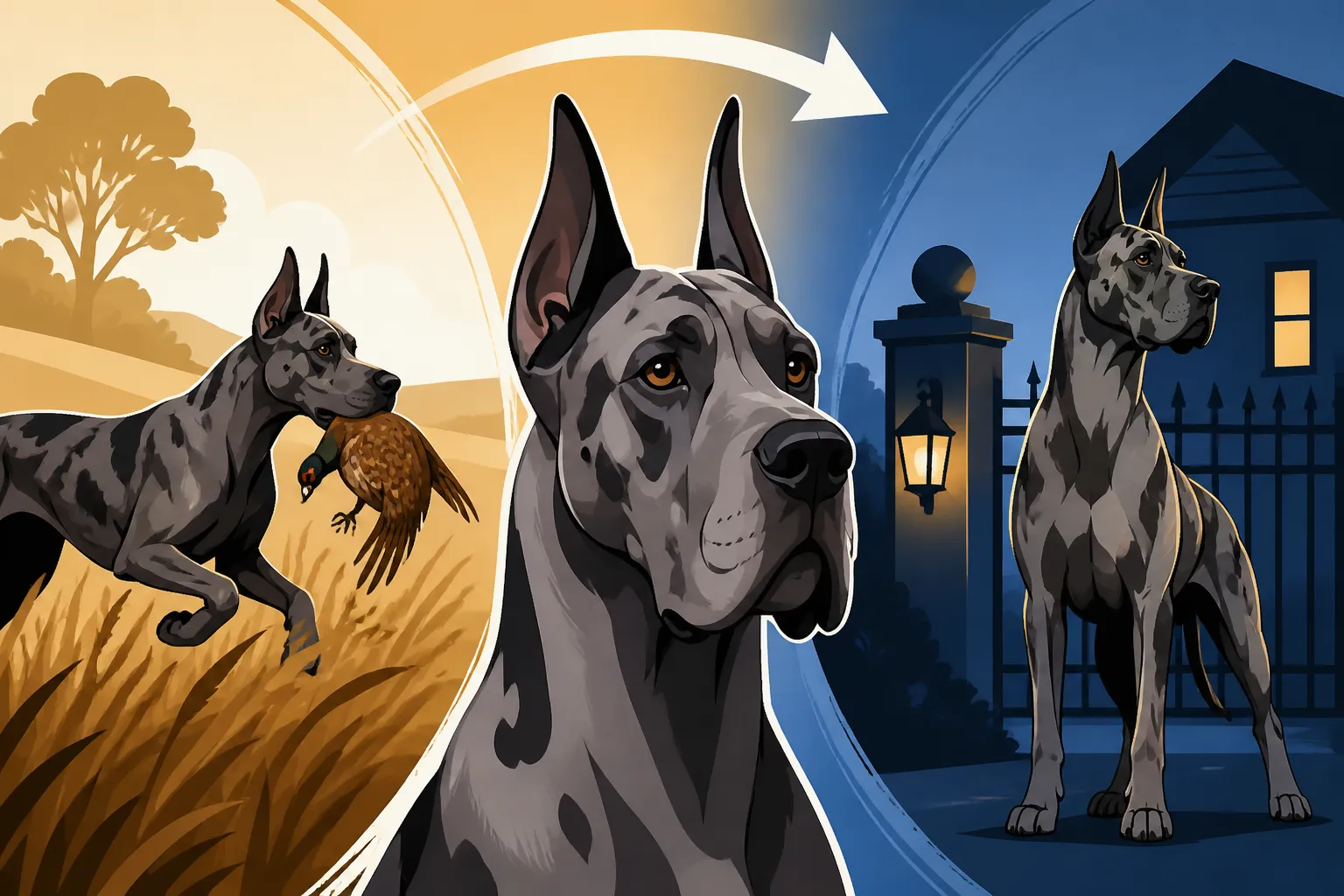
As society evolved, so did the roles of many dog breeds. The grand, perilous boar hunts began to dwindle, becoming less of a necessity and more of a sport for the aristocracy. But a dog with the Great Dane's imposing presence and inherent protective instincts wasn't simply put out to pasture. Instead, they found a new, equally important, and often more visible role: guarding noble estates and families. This was a natural progression, leveraging their existing traits for a different kind of protection.
Imagine a sprawling manor house in a less-than-safe era. Who better to patrol the grounds and deter intruders than a majestic animal that could, with its mere presence, command respect and instill a healthy dose of caution? Their sheer size alone was a deterrent, but combine that with their deep, resonant bark and a watchful demeanor, and you had an unparalleled guardian. The Great Dane quickly became a symbol of status and security, often seen alongside their noble owners, both as companions and protectors.
This transition wasn't just about physical deterrence; it was also about temperament. While they needed to be formidable, they also needed to be discerning. A guardian could not be indiscriminately aggressive; they needed to distinguish between friend and foe, a stranger and a threat. This required intelligence and a stable, confident nature, qualities that were already present in the breed, having been indirectly selected for during their hunting days. For more on their national identity, see The Great Dane as Germany's National Breed.
Why the Great Dane Became the Ideal Protector
Several factors contributed to the Great Dane's emergence as an ideal estate guardian. First and foremost, their physical presence is undeniable. A dog standing nearly three feet tall at the shoulder, with a powerful build, commands attention. Just their silhouette in a doorway or patrolling a fence line is enough to make many think twice. This visual deterrent was incredibly valuable in times when security was far less sophisticated than it is today.
Beyond their imposing size, their temperament played a crucial role. While capable of great power, Great Danes are also known for their loyalty and often, their discerning nature. They bond deeply with their families and are naturally watchful over their territory. This meant they weren't just aggressive dogs; they were intelligent protectors who understood their boundaries and responsibilities. They possessed a deep, resonant bark that could echo across an estate, alerting residents and intimidating potential threats long before an actual confrontation. This combination of physical presence and intelligent temperament made them much more than just "guard dogs"; they were revered family guardians.
Adapting Hunting Traits to Guarding Roles
The very traits that made them exceptional boar hounds translated almost perfectly to their new guarding duties. Their incredible speed, once used to catch up to fleeing prey, now allowed them to rapidly cover ground across large estates to intercept intruders. Their powerful build and courage, once necessary to hold a wild animal, instilled confidence in facing human threats. They were bred not just to chase, but to engage and hold, if necessary.
Moreover, their strong prey drive, while needing careful management, morphed into an intense protective instinct for their human "pack" and territory. The focus shifted from bringing down game to defending their home. Their keen senses, used for tracking, became assets for detecting unusual sounds or movements. Essentially, the same genetic blueprint that made them top-tier hunters provided the foundation for them to become top-tier protectors, a testament to the versatility and inherent nobility of the breed.
| Trait | Original Hunting Application | New Guarding Application |
|---|---|---|
| Size & Strength | Tackling and holding large, dangerous game | Imposing physical deterrent, strong presence |
| Speed & Agility | Catching fast-moving prey in dense forests | Quickly covering ground on large estates to intercept |
| Courage & Tenacity | Facing down aggressive wild boar | Standing firm against human intruders, unshakeable |
| Loyalty & Bond | Working closely with human hunters | Protecting family and territory with unwavering devotion |
| Alertness & Senses | Tracking prey by scent and sound | Detecting unusual activity, keen watchfulness |
| Deep Bark | Communicating during the hunt | Alerting residents, intimidating intruders |
From Noble Guardian to Family Companion: The Modern Great Dane
Fast forward to today, and the Great Dane has evolved once again, primarily into a cherished family companion. While they still possess those deep-seated protective instincts and an imposing presence, their primary role in most homes is to be a loving, gentle, and often comically clumsy member of the family. The moniker "Apollo of Dogs" speaks to their majestic appearance, but their "gentle giant" reputation truly captures their nature in a domestic setting.
The shift from guardian to companion doesn't mean they've lost their protective edge entirely. Many Great Dane owners will tell you that their Danes are acutely aware of strangers approaching the house, often letting out a deep, booming bark to announce an arrival. They are watchful, and their size naturally deters, but aggressive behavior is absolutely not characteristic of a well-bred, well-socialized Great Dane. Instead, you'll find them leaning into you for affection, taking up most of the sofa, or gently supervising children playing.
This modern role highlights the incredible adaptability of the breed. They can be formidable when necessary, yet exquisitely tender and patient with those they consider their family. It's a testament to good breeding practices over generations, focusing on stable temperaments and health, that they can transition so gracefully from such demanding historical roles to the heartwarming presence they are in our homes today. If you're wondering about their typical disposition, The Gentle Great Dane Temperament and Its Limits is a great read.
The Gentle Giant: Instincts Versus Breeding
The term "gentle giant" is not just a cute nickname; it reflects a deliberate aspect of modern Great Dane breeding. While the historical roles emphasized their protective capabilities, contemporary breeders prioritize a stable, friendly temperament suitable for living closely with families. This means selectively breeding dogs that are confident and watchful, but not overly aggressive or anxious. The aim is a dog that can alert you to a stranger but won't be overly reactive.
However, those historical instincts remain. A Great Dane's sheer size still serves as a natural deterrent. Their deep bark is inherently intimidating, and their loyal nature means they will instinctively protect their loved ones if a real threat arises. It's less about active "guarding" in the traditional sense and more about passive deterrence and an inherent, protective awareness. They are often incredibly sensitive to the moods of their family members, quick to offer comfort or to respond if they sense distress. This blend of inherent protective instinct softened by generations of careful breeding makes them unique. You can learn more about Whether a Great Dane Is a Guard Dog if you're curious about their protective tendencies.
The Great Dane as a Modern Family Member
Today's Great Dane is truly integrated into the family dynamic. They thrive on companionship and suffer if left alone for extended periods. Their affectionate nature means they want to be where their people are, often attempting to become lap dogs despite their colossal size. This desire for closeness and interaction makes them wonderful companions for individuals and families alike.
Their impressive physical attributes, once honed for the hunt, are now appreciated for their aesthetic beauty and the comfortable presence they provide. Owners often spend time ensuring their Danes are properly socialized from a young age, so they can confidently navigate the modern world, meeting new people and other dogs without undue stress. This isn't just about training; it's about honoring their inherent intelligence and ensuring their stable temperament shines through. For more on how they compare to other large breeds, you might enjoy Great Danes Against the Other Giant Breeds.
This journey, from the rugged forests of Europe to the comfortable sofas of our homes, showcases a remarkable adaptability and a consistent thread of loyalty and courage that defines the Great Dane. They remind us that while roles may change, the heart of a truly noble breed endures.
Disclaimer
This article is for general informational purposes only and does not constitute professional advice. Laws, prices and regulations vary by location and change over time. Consult a qualified professional for guidance on your specific situation.