The Great Dane Neck and Topline
It’s easy to get swept away by the sheer size and commanding presence of a Great Dane. Their massive frames, long legs, and stately heads are often the first things we notice. But beneath that impressive exterior, there’s a nuanced structure that contributes to their iconic elegance and, more importantly, their overall well-being. This guide delves into the crucial elements of the Great Dane's neck and topline, explaining why these features are not just about breed standards but about health, movement, and living a comfortable life.
The Importance of a Well-Constructed Great Dane Neck and Topline
When you look at a Great Dane, their neck and the line of their back aren't just decorative features. They're fundamental to how the dog carries itself, moves, and even how well its body functions over its relatively short lifespan. A beautifully constructed neck and topline are the hallmarks of a healthy, athletic Great Dane, allowing them to move with power and grace.
Beyond Aesthetics: Functionality and Movement
Think of the neck and topline as the scaffolding that supports the entire structure of the dog. A Great Dane, being a giant breed, puts immense strain on its musculoskeletal system. A strong, well-muscled neck and a firm, level topline are absolutely essential for proper balance and efficient movement. Without this robust foundation, every step, every turn, every leap places undue stress on joints, ligaments, and the spine.
Imagine a Great Dane trotting across a field, its powerful legs covering ground effortlessly. This elegant stride is largely due to the seamless connection from the head through the neck and along the back. The neck acts as a powerful lever, counterbalancing the body's movements, especially during turns or when accelerating. The topline, running from behind the withers to the tail, acts as a flexible yet sturdy bridge, transferring power from the hindquarters to the forequarters. When these components are correctly put together, the dog moves with a flowing, ground-covering gait that is characteristic of the breed, capable of the impressive speed and agility that their ancestral role as boar hounds demanded. It’s not just about looking good in the show ring; it’s about enabling them to live a full, active life without unnecessary strain.
The Foundation for Overall Health
Beyond movement, a correctly formed neck and topline are critical for long-term health, particularly in a breed prone to specific orthopedic and neurological issues. The cervical spine, or neck vertebrae, houses the spinal cord, and any instability or malformation in this area can have severe consequences. A neck that is too short, too straight, or lacks proper musculature can lead to an increased risk of issues like cervical spondylomyelopathy, commonly known as Wobbler Syndrome. This condition occurs when the spinal cord in the neck region becomes compressed, leading to an unsteady gait and neurological symptoms. You can learn more about The Neck Condition That Trips a Great Dane Up.
Similarly, the integrity of the topline impacts the entire spine. A weak or overly long back can predispose a Great Dane to intervertebral disc disease or general back pain as they age. The powerful muscles supporting the spine also play a role in protecting the internal organs and maintaining overall core strength. A Great Dane with a weak topline might compensate by shifting its weight unnaturally, leading to strain on hips, shoulders, and even its elbows. When you're looking at a Great Dane, especially as a puppy, understanding the structural ideals for the neck and topline isn't just academic; it’s about investing in their future health and comfort.
Deciphering the Breed Standard: What a "Correct" Neck Looks Like
The Great Dane breed standard provides a blueprint for the ideal physical characteristics, and the neck is a prominent feature. It’s described in a way that emphasizes both elegance and strength, perfectly reflecting the breed’s "Apollo of Dogs" moniker.
Ideal Neck Length and Arch
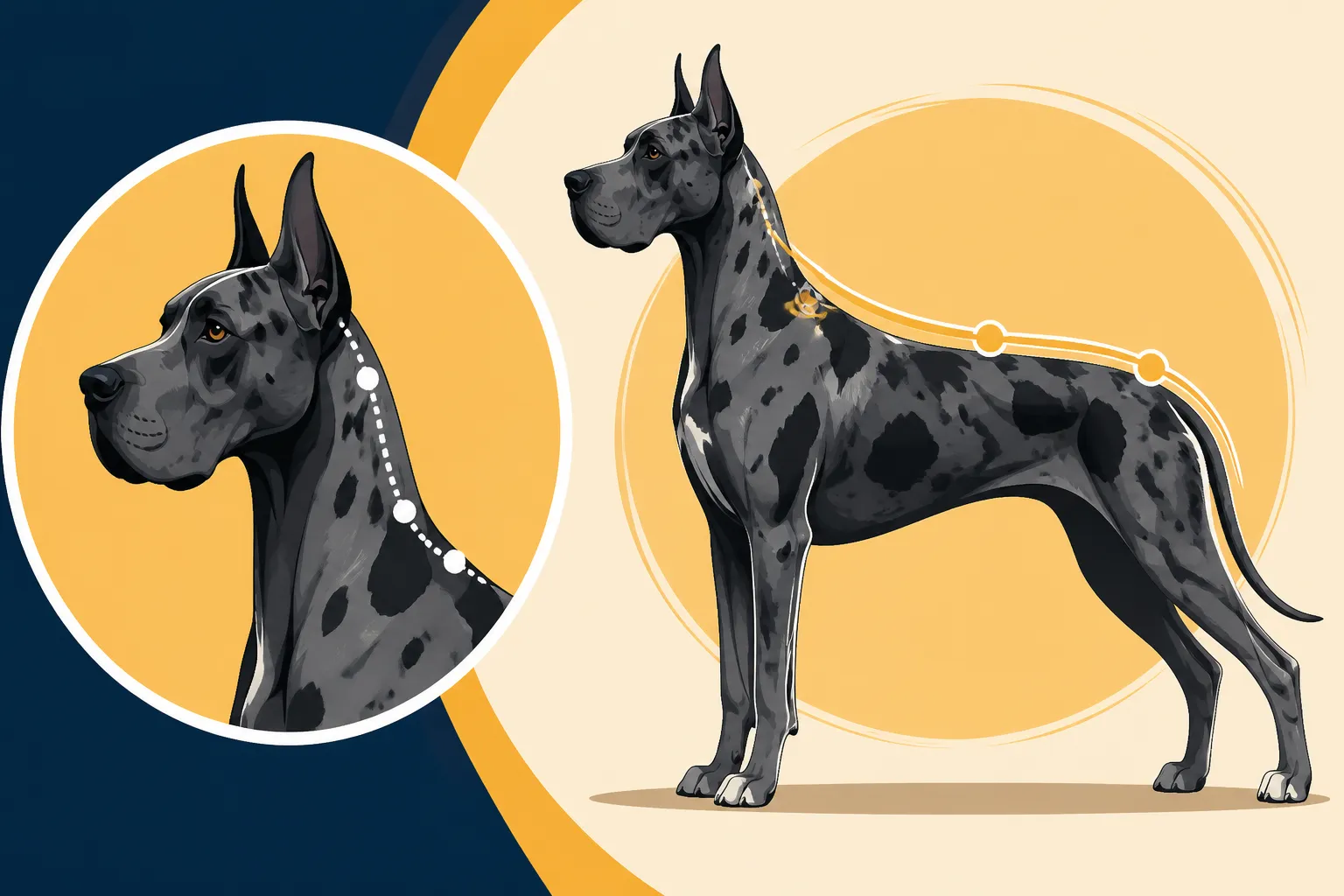
The breed standard calls for a neck that is "long, well-arched, and muscular, set high and firm, and widening gradually and smoothly into the shoulders." Let's break that down. "Long" doesn't mean overly slender or delicate; it implies sufficient length to provide balance and reach, allowing the head to be carried proudly. A Great Dane with a neck that appears too short will look "stuffy" or blocky, detracting from the elegant outline. Conversely, a neck that is excessively long and thin might lack the necessary musculature for support.
The "well-arched" aspect refers to the gentle curve from the nape of the neck down to where it blends into the withers. This arch is crucial for both aesthetics and function. It provides natural spring and flexibility, absorbing shock and facilitating powerful movement. A neck that is too straight or "ewe-necked" (concave along the top) is a structural fault, as it compromises strength and limits proper head carriage and balance. The neck should also be "muscular," indicating robust development, not just skin and bone. This musculature provides the power and stability needed for such a large head and body. Most importantly, it should "widen gradually and smoothly into the shoulders," creating a seamless transition without abrupt angles or weaknesses.
Musculature and Strength
A Great Dane’s neck should feel substantial and strong to the touch. The muscles running along the top and sides of the neck are vital for supporting the head and allowing for a full range of motion. This isn't just about looking powerful; it's about practical strength. Imagine a Great Dane lowering its head to sniff the ground or raising it majestically to survey its surroundings. These actions require significant muscle engagement.
A Great Dane with underdeveloped neck muscles might appear frail or lack the commanding presence inherent to the breed. Furthermore, strong neck muscles can help stabilize the cervical spine, potentially reducing the risk of injuries or exacerbating conditions like Wobbler Syndrome. While genetics play a huge role in overall conformation, proper diet and controlled exercise, especially during the crucial growth phases, contribute significantly to developing and maintaining this musculature. Puppy play and gentle leash work can help build this foundation without putting undue stress on developing joints and bones.
Understanding the Great Dane's Topline
The topline refers to the outline of the dog's back, from the withers (the highest point of the shoulders) to the tail set. It's a critical indicator of spinal health, structural integrity, and the dog's overall physical form.
From Withers to Tail: The Gentle Slope
The breed standard for the Great Dane calls for a topline that is "firm and level, or with a very slight rise over the loin when standing." This means that when a Great Dane is standing naturally, the line of its back should appear relatively straight and strong, ideally with a subtle upward curve over the powerful loin muscles before gently sloping to the tail. The withers should be prominent, providing a clear starting point for this firm line.
Faults in the topline can include a "roach back," where the back arches excessively upwards, or a "sway back" (also called a "dip back"), where the back sags downwards in the middle. Both of these are serious structural imperfections. A roach back can restrict movement and place abnormal stress on the spine, while a sway back indicates weakness in the back muscles and ligaments, often seen in older dogs or those with poor conformation. A firm, level topline is crucial for transmitting power efficiently through the body and maintaining balance during movement. It's the stable platform from which all movement originates.
The Role of the Back and Loin
The topline isn't just a straight line; it's comprised of the back and loin regions, each with specific characteristics vital to the Great Dane’s function. The back itself should be "short and strong," providing a compact and powerful core. A long back in a giant breed can be a significant disadvantage, as it introduces weakness and makes the dog more prone to spinal issues. Imagine a long bridge compared to a short, sturdy one – the shorter one is inherently more stable under load.
The loin, located between the last rib and the pelvis, should be "broad and slightly arched." This arch over the loin is a common feature in many powerful breeds and indicates strong musculature that contributes to spring and drive from the hindquarters. It acts as a powerful lever, allowing the dog to propel itself forward with force. A weak or flat loin reduces this power and can make the dog less agile. Together, a short, strong back and a broad, slightly arched loin create a robust and flexible spinal column capable of supporting the Great Dane's immense size and powerful movements.
Potential Issues and How They Manifest
Understanding the ideal is one thing, but recognizing when something isn't quite right with a Great Dane's neck and topline is equally important. These issues can range from minor conformational faults that impact aesthetics to serious health conditions that affect quality of life.
Structural Faults and Their Impact
Structural faults in the neck and topline often become apparent as a Great Dane grows. A "short, thick neck" can make the dog appear cumbersome and limit its reach and agility. It can also crowd the cervical vertebrae, potentially contributing to issues. A "ewe neck," as mentioned earlier, is weak and hinders proper muscle development and function. Similarly, a "straight shoulder assembly," where the shoulder blade is too upright rather than well-angled, can make the neck appear shorter and less elegant, reducing reach and efficiency in movement.
When it comes to the topline, a "weak or sagging topline" not only looks unsightly but indicates insufficient muscle tone or genetic weakness in the ligaments supporting the spine. This can lead to a less efficient gait, making the dog seem to plod rather than flow. A "roach back" or "sway back" dramatically alters the natural distribution of weight along the spine, often leading to compensatory movements that strain other joints. These faults don't just affect how a Great Dane looks; they directly impact its ability to move freely, comfortably, and powerfully, potentially leading to discomfort or pain as the dog ages.
Health Concerns Linked to Neck and Topline
While genetics are a primary driver, specific health conditions are intrinsically linked to the structure of the neck and topline. Perhaps the most well-known is Wobbler Syndrome (Cervical Spondylomyelopathy), which predominantly affects large and giant breeds like Great Danes. This neurological condition involves compression of the spinal cord in the neck region. Contributing factors can include genetic predisposition to malformed vertebrae, a straight neck set that puts stress on the cervical spine, or even rapid growth if not managed properly. Signs can include an unsteady, wobbly gait, particularly in the hindquarters, stumbling, or reluctance to lower the head. Diagnosing Wobblers typically involves advanced imaging like MRI. We have an article dedicated to Imaging a Great Dane Neck for Wobblers.
Other issues, while not as dramatic, can still impact a Great Dane's comfort. For instance, a persistent sway back might indicate underlying disc issues or weakness in the paraspinal muscles, leading to chronic back pain. Over time, this can contribute to compensatory lameness in the hips or shoulders. A poorly structured neck might also contribute to early onset arthritis in the cervical vertebrae. While not every structural fault will lead to severe health issues, they certainly increase the risk and can diminish a Great Dane's overall quality of life. This is why reputable breeders prioritize sound structure, not just for show but for the longevity and comfort of their dogs.
Here's a simple comparison of ideal versus faulty neck and topline characteristics:
| Feature | Ideal Characteristics | Faulty Characteristics | Potential Impact |
|---|---|---|---|
| Neck | Long, well-arched, muscular, clean, set high | Short, thick, straight (ewe neck), thin, lacking muscle | Restricted movement, poor balance, increased risk of Wobbler Syndrome, "stuffy" appearance |
| Withers | Prominent, high | Flat, undefined | Weak shoulder connection, less efficient movement |
| Back | Short, strong, firm | Long, weak, sagging (sway back), excessively arched (roach back) | Spinal issues, disc disease, inefficient gait, back pain, reduced power |
| Loin | Broad, slightly arched, well-muscled | Narrow, flat, weak | Reduced hindquarter drive, poor flexibility, less athletic performance |
| Overall Topline | Level or very slight rise over loin, firm | Sloping downwards from withers, uneven, weak | Compromised structure, lameness, discomfort, reduced endurance |
Living with a Great Dane: Practical Considerations
Owning a Great Dane means being mindful of their unique physical needs, and that certainly includes their neck and topline. What you do daily, from what you feed them to how you walk them, can significantly influence the health and longevity of these crucial structures.
The Importance of Proper Nutrition and Exercise
Nutrition plays an enormous role, especially during the rapid growth phase of a Great Dane puppy. Feeding a large breed puppy food that is formulated for slow, steady growth is paramount. Over-nutrition, particularly too much calcium or phosphorus, or simply too many calories, can lead to excessively rapid growth, putting immense stress on developing bones and joints, including the spine and neck vertebrae. This can exacerbate conformational weaknesses and increase the risk of conditions like Wobbler Syndrome. We have a great article on Why Calcium Supplements Damage a Great Dane. It’s about careful, controlled growth, not trying to make them bigger faster. Chewy offers a wide selection of large breed puppy formulas that prioritize balanced growth.
Similarly, appropriate exercise is key. While Great Danes are large, their bones and joints are not fully mature until they are closer to two years old. Intense, forced exercise, like long runs or strenuous agility, should be avoided during puppyhood. Instead, focus on moderate, controlled exercise such as leashed walks and supervised playtime on soft surfaces. This allows muscles to develop without overtaxing immature joints and spinal structures. Once they are mature, a Great Dane enjoys regular exercise, but always be mindful of their limits and avoid activities that involve excessive jumping or jarring movements that could strain the back and neck. Find out more about Exercise Limits While a Great Dane Is Still Growing.
Choosing the Right Equipment
The equipment you use daily to walk your Great Dane can have a direct impact on their neck and throat. For a breed that can easily weigh over 100 pounds, a traditional flat collar can put significant pressure on the delicate structures of the neck, especially if they pull on the leash. This pressure can be uncomfortable, potentially damaging to the trachea, and in Great Danes prone to neck issues like Wobbler Syndrome, it can be downright dangerous.
Many Great Dane owners find that a well-fitting front-clip harness is a far better choice. Harnesses distribute pressure across the chest and shoulders, away from the neck and throat. This not only makes walks more comfortable for your Dane but can also provide better control, especially for powerful pullers, making walks more enjoyable for both of you. Brands like Chewy often carry a variety of large-breed harnesses designed for comfort and control. If you have a Great Dane with a confirmed neck issue, or even just one that pulls, switching to a harness is a simple yet effective way to protect their neck and spine. You can read more about Swapping a Great Dane's Collar for a Harness.
Disclaimer
This article is for general informational purposes only and does not constitute professional advice. Laws, prices and regulations vary by location and change over time. Consult a qualified professional for guidance on your specific situation.