What Separates Black From Mantle in a Great Dane
It’s surprisingly easy to get lost in the wonderful world of Great Dane colors, especially when you’re trying to tell the difference between what might seem like just "black and white" at first glance. Many new owners, and even some who've been around Danes for a while, can get a bit muddled trying to distinguish a true solid black Great Dane from its beautifully marked mantle counterpart. It’s not just about a little bit of white here or there; there are very specific patterns and standards that define each, and understanding them helps you appreciate the breed's rich diversity. This guide will walk you through the precise characteristics that separate a black Great Dane from a mantle, delving into what the breed standard truly looks for.
The Classic, Solid Black Great Dane
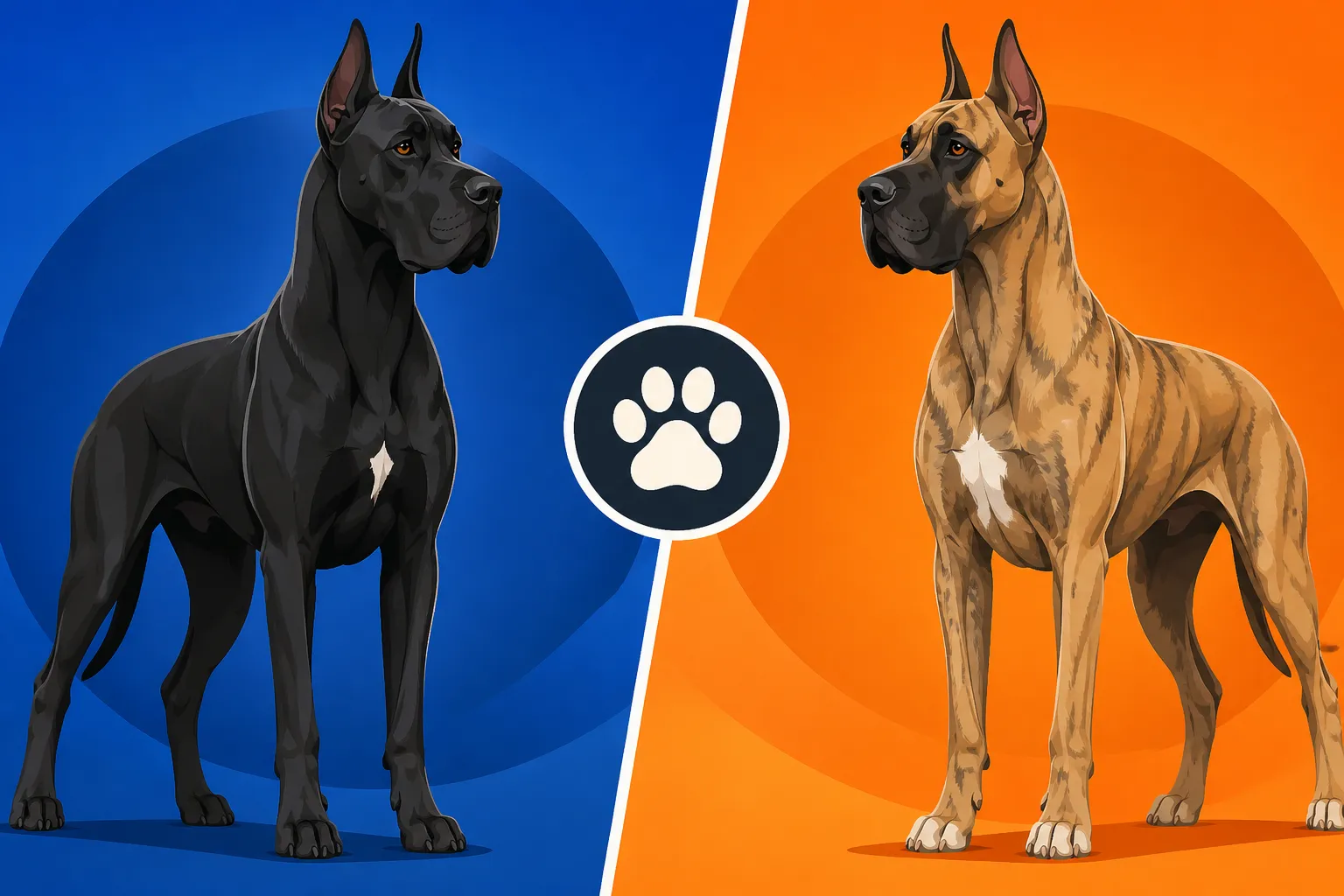
When we talk about a solid black Great Dane, we're picturing an animal of profound elegance and striking simplicity. There's something undeniably powerful about a Dane cloaked entirely in a deep, glossy black coat. It's not just "dark"; it's a specific, rich pigment that demands attention and, when well-groomed, can shine like patent leather. This isn't just a casual preference; the breed standard has very clear guidelines for what constitutes a true black.
The All-Important Deep, Glossy Black
For a Great Dane to be officially classified as a black, its coat needs to be a rich, lustrous black from nose to tail, ideally without any white markings at all. We're talking about a uniform, intense color that makes the dog look like a magnificent shadow come to life. Sometimes, you might see a tiny splash of white on the chest or the tips of the toes, and while technically a deviation, small amounts of white in these areas are often tolerated in an otherwise excellent dog. However, the ideal is truly solid. The texture of the coat should be smooth and short, contributing to that sleek, polished appearance. Think of it as a finely tailored suit – every inch should be perfect. This uniform coloration contributes significantly to The Great Dane the Show Ring Is Looking For, where precision in appearance is highly valued.
Imagine you're at a dog park, and a huge, gleaming black Great Dane saunters past. Its coat catches the sunlight, reflecting it like obsidian. There's no distraction, no other color breaking up its silhouette, just that sheer, unadulterated black. That's the visual impact of a truly solid black Dane. Their presence is often described as dignified and commanding, with the solid color adding to their imposing yet graceful stature. It's a look that's both classic and timeless, and it highlights the powerful musculature and flowing lines of the breed without any visual interruptions.
Genetics of the Black Coat
Understanding the genetics behind a solid black coat can feel a bit like deciphering a complex code, but it’s fascinating once you get the hang of it. For Great Danes, the solid black color is primarily controlled by the K locus, specifically the dominant black allele (KB). A dog that inherits at least one copy of this dominant KB gene will express a black coat, assuming no other genes are modifying it to another color like blue or brindle. So, a solid black Dane will typically have the genotype KB/KB or KB/ky, where 'ky' represents the non-black allele.
This genetic makeup means that black is often a "default" color for many dogs if certain other genes aren't present to express different patterns or diluted colors. It’s also why you’ll see black Danes often used in breeding programs, as they can carry genes for other colors without showing them. It’s a bit different from some other breeds where recessive black genes might be at play, but for Great Danes, that dominant KB is the key player in producing that striking, uniform ebony. It’s a testament to the elegant simplicity that can be found even within complex genetics, proving that sometimes, less truly is more when it comes to a powerful visual.
Black Great Danes in the Ring and Beyond
In the show ring, a solid black Great Dane is expected to embody power and elegance. Judges look for that deep, glossy black, as mentioned, with minimal to no white markings. Any significant white can be considered a fault, depending on its size and location, as it deviates from the ideal set forth in the breed standard for this specific color. Breeders meticulously plan pairings to achieve this rich, even pigmentation, often considering genetics that produce The Seven Great Dane Colors to avoid unexpected variations.
Beyond the competitive arena, black Great Danes hold a special place in the hearts of many owners. Their imposing size combined with their sleek, dark coat often makes them appear more formidable, yet those of us who live with them know they're typically just as gentle and loving as any other color Dane. Perhaps it's the contrast between their majestic appearance and their gentle "Apollo of Dogs" nature that makes them so beloved. Whether gracing a show ring or lounging on a favorite dog bed from, say, Chewy, a well-bred black Great Dane is a truly magnificent companion.
Unpacking the Mantle Great Dane's Distinctive Pattern
Now, let's shift our focus to the mantle Great Dane. This is where the beauty of black meets the elegance of white in a very particular, recognizable pattern. If the solid black is a sleek, single-color masterpiece, the mantle is a work of art with precise, deliberate brushstrokes of contrasting white. It's not just a black dog with some random white patches; it's a specific configuration that gives the mantle its unique identity.
The Signature Black Blanket with White Trim
A mantle Great Dane is characterized by a solid black body, often referred to as a "black blanket," that covers the torso, extending down the legs and onto the tail. The key here is the trim – precise white markings that define the pattern. Imagine a dog wearing a perfectly fitted black coat, but it has a crisp white collar, a clean white bib on the chest, and pristine white "socks" on its paws. This is the essence of the mantle.
The white isn't haphazard; it's quite specific. You'll see white on the muzzle, often extending up the face as a blaze, and crucially, there's a distinct white collar around the neck, which may or may not be complete. The chest is white, the front legs are predominantly white with a black "sleeve" running down the back, and the rear legs are typically white below the hocks. The tail usually has a white tip. It’s a stunning contrast that makes these dogs incredibly eye-catching, almost like they're dressed for a formal occasion. This pattern is so specific that it's often confused with other patterns, but the "black blanket, white trim" rule helps solidify its definition.
The White Collar on a Mantle Great Dane and Other Essential Markings
The white collar is indeed a hallmark of the mantle pattern, but it's just one piece of the puzzle. The breed standard for the mantle color is quite descriptive, almost poetic in its precision. Beyond the collar, which can be full or broken, you're looking for a white muzzle with a black nose, typically a white blaze on the face, and a full white chest. The white markings should ideally create a striking contrast without overwhelming the dominant black.
Let's break down the markings:
- Head: A white muzzle, often with a white blaze that runs between the eyes. The skull should be black.
- Neck: A partial or complete white collar. This is one of the most identifiable features distinguishing a mantle from a solid black or even a heavily marked harlequin.
- Body: A solid black body "blanket."
- Chest and Belly: White, extending under the body.
- Legs: Predominantly white, especially the lower legs, with black extending down the back of the front legs and partway down the thighs on the rear.
- Tail: Black with a white tip.
These precise markings are what differentiate a mantle Great Dane. Without them, particularly the white collar and specific leg markings, a dog might be considered a poorly marked black or even a mis-marked harlequin. It's truly about the specific arrangement, not just the presence of white. When considering a puppy, a good breeder will be able to show you the lineage and explain how these patterns present, often referencing What a Great Dane Breeder Who Screens Hearts Charges as part of their commitment to the breed.
The Genetic Recipe for Mantle
The mantle pattern, while visually distinct, isn't a separate color gene in itself but rather a specific expression of the piebald gene in conjunction with a black base. Genetically, a mantle Great Dane carries the black gene (KB allele at the K locus, as discussed for solid blacks) and two copies of the piebald gene (sp/sp) at the S locus. The 'sp' allele is responsible for producing white markings on a colored coat.
The amount and placement of white are influenced by polygenes (multiple genes working together) and modifier genes, which is why you see variations in how complete a white collar might be or how extensive the blaze is. However, the fundamental recipe is that black base with the piebald patterning. This is distinct from, say, harlequin, which has additional modifying genes (like the merle gene, M) that break up the black patches. Understanding this genetic foundation helps breeders produce consistent mantle patterns and avoid issues that can arise from, for example, combining certain color genes, such as Why Two Merle Great Danes Should Not Be Bred, which can lead to health problems. It's a fascinating interplay of genetics that results in such a beautiful and specific coat pattern.
Key Distinctions: Seeing the Difference Clearly
Sometimes, telling the difference between a Black and a Mantle Great Dane can seem tricky at a quick glance, especially with younger puppies whose markings might not be fully defined yet. However, once you know what to look for, the distinctions become incredibly clear. It's all about precision in the white markings.
Visual Cues: Spotting the White
The easiest way to tell a Black Great Dane from a Mantle is to look for the presence and pattern of white. A truly solid black Dane will have virtually no white. Maybe a tiny, barely noticeable speck on the chest or a few white hairs on the toes, but that's about it. Anything more than that, and you're likely not looking at a show-quality solid black.
A mantle, on the other hand, must have specific white markings. The most obvious are the white collar (even if broken), the white chest, and the white on the legs, along with the white muzzle and blaze. If you see clearly defined white areas that fit this description, you're looking at a mantle. If the dog is mostly black with large, irregular patches of white that don't follow the mantle pattern, you might be looking at something else entirely, like a poorly marked harlequin or even a piebald that isn't considered a true mantle by standard.
Here's a quick comparison table to help:
| Feature | Solid Black Great Dane | Mantle Great Dane |
|---|---|---|
| Body Color | Uniform, deep, glossy black | Solid black "blanket" covering torso |
| White Collar | Absent (or minuscule, nearly invisible flecks) | Present, either complete or broken around the neck |
| Chest | Black (minimal white flecks sometimes tolerated) | White, extending to the belly |
| Muzzle/Face | Black | White muzzle, often with a white blaze between the eyes |
| Legs/Paws | Black (minimal white flecks on toes sometimes tolerated) | Predominantly white lower legs/paws, black "sleeves" on upper legs |
| Tail | Black | Black with a distinct white tip |
| Overall Look | Sleek, uniform, imposing | Tuxedo-like, striking black and white contrast |
When you're comparing two dogs side-by-side, these markers become incredibly useful. Think of it as looking at two different models of a car: both are excellent, but one has a specific trim package that sets it apart. The mantle's "trim" is its defining characteristic. This specific pattern is why What a Mantle Great Dane Puppy Costs can sometimes differ from other color varieties, reflecting the careful breeding needed to achieve the correct markings.
The Importance of Breed Standard for Both Colors
The Great Dane breed standard isn't just a guideline for show dogs; it's a blueprint for the ideal representation of the breed, including temperament, conformation, and, of course, color. For both black and mantle Great Danes, adherence to these standards is crucial, not just for aesthetics but also for preserving the integrity of the breed. When a dog deviates significantly from the standard, it can indicate potential issues in breeding practices, or simply a dog that doesn't meet the ideal.
For a black Great Dane, the standard calls for that rich, glossy, uniform black. Any large white patches or other colors would be considered a serious fault. For the mantle, the standard meticulously describes the placement and extent of the white markings. A dog that is mostly black with only a tiny speck of white, but is being called a "mantle," is often mislabeled. Conversely, a dog that has too much white, or white in areas not specified for a mantle, might be considered a piebald (which is sometimes referred to as a "marked harlequin" in some informal circles, but it's not the true mantle pattern). This precision ensures that when someone says "black" or "mantle" Great Dane, there's a clear, universally understood image that comes to mind. It also plays a role in The Great Dane Head the Standard Wants, as even features like muzzle color and eye rims are often influenced by the overall coat coloration.
What to Look for in a Puppy When Distinguishing
Distinguishing between a black and a mantle puppy can be a bit trickier than with adults, as their markings might not be as pronounced. However, the core principles still apply. For a black puppy, you're looking for an almost entirely black coat. Any white should be extremely minimal, like a few hairs on the chest or very tiny white toe tips. If you see anything more significant than that, it's unlikely to mature into a truly solid black.
For a mantle puppy, look for the defining white features right away. Even at a few weeks old, a mantle puppy should show a white muzzle, a distinct white blaze on the face, some white on the chest, and noticeably white paws and lower legs. The white collar might be a bit fuzzy or incomplete in a very young pup, but the presence of all these white markings in their correct positions is the key. If you're unsure, ask the breeder to show you pictures of previous litters to demonstrate how their mantle puppies develop. Responsible breeders understand the importance of color genetics and can provide insights, often along with Reading a Great Dane Puppy's Health Papers which detail parentage and health screenings. When getting supplies for your new puppy, whether black or mantle, places like Chewy are excellent for finding appropriately sized collars, food, and beds.
Living with Black vs. Mantle: Care and Temperament
While the visual differences between black and mantle Great Danes are clear, it's important to remember that these distinctions primarily relate to their appearance. When it comes to their day-to-day lives, their personalities, and the care they require, these two color varieties are, at their core, just Great Danes. Their massive size and specific health considerations will always be more impactful than their coat color.
Do Coat Colors Affect Personality?
This is a question many prospective Great Dane owners ponder: Does the color of a dog's coat influence its personality? The simple answer, for black and mantle Great Danes, is generally no. A dog's temperament is primarily a result of its genetics (the disposition inherited from its parents), its early socialization, and the training it receives throughout its life. Whether a Dane is solid black, mantle, fawn, or blue, they are still Great Danes, known for their "gentle giant" disposition.
You'll find gentle, affectionate, sometimes goofy, and often loyal companions in both black and mantle Danes. Any variations in temperament are more likely due to individual dog personality, lineage, and upbringing rather than the specific genes that code for their coat pattern. While some old wives' tales might suggest certain colors are more "stubborn" or "calm," scientific evidence largely refutes these claims when it comes to standard color variations like black and mantle. What truly matters is choosing a puppy from a reputable breeder who prioritizes good temperament in their lines, or adopting from a rescue that provides thorough background information. Understanding Whether Great Danes Are Really Calm Indoors is far more important than their coat color in terms of living harmoniously with these big dogs.
General Care Considerations for Both
When it comes to caring for a Great Dane, regardless of whether it's black or mantle, the fundamental needs remain the same. Their sheer size dictates much of their care. They need large quantities of high-quality food, often specifically formulated for large or giant breeds to support their rapid growth as puppies and maintain their impressive physique as adults. You might find yourself ordering huge bags of kibble from online retailers like Chewy on a regular basis! Whether a Great Dane Needs Puppy Food to Eighteen Months is a crucial question, as proper nutrition prevents many joint and growth issues.
Grooming for both black and mantle Danes is relatively straightforward thanks to their short coats. They shed, of course, but typically require only weekly brushing to remove loose hair and keep their coats healthy and shiny. Baths are infrequent unless they get particularly dirty. The biggest challenge in grooming often comes down to their size – getting a giant dog into a bathtub can be an adventure! Health-wise, both black and mantle Danes are susceptible to the same breed-specific issues, such as bloat, dilated cardiomyopathy (DCM), and orthopedic problems like hip and elbow dysplasia. Regular vet check-ups, preventive care, and prompt attention to any health concerns are paramount. Caring for a Great Dane is a significant commitment, but the love and companionship they offer make it incredibly rewarding, regardless of the beautiful coat they wear.
Disclaimer
This article is for general informational purposes only and does not constitute professional advice. Laws, prices and regulations vary by location and change over time. Consult a qualified professional for guidance on your specific situation.