Swapping a Great Dane’s Collar for a Harness
It's a familiar scenario for many Great Dane owners: you're out for a walk, enjoying the fresh air, when suddenly your gentle giant spots a squirrel. In a split second, that serene stroll turns into a tug-of-war, leaving your arm aching and your beloved Dane gagging against their collar. This common frustration highlights a real problem for owners of large, powerful breeds. This guide will dive deep into why traditional collars can be less than ideal for a Great Dane and how transitioning to a well-fitted harness can transform your walking experience, making it safer and more comfortable for both you and your majestic companion.
The Challenges of Collars on a Great Dane
When you have a dog that can easily outweigh a grown human, the physics of leash walking change dramatically. A collar, while standard for identification and basic control, can quickly become a liability, not just for your comfort, but for your Great Dane's health. It’s not just about strength; it’s about their unique physiology.
Why a Collar Can Be Problematic for a Giant Breed
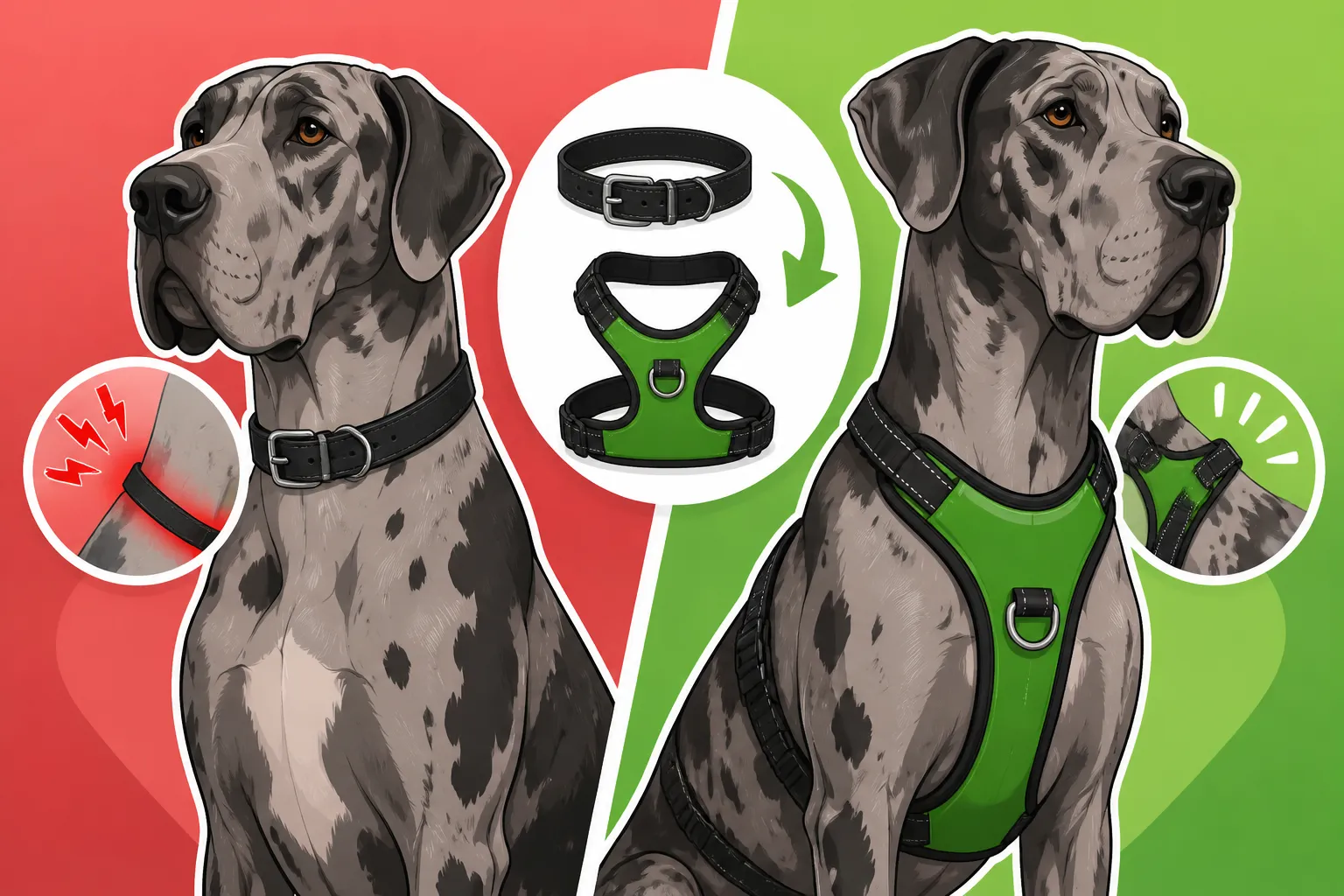
Think about the sheer force a Great Dane can generate when they decide to pull. A traditional neck collar concentrates all that pressure onto a very small area: their throat and neck. This isn't just uncomfortable; it can be downright dangerous. The delicate structures in a dog's neck, including the trachea (windpipe), thyroid gland, and cervical vertebrae, are not designed to withstand repeated, sudden impact from a collar. Over time, this constant pressure can lead to chronic irritation, coughing, gagging, and even more serious issues like tracheal collapse or exacerbating existing neck conditions.
For a breed like the Great Dane, which can be prone to certain health issues, adding undue stress to their neck is a risk no owner wants to take. Even a seemingly minor jolt can strain muscles or ligaments, and in a worst-case scenario, could contribute to or worsen conditions like the often-debilitating The Neck Condition That Trips a Great Dane Up. The potential for long-term damage, even from seemingly minor pulling, is a serious consideration.
Beyond the physical risk to your dog, there's the very real danger to you. A Great Dane that lunges or pulls with a collar can easily pull you off your feet, leading to falls and injuries. It's not uncommon to hear tales of owners with sprained wrists or scraped knees simply because their otherwise well-behaved Dane got excited on a walk. This isn't a sign of a bad dog; it’s often a sign that the equipment isn't suitable for Handling a Great Dane That Outweighs You.
Recognizing Signs Your Great Dane Needs a Change
Sometimes, the signs that a collar isn't working are obvious, like your dog making choking sounds or clearly struggling for breath when they pull. Other times, they can be more subtle. Pay close attention to your Great Dane's behavior and physical responses during walks. Do they frequently stop and scratch at their neck? Do they try to rub their neck on the ground or against your leg after the leash is removed? These can be indicators of discomfort or irritation.
Another tell-tale sign is persistent coughing or gagging, especially right after a pull or throughout the walk. This can be a direct result of the collar pressing on their trachea. Some dogs might even develop a hoarse bark or show changes in their vocalization. If your Great Dane seems reluctant to go for walks, or actively resists having their collar and leash put on, it could be a psychological response to discomfort they associate with the collar.
Observe how your Great Dane walks on the leash. Is there a constant tension, with your dog pulling ahead, seemingly oblivious to your attempts to slow them down? This relentless pulling, even if it doesn't always result in choking sounds, is still placing immense strain on their neck. If you find yourself constantly battling your dog to maintain Great Dane Leash Manners at a Hundred and Fifty Pounds, it’s a strong signal that a collar might be counterproductive to your training goals and your dog's well-being.
Understanding Different Harness Types for Great Danes
Once you realize a collar isn't cutting it, the world of harnesses can seem a bit overwhelming. There are so many options! But for a Great Dane, not all harnesses are created equal. The key is understanding how each type works and which one best suits your dog's walking style and your handling needs.
Front-Clip Harnesses for Better Control
Front-clip harnesses, sometimes called "no-pull" harnesses, are a game-changer for many Great Dane owners struggling with a strong puller. Instead of the leash attaching to the dog's back, it clips to a ring located on the front of their chest. The genius of this design is simple: when your Great Dane tries to pull forward, the leash connection on their chest gently redirects their momentum to the side. This makes it much harder for them to gain leverage and pull you forward.
Imagine trying to pull a wagon from the side instead of the front; it naturally veers off course. It works similarly with your Dane. This redirection not only discourages pulling but also allows you to steer your dog more effectively without putting pressure on their neck. It transforms a powerful lunge into a gentle turn, giving you more control and your dog less incentive to pull.
These harnesses are particularly effective during the training phase, helping your Great Dane learn to Get a Great Dane to Walk on a Loose Leash without the discomfort of choking. For new Great Dane puppies, or even older rescue Danes who may have developed bad leash habits, starting with a front-clip harness can establish positive walking behaviors from the outset. Choosing durable, well-fitting equipment like this is an investment in your dog's safety and comfort, potentially preventing injuries down the line that could lead to unexpected vet visits. While a good pet insurance plan like one from Healthy Paws can cover accidents and illnesses, preventing them where possible is always the goal.
Back-Clip Harnesses and Their Use Cases
Back-clip harnesses are perhaps the most common type you'll see. With these, the leash attaches to a ring on the dog's back, typically between the shoulder blades. They are generally comfortable and don't put any pressure on the neck or throat, which is a definite improvement over a traditional collar. For Great Danes that are already well-trained on a leash and don't pull much, a back-clip harness can be an excellent choice, offering comfort and security for casual walks.
However, if your Great Dane is still prone to pulling, a back-clip harness won't offer the same "no-pull" mechanism as a front-clip. In fact, for a strong puller, it can sometimes encourage them to lean into the harness and pull even harder, almost like a sled dog. The pressure is distributed more broadly across their chest and back, which is safer than neck pressure, but it doesn't give you the same steering capability.
Despite this, back-clip harnesses are fantastic for well-mannered Danes who walk politely on a loose leash. They're also great for activities where pulling isn't a concern, like car rides (when used with a seatbelt attachment) or simply lounging in the yard. They allow for a full range of motion and are generally easier to put on and take off than some front-clip designs. For dogs who have mastered their The Manners a Great Dane Needs Before It Grows and refined their leash skills, a comfortable back-clip harness can be a perfect fit.
Dual-Clip Harnesses: The Best of Both Worlds
For ultimate versatility and control, many Great Dane owners opt for a dual-clip harness. These clever designs feature attachment rings on both the front of the chest and the back between the shoulder blades. This means you can choose where to attach your leash based on the situation, or even attach a double-ended leash to both rings for maximum control.
When you're working on leash manners or navigating a busy area, you can use the front clip to discourage pulling and guide your Great Dane gently. For relaxed strolls in a quiet park, or if your dog is having a particularly good day, you might opt for the back clip for a more traditional and comfortable walking experience. The ability to switch between attachment points or even use both simultaneously offers an unparalleled level of adaptability.
This flexibility makes dual-clip harnesses a wise choice for Great Dane owners who encounter a variety of environments or who are still working through different stages of their dog’s training. It's like having multiple tools in one, ready for whatever your outing brings. Investing in quality gear like a good dual-clip harness can offer peace of mind, knowing you're well-equipped for any scenario. And with pet insurance providers like Healthy Paws, you can feel more secure knowing that you have comprehensive coverage should any unexpected accident or illness arise, even if your gear is top-notch.
Step-by-Step Guide to Transitioning to a Harness
Making the switch from a collar to a harness for your Great Dane doesn't have to be a battle. With a thoughtful, positive approach, you can help your dog embrace their new walking gear. It's all about patience, proper fit, and positive reinforcement.
Choosing the Right Size and Fit
This is perhaps the most crucial step, especially for a Great Dane. A poorly fitting harness is not only uncomfortable but can also cause chafing, restrict movement, or, worst-case scenario, allow your strong Dane to slip out. Always measure your Great Dane carefully according to the harness manufacturer's instructions. Key measurements typically include the girth around the broadest part of their chest, just behind the front legs, and sometimes the neck circumference or length of their back.
When you receive the harness, adjust it so it's snug but not tight. You should be able to comfortably slide two fingers under any strap. Check for clearance around the armpits; you don't want any straps rubbing or digging in there, as this can quickly lead to painful chafing, especially on long walks. Make sure the harness doesn't restrict their natural shoulder movement, which is essential for a Great Dane's long, powerful stride.
Don't settle for "good enough." A Great Dane needs a harness specifically designed for large, strong breeds, often featuring wider straps, robust buckles, and reinforced stitching. Brands like Ruffwear, Blue-9 Balance, and Freedom No-Pull Harness are often recommended for their quality and design in handling powerful dogs. It's an investment, but a well-made, properly fitted harness will last longer and provide significantly more comfort and safety.
Introducing the Harness Positively
Dogs, especially Great Danes known for their sensitive nature, respond best to positive experiences. Don't just clip the harness on and head out the door. Start by simply letting your Great Dane see and sniff the harness. Place it on the floor, offer treats around it, and let them associate it with good things.
Next, gently place the harness over their head (if it's that style) or drape it over their back without buckling. Give them a high-value treat immediately. Do this a few times a day for a few days. Once they seem comfortable, start buckling one strap, then offer a treat. Gradually work up to buckling all straps, always making it a quick, positive interaction with rewards. Keep the initial wear times very short – just a few minutes, even indoors – and then take it off. This prevents them from feeling trapped or uncomfortable and builds a positive association.
Once they're comfortable wearing it indoors for longer periods, attach the leash and practice walking around the house. Again, keep it light and fun, with plenty of praise and treats. The goal is for your Great Dane to view the harness not as an imposition, but as a cue that something fun is about to happen – like a walk!
Training for a Loose Leash Walk with a Harness
The harness is a tool, but it's not a magic bullet. While a front-clip harness will naturally reduce pulling, it’s still important to continue working on Getting a Great Dane to Walk on a Loose Leash through positive reinforcement training. The harness gives you a better opportunity to teach, as your dog isn't distracted by discomfort around their neck.
Start with short, focused training sessions. When your Great Dane walks politely beside you with a loose leash, reward them lavishly with treats and praise. If they start to pull, simply stop walking. Wait for the leash to slacken, even for a second, then immediately praise and resume walking. This teaches them that pulling gets them nowhere, while a loose leash means progress. Avoid yanking or using physical corrections, as these are often ineffective and can undermine trust with a sensitive breed like a Great Dane. You might find that Why Physical Corrections Fail on a Great Dane explains this further.
Consistency is key. Everyone who walks your Great Dane should use the same harness and follow the same training methods. This will help your dog understand the new rules quickly. Remember, the goal isn't just to stop pulling; it's to create a happy, relaxed walking experience for both of you. By preventing injuries through proper equipment and consistent training, you're investing in your Great Dane's long-term health, which is always a smart move. Should any unforeseen accidents or illnesses occur despite your best efforts, a pet insurance plan from Healthy Paws can provide crucial financial support.
Benefits and Long-Term Impact of Harness Use
Making the switch to a harness is more than just changing a piece of equipment; it's about improving the quality of life for your Great Dane and enhancing your bond. The benefits extend far beyond just the immediate comfort.
Enhanced Safety and Comfort for Your Giant Companion
The most immediate and obvious benefit of a harness is the protection it offers your Great Dane's delicate neck and throat. By distributing pressure across their chest and shoulders, a harness eliminates the risk of tracheal damage, neck strain, or exacerbation of conditions like Wobbler's Syndrome. This means your dog can breathe freely, even if they get excited, making walks much more enjoyable and less stressful for them. For a breed whose average Why a Great Dane Only Lives Seven to Ten Years, every measure to enhance their well-being is vital.
Beyond the physical safety, there's a significant improvement in overall comfort. No more choking, gagging, or constantly struggling against a tight collar. This comfort translates into a happier, more relaxed Great Dane on walks. A comfortable dog is also less likely to react negatively to their environment, leading to a more positive experience for everyone involved. For you, the handler, a harness provides superior control, especially when dealing with A Great Dane That Pulls You Off Your Feet. You can guide and steer your dog much more effectively without resorting to force or risking injury to yourself.
Promoting Better Behavior and Training Outcomes
When your Great Dane is uncomfortable or in pain, their ability to learn and respond to cues is severely hindered. By switching to a harness, you remove a major source of discomfort, allowing your dog to focus better on your commands and the lesson at hand. A comfortable dog is more receptive to training, making it easier to reinforce positive behaviors and correct undesirable ones. This is particularly true when working on Harnesses and Collars That Control a Great Dane.
The improved control offered by a front-clip or dual-clip harness also changes the dynamic of your walks. Instead of a constant battle, you can now enjoy a more cooperative experience. This shift in communication from punitive neck pressure to gentle body guidance can significantly strengthen the bond between you and your Great Dane. They learn to trust your guidance, and you gain confidence in managing their impressive size and strength.
Ultimately, using a harness fosters a more harmonious relationship and helps you achieve better training outcomes. A Great Dane that walks politely on a leash is a joy to take out, expanding the possibilities for adventures together. And while no equipment can prevent every issue, ensuring your dog is comfortable and safe with a well-fitted harness is a proactive step towards their long-term health and happiness. Should any unexpected veterinary needs arise, knowing you have a pet insurance plan, such as one from Healthy Paws, can provide invaluable financial support, allowing you to focus on your Great Dane's care.
| Feature | Traditional Collar | Front-Clip Harness | Back-Clip Harness | Dual-Clip Harness |
|---|---|---|---|---|
| Primary Purpose | ID & basic restraint | No-pull training & control | General walking & comfort | Versatility, control & comfort |
| Pressure Point | Neck/throat | Chest | Back/shoulders | Chest and/or back/shoulders |
| Risk of Injury | High (trachea, neck strain) | Low | Low | Low |
| Pulling Control | Low (can encourage pulling) | High (redirects momentum) | Low (can encourage pulling) | High (using front clip), Moderate (using back clip) |
| Ease of Steering | Poor | Good | Fair | Excellent |
| Comfort for Dane | Variable (can be uncomfortable with pulling) | Good (no neck pressure) | Very Good (no neck pressure, good for non-pullers) | Very Good (adaptable to situation) |
| Training Utility | Limited | Excellent for loose-leash training | Limited for loose-leash training | Excellent (flexible for different training stages) |
| Best For | ID, very well-trained non-pullers | Strong pullers, training | Well-trained Danes, casual walks, car safety | All Great Danes, especially those in training or strong |
Disclaimer
The information provided in this article is for general informational purposes only and is not a substitute for professional veterinary advice. Always consult with a qualified veterinarian or certified professional dog trainer for any health concerns, behavioral issues, or before making changes to your Great Dane's equipment or routine.