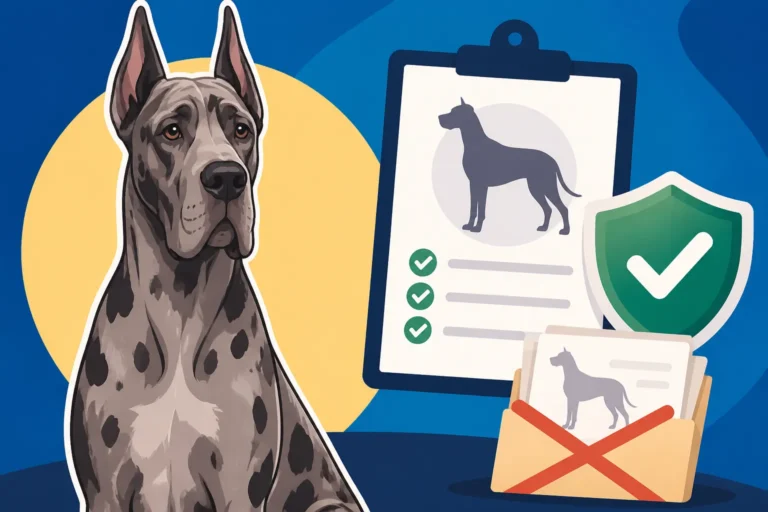
Why a Great Dane Under a Thousand Is a Warning
A Great Dane puppy advertised for less than a thousand dollars can feel like a rare chance to bring home the dog you’ve wanted. But a low price may signal missing health testing, poor early care, a scam, or costs shifted onto you later. Here’s how to investigate the offer, spot warning signs, and choose a safer path without assuming every affordable puppy is badly bred.
Why a very low Great Dane price deserves a closer look
Responsible breeding has costs a low listing may not reflect
Raising a litter responsibly involves more than feeding a mother dog and posting puppy photos. The breeder should plan for veterinary care, appropriate nutrition, clean and safe housing, early handling and socialization, and time to answer questions and support puppy buyers. Health screening of breeding dogs also takes effort and money. A price by itself cannot tell you whether those things happened—but a very low price with no clear explanation is a reason to ask.
This matters with any breed, and especially with a giant breed. A puppy may arrive with a health problem that is not obvious at pickup, while the eventual cost of treatment, medication, or specialist care can be substantial. That does not mean every inexpensive puppy will become ill. It means the advertised price is only one part of the decision, and a reassuring sales pitch is not a substitute for records you can verify.
Ask what the price includes. A responsible seller should be able to explain the puppy’s veterinary care, vaccination and deworming history, contract, registration status if applicable, and what happens if the puppy develops a serious health issue. For a broader view of what responsible screening involves, see The Health Testing a Great Dane Breeder Owes You and What a Great Dane Breeder Should Be Screening For.
A low price is a clue, not a verdict
There are legitimate reasons a Great Dane may be available for less than you expected. An adult dog may need a new home, a rescue organization may have a different adoption process from a breeder, or a breeder may be placing a puppy with a specific circumstance in mind. Those situations deserve careful review too, but they are not automatically evidence of neglect.
The concern is a low price paired with pressure, secrecy, or missing information. For example, imagine a seller says a puppy is ready today, refuses to show where the litter is being raised, and asks for a deposit before you can speak by phone. The price may be the detail that catches your eye, but the evasive answers are what should make you pause.
Compare the offer with the explanation, not just with another online listing. The article A Great Dane Puppy Priced Under a Thousand explores the issue from the buyer’s perspective, while The Fifteen Hundred to Three Thousand Great Dane can help frame why raising and caring for a well-bred puppy can involve meaningful costs. Neither figure is a universal rule. Local conditions, breeder practices, and what is included can differ.
Warning signs to investigate before sending money
Missing records and vague answers
Ask for the names of the sire and dam, the health tests performed, and the results—not simply “the parents are healthy.” Then ask how you can confirm the information. A seller who cannot explain what was tested or will not show documentation has not given you enough to assess the breeding responsibly. You can also ask whether the breeder’s veterinarian can confirm that the puppy has received the care described, with appropriate permission.
A registration paper is not a health report. It may tell you something about a dog’s recorded lineage, but it does not by itself confirm that the parents had relevant health screening, that the puppy was raised in good conditions, or that the seller will provide support. Be cautious if registration is presented as the main proof of quality while questions about health, temperament, and the puppy’s living environment go unanswered.
Use a written question list rather than relying on a friendly conversation. Ask what the breeder knows about health concerns in the puppy’s close relatives, what veterinary checks the litter has had, and what the contract says if a serious inherited condition is identified. A careful breeder may not have a perfect answer to every future health question, but should be willing to discuss what they know and show you the records they have.
Pressure, secrecy, and payment demands
A countdown is a classic reason to slow down. Be wary of claims that several people are waiting, the puppy will be gone within the hour, or you must pay immediately to “hold” the dog before seeing reliable documentation. Scammers can copy photographs, invent a litter, and request deposits for puppies that do not exist. A seller who insists on an unusual payment method or avoids a live conversation adds another reason to verify everything independently.
Ask for a live video call that shows the puppy with its mother and littermates, and arrange an in-person visit when practical and safe. A video call is not perfect proof, but it can help you check whether the seller has access to the puppy and can answer questions about the environment. Do not treat a polished website, social media page, or stack of screenshots as verification on its own.
A seller should also be willing to discuss the puppy’s temperament and the kind of home that would suit it. If the only conversation is about how quickly you can pay, the seller may be prioritizing the transaction over a good placement. Before committing, read Seeing the Dam Before Buying a Great Dane and Questions to Ask Before Taking a Great Dane for practical prompts to bring into that conversation.
| What you notice | Why it deserves attention | A sensible next step |
|---|---|---|
| No health records or unclear test descriptions | You cannot assess what was checked or verify the claims | Ask for records and confirm what the tests mean with your veterinarian |
| Seller will not show the puppy’s environment | You have little information about early care and conditions | Request a live video call or arrange a responsible visit |
| Pressure to pay immediately | Urgency can discourage careful verification | Pause and do not send money until the seller and puppy are verified |
| Registration presented as the only proof of quality | Registration does not establish health or responsible rearing | Ask separately about health screening, veterinary care, and the contract |
| No written agreement or return plan | You may have little clarity if serious problems arise | Request the contract in advance and review it before paying |
| Puppy is offered with no questions about your home | The seller may not be considering whether the placement is suitable | Ask what support and screening the seller provides to buyers |
How to check a breeder or seller carefully
Verify the puppy, parents, and paperwork
Start with the basics: Can the seller explain who owns the mother, where the litter was raised, and what veterinary care the puppies have received? Do the details stay consistent across the conversation, paperwork, and video call? If the seller gives you a kennel name or registration details, check them through the relevant registry or breed organization rather than relying only on links the seller provides.
Ask about health screening in plain language. For example: “What tests were done on each parent, and may I see the results?” If an answer is vague, follow up: “Who performed the test, and can my veterinarian help me understand the result?” You do not need to become a veterinary expert before buying a puppy. You do need enough information to make an informed decision, and you can ask your veterinarian to help interpret unfamiliar records.
A transparent seller should also provide a contract that spells out important responsibilities. Read the whole document before sending a deposit. Look for the seller’s policies if the puppy has a serious health issue, the expectations for returning or rehoming the dog, and any limits or conditions you should understand. A contract does not guarantee a perfect outcome, but unclear or absent paperwork leaves you with fewer answers if a problem comes up.
Compare breeder, rescue, and rehoming options
If the budget is firm, widening the search may be safer than rushing into the cheapest listing. Breed-specific rescue groups and established shelters sometimes have adult Great Danes or younger dogs looking for homes. Their processes vary, so ask what is known about the dog’s medical history, behavior, and needs. An adult dog may offer a clearer picture of size and temperament, though its history can still be incomplete.
A rescue adoption is not automatically simple or risk-free, and it is fair to ask what is included in the placement process. Read What Comes Included in a Great Dane Adoption and Where People Actually Find a Great Dane to think through those options. If you are considering a breeder, it may be worth waiting for a litter from a seller who is open about health screening and care rather than treating immediate availability as a benefit.
For a young puppy, ask whether the seller is prepared to keep the puppy until the appropriate placement time and whether they will take the dog back if your circumstances change. A breeder who asks questions about your home, experience, and plans is not necessarily being difficult. They may be trying to avoid a poor match—an important concern when the puppy will grow into a very large dog.
Budget for the dog beyond the purchase price
Plan for the first months and the long term
The purchase price is only one line in the budget. A Great Dane needs appropriately sized equipment, food, routine veterinary care, training, and a home setup that can handle a large, growing dog. An unexpected illness or injury can add significant expense. Before deciding that a low-priced puppy is affordable, work out what you can manage for both expected care and emergencies.
Make a starter list before bringing a puppy home: a suitable bed, sturdy food and water bowls, a crate or safe confinement setup if you plan to use one, a leash and harness, cleaning supplies, and food the puppy is already eating. If you shop online at Chewy, check item dimensions carefully; a product labeled “large” may still be too small for a Great Dane as it grows. Keep the first food transition gradual and ask your veterinarian before making a major diet change.
You can use Chewy as one place to compare practical supplies, but focus on fit, safety, and durability rather than buying everything at once. A puppy will outgrow some equipment, and not every advertised giant-breed accessory will suit your dog’s eventual size. Keep a written list of what you have already bought so early excitement does not turn into duplicate purchases.
Build veterinary care into the plan as well. Arrange a checkup soon after bringing the puppy home, bring all the records, and ask the veterinarian what follow-up care is appropriate. If you are comparing beds, bowls, or other basics through Chewy, measure the space at home first and save the receipt until you know the item works for your dog. Those small steps can prevent a low initial price from distracting you from the cost and commitment of raising a giant-breed dog.
Decide before you fall for the puppy
It is hard to walk away once you have seen a puppy’s face. That is exactly why it helps to make your rules in advance. Decide what records you need to see, whether you will pay a deposit, how you will verify the seller, and what would make you stop the conversation. If the seller refuses reasonable checks, you do not have to keep negotiating just because the puppy is inexpensive.
A simple decision process can help:
- Ask for the puppy’s veterinary and health records, plus information about both parents.
- Arrange a live conversation and, where feasible, a visit to see the puppy and its living conditions.
- Read the full contract before sending money.
- Confirm the seller’s identity and the details of the litter independently.
- Compare the total care budget with what you can realistically afford.
- Walk away if the seller uses pressure, changes the story, or blocks basic verification.
A Great Dane under a thousand dollars is not automatically a scam or an unhealthy dog. The warning is the possibility that the low price comes with missing care, weak accountability, or a seller who cannot support the claims being made. Take time to verify the puppy, understand the agreement, and think beyond the first payment. A good match should withstand careful questions.
Disclaimer
This article is for general informational purposes only and does not constitute professional advice. Laws, prices and regulations vary by location and change over time. Consult a qualified professional for guidance on your specific situation.