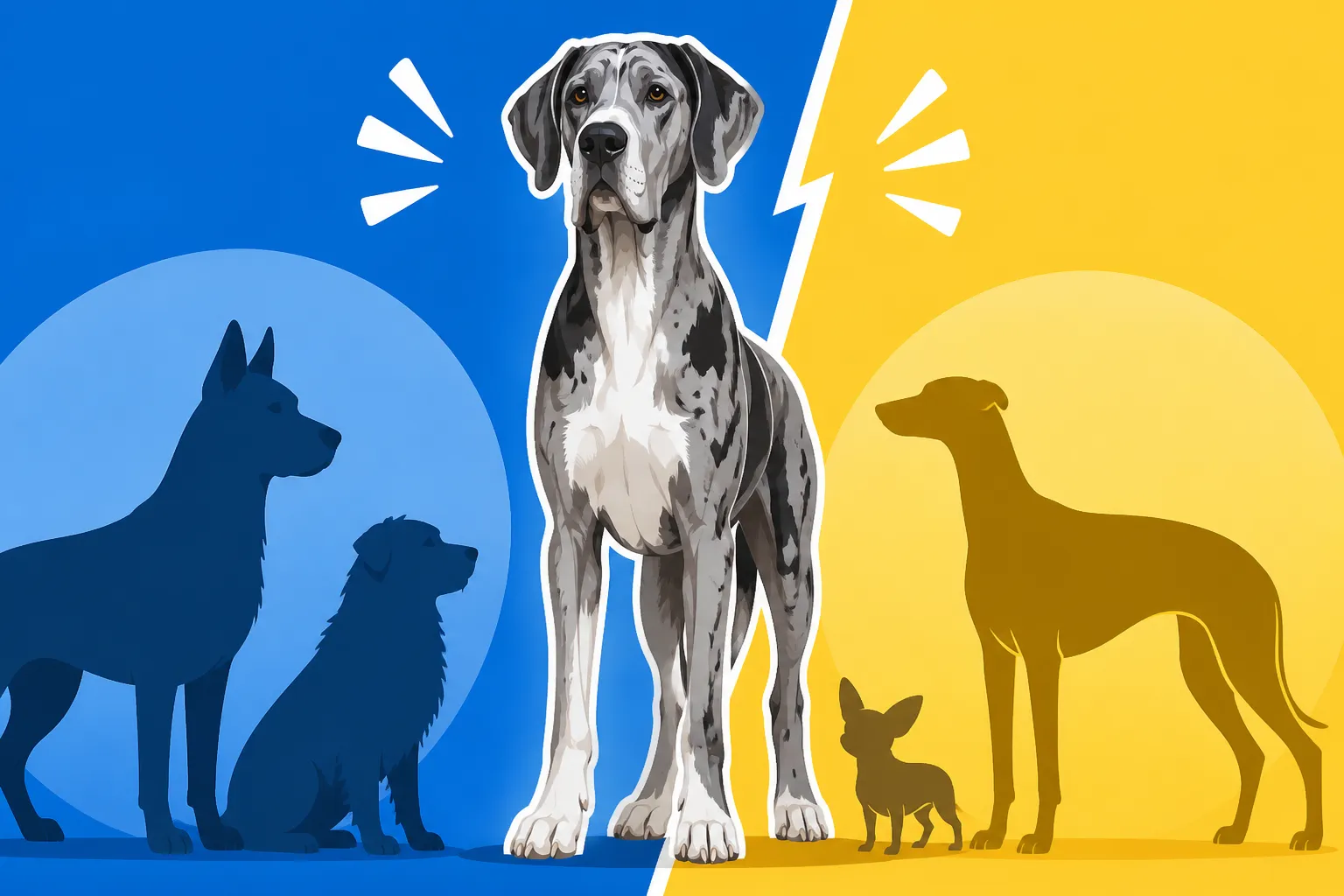
Whether a Great Dane Is the Tallest Breed
It's a common sight: someone spots a Great Dane and exclaims, "Wow, that's the tallest dog I've ever seen!" And honestly, who can blame them? These magnificent hounds certainly make an impressive statement with their sheer presence. But when we talk about the absolute tallest breed in the canine world, things get a little more nuanced than just a first impression. This guide will dive deep into what truly makes a dog "tall," compare the Great Dane to its towering counterparts, and explore the factors that determine a dog's incredible stature.
What Do We Mean By "Tallest" In The Canine World?
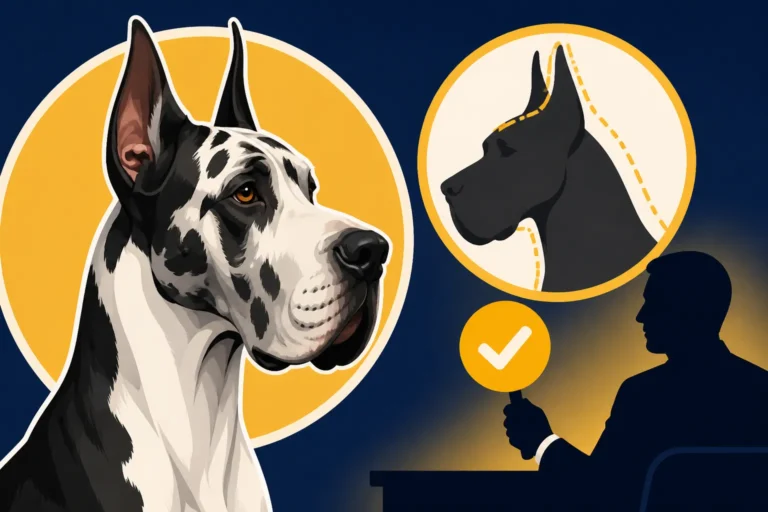
When people ask if a Great Dane is the tallest dog, they're usually picturing the dog standing proudly, head high above their own waist. And while a Great Dane certainly excels at that, the official measurement for a dog's height is actually taken at the withers. The withers are the highest point of a dog's shoulder blades, specifically where the neck meets the back. This measurement is consistent and isn't affected by a dog lifting or lowering its head, or by how long its legs are relative to its body.
Measuring Stature: Withers Height vs. Overall Impression
Imagine trying to measure a person's height by how high they can reach or how long their torso is. It wouldn't be very accurate, right? The same applies to dogs. A dog might look incredibly tall because of its long neck, slender build, or even its head carriage. Great Danes, with their elegant necks and often upward-gazing posture, certainly give the impression of immense height. However, the standard uses the withers because it represents the dog's actual skeletal height and is less subjective. It's the benchmark by which breed standards are set and world records are broken. So, when comparing "tallest," we're really talking about height at the withers.
The Breed Standard for Great Dane Height
For Great Danes, the breed standard sets clear minimums for height, reflecting their status as a giant breed. According to the official standard, a male Great Dane should stand at least 30 inches (76 cm) at the withers, and females should be at least 28 inches (71 cm). There isn't typically an upper limit specified, as long as the dog remains well-proportioned and sound. These are substantial figures, placing them squarely in the category of truly giant dogs. Many individual Great Danes will exceed these minimums, often reaching 32-34 inches or more. You can see why they make such an impression! But these minimums are just part of the story when we compare them to other enormous breeds. The Thirty-Two Inch Male Great Dane gives a good sense of the typical height for this impressive breed.
Great Danes Versus Other Giant Breeds
So, how do Great Danes stack up against the other giants of the dog world? While they are undeniably among the tallest, they are often in very close competition, and sometimes even surpassed, by a few other breeds known for their incredible height.
The Irish Wolfhound: Often the True Tallest
If we're talking about consistent breed averages, the Irish Wolfhound often takes the crown for being the tallest dog breed. These majestic hounds were originally bred for hunting wolves and wild boar, and their immense size and powerful build were essential for their job. The breed standard for Irish Wolfhounds actually mandates even greater minimum heights than Great Danes: males must be at least 32 inches (81 cm) at the withers, and females at least 30 inches (76 cm).
It's not uncommon to see Irish Wolfhounds reaching 34-36 inches (86-91 cm) or more. While individual Great Danes can certainly reach and even exceed these heights, on average, a well-bred Irish Wolfhound is likely to be a few inches taller than a well-bred Great Dane. Their slightly different build – often a bit more lean and rangy – contributes to this impression of extreme height, even if their weights might be similar or less than some of the heavier Great Danes. Which Is Taller, a Great Dane or a Wolfhound delves into this comparison more deeply.
Other Towering Contenders: Scottish Deerhounds and Mastiffs
Beyond the Irish Wolfhound, there are other breeds that give the Great Dane a run for its money in the height department, or at least compete fiercely in overall size and presence.
- Scottish Deerhound: Another sighthound, the Scottish Deerhound is built similarly to the Irish Wolfhound – tall, lean, and athletic. Their breed standard calls for males to be at least 30 inches (76 cm) and females at least 28 inches (71 cm), putting them right in line with or slightly above the Great Dane's minimums. While they might not reach the sheer mass of some Great Danes, their elegant, leggy build makes them appear incredibly tall.
- Mastiff: When people think of giant dogs, the Mastiff often comes to mind. While they are undoubtedly heavier than Great Danes, often weighing significantly more, their height usually doesn't surpass the Great Dane's. Mastiffs are built for immense power and bulk, with a stocky, muscular frame. Their minimum height for males is typically 30 inches (76 cm) and females 27.5 inches (70 cm), which is comparable to, or slightly less than, the Great Dane. So, while a Mastiff might feel like a larger dog due to its sheer weight, it's rarely taller at the withers than a Great Dane. Telling a Great Dane From a Mastiff can help distinguish these two magnificent breeds.
- Saint Bernard: Another gentle giant, the Saint Bernard is renowned for its bulk and impressive weight. While they are incredibly large dogs, like Mastiffs, they are typically more focused on mass than extreme height. Male Saint Bernards usually stand between 27.5 and 30 inches (70-76 cm) at the withers, with females slightly less. This means that while they are huge, they are generally not as tall as the average Great Dane or Irish Wolfhound. Whether a Saint Bernard Is Heavier Than a Great Dane explores this distinction further.
Here's a quick comparison of the average minimum heights for some of these giant breeds:
| Breed | Male Minimum Height (approx.) | Female Minimum Height (approx.) | Primary Characteristic |
|---|---|---|---|
| Irish Wolfhound | 32 inches (81 cm) | 30 inches (76 cm) | Tallest, lean, athletic |
| Great Dane | 30 inches (76 cm) | 28 inches (71 cm) | Very tall, powerful, elegant |
| Scottish Deerhound | 30 inches (76 cm) | 28 inches (71 cm) | Tall, graceful, athletic |
| Mastiff | 30 inches (76 cm) | 27.5 inches (70 cm) | Heaviest, bulky, powerful |
| Saint Bernard | 27.5 inches (70 cm) | 25.5 inches (65 cm) | Massive weight, sturdy build |
So, while Great Danes are certainly among the tallest, they are not consistently the tallest when compared to their close rival, the Irish Wolfhound, and are more defined by their combination of height, power, and elegance rather than being solely the highest point on the measuring tape.
Famous Great Danes and Their Record-Breaking Heights
While the Irish Wolfhound might generally hold the title for average height, it's often a Great Dane that captures the public's imagination when it comes to breaking world records for individual height. This is where the Great Dane truly shines, with several individuals reaching incredible, awe-inspiring measurements.
The Tallest Great Dane Ever Recorded
Historically, several Great Danes have held the Guinness World Record for the tallest dog. These exceptional individuals truly push the boundaries of what's considered "tall" for any canine. One of the most famous was Zeus, a Great Dane from Otsego, Michigan, who measured an astonishing 44 inches (111.8 cm) at the withers! To put that in perspective, that's nearly four feet tall at the shoulder. Imagine standing next to a dog whose shoulder is at your hip.
These record-breaking Danes are truly giants among giants, and their stories often capture worldwide attention, cementing the Great Dane's reputation as a monumental breed. While such heights are rare even within the breed, they demonstrate the genetic potential for extreme size that exists within the Great Dane lines. The Tallest Great Dane Ever Recorded dives into the specific details of these incredible dogs.
How Genetics and Health Influence Extreme Stature
Reaching such incredible heights isn't just a matter of luck; it's a complex interplay of genetics, nutrition, and overall health. For a Great Dane to grow to an extreme size like Zeus, they need to inherit the right genetic predisposition for large bone structure and growth. However, genetics alone aren't enough.
Proper nutrition is paramount, especially during the crucial puppy and adolescent phases. Giant breed puppies like Great Danes have specific dietary needs. They shouldn't be grown too quickly, and often require large breed puppy formulas that control calcium and phosphorus levels to prevent rapid, unhealthy growth that can lead to orthopedic problems. Owners often spend time researching specialized foods from retailers like Chewy to ensure their growing giants get the right balance of nutrients.
Overfeeding or supplementing with extra calcium, ironically, can be detrimental, leading to serious bone and joint issues rather than promoting healthy growth. Why a Great Dane Puppy Should Grow Slowly explains the importance of managed growth. Additionally, a dog's overall health, free from chronic illnesses or parasites, allows its body to dedicate resources to healthy development and reaching its full genetic potential. Responsible breeding also plays a role, with breeders aiming for healthy, sound dogs within the breed standard, even if they don't necessarily set out to breed a world record holder.
Considerations for Living With Such a Tall Breed
Whether your Great Dane is "average" height for the breed or an absolute record-breaker, living with such a tall dog presents unique challenges and considerations that prospective owners must be prepared for. Their size impacts everything from daily care to the layout of your home.
Adapting Your Home to a Giant Dog
One of the first things you'll notice with a Great Dane is how they interact with your living space. Counter-surfing becomes an Olympic sport they excel at, as they can easily reach most kitchen counters without even stretching. Baby-proofing your kitchen from a Great Dane might mean reconsidering what you leave out. Their sheer height means they can peer over fences that would contain smaller dogs, and even open doors with a well-placed paw or nudge.
Everyday items need to be supersized. Finding a dog bed big enough for a Great Dane might mean browsing specialty stores or online retailers like Chewy for extra-large orthopedic options. Standard dog crates often won't do; you'll need one specifically designed for giant breeds to allow them to stand and turn comfortably. Even water bowls need to be large and sturdy enough not to be easily tipped or drained in a few gulps. Crates That Hold a Full-Grown Great Dane gives guidance on appropriate sizing.
The Physical Demands and Costs of a Tall Dog
Beyond the initial setup, the ongoing care for a tall, large dog like a Great Dane comes with its own set of demands and costs. Their larger bodies require more food; feeding an adult Great Dane six to ten cups of quality kibble a day is not uncommon, and this adds up significantly. Medications, when needed, are dosed by weight, meaning a Great Dane will typically require larger, more expensive doses of everything from heartworm prevention to antibiotics. Feeding an Adult Great Dane Six to Ten Cups highlights the dietary needs.
Regular grooming, even for their short coat, requires managing a lot of dog. Bathing a Great Dane at home often means a trip to a self-serve dog wash or a professional groomer with specialized tubs, as they simply won't fit in a standard bathroom tub. Nail trims can be a wrestling match with a dog that outweighs you, often requiring two people or a professional groomer/vet tech experienced with giants. Why Every Great Dane Bill Is Bigger touches on the financial realities.
Their height also means they can exert immense force. A Great Dane that pulls on the leash can easily drag an unprepared owner off their feet. Early and consistent training is not just a recommendation; it's a necessity for safety and control. Great Dane Leash Manners at a Hundred and Fifty Pounds offers crucial advice. While they might not be the absolute tallest breed in every instance, the Great Dane's impressive stature undoubtedly places them among the canine titans, demanding a thoughtful and prepared approach from their dedicated owners.
Disclaimer
This article is for general informational purposes only and does not constitute professional advice. Laws, prices and regulations vary by location and change over time. Consult a qualified professional for guidance on your specific situation.