The Great Dane in the Working Group
A Great Dane’s place in the Working Group can be confusing: the name may sound as if every dog in the group is meant to perform a specific job today. It isn’t that simple. This guide explains what the classification means, how the breed’s working history shaped it, and what owners should realistically expect from a Great Dane at home.
What the Working Group Means for a Great Dane
It is a breed classification, not a job description
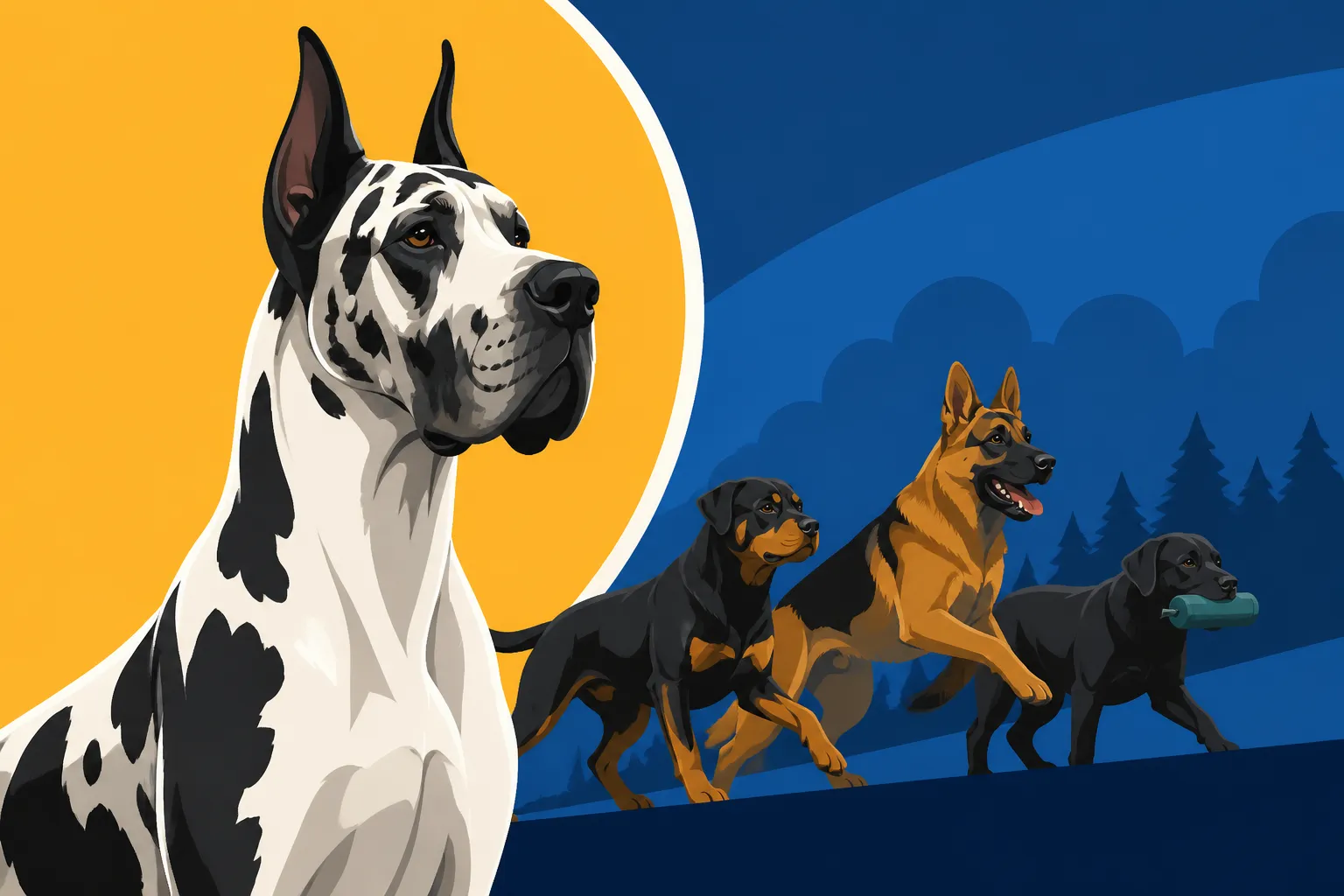
In the American Kennel Club, the Working Group includes breeds developed for tasks such as guarding property, pulling loads, and performing rescue work. The Great Dane belongs to this group because of its history and original purpose, not because every modern Great Dane is expected to work in the same way.
The classification is useful background, but it doesn’t tell you exactly how an individual dog will behave. A Great Dane may be calm, social, watchful, or reserved, depending on its temperament, breeding, experiences, and training. The group label alone cannot tell you whether a particular dog is confident around visitors or comfortable in a busy household.
It also doesn’t mean that a Great Dane automatically has the skills of a trained protection dog. A dog’s size and deep bark can be imposing, but safe, reliable behavior comes from temperament, socialization, and thoughtful handling. If you’re considering a Great Dane because you want a dog to guard your home, think carefully about the difference between presence and trained protective work. The discussion in Whether a Great Dane Is a Guard Dog offers more context on that distinction.
The group connects modern breeds to historical work
Many Working Group breeds were shaped to perform demanding jobs alongside people. Their bodies, instincts, and temperaments developed in response to practical needs, such as moving livestock, guarding homes, or helping people in difficult conditions. The Great Dane’s place in the group reflects its own history rather than suggesting that every member of the group shares the same build or behavior.
A breed’s original work can still offer clues about what it may enjoy or find challenging. But history isn’t destiny. A Great Dane living in a suburban home today is not automatically going to behave like a dog working on an estate centuries ago. Daily routines, responsible breeding, early experiences, and the way an owner manages the dog all matter.
That background is part of what makes the breed interesting: the Great Dane combines a large, powerful frame with a reputation for close companionship. For a broader look at its past, The Boar Hound the Great Dane Descends From explores the working ancestry behind the modern dog.
How the Great Dane’s Working History Shaped the Breed
A large body was useful for the work the breed was developed to do
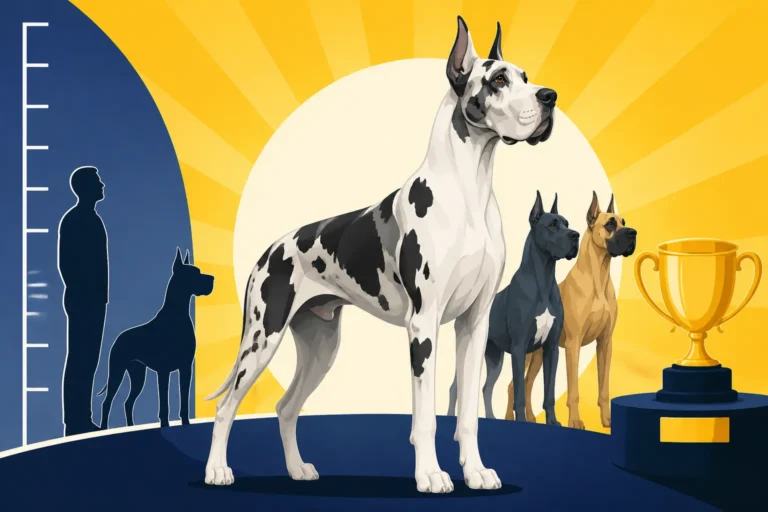
The Great Dane’s size is not just a modern visual trait. Historically, the breed’s ancestors were used in hunting large game, including wild boar, and in guarding roles. A dog intended to help with powerful quarry needed strength, speed, and the ability to work alongside people. Those historical demands help explain why the breed is both tall and substantial.
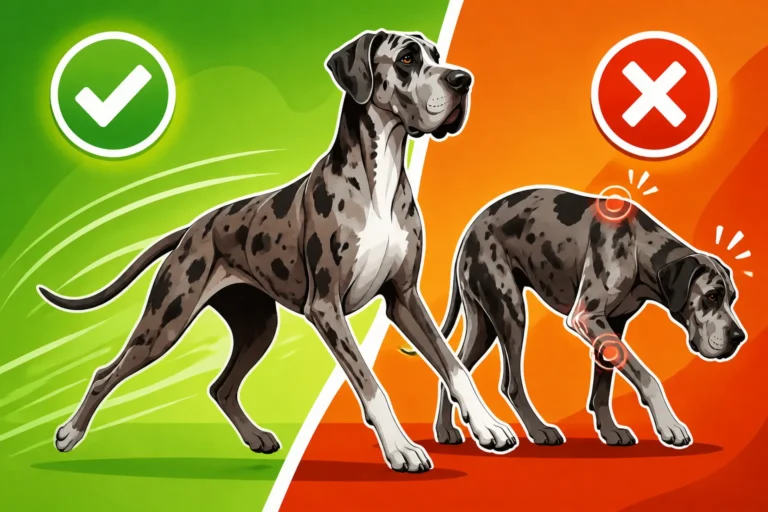
That history should not be mistaken for a recommendation to push a pet Great Dane into strenuous work. A young dog’s joints and bones are still developing, and even an adult’s exercise needs should be matched to its health and conditioning. The breed’s athletic history does not mean that long runs, repetitive jumping, or intense physical tasks are suitable for every Dane.
Owners often find the size itself is the first practical surprise. A Great Dane can reach counters, take up much of a sofa, and make an ordinary walk feel very different from walking a smaller dog. If you’re deciding whether the breed fits your household, How Big a Great Dane Actually Gets can help you think beyond puppy size and picture adult life more accurately.
A working past does not mean constant activity
People sometimes hear “working breed” and assume they need to keep the dog busy all day with vigorous exercise. That isn’t a reliable rule for Great Danes. Individual activity levels vary, but many do well with regular, moderate movement, companionship, and routines that give them appropriate ways to engage with their surroundings.
For example, a walk with time to sniff, a short training session, and calm interaction at home may be more useful than trying to tire a dog out with repeated high-impact exercise. A Great Dane that is restless may need more mental engagement, better-settled routines, or help with anxiety—not simply a longer workout. A vet can also help distinguish normal energy from behavior connected to discomfort or health problems.
The breed’s working background is still relevant, though. Great Danes benefit from learning how to walk politely, wait at doors, and settle around visitors while they are manageable to guide. If leash handling is already a concern, Great Dane Leash Manners at a Hundred and Fifty Pounds looks at why those skills matter so much for a large dog.
| What the Working Group label tells you | What it does not guarantee |
|---|---|
| The breed has a history connected to practical work | That every Great Dane wants a job or needs intense exercise |
| The Great Dane is grouped with breeds developed for demanding roles | That an individual dog is trained to protect people or property |
| Size and strength are important parts of breed history | That size predicts confidence, sociability, or good manners |
| Training and suitable outlets are important for a large dog | That one exercise routine fits every Great Dane |
What to Expect From a Great Dane Today
Companionship often matters more than a formal working task
For many households, the Great Dane’s most important “job” is being a companion. The breed is often kept as a family dog, and its physical presence can contrast sharply with its desire to stay close to its people. That can be charming when a Dane rests its head beside you, but less charming when the dog follows you into a narrow kitchen or tries to fit on furniture built for smaller bodies.
That closeness is worth considering before bringing one home. A Great Dane may not need a farm or a formal work assignment, but it does need time with its people, consistent training, and enough space to move comfortably. A dog that spends long stretches alone without preparation may become distressed or destructive. Its size can make the results harder to manage than similar behavior from a small dog.
The breed’s temperament can also be misunderstood because of its appearance. A towering dog may look intimidating to a visitor, while the dog itself may be friendly or simply uncertain. Calm introductions and careful socialization help a Great Dane learn how to handle everyday encounters without relying on assumptions about what a “gentle giant” should be. The Gentle Great Dane Temperament and Its Limits offers a fuller look at the breed’s typical personality and the importance of individual differences.
Good manners are a practical part of responsible ownership
Basic training is especially important for a dog whose adult weight and reach can make ordinary mistakes consequential. A Great Dane that jumps up, pulls hard, or rushes through a doorway can knock someone over even without meaning to. Teaching polite behavior early is not about making the dog perform a formal working role; it is about making daily life safer and easier.
Focus on skills that fit real situations: walking on a loose lead, coming when called in safe settings, waiting before going through doors, settling on a mat, and greeting people without jumping. Keep sessions short and positive. Reward the behavior you want, and make sure everyone in the household responds consistently. If one person allows a dog to leap up and another tries to stop it, the mixed signals can slow progress.
Socialization is just as practical. A Dane should gradually encounter ordinary sights and sounds, different types of people, and calm dogs in settings where the experience can stay positive. Socialization does not mean forcing a dog to meet everyone. It means giving the dog manageable opportunities to observe and learn. Socializing a Great Dane Puppy Early explains how to build those experiences thoughtfully, while Stopping a Great Dane Jumping Up on People focuses on one common behavior that becomes more difficult to manage as the dog grows.
Preparing for Life With a Working Group Dog
Plan for the dog’s size before bringing it home
A Great Dane can make everyday household choices feel unexpectedly complicated. A crate needs to accommodate the dog comfortably, a bed needs to support a large body, and a car needs enough room for the dog to travel safely. Doorways, staircases, slippery floors, and tight hallways deserve a second look too. These aren’t minor details when a full-grown dog has difficulty turning around or getting in and out.
Shopping by breed label alone is not enough. Measure the dog or the space, check product dimensions, and consider how the item will be used. When comparing large beds or travel equipment, owners may use retailers such as Chewy to browse options, but should verify measurements, materials, and suitability before ordering. A “large” label can mean different things across products.
The same practical thinking applies to food and water equipment. A bowl that is too small may be awkward to use, while a lightweight one may slide across the floor. Chewy is one place owners may check for different bowl sizes and styles; compare dimensions and stability rather than assuming a product is appropriate just because it is marketed for a large dog. For broader planning, The Kit a Great Dane Puppy Needs First can help new owners think through essential supplies before the dog arrives.
Working breed does not mean one-size-fits-all care
A dog’s needs change with age, health, and personality. A young Great Dane may need careful management while growing, while an adult may need regular conditioning and a comfortable place to rest. An older Dane may benefit from easier access to the car, non-slip walking surfaces, and support getting up. The Working Group classification won’t tell you which of these adjustments your dog needs; observing the individual dog and working with a veterinarian will.
Because Great Danes are so large, ordinary equipment needs closer attention. Check harness fit to avoid rubbing, choose a lead you can hold securely, and keep bedding in a place where the dog can lie down without blocking a busy walkway. For everyday supplies, Chewy may be useful for browsing products, but measure carefully and read the product details rather than relying on broad size descriptions.
Think about handling skills as part of care, too. A dog that is comfortable with gentle paw, ear, and body handling is easier to examine at home and easier for veterinary staff to work with. Build those habits gradually and reward calm cooperation. If your Dane is nervous, painful, or resistant, don’t force a procedure that could frighten or injure the dog; ask a veterinary professional for a safe plan. The breed’s stature can make preparation valuable, but good care is still based on the dog in front of you.
A Great Dane belongs in the Working Group because of the history behind the breed, not because every Dane needs a formal job today. The label offers useful context about the breed’s development, while daily life depends more on the individual dog: its health, temperament, training, and relationship with its household. Understanding both the history and the practical realities makes it easier to appreciate this remarkable breed without expecting it to fit a stereotype.
Disclaimer
This article is for general informational purposes only and does not constitute professional advice. Laws, prices and regulations vary by location and change over time. Consult a qualified professional for guidance on your specific situation.