Whether a Great Dane Was Ever a War Dog
A Great Dane’s size can make it look like a natural battlefield dog, and stories about ancient war dogs can blur the line between a breed’s ancestors and the breed we know today. This guide separates documented Great Dane history from popular legend, explains what “war dog” actually means, and shows why hunting and guarding are better-supported parts of the breed’s past.
Was the Great Dane a war dog
The short answer is no, not as a recognized military breed
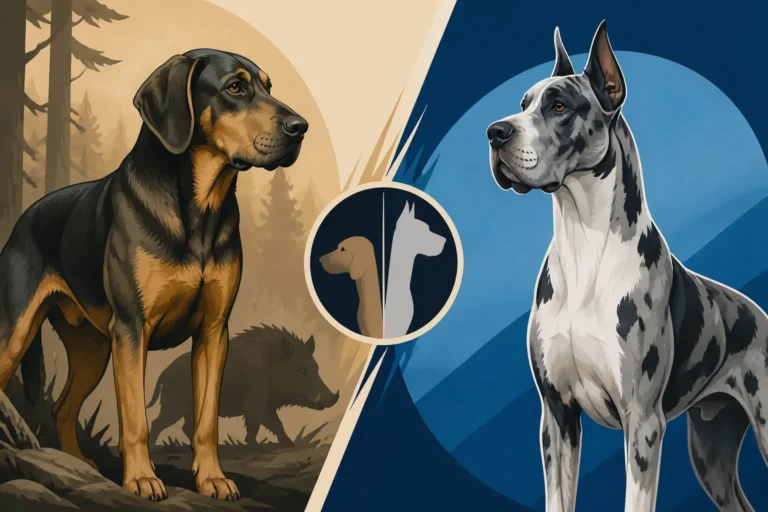
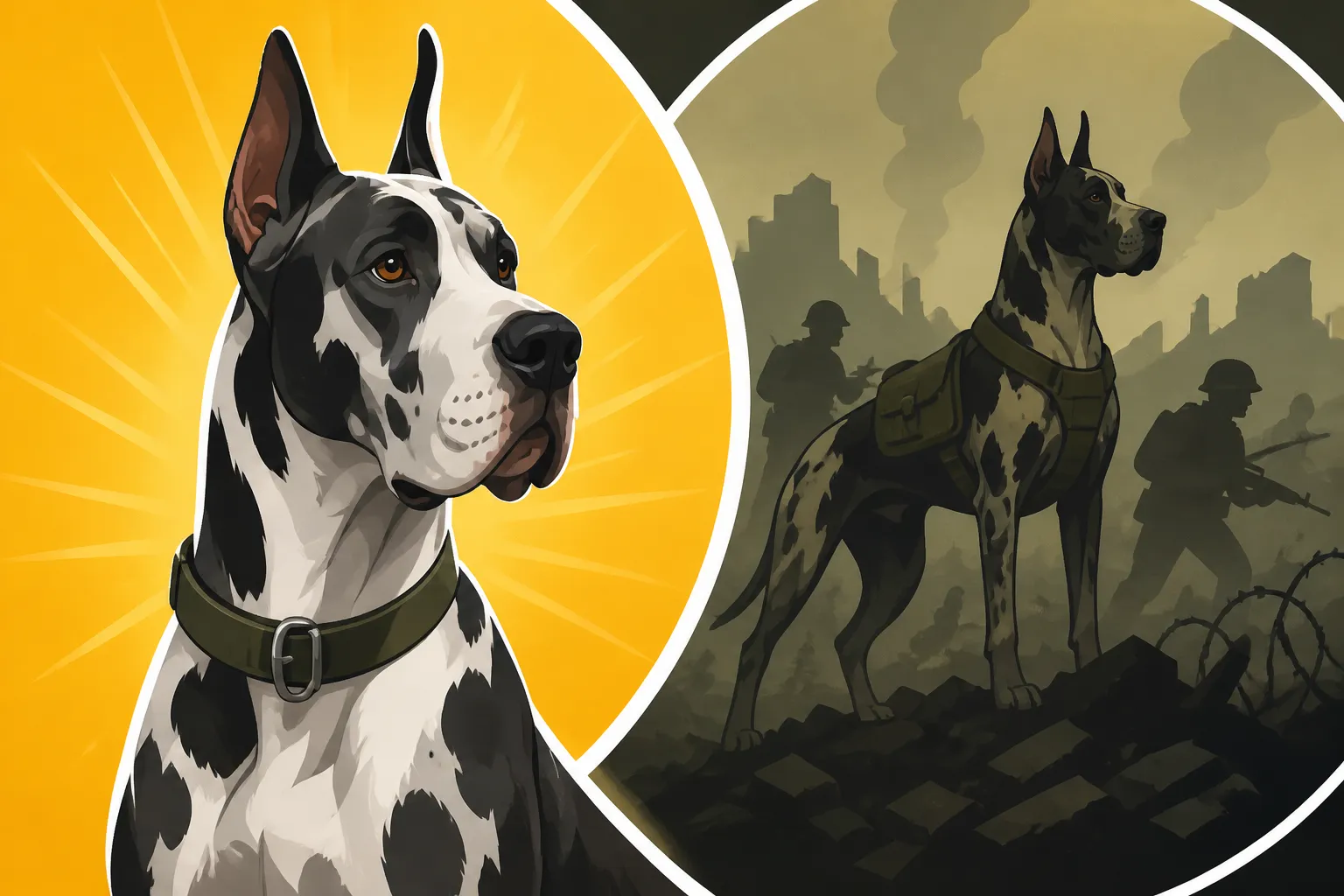
The Great Dane is not generally recognized as a breed developed specifically for military service. Its better-established history is as a powerful hunting dog, particularly associated with pursuing and holding large game such as wild boar. The dog we now call a Great Dane developed from older European dogs over time; it was not a standardized modern breed throughout most of the periods people picture when they imagine medieval or ancient armies.
That distinction matters because “a dog existed during wartime” and “a breed was purpose-bred as a war dog” are very different claims. People have used dogs in conflicts across many eras and places. But that broad history does not show that Great Danes had a defined battlefield role, were bred to serve armies, or were a regular military dog type.
The breed’s imposing appearance makes the story easy to believe. A tall, alert dog beside a soldier or guarding an estate looks plausible in an illustration, and older dogs related to the Great Dane may have been present in a range of settings. Still, an image or a general account of dogs in war is not enough to establish that Great Danes themselves served as a formal war breed.
Why the story gets repeated
A common source of confusion is that “Great Dane” sounds like the name of a very old, clearly defined breed. In reality, the modern breed name and identity came later than many of the stories people attach to it. The breed is closely associated with Germany, and the name does not mean that the dog was originally from Denmark. That background is explored in Why the Great Dane Is Not Danish.
There is also a tendency to treat historical dogs as if they belonged neatly to the modern breeds we recognize today. A large, mastiff-like dog in an old account might be described with a broad term rather than a precise breed name. It may have shared traits with Great Dane ancestors, but that does not make it accurate to call it a Great Dane in the modern sense. For the difference between ancestry and breed identity, see The Boar Hound the Great Dane Descends From.
Finally, dramatic stories tend to travel farther than careful distinctions. “A Great Dane once guarded a castle” is easy to turn into “Great Danes were war dogs,” especially when an intimidating silhouette seems to support the claim. But guarding an estate, hunting dangerous game, and fighting on a battlefield are separate jobs. The historical evidence is much stronger for the first two than for the last.
What war dogs were actually expected to do
Military dogs have served in several different roles
The phrase “war dog” can refer to dogs used for very different purposes. In some historical settings, dogs may have been used to guard camps or alert people to intruders. In other periods, trained dogs have carried messages, helped locate wounded people, or worked alongside military and emergency personnel. Some accounts describe attack roles, but those should not be casually applied to every large or powerful breed.
Those duties require different qualities. A sentry dog needs to notice unusual activity and respond reliably. A messenger needs to travel with a handler and remain trainable amid noise and confusion. A search dog needs stamina, focus, and the ability to work with people. Being big is not, by itself, a qualification for any of these jobs.
For a dog to become a dependable working partner, breeding, training, temperament, and the task all matter. A dog that is physically imposing may still be a poor fit for a particular role. Great Danes, like other breeds, are individual animals; size alone cannot tell you whether a dog is suited to protection, military work, or any other demanding task.
A boar-hunting dog is not automatically a battlefield dog
The Great Dane’s hunting history helps explain why people sometimes connect it with combat. Large boarhounds needed strength and courage to pursue and hold dangerous prey. But the purpose of a hunt is not the same as the purpose of a military operation. A hunting dog’s job was shaped around quarry, handlers, and the conditions of the hunt—not around carrying out a soldier’s duties.
The historical relationship between the Great Dane and boar hunting is a more grounded way to understand the breed’s formidable reputation. A boar could injure a dog, so the dogs used in this work needed physical power and nerve. That history is discussed in The Wild Boar the Great Dane Was Bred to Hold. It provides a plausible reason for the breed’s strength without requiring a battlefield origin story.
| Claim | What it means | How well it fits the Great Dane’s history |
|---|---|---|
| Great Danes are large and powerful | The breed has a striking build and substantial strength | Well supported as a present-day breed trait |
| Great Dane ancestors were used to hunt large game | Large European dogs were associated with boar hunting | A well-established part of the breed’s background |
| Great Danes could guard property | A large, alert dog may deter intruders and serve as a household or estate guardian | Plausible, but distinct from military service |
| Great Danes were a formal war-dog breed | The breed was developed or routinely trained for battlefield duties | Not a well-supported description of the breed’s history |
Hunting, guarding, and the Great Dane’s reputation
The breed’s working past was not one single job
The Great Dane’s history is easier to understand when it is not reduced to one dramatic label. Large dogs in Europe were shaped by practical needs that changed across time and place. Hunting large game demanded strength and courage; guarding property relied on presence and alertness. Those purposes help explain why the breed came to be associated with both power and watchfulness.
Guarding, however, does not necessarily mean a dog was trained to attack. A dog’s size and bark can discourage someone from approaching, while its ordinary role may simply be to live around people and alert them to something unusual. The question of whether a Great Dane is naturally a guard dog is more nuanced than its appearance suggests; Whether a Great Dane Is a Guard Dog looks more closely at that distinction.
Over time, the Great Dane also became a companion and show dog. Its role shifted as people bred and kept dogs for different reasons, and modern breed standards emphasize structure and movement as well as appearance. That later development is a separate chapter from hunting or guarding; The Great Dane the Show Ring Is Looking For offers context on the breed as a show dog.
Individual dogs may have lived through wars without defining the breed
It is entirely possible that dogs resembling Great Dane ancestors lived through periods of conflict. Dogs have shared human settlements, farms, estates, and travel routes for a long time, so an individual dog could have been present during wartime without having a military assignment. That possibility should not be mistaken for proof that Great Danes were bred or used as a standard war-dog breed.
The same caution applies to paintings, family accounts, and broad descriptions of “mastiffs” or “hounds.” A picture of a large dog with a soldier might show a companion, a guard animal, or simply an artist’s interpretation. Without clear evidence about the dog’s identity and role, it is not safe to label it a Great Dane serving in battle.
The most careful conclusion is therefore a measured one: large dogs related to the Great Dane may have been around people in difficult times, but the breed’s documented historical identity is much more closely tied to hunting, guarding, and later companionship than to organized military work. The Great Dane’s German history is worth exploring on its own terms in The Great Dane as Germany's National Breed and How Great Danes Went From Hunting to Guarding.
What this history means for Great Dane owners today
A historic reputation is not a training plan
A Great Dane’s size can make everyday manners especially important. A friendly dog that jumps on a guest or pulls hard toward another dog can be difficult to manage, not because it has a supposed warrior instinct, but because a large animal has real physical force. Calm greetings, loose-leash walking, a reliable recall, and comfortable handling are useful skills for a companion dog.
It is also helpful to avoid assuming that a dog should protect the household just because it looks imposing. Great Danes vary in confidence and temperament, and encouraging suspicion or aggression can create risks for the dog, visitors, and the people responsible for it. A well-socialized companion should be taught what to do in ordinary situations rather than expected to behave like a historical guard or military animal.
For practical daily care, choose gear for the dog in front of you, not for an image of a war dog. A well-fitted harness and sturdy lead can make walks easier to manage; Harnesses and Leads for a Great Dane covers the everyday equipment question. Retailers such as Chewy offer a place to compare general pet supplies, but product choice should still be based on fit, comfort, and advice from a qualified trainer or veterinarian when needed.
Keep breed history separate from modern care decisions
The Great Dane’s past does not tell you exactly how much exercise an individual dog needs, what food suits it, or how it will behave with children and other animals. Those decisions depend on the dog’s age, health, temperament, training, and home environment. A large breed’s history can provide context, but it cannot replace attentive care or professional guidance.
If you are gathering supplies for a new dog, Chewy is one example of a retailer where owners may browse everyday items such as bedding or walking equipment. Compare measurements carefully: a product described as “large” may still be too small for a Great Dane. Chewy listings can help with basic product research, while the dog’s actual comfort and safe use matter more than a label or breed stereotype.
And if a historical story is what first drew you to the breed, let it be a starting point rather than an expectation. The Great Dane is not a living piece of military equipment. It is a companion with needs that deserve thoughtful training, safe handling, and a suitable home. Chewy may be convenient for routine supplies, but no product can replace socialization, veterinary care, or patient work on manners. Understanding the breed’s real history makes it easier to appreciate the dog you have today, rather than asking it to live up to a legend.
Disclaimer
This article is for general informational purposes only and does not constitute professional advice. Laws, prices and regulations vary by location and change over time. Consult a qualified professional for guidance on your specific situation.