What Two Harlequin Great Danes Produce
Breeding Great Danes is a serious undertaking, and when you start considering specific color patterns like Harlequin, the stakes get even higher. Many folks dream of producing a litter of beautiful Harlequins, but pairing two Harlequin Great Danes together comes with a unique set of genetic challenges and potential heartbreaks that every responsible breeder must understand. This guide will walk you through the complex genetics involved, what outcomes you can truly expect, and why ethical breeding practices are paramount.
Genetic Basis of Harlequin Color
The striking Harlequin pattern isn't just a random splash of color; it's the result of a fascinating genetic dance. Understanding this dance is absolutely critical before you ever consider breeding Great Danes with this coloration. It's a prime example of how beauty can mask underlying genetic complexities that, when misunderstood, can lead to devastating consequences for the puppies involved. We’re not talking about simply mixing two colors; we’re talking about an intricate interaction between different genes.
The Merle Gene: Foundation of Harlequin
To even think about a Harlequin Great Dane, you first have to understand the Merle gene. Think of the Merle gene, often symbolized as 'M' in genetic shorthand, as the foundational artist. A dog must inherit at least one copy of this gene (making its genetic code Mm, meaning one merle gene and one non-merle gene) to display any merle pattern at all. Without that 'M', there's no merle, and therefore no Harlequin. If a Great Dane is homozygous for the non-merle gene (mm), it will not show merle, regardless of any other modifiers. It's like having a canvas ready, but no paint.
The Merle gene itself works by diluting pigment in irregular patches, creating those iconic mottled, marbled coats you see not just in merle Danes, but also in breeds like Australian Shepherds or Border Collies. It's a genetic "paint splattering" effect, lightening some areas of the base coat (which is usually black or sometimes liver) while leaving other areas fully pigmented. This creates the grey and black patched appearance of a traditional merle. The crucial point here is that a single copy of the merle gene (Mm) typically results in a healthy, normally sighted and hearing merle dog. Problems only truly begin when a dog inherits two copies of the merle gene (MM), which is what we call "double merle." This double dose is where the potential for severe health defects comes into play, and it's precisely why understanding merle inheritance is the first, non-negotiable step in comprehending Harlequin breeding.
The Harlequin Modifier Gene
Now, let's introduce the Harlequin modifier. This gene, often symbolized as 'H', is what takes a typical merle pattern and transforms it into the visually stunning white base with torn black patches that we recognize as Harlequin. For a dog to be a Harlequin, it must first be a merle (Mm), and then it must also inherit at least one copy of the Harlequin gene (Hh). If a dog is merle (Mm) but doesn't have the Harlequin modifier (hh), it will simply be a regular merle, lacking that characteristic stark white background. The Harlequin gene essentially removes all the diluted grey areas that would normally be present in a merle coat, leaving behind only the solid black patches on a pure white background. It's a truly unique and powerful genetic interaction, almost like an eraser on the canvas.
It's absolutely vital to grasp that the Harlequin gene itself is what we call a "lethal gene" in its homozygous form (HH). This means that if a Great Dane puppy were to inherit two copies of the Harlequin gene (HH), it would typically not be viable. In most cases, this results in embryonic death, meaning the puppy never fully develops in the womb, or in very rare instances, it leads to extreme deformities that are incompatible with life. This is why you will never find a Great Dane that is genetically HH; they simply don't survive. All Harlequin Great Danes are therefore heterozygous for the Harlequin gene (Hh), meaning they carry one copy. This particular genetic nuance is critical because it means every Harlequin Dane, no matter how beautiful or healthy, carries one copy of that powerful modifier, and when two are bred together, the odds of creating genetically problematic offspring skyrocket. You can dive deeper into these complex interactions by reading Harlequin and Merle Great Dane Genetics.
Why Single Harlequin Genes Work
The reason a single Harlequin gene (Hh) working on a single merle gene (Mm) is so successful is that it creates the desired Harlequin pattern without triggering the severe health consequences associated with double merle. This specific genetic combination (MmHh) is what produces the ideal Harlequin Great Dane—a visually stunning dog with generally robust health, assuming the other necessary health screenings are clear. These dogs are typically cherished for their unique markings and wonderful temperaments, often making fantastic companions. Many experienced Great Dane owners, like myself, have been utterly captivated by their charm and presence.
The problem, however, lies not in the health of the individual MmHh Harlequin dog, but in its genetic potential for future offspring. While the dog itself is healthy, its genetics still carry the potential for trouble in breeding. When you have an MmHh Harlequin, that "M" gene is still present, and so is the "H" gene. Each parent passes on one copy of each gene to their offspring. This is where Punnett squares become incredibly useful tools, helping responsible breeders visualize the probabilities of different genetic combinations. For instance, a single Harlequin parent can pass on either M or m, and either H or h. The danger isn't in the single gene expression within the parent, but in the combination of two dominant merle genes (MM) or two dominant harlequin genes (HH) from both parents. The latter, as we discussed, is typically lethal, while the former leads directly to the double merle syndrome that is a hallmark of irresponsible breeding.
The Risks of Harlequin x Harlequin Breeding
This is where we get into the absolutely critical reasons why breeding two Harlequin Great Danes is so strongly discouraged by ethical Great Dane breeders and rescue organizations worldwide. The risks are not theoretical; they are substantial and often lead to preventable suffering and heartbreak for puppies and their future families. It’s a decision that weighs heavily on the conscience of any truly responsible dog owner.
The Double Merle Dilemma
When you make the decision to breed two Harlequin Great Danes together, you are immediately entering a high-risk genetic lottery. Both parents carry at least one copy of the Merle gene (Mm) because, by definition, they must be merle to express the Harlequin pattern. This genetic fact means that their offspring automatically face a 25% risk of inheriting two copies of the Merle gene (MM), thereby creating what is devastatingly known as a "double merle." This isn't just about color aesthetics; it's about life-altering, often severe health defects. A double merle puppy, frequently appearing mostly or entirely white, is the heartbreaking and entirely avoidable consequence of this pairing. These puppies aren't just "white dogs"; their extreme lack of pigment is a visible indicator of a deeper genetic issue that profoundly affects crucial developmental processes, particularly those involving the sensory organs.
The appearance of a double merle can vary, but they are typically characterized by a predominant white coat. Some may have small, isolated patches of color, while others are entirely white or off-white. This extreme dilution of pigment is almost invariably accompanied by significant sensory deficits because the same genetic process that dilutes coat color also disrupts the normal development of the eyes and ears. It's not merely a cosmetic issue that impacts their looks; it's a profound impairment that affects their fundamental ability to interact with the world around them. Breeders who knowingly engage in Harlequin x Harlequin pairings are widely considered irresponsible because they are deliberately gambling with the health and well-being of the puppies they produce, often resulting in a higher number of these "faulty" outcomes that require immense commitment and resources.
Health Issues Associated with Double Merle
The health problems that plague double merle Great Danes can be severe, lifelong, and truly heartbreaking. The most common and devastating issues include deafness and blindness, which can be either partial or complete. Imagine a tiny, vulnerable puppy entering the world unable to hear its mother's comforting sounds or see its surroundings. This is the grim reality for many double merles, who struggle to navigate an environment designed for sighted and hearing animals. Their eyes can be grossly underdeveloped (microphthalmia), misshapen, or even entirely absent. Some may present with colobomas, which are holes or defects in the eye structures, leading to compromised vision. Their pupils might be oddly shaped, or they might have unusually translucent blue irises. Hearing loss often occurs because the specialized cells that carry sound to the brain, which are dependent on proper pigment development, simply don't form correctly.
These profound sensory impairments make it incredibly difficult for these dogs to learn, socialize, and safely navigate the world. They require specialized care, adapted training methods, and a home environment that can compassionately accommodate their unique needs. It’s a huge commitment, both emotionally and financially, far beyond what many typical prospective owners are prepared for. Beyond the obvious sensory issues, some research has also suggested that double merles may have a higher incidence of other systemic health problems, although these are less consistently documented than the vision and hearing defects. The bottom line, however, remains crystal clear: these conditions are entirely preventable with responsible breeding choices. It’s precisely why organizations dedicated to the welfare of Great Danes advocate so strongly against these pairings. If you want to understand more about the specific risks, Why Two Merle Great Danes Should Not Be Bred offers further insights. Resources like Chewy sometimes offer specialized toys or enrichment items for dogs with sensory challenges, but these are after-the-fact solutions to preventable problems.
The Ethical Breeder's Stance
For any truly ethical Great Dane breeder, the health, longevity, and stable temperament of their dogs are the absolute paramount considerations. This unwavering commitment means making informed, scientifically backed decisions about genetics to actively avoid producing puppies with known, preventable defects. Breeding two Harlequins is, unequivocally, considered irresponsible breeding within the ethical Great Dane community. A reputable, ethical breeder will always prioritize the long-term well-being of the breed over the fleeting desire for a specific color pattern, no matter how striking or in-demand it might seem. They possess a deep understanding of the genetic risks involved and actively implement strategies to mitigate them. This almost always means careful pairing of a Harlequin Great Dane with a non-merle solid color Great Dane (such as a Black or a Fawn) to ensure that no double merle puppies are produced in the litter.
Part of being an ethical breeder also involves absolute transparency and open communication with potential puppy buyers. They will take the time to educate families about the genetic background of both parent dogs, the comprehensive health screenings performed, and the range of expected outcomes for the litter. They stand by their puppies for life, often offering take-back clauses in contracts and serving as a continuous resource for advice and support to their puppy families. This commitment might even extend to guiding new owners on where to find the best quality food or enrichment products from trusted retailers like Chewy. If you encounter a breeder who is willing to breed two Harlequins, it serves as a massive red flag that they may not have the puppies' best interests at heart, or they simply lack the crucial understanding of Great Dane genetics necessary for responsible breeding. You should always insist on seeing The Health Testing a Great Dane Breeder Owes You before committing to a puppy.
Understanding the Outcomes: What You Might See
While the profound risks associated with breeding two Harlequins are clear, it's also helpful to fully understand the complete spectrum of what such a pairing might actually produce in a litter. It's not all dire outcomes, but the potential for significant problems is undeniably and unacceptably elevated. A breeder engaging in this practice is essentially rolling the dice with genetic health.
Expected Coat Colors and Patterns
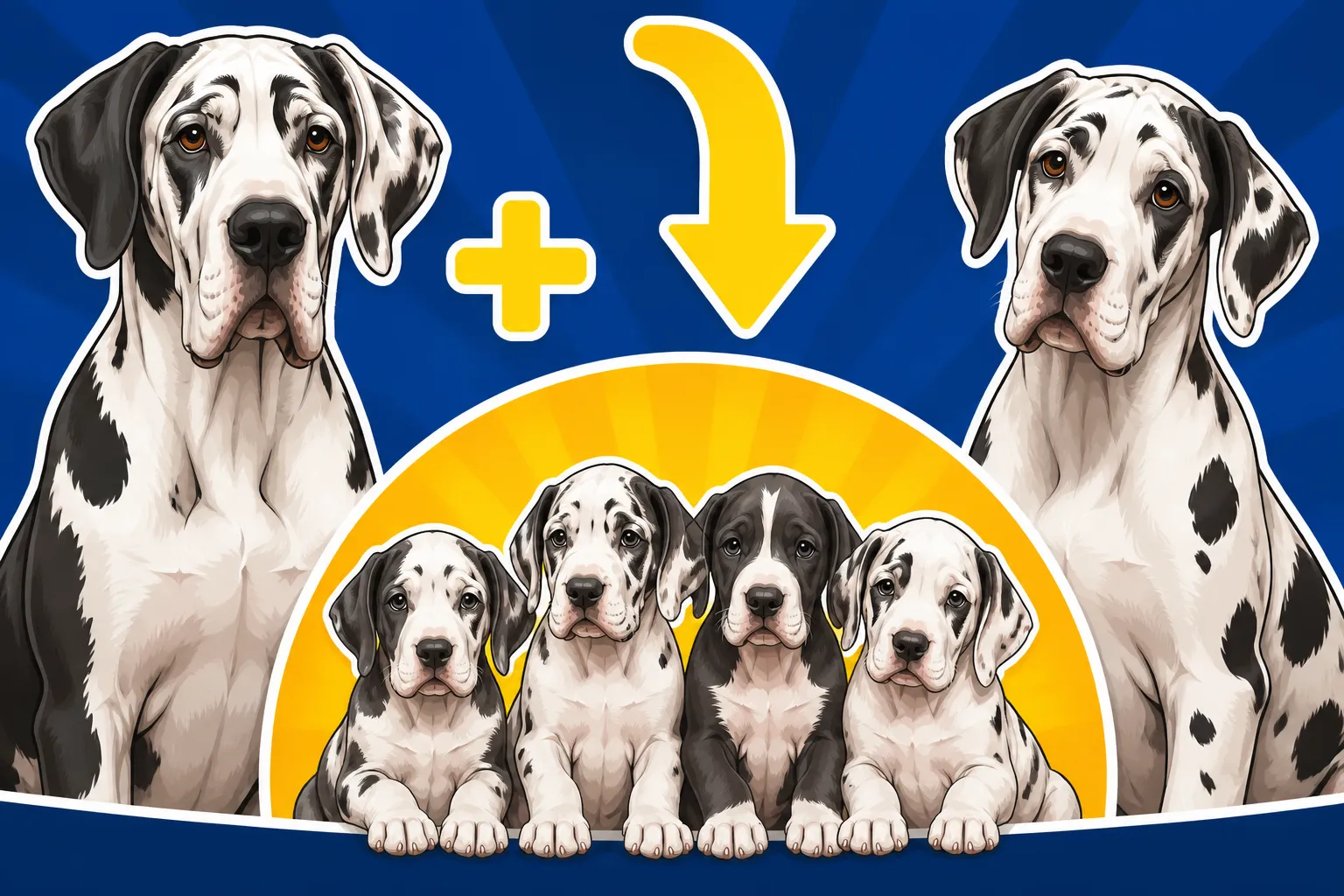
Even when you breed two Harlequin Great Danes together, you will likely get a variety of coat patterns and colors, not just more Harlequins. This is due to the inherent probabilities dictated by mendelian genetics. Because each Harlequin parent is genetically MmHh (carrying one merle and one harlequin gene), a Punnett square analysis reveals the statistical probabilities for their offspring. You would typically expect to see a mix of:
- Harlequin (MmHh): These puppies would be the desired outcome by many, displaying the classic white base with distinct black patches. However, they only make up a portion of the litter, statistically around 25%.
- Merle (Mmhh): These puppies inherit the merle gene but do not inherit the Harlequin modifier. They will have the diluted grey base with black patches, resembling a traditional merle Great Dane. These also make up about 25% of the litter.
- Solid Black (mmHh or mmhh): These puppies inherit two non-merle genes (mm) and therefore cannot express merle or harlequin, regardless of whether they received the 'H' gene. They will be solid black. These also account for approximately 25% of the litter.
- Double Merle (MMHh or MMhh): These are the most concerning and problematic puppies. They receive two copies of the merle gene, which leads to the excessive white coloration and the associated severe health risks. The presence or absence of the 'H' gene matters less here, as the double merle genetic status overrides much of the expected pattern. This group also makes up roughly 25% of the litter.
It’s truly a genetic lottery, and while some beautiful, outwardly healthy Harlequin, Merle, or Black puppies might result, the 25% chance of a double merle is simply too high for any truly responsible breeding program. It’s a gamble that consciously puts innocent lives at risk for the sake of a specific aesthetic desire, often driven by market demand for "rare" colors rather than a genuine commitment to breed health and preservation. Understanding The Seven Great Dane Colors can put this genetic lottery into broader perspective.
The Unwanted White or "Albino" Puppies
The term "albino" is quite often mistakenly applied to double merle Great Danes due to their extreme white coloration. However, it's important to clarify that true albinism is an exceptionally rare genetic condition that involves a complete and total lack of pigment, resulting in characteristic pink eyes and skin, caused by a different genetic mutation. Double merle dogs, on the other hand, are not true albinos. They typically have some pigment, even if it's only visible in their eye color (which is often startlingly blue) or a tiny, isolated patch of dark fur. The stark, overwhelming white appearance is solely due to the profound and widespread dilution of pigment caused by inheriting two copies of the merle gene. For more information on the health implications of this phenotype, Why a White Great Dane Is Often Deaf thoroughly explains the correlation.
These mostly white puppies are frequently born with the aforementioned profound health challenges, including severe vision and hearing impairments. Many breeders who undertake Harlequin x Harlequin pairings are then faced with the incredibly difficult and emotionally draining decision of how to provide for these special needs puppies, or worse, they struggle immensely to find homes that are truly equipped and committed to handle their extensive needs. It's an immense burden, both emotionally and financially, especially considering the increased necessity for veterinary visits, specialized training, and potentially adaptive equipment. A truly good, ethical breeder plans for every possible outcome, but these specific, problematic outcomes are entirely avoidable through responsible genetic pairings. For instance, if you adopt a double merle, you'd want to be sure you have access to specialized toys or feeding solutions that might be available from retailers like Chewy for visually or hearing-impaired dogs, adding another layer of cost and specialized care. You can also learn about Missing Eyes and Small Eyes in White Great Danes if you want to understand the extreme end of these health issues.
Predicting Health in a Harlequin Cross
Predicting the overall health of individual puppies from a Harlequin x Harlequin cross is an inherently risky endeavor. While the non-double merle offspring (those that end up as regular Harlequins, Merles, and Blacks) may be perfectly healthy, the sheer, undeniable probability of producing profoundly affected double merle puppies makes the entire pairing fundamentally problematic and irresponsible. Even puppies that appear outwardly healthy in such a litter might carry subtle genetic predispositions or minor anomalies that are harder to detect without specific, specialized testing. For example, a puppy that appears as a standard Harlequin or Merle could still potentially have minor eye or ear anomalies that are only detectable with thorough veterinary ophthalmic and audiometric exams.
This is precisely why comprehensive health testing of all parent dogs, even long before any breeding is ever considered, is absolutely crucial. An ethical breeder screens for a multitude of genetic and structural conditions common to Great Danes, such as Dilated Cardiomyopathy (The Heart Muscle Disease Great Danes Are Prone To), hip and elbow dysplasia (Great Dane Hips, Elbows and Growing Joints), and thyroid problems. When you intentionally introduce the additional layer of risky color genetics, the importance of these broader health screenings only intensifies, as any existing health issues could compound the problems of a double merle. A puppy born from such a high-risk pairing, even if it initially appears sound, should ideally be evaluated by veterinary specialists (ophthalmologists and audiologists) to catch any subtle issues early on, ensuring their best chance at a good quality of life. This also falls under Reading a Great Dane Puppy's Health Papers – what papers are you getting from a risky breeder?
Ethical Considerations and Responsible Breeding
The responsibility that comes with being a Great Dane breeder is immense. These individuals literally hold the future of the breed, and the lives of individual animals, directly in their hands. This section highlights the indispensable practices and principles that must guide any breeder who prioritizes animal welfare, health, and ethical conduct above all else. It's a commitment that lasts far beyond the initial sale of a puppy.
The Importance of Genetic Testing
Genetic testing isn't merely a suggestion for Great Dane breeders; it is a non-negotiable, fundamental requirement for ethical practice, especially when dealing with complex color genetics like those involving the merle and Harlequin genes. Before any breeding pair is even considered, both prospective parents should undergo comprehensive DNA testing. This testing serves several vital purposes: it identifies carriers of various genetic diseases prevalent in the breed, and it precisely identifies their merle (M/m) and Harlequin (H/h) status. This scientific approach goes far beyond just looking at the dog's visible coat color, as some dogs can be "cryptic merle," meaning they carry the merle gene but do not visibly express it in their coat. Only through accurate genetic testing can a breeder be 100% certain of the genetic makeup they are truly working with, thereby avoiding dangerous pairings.
Knowing the exact genetic profile of both parent dogs empowers a breeder to make informed, responsible decisions that actively prevent the creation of double merle puppies. It also helps to avoid inadvertently perpetuating other inherited health issues within the breed, which are a serious concern for a giant breed with a short lifespan. Transparency with these genetic test results is a clear hallmark of a reputable and ethical breeder. They will not only gladly share documentation, often from established and trusted genetic testing companies, but will also explain the implications of these results to potential puppy buyers. This investment in genetic testing, while a cost, is a small price to pay for preventing a lifetime of suffering for a puppy and their future family. It's a key part of What a Great Dane Breeder Should Be Screening For.
Choosing Compatible Mates
The primary, overarching goal when choosing compatible mates for Great Danes, especially those carrying the Harlequin gene, is to absolutely avoid breeding two merle-carrying dogs together. This means, unequivocally, that a Harlequin Great Dane (which is always MmHh) should always be bred to a non-merle (mm) dog. A solid colored Great Dane, such as a black, fawn, or brindle, that has been genetically tested to confirm it does not carry the merle gene, is the ideal and only responsible partner for a Harlequin. This specific pairing ensures with 100% certainty that no puppy in the litter will inherit two copies of the merle gene, thereby completely eliminating the risk of producing double merle offspring with their associated severe health defects.
While this responsible approach might mean fewer Harlequin puppies in a given litter (typically 25% Harlequin, 25% Merle, 50% solid colors like Black or Fawn), it unequivocally prioritizes health, welfare, and responsible breeding over mere color production. For instance, a typical Harlequin x Solid Black pairing would produce a mix of Harlequin, Merle, and Black puppies, all of whom would carry only a single copy of the merle gene (Mm) or no merle gene (mm). This safe approach allows for the continuation and responsible development of the Harlequin line without compromising the health of the puppies. It’s about being deliberate and making choices that genuinely serve the best interests of the dogs, not simply aiming for a specific, potentially harmful, visual outcome that prioritizes superficial appearance over well-being.
The Lifelong Commitment to Every Puppy
Responsible breeding extends far beyond the moment two dogs are mated; it is a profound, lifelong commitment to every single puppy produced in a litter. This holistic responsibility encompasses several critical aspects: ensuring that each puppy goes to a suitable, loving, and well-vetted home; offering continuous support, advice, and guidance to new owners throughout the dog's life; and, critically, being prepared to take a dog back at any point in its life if circumstances change for the owner. For puppies born with special needs, such as a double merle with significant vision or hearing impairments, this commitment becomes even more profound and demanding. The breeder must be prepared to provide extensive, often costly, specialized care; actively work to locate highly specialized and understanding homes; or, if such a home cannot be found, be prepared to provide lifetime care for that dog themselves.
This deep and unwavering commitment powerfully underscores why actively avoiding problematic pairings, like two Harlequins, is so incredibly crucial. Preventing suffering is always, always easier, more humane, and infinitely more ethical than attempting to manage it after it has already occurred. A breeder who truly loves and respects the Great Dane breed understands that their responsibility extends far beyond the mere transaction of selling a puppy. They are genuine custodians of the breed's health, temperament, and long-term future, and their every breeding decision impacts generations of dogs and their families. This profound dedication is tangibly reflected in the comprehensive support they offer, perhaps even guiding new owners to reputable sources for high-quality supplies and support, whether it's for specialized diets or comfortable, giant-breed orthopedic beds from Chewy that help cushion those enormous joints.
| Offspring Genetic Combination | Expected Phenotype (Appearance) | Associated Health Risks | Probability (Approximate) | Ethical Breeding Stance |
|---|---|---|---|---|
| MMHh or MMhh (Double Merle) | Mostly or entirely white, some small patches | Severe deafness, blindness, eye deformities (microphthalmia, colobomas) | 25% | Highly unethical, avoidable |
| MmHh (Harlequin) | Classic Harlequin: white with black patches | Generally healthy, standard Great Dane health concerns | 25% | Desirable if health-tested parents |
| Mmhh (Merle) | Merle: diluted grey with black patches | Generally healthy, standard Great Dane health concerns | 25% | Desirable if health-tested parents |
| mmHh or mmhh (Solid Black) | Solid black | Generally healthy, standard Great Dane health concerns | 25% | Desirable if health-tested parents |
Disclaimer
This article is for general informational purposes only and does not constitute professional advice. Laws, prices and regulations vary by location and change over time. Consult a qualified professional for guidance on your specific situation.