Whether a Second Great Dane Is Manageable
Adding a second Great Dane can mean twice the companionship, but it also means more food, larger equipment, extra training, and another dog whose needs may not match the first one’s. Whether it is manageable depends less on the size of your home than on your time, budget, dogs’ temperaments, and ability to give each one individual attention.
What Changes When You Have Two Great Danes
Space is about safe movement, not just square footage
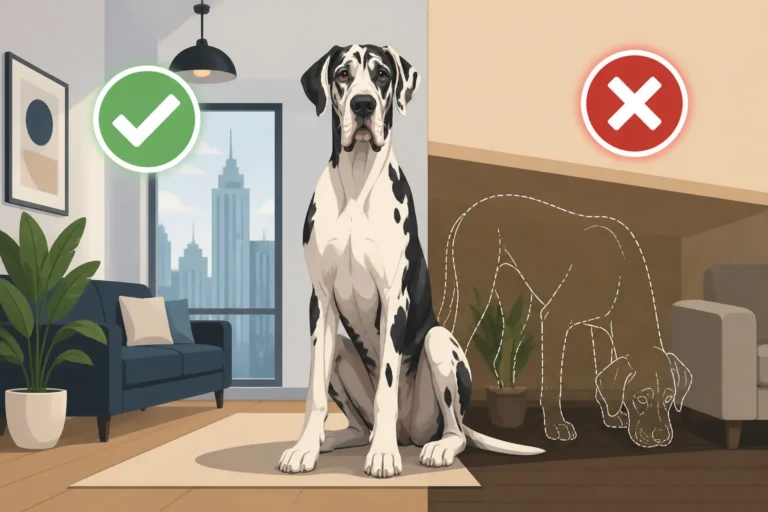
Two Great Danes need room to move around one another without constantly squeezing past each other, especially near doorways, beds, food bowls, and the places where your family gathers. A spacious home can still feel cramped if both dogs crowd the same narrow hallway or rush to the front door together. Think about how they will pass, settle, and get away from one another when they want a break.
A large yard can be useful, but it does not replace walks, training, or supervision. Some Danes spend most of their outdoor time near the door while their people are inside. Consider where the dogs will rest, whether there are comfortable separate sleeping spots, and whether you can use gates to create calm zones. For more on the layout question, see Whether a Great Dane Actually Uses a Big Yard and Furnishing a House for a Great Dane.
Furniture and everyday items also become more complicated at giant-breed scale. Two dogs may want the same sofa, bed, or sunny patch of floor. If one dog is reluctant to share, having more than one comfortable resting place can prevent unnecessary tension. Beds should be large enough for each dog to stretch out, and their locations should let either dog rest without being stepped over.
Daily care and costs add up in less obvious ways
A second Dane usually means more than another bowl of food. You will also need to plan for veterinary care, preventive medications, grooming supplies, training, boarding, transport, and replacement items. Some expenses can be shared, such as certain household supplies, while others are tied to each dog. Food, medication doses, examinations, and emergency care are individual needs.
The practical workload matters just as much as the budget. Two dogs may need separate vet visits, or one may need extra appointments while the other is healthy. If one dog is recovering from an injury, you still have to manage the other dog’s exercise and routine. Before deciding, look at your ordinary week—not just a relaxed weekend—and ask who will walk, feed, train, and supervise them when schedules get busy.
It can help to estimate the second dog’s likely ongoing needs alongside your current dog’s expenses, then leave room for surprises. Whether Two Great Danes Double Everything and The Vet Spending a Great Dane Needs Anyway offer useful related perspectives. When you need another appropriately sized bed, bowl, or grooming item, retailers such as Chewy may be one place to compare available options; check fit and durability rather than assuming a product labeled “large” will suit a Great Dane.
| Area | What may be shared | What to plan for each dog |
|---|---|---|
| Feeding | Storage area and some feeding supplies | Food, portion, bowl, and a calm feeding place |
| Resting | General living space | A comfortable bed and a place to retreat |
| Health care | Your clinic and household records system | Exams, medication, preventive care, and emergency needs |
| Training | Household rules and some practice routines | Individual skills, attention, and behavior support |
| Travel | Some vehicle or trip planning | Safe space, restraint, and room for both dogs |
| Daily care | Some grooming tools and household routines | Exercise, supervision, handling, and individual time |
How the Dogs’ Temperaments Affect the Match
Your current dog’s comfort matters more than wanting a companion
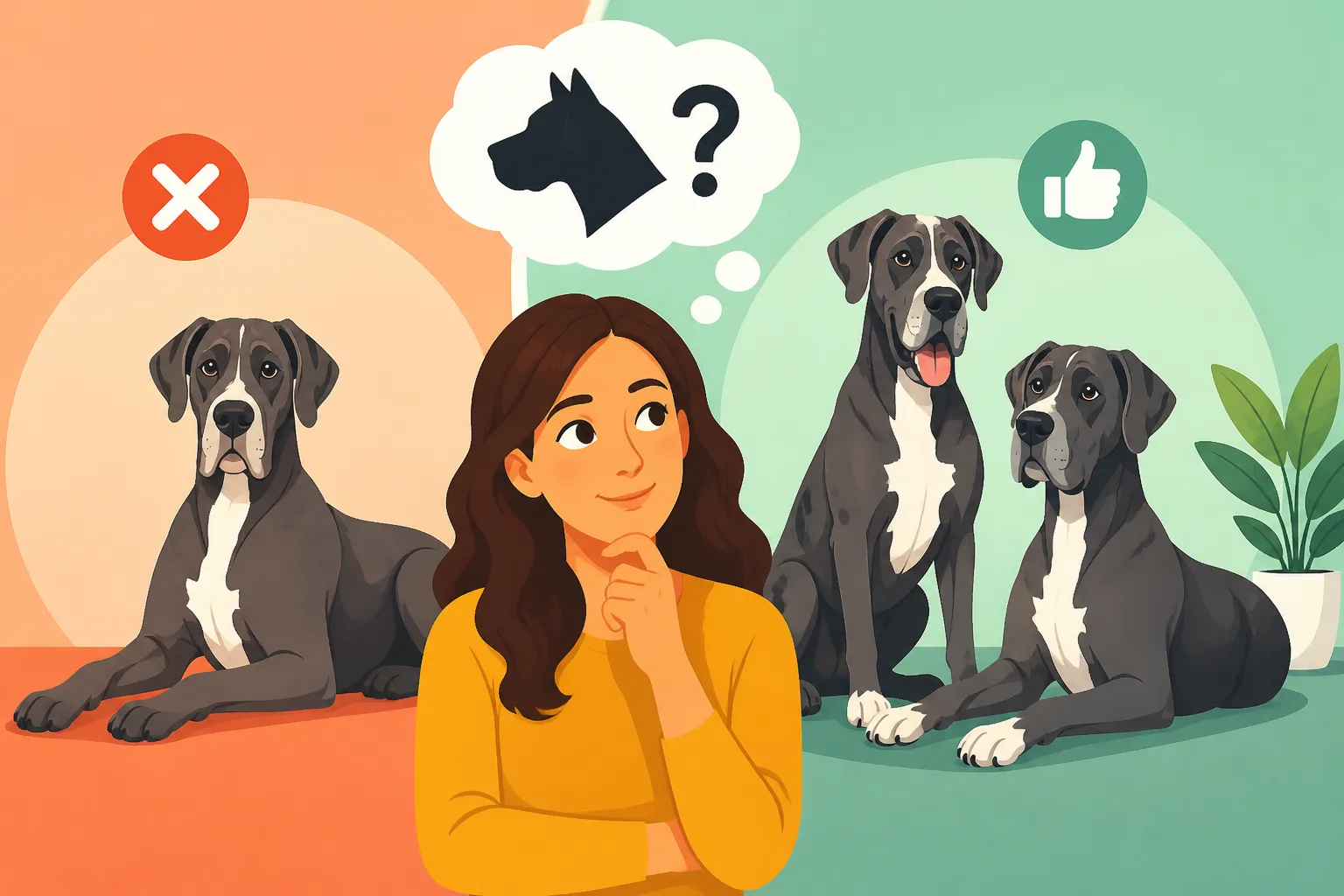
A second dog is not automatically a gift to the first. Some Great Danes enjoy canine company; others prefer people or are comfortable with only familiar dogs. A dog that is friendly at a park may still dislike sharing its home, bed, food, or people. Look at how your dog behaves around other dogs in different situations, especially when resting or receiving attention.
Notice whether your current Dane can relax when another dog is nearby, disengage from play, and respond to you around distractions. If your dog guards food, toys, sleeping spaces, or a person, that does not necessarily rule out another dog, but it does call for careful planning and professional guidance before adoption. Do not assume that a second dog will “teach” the first to behave better or cure loneliness.
A thoughtful introduction starts on neutral ground, with enough space for both dogs and calm handling from adults who can manage them safely. Keep the first meeting low-pressure, watch their body language, and avoid forcing face-to-face contact. At home, provide separate resources and supervise interactions until you have a clear picture of how the dogs respond to each other. For more on the transition, see Adding a Great Dane to a House With a Dog and Two Great Danes in One House.
Age, energy, and play style can make a big difference
An adult Dane and a puppy may be a lovely match, but they may not want the same things at the same time. A puppy can be persistent, bouncy, and still learning boundaries. An older dog may want quiet, predictable rest. If the adult dog needs space, the puppy should not be allowed to pester it simply because the older dog seems tolerant.
Two dogs close in age may have compatible energy, but that is not guaranteed either. One may enjoy wrestling while the other prefers short play and a nap. Watch for signs that play is becoming one-sided: repeated attempts to leave, hiding, freezing, tense posture, or one dog repeatedly pinning or chasing the other. Interrupt calmly and give both dogs a chance to settle separately.
A pair with different abilities or health needs may require separate exercise routines. One dog might be ready for a longer outing while the other needs a gentler pace. Puppies also need age-appropriate activity and rest; having an adult dog in the home does not make it safe to copy the adult’s exercise routine. Whether an Older Dog Copes With a Great Dane Puppy explores that particular age mismatch.
A Practical Plan for Bringing Home a Second Dane
Set up separate routines before the new dog arrives
Before the dogs meet at home, prepare distinct places for eating, sleeping, and resting. Feed them separately, ideally where each can eat without the other hovering nearby. Pick up high-value chews and toys during the early adjustment period, then introduce shared-space activities gradually under supervision. A second water station can also reduce crowding in a busy home.
Plan how you will give each dog one-on-one attention. That might mean separate short walks, individual training sessions, or quiet time with a person while the other dog rests behind a gate. Training together can be useful later, but initially, individual sessions help you see what each dog understands and prevent one dog from copying the other’s excitement or distraction.
Have the basics ready before arrival: secure gates, suitable leads and harnesses, separate bowls, and safe resting areas. For large-breed equipment, fit matters more than a generic size label. Chewy may offer a way to compare beds, gates, and other supplies, but measure your dog and the space first, and check whether items are sturdy enough for the way your dogs use them.
Use a gradual introduction and keep supervising
Start with a calm meeting in a neutral area if practical. Keep both dogs on manageable leads, allow space, and reward relaxed behavior. Walk in the same direction rather than insisting they greet immediately. If either dog seems tense, overwhelmed, or unable to disengage, add distance and take a slower approach. An introduction is not a test that must be completed in one session.
At home, let the dogs spend short, supervised periods in the same space, with an easy way to separate them. Avoid leaving them alone together until they have shown reliable, relaxed behavior over time. Even dogs that appear to get along can have disagreements over food, toys, doorways, or human attention. Children should not be responsible for managing two powerful dogs or mediating their interactions.
Keep records of what you observe: which situations are comfortable, what triggers tension, and how each dog responds to rest and separation. If you see repeated guarding, escalating conflict, or fear, consult a qualified veterinary behavior professional or experienced force-free trainer. Early help is easier than waiting until the dogs have developed a pattern that is difficult to interrupt. Household handling and leash skills matter too; Great Dane Leash Manners at a Hundred and Fifty Pounds is relevant when one person needs to walk either dog safely.
How to Decide Whether Two Great Danes Are Manageable for You
Check your capacity honestly
A useful decision is based on the household you have, not the idealized version of life after the new dog settles in. Ask yourself whether you can afford the additional routine and unexpected care, manage two large dogs safely, and give each one individual time. Also consider who will step in if you are sick, traveling, working late, or temporarily unable to handle both dogs.
Think through realistic scenarios. If one dog pulls toward another dog on a walk, can you safely manage both? If the dogs need separate outings, is there enough time in your day? If one needs medication or restricted activity, can you keep the other’s routine going without turning the home into a constant struggle? These questions are not reasons to give up on the idea; they help you spot what needs to be solved first.
A second Great Dane may be a poor fit right now if your current dog is in distress around other dogs, your budget has no room for another dog’s care, or you are already struggling to meet your existing dog’s needs. Waiting can be a responsible choice. You might revisit the idea after training support, a change in schedule, or a more stable financial plan.
Use a simple readiness check
Consider each area below and be specific. “We have space” is less useful than knowing where each dog will sleep and eat. “They can play together” is less reassuring than seeing both dogs stop, rest, and disengage comfortably.
| Readiness question | A promising answer looks like |
|---|---|
| Does your current dog tolerate other dogs at home? | You have seen relaxed behavior around dogs and can identify any triggers |
| Can you separate them when needed? | You have safe spaces, gates, and a plan for feeding and rest |
| Can you manage both physically? | Adults can handle each dog on lead without relying on a child |
| Is there room in the budget? | You have considered routine care as well as unexpected veterinary needs |
| Can you give each dog individual attention? | Your schedule allows separate training, handling, and downtime |
| Is the match sensible? | Their energy, age, and play styles have been considered rather than assumed |
If most answers are yes, a second Dane may be manageable with a careful introduction and ongoing supervision. If several answers are uncertain, identify those gaps before committing. A rescue group or responsible breeder may be able to discuss an individual dog’s temperament and history, but no description can guarantee that two dogs will become close companions. The goal is not to make them share every moment; it is to create a home where both can feel safe, cared for, and able to relax.
For families with children or smaller pets, add another layer of planning. A playful Dane can knock someone over without intending harm, and even friendly play between dogs of very different sizes needs supervision. Review Great Danes With Children and Small Dogs before deciding how the dogs will share space with the rest of the household.
Disclaimer
This article is for general informational purposes only and does not constitute professional advice. Laws, prices and regulations vary by location and change over time. Consult a qualified professional for guidance on your specific situation.