Why Great Dane Training Cannot Wait
Oh, Great Danes! They're truly magnificent creatures, aren't they? Those soulful eyes, that immense size, the way they just lean into you for affection. It's easy to fall head over heels for a Great Dane puppy, all floppy ears and oversized paws. But here's the thing, and I can't stress this enough: that adorable, bumbling puppy grows up faster than you can imagine into a truly giant dog. And if you don't lay down the training foundation early, you're not just dealing with an inconvenience; you're looking at potential chaos, frustration, and even danger. This guide is all about understanding why early, consistent training isn't just a suggestion for Great Danes, but an absolute necessity for a happy, safe, and well-adjusted life together.
The Exponential Growth Factor: Why Size Demands Urgency
When you bring home a Great Dane puppy, you're essentially adopting a tiny, fluffy wrecking ball that will, in a blink of an eye, become a full-sized wrecking ball. The speed at which these dogs develop is astonishing, and it’s precisely why you cannot afford to delay their education.
From Puppy to Pony: The Speed of Great Dane Development
Think about a typical small dog, say a Jack Russell. They reach their adult size and maturity over a year, sometimes more. A Great Dane? They pack on an incredible amount of height and weight in a fraction of that time. You might have a 20-pound fluffball at 8 weeks, but by 6 months, that same dog could easily be 80-100 pounds. By a year, they're often topping 120-150 pounds and still growing into their full frame. This isn't just a gradual increase; it's an explosion of size. What feels manageable at 30 pounds – a little tug on the leash, a playful jump – becomes an insurmountable struggle when that same dog is 130 pounds. You can read more about The Manners a Great Dane Needs Before It Grows.
Imagine trying to teach a full-grown pony not to pull on the reins if it's never been taught. That's essentially the challenge you face if you wait too long with a Great Dane. Their bones, muscles, and sheer mass develop at an incredible pace, meaning that physical strength quickly outstrips your ability to physically control them without proper training. It's like trying to stop a small car by hand once it's already moving at full speed.
When "Cute" Becomes "Concerning": Unmanaged Puppy Behaviors
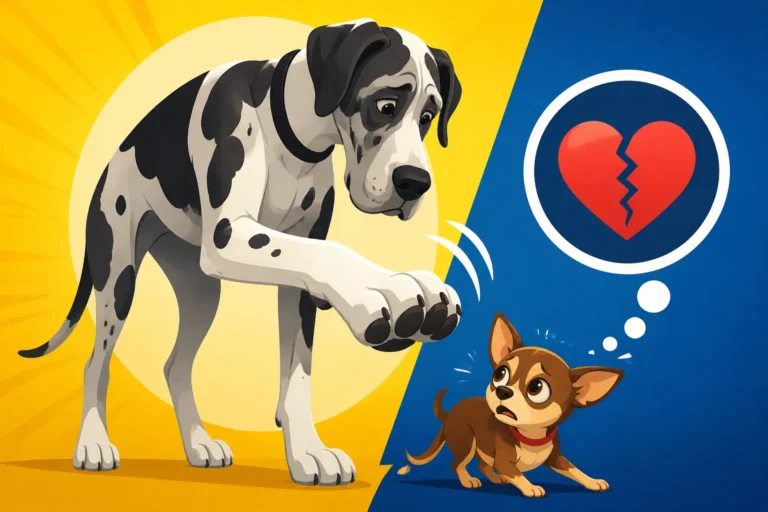
Those adorable puppy behaviors that make you giggle in the early weeks can quickly become serious problems. A tiny puppy mouthing your hand is cute. A 100-pound adolescent Great Dane doing the same thing is not only painful but can easily break skin or cause genuine fear in guests, especially children. Similarly, a small puppy jumping up for attention might knock over a flower pot; a giant adolescent jumping up can knock over an elderly relative or a child, causing real injury.
This isn't about blaming the dog; it's about anticipating their growth and proactively shaping their behavior. If a puppy learns that jumping gets attention, they'll continue to do it. If they learn that a little nip on the hand makes you stop petting them, they'll keep doing it. These behaviors are reinforced, and the larger the dog gets, the harder those ingrained habits are to break. You need to start teaching alternatives, like a polite "sit" for attention, from the very first day. This is where programs like BAXTER & Bella can be incredibly helpful, offering structured guidance that helps you address these behaviors before they escalate.
The Physical Reality of a Full-Grown Great Dane
Let's be brutally honest: a fully grown Great Dane is a physically imposing animal. Male Great Danes typically stand 30-32 inches tall at the shoulder and can weigh anywhere from 140 to 175 pounds, sometimes even more. Females are slightly smaller, usually 28-30 inches and 110-140 pounds. These aren't just big dogs; they're massive dogs. When you envision your adult Great Dane, imagine its head potentially reaching your kitchen counter or even your shoulder if they stand on their hind legs.
Their sheer mass affects everything: how they move, how much space they take up, and the force they can exert. An untrained Great Dane can inadvertently injure you, your family, or your guests just by being enthusiastic. They don't mean to be dangerous, but their size makes even minor lapses in manners problematic. If you want a dog you can comfortably take for walks, invite friends over to meet, or simply have lounging peacefully in your home, training simply cannot wait. You really need to address Stopping a Great Dane Jumping Up on People long before they're adult height.
Safety First: Preventing Accidents and Injuries
The paramount reason for immediate Great Dane training is safety. Their size dictates that any lack of control or poor manners can translate directly into accidents or injuries, both for people and for the dog itself.
The Unintended Consequences of Jumping and Leaning
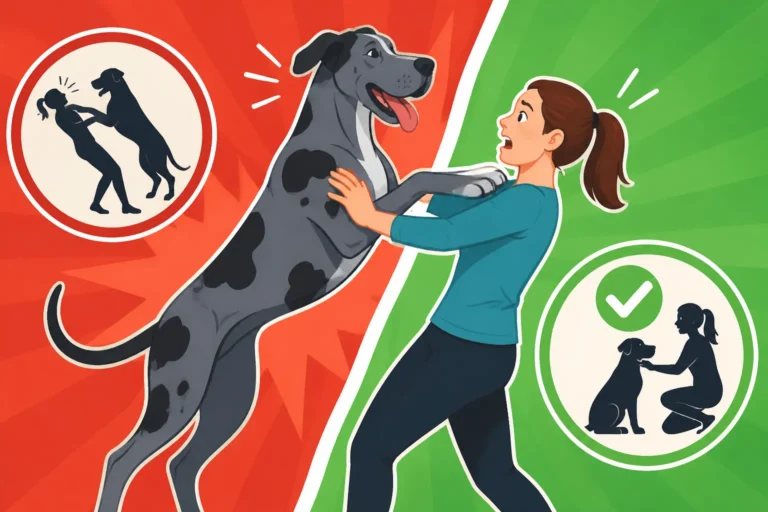
We touched on jumping already, but it bears repeating with emphasis. A Great Dane jumping up isn't like a Beagle jumping up. A playful leap from a Great Dane can easily send an adult sprawling, leading to sprains, fractures, or worse. Imagine a child being knocked over by a dog that weighs more than they do. The consequences can be heartbreaking. It's not about malice; it's about sheer physics. Even their characteristic "lean" – where they press their full weight against you for comfort or attention – can be overwhelming for some, particularly if they are unsteady on their feet.
Teaching a solid "off" or "four on the floor" command from puppyhood is non-negotiable. This isn't just about good manners; it's about protecting everyone who interacts with your dog. Consistent redirection to a "sit" or "down" when seeking attention, paired with positive reinforcement, creates a dog that understands appropriate greetings. You might consider specific harnesses or tools from places like Amazon that can help manage the physical aspect during training, especially when they're in their boisterous adolescent phase.
Leash Reactivity and the Power of a Hundred-Fifty Pounds
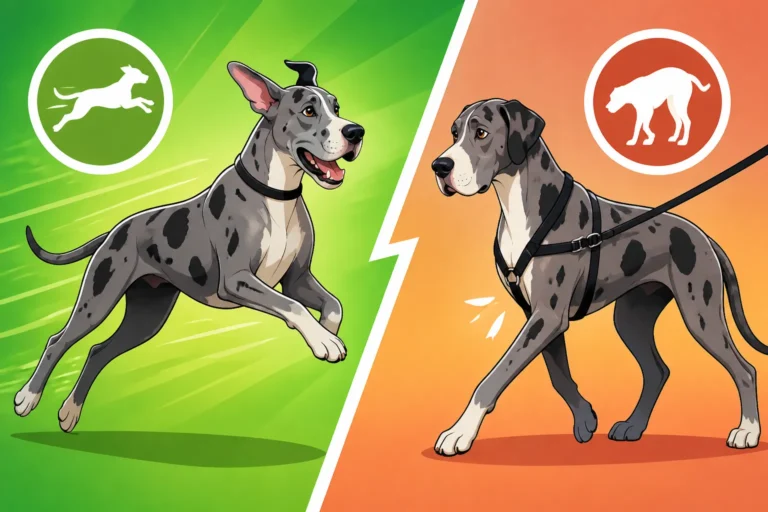
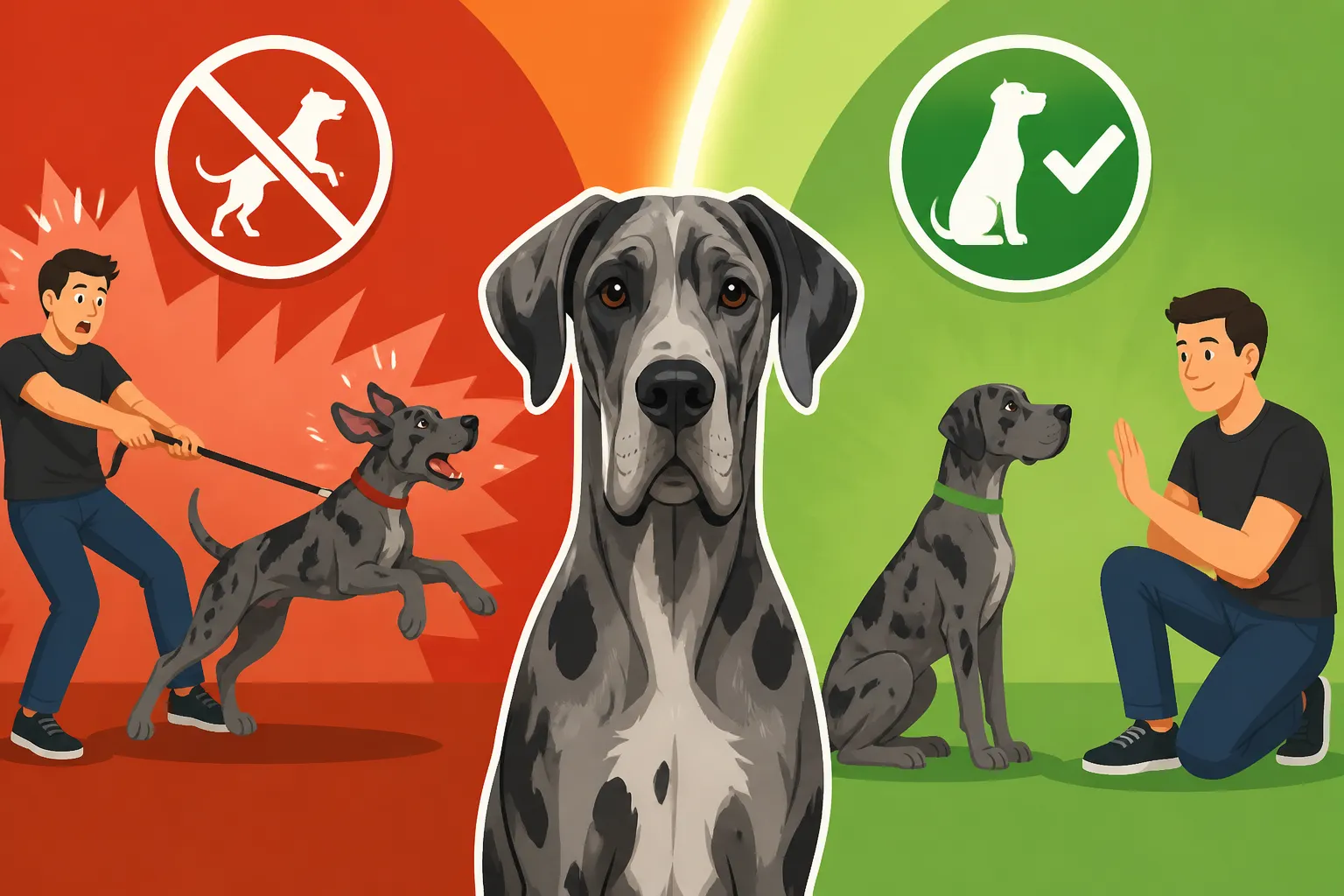
Picture this: you're walking your magnificent Great Dane, feeling proud, when suddenly a squirrel darts across the path, or another dog barks. In an instant, your dog lunges. If you haven't diligently worked on Great Dane Leash Manners at a Hundred and Fifty Pounds, you could be pulled off your feet, dragged, or even injured. A 150-pound dog pulling with all its might is an unstoppable force for most people. I've known people who have suffered shoulder injuries, broken wrists, or nasty falls because their giant dog decided to chase something.
Leash training needs to start the moment your puppy's vaccinations allow them to go outside, even if it's just in your yard. Teaching a loose-leash walk, practicing "heel," and ensuring they can "leave it" when distractions arise are crucial skills. If you struggle with this, a professional trainer experienced with giant breeds is invaluable. Remember, it's not just about your safety; it's about your dog's too. An out-of-control dog could dart into traffic or cause issues with other pets or people.
Counter Surfing and the Reach of a Giant
Great Danes, with their incredible height, have access to surfaces other dogs only dream of. Kitchen counters, dining room tables, even certain shelves are all within reach for a determined Great Dane. This isn't just annoying; it can be dangerous if they get into something toxic like chocolate, certain plants, or medications. Why a Great Dane Steals Food Off Counters isn't just about being naughty; it's an opportunity.
Teaching a strong "leave it" command and establishing clear boundaries around food preparation and dining areas is vital. Consistency is key here. Every time they successfully grab something off the counter, they learn that the behavior is rewarding. Every time you redirect them and reward them for not counter surfing, you reinforce the desired behavior. Setting up your home with gates or crating your dog when you can't supervise actively can also be helpful during the learning phase. For practical tools, a quick search on Amazon for "tall pet gates" or "Great Dane safe chew toys" can yield helpful results to manage their environment.
Building a Foundation: The Critical Window for Learning
Beyond just managing their size, early training for a Great Dane is about tapping into their most receptive learning period and shaping their entire worldview. This foundation sets the stage for a lifetime of good behavior and a confident, well-adjusted dog.
The Malleable Mind of a Great Dane Puppy
Just like human children, puppies have critical developmental windows where they are most open to learning and new experiences. For Great Danes, this period is especially important because they grow physically so rapidly. Their minds, however, are still like sponges during those first few months. They are learning about the world, about you, and about what's expected of them. Trying to teach complex commands or correct ingrained bad habits in an adult Great Dane is significantly harder than guiding a puppy during this impressionable stage.
Think of it as building a house. It's far easier to pour a strong, level foundation at the beginning than to try and fix structural issues once the walls are up and the roof is on. Early training isn't just about teaching "sit" and "stay"; it's about teaching them how to learn, how to focus on you, and how to operate calmly in different environments. Utilizing an online puppy training program like BAXTER & Bella can provide structure and support during this crucial time, making sure you don't miss those vital early weeks. It's often more affordable and flexible than in-person classes, especially for busy families.
Socialization: More Than Just Playtime
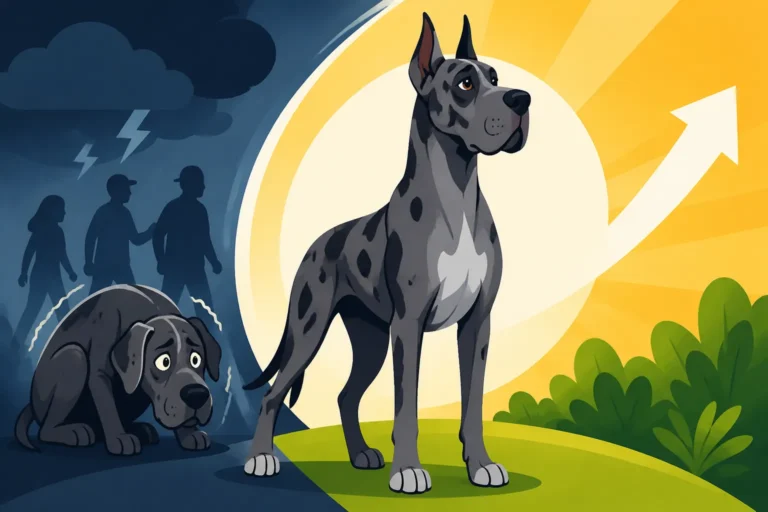
For a giant breed like a Great Dane, proper socialization is absolutely non-negotiable. It's not just about letting them play with other dogs; it's about exposing them to a wide variety of sights, sounds, people, places, and textures in a positive and controlled way during their puppyhood. A poorly socialized Great Dane can become fearful, anxious, or even reactive to new situations, and a fearful giant is a very difficult and potentially dangerous animal to manage. Socializing a Great Dane Puppy Early is perhaps one of the most important things you can do for them.
From a young age, safely introduce your Great Dane puppy to:
- Different types of people (men, women, children, people in hats, people with umbrellas).
- Various environments (parks, stores where dogs are allowed, car rides, vet offices).
- Different surfaces (grass, pavement, gravel, stairs).
- Calm, vaccinated adult dogs of various sizes.
- Common sounds (traffic, vacuums, thunderstorms on a speaker).
The goal isn't to make them love everything, but to teach them that new things are generally okay and not something to be afraid of or react aggressively towards. A confident, well-socialized Great Dane is a joy to be around and handles life's surprises with grace.
Establishing Leadership and Boundaries Early
Great Danes thrive on clear structure and knowing what's expected of them. They are intelligent dogs, and they will test boundaries, especially during their adolescent phase. Establishing yourself as a consistent, fair, and trustworthy leader from day one is paramount. This doesn't mean being harsh or punitive; it means being clear with your expectations and rewarding good choices.
Basic commands like "sit," "stay," "down," and "come" are your foundational tools for communication. More than just words, these commands are about teaching impulse control and respect. If your Great Dane understands that "sit" means they get what they want (like a treat, or permission to go outside), they learn to defer to you. This kind of consistent communication builds trust and strengthens your bond. It also helps them understand Why Waiting Until a Great Dane Is Grown Is Too Late, because by then, the habits are set. It's much easier to guide a young puppy than to try and change the established patterns of an adult dog.
Long-Term Harmony: Living with a Well-Mannered Giant
The benefits of early and consistent training extend far beyond preventing immediate problems; they pave the way for a truly harmonious relationship and a lifetime of shared joy. A well-trained Great Dane is a pleasure to live with, integrating seamlessly into your family and community.
Public Perception and Responsible Ownership
Let's face it, a Great Dane commands attention. Their size alone means people will notice them. A well-behaved Great Dane, calmly walking on a leash, greeting people politely, and resting quietly in public, acts as an incredible ambassador for the breed. People will often comment on how well-behaved they are, and you'll feel a sense of pride in your dog. This positive public perception is vital for a breed that can sometimes be misunderstood due to its imposing stature.
Conversely, an unruly Great Dane – barking excessively, pulling on the leash, jumping on strangers – can quickly create a negative image. This can lead to fear, avoidance, and even restrictions in public places or housing. Responsible Great Dane ownership absolutely includes ensuring your dog is a polite member of society. This commitment starts with early training and socialization, ensuring they learn how to navigate the human world politely. Thinking about Whether a Great Dane Is Welcome at a Dog Park should prompt you to think about how well-trained and socialized your dog is first.
Easing Vet Visits and Grooming Challenges
Imagine trying to wrestle a 150-pound anxious dog onto a vet scale, or trying to trim the nails of a dog that pulls its paws away forcefully. Without early conditioning and positive experiences, routine vet visits and grooming can become monumental, stressful battles for both you and your Great Dane. Their sheer size means that a nervous or resistant Dane requires multiple people to handle, or worse, sedation for basic care, which always carries its own risks.
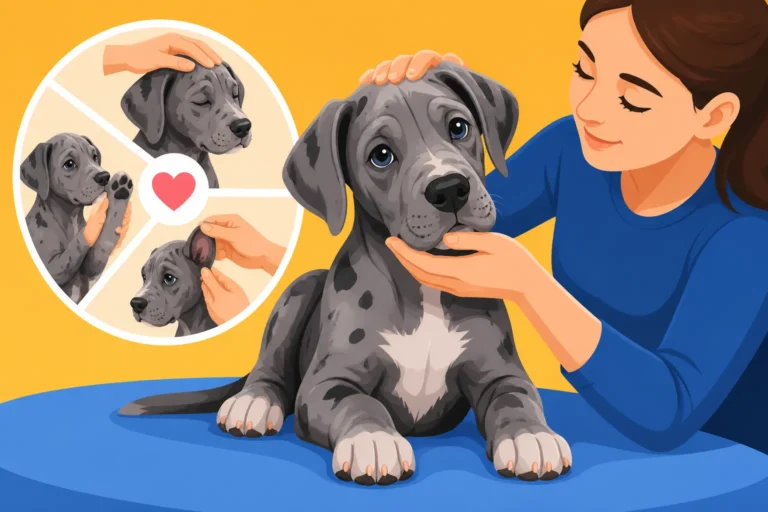
From day one, practice handling your puppy's paws, ears, mouth, and tail. Make it a positive experience with treats and praise. Get them used to lying on their side. Take them to the vet for "happy visits" where they just get treats and pets, without any injections or poking. This helps build a positive association with these experiences. A well-behaved Dane that tolerates handling will have a much less stressful life, and so will you and your vet team! Don't forget, even getting them used to the car for these trips is key; Teaching a Great Dane to Get Into a Car can save a lot of future headaches.
Enjoying Life Together: Travel and Family Integration
The dream of owning a Great Dane often includes imagining them as a part of every family adventure, from camping trips to visiting relatives. A well-trained Great Dane can absolutely be a fantastic travel companion. If they know how to settle quietly in a crate, walk politely on a leash in new environments, and respect boundaries in unfamiliar homes, your world together expands exponentially. You can truly integrate them into your lifestyle rather than feeling tethered to your home.
This includes living happily alongside children and other pets. When a Great Dane understands cues like "leave it" or "place," you can confidently manage interactions with younger family members or smaller animals. Without this training, managing the interactions between a giant dog and a small child or cat can be a constant source of anxiety. Early training helps ensure that your gentle giant is truly gentle and respectful in all aspects of family life.
Here's a quick look at the impact of early versus delayed training:
| Aspect | Early Training (Puppyhood) | Delayed Training (Adolescent/Adult) |
|---|---|---|
| Effort Required | Moderate, consistent effort. Easier to shape habits. | High, intensive effort. Harder to break ingrained bad habits. |
| Cost | Often includes puppy classes or online programs. | Remedial training, possibly private trainers or behavioral specialists, can be significantly more expensive. |
| Safety | Prevents dangerous situations; builds confidence and control. | Higher risk of accidents, injuries, and unintended damage due to size. |
| Bonding | Strengthens bond through clear communication and positive reinforcement. | Can strain relationship due to frustration and lack of understanding. |
| Socialization | Develops a confident, adaptable dog. | Can lead to fear, anxiety, or reactivity, especially in a large dog. |
| Quality of Life | Enables seamless integration into family and public life. | Restricts activities, causes stress, potentially leads to rehoming. |
| Physical Control | Establishes control before physical size becomes a major issue. | Physical control becomes extremely difficult or impossible for most adults. |
The Cost of Delay: When Training Becomes Remedial
Many Great Dane owners mistakenly believe they can "wait until they're older" for serious training, perhaps thinking their dog will naturally mature out of puppy behaviors. This is a risky gamble that almost always backfires, leading to far greater challenges and costs down the line.
The Difficulty of Retraining Adult Great Danes
While it's true that old dogs can learn new tricks, retraining an adult Great Dane with ingrained bad habits is significantly more challenging than teaching a puppy from scratch. Habits, good or bad, become deeply ingrained over time. For a giant breed, breaking these habits often requires immense patience, consistency, and a greater level of physical and mental engagement. An adult Great Dane that has learned to jump for attention for a year isn't going to unlearn that overnight; it will take weeks, possibly months, of dedicated work to extinguish the behavior and replace it with a polite alternative.
The sheer power and stubbornness of an adult Dane who has been allowed to make their own rules can be overwhelming. What was a minor nuisance in a puppy becomes a major impediment to living peacefully with your dog. You might find yourself unable to have guests over, take your dog on walks, or even just relax at home because of persistent, unmanaged behaviors. This is why it's so important to invest in What a Great Dane Must Know by Six Months.
Professional Help: Necessary But Pricey
If you find yourself with an adult Great Dane whose behaviors have become unmanageable due to a lack of early training, seeking professional help is usually the only way forward. And let's be realistic: services for giant breeds tend to cost more. A trainer experienced with Great Danes will understand their unique growth patterns, their physical strength, and their temperament. However, the hourly rates for a qualified private trainer or a behavioral specialist can add up quickly, especially if extensive remedial work is needed. This investment far outweighs the cost of puppy classes or an online program started during those critical early months.
Furthermore, if the issues are severe, requiring intensive one-on-one sessions or even board-and-train programs, the financial commitment can be substantial. Finding a Trainer Comfortable With a Great Dane is crucial, but budgeting for one needs to happen early if you plan to go that route, rather than waiting until you're in crisis mode. These trainers are worth every penny, but it's a cost that could often be minimized with proactive, early training.
The Emotional Toll of an Unruly Giant
Beyond the financial and physical costs, living with an untrained or poorly behaved Great Dane can take a significant emotional toll on owners. The constant stress of managing an out-of-control dog, the embarrassment in public, the worry about their safety or the safety of others, and the feeling of being overwhelmed can erode the joy of dog ownership. Many owners feel guilty, frustrated, and even resentful, which is heartbreaking for both them and their dog.
A Great Dane is a sentient, intelligent creature that thrives on clear communication and a stable environment. When they don't understand the rules, they can become anxious or confused, which can manifest in further behavioral problems. Early training is an act of love and responsible pet ownership. It empowers you to guide your gentle giant, building a bond of mutual respect and understanding that truly makes them the magnificent companion they are meant to be. Don't let the opportunity slip by; start that training today.
Disclaimer
This article is for general informational purposes only and does not constitute professional advice. Laws, prices and regulations vary by location and change over time. Consult a qualified professional for guidance on your specific situation.