A Great Dane That Reaches the Kitchen Counter
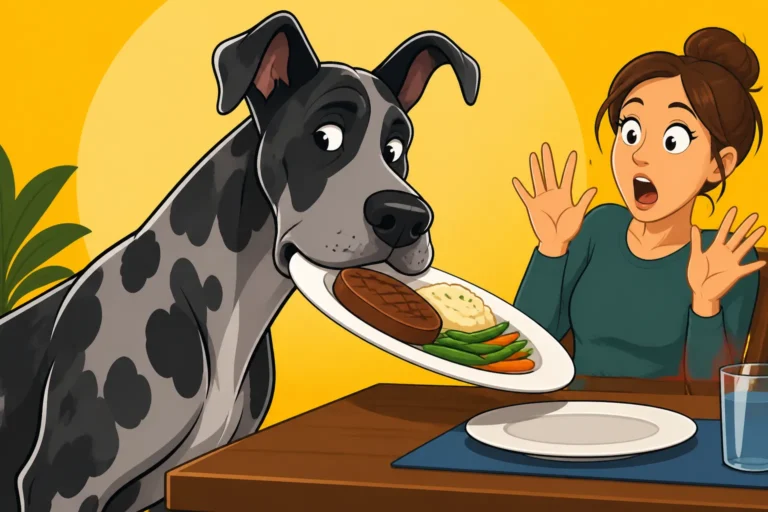
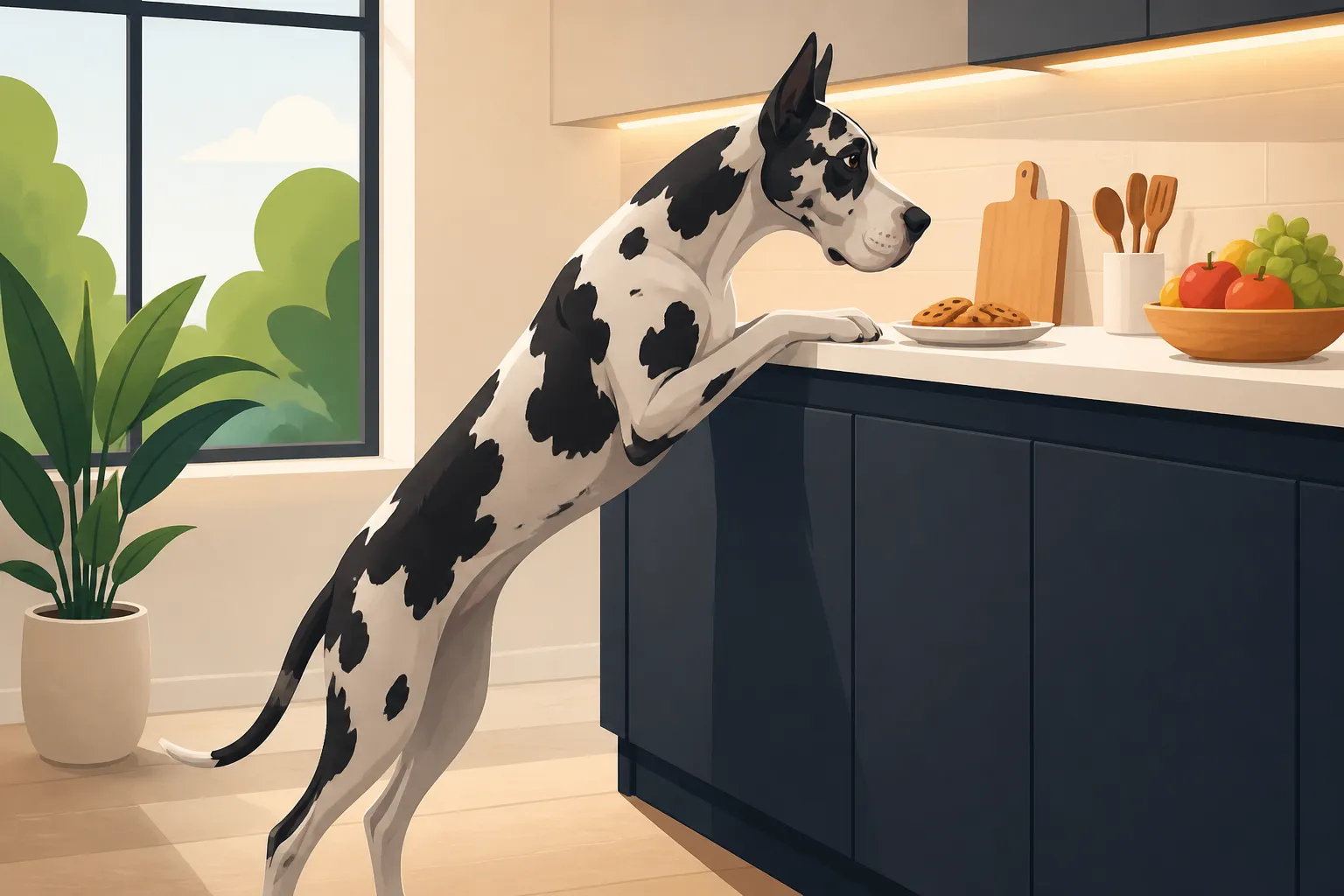
It’s a tale as old as time for Great Dane owners: you turn your back for a split second, perhaps to grab a forgotten ingredient from the pantry, and suddenly, a towering head is exploring the kitchen counter. That gorgeous, lanky puppy you brought home has seemingly overnight transformed into a countertop-leveling beast, and now your carefully prepared meal or fresh groceries are at eye-level, and often, within reach. This guide will walk you through understanding why your gentle giant sees your kitchen counters as fair game and, more importantly, how to implement effective strategies to keep your food safe and your Dane’s paws on the floor.
Understanding the Counter Surfing Phenomenon in Great Danes
Let's be real, when you have a dog that can stand on all fours and casually eye what's cooking on the stove, the game changes entirely. Counter surfing in Great Danes isn't necessarily a sign of a "bad" dog; it's often a natural behavior exacerbated by their sheer size and our human habits. It's frustrating, certainly, but understanding the root causes is the first step toward finding solutions.
The Anatomy of a Giant: It's Not "Bad" Behavior, It's Just Physics
For smaller breeds, reaching the counter usually requires an impressive vertical leap, something that takes effort and deliberate intent. For a Great Dane, it’s often as simple as a casual stretch or a curious lean. Their adult height, which can easily be thirty inches or more at the shoulder, means that most standard kitchen counters are well within nose-range, if not mouth-range. They don't have to work nearly as hard to investigate or swipe something tasty.
This isn't about naughtiness or defiance; it's about physical capability. Imagine if you could effortlessly reach a high shelf that used to require a step stool. You'd probably find yourself checking it out more often, right? The same principle applies to your Great Dane. What looks like an act of rebellion to us is often just their natural curiosity interacting with their unique physical dimensions.
The Allure of the Forbidden: Why Counters Are So Tempting
To a dog, especially one with a keen sense of smell like a Great Dane, a kitchen counter laden with food is a treasure trove of tantalizing aromas. Their world is largely scent-driven, and the wafts of roast chicken, freshly baked cookies, or even just spilled coffee grounds can be overwhelmingly attractive. These scents act as powerful lures, drawing them in for a closer inspection.
Beyond just smell, there's the visual aspect. Many Great Danes are incredibly smart and observant. They watch us prepare food, see us place items on the counter, and understand that this surface is where interesting things often appear. If they've ever had a "win"—even accidentally knocking something off that then became a snack—they've learned that counters can yield rewards, reinforcing the behavior. They’re like furry detectives, constantly gathering data on where the good stuff hides.
The Role of Opportunity and Reinforcement: If They Get Food Once, They'll Try Again
Dogs are brilliant at connecting actions with consequences, especially when those consequences involve food. If your Great Dane has ever successfully snagged a dropped piece of toast, a forgotten sandwich, or even just licked a leftover plate on the counter, they've just received a huge reward for being up there. This single "win" can be enough to cement the behavior, making them more likely to try again. They don't rationalize like humans; they simply associate the counter with potential deliciousness.
Every time they get a crumb, a lick, or an entire meal from the counter, that behavior is reinforced. It tells them, "Hey, this is a viable way to get food!" This is why consistency in preventing access and never rewarding the behavior (even inadvertently) is absolutely critical. It’s a lot harder to "untrain" a behavior that has been richly rewarded than to prevent it from ever starting.
Identifying the Triggers and Your Dog's Motivation
Understanding why your Great Dane is eyeing the counter goes a long way in devising an effective strategy. It's not always just about hunger; sometimes other factors are at play that can surprise you. Pinpointing these motivations helps tailor your approach, making your efforts more fruitful.
Food-Motivated Counter Surfing: Obvious Smells, Visible Treats, Unattended Meals
This is, perhaps, the most common and straightforward motivation. A Great Dane's sense of smell is incredibly powerful, and even subtle odors from food can attract their attention. Imagine leaving a cooling pizza on the counter or a plate of leftovers for just a moment. To us, it might seem safe, but to a Great Dane, it's an irresistible buffet waiting to happen. The visible presence of food, especially if it's something they particularly love, acts as a direct invitation.
Even if you’ve cleared the main dishes, lingering crumbs, spilled liquids, or food prep scraps can be enough to entice them. Their powerful noses don't miss much, and if there's any reward to be found, they will investigate. This is where vigilance truly pays off. They learn quickly what foods are most likely to be left unattended and at what times, often becoming quite strategic in their counter-surfing attempts. A Great Dane That Takes Dinner Off the Table explores similar challenges.
Attention-Seeking or Boredom: Sometimes It's Not Just Food
While food is often the primary driver, sometimes a Great Dane will engage in counter-surfing (or similar mischievous behaviors) as a way to get your attention. If they’re feeling under-stimulated, bored, or simply want to interact with you, a quick "counter check" might lead to a reaction from you—even a negative one—which still counts as attention. They might knock something over, not necessarily to eat it, but because they know it will make you look at them and say something.
Consider your routine. Is your Dane getting enough mental and physical exercise? A Great Dane might be a "gentle giant" indoors, but they still need appropriate outlets for their energy and intelligence. If they're constantly looking for trouble, it might be a sign they need more engagement. This could be structured playtime, training sessions, or puzzle toys that keep their minds active. Wearing Out a Great Dane Without Wrecking Its Joints offers ideas for appropriate exercise.
The "Accidental" Counter Sweep: When Their Tail or Body Clears Things Unintentionally
Sometimes, it's not even a deliberate act of counter-surfing, but rather an unfortunate consequence of having a massive dog in a normal-sized kitchen. A Great Dane's tail, often referred to as a "Dane-whip," can clear a coffee table or a low counter with astonishing speed and force. Their large bodies, when excited or simply moving through a confined space, can also bump against counters, sending items crashing to the floor.
While the initial sweep might be accidental, what happens next is often not. If something delicious falls to the floor, your Great Dane will quickly capitalize on the "accident." This reinforces the idea that counters can be a source of food, even if it wasn't a direct theft. This scenario highlights the importance of keeping counters as clear as possible, not just from intentional surfing, but from collateral damage caused by an enthusiastic tail or a lumbering body.
Proactive Strategies to Prevent Counter Surfing
The best defense against counter surfing is a good offense. Implementing proactive strategies focuses on preventing the behavior before it even starts, which is far easier and less stressful than constantly trying to correct it. Think about creating an environment where the opportunity for counter surfing is minimized, and your Dane learns that the kitchen counter is simply not a source of anything good.
Management First: Preventing Access and Opportunity
This is arguably the most critical and immediately effective strategy. If your Great Dane cannot physically reach or get to the counter, they cannot surf it. This means being incredibly vigilant about your kitchen setup and your dog's access. When you're actively cooking or supervising, it's easier to redirect them. However, for times when you can't give them your full attention, physical barriers are your best friend.
Consider using baby gates—extra-tall, sturdy ones designed for large breeds—to block off kitchen access when you're not actively supervising. Baby Gates a Great Dane Cannot Step Over provides options. When you leave the house, or if you need to be in another room and can't keep an eye on them, a comfortable, appropriately sized crate is an excellent tool. Crates That Hold a Full-Grown Great Dane outlines what to look for. The goal here is to remove the opportunity completely, eliminating any chance for them to practice the undesirable behavior.
Environmental Set-Up: Making Your Kitchen a "No-Go" Zone
Beyond just restricting access with gates, think about how you set up your kitchen space. The golden rule: if you don't want your Great Dane to eat it, don't leave it on the counter. This sounds simple, but it requires a conscious effort from everyone in the household. Get into the habit of immediately putting away food, clearing plates, and wiping down surfaces. Don't leave groceries unattended on the counter when you come home, even for a minute.
This extends to non-food items too. While your Great Dane might not eat your keys, if they knock them off and get a reaction, it still reinforces counter exploration. Keep counters sparse and clear. Invest in sturdy, tall containers for bread, fruit, or anything else you might typically leave out. The less tempting and accessible the counter is, the less likely your Dane will be to see it as a potential treasure chest. This consistent environmental management helps communicate that the kitchen counter is not for them.
Teaching an "Off" or "Leave It" Command Consistently
While management prevents the behavior, training empowers your Great Dane with an alternative. The "Off" command (meaning all four paws on the floor) and the "Leave It" command are invaluable for a giant breed. Start practicing these commands in low-distraction environments, rewarding heavily when your Dane complies. Use high-value treats to make it really worthwhile for them to choose to ignore something.
Practice "Leave It" with items on the floor first, gradually increasing the difficulty by placing items on lower surfaces, and eventually, the counter, while you are standing right there. The key is to teach them that ignoring the item (or getting off the counter) earns them something even better from you. Consistency is paramount. Everyone in the household needs to use the same commands and reinforce them in the same way. Resources like BAXTER & Bella's online training programs can be incredibly helpful for learning how to teach these essential cues with positive reinforcement, ensuring everyone is on the same page. Teaching a Great Dane to Leave Food Alone offers a deeper dive into this specific skill.
Training Interventions and Behavioral Adjustments
Once you've got a handle on the preventative measures, it's time to layer in the training. This is where you teach your Great Dane what you do want them to do, rather than just what you don't want. Behavioral adjustments are about shaping their choices and providing them with appropriate outlets and alternatives.
Positive Reinforcement for Desired Behaviors
Instead of only reacting when your Great Dane is on the counter, focus on praising and rewarding them when they are not on the counter. If your Great Dane is calmly lying on their bed while you're in the kitchen, toss them a treat. If they walk past the counter without a glance, verbally praise them with enthusiasm. The goal is to make staying on the floor and ignoring the counter a highly rewarding experience.
This approach builds a positive association with appropriate behavior, rather than simply punishing undesirable actions. Your Great Dane will learn that being calm and respectful of boundaries in the kitchen yields good things (treats, praise, attention), while counter surfing yields nothing (or negative consequences like being crated). Keep a jar of small, high-value treats handy in the kitchen for these moments.
Training a "Place" or "Settle" Command
A "place" or "settle" command is incredibly useful for teaching your Great Dane to go to a designated spot—like their bed or a mat—and stay there calmly while you're busy in the kitchen. This not only keeps them off the counter but also out from underfoot. Start by luring them to their bed with a treat, saying "Place" or "Settle," and then rewarding them once they're on it. Gradually increase the duration they need to stay and the distance you move away.
Practice this frequently throughout the day, not just when you're preparing food. Once they've mastered it, you can direct them to their "place" when you're working in the kitchen, reinforcing their calm behavior with occasional treats. This gives them a clear job to do and helps them understand what is expected of them during busy kitchen times. Online platforms, such as those offered by BAXTER & Bella, can provide structured lessons and support for teaching a reliable "place" command. Teaching a Great Dane a Place to Settle goes into more detail.
Addressing Boredom and Energy Outlets
A tired Great Dane is often a well-behaved Great Dane. If your dog is counter surfing out of boredom or excess energy, no amount of "leave it" commands will fully solve the problem. Ensure your Dane is getting sufficient physical exercise appropriate for their age and joint health. This doesn't necessarily mean miles of running, especially for a growing Great Dane, but rather consistent walks, structured play, and opportunities to sniff and explore.
Mental stimulation is just as important. Great Danes are intelligent and benefit from activities that make them think. Puzzle Feeders a Great Dane Cannot Crush are fantastic for meal times, turning eating into a game. Regular training sessions, even short ones, can engage their minds. Consider scent work games, where they have to use their nose to find hidden treats. A dog whose needs are met physically and mentally is less likely to invent their own "entertainment" by exploring forbidden surfaces.
Tools and Aids for Managing a Counter-Surfing Great Dane
Sometimes, training alone isn't enough, or you need some extra support while your Great Dane is learning. There are various tools and aids that can help you manage the environment and deter counter-surfing, providing an additional layer of prevention and reinforcement.
Physical Barriers: Gates and Crates
We touched on these earlier, but it’s worth reiterating their importance. For a Great Dane, standard baby gates simply won't cut it. You need gates that are extra tall and robust, often extending to 40 inches or more, and securely mounted or pressure-fitted to withstand a gentle giant. Brands found on platforms like Amazon offer a wide range of options specifically designed for large breeds. These gates allow you to visually separate your Dane from the kitchen without complete isolation.
When you cannot supervise your Dane at all, or when you need a guaranteed "time-out" zone, a large, comfortable crate is indispensable. It provides a safe, confined space where they cannot get into trouble. Ensure the crate is large enough for your Great Dane to stand up, turn around, and lie down comfortably. This isn't a punishment, but a safe haven and a management tool. Crates are particularly useful during those times when you're preparing meals, entertaining guests, or leaving the house.
Deterrents (Used Cautiously)
While I always advocate for positive reinforcement, sometimes a harmless deterrent can help break a stubborn habit, particularly if your Great Dane is highly motivated by food. Motion-activated alarms or cans filled with pennies (often called "shake cans" or "booby traps") can be strategically placed on the counter. When your Dane approaches, the unexpected noise can startle them and create an unpleasant association with the counter.
However, these tools must be used with extreme caution and never in a way that frightens or traumatizes your dog. They should create an unexpected, impersonal consequence, not one that seems to come from you. If your Great Dane associates the deterrent with your presence, they might just learn to counter surf when you're not around. Test them first, and use them sparingly as an aid, not as a primary training method. Always prioritize positive training and management.
Enrichment Toys and Puzzle Feeders
To combat boredom and redirect your Great Dane's natural scavenging instincts, invest in a variety of durable enrichment toys and puzzle feeders. These toys are designed to make your dog work for their food or treats, engaging their minds and keeping them occupied for extended periods. Instead of freely feeding your Dane all their meals in a bowl, consider putting a portion in a large, sturdy puzzle feeder.
Look for puzzle feeders that are built to withstand a Great Dane's powerful jaws and size. Many options are available on Amazon. These feeders slow down eating, provide mental stimulation, and fulfill their natural desire to "hunt" for food, thereby reducing the appeal of illicit counter snacks. Rotate toys regularly to keep things interesting and prevent your Dane from getting bored with the same old things. This makes authorized "food work" more appealing than counter surfing.
What to Do When They Slip Up (Because They Will)
Let's be realistic: even with the best intentions and the most consistent training, your Great Dane will likely slip up now and then. They're dogs, after all, and sometimes the allure of a rogue crumb or an unattended sandwich is just too strong. How you react in these moments is crucial for maintaining your training and not inadvertently reinforcing the wrong behavior.
The "Caught in the Act" Response: How to React Effectively Without Fear
If you catch your Great Dane in the act of counter surfing, your reaction needs to be immediate, consistent, and unemotional. A sharp, firm "Off!" or "Leave it!" followed by physically guiding them away from the counter (without force or anger) is often effective. Do not yell, chase, or punish them harshly, as this can create fear or, worse, teach them that counter surfing is a great way to get your attention.
The moment their paws hit the floor, or they move away from the counter, mark that positive action with a "Yes!" and a treat that you give them from the floor, away from the counter. This teaches them that choosing to disengage from the counter is what earns them the reward. If you scold them and then they get a treat immediately, they might be confused. The key is to reward the desired outcome: paws on the floor, away from the counter. Consistency from every family member is crucial here; mixed signals will only confuse your intelligent Dane.
Cleaning Up and Preventing Future Incidents: Reinforce Management
Once the immediate situation is handled, take a deep breath and quickly clean up any mess. If your Great Dane managed to get something, remove it from their reach immediately. Don't engage in a tug-of-war or chase them, as this can turn into a fun game for them. Simply remove the item if you can safely do so.
Afterward, take a moment to reflect on how the slip-up happened. Was a plate left out? Did someone forget to close the gate? Did you leave the room without crating them? Use these moments as learning opportunities to reinforce your management strategies. Every slip-up is a chance to identify a loophole in your system and tighten your preventative measures. This might mean adjusting your routine, adding a taller gate, or ensuring everyone in the household is on board with the rules.
Safety Concerns: Foods a Great Dane Should Never Eat
Beyond the sheer annoyance and loss of your lunch, counter surfing poses a significant health risk to your Great Dane. Many common human foods are toxic to dogs, and a Great Dane, with its size, can consume a dangerous amount quickly. Chocolate, onions, garlic, grapes, raisins, xylitol (found in many sugar-free products), and even certain nuts can cause severe illness or even be fatal. Poisons a Great Dane Can Reach on a Counter provides a comprehensive list.
If your Great Dane manages to ingest something potentially toxic, immediate veterinary attention is paramount. Do not wait for symptoms to appear. Knowing which foods are dangerous and being extra vigilant about keeping them out of reach is a non-negotiable part of owning a giant breed like a Great Dane. Even non-toxic foods, if consumed in large quantities or if they are particularly rich, can lead to serious digestive upset, pancreatitis, or even a life-threatening condition like bloat, which Great Danes are already prone to.
| Strategy Type | Description | Key Benefits | Considerations |
|---|---|---|---|
| Management | Physical barriers, keeping counters clear, direct supervision. | Immediate prevention, no training required for initial effect. | Requires vigilance and consistent effort from all household members. |
| Training | Teaching "Off," "Leave It," "Place" commands, positive reinforcement. | Builds desired behaviors, empowers dog to make good choices. | Requires consistent practice, patience, and clear communication. |
| Deterrents | Motion-activated alarms, shake cans (used cautiously). | Can create an impersonal negative association with the counter. | Must be used carefully to avoid fear/anxiety; not a primary method. |
| Enrichment | Puzzle feeders, engaging toys, adequate exercise. | Addresses boredom, redirects natural instincts, mental stimulation. | Requires investment in appropriate toys and dedicated exercise time. |
Disclaimer
This article is for general informational purposes only and does not constitute professional advice. Laws, prices and regulations vary by location and change over time. Consult a qualified professional for guidance on your specific situation.