Whether One Person Can Walk Two Great Danes
Walking two Great Danes at once can feel less like a peaceful stroll through the park and more like an Olympic event where you're constantly bracing for impact. Many of us dream of serene walks with our magnificent giants, but the reality of managing two powerful, often enthusiastic, dogs on leash simultaneously can be daunting, leading to tangled lines, pulled shoulders, and sometimes, outright frustration. This comprehensive guide will explore the practicalities, challenges, and strategies involved in successfully walking two Great Danes by yourself, offering realistic advice to make those outings more manageable and enjoyable for everyone involved.
The Inherent Challenges of Walking Two Giant Breeds
Let's be honest: one Great Dane is a lot of dog. Two? That's a whole different ballgame. The sheer size, strength, and individual personalities of Great Danes create a unique set of challenges when you're trying to walk them solo. It's not just about doubling the effort; it's about exponential complexity.
Managing Disparate Strengths and Personalities
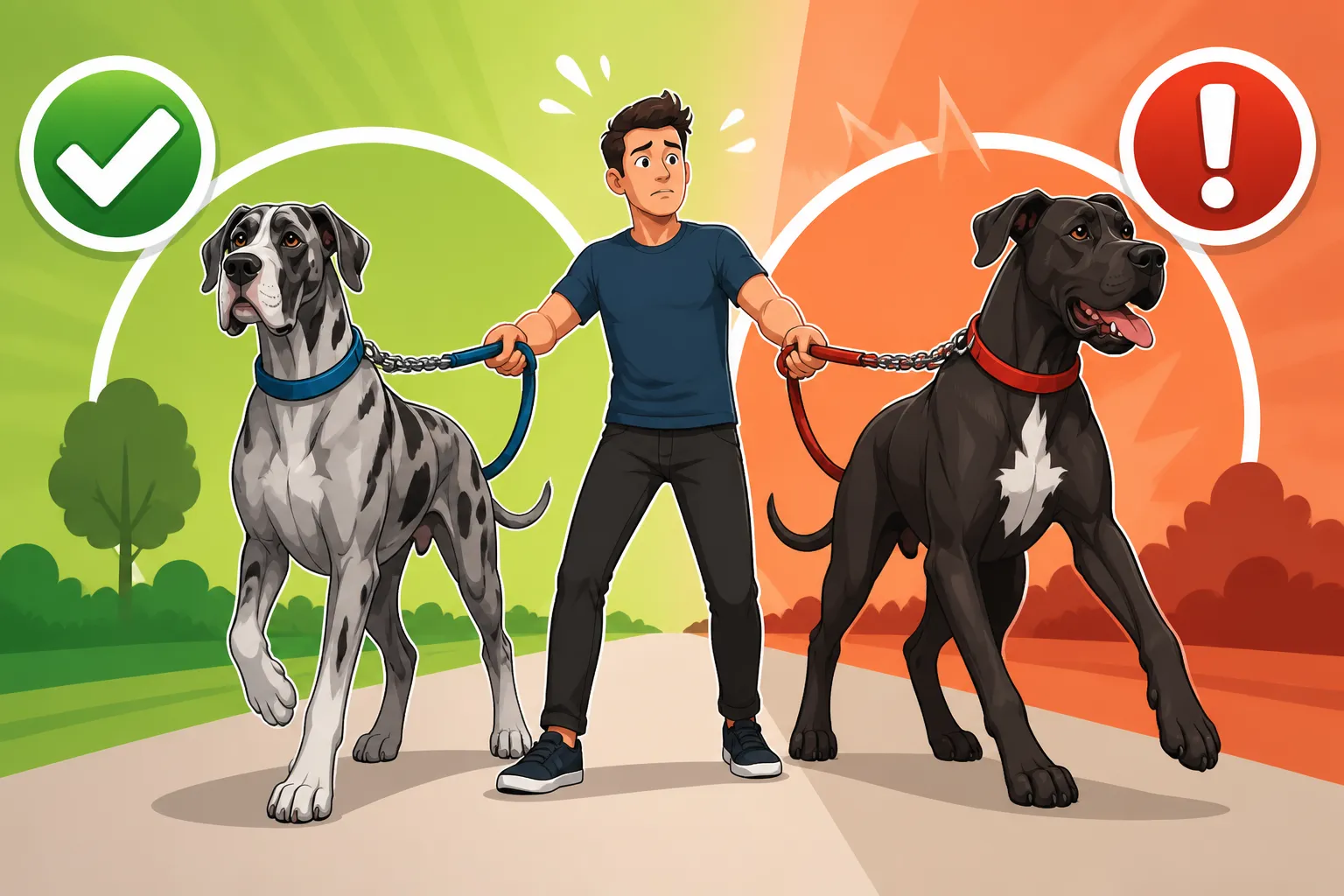
You might have two Great Danes, but they are rarely two identical walking partners. One might be a seasoned pro on the leash, calmly trotting beside you, while the other is still very much in its adolescence, lunging at squirrels or pulling with the force of a small pony. Imagine you're walking along, and suddenly, your younger Dane spots a rabbit and bolts, while your older, more sedate Dane decides this is the perfect moment to sniff a particularly interesting patch of grass. You're pulled in two different directions, your balance is compromised, and you're fighting two distinct forces with only two hands. It's easy to feel completely overwhelmed, especially when you're trying to correct one without inadvertently correcting the other. This isn't just a physical strain; it's a mental one, trying to anticipate and react to two independent beings who might have very different ideas about what constitutes a good walk.
Then there's the reactivity factor. If one of your Danes is prone to barking at other dogs, or gets overly excited by passersby, having another Dane with them can either amplify or diffuse the situation. Sometimes, a calm companion can help settle a nervous or reactive dog, but just as often, the excitement of one dog can quickly escalate the other, turning a simple walk into a frantic dance of barks and lunges. Dealing with A Great Dane That Lunges at Other Dogs is hard enough with one; with two, you need to be twice as vigilant and twice as strong in your handling.
The Logistics of Equipment and Grip
Holding two leashes, especially two Great Dane-sized leashes, can be a logistical nightmare. Standard leashes are often designed for single-dog use, meaning you're left juggling two separate handles. This might seem simple in theory, but consider what happens when they cross paths, sniff different things, or one decides to do a sudden, unexpected U-turn. Leashes can tangle around your legs, around each other, or even around the dogs themselves, creating a hazardous situation where a quick correction becomes impossible, and a fall becomes a real possibility. Your grip can become compromised, making it harder to maintain control, particularly if both dogs decide to pull hard simultaneously.
Beyond the tangles, there's the sheer power dynamic. A hundred and fifty pounds of Great Dane, multiplied by two, is three hundred pounds of dog that can easily pull you off your feet if they decide to chase something. Standard leashes, even thick ones, can dig into your hands when you're trying to hold onto two powerful animals. This is why many owners find themselves experimenting with different leash configurations, looking for that elusive combination that offers both control and comfort. It's not just about having the right gear; it's about how that gear integrates with your body mechanics and your ability to maintain a firm, safe hold.
Essential Gear for Multi-Dane Walks
Successfully walking two Great Danes often comes down to having the right tools for the job. Investing in appropriate equipment isn't just about convenience; it's about safety and control for both you and your dogs. Forget flimsy collars and standard leashes; you need gear built for power and purpose.
Harnesses Over Collars for Control and Comfort
For Great Danes, especially when walking two at once, harnesses are almost always a superior choice to traditional neck collars. A flat collar, while fine for identification, can put immense pressure on a Great Dane's sensitive neck and trachea if they pull, potentially causing injury or discomfort. Even worse, if you're trying to correct a lunge from A Great Dane That Pulls You Off Your Feet with a collar, you risk doing more harm than good to their throat and spine. Harnesses distribute pressure across the chest and shoulders, which is far more comfortable and safer for your giant companions. Many modern harnesses are designed with a front-clip option, which discourages pulling by redirecting the dog's momentum back towards you when they try to forge ahead. This subtle redirection can make a huge difference in managing two strong dogs.
When selecting harnesses, look for sturdy construction with padded straps to prevent chafing, especially under the armpits. It's worth trying different brands and styles to see what fits your individual Danes best. You can find a vast array of options, from no-pull designs to those with multiple clip points, on sites like Amazon, allowing you to compare features and read reviews from other large dog owners. A well-fitting harness should be snug but not restrictive, allowing full range of motion while preventing escapes. Remember, each Dane will likely need a different size and fit, so don't assume one type will work for both.
Leash Choices for Dual-Dane Handling
This is where things get interesting for two-Dane households! Standard leashes, while functional for a single dog, quickly become cumbersome with two. Thankfully, there are several specialized leash options that can make dual-dog walking much more manageable.
Table: Dual-Great Dane Leash Options
| Leash Type | Description | Pros | Cons | Best For |
|---|---|---|---|---|
| Splitter/Coupler | A "Y" shaped leash with one handle and two clips for dogs. | One handle to hold; dogs walk closer together. | Can still tangle if dogs diverge; limits individual control. | Dogs with good leash manners; similar walking paces. |
| Double-Ended Leash | A single leash with clips at both ends, often used with a harness. | Versatile; can connect to two dogs, or one dog and yourself. | Can be long and cumbersome; requires precise handling. | Experienced handlers; dogs needing more individual guidance. |
| Hands-Free Leash | Worn around the waist, attaching to a single dog or a splitter. | Frees up hands; useful for running or hands-on training. | Less direct control in emergencies; can pull you off balance if dogs bolt. | Calm, well-trained dogs; owners who need hands free for other tasks. |
| Two Separate Leashes | Traditional setup of holding one leash in each hand. | Maximum individual control; easy to separate dogs. | High risk of tangling; requires strong grip in both hands; tiring. | Short, controlled walks; dogs with very different walking styles or training needs. |
For many, a coupler (also known as a splitter) is a game-changer. This effectively turns two leashes into one by connecting both dogs to a single handle, streamlining your grip. You can find robust, Great Dane-appropriate couplers that attach to your main leash on Amazon. However, if your Danes have very different walking styles – one pulls constantly, the other lags – a coupler might exacerbate tangles or make it harder to give individual corrections.
In such cases, some owners opt for two separate leashes but utilize a double-ended leash for one of the dogs, connecting one end to their harness and the other to a belt loop or a strong carabiner on a waist belt for a makeshift hands-free option. This allows you to manage one dog more directly while the other is semi-tethered. The important thing is to ensure any hands-free attachment is incredibly strong and secure, designed to withstand the sudden force of a Great Dane. When looking for Leashes Rated for a Great Dane, always prioritize heavy-duty hardware and thick, durable webbing. Regardless of your choice, practice in a quiet, low-distraction area first.
Training Strategies for Synchronized Strolling
Even with the best gear, walking two Great Danes boils down to effective training. You can’t just rely on brute strength or clever gadgets; your dogs need to understand expectations and respond reliably, both individually and as a pair. This is where patience, consistency, and a solid training plan come into play.
Building Individual Leash Manners First
Before you even think about walking two Great Danes together, ensure each dog has impeccable leash manners on their own. This foundational work is non-negotiable. Trying to teach two dogs simultaneously, especially when they're prone to pulling, is an uphill battle you're unlikely to win. Each Great Dane needs to learn how to walk politely on a loose leash, respond to cues like "heel" or "let's go," and ignore distractions when walking by themselves. This individual training builds confidence in the dog and competence in you as the handler. A great place to start is with positive reinforcement methods, rewarding desired behaviors with high-value treats and praise. Consistency is key here; every walk, even a short one in the yard, is an opportunity to reinforce good manners.
Think about it: if one Great Dane is pulling you constantly, and the other is weaving erratically, combining them is only going to amplify those issues. You need a baseline of calm, controlled walking from each dog individually. This is where resources from places like BAXTER & Bella can be incredibly helpful. Their online training programs often emphasize building strong individual foundations, which are crucial before attempting more complex tasks like multi-dog walks. They can provide structured lesson plans that guide you through teaching essential cues and loose-leash walking techniques for each dog. Mastering Teaching a Great Dane to Heel Beside You with each dog separately will make all the difference when you eventually put them together.
Practicing Tandem Walks in Controlled Environments
Once both your Great Danes are walking beautifully on individual leashes, you can start introducing them to tandem walks. Begin in a low-distraction environment – your backyard, a quiet street during off-peak hours, or an empty park. The goal is to set them up for success, not to challenge them immediately. Initially, you might even enlist a friend to help, with each person handling one dog, allowing you to observe their interactions and identify potential issues without being overwhelmed. Gradually, as they demonstrate comfort and good manners together, you can transition to handling both yourself. Start with short walks, perhaps just around the block, and gradually increase the duration and complexity as they improve.
During these initial tandem walks, focus heavily on rewarding calm, cooperative behavior. If they walk side-by-side without pulling or tangling, shower them with praise and treats. If one starts to get distracted, use the techniques you learned during individual training to redirect their focus back to you. The key is to make walking together a positive and rewarding experience, reinforcing the idea that good things happen when they maintain good manners as a pair. Remember that Great Dane Leash Manners at a Hundred and Fifty Pounds takes consistent effort, and multiplying that by two means you need to be extra patient and prepared.
Addressing Common Dual-Dog Walking Issues
Even with excellent training, you're bound to encounter common issues when walking two Great Danes. Tangles are almost inevitable, especially if they have different sniffing interests. When a tangle occurs, resist the urge to get frustrated. Instead, calmly stop, untangle the leashes, and then resume walking. This teaches them that tangles are just a brief pause, not a reason for chaos.
Reactivity to other dogs or people can also be magnified with two. If one Dane starts to react, the other might quickly follow suit, creating a formidable sight for unsuspecting passersby. This is where your ability to redirect and manage their attention becomes critical. Carry high-value treats and use them to get their focus on you before they notice the distraction. You might need to change your walking route to avoid known triggers, or practice "look at me" exercises vigorously. If reactivity becomes a major hurdle, consider consulting a professional trainer experienced with large breeds and multi-dog households; they can offer tailored advice and help you implement strategies to keep everyone safe and calm. Programs like those offered by BAXTER & Bella often have sections on managing distractions and reactivity, which can be adapted for walking two dogs.
Realistic Expectations and Safety Precautions
Walking two Great Danes is a commitment, and it's essential to approach it with realistic expectations. Not every walk will be perfect, and there will be days when it feels like more trouble than it's worth. However, with the right mindset and proper precautions, you can enjoy these special moments with your giant companions.
Knowing Your Limits and Theirs
It's crucial to be honest with yourself about your physical capabilities and your dogs' temperament. While it's certainly possible for one person to walk two Great Danes, it's not always easy, nor is it always safe in every situation. If you're feeling unwell, or if your dogs are particularly high-energy that day, it might be better to walk them separately or enlist help. There's no shame in recognizing when you need an extra pair of hands. A sudden, unexpected lunge from both dogs could easily lead to a fall, and that's a risk you want to minimize, especially if you're in an area with traffic or other hazards.
Also, consider the environment. Walking two Great Danes calmly through a quiet neighborhood is one thing; navigating a bustling farmer's market or a crowded city street with them is quite another. Their sheer size means they take up a lot of space, and even well-behaved Danes can inadvertently knock over a small child or person if they shift suddenly. Understand the limits of your control and your dogs' ability to cope with high-stimulus environments. For their joint health and overall well-being, remember Exercise Limits While a Great Dane Is Still Growing. As they get older, their physical stamina and tolerance for long walks might change, so always adjust your expectations and routes accordingly.
Emergency Preparedness
Safety should always be your top priority. What happens if one of your Great Danes suddenly gets spooked and tries to bolt? What if you trip and fall? Being prepared for these scenarios can make all the difference. Always carry your phone, especially if you're out walking alone. Consider wearing a hands-free leash system that attaches securely to your waist, even if you're also holding leashes, as it provides a backup anchor point if you momentarily lose your grip. Ensure both dogs are wearing collars with up-to-date ID tags and are microchipped, just in case one manages to slip away.
It's also a good idea to practice emergency stops and recalls regularly, even when walking both dogs. If you can get them to reliably "sit" or "stay" on command, even when excited, it gives you a critical tool for regaining control. Think about potential hazards on your walking route: busy roads, aggressive off-leash dogs, or dangerous objects. Having a plan for how you would react in different emergency situations can give you greater peace of mind and help you react calmly if something unexpected happens.
The Joy of the Coordinated Walk
Despite the challenges, there's immense satisfaction in successfully walking two Great Danes together. When they're trotting in unison, responding to your cues, and enjoying the world by your side, it's a testament to your training, patience, and bond. These coordinated walks can be incredibly rewarding, reinforcing the unique connection you have with each of your magnificent dogs. It's a dance, really, between three beings, learning to move in harmony.
It takes time, effort, and the right tools, but seeing your two Great Danes calmly navigate a path together is a truly beautiful thing. It strengthens their bond with each other and with you, and it showcases the incredible potential of these gentle giants when given consistent guidance. Don't be discouraged by initial struggles; celebrate the small victories and keep working towards those moments of serene, synchronized strolling.
Disclaimer
This article is for general informational purposes only and does not constitute professional advice. Laws, prices and regulations vary by location and change over time. Consult a qualified professional for guidance on your specific situation.