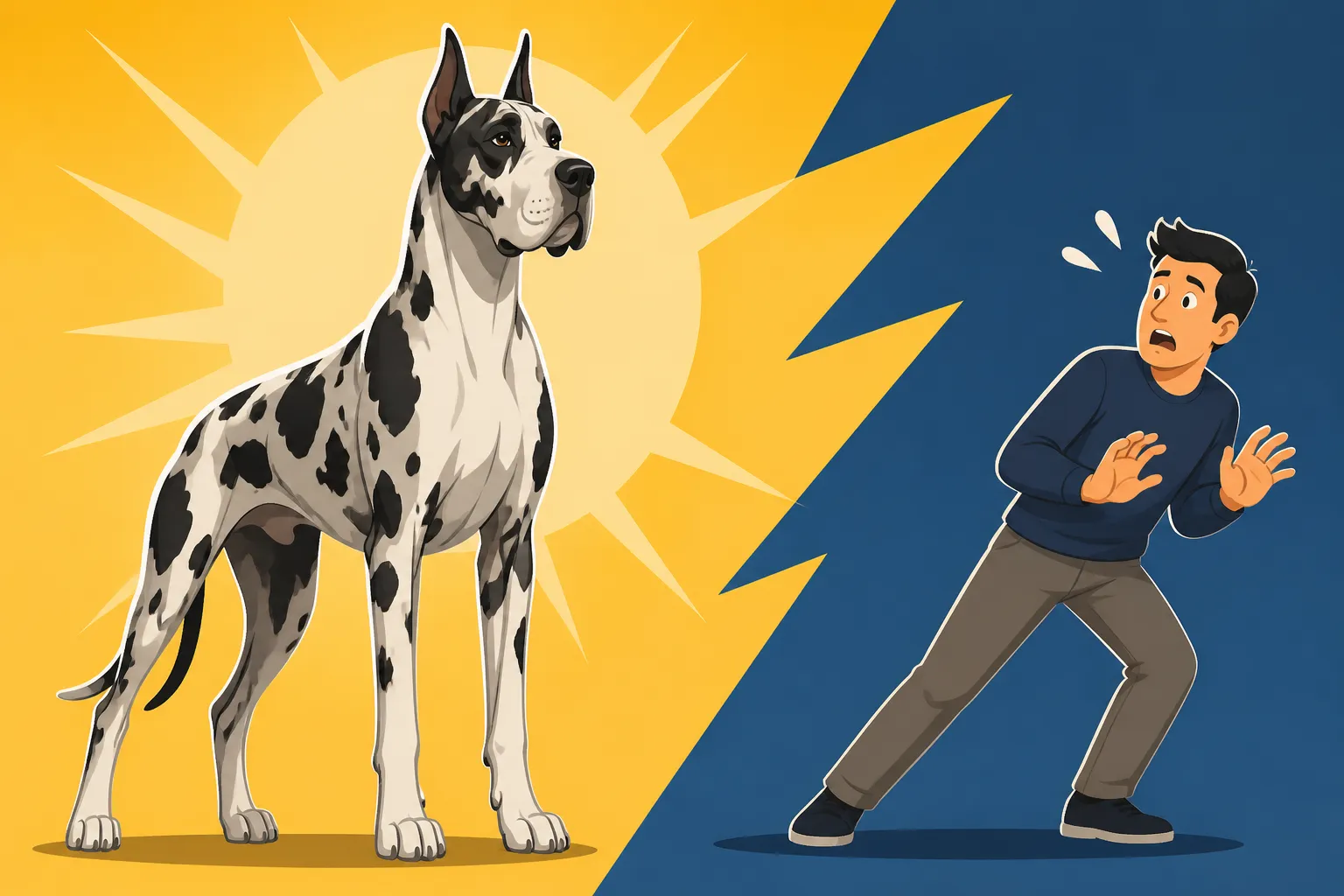
Whether a Great Dane’s Size Alone Deters Anyone
It's a common thought for anyone considering a Great Dane: "They're so huge, surely their size alone acts as a deterrent, right?" You might imagine a would-be intruder taking one look at a towering Dane and thinking twice, or people giving you a wide berth on walks. While there's a kernel of truth to the intimidating presence of these magnificent dogs, relying solely on their impressive stature for deterrence is a nuanced topic that this guide will thoroughly explore.
The Visual Impact of a Great Dane
There's no denying that a full-grown Great Dane commands attention. They are truly immense animals, easily standing eye-to-eye with many adults when on their hind legs. This sheer physical presence can certainly make an impression, and often, that impression is one of awe, respect, and sometimes, a little intimidation.
The "Gentle Giant" Misconception
For those of us who live with and adore Great Danes, we know them as the ultimate "gentle giants." They are often incredibly sweet, affectionate, and surprisingly sensitive dogs who just want to be close to their people, often attempting to become lap dogs despite their colossal size. This loving disposition is why many owners fall head over heels for the breed. However, this gentle nature isn't always apparent to an outsider. Someone unfamiliar with Great Danes might only see their immense size and assume a fierce temperament, based purely on their appearance. This perception is where the idea of deterrence often begins – it's less about the dog's actual intent and more about how their size is interpreted by others.
The "gentle giant" label is a double-edged sword. While it accurately describes the typical temperament of a well-socialized Dane, it can also lead to misconceptions. Some people might mistakenly believe that all large dogs are automatically gentle, which isn't true for every breed, nor for every individual within a breed. Conversely, those who only see the size might fail to appreciate the dog's true personality, leading them to be overly fearful or, sometimes, dangerously complacent. A Great Dane's size can mask a surprisingly delicate spirit, and relying on that imposing figure for security without understanding the dog's actual drives and training can be a mistake.
Immediate Visual Deterrence vs. Actual Threat
When it comes to deterring unwanted attention, a Great Dane's size offers an immediate, visceral impact. Imagine a potential burglar casing your home: seeing a massive head in the window or hearing a deep, resonant bark can certainly make them think twice. The sheer scale of the dog suggests a powerful animal, one that would be difficult to contend with. This visual cue can be incredibly effective in preventing someone from even attempting to approach your property. For many, the sight of such a large dog is enough to cause them to simply move on, opting for an easier target.
However, this visual deterrence is often a first line of defense, and it's not always indicative of an actual threat. A truly effective deterrent needs more than just size; it requires a combination of temperament, training, and a willingness to protect. A Great Dane that barks loudly but then retreats, or one that is overly friendly, might not offer the protection you imagine. Conversely, a fearful or reactive Great Dane, while visually intimidating, could pose a liability if its behavior is unpredictable. The true effectiveness of a Great Dane as a deterrent comes not from its size alone, but from that size being paired with a confident, well-trained dog whose presence communicates boundaries and potential consequences. This is why proper training, starting early, is paramount. Why Waiting Until a Great Dane Is Grown Is Too Late.
Beyond Size: Temperament and Training
While a Great Dane's size is undeniably impressive, it's crucial to remember that size without appropriate temperament and training is rarely enough for reliable deterrence, whether you're talking about home security or simply managing public interactions.
The Importance of Socialization
A well-socialized Great Dane is typically a calm, confident, and stable dog. Early and consistent socialization exposes a Great Dane puppy to a wide variety of sights, sounds, people, and other animals in a positive and controlled manner. This helps them develop into dogs that are not easily spooked, overly fearful, or unexpectedly reactive. Without proper socialization, a large dog, regardless of breed, can become anxious or aggressive, not because they are inherently bad, but because they haven't learned how to appropriately respond to the world around them. An unsocialized Great Dane, even a naturally gentle one, might react defensively due to fear, which can be dangerous given their power.
Socialization isn't just about exposing your puppy; it's about making those exposures positive. Attending puppy classes, visiting dog-friendly stores, and having calm, controlled introductions to new people and environments are vital steps. A trainer can help you navigate this, and resources like BAXTER & Bella offer online programs that can guide you through the critical socialization windows from the comfort of your home, ensuring your giant breed puppy develops into a confident and well-adjusted adult. A Great Dane that is comfortable in its own skin is less likely to be unpredictably reactive, which is a far more effective form of "deterrence" than one based on fear or anxiety. Socializing a Great Dane Puppy Early.
Training for Confident Behavior
Training goes hand-in-hand with socialization. A Great Dane needs to learn basic obedience cues ("sit," "stay," "come," "leave it") for management and safety, but also to build confidence and a strong bond with you. For a dog of this magnitude, these commands are not just polite suggestions; they are critical safety measures. Imagine trying to manage a 150-pound dog that decides to pull on the leash or jump on a small child without solid training. Great Dane Leash Manners at a Hundred and Fifty Pounds. This is where training transforms their size from a potential hazard into a controlled, powerful presence.
For deterrence purposes, specific training can be incredibly beneficial. Teaching your Great Dane a strong "bark and hold" command (where they bark to alert but don't attack unless commanded) or a "place" command to settle quietly when strangers are at the door can be invaluable. This teaches them when to use their imposing presence and how to manage it. Without this kind of structured training, a Great Dane might bark indiscriminately at everything, or worse, be completely silent when you actually need an alert. Many online platforms, including those found with a quick search on Amazon for dog training books, and comprehensive programs like BAXTER & Bella, offer fantastic resources specifically tailored for large breeds, helping you instill that confident, controlled behavior.
Here’s a look at how visual deterrence and actual training stack up:
| Feature | Reliance on Size Alone | Reliance on Training & Temperament |
|---|---|---|
| Initial Impression | High (due to sheer size) | High (due to confident demeanor) |
| Predictability | Low (unpredictable behavior) | High (predictable, controlled actions) |
| Effectiveness | Variable (depends on intruder's nerve) | High (clear boundaries, consistent) |
| Owner Control | Low (dog acts independently) | High (dog responds to commands) |
| Public Perception | Can be fearful or misunderstood | Respected, seen as well-behaved |
| Risk of Liability | Higher (uncontrolled reactions) | Lower (managed responses) |
Real-World Scenarios: When Size Matters (and When It Doesn't)
Understanding the practical implications of a Great Dane's size as a deterrent in various real-world scenarios is key to responsible ownership. It's not a one-size-fits-all answer.
Home Security vs. Public Encounters
At home, a Great Dane's size absolutely can act as a significant deterrent. As mentioned, the visual presence of a massive dog through a window or a deep bark echoing through the house can make a potential intruder reconsider. This is especially true if your Dane is naturally alert and barks at strange noises or people approaching the property. The sound alone of a truly giant breed can be enough to send someone scurrying. Many Danes also have a natural territorial instinct, not necessarily aggressive, but certainly alert to their domain. This means they are often good at letting you know if something is amiss. A Great Dane That Barks at the Door.
However, in public, the dynamic changes. While some people might feel intimidated by a Great Dane walking towards them, many others are simply curious, delighted, or want to say hello. Your Great Dane might draw a crowd rather than deter one. For public safety and your peace of mind, it's far more important for your Great Dane to be impeccably behaved and under control on a leash than for them to appear threatening. A Great Dane that pulls, lunges, or is reactive in public, even if their intent isn't malicious, can be perceived as dangerous due to their size and power, leading to stressful encounters and potential incidents. For reliable heavy-duty leashes and harnesses suitable for a giant breed, browsing options on Amazon can be a good starting point.
Unexpected Reactions to a Large Dog
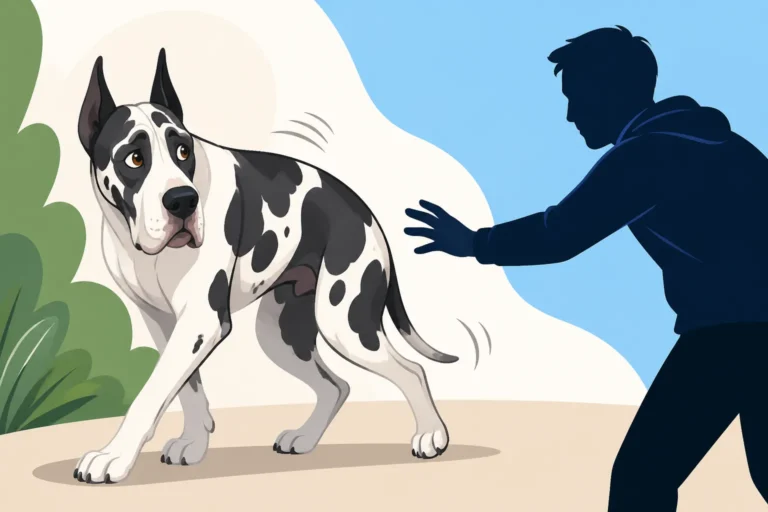
It's vital to be prepared for a range of reactions from people when you're out and about with your Great Dane. Some people will be utterly charmed and want to pet your dog, sharing stories of Danes they've known. Others, however, might genuinely be afraid, even if your dog is the sweetest creature on earth. This fear can stem from past bad experiences, a general anxiety around dogs, or simply being overwhelmed by the sheer size of your pet. It's your responsibility as an owner to manage these interactions respectfully.
Sometimes, a Great Dane's size can even incite negative attention. Unfortunately, some individuals might see a large, powerful dog as a challenge, or even try to provoke it, which is incredibly dangerous and irresponsible on their part. For example, a Great Dane that growls at strangers, even if it’s due to anxiety, can create a tense situation quickly. A Great Dane That Growls at Strangers. Training your dog to ignore provocations and maintaining control is paramount. Always be aware of your surroundings, and be ready to advocate for your dog and for public safety.
Practical Considerations for Owners
Living with a Great Dane means you're not just a dog owner; you're often an ambassador for the breed. Their size makes them noticeable, and their behavior, good or bad, reflects on all giant breeds.
Managing Public Perceptions
Because of their impressive size, Great Danes are often judged more harshly than smaller dogs. A tiny terrier jumping up might be annoying; a Great Dane doing the same could be terrifying or even cause injury. This means that as an owner, you have a heightened responsibility to ensure your dog is well-behaved and friendly (or at least neutral) in public. When people encounter a well-mannered Great Dane, it helps to dispel myths and promotes a positive image of giant breeds.
Training plays a monumental role here. A Great Dane that calmly sits and greets people, or ignores them entirely, leaves a far better impression than one that is unruly or appears aggressive. If your Dane leans on people, which is a common behavior, ensure it's done gently and appropriately. Why a Great Dane Leans on People. This isn't just about politeness; it's about safety and fostering understanding. You might find yourself educating people about the breed, explaining their typically gentle nature, and demonstrating that their imposing size is usually accompanied by an equally large heart.
Responsible Ownership and Safety
Ultimately, relying on a Great Dane's size alone for deterrence is an irresponsible and often ineffective strategy. True deterrence, whether for home security or simply to avoid negative interactions, comes from a combination of factors:
- Selection: Choose a Great Dane from responsible breeders who prioritize sound temperament and health. The Health Testing a Great Dane Breeder Owes You.
- Socialization: Thoroughly socialize your puppy from an early age to ensure they are confident and well-adjusted.
- Training: Invest in consistent, positive reinforcement training. This builds a strong bond and ensures you can control your dog in any situation. Programs like BAXTER & Bella can be incredibly helpful for structured training at home.
- Management: Always manage your Great Dane responsibly, whether that means using a sturdy leash and harness in public or securing your yard at home. Ensure they have appropriate, durable toys, which you can find a wide variety of on Amazon, to keep them mentally stimulated and prevent destructive behaviors.
- Awareness: Be aware of your dog's body language and the reactions of people around you. Intervene before issues arise.
While the visual impact of a Great Dane is undeniable and can certainly contribute to a sense of security, it should never be the sole basis for deterrence. A responsible owner understands that a well-trained, well-socialized Great Dane, whose natural presence is complemented by good manners and a stable temperament, is the most effective and ethical form of deterrence possible. Their size is a gift, but it's the training and care you put in that truly unlocks their potential as magnificent companions and, yes, a formidable presence when needed.
Disclaimer
This article is for general informational purposes only and does not constitute professional advice. Laws, prices and regulations vary by location and change over time. Consult a qualified professional for guidance on your specific situation.