A Great Dane That Will Not Fit Its Crate Anymore
It’s a scenario many Great Dane owners face: you invested in a generously sized puppy crate, thinking you were prepared for their growth, only to wake up one morning and realize your gentle giant barely fits inside anymore. This isn't just about comfort; a crate that's too small can be detrimental to their physical health and emotional well-being, leaving you wondering how to manage their confinement when you need to leave the house. This guide will walk you through understanding why this happens, how to assess your adult Dane's continued need for a crate, and practical solutions when they've simply outgrown their space.
When Your Great Dane Outgrows Their Crate: The Inevitable Giant Growth Spurt
Let’s be honest, Great Danes grow at an astonishing rate. What seems like a massive crate for a tiny puppy can quickly become a cramped sardine can for a rapidly developing adolescent or adult. This isn't your fault; it's simply the reality of owning one of the largest dog breeds on the planet. Their growth isn't just about height and length; it's about sheer mass and bone structure filling out.
The Rapid Growth of a Great Dane Puppy
Great Dane puppies are little sponges, soaking up nutrients and converting them into inches and pounds faster than almost any other breed. In just a few short months, that fluffy pup that curled comfortably in a 42-inch crate can easily stretch out to occupy every last inch of it. Their legs lengthen, their chests deepen, and suddenly, turning around becomes a multi-point maneuver rather than a simple pivot. You might have bought the largest crate you could find at the time, but the definition of "large" changes dramatically when you're talking about a dog that can eventually stand taller than many humans on its hind legs. This rapid development means that what was appropriate for a five-month-old Great Dane is almost certainly inadequate for an eight-month-old, let alone a full-grown adult. For more on their development, you might find The Great Dane Growth Curve Month by Month insightful.
Signs Your Dane No Longer Fits Comfortably
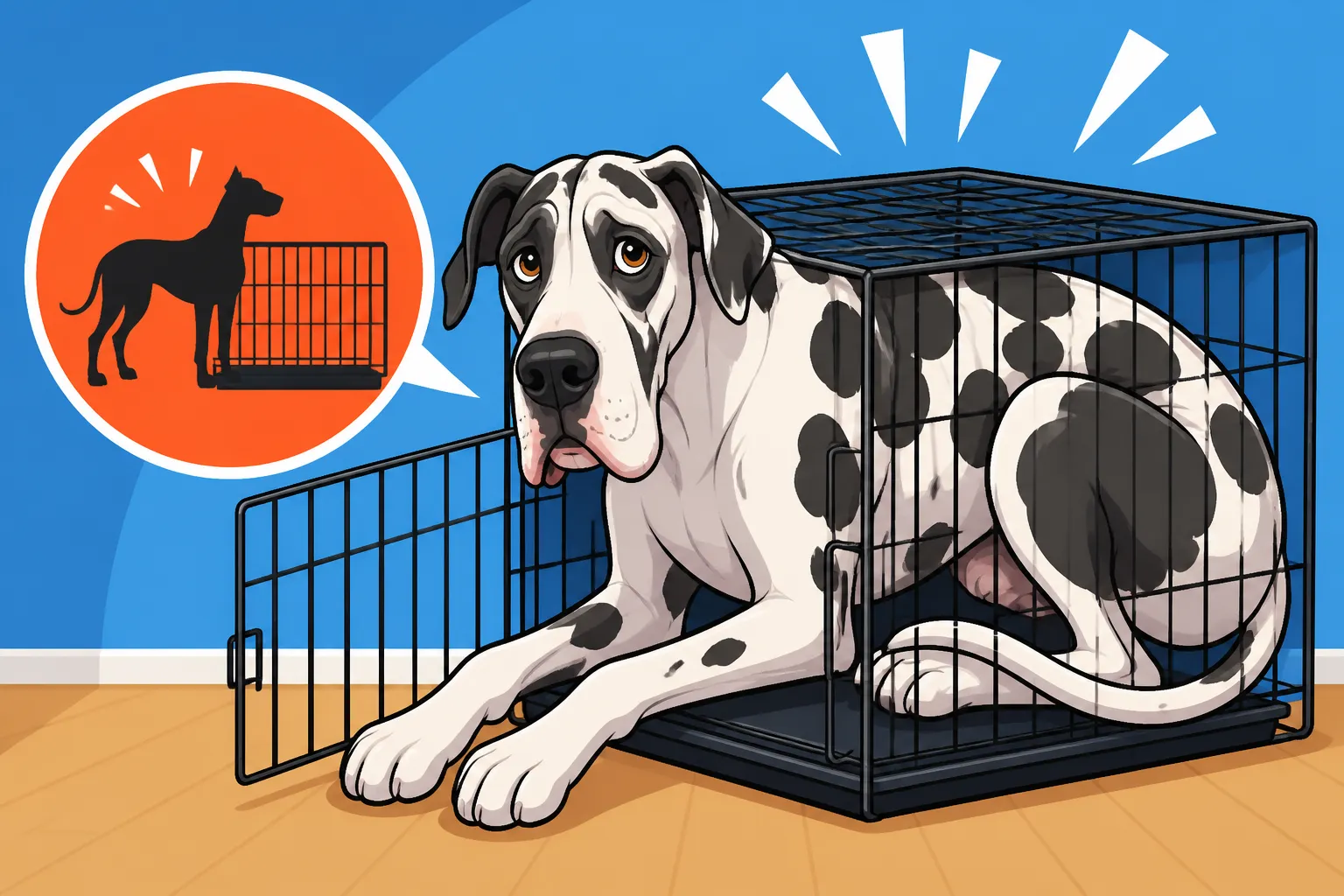
It's not always a dramatic, overnight change, but rather a gradual increase in discomfort. You might notice your Great Dane struggling to stand up fully, having to hunch their back or duck their head. Turning around might involve bumping into the sides, leading to frustration or reluctance to enter the crate. They might try to sleep in awkward positions, with limbs dangling out or pressed uncomfortably against the wire. If your Dane can't stand up, turn around, or lie down in a natural, comfortable position without touching the top, sides, or front/back, then the crate is simply too small. Imagine trying to sleep in a twin bed when you're used to a king-sized one; it’s just not going to cut it for a prolonged period. This discomfort can lead to anxiety, a negative association with the crate, and even physical strain on their joints, especially crucial for a breed already prone to orthopedic issues.
Is a Crate Still Necessary? Re-evaluating Confinement for Your Adult Dane
Once your Great Dane has outgrown their original crate, the immediate question becomes: do they even need a crate anymore? For many owners, the crate was a vital tool during puppyhood for house training and managing destructive chewing. As they mature, some Danes can be trusted with more freedom, while others still benefit from a safe, defined space.
When Crate Training Remains Beneficial
Even for adult Great Danes, a crate can serve several important purposes beyond basic puppy management. It can be a safe haven, a quiet den where they can retreat from household chaos, or a secure place for them to relax when you have guests over or need to perform tasks that might make them anxious. If your Great Dane experiences separation anxiety, a crate, when properly introduced and positively reinforced, can actually provide a sense of security rather than confinement, especially if they view it as their personal den. Similarly, if your Dane is prone to destructive chewing when left alone, or if they have medical issues that require restricted movement, a crate can be a necessary management tool. Some dogs genuinely love their crates as a secure, personal space, a fact often overlooked when we project our human feelings about confinement onto them. Understanding Whether a Great Dane Needs a Crate at All can help you make an informed decision.
Assessing Your Dane's Maturity and Trustworthiness
Before ditching the crate entirely, it's crucial to honestly assess your Great Dane's behavior and maturity. Have they reliably mastered house training? Do they chew on inappropriate items when unsupervised? Are they generally calm and settled when you're home, even if you're not actively engaging with them? A Great Dane that is still prone to counter-surfing, chewing furniture, or having accidents indoors when you're gone is probably not ready for full run of the house. For a breed that can reach counters with ease and destroy a sofa in minutes, managing their unsupervised time is vital. Damage a Great Dane Reaches That Smaller Dogs Cannot is a stark reminder of their potential for mischief. Take a few test runs, leaving them for short periods while you're still nearby, observing their behavior via a pet camera if possible, to gauge their readiness for more freedom.
Alternatives and Upgrades: What to Do When the Crate is Too Small
Okay, the old crate is out. Now what? You have a few main options: investing in a truly giant crate, utilizing a secure playpen system, or dog-proofing a specific room or area of your home. Each has its pros and cons, and the best choice will depend on your Great Dane's individual needs, your living situation, and your budget.
Investing in a Truly Giant Crate
For many Great Dane owners, the solution to an outgrown crate is simply to get a bigger one – a much bigger one. We're talking about crates designed for giant breeds, often 54 inches or even larger, providing ample space for your Dane to stand, stretch, and turn comfortably. These colossal crates are a significant investment, both in terms of cost and the sheer amount of floor space they consume in your home.
When shopping, look for heavy-duty construction. Great Danes are strong, and a flimsy wire crate won't stand up to a determined Dane for long. Some brands offer crates specifically designed for giant breeds, often with thicker gauge wire or reinforced frames. Always ensure the crate dimensions allow your dog to stand without hunching, lie comfortably on their side with limbs extended, and turn around easily. You might find yourself searching on platforms like Amazon for "extra-large dog crate" or "giant breed crate" to compare options. Remember, the goal is comfort and safety, not just containment. Also, consider the type of crate material. While wire crates offer good visibility and airflow, some owners prefer heavy-duty plastic or even custom-built wooden crates for a more aesthetic and den-like feel, provided they are well-ventilated. This is key to Choosing a Crate a Great Dane Can Stand In.
Utilizing Secure Playpen Systems
If a massive crate isn't feasible for your living space, or if you feel your Dane needs a bit more room to roam while still being contained, a secure playpen system can be a fantastic alternative. These pens, often made of sturdy metal panels, can be configured into various shapes and sizes, effectively creating a "room within a room."
You can connect multiple panels to create a large rectangular or square area in a corner of your living room, or even use them to block off an entire section of your home. This allows your Great Dane more floor space, room for a comfy bed, water bowl, and a few toys, without giving them free rein over the whole house. Just like with crates, the key here is durability and height. A Great Dane can easily clear a standard baby gate, so you'll need panels that are at least 48 inches tall, ideally 60 inches, to prevent jumping. When selecting a playpen, consider how easily your Dane could push it around or knock it over. Look for models with sturdy bases or those designed to be anchored to a wall. You'll want to review Pens and Gates Instead of a Great Dane Crate for more detailed advice on selecting the right setup.
Dog-Proofing a Designated Room
For Great Danes who have demonstrated good house manners and aren't prone to destructive chewing, dog-proofing a specific room can be an excellent solution. This gives them the most freedom while still limiting their access to areas where they might get into trouble.
Choosing the Right Room: A utility room, a large laundry room, or even a spare bedroom can work perfectly. The ideal room should have durable flooring (tile or laminate is often better than carpet), minimal breakable items, and no easy access to electrical cords or tempting chewables. Remove anything valuable or dangerous that is within reach of a curious Great Dane – and remember, "within reach" for a Great Dane includes counters, shelves, and even some wall hangings!
Securing the Space: Install strong Baby Gates a Great Dane Cannot Step Over at the doorway to contain them. Ensure windows are securely latched and that any blinds or curtains are either out of reach or not valuable enough to be destroyed. Provide a comfortable bed, fresh water, and a variety of appropriate chew toys. Make sure the room is temperature-controlled and well-ventilated. This approach requires more upfront effort in "Dane-proofing" the space, but it offers the most freedom for your dog and can feel less restrictive than a crate. It’s a great way to build up their independence when you're working on Building Up a Great Dane's Alone Time.
| Confinement Option | Pros | Cons | Best For |
|---|---|---|---|
| Giant Crate | High security, den-like feel, good for medical restriction | Takes up significant space, can feel restrictive for some Danes | Danes who like their den, temporary confinement, early independence building |
| Secure Playpen | More room to move, customizable shapes, good for larger areas | Can be pushed/moved, requires tall, sturdy panels, still takes floor space | Danes needing more space than a crate but not full room access |
| Dog-Proofed Room | Maximum freedom, feels less confined, integrates into home decor | Requires thorough "Dane-proofing," only for trustworthy Danes | Mature Danes, those with minimal anxiety, owners with spare rooms |
Making the Transition Smooth: Helping Your Great Dane Adjust
Moving your Great Dane out of a crate they've outgrown, or into a new, larger confinement system, requires patience and positive reinforcement. Their routine is changing, and like any big change, it can be a little unsettling for them.
Gradual Introduction to New Spaces
If you're moving to a larger crate or a playpen, introduce it gradually. Leave the door open, toss treats inside, and let your Dane explore it on their own terms. Feed meals inside the new space. Start with short periods of confinement, slowly increasing the duration as they become more comfortable. For a dog-proofed room, let them spend time in it with you, playing and relaxing, before you leave them alone.
Consistency is key. Use the same verbal cues you used for their old crate, like "crate up" or "kennel." Praise and reward them lavishly when they enter and settle calmly. If they show signs of anxiety, like pacing, barking, or scratching, it might be that you've moved too quickly. Revert to shorter times and more positive reinforcement. This transition period is crucial for ensuring their continued comfort and compliance. Remember, a new space should always be associated with good things, not punishment or fear.
Providing Enrichment and Comfort
Regardless of the confinement method you choose, ensuring your Great Dane has plenty of mental and physical enrichment is paramount. Boredom and anxiety are often the root causes of destructive behavior when left alone.
Comfort: Always provide a comfortable, appropriately sized bed. Great Danes, with their sparse coats and bony joints, need good cushioning to prevent pressure sores like elbow hygromas. Consider orthopedic beds that offer ample support. Ensure access to fresh water, especially if they’ll be confined for more than a couple of hours.
Enrichment: Offer durable chew toys that are size-appropriate for a Great Dane. Puzzle feeders filled with a portion of their meal can keep them mentally engaged for a significant period. Kongs stuffed with peanut butter or plain yogurt and frozen can provide a long-lasting distraction. Rotate toys so they don't get bored with the same ones day after day. A tired Dane is a good Dane, so make sure they've had adequate exercise before being confined. A brisk walk or a good play session can help them settle down for a nap. These strategies are all part of preventing issues like A Great Dane That Howls in an Empty House and helping them learn to be calm when you're not around.
Monitoring Behavior and Adjusting as Needed
Even after you've made the transition, continue to monitor your Great Dane's behavior closely. Use a pet camera to observe them while you're away. Are they calm and relaxed, or are they pacing, whining, or attempting to escape? Look for signs of stress or boredom.
If issues arise, don't get discouraged. This isn't a one-and-done solution; it's an ongoing process. You might need to adjust the duration of their alone time, try different types of enrichment, or even reconsider your chosen confinement method. Perhaps the dog-proofed room isn't working, and a very large, comfortable crate is actually preferred by your Dane. For more insight into their daily needs, consider How Much Sleep a Great Dane Actually Needs or Whether a Great Dane Is Really Calm Indoors. The goal is to create a safe, comfortable environment where your Great Dane feels secure and happy, even when you can't be right by their side. With patience, consistency, and a little trial and error, you’ll find the perfect solution for your magnificent, growing Dane.
Disclaimer
This article is for general informational purposes only and does not constitute professional advice. Laws, prices and regulations vary by location and change over time. Consult a qualified professional for guidance on your specific situation.