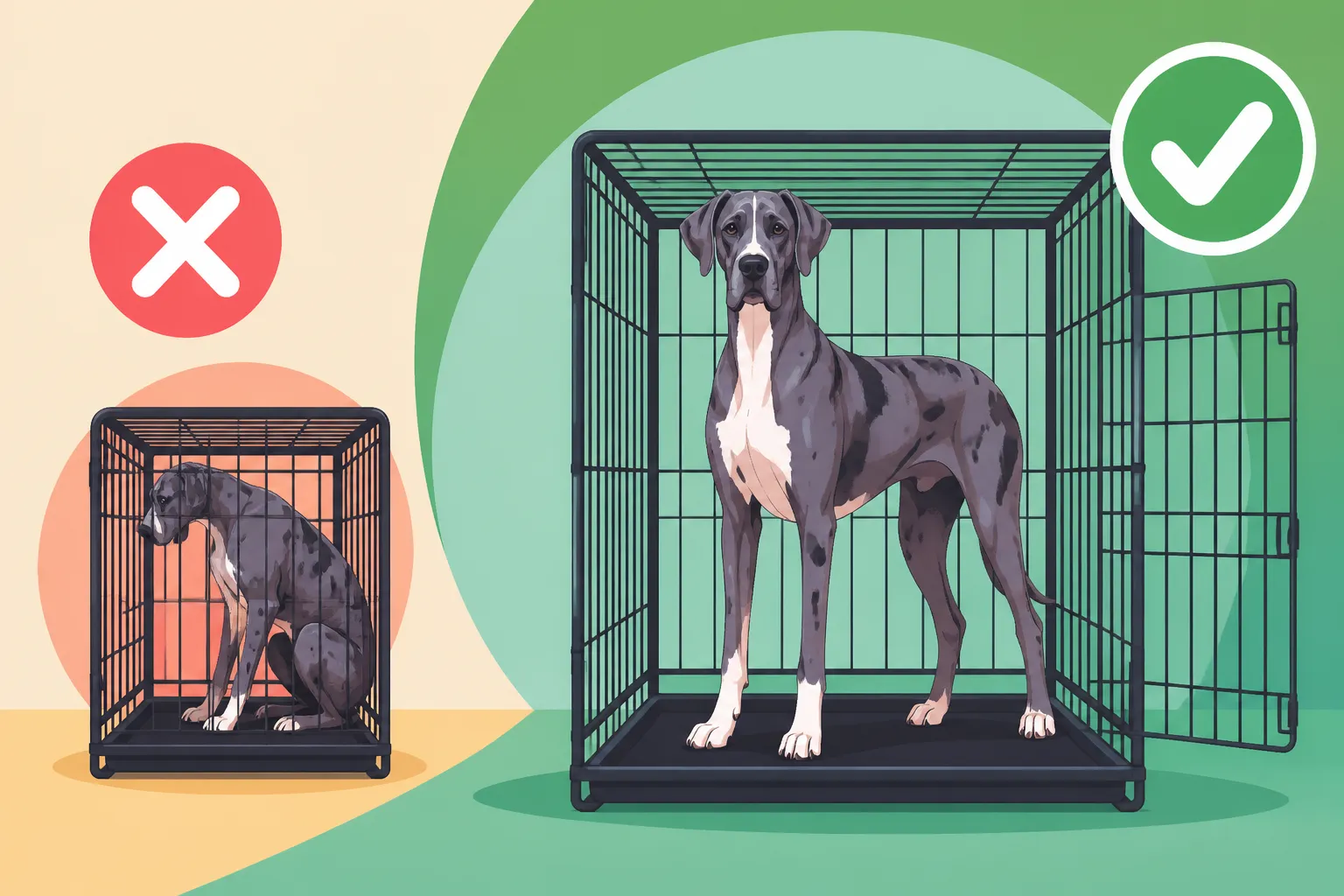
Choosing a Crate a Great Dane Can Stand In
Bringing a Great Dane into your home is an incredible joy, but it also comes with unique challenges, not least of which is finding a dog crate that actually fits them. Many new Dane owners quickly realize that "large" or "XL" crates from standard pet stores barely contain a growing puppy, let alone a majestic adult. This comprehensive guide is here to walk you through the often-frustrating process of selecting a dog crate that is appropriately sized, durable, and comfortable enough for your giant companion to truly stand up, turn around, and stretch out in.
The Critical Importance of Proper Crate Sizing for Your Great Dane
When you're dealing with a dog that can easily reach over 30 inches tall and weigh upwards of 150 pounds, a crate isn't just a bed; it's a vital piece of equipment that impacts their physical health, emotional well-being, and your success with training. Skimping on size is a mistake that can lead to far more problems than it solves, both for you and your beloved Dane.
Ensuring Physical Comfort and Preventing Health Issues
Imagine being cooped up in a space where you can't fully extend your legs or stand upright – it's uncomfortable, right? For a Great Dane, this discomfort is amplified, and the consequences can be more severe than just grumpiness. A crate that's too small forces your Dane into awkward positions for extended periods. This can put undue stress on their already rapidly developing or aging joints, particularly their hips and elbows. Great Danes are already prone to conditions like hip and elbow dysplasia, as well as arthritis in their later years. Confining them in a cramped space can exacerbate these issues, potentially leading to pain, stiffness, and long-term orthopedic problems.
Beyond joint health, the ability to stand and stretch is crucial for overall muscle tone and circulation. If a Dane can't properly move, they might experience muscle atrophy or stiffness, especially after long periods of rest. This isn't just about physical comfort; it's about providing a safe, restorative space where they can truly relax and feel secure, without their body being continually impinged. This is especially important for Caring for a Great Dane Past Six when stiffness might already be setting in.
How Crate Size Impacts Training and Well-being
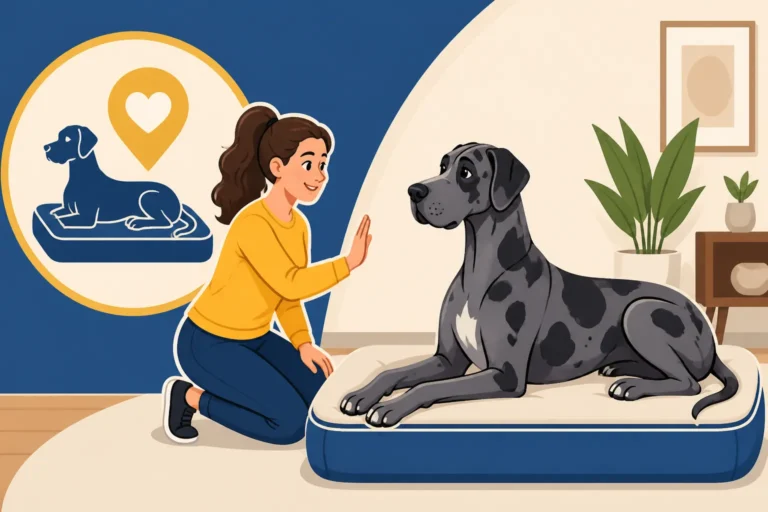
The fundamental principle of successful crate training hinges on the dog viewing the crate as their den – a safe, clean, and comfortable sanctuary. If the crate is too small, this whole concept falls apart. A Dane crammed into an undersized crate will likely resist going in, viewing it as punishment rather than a haven. This can quickly create a negative association, making house-training, managing separation anxiety, and providing a safe space exponentially harder.
Great Danes are typically clean animals and naturally avoid soiling their sleeping area. However, if their crate is so small that they can't move away from their potty spot, they'll have no choice but to lie in their own waste. This breaks down their natural inclination for cleanliness, making house training a nightmare and potentially leading to behavioral issues. You're inadvertently teaching them that it's acceptable to soil their living space, which is the exact opposite of what you want to achieve. A properly sized crate respects their natural instincts, reinforcing good habits and fostering a sense of security. It's a key part of Building Up a Great Dane's Alone Time safely and effectively.
Accurately Measuring Your Great Dane for Their Future Home
You can't just guess when it comes to a Great Dane crate. What looks big to you might still be too small for them. Taking accurate measurements is the absolute first step to ensuring your Dane's comfort and your investment in the right equipment.
Understanding Great Dane Growth Stages and Adult Dimensions
Great Danes are not like other dogs; they grow at an astonishing rate, reaching impressive heights and weights in a relatively short period. A Great Dane puppy at four or five months might already be the size of a full-grown Labrador, and they're still nowhere near their adult stature. Males, in particular, can easily stand 30-34 inches at the shoulder and weigh 140-175 pounds or more, while females are typically 28-32 inches and 110-140 pounds.
It's crucial to remember that Danes continue to "fill out" long after they reach their full height. They might hit their adult height around 12-18 months, but they'll continue to broaden, develop deeper chests, and add muscle mass until they're two or even three years old. This means that a crate that fits a lanky 18-month-old might feel snug when they're a fully mature two-and-a-half-year-old. When choosing a crate, you need to think about their final adult dimensions, not just their current puppy size, though adjustable dividers can help for puppies. The Great Dane Growth Curve Month by Month is a good resource to consult.
Step-by-Step Guide to Getting the Right Measurements
To ensure you get a crate that your Great Dane can truly stand, turn, and stretch in, you'll need two key measurements from your dog:
-
Height (Standing):
- Have your Dane stand comfortably on all four paws.
- Measure from the floor to the top of their head, including their ears if they are naturally upright or cropped. If their ears are natural and folded, measure to the very tip of their skull.
- Add 2-4 inches to this measurement. This extra space allows them to stand completely upright without their head brushing the top of the crate and provides room for stretching.
-
Length (Nose to Tail Base):
- Have your Dane stand or lie down in a natural, relaxed position.
- Measure from the tip of their nose to the base of their tail (where the tail joins the body). Do not include the tail's full length, as it will likely be curled or tucked when they turn.
- Add 4-6 inches to this measurement. This ensures they can turn around comfortably without feeling cramped and can lie down fully stretched out.
A simple way to visualize this is to pretend you are marking out a box on your living room floor with painter's tape using these dimensions. Would your Dane look comfortable standing and turning within that taped area? If not, you need to go bigger. For instance, if your male Great Dane stands 32 inches tall to the top of his head, you'll want a crate that is at least 34-36 inches high. If he's 40 inches from nose to tail base, a crate of at least 44-46 inches long is required. Many standard large crates top out at around 30 inches high and 48 inches long, which often isn't quite enough for a truly large male Dane.
| Measurement Point | What to Measure For | Recommended Extra Space |
|---|---|---|
| Height (standing) | From floor to top of head (ears included if upright) | Add 2-4 inches |
| Length (standing/lying) | From tip of nose to base of tail | Add 4-6 inches |
Essential Features: What Makes a Great Dane Crate Stand Out?
Once you have your measurements, you'll quickly discover that not all crates are created equal, especially when it comes to supporting the sheer size and strength of a Great Dane. You need a crate that is built like a tank, not a flimsy cage.
Uncompromising Durability and Construction
Forget about lightweight plastic travel crates for everyday use unless it's strictly for transport and you know your Dane is calm in transit. For home use, a Great Dane needs a heavy-duty crate.
-
Wire Crates: While popular, many standard wire crates are simply not robust enough for a determined or anxious Great Dane. Look for crates made with thicker gauge wire (often advertised as "heavy-duty" or "pro-grade") and reinforced welds. The latches are equally important; they should be strong, secure, and preferably feature multiple points of closure. A single, flimsy latch won't stand a chance against a powerful paw. Some premium wire crates offer a more robust structure than typical budget options you might find on Amazon.
-
Heavy-Duty Metal or Aluminum Crates: These are often the gold standard for giant breeds. Brands specializing in impact-resistant or escape-proof crates frequently use thicker aluminum or steel with reinforced corners and solid bars rather than thin wire mesh. These tend to be more expensive but offer unparalleled security and longevity. If your Dane has any tendencies towards anxiety or tries to "break out," investing in one of these can save you a lot of headache (and potential home repairs) in the long run. These often come with chew-proof designs, which is a blessing if you have a powerful chewer.
-
Plastic/Vari-Kennel Style Crates: While some very large plastic crates exist, they generally don't offer the vertical space needed for a Great Dane to comfortably stand upright. They can also be less durable for a dog of this size, with plastic connections being a weak point. They are best reserved for airline travel (where specific requirements apply) or very temporary situations for a calm, smaller Dane.
Regardless of material, inspect the overall construction. Are there sharp edges or potential pinch points? Are the doors well-aligned and easy to open and close, but secure when latched? You want something that will withstand years of use, not just a few months.
The Specific Dimensions That Truly Matter
Beyond just height and length, consider the overall footprint and usability.
-
Height: As discussed, your Dane must be able to stand completely upright with a couple of inches of clearance. Don't compromise on this. A common crate size for larger male Great Danes might be 54 inches long, 37 inches wide, and 45 inches high. These are typically marketed as "Giant" or "XXL" and are far less common than the standard 48-inch "XL" crates.
-
Length: Ensure enough room for them to turn around fully and lie stretched out. If they curl up to sleep, that's fine, but they need the option to extend their body without their nose or tail touching the ends.
-
Width: Often overlooked, adequate width is essential for comfortable turning and lying positions. A crate that's long and tall but too narrow will still feel cramped.
-
Door Size and Placement: Can your Great Dane easily walk in and out without crouching excessively? Multi-door crates (front and side entry) can be incredibly convenient for placement in different areas of your home or car, and for ease of cleaning. Consider the threshold as well; some crates have a small lip that can be a tripping hazard for an older or less agile Dane.
Practical Considerations: Doors, Portability, and Cleaning
Life with a Great Dane is full of practical considerations, and their crate is no exception.
-
Ease of Assembly and Portability: Many large wire crates are designed to fold flat, which is a huge bonus if you ever need to move it, store it, or transport it (though transporting a crate this size is a feat in itself!). Heavy-duty metal crates may require more involved assembly and are generally less portable due to their weight and rigid structure. Think about where the crate will live permanently.
-
Cleaning: Look for a crate with a removable, easy-to-clean pan. Accidents happen, especially during puppyhood, or if your Dane experiences an upset stomach. A smooth, non-absorbent pan that slides out easily for washing is invaluable. Even without accidents, dirt and shedding hair accumulate, so regular cleaning is a must.
-
Dividers: If you're getting a giant crate for a puppy, look for models that come with a divider panel. This allows you to adjust the size of the living space as your puppy grows, preventing them from using one end as a potty area. You'll expand the space gradually until they reach their full adult size, making the crate truly grow with them. This is part of setting up The Kit a Great Dane Puppy Needs First.
Creating a Sanctuary: Beyond Just the Crate Itself
A crate is more than just metal or plastic; it's a personal space. To truly make it a positive experience for your Great Dane, you need to consider what goes inside it and where it's placed.
Selecting the Right Bedding and Accessories
Even the largest crate can be uncomfortable without proper bedding. For Great Danes, whose bony joints are susceptible to pressure sores and discomfort, an orthopedic bed is almost a necessity.
- Orthopedic Beds: Look for beds specifically designed for large and giant breeds. These feature dense, supportive foam that won't flatten out under their weight. Memory foam or gel-infused foam options provide excellent pressure relief for their joints, which is crucial for preventing conditions like elbow hygromas and supporting older Danes with arthritis. Many come with washable covers, which is essential for hygiene. Orthopedic Beds a Great Dane Needs can provide more detail on this.
- Chew-Proof Options: Some Danes, especially puppies or those with separation anxiety, can be powerful chewers. If this describes your dog, invest in chew-resistant bedding. These might be made from durable canvas, ballistic nylon, or even aluminum frames with raised platforms. It’s better to spend more on a durable, safe bed than to constantly replace destroyed bedding or risk your dog ingesting harmful materials.
- Water Bowls: Hydration is important, even in a crate. Choose a bowl that can attach securely to the crate bars to prevent tipping and spills. Stainless steel buckets with clips or specific crate-mountable water dishes are excellent options. Make sure it's large enough to hold a good amount of water for your Dane.
Strategic Placement for Comfort and Training Success
Where you put the crate matters just as much as its size and contents.
- Family Hub: Ideally, the crate should be in a central area of your home where your family spends a lot of time, like the living room or a spacious family room. Great Danes are social creatures and thrive on being near their people. Placing the crate in an isolated area can lead to feelings of loneliness and anxiety, making crate training much harder.
- Quiet and Draft-Free: While central, choose a spot that isn't directly in a high-traffic walkway or subject to constant loud noises. Avoid placing it near direct sunlight or heat sources, or in a drafty hallway. Your Dane should be able to relax without being constantly disturbed or getting too hot or cold.
- Covering the Crate: Many dogs find a covered crate more den-like and secure. A light blanket or a purpose-made crate cover can help block out visual distractions and reduce overstimulation, promoting a calm environment. Just ensure good airflow, especially in warmer weather.
- Integrating with Training: The crate should always be associated with positive experiences. For effective training, consider online programs like those offered by BAXTER & Bella. They emphasize positive reinforcement methods that work well for giant breeds, teaching them to love their crate as their own special space. This can make all the difference in building confidence and good habits. For a giant dog, Crate Training a Great Dane That Fills the Room is essential from day one.
Avoiding Common Pitfalls in Great Dane Crate Ownership
Even with the best intentions, it's easy to make mistakes when it comes to crating a giant breed.
- Underestimating Their Size and Strength: This is probably the biggest mistake. A standard 48-inch crate may seem huge, but for many adult male Great Danes, it's just not enough. Always err on the side of larger, especially with their remarkable growth. Remember that Damage a Great Dane Reaches That Smaller Dogs Cannot is extensive, so a flimsy crate won't contain them if they decide to escape.
- Rushing the Crate Training Process: Crate training is a gradual process that requires patience and positive reinforcement. Never force your Dane into the crate or use it as punishment. Introduce it slowly, with treats, toys, and short, positive stays. Gradually increase the duration. If they show signs of distress, you might be going too fast.
- Ignoring Signs of Discomfort or Distress: Whining, barking, pawing at the door, or trying to chew their way out are all signs that your Dane is uncomfortable or anxious. Don't ignore these. Reassess the crate's size, comfort, and location, and re-evaluate your training approach. Sometimes, more exercise before crating, a new chew toy, or a change in routine can make a big difference. If they're showing severe anxiety, consider consulting a professional dog trainer or a veterinary behaviorist. Remember, a crate should be a safe retreat, not a source of stress. Sometimes Pens and Gates Instead of a Great Dane Crate are a better solution for a distressed dog.
Choosing the right crate for your Great Dane is a significant decision, but by prioritizing size, durability, and comfort, you can provide them with a secure, happy, and healthy sanctuary for years to come.
Disclaimer
This article is for general informational purposes only and does not constitute professional advice. Laws, prices and regulations vary by location and change over time. Consult a qualified professional for guidance on your specific situation.