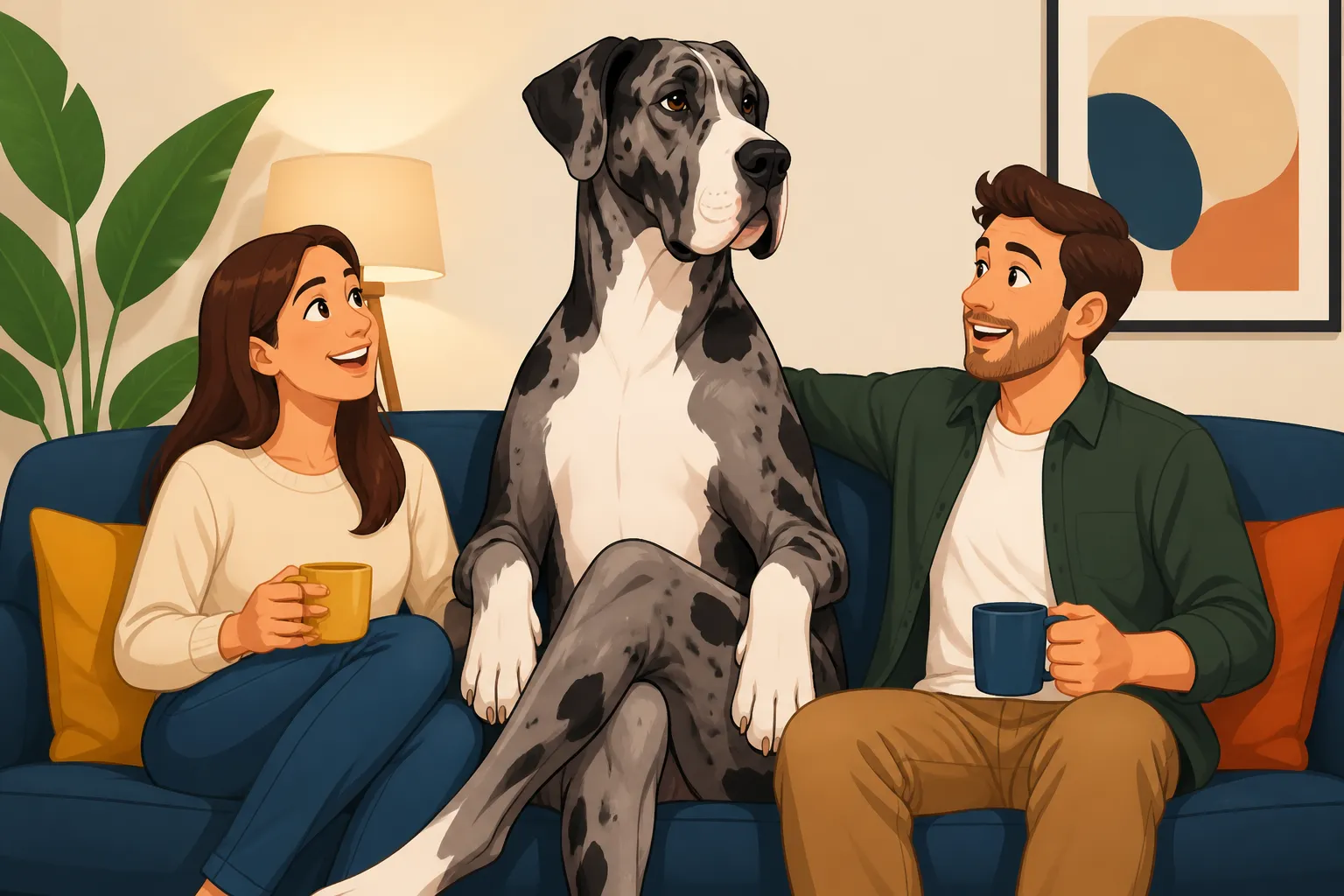
A Great Dane That Sits on the Sofa With Guests
It’s a scenario many Great Dane owners know all too well: the doorbell rings, you open the door, and before you can even properly greet your guests, your beloved giant bounds over, eager for attention, and quite possibly tries to claim a spot right on the sofa next to them – or even on top of them. This can be awkward, intimidating, and frankly, a bit much for visitors who aren't used to such an enormous, enthusiastic greeting. This guide will walk you through understanding why your Great Dane might be doing this and offer practical, empathetic strategies to teach them better sofa manners when company comes over.
Understanding Why Your Great Dane Jumps on the Sofa with Guests
It's easy to get frustrated when your Great Dane decides the sofa is their personal greeting station, especially with guests. But before we dive into solutions, let's take a moment to really understand what might be going on in your big dog's head. It’s rarely about malice; it’s usually a mix of instinct, excitement, and learned behavior.
The Instinct for Connection and Comfort
Great Danes are renowned for their affectionate nature. They genuinely love to be close to their people, and in their eyes, guests are just more people to love! Their sheer size often means they don't quite grasp the concept of "personal space" the way a smaller dog might, or the way a human does. They see you relaxing on the sofa, they see your guests doing the same, and to them, it's the ultimate spot for shared comfort and bonding. If your Dane is allowed on the sofa when it’s just family, they naturally extend that privilege to guests. They want to be part of the pack, part of the conversation, and part of the cozy scene. It's a sweet sentiment, even if the execution is a bit overwhelming.
Moreover, the sofa is typically a warm, soft, elevated spot. From a dog's perspective, it’s prime real estate. If they’re allowed to enjoy it at other times, why would they suddenly be excluded when new, exciting people arrive? This inconsistency can be confusing for them. They might also be seeking reassurance or attention, especially if they're feeling a bit overwhelmed by new smells and sounds. A Great Dane that pushes its way onto the sofa might actually be feeling a little anxious and trying to create closeness.
Excitement and Lack of Clear Boundaries
When guests arrive, the energy in your home inevitably shifts. There's a flurry of activity, new voices, new smells, and often, a general air of excitement. Your Great Dane, being a sensitive and intelligent creature, picks up on all of this. For many dogs, visitors equal potential pets, treats, or playtime, and that excitement can quickly escalate. This heightened state of arousal can make it difficult for them to remember their manners or respond to commands they'd typically obey. They might jump on the sofa not just for comfort, but as an overflow of this excited energy, trying to get closer to the source of all the fun.
A common issue is a lack of consistently enforced boundaries. If your Great Dane is sometimes allowed on the sofa, sometimes not, or if different family members have different rules, the message gets muddled. When guests are present, the stakes feel higher, and your desire for polite behavior intensifies, but your dog might just be acting on the inconsistent lessons they’ve already received. They haven’t learned a clear "off-limits" rule for the sofa, especially not one that applies specifically when new people are around. It takes a lot of clear, consistent communication to teach a dog that big to respect a boundary, especially one that conflicts with their desire for closeness.
Learned Behavior and Accidental Reinforcement
Dogs are masters of association. If, in the past, your Great Dane has jumped on the sofa with guests and received any form of attention – even negative attention like pushing them off, or a gasp – they might interpret that as a reward. "Ah, jumping on the sofa gets me noticed!" they might think. If a guest, perhaps trying to be polite or simply overwhelmed, has patted your dog or allowed them to settle, this further cements the idea that sofa-jumping is an acceptable or even desirable behavior.
Think about how often we inadvertently reinforce behaviors we don't want. A nervous laugh, a gentle push, or even making eye contact can be enough for a Great Dane to feel like their behavior is being acknowledged and, therefore, encouraged. They aren't trying to be naughty; they're simply doing what has worked for them in the past to get what they want: attention, closeness, and a prime spot next to the interesting new people. Breaking this cycle requires intentional effort to stop reinforcing the unwanted behavior and instead reward the desired alternative.
Setting Clear Boundaries for Your Great Dane and the Sofa
Teaching your Great Dane to respect boundaries around the sofa, especially when guests are over, is a process that requires patience, consistency, and a clear game plan. It’s about teaching them what to do instead of just telling them what not to do.
"Off" and "Place" Commands: Your Best Friends
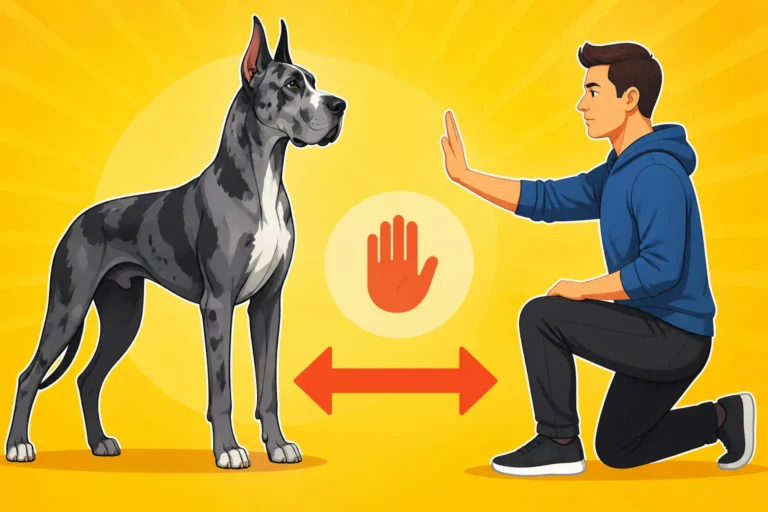
One of the most fundamental steps is to teach your Great Dane a reliable "off" command. This means all four paws off the furniture. Start practicing this when there are no guests around, using high-value treats and praise. Lure them off with a treat, say "off," and immediately reward them when they comply. Practice it dozens of times a day in short, positive sessions. Once they understand "off," you can introduce a "place" command. This involves teaching them to go to a designated spot – like their bed or a mat – and stay there until released. For a Great Dane, this "place" needs to be substantial and comfortable, a truly inviting alternative.
A durable, orthopedic dog bed, perhaps something like those found on Amazon that are sized for giant breeds, can be an excellent "place" target. It provides a comfortable, approved spot that is solely theirs. You'll want to practice "place" extensively, gradually increasing the duration and distance they need to stay there. Start with just a few seconds, then build up to several minutes. Practice while you move around the room, while you sit on the sofa, and eventually, while someone else enters the room. This command is invaluable because it gives them a clear directive for appropriate behavior when they cannot be on the sofa. The Manners a Great Dane Needs Before It Grows is a great resource for starting these foundational commands early.
Consistency Across All Family Members
This is where many well-intentioned training efforts fall apart. If one family member allows the Great Dane on the sofa, and another doesn't, or if the rules change depending on the day or the type of guest, your dog will be utterly confused. Every single person in the household must be on the same page regarding sofa rules. Decide together: Is the sofa ever allowed for the dog? If so, under what circumstances? If the rule is "never with guests," then it needs to be "never with guests" for everyone.
Holding a family meeting to discuss and agree upon these rules is crucial. Create a simple, clear set of guidelines. For instance: "Duke is only allowed on the sofa when invited by a specific command, and never when guests are present." Then, ensure everyone uses the same commands ("off," "place") and rewards. If a family member accidentally reinforces the unwanted behavior, it can undermine weeks of training. Don't be afraid to gently remind each other when someone slips up. Your Great Dane is an intelligent creature, but they thrive on predictability and clear communication.
Proactive Management: Crates, Gates, and Leashes
Sometimes, even with the best training, the excitement of new guests can be too much for a Great Dane, especially a younger one. This is where proactive management becomes your secret weapon. Before guests arrive, consider setting up barriers. A sturdy baby gate, one designed to be tall enough that a Great Dane cannot easily step over, can be used to block off the living room or create a designated "guest zone" where your dog isn't free to roam. You can find robust options on Amazon.
Another fantastic management tool is a crate. If your Great Dane is crate-trained, having them relax in their crate with a long-lasting chew or puzzle toy for the initial flurry of guest arrivals can be incredibly helpful. It gives them a safe, calm space away from the excitement and prevents them from practicing unwanted behaviors. This isn't a punishment; it's a management strategy that sets them up for success. You can gradually introduce them to guests once the initial excitement has died down, keeping them on a leash initially if needed. Crate Training a Great Dane That Fills the Room offers excellent tips for integrating crates into your Great Dane's life.
Practical Strategies for Managing Sofa Behavior When Guests Arrive
Once you've laid the groundwork with training and consistency, it’s time to put those strategies into action when the doorbell rings. Managing your Great Dane's behavior when guests are physically present requires a combination of preparation, redirection, and consistent reinforcement.
The Controlled Greeting: Before the Sofa
The moment guests arrive is often the most chaotic. To prevent your Great Dane from immediately making a beeline for the sofa (or your guests themselves), implement a controlled greeting strategy. Before your guests even knock, put your Great Dane on their "place" bed or behind a gate. Reward them for staying calm in their designated spot. When your guests enter, ensure they don't immediately rush to greet your dog. Instead, ask them to ignore your Great Dane for the first few minutes, until your dog settles down.
Once your Great Dane is calm, you can slowly allow them to greet guests, perhaps on a leash at first. Teach guests how you want them to interact – no encouraging jumping, only petting when all four paws are on the floor. If your Dane starts to get too excited, a quick "off" or "place" command, followed by a reward for compliance, reinforces the correct behavior. Remember, the goal is to redirect their energy and excitement into appropriate channels before they even consider the sofa. This proactive approach prevents A Great Dane That Knocks People Over from happening during enthusiastic greetings.
Redirection and Alternative Behaviors
Instead of focusing solely on telling your Great Dane "no" about the sofa, give them something else to do. When guests are over and you're socializing, provide your Dane with a high-value chew toy or a puzzle feeder that will keep them engaged and occupied on their own bed or mat. This gives them an approved activity that still allows them to be in the same room and feel like part of the action, without resorting to sofa-jumping.
You can also engage them in short, calm training sessions. Ask for a "sit," "down," or "stay," and reward them generously. This helps to channel their energy, reinforce positive behaviors, and keeps their mind engaged. If you see them eyeing the sofa, intercept before they even jump. Use a cheerful voice to say, "Let's go to your place!" and lure them to their bed, rewarding them immediately. Consistency in redirecting them to their approved "place" spot every single time is critical. Think about enrolling in an online training program like BAXTER & Bella, which can provide structured guidance for these types of behavioral challenges and consistent reinforcement techniques.
Managing Guest Interaction and Expectations
It’s not just about training your dog; it’s also about managing your guests! Many people, unfamiliar with the dynamics of a giant breed, might inadvertently encourage unwanted behavior. Politely explain your training goals to your guests as they arrive. Say something like, "Duke is learning his sofa manners, so please help us by asking him 'off' if he tries to jump up, or just ignoring him if he gets too excited." You might even ask them to toss a treat onto their bed rather than directly to them if they’re jumping.
Prepare your guests with specific instructions. For example, tell them, "When Duke is on his bed, you can offer a gentle pet, but if he tries to get on the sofa, please don't engage. We're teaching him to stay on his spot." This empowers your guests to be part of the solution rather than accidentally contributing to the problem. If a guest is particularly resistant or fearful of dogs, consider keeping your Great Dane gated or leashed for the duration of their visit to ensure everyone's comfort and safety. Establishing clear expectations upfront can save a lot of stress for both you and your dog.
Consistency is Key: Reinforcing Good Habits Long-Term
Training a Great Dane is a marathon, not a sprint, and maintaining good sofa manners with guests is no exception. It requires ongoing effort and a commitment to consistency.
Establishing a Permanent "Place" Routine
Your Great Dane's "place" command shouldn't just be for special occasions or when guests are over. Integrate it into your daily routine. Practice it when you're watching TV, eating dinner, or simply relaxing. The more ingrained and natural the "place" command becomes, the easier it will be for your Great Dane to perform it reliably when distractions, like guests, are present. Think of it as their default calm spot.
Use their "place" for structured downtime. When you’re busy with chores, have them settle on their bed. When you're having a quiet evening, ask them to "place." Always reward them generously for staying there, even if it's just a verbal "Good boy!" or a gentle pat. This frequent, low-stress practice builds a strong association between their designated spot and positive experiences, making it a truly desirable alternative to the sofa. A comfortable, supportive bed is crucial for this, ensuring that their "place" is a genuinely enjoyable spot for your giant. Bedding That Prevents Great Dane Hygromas discusses the importance of good bedding for their health and comfort.
Addressing Relapses and Regression
No training journey is perfectly linear. There will be days when your Great Dane tests the boundaries, or when excitement gets the better of them. Don't get discouraged! A relapse isn't a failure; it's an opportunity to reinforce the training. If your Dane jumps on the sofa with a guest, calmly and immediately give the "off" command. If they don't respond, gently lead them off or use a leash to guide them to their "place." Reward them only when all four paws are on the floor or they are settled in their designated spot.
It's vital to avoid getting angry or overly frustrated, as this can make your dog anxious and less likely to respond. Instead, approach relapses as a signal that you might need to go back to basics, practicing the commands in a less distracting environment before reintroducing guests. Sometimes, guests might accidentally encourage the behavior, so a polite reminder to them is also important. Remember, your Great Dane is a large, powerful animal, and consistent training is not just for manners but for everyone's safety and comfort. It's a journey, not a destination, and patience is your most valuable tool.
Management Tools and Their Use
Using physical management tools effectively can make a huge difference in managing your Great Dane's sofa habits around guests. Here's a quick overview:
| Management Tool | Best Use Case | Pros | Cons |
|---|---|---|---|
| Crate | Containing dog during high-excitement periods (guest arrival, dinner) or for focused quiet time. | Provides a safe, secure den; prevents unwanted behaviors; useful for travel. | Must be adequately sized for a Great Dane; requires positive introduction; some dogs dislike confinement. |
| Baby Gates | Blocking off access to specific rooms (e.g., living room with sofa) or creating a designated "safe zone." | Physically prevents access; allows dog to still see/hear activity; flexible placement. | Needs to be tall and sturdy enough for a Great Dane; can be inconvenient to step over. |
| Leash | Direct, temporary control during greetings or when dog is permitted to be near guests but needs supervision. | Immediate control over movement; can prevent jumping; useful for teaching proximity manners. | Requires handler's constant attention; dog might pull or chew on leash if not accustomed. |
| "Place" Bed | Designated spot for settling calmly away from the sofa, especially when guests are present. | Teaches an alternative, desirable behavior; comfortable for the dog; promotes calmness. | Requires consistent training; dog might test boundaries initially; needs to be highly comfortable. |
Beyond these tools, don't forget the power of a long-lasting chew or a food-dispensing toy to keep your Great Dane happily occupied while guests are present. Investing in good quality, large-breed-appropriate items, which you can often find on platforms like Amazon, can make a significant difference. Remember that Whether a Great Dane Is Really Calm Indoors often depends on sufficient mental and physical exercise, even if that exercise is structured play rather than intense running. A tired Dane is a well-behaved Dane, often less prone to high-arousal jumping behaviors.
Disclaimer
This article is for general informational purposes only and does not constitute professional advice. Laws, prices and regulations vary by location and change over time. Consult a qualified professional for guidance on your specific situation.