A Red Lump in a Great Dane Puppy’s Eye Corner
Seeing a red lump suddenly pop out in the corner of your Great Dane puppy's eye can be incredibly startling, immediately sparking worry about what's going on and if your precious pup is in pain. This isn't just a minor irritation; it's a visible sign that something is amiss, often appearing with alarming speed. This comprehensive guide will explain exactly what that mysterious red lump is, delve into why Great Danes are particularly susceptible to this condition, and, most importantly, detail the immediate and long-term steps you need to take to ensure your puppy's comfort and eye health.
Understanding That Red Lump in Your Puppy's Eye
When you first notice that alarming red mass in your Great Dane puppy's eye, it's easy to jump to conclusions, imagining all sorts of terrible things. However, this specific presentation often points to a surprisingly common condition in certain breeds: "cherry eye." While the name sounds almost cute, the reality for your puppy can be quite uncomfortable, and it absolutely requires veterinary attention.
The Role of the Third Eyelid
To truly understand what's happening, we need to talk about a part of your dog's eye that humans don't have: the third eyelid, or nictitating membrane. This isn't just an extra flap of skin; it's a vital structure located in the inner corner of your dog's eye, closest to the nose. Its primary job is to provide additional protection for the eyeball, acting like a windshield wiper to spread tears across the surface and help remove debris. Crucially, embedded within this third eyelid is a gland responsible for producing a significant portion of the eye's tears – roughly 30-50% of the total tear film. This tear production is absolutely essential for keeping the eye moist, healthy, and free from irritation and infection.
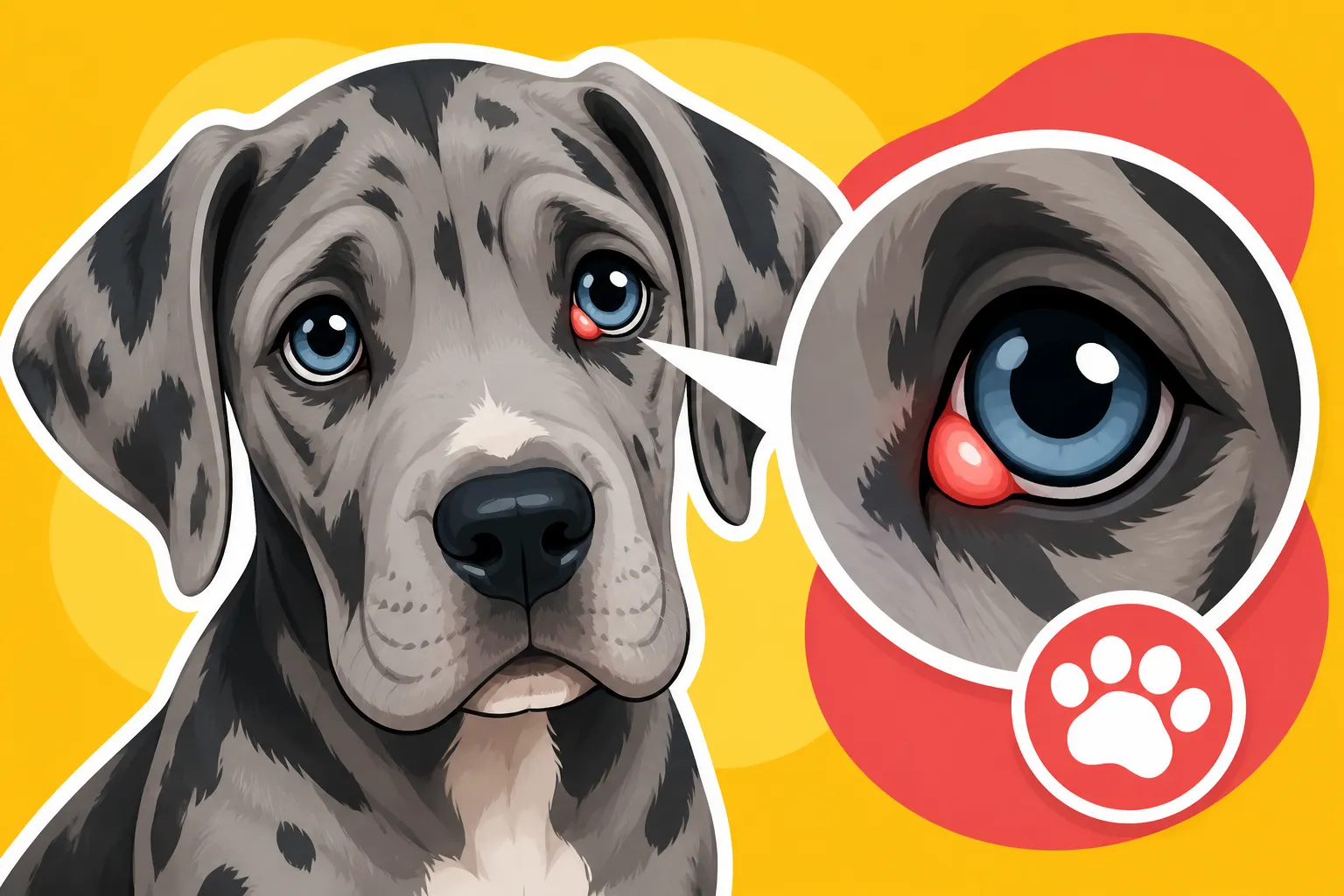
When this gland, for various reasons we'll explore, prolapses or "pops out" from its normal position behind the third eyelid, it becomes visible as a swollen, red, fleshy mass. Because it's a gland and very vascular, it looks exactly like a small cherry, hence the common term "cherry eye." It's not just unsightly; being exposed, this delicate gland can become inflamed, dry, and more susceptible to injury and secondary infections, further irritating your puppy's eye.
Differentiating Cherry Eye from Other Eye Issues
While cherry eye has a very distinctive appearance, it's natural to wonder if it could be something else. Typically, a prolapsed gland of the third eyelid presents as a round, pink or red, fleshy mass protruding from the inner corner of the eye. It usually appears quite suddenly, sometimes overnight, and can be constant or intermittently pop in and out. Your puppy might rub at the eye, squint, or show increased tear production as a reaction to the discomfort, though some puppies seem relatively unfazed in the early stages.
It's vital to note that while cherry eye is common, other conditions can also affect a Great Dane's eye, leading to similar-looking symptoms. For instance, conjunctivitis (pink eye) can cause redness and swelling, but it usually involves the entire conjunctiva, often with discharge, and doesn't typically present as a distinct, protruding lump. Foreign bodies, tumors, or even certain eyelid deformities like entropion or ectropion can also cause irritation and swelling in the eye area. This is why a prompt visit to your veterinarian is non-negotiable. They possess the expertise to accurately diagnose the problem, rule out other potentially serious issues, and recommend the most appropriate course of action. You don't want to guess when it comes to your puppy's precious eyesight. For a deeper dive into common issues, you can learn more about Great Dane Eyelid and Eye Problems.
Why Great Danes Are Prone to Cherry Eye
It often feels unfair when our beloved dogs, especially puppies, face health challenges. When a condition like cherry eye appears, many owners wonder if they did something wrong or if it's just bad luck. In the case of Great Danes, while individual circumstances can play a role, there's a strong underlying genetic and anatomical predisposition that makes them more likely to develop this condition.
Breed-Specific Predisposition and Genetics
Great Danes, along with other large and giant breeds like English Bulldogs, Beagles, and Cocker Spaniels, are unfortunately overrepresented when it comes to cherry eye. This isn't random; it's linked to the very genetics and conformational traits that define these breeds. The connective tissue that normally holds the gland of the third eyelid firmly in place is often weaker or less developed in Great Danes compared to many other breeds. Think of it like a hammock that isn't quite strong enough to hold its contents securely; eventually, it sags and the gland can pop out.
While a specific "cherry eye gene" hasn't been isolated, the tendency is clearly inherited, suggesting a polygenic (multiple genes involved) mode of inheritance. This means that even if a parent doesn't show signs, they can carry genes that predispose their offspring to the condition. Responsible breeders, while not always able to completely eliminate the risk of cherry eye due to its complex inheritance, should be aware of its prevalence in the breed and strive to select breeding pairs with no history of the condition themselves or in their immediate lineage. When considering a puppy, asking a breeder about their lines' history with such issues, among other health clearances, is a crucial step. It's part of the comprehensive information you should expect regarding The Health Testing a Great Dane Breeder Owes You.
Factors That Can Exacerbate the Condition
While the primary cause of cherry eye in Great Danes is this inherent anatomical weakness, certain environmental factors or behaviors might, in rare cases, exacerbate the issue or cause an already loose gland to finally prolapse. This isn't to say these things cause cherry eye, but they can be the final push for a predisposed puppy.
For example, excessive rubbing of the eyes, perhaps due to allergies, dust, or other irritants, could theoretically put enough pressure on the weak connective tissue to trigger a prolapse. Similarly, moments of extreme excitement or strain, like vigorous shaking of the head during play, might also contribute. However, it's crucial to understand that these are usually minor contributing factors, if at all, to an already existing underlying weakness. The issue isn't typically caused by direct trauma or a specific event, but rather by the inherent structure failing under normal conditions. This is why you shouldn't blame yourself if your puppy develops cherry eye; it's far more about their genetic blueprint than anything you did or didn't do.
What to Do When Cherry Eye Appears
Finding that red lump in your Great Dane puppy's eye can be quite a shock, but the good news is that cherry eye is a treatable condition. Your immediate response and swift action are key to ensuring the best possible outcome for your puppy's comfort and long-term eye health. Don't delay in seeking professional help.
Immediate Steps and Veterinary Consultation
The very first thing you should do when you notice a red lump in your Great Dane's eye is to call your veterinarian. This is not a condition you can or should try to treat at home with over-the-counter remedies. While it might be tempting to Google quick fixes, the delicate nature of the eye and the potential for complications mean professional diagnosis and treatment are essential. In the meantime, try to prevent your puppy from rubbing or scratching at their eye, as this can further irritate the exposed gland and even lead to secondary infection. An Elizabethan collar (cone) might be necessary if they are constantly pawing at it.
Delaying a vet visit can significantly worsen the prognosis. The longer the gland remains prolapsed and exposed to air, the more inflamed, swollen, and potentially damaged it becomes. This increased inflammation makes surgical repositioning more difficult and can lead to a higher risk of recurrence or, in severe cases, even compromise the gland's ability to produce tears. Since this gland is responsible for a substantial portion of tear production, maintaining its function is paramount to preventing chronic dry eye later in life, a condition that can be painful and require lifelong medication. Don't wait to see if it "goes back in" on its own; act quickly.
Diagnostic Process and Treatment Options
Once you're at the vet, they will perform a thorough ophthalmic examination. This involves carefully looking at the affected eye and often comparing it to the other eye. They'll confirm that the lump is indeed the prolapsed gland of the third eyelid and rule out other potential causes of eye irritation or swelling. They might perform a Schirmer tear test to check baseline tear production, especially if the gland has been prolapsed for a while, to assess its health.
In very mild, early cases, a veterinarian might attempt a course of anti-inflammatory eye drops or ointments to reduce swelling and irritation. However, it's important to be realistic: medical management alone rarely results in a permanent resolution of cherry eye in Great Danes. The anatomical weakness remains, and the gland often pops back out once the medication is stopped. For this reason, surgical correction is considered the definitive and most successful treatment.
The goal of surgery for cherry eye is not to remove the gland. Removing it would significantly reduce your Great Dane's tear production, almost certainly leading to a chronic and irreversible condition called Keratoconjunctivitis Sicca (KCS) or "dry eye," which requires lifelong medication and can lead to severe discomfort and vision problems. Instead, the surgery focuses on repositioning the gland back into its proper anatomical location and anchoring it there securely. The most common technique is the "pocket technique," where a small incision is made in the conjunctiva, a pocket is created, the gland is tucked inside, and the edges are stitched closed, essentially creating a new "home" for the gland. Other techniques involve anchoring the gland to surrounding tissue. Your vet will discuss the best surgical approach for your puppy, taking into account their specific condition. For any surgical procedure, especially with a giant breed, you'll need to consider Anesthesia Risk in a Great Dane and typically they'll require Pre-Surgery Bloodwork on a Great Dane to ensure they're healthy enough for the procedure. Post-operative care will often involve Monthly Medications Dosed at Great Dane Weight for pain and anti-inflammatories.
The Financial Realities of Treatment
Let's be upfront: treating cherry eye, especially surgically, is an investment. The cost can vary widely depending on your location, the specific veterinary clinic, the complexity of the surgery, and any pre-operative diagnostics or post-operative medications required. You're looking at costs that can range from several hundred to well over a thousand dollars, especially if both eyes are affected (which is not uncommon, as the predisposition often affects both). Given that owning a Great Dane already comes with a significant financial commitment, as detailed in articles like The Fifteen Hundred to Three Thousand Great Dane, an unexpected surgical bill can be a real strain.
This is where planning ahead with pet insurance can truly be a lifesaver. Companies like Healthy Paws offer policies that can cover a significant portion of unexpected veterinary expenses, including conditions like cherry eye, provided your pet is enrolled before the condition manifests. Having a good pet insurance plan means you can make decisions based on your puppy's health needs, rather than solely on your immediate budget. While it won't cover pre-existing conditions, enrolling a young puppy can protect you from unforeseen issues down the line. It's a smart way to manage the potential costs of caring for a giant breed. Investing in pet insurance is often highlighted as essential for managing unforeseen costs, much like the advice in Insuring a Great Dane Against Bloat and Heart Bills.
Here's a quick comparison of the common treatment pathways:
| Feature | Medical Treatment (Drops/Ointments) | Surgical Correction (Gland Repositioning) |
|---|---|---|
| Effectiveness | Low success rate for full resolution | High success rate for initial correction |
| Cost | Lower initial cost | Higher upfront cost |
| Duration | Temporary relief, ongoing application | Permanent correction (ideally) |
| Tear Production | Preserved (but gland still exposed) | Preserved (if gland is repositioned) |
| Recurrence Risk | Very high | Low to moderate, depending on technique |
| Timeframe | Can be tried for short periods | Definitive solution, usually urgent |
Aftercare and Long-Term Eye Health
The journey doesn't end once the surgery is complete; proper aftercare and ongoing vigilance are crucial for a successful outcome and to prevent future problems with your Great Dane's eyes. You've invested time, emotion, and money into this, so seeing it through is paramount.
Post-Surgical Care and Recovery
After surgery, your Great Dane puppy will likely come home with an Elizabethan collar (the infamous "cone of shame") to prevent them from rubbing or scratching at the surgical site. It's essential that they wear this cone diligently for the recommended period, usually 10-14 days, even if they seem to hate it. Removing it too soon can lead to stitches coming out, infection, or re-prolapse of the gland, meaning another surgery might be necessary.
You'll also be given a regimen of eye drops or ointments, typically a combination of antibiotics to prevent infection and anti-inflammatories to reduce swelling. Administering these as directed is vital. Keep the area around the eye clean, gently wiping away any discharge with a warm, damp cloth, but avoid rubbing directly on the surgical site. Monitor the eye closely for any signs of complications: excessive swelling, redness, discharge (especially yellow or green), pain, or if the gland appears to be prolapsing again. Your vet will schedule a follow-up appointment to check healing and remove stitches if necessary. General recovery after any Great Dane surgery, even for issues like bloat, requires careful observation and adherence to vet instructions, as highlighted in articles like Recovery After Great Dane Bloat Surgery.
Preventing Recurrence and Maintaining Eye Health
While surgical correction is highly effective, it's important to understand that no surgery offers a 100% guarantee against recurrence. Because the underlying weakness in the connective tissue remains, there's always a small chance that the gland could prolapse again, either in the same eye or the other eye, particularly if the predisposition is strong. This isn't a failure of the surgery but rather a characteristic of the condition in genetically predisposed breeds. If it happens, you'll need to contact your vet again for further assessment.
Long-term, maintaining your Great Dane's overall eye health involves routine care and vigilance. Keep an eye out for any signs of irritation, excessive tearing, squinting, or redness. Regular veterinary check-ups are important, and your vet might recommend specific eye exams, especially if your Great Dane has a history of eye issues. Knowing Whether a Great Dane Needs an Eye Exam as part of their routine care is always a good idea. Ensure your puppy's environment is clean and free of excessive dust or allergens that could irritate their eyes. While you can't change their genetics, providing a healthy environment and prompt veterinary care gives your Great Dane the best chance at comfortable, clear vision throughout their life.
Disclaimer
The information provided in this guide is intended for educational purposes only and should not be considered a substitute for professional veterinary advice. Always consult with a qualified veterinarian for any health concerns or before making any decisions related to your Great Dane's care.